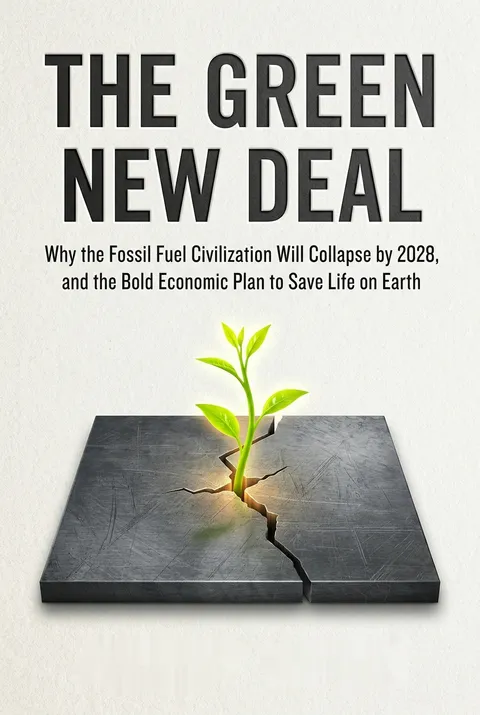


Key Takeaways
Replace isolated green projects with connected, low-carbon infrastructure
Infrastructure changes the whole system. Rifkin calls the proposed shift a Third Industrial Revolution: a new economic platform built by linking digital communication, renewable energy, and low-carbon transport. Earlier industrial eras also combined new ways to communicate, power activity, and move goods. In the twentieth century, cars, oil, electricity, and highways reshaped where people lived and how businesses operated. The argument is that climate policy must match that scale of change, not remain a collection of disconnected solar panels, recycling schemes, or efficient buildings.
Connect the pieces. Sensors and digital networks could help buildings, vehicles, utilities, and businesses coordinate energy use and supply chains. The transformation depends on infrastructure that lets these parts work together, creating new business models and jobs. Rifkin argues that this system-wide approach is the Green New Deal's central purpose.
What's striking is the shift from treating climate action as a list of projects to seeing it as a redesign of the systems those projects depend on. That framing helps explain why a successful pilot can have little effect if it remains isolated from the grid, transport network, or building rules. It also makes infrastructure a question of power: whoever sets access, standards, and ownership shapes the economy built on top. The framework is useful, but the analogy to earlier industrial revolutions can make change sound more orderly than it is. Infrastructure transitions are contested, uneven, and shaped by local choices.
Track renewable growth, because cheap energy can turn fossil assets into liabilities
Watch the cost curve. The book argues that solar and wind costs have fallen fast enough to challenge fossil-fuel power on price. Falling demand can leave mines, pipelines, power plants, and other investments unable to earn back their cost. Rifkin calls these stranded assets. The book cites an estimate of up to $100 trillion in potentially stranded carbon assets, and describes a possible fossil-fuel demand peak during the 2020s.
A forecast, not a date certain. Rifkin predicts a major disruption around 2028, based on renewable growth, new technologies, and the sectors moving away from fossil fuels. He points to Europe, where solar and wind reached about 15 percent of electricity generation in 2017, as an example of market share tipping toward a new energy system. The timing depends on adoption, investment, and policy.
The strongest insight is financial: climate risk is not only the future cost of storms or heat, but also the possibility that today's assets lose value before their owners expect. That lens can bring investors into climate decisions even when moral appeals do not. The book's tipping-point logic is persuasive as a warning, but it should not be mistaken for a clockwork law. Energy transitions depend on market rules, grids, permitting, storage, and political choices. A forecast like 2028 is best read as a scenario meant to focus attention, not a guaranteed collapse date.
Build the grid for local power producers, not only giant plants
Make electricity two-way. The Renewable Energy Internet is Rifkin's name for a digitized power system that can manage renewable electricity from many local sources, rather than relying chiefly on large centralized plants. Homes, farms, and businesses could generate power, use what they need, and share surplus through the grid. The system requires more than panels and turbines: buildings must become efficient, energy storage must balance variable supply, and digital meters and controls must coordinate electricity flows.
Plan the components together. Rifkin also includes charging stations for electric vehicles, which could store power and return some to the grid when needed. Germany's feed-in tariffs helped small businesses, farmers, and neighborhood groups form energy cooperatives. By 2018, solar and wind supplied nearly a quarter of German electricity, with many smaller producers contributing. Local generation can support resilience, especially when communities can operate independently during disruption.
The model joins climate mitigation with a question of who gets to produce and govern energy. Distributed generation can make communities less dependent on distant plants and create a stake in the transition for households and small businesses. But distribution is not automatically democratic: access to capital, suitable roofs, land, and technical help is unequal. Nor does local generation remove the need for large-scale transmission and careful grid management. The practical value lies in combining local participation with system-wide coordination, rather than treating decentralization as a substitute for planning.
Electrify transport and share vehicles to reduce oil demand and wasted road space
Change both the vehicle and its use. Rifkin sees transport shifting from gasoline cars toward electric and fuel-cell vehicles, while shared services and autonomous driving could reduce the number of vehicles needed. The proposed Mobility and Logistics Internet links vehicles, roads, warehouses, and freight through real-time data. In the book's account, Daimler equipped hundreds of thousands of trucks with sensors to monitor traffic, weather, and logistics conditions.
Ownership is not the only model. A study cited by Rifkin suggests one shared vehicle might replace five to fifteen privately owned vehicles. Another forecast projects that shared autonomous electric transport could sharply cut costs and oil use. These are projections, not settled outcomes. The transition also depends on charging infrastructure, better logistics, and decisions about whether people can access reliable shared mobility.
This argument usefully separates the environmental impact of a vehicle from the way society organizes mobility. Electrifying every privately owned car could reduce tailpipe emissions while leaving congestion, road space, and material demand largely intact. Sharing can address those wider costs, especially in dense areas with strong alternatives. Yet convenience alone does not guarantee fewer cars, and autonomous fleets could add empty trips or reinforce car dependence. The book's broader lesson is to evaluate transport as a service system, while testing claims about efficiency against actual travel behavior and public access.
Make building retrofits the backbone of the green transition
Start with what already exists. Buildings consume substantial energy, and much of today's building stock will remain in use for decades. Rifkin argues that homes, offices, factories, and public buildings need insulation, efficient windows, clean heating, and renewable-energy systems before they can function as smart nodes in a connected economy. Retrofitting is therefore both a climate measure and a major construction program.
Pair requirements with support. The book cites a German program that upgraded 342,000 apartments, creating 25,000 jobs and helping preserve 116,000 more. It also describes energy performance certificates and minimum standards as ways to identify inefficient properties and encourage improvements. But rules need financing and assistance, particularly for lower-income tenants and owners. Penalties without affordable routes to comply can punish people who lack the means to upgrade.
Buildings make the transition tangible: energy use is embedded in walls, heating systems, and daily routines, not just in power plants. Retrofit programs can join emissions reductions to lower utility costs and local employment. Their difficulty is institutional as much as technical. Owners pay for improvements while tenants may receive the savings, and construction disrupts occupied spaces. Effective policy must align incentives across those parties and protect residents from rent increases or displacement. The book's emphasis on standards is valuable, but standards work best when paired with accessible financing and safeguards.
Reform farming as a land-use problem, not only a food problem
Food has an infrastructure footprint. The book traces energy use through growing, processing, packaging, and shipping food. It argues that industrial farming relies heavily on fossil fuels and petrochemical fertilizers, while livestock, especially cattle, contributes substantially to agricultural emissions. Cattle graze on about 26 percent of the planet's ice-free land. A comparison cited in the book finds that beef and other ruminant meats require over twenty times more land and produce over twenty times more emissions per unit of protein than legumes.
Change practices and incentives. Rifkin points to organic and ecological farming, reduced beef consumption, and carbon farming. Cover crops, crop rotation, and reduced tillage can help keep carbon in soil while supporting plant growth. Farmers could also generate renewable electricity and sell surplus to the grid. The larger proposal is to redirect public support toward practices that restore soil and reduce pollution.
The important move is to connect food choices with land, energy, and the design of agricultural incentives. It shows why a transition cannot be measured by electricity alone. Practices such as cover cropping can serve several purposes at once, including soil protection and carbon storage. Still, food systems vary widely by region, and no single diet or farming method can simply be imposed everywhere. The book's comparison of protein sources makes the resource burden visible, while leaving room for a more detailed discussion of livelihoods, nutrition, and how farmers can adopt new practices without carrying the financial risk alone.
Pair fossil-fuel phaseouts with paid retraining and community transition funds
A transition has workers in it. Rifkin argues that renewable energy, building upgrades, grid construction, and electric transport will require millions of workers with vocational and professional skills. The book cites nearly one million Americans employed in energy efficiency, solar, wind, and electric vehicles, or about three million when some construction workers are included. It also notes that clean-energy work spans hundreds of occupations and often pays more than comparable jobs in the old energy sector.
Protect communities, not just job counts. Workers and regions dependent on coal, oil, and gas can lose livelihoods and tax revenue as industries decline. Germany's coal phaseout plan paired a long transition with €40 billion for affected regions. Rifkin calls for training, wage support, social protections, and service programs such as Climate Corps or Infrastructure Corps. These measures make the shift more practical and fair, rather than asking communities to absorb its costs alone.
The phrase just transition matters because economic change is experienced locally, through paychecks, identity, and the survival of towns. Retraining alone is insufficient if new jobs are far away, temporary, or lower quality. Support must include worker voice, dependable benefits, and investment in the places most exposed to decline. The book also identifies unequal representation in clean-energy workforces, which means access must be designed rather than assumed. A credible climate plan earns trust when it gives affected people a meaningful role and a clear path to security.
Redirect workers' pension capital toward the infrastructure their futures depend on
Retirement savings shape markets. By 2017, global pension funds held about $41 trillion, including more than $25 trillion in US funds. Rifkin argues that workers' deferred wages should not be invested in ways that threaten their jobs, communities, or long-term financial security. He recalls how pension capital became controlled largely by financial institutions after postwar labor disputes, leaving workers with limited influence over where their savings went.
Treat climate risk as financial risk. Cities and pension funds began divesting from fossil fuels and investing in clean energy and infrastructure. New York City, for example, announced plans to remove fossil-fuel investments from its public pension funds. The book argues that trustees should consider climate-related risks across a portfolio, not only the short-term return of each holding. Green banks could help connect pension funds with large, investable public projects.
This proposal turns retirement assets into a form of collective economic power. It also exposes a tension: trustees owe beneficiaries financial prudence, but climate damage and stranded assets can make a narrow, short-term definition of prudence misleading. Local investment may create public benefits, though pension funds still need transparent governance, careful risk assessment, and protection from political favoritism. Divestment alone does not build replacement infrastructure. The central opportunity is to connect long-term capital with credible projects while keeping beneficiaries' interests, including secure retirement income, at the center.
Use performance-based contracts without surrendering public control
Pay for results, not promises. An energy service company, or ESCO, finances or helps deliver an efficiency or renewable-energy project and earns a return from the savings or energy it successfully produces. In performance contracting, the firm's compensation depends on whether the project meets agreed outcomes. The model can fund building retrofits, renewable installations, storage, and smart-grid work without requiring a government to pay the full cost upfront.
Keep the public in charge. Rifkin presents ESCOs as an alternative to handing infrastructure over to private owners whose profits may conflict with public needs. Governments can define the project, maintain oversight, and retain public control while private firms provide expertise and take on performance risk. Pension funds and green banks could finance projects. The Toronto smart-city proposal illustrates the danger of unclear rules: residents objected to a private technology company collecting and controlling data about public space.
Performance contracting offers a practical answer to a familiar problem: governments need private expertise and capital, but essential infrastructure should remain accountable to the public. Linking payment to measured results can align incentives better than a simple construction contract. The model still requires independent verification, clear rules about data, and a fair allocation of risk. Public ownership is not enough if residents cannot understand or influence how services operate. The Toronto example makes that point especially clearly: technical sophistication cannot substitute for consent and accountable governance.
Give citizens a lasting role in planning resilient regional infrastructure
Plan with the people affected. Rifkin's peer assemblies bring residents, businesses, labor, universities, civic groups, and public officials into ongoing regional planning. They are intended to do more than collect comments: participants help shape a long-term roadmap that continues across election cycles. In Hauts-de-France, the approach accompanied a regional transition involving more than 1,000 projects. Local and regional governments adapt plans to their needs, while national authorities establish shared rules and standards.
Coordinate beyond borders. The book urges the United States, the European Union, and China to cooperate on standards and connected infrastructure. It frames climate disruption as a reason to prioritize resilience and shared responsibility, not only national competition. Rifkin's proposed agenda spans renewable power, transport, buildings, food, water, jobs, finance, and climate response. Its scale depends on treating these areas as parts of one transition rather than separate policy lists.
Peer assemblies address a real weakness in long-term infrastructure planning: elected terms are short, while the systems being built can shape communities for generations. Broad participation can reveal local knowledge and build legitimacy, especially when residents have decision-making influence rather than a ceremonial invitation. The process can also be slow or captured by well-organized interests, so representation and transparency matter. The international argument adds a useful counterpart: local control need not mean isolation. Shared standards can support cooperation while leaving communities meaningful authority over their own infrastructure.
Analysis
The book's most valuable contribution is its insistence that climate policy is an infrastructure problem. Emissions are produced by linked systems of power, buildings, transport, food, finance, and governance. A solar installation or clean-vehicle subsidy may help, but its impact is constrained if the grid, housing stock, and travel patterns remain designed around fossil fuels. Rifkin's systems lens therefore turns scattered climate initiatives into a coherent economic transition, and gives public investment, workforce planning, and democratic oversight a central role.
Its argument is strongest when it connects technological change to ownership and distribution. Decentralized energy can alter who produces power. Pension funds can redirect capital. Performance contracts can bring private expertise into publicly governed projects. Peer assemblies can widen participation beyond elections. These are not merely technical design choices; they determine who benefits, who bears risk, and who has authority.
The book is less convincing when it treats market change as nearly inevitable and gives precise timelines for fossil-fuel collapse. Falling renewable costs can redirect investment, but prices alone do not build transmission lines, make retrofits affordable, secure minerals, or resolve land-use conflicts. The projections for autonomous shared vehicles also assume rapid technological and behavioral shifts. In addition, digital coordination may create new dependencies, privacy risks, and cybersecurity vulnerabilities, a tension the book recognizes but does not fully resolve.
The practical reading is neither that the transition will happen automatically nor that it is impossible. Market signals can open a window, but institutions decide whether that window produces a fair, resilient public system or a new form of concentrated control. The book's strongest prescription is to use the opening for coordinated investment, worker protection, and public accountability, while treating its dates and forecasts as hypotheses to test rather than promises.
Review Summary
The Green New Deal receives mixed reviews, with some praising its comprehensive approach to addressing climate change and transitioning to renewable energy. Readers appreciate Rifkin's detailed plan and economic analysis. However, critics argue the book is repetitive, overly optimistic, and lacks practical implementation details. Some find the economic concepts challenging, while others value the insights into global green energy strategies. Overall, reviewers acknowledge the urgency of climate action but debate the feasibility of Rifkin's proposed solutions.
People Also Read







Glossary
Third Industrial Revolution
Connected postcarbon infrastructureRifkin's name for a proposed economic transformation built on the convergence of digital communication, renewable energy, and digitized transport and logistics. These systems connect through an Internet of Things platform and energy-efficient buildings. The framework treats infrastructure as the foundation for new business models, employment, and forms of governance, rather than as a collection of separate technologies.
General-purpose technology platform
Society-wide operating infrastructureA society-wide infrastructure that combines communication, energy, and transportation systems so economic and social activity can be managed, powered, and moved. Rifkin uses the term to explain why major technological shifts affect more than individual industries: they reshape business models, settlement patterns, governance, and people's sense of their place in the world.
Renewable Energy Internet
Digitized shared power gridRifkin's proposed electricity system for managing renewable power generated at many distributed sites. Efficient operation requires energy-efficient buildings, renewable generation, storage, digital meters and controls, and electric-vehicle charging. The system allows homes, businesses, and communities to use electricity locally, share surpluses through the grid, and potentially disconnect into microgrids during disruptions.
Internet of Things (IoT)
Networked sensors and devicesA digital network connecting physical devices and systems through embedded sensors and communications technology. In Rifkin's proposal, sensors provide data about buildings, energy flows, vehicles, roads, warehouses, and farms. The resulting information can help coordinate activity and improve efficiency, but the system also raises questions about privacy, security, access, and who controls collected data.
Stranded assets
Investments losing expected valueAssets that lose economic value earlier than expected, often because a technological or market shift makes them less useful or profitable. In the book, the term refers especially to fossil-fuel reserves and infrastructure such as pipelines, power plants, and processing facilities that could become uneconomic as renewable energy and related technologies gain market share.
Glocalization
Connected local economic activityRifkin's term for economic activity organized around locally rooted businesses and communities that connect directly across regions and borders through digital networks. It contrasts with a model in which global corporations mediate most trade and services. The idea pairs local customization and governance with broader networks for collaboration and exchange.
Peer assembly governance
Ongoing collaborative regional planningA planning and governance approach in which residents, businesses, labor organizations, universities, civic groups, and public officials work together on long-term regional plans. The assemblies are intended to help shape decisions and maintain continuity beyond election cycles. In Rifkin's model, public authorities facilitate and oversee the process, while elected bodies retain responsibility for laws and implementation.
Energy service company (ESCO)
Firm delivering energy improvementsA company that finances, installs, or manages energy improvements such as building retrofits, renewable generation, storage, and efficiency systems. In Rifkin's proposed model, an ESCO may earn returns from the energy or savings its work produces. Public agencies can use these firms for technical expertise while retaining authority over infrastructure goals and oversight.
Performance contracting
Payment tied to measured resultsA contract in which compensation for an energy project depends on agreed performance, such as verified energy savings or renewable generation. The ESCO may finance the project and accept some risk if the promised results are not achieved. Rifkin presents the model as a way to align private returns with public benefits, provided public authorities retain control and independently verify outcomes.
Age of Resilience
Era of climate adaptationRifkin's name for a period in which societies must adapt to climate disruption rather than assume nature can be controlled or economic growth can continue without ecological limits. The concept emphasizes resilient infrastructure, disaster preparedness, and cooperation among communities. It contrasts with the Age of Progress, the book's label for the industrial belief in continuous human mastery and improvement.
Carbon bubble
Overvaluation of fossil investmentsThe risk that fossil-fuel reserves and related infrastructure are valued as though they will be used and generate returns, even though climate policy or competing technologies may prevent that. If demand falls or assets become uneconomic, investors could face large losses. Rifkin links this financial risk to the transition toward renewable energy and the possibility of stranded assets.
Social capitalism
Business tied to public benefitRifkin's description of an economic model that combines private enterprise with public goals and social investment. In the book, it includes socially responsible investment, pension-fund financing, and ESCO contracts designed to reward useful outcomes such as energy savings and cleaner infrastructure. The model aims to retain public accountability while drawing on private expertise and capital.
FAQ
What's The Green New Deal about?
- Climate Emergency Focus: The book addresses the urgent need to tackle human-induced climate change, warning of a sixth mass extinction if swift action isn't taken.
- Economic Transformation Proposal: Jeremy Rifkin advocates for a radical global economic shift to decarbonize within a decade, creating green businesses and jobs for a sustainable future.
- Political Mobilization: It highlights the rise of young politicians and activists, especially in the U.S., pushing for a Green New Deal to combat climate change and economic inequality.
Why should I read The Green New Deal by Jeremy Rifkin?
- Understanding Urgency: The book provides insights into the pressing climate crisis and the scientific consensus on its impacts, helping readers understand the necessary timeline for change.
- Informed Action Guide: It serves as a guide for individuals and policymakers on mobilizing for a sustainable future, outlining actionable steps and potential economic growth through green initiatives.
- Historical Context: Rifkin connects the current climate crisis to past economic transformations, offering a broader perspective on societal adaptation to change.
What are the key takeaways of The Green New Deal?
- Urgent Decarbonization: The book stresses the need to cut global warming emissions by 45% from 2010 levels within twelve years to avoid catastrophic impacts.
- Third Industrial Revolution: Rifkin introduces a new paradigm integrating renewable energy, digital communication, and autonomous transportation for a sustainable economy.
- Public Support: There is significant bipartisan support for a Green New Deal in the U.S., indicating a potential shift in political dynamics to facilitate necessary changes.
What specific methods does The Green New Deal propose for achieving its goals?
- Renewable Energy Investment: Rifkin advocates for massive investments in solar, wind, and other renewable sources, which are becoming cheaper and can underpin a new energy economy.
- Infrastructure Overhaul: The book calls for transforming existing infrastructure to support green technologies, including retrofitting buildings and upgrading the energy grid.
- Job Creation: Transitioning to a green economy will create millions of jobs, with training programs needed to prepare the workforce for new roles in the renewable sector.
What are the best quotes from The Green New Deal and what do they mean?
- "We are facing a global emergency.": This quote underscores the urgency of the climate crisis and the need for immediate action, setting the book's tone.
- "The human race faces a razor-thin timeline for a radical reorientation of civilization.": It highlights the critical timeframe for implementing changes to avert disaster.
- "The Green New Deal would generate 100% of the nation’s electricity from clean, renewable sources within the next 10 years.": This emphasizes the ambitious goals and feasibility of a complete shift to renewable energy.
How does The Green New Deal address economic inequality?
- Equitable Resource Distribution: Rifkin argues for equitable distribution of wealth and resources in the green economy transition, ensuring disadvantaged communities benefit.
- Job Creation for Marginalized Groups: The book emphasizes creating employment opportunities for marginalized groups, with training programs to help them transition into the green economy.
- Political Mobilization for Justice: Young activists play a crucial role in advocating for social and economic justice alongside environmental sustainability.
What challenges does The Green New Deal foresee in implementing its proposals?
- Political Resistance: Significant pushback from established fossil fuel interests is expected, requiring a united front from activists, politicians, and the public.
- Public Awareness: Widespread public understanding of the climate crisis and proposed solutions is essential for building momentum for change.
- Technological and Financial Hurdles: The transition involves substantial technological advancements and financial investments, critical to the Green New Deal's success.
How does The Green New Deal relate to previous economic transformations?
- Historical Context: Rifkin draws parallels between the current climate crisis and past industrial revolutions, explaining how shifts in energy and technology reshaped economies.
- Lessons from the Past: Understanding past transitions' successes and failures can guide effective action today.
- Cultural Shifts: Economic transformations often come with shifts in cultural values and societal norms, fostering a new consciousness around sustainability.
What role do global movements play in The Green New Deal?
- International Solidarity: Global cooperation is crucial for addressing climate change, with movements in Europe and other regions serving as models for the U.S. Green New Deal.
- Shared Knowledge: Sharing best practices and technologies across borders is essential for accelerating the transition to renewable energy.
- Youth Activism: Young activists worldwide are vital for driving the Green New Deal forward with their energy and commitment.
How does The Green New Deal envision the future of energy?
- Decentralized Energy Production: Rifkin advocates for communities generating their own renewable energy, reducing reliance on fossil fuels.
- Smart Energy Grids: The need for smart grids to efficiently manage energy distribution from various sources is discussed, enhancing system resilience.
- Near-Zero Marginal Cost: As renewable technologies become cheaper, the marginal cost of energy will approach zero, changing energy economics.
What is the significance of the term "stranded assets" in The Green New Deal?
- Definition: Stranded assets are fossil fuel investments that become obsolete due to market changes or regulatory shifts, central to understanding economic implications.
- Financial Risks: The book highlights the financial risks for investors and economies reliant on fossil fuels, as renewable energy becomes more competitive.
- Proactive Measures: Recognizing stranded assets' reality is crucial for policymakers and investors, with proactive steps needed to transition to a green economy.
How does The Green New Deal propose to finance its initiatives?
- Carbon Tax: An aggressive carbon tax is suggested to generate revenue and discourage fossil fuel use, funding green infrastructure projects.
- Divestment from Fossil Fuels: The book advocates for divesting public pension funds from fossil fuels and reallocating resources to green initiatives.
- Green Banks: Establishing green banks to provide financing for sustainable projects, leveraging public and private capital for the green transition.
About the Author


Download PDF
Download EPUB
.epub digital book format is ideal for reading ebooks on phones, tablets, and e-readers.








