

Key Takeaways
Treat the next decade as the hinge between two climate futures
The deadline is structural. The authors argue that global emissions must fall by at least half by 2030, then reach net zero by 2050 at the latest. Net-zero emissions means balancing greenhouse gases released with those absorbed by natural systems or removed from the atmosphere. These dates are not predictions of a precise outcome. They are milestones based on the remaining chance of limiting warming to 1.5 degrees Celsius and avoiding the most dangerous impacts.
Choices lock in consequences. Energy systems, transport, and land use last for decades, so today's decisions shape future emissions. The book contrasts a path toward more than 3 degrees of warming with a 1.5-degree future featuring cleaner cities, restored forests, and less fossil fuel use. The scenarios make the stakes tangible, but the authors stress that the future is still being made.
The book's strongest opening move is to make climate change a question of path dependence, not merely personal virtue. Infrastructure creates defaults that can persist long after the decision to build it. That gives the 2030 target practical meaning: it is a test of whether institutions can change course before high-carbon systems become harder to replace. Scenario writing can motivate action, but it can also make futures feel more certain than they are. The useful reading is conditional: these are plausible consequences of choices, not prophecies.
Make climate action a human-safety project, not a wildlife niche
The planet is not the patient. Earth will persist through dramatic changes; the question is whether the conditions that support human civilization will. The authors connect climate disruption to social justice because poorer communities are often more exposed to hazards and have fewer resources to recover. They connect it to health because burning fossil fuels also pollutes local air, contributing to more than 7 million deaths annually, according to the figures cited in the book.
The risks travel across systems. Crop disruption, water scarcity, damaged infrastructure, migration, and financial losses are not separate environmental concerns. They can compound one another. The book also frames climate action as intergenerational justice: future people cannot reverse many harms that present generations can still limit. This reframing makes cleaner air, safer communities, and economic resilience part of climate policy, not side benefits.
This framing is politically useful because people encounter climate risk through bodies, homes, livelihoods, and prices, not through an abstract global average. It also reflects systems thinking: a shock to food or water can strain health, migration, and political institutions at once. The emphasis on human survival should not reduce nature to a service provider, however. The book's own account of interconnected life points toward a broader ethic: ecosystems matter both because people depend on them and because they are living communities with value beyond immediate human use.
Use stubborn optimism to stay truthful and keep acting
Optimism is a practice. Stubborn optimism, the authors' term for persistent commitment despite uncertainty, is not a claim that success is guaranteed. It means facing the evidence, identifying real openings, and continuing to work when outcomes remain unknown. The book traces this mindset to the negotiations that produced the Paris Agreement. After the failure in Copenhagen, Christiana Figueres initially voiced the prevailing belief that a global agreement would not happen in her lifetime. She then recognized that repeating despair could help make that outcome inevitable.
Possibility came first. The Paris negotiations involved 195 nations and years of conflict over responsibility and policy. The authors argue that a shared belief in the possibility of agreement helped participants keep negotiating through setbacks. The practical lesson is to challenge thoughts of helplessness without pretending the problem is small. An individual action may seem minor, but it can contribute to wider shifts whose turning points are difficult to predict.
This account connects climate action to self-efficacy, the belief that effort can influence outcomes. In collective problems, that belief is not just a mood: it can affect whether people organize, vote, invest, or withdraw. The Paris story shows optimism operating as a coordination tool, helping participants persist before evidence of success was available. Its limit is equally important. Optimism detached from measurable goals becomes reassurance. The authors avoid that trap by pairing confidence with emissions milestones and concrete political work.
Treat climate scarcity as a shared constraint, not a contest
Competition can manufacture shortage. The authors use Tucson, Arizona, to show how fear of water scarcity can worsen the problem. Residents pumped so much groundwater that the water table fell by more than 91 meters, even though the area's annual rainfall exceeded municipal water use. The example is not a claim that every shortage is imaginary. It shows how a narrow view of a resource can encourage behavior that depletes the wider system.
The atmosphere has a real limit. The book calls the remaining capacity to absorb greenhouse gases the carbon budget, comparing it to a bathtub that can overflow if emissions keep accumulating. Nations have disputed how that limited space should be shared, especially given unequal historical responsibility. During negotiations, the United States and China helped shift the discussion toward the shared benefits of reducing emissions, making agreement more attainable. Endless Abundance names the mindset of finding shared gains through cooperation, not pretending physical limits do not exist.
The useful distinction is between material limits and the social arrangements built around them. Some resources are finite, yet cooperation can reduce waste, distribute access, or create alternatives. This resembles commons governance: people are more likely to protect a shared resource when rules feel legitimate and burdens are visible. That legitimacy cannot be assumed. A cooperative climate deal must still confront differences in historical emissions, wealth, and capacity. Shared benefit is a powerful frame, but it does not erase the need for fairness.
Grieve what is lost, then keep a vivid destination in view
Pain deserves attention. The authors argue that grief over disappearing species, damaged landscapes, and altered seasons should be felt rather than buried. But grief can either deepen commitment or drain the ability to act. Their advice is to make room for mourning and community support while refusing to treat despair as a plan.
Separate vision from tactics. A vision describes the future worth pursuing; a goal is a specific target or method along the way. The Paris Agreement mattered, but it served a larger vision of humans and nature thriving together. Holding that destination firmly while adapting the route helps people persist when tactics fail. The authors also urge readers to let go of nostalgia for systems that helped create the crisis, and to resist blame that consumes energy without repairing harm.
This pairing of grief and vision resembles approaches in trauma-informed work: acknowledging loss can restore contact with reality, while a meaningful direction helps prevent pain from becoming paralysis. It also clarifies a common strategic mistake. A campaign can become so attached to one policy instrument that the instrument replaces the purpose. A durable vision allows tactical flexibility. Still, not all anger or blame is destructive. Accountability can expose deception and change incentives; the challenge is to pursue justice without making punishment the only imagined route forward.
Shift from extraction to deliberate repair of people and ecosystems
Regeneration means restoring capacity. Radical Regeneration is the book's name for designing human activity to replenish people and natural systems rather than simply taking from them. Nature can recover when pressure is removed: the authors point to returning wildlife around Chernobyl and the recovery of whale populations after commercial whaling was restricted. But some damage has passed thresholds, so recovery may require intentional help.
Repair has practical forms. Rewilding means allowing natural processes to return, sometimes with human support such as reintroducing native animals. The Knepp project in England converted degraded farmland into a landscape where grazing animals helped create varied habitats; the authors describe a subsequent rise in wildlife. Tree planting, wetland restoration, and coral nurseries are other examples. The book also treats personal renewal as part of this ethic: rest, time outdoors, and practices that restore energy help people sustain long-term work.
Regeneration is more demanding than reducing damage because it asks whether activity improves the system's ability to sustain life. That question links ecological restoration with organizational learning and public health: both depend on renewing the conditions that make future action possible. The emphasis on human assistance is well placed, since passive recovery cannot undo every disruption. Yet restoration is context-dependent. Planting trees is not automatically beneficial if the species or location is wrong. Repair requires local knowledge, long time horizons, and respect for what an ecosystem can regenerate on its own.
Spend less like a consumer and act more like a citizen
Buying can become identity. The authors compare consumption to a monkey holding food inside a coconut trap: the monkey could escape by letting go, but its grip keeps it stuck. Advertising and fast-changing trends encourage people to treat purchases as proof of personality or belonging. The book reports that fashion contributes an estimated 10 percent of global carbon dioxide emissions, while short product lifespans and difficult-to-repair goods create more waste.
Change the definition of enough. Readers are encouraged to reduce unnecessary buying, choose durable goods when purchases are needed, repair and reuse, and favor companies with credible sustainability commitments. The deeper move is from seeing oneself mainly as a consumer to acting as a citizen who can shape institutions. Individual purchasing matters, but collective choices about standards, public services, and political priorities can change the conditions under which everyone consumes.
Consumer behavior sits at the intersection of identity and infrastructure. A reusable or durable purchase can help, but the largest gains often depend on whether repair is affordable, public transport is available, and producers face rules that reward longer-lasting goods. This is why the citizen frame matters: it prevents climate action from shrinking into a shopping guide. At the same time, the book's appeal to personal restraint should be applied with care. Consumption is unequal, and people with fewer resources should not carry the same burden as high-consuming households.
Move money and infrastructure before fossil assets become stranded
Delay makes transition riskier. The authors note that governments spent roughly $600 billion a year subsidizing fossil fuels, about three times the support for renewables at the time of writing. They warn that a sudden loss in value for high-carbon investments could destabilize companies, pensions, and public finances. These vulnerable investments are often called stranded assets: assets that lose value because economic or policy changes leave them unusable or unprofitable.
Redirect capital deliberately. The book points to the rapid decline in solar costs, divestment campaigns, and Norway's decision to move billions of dollars away from fossil fuels and toward renewable energy. It also questions GDP as a complete measure of success: disposable goods can raise output while degrading ecosystems, whereas repair and reuse may improve life without increasing measured production. A cleaner economy requires investment, policy, and infrastructure that reward health and long-term resilience.
The financial argument complements the moral one. Climate policy is often framed as a cost imposed on investors, but delayed adaptation can create losses through abrupt repricing and obsolete infrastructure. That makes transition planning a form of risk management. The critique of GDP also points to a measurement problem: what is counted shapes what governments pursue. Still, a replacement scorecard must be clear enough to guide budgets and compare outcomes. Well-being indicators can broaden priorities, but they work best alongside transparent measures of emissions, inequality, and ecological health.
Pair climate technology with accountable governance and equal leadership
Tools amplify human priorities. Artificial intelligence can help balance renewable power grids, reduce building energy use, detect methane leaks, and improve weather predictions. The authors cite Google's use of machine learning to cut the energy needed to cool its data centers by 40 percent. But they warn that advanced tools can also concentrate wealth, displace workers, or enable surveillance. Innovation is no substitute for present-day emissions cuts, and governance needs to address who benefits and who bears the disruption.
Representation shapes decisions. The book argues for women to have equal influence in families, businesses, and government, citing research linking women's leadership and representation with stronger environmental action. It also highlights education and economic opportunity for girls as routes to greater agency and community resilience. The broader principle is to include people with relevant knowledge and stake in the transition, while preparing workers and communities for economic changes.
Technology is best understood here as a multiplier, not an independent solution. Its value depends on ownership, incentives, and safeguards, which makes governance part of engineering rather than an afterthought. The argument for gender equality is both ethical and practical: excluding capable leaders wastes knowledge and weakens legitimacy. Evidence about leadership differences should not be turned into claims that women are naturally more virtuous or uniform in outlook. The stronger case is institutional: broader participation can improve deliberation and ensure that those affected by decisions help shape them.
Defend shared facts and turn climate concern into political pressure
Truth is civic infrastructure. The authors describe how confirmation bias makes people favor information that supports existing beliefs, while a study they cite found false news spread faster online than true news. Their advice is to check sources, funding, and peer review, and to listen sincerely to people who distrust climate claims rather than assuming more statistics will persuade them.
Democracy needs participation. Climate action depends on elected leaders, institutions, and organized citizens. The book points to Extinction Rebellion's 2019 protests in London, followed by the UK's declaration of a climate emergency and creation of a citizens' assembly. It also cites research proposing that nonviolent movements can gain decisive influence when participation reaches about 3.5 percent of a population. Readers are urged to vote, contact representatives, join peaceful movements, and hold leaders accountable.
The connection between public knowledge and political capacity is crucial: policy cannot respond to evidence that citizens are prevented from trusting or discussing. The call to listen to skeptics is especially practical because disagreement often includes concerns about cost, identity, and fairness, not just scientific claims. Protest can reset political attention, while voting and institutional engagement turn attention into durable rules. The cited 3.5 percent figure is a useful organizing reference, not a guarantee that every movement succeeds at a threshold. Political outcomes depend on goals, tactics, institutions, and the response of those in power.
Analysis
The book's central argument is that climate action requires a change in both destination and self-understanding. Its structure moves from two possible futures, to three guiding mindsets, to ten areas of action. That progression gives the work a persuasive arc: evidence establishes urgency, the Paris Agreement supplies a story of collective possibility, and practical choices connect personal conduct to political systems. Its most effective move is refusing the false choice between despair and reassurance. The authors acknowledge irreversible loss while arguing that the scale of future harm remains responsive to present decisions. Their imagined 2050s make abstract warming legible through air quality, food, water, migration, and city life. These scenes are advocacy tools, not forecasts, and readers should keep that distinction clear. A scenario can clarify consequences without establishing exactly how or when they will unfold.
The book also broadens climate responsibility beyond household footprints. Consumption, finance, technology, gender equality, public truth, and democratic participation all shape the capacity to decarbonize. This is a strength because it avoids treating climate change as a niche environmental concern. It also creates a demanding coordination problem: individuals, businesses, and states have different power, resources, and obligations. The authors recognize unequal historical responsibility, though their emphasis on shared gains can sometimes make distributive conflict seem easier to settle than it is.
The three mindsets offer a memorable orientation, not a substitute for policy design. Optimism helps sustain commitment, abundance helps people imagine cooperation, and regeneration changes the test of progress from extraction to renewal. Their practical force comes when these ideas meet measurable targets, public investment, credible science, and organized civic pressure. The book's deepest proposition is therefore neither that attitude alone saves the future nor that technology will do it for us. It is that coordinated action becomes more possible when people can imagine a worthwhile future, trust what is known, and see a meaningful role for themselves in building it.
Review Summary
The Future We Choose receives mixed reviews, with praise for its accessibility and optimism but criticism for oversimplification. Readers appreciate the clear explanations of climate change impacts and actionable suggestions for individuals. However, some find it lacking in depth and new information for those already familiar with the topic. The book's emphasis on mindset shifts and individual actions resonates with many, while others argue for more focus on systemic change. Overall, it's seen as a good introduction for climate change newcomers but less valuable for experts.
People Also Read



Glossary
Stubborn Optimism
persistent action amid uncertaintyA deliberate stance that acknowledges bad news and real obstacles while continuing to work toward a better outcome. It does not claim that success is certain. In the book, it means treating optimism as a starting condition for collective effort, not as a reward received after problems have been solved.
Endless Abundance
shared gains through cooperationA mindset that looks beyond zero-sum competition and asks how people can meet needs through collaboration, creativity, and shared systems. It does not deny real ecological limits. Instead, it emphasizes that cooperation can expand available solutions and benefits, while protecting and renewing the resources on which everyone depends.
Radical Regeneration
design for renewed lifeA way of organizing human activity so it replenishes people and ecosystems rather than depleting them. The book applies regeneration to personal renewal, relationships, economies, and nature. It includes removing harmful pressures where possible and intentionally helping damaged systems recover when they cannot restore themselves unaided.
carbon budget
remaining emissions capacityThe limited amount of greenhouse gases that can still be added to the atmosphere while retaining a given chance of limiting global warming to a target. The book compares this capacity to a bathtub with a finite limit. Because emissions accumulate, every additional release uses part of the remaining budget.
Anthropocene
human-dominated geological periodA term used in the book for a period in which human activity has become a major driver of large-scale changes to Earth's systems. The authors describe fossil fuel use, deforestation, and other human impacts as forces that have disrupted the relatively stable conditions that supported the growth of human civilization.
net-zero emissions
balanced greenhouse gas emissionsA state in which human-caused greenhouse gas emissions are balanced by amounts absorbed by natural systems or removed from the atmosphere. The book presents reaching net zero by 2050 at the latest as a central climate milestone, requiring rapid emissions reductions rather than relying only on future removals.
rewilding
restoring natural processesThe practice of allowing land or ecosystems to return toward natural processes, sometimes by removing damaging pressures and sometimes by actively supporting recovery. Examples in the book include restoring degraded land and enabling grazing animals to create diverse habitats. Rewilding does not mean that every place follows one fixed restoration plan.
stranded assets
investments losing future valueAssets that may lose value because economic, technological, or policy changes make them unusable or unprofitable. In the book, high-carbon infrastructure and fossil fuel investments face this risk as economies shift toward clean energy. The authors argue that planning the transition can reduce the danger of sudden financial losses.
FAQ
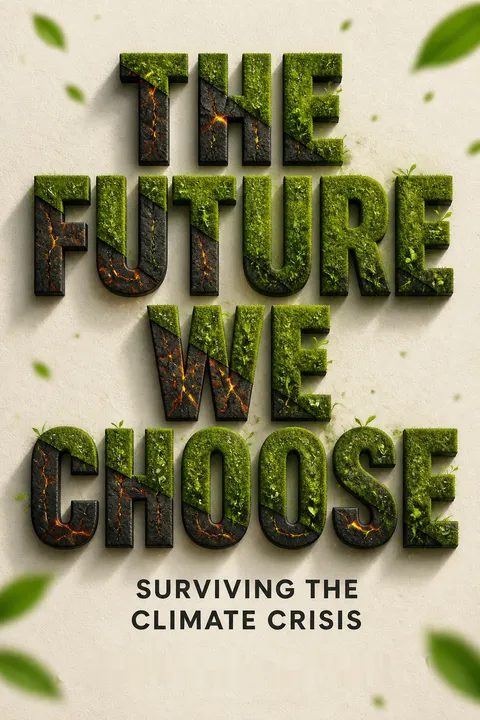
What's "The Future We Choose: Surviving the Climate Crisis" about?
- Overview: "The Future We Choose" by Christiana Figueres and Tom Rivett-Carnac is a guide on how humanity can address and survive the climate crisis. It presents a vision for a sustainable future and outlines the necessary actions to achieve it.
- Two Scenarios: The book contrasts two potential futures: one where we fail to act and face catastrophic climate impacts, and another where we successfully limit global warming to 1.5 degrees Celsius.
- Mindsets and Actions: It emphasizes the importance of adopting three mindsets—Stubborn Optimism, Endless Abundance, and Radical Regeneration—and outlines ten specific actions to combat climate change.
- Call to Action: The authors urge readers to take immediate and decisive action, both individually and collectively, to ensure a livable planet for future generations.
Why should I read "The Future We Choose"?
- Urgency of the Crisis: The book highlights the critical nature of the current decade in determining the future of our planet, making it essential reading for understanding the stakes.
- Practical Guidance: It provides actionable steps and mindsets that individuals and communities can adopt to contribute to climate solutions.
- Inspiration and Hope: Through examples and a positive outlook, the book inspires readers to believe in the possibility of a better future and their role in creating it.
- Expert Insights: Written by key figures in the Paris Agreement, it offers authoritative insights into global climate negotiations and strategies.
What are the key takeaways of "The Future We Choose"?
- Two Possible Futures: Humanity faces a choice between a future of climate devastation and one of sustainable prosperity, depending on our actions now.
- Mindset Shift: Adopting mindsets of optimism, abundance, and regeneration is crucial for driving the necessary changes.
- Ten Actions: The book outlines ten specific actions, including moving beyond fossil fuels, reforesting the Earth, and engaging in politics, to combat climate change.
- Collective Responsibility: It emphasizes that everyone, from individuals to governments, has a role to play in addressing the climate crisis.
What are the best quotes from "The Future We Choose" and what do they mean?
- "Impossible is not a fact. It is an attitude." This quote underscores the power of mindset in overcoming challenges and achieving seemingly unattainable goals.
- "Optimism is not soft, it is gritty." It highlights that optimism requires resilience and determination, especially in the face of adversity.
- "We are all weavers of the grand tapestry of history." This metaphor emphasizes the collective impact of individual actions in shaping the future.
- "We did everything that was necessary." A call to action, urging readers to commit to doing whatever it takes to address the climate crisis.
How do the authors define "Stubborn Optimism" in "The Future We Choose"?
- Mindset of Hope: Stubborn Optimism is about maintaining hope and determination despite challenges and setbacks.
- Active Engagement: It involves actively working towards solutions and believing in the possibility of a better future.
- Resilience: This mindset requires resilience and the ability to see beyond immediate difficulties to long-term goals.
- Empowerment: It empowers individuals to take meaningful action and contribute to positive change.
What is "Endless Abundance" according to "The Future We Choose"?
- Beyond Scarcity: Endless Abundance is a mindset that moves beyond the perception of scarcity to recognize the potential for abundance through collaboration.
- Resource Management: It involves managing resources sustainably and regeneratively, ensuring they are available for future generations.
- Collaboration Over Competition: This mindset emphasizes collaboration and shared benefits rather than competition and zero-sum thinking.
- Innovation and Creativity: It encourages innovative solutions and creative approaches to resource use and environmental challenges.
How does "Radical Regeneration" play a role in "The Future We Choose"?
- Restorative Practices: Radical Regeneration focuses on restoring and regenerating natural systems rather than merely sustaining them.
- Human-Nature Connection: It emphasizes the interconnectedness of human well-being and the health of ecosystems.
- Intentional Action: This mindset calls for intentional actions to support and enhance the planet's regenerative capacities.
- Long-Term Vision: It requires a long-term vision and commitment to creating a life-sustaining society.
What are the ten actions recommended in "The Future We Choose"?
- Let Go of the Old World: Embrace change and move away from outdated systems and practices.
- Face Your Grief: Acknowledge the emotional impact of climate change while holding a vision for the future.
- Defend the Truth: Stand up for scientific facts and combat misinformation.
- See Yourself as a Citizen: Prioritize civic engagement over consumerism.
- Move Beyond Fossil Fuels: Transition to renewable energy sources.
- Reforest the Earth: Plant trees and restore natural habitats.
- Invest in a Clean Economy: Support sustainable economic practices and divest from fossil fuels.
- Use Technology Responsibly: Leverage technology for positive environmental impact.
- Build Gender Equality: Ensure equal representation and decision-making power for women.
- Engage in Politics: Actively participate in political processes to drive climate action.
How do the authors suggest individuals can contribute to climate solutions in "The Future We Choose"?
- Personal Commitment: Individuals are encouraged to commit to reducing their carbon footprint by at least 50% by 2030.
- Community Engagement: Engage with local communities and participate in collective actions and initiatives.
- Political Involvement: Vote for and support leaders who prioritize climate action and policies.
- Lifestyle Changes: Adopt sustainable practices in daily life, such as reducing waste and choosing renewable energy.
What role does technology play in "The Future We Choose"?
- Potential for Good: Technology has the potential to significantly reduce emissions and improve resource efficiency.
- Responsible Use: It must be used responsibly, with governance systems in place to prevent misuse.
- AI and Innovation: Artificial intelligence and other innovations can accelerate climate solutions if aligned with sustainable goals.
- Complementary to Action: Technology should complement, not replace, immediate and decisive climate actions.
How does "The Future We Choose" address the issue of climate justice?
- Equitable Solutions: The book emphasizes the need for solutions that are fair and just, addressing the disproportionate impacts of climate change on vulnerable populations.
- Historical Responsibility: It acknowledges the historical responsibility of developed nations in contributing to climate change.
- Inclusive Participation: Ensures that all voices, especially those from marginalized communities, are included in decision-making processes.
- Intergenerational Justice: Highlights the moral responsibility to future generations to leave a livable planet.
What is the significance of the Paris Agreement in "The Future We Choose"?
- Historical Achievement: The Paris Agreement is presented as a landmark achievement in global climate negotiations.
- Framework for Action: It provides a framework for countries to commit to reducing emissions and limiting global warming.
- Collective Effort: The agreement represents a collective effort by 195 nations to address the climate crisis.
- Ongoing Commitment: It underscores the need for ongoing commitment and action to meet the agreement's goals and prevent catastrophic climate impacts.
Download PDF
Download EPUB
.epub digital book format is ideal for reading ebooks on phones, tablets, and e-readers.








