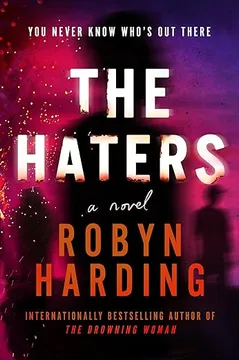


Plot Summary
The First Reader's Blow
At forty-four, Camryn Lane1 has finally published Burnt Orchid, the novel she spent years writing while raising her daughter,2 Liza,2 and working as a high school counselor. Her launch party gathers colleagues, family, and friends, including her younger boyfriend,6 Theo,6 and her steadfast best friend,7 Martha.7
Just before Camryn1 takes the stage, an email from a reader named Ingrid Wandry accuses her of stealing students' private troubles for fiction. Camryn1 cannot answer before the toast and reading begin, so she performs through the shock.
The next morning, she tries to dismiss the accusation as a stranger's cruelty. Yet the message has struck precisely where her pride is most exposed: she wants her work recognized, but fears recognition may cost her the trust of the students she serves.
Camryn's success arrives with an accusation that makes the private labor of writing feel ethically suspect. Her work as a counselor depends on boundaries and confidentiality, while her novel depends on emotional access to human suffering. The book does not establish that she has crossed those boundaries; instead, it shows how quickly a public claim can make her question her own integrity. Her launch also places two forms of validation side by side: the warmth of people who know her and the authority she grants an unknown reader.
One Star Becomes a Mob
Camryn1 finds that Ingrid has repeated the accusation in a public review, where strangers begin adding one-star ratings and calling for a boycott. Her agent,19 Holly,19 and publicist, Olivia,19 advise her not to engage; journalist friend Janine Kang17 warns that online abuse can become real-world stalking.
Meanwhile, Camryn1 investigates a school incident involving Abby Lester,4 a student who overdosed on MDMA at a sleepover while peers filmed and shared footage of her. Popular student Fiona Carmichael3 admits posting the video but withholds what happened.
The opening chapters of Camryn's novel echo these events through Orchid,5 a fourteen-year-old who kills her mother's abusive boyfriend and later escapes detention with Lucy,14 a younger girl she protects. Both stories begin with a girl forced to survive adults' and peers' failures.
The review campaign gains force because it converts a plausible professional concern into a verdict delivered by strangers. At school, Camryn faces an actual breach of care: Abby's classmates choose recording and social status over seeking help. The parallel with Orchid is not a claim that fiction mirrors Camryn's students. It instead exposes the difference between depicting harm and responding to it. Camryn tries to maintain that distinction, but the internet's compressed judgments make context difficult to preserve.
Miami's Anonymous Gifts
A book festival invitation lifts Camryn's1 spirits, and she travels to Miami hoping the online storm will fade. Anonymous flowers wait at her hotel, and a woman in the audience challenges her about writing teen characters while counseling teenagers.
Camryn1 defends her work, but the public questioning leaves her rattled. Later, an unknown woman sends her a drink at the hotel bar, deepening Camryn's1 suspicion that the gifts are connected. That night, repeated silent calls reach her room; by morning, her voicemail contains dozens of silent messages.
Camryn1 returns home and reunites with Theo,6 but neither can explain who sent the flowers or made the calls. Olivia reports that removing abusive reviews has provoked a backlash, giving Camryn1 reason to fear that the campaign is growing rather than passing.
Miami turns an online dispute into a bodily experience: Camryn is watched, questioned in public, and made to wonder who is nearby. The flowers and drink remain ambiguous, which matters because uncertainty itself begins to govern her decisions. Her earlier wish to be welcomed among successful writers is briefly fulfilled, then interrupted by a challenge she cannot control. The festival's mixed response shows how quickly a public platform can become both an opportunity and a stage for accusation.
A Forged Affair
At school, Camryn1 works with Fiona3 over the video of Abby,4 while repeated messages on Liza's2 laptop briefly make her fear that Liza's boyfriend,12 Wyatt,12 is controlling her. Liza2 explains that the messages were a joke, and Camryn1 accepts the explanation.
Camryn's1 attempt to support Abby4 goes worse: Abby4 recoils from her, and the vice principal reveals that students fear Camryn1 may use their problems in future books. Then Theo6 returns from trying to learn why Martha's partner,7 Felix, has withdrawn. Felix has accused Martha7 and Theo6 of an affair and punched Theo.6
A forged email, sent from Camryn's1 old account, appears to confirm the affair. Camryn1 tells Martha7 and Felix that someone hacked her account, linking the attack on their relationship to Ingrid's campaign. Felix apologizes, but trust between the friends has been shaken.
The harassment changes from attacking Camryn's reputation to manufacturing evidence that injures people around her. The forged message works because it borrows the language of intimate knowledge and makes a lie feel like a private confession. Meanwhile, Camryn's mistaken concern about Wyatt shows how the campaign has altered her judgment: she is alert to danger, but cannot reliably distinguish evidence from fear. Abby's rejection compounds that uncertainty by making Camryn's professional identity feel compromised inside the very school where she has built it.
The Wrong Ingrid
Camryn1 traces the photographs on Ingrid's account to Purr Feline Clinic in Bellevue and drives there without telling Theo6 or Liza.2 She follows a veterinary technician10 home, confronts her, and learns that the woman is Megan Prince,10 not Ingrid.
Megan's10 private photographs have been stolen, but she cannot identify which follower used them. Camryn's1 fear and frustration spill into a shouted confrontation; Megan's nephew records it from the house. After Camryn1 returns to Vancouver, Megan edits the footage into a TikTok video portraying her as an author who cannot tolerate criticism.
Hundreds of thousands watch. Camryn's1 apology message to Megan10 becomes part of the post, and the video recasts her attempt to confront an unknown harasser as an attack on an innocent woman.
Camryn's decision to seek a face-to-face explanation is understandable in the abstract, but she arrives with certainty about a stranger whose identity she has not verified. That mismatch turns her fear into a visible outburst. Megan's video strips away the months of threats and presents the moment most damaging to Camryn, a reminder that a real injury can still produce harmful conduct. Once clipped and circulated, Camryn loses control over the meaning of her own actions.
The Dinner Splinters
Before the video explodes, Camryn1 joins Liza's father,8 Adrian,8 his wife9 Tori,9 and their household for dinner. Liza2 announces that she plans to defer university and travel in Australia, but Camryn,1 already anxious about Wyatt's12 influence, accuses him of steering her away from school.
Liza2 says she is traveling with friends, not with Wyatt,12 then leaves after Camryn's1 questions turn the celebration into an argument. Soon after, the viral video reaches Liza's2 friends and then the news.
Liza2 moves back to Adrian's8 home, ashamed that classmates are sharing clips of her mother.1 Camryn's1 publisher orders a carefully managed apology and asks her to disappear from social media. At school, administrators also receive anonymous complaints claiming she has abused her role as counselor.
The dinner exposes the cost of Camryn's fear: she wants to protect Liza, but treats her daughter's independent decision as evidence of manipulation. The viral footage then makes their private conflict public, leaving Liza to carry consequences she did not choose. Camryn's attempts to regain control through apologies and explanations collide with institutions that respond to reputational risk. At home and at work, people begin to judge her through the image of the outburst rather than the history of her care.
The Address Goes Public
Camryn's1 public replies to her critics intensify the online backlash, and her home address is circulated with threats. Her principal tells her to leave Maple Heights for the rest of the school year while the school manages parents' concerns. Anonymous messages menace Camryn1 at home; a pizza delivery timed to a threat sends her rushing to the lobby before she realizes it is a prank.
Someone later paints a slur on her car in the secure garage and spreads her shampoo across the bathroom floor. Camryn1 cannot tell whether the intruder used a key or found another way inside. Her friends debate whether she is safe, while Theo6 grows angry that she will not let him take charge. The campaign now governs where she goes and whom she trusts.
The harassment becomes effective not simply because it threatens violence, but because it makes ordinary boundaries feel unreliable. A locked building, a private bathroom, and a familiar car cease to guarantee safety. Camryn's own actions have also contributed to the public exposure, yet that fact does not make the threats deserved. The novel keeps both truths in view: she has behaved recklessly, and other people exploit that mistake to intimidate and punish her.
A Career's Last Bargain
A daytime talk show invites Camryn1 to appear beside Megan10 and apologize, offering a chance to explain herself publicly. Camryn1 first sees it as a way to repair her career. But Liza,2 still hurt and embarrassed, makes clear that another televised account would deepen her humiliation.
Camryn1 declines the invitation. Her publisher then rejects the outline for her second novel, unwilling to risk another release amid the controversy. With her writing future suddenly uncertain, Camryn1 hires cyber investigator Shane Miller, borrowing money from Adrian's8 wealthy mother to pay him.
Shane takes Camryn's1 laptop and promises to identify the harasser. In the novel Camryn wrote, Orchid5 refuses to let a younger street girl commit a paid killing, foreshadowing the boundary between survival and irreversible harm that Camryn1 is now struggling to recover.
Camryn gives up the most immediate route to professional repair because Liza's need outweighs her own public vindication. The decision is not a clean moral triumph: it comes after Camryn has already damaged their relationship, and the publisher's rejection makes the sacrifice costly. Hiring Shane shows that she still cannot accept uncertainty, even as her resources and confidence collapse. Orchid's refusal to let Star kill for money offers a fictional counterpoint to Camryn's dilemma: protecting someone sometimes means accepting loss rather than forcing a solution.
Fire Before Answers
Shane fails to meet Camryn1 and stops answering her calls. While she waits, she runs into Wyatt12 and learns that he and Liza2 have broken up. Police later tell Camryn1 that Shane has died in a house fire, possibly an arson, and question her because she hired him shortly before his death.
Camryn1 recognizes an unsettling resemblance to a scene in Burnt Orchid: Star16 tries to start a kitchen grease fire, and Orchid5 intervenes, rescuing both Star16 and Carol, the disabled woman targeted by her husband.
Orchid5 flees rather than explain her role to police, then begins rebuilding her life through shelter work and social-work study. Camryn's fictional plot gives investigators a reason to scrutinize her, while the real fire makes the danger around her impossible to dismiss.
The novel within the novel becomes evidence, not merely a story Camryn uses to understand her work. Its specific fire details invite suspicion, even though similarity is not proof of guilt. Orchid's escape is an act of self-preservation, but it also leaves others to face the consequences without her. Camryn stands at a parallel threshold: her search for the truth has drawn her into the police investigation, and knowledge may be more dangerous than the ignorance she once feared.
The Party's Hidden Witnesses
After Camryn1 learns that Fiona3 is traveling with Liza,2 she asks her daughter2 what really happened at Abby's4 sleepover. Liza2 admits that she and Wyatt12 arrived after Abby4 had taken the drugs and stayed silent because they feared being ostracized.
Camryn1 tells Abby's mother,20 Rebecca,20 that Liza2 was there, then finds Abby4 hiding nearby. Abby4 claims Liza2 supplied the pills, but her own account reveals that Fiona3 has been shaping her memories and directing her anger.
Abby4 admits she set the fire at Shane's home to destroy Camryn's1 laptop, hoping to erase evidence of the harassment. She says she meant only to damage the computer, not kill Shane. Rebecca20 hears the admission and calls the police. Camryn's1 attempt to protect her daughter2 now gives Abby's family20 the truth they need.
The revelation does not restore a simple division between innocent and guilty. Liza failed to seek help, Abby retaliated with a dangerous plan, and Fiona manipulated the social conditions that made both girls vulnerable. Camryn's choice to disclose Liza's involvement risks further distance from her daughter, but withholding it would repeat the concealment that enabled Abby's harm. Accountability here begins with uncomfortable truth, not with a perfect witness or a blameless victim.
Fiona's Last Confession
Police investigate Shane's death, and Abby4 receives a court finding that she is not criminally responsible because of severe PTSD, followed by treatment in a forensic psychiatric facility.
Before Fiona3 leaves for a wilderness program, she tells Camryn1 that Abby4 carried out the online attacks, but Fiona3 supplied Megan's private photos and fed Abby4 information through her friendship with Liza.2 Fiona3 and Hugo11 also arranged the prank calls, pizzas, car graffiti, and other intimidation. Lily13 and Mysha describe Fiona's3 role in pressuring Abby4 to take drugs and sharing the overdose video, though Fiona3 and Hugo11 deny responsibility and physical evidence is lacking.
Camryn1 ends her relationship with Theo6 and focuses on repairing things with Liza.2 In her novel, Orchid5 leaves the streets, studies social work, and meets Michael Carder, imagining a different future.
Fiona's confession clarifies the campaign's architecture without making every consequence reversible. She supplied access and intelligence, while Abby's technical ability and trauma powered the most damaging attacks. Their cruelty grew through mutual use, not a single mastermind's total control. The novel's Orchid also finds a route from street survival toward service and intimacy, but that transformation rests on leaving people behind. Camryn's ending begins with a narrower task: tending to the relationships she can still reach.
Epilogue
At a new school, Camryn1 returns to counseling and supports a thirteen-year-old whose cruelty masks insecurity. Liza2 stays home, works, and begins imagining college again; she also plans a visit to family in France.
Camryn1 and Martha7 rebuild their friendship, and Camryn1 admits to herself that writing remains part of her. She intends to try again under a pseudonym, with less public exposure, and has already chosen a title: The Haters.
The epilogue offers recovery without pretending that the damage has vanished. Liza's plans are modest and grounded in family, a first step back toward trust after public humiliation and a frightening social betrayal. Camryn's new counseling role returns her to work that has meaning beyond recognition, while the young student's cruelty reminds her that prevention requires patience, not cynicism. Her private decision to write again preserves artistic identity without repeating the exposure that helped make her life vulnerable. The ending is not a return to the old dream, but a more guarded way of carrying it forward.
Analysis
The Haters treats online harassment not as a separate digital realm but as a force that reorganizes ordinary life. Reviews become school rumors, a forged email injures a marriage, private photographs lead Camryn1 to a stranger's home, and an edited video changes how colleagues and family interpret her. Each shift depends on real vulnerabilities: platforms amplify emotional certainty, institutions protect themselves from reputational risk, and adolescents weigh safety against belonging. The story does not absolve Camryn1 when she behaves recklessly. Her decision to confront Megan10 is genuinely frightening to the woman she mistakes for her attacker.10 But the novel also refuses the easy conclusion that a public mistake makes every subsequent punishment fair.
Camryn's1 deepest conflict is not simply between art and motherhood. She wants authorship over her life, yet the attention that validates her work exposes the people closest to her. Liza's2 anger forces Camryn1 to understand that a book can be fictional and still shape a child's social world. The parallel story of Orchid5 sharpens this problem. Orchid5 survives by becoming strategic and powerful, but her choices carry costs for the girls she gathers around her. In both narratives, protection can become control, and care can be compromised by fear.
The book's most unsettling insight is that truth alone does not repair harm. Camryn1 eventually learns who helped orchestrate the attacks, but that knowledge cannot restore Shane, erase Liza's2 humiliation, or guarantee her career. Recovery begins in smaller acts: telling Abby's mother20 what Liza2 knows, accepting the limits of her authority, returning to counseling, and preserving writing as a private future rather than a public performance. The ending offers neither a clean redemption nor a triumph over the internet. It offers a more difficult possibility: living responsibly after a mistake, while refusing to let the loudest version of a person become the only one.
Review Summary
Most readers find The Haters to be a gripping, fast-paced thriller that expertly explores online trolling and social media harassment. Reviewers praise the clever book-within-a-book concept, compelling twists, and relatable premise. Many couldn't put it down, though some criticized protagonist Camryn's questionable decision-making. Common critiques include an anticlimactic ending, underdeveloped secondary characters, and pacing issues caused by excerpts from Camryn's fictional novel. Overall, fans of psychological thrillers will likely enjoy this timely, suspenseful read.
People Also Read




Characters
Camryn Lane
Counselor turned novelistCamryn is a divorced mother, high school counselor, and debut novelist whose long-delayed writing career gives her a new sense of possibility. She is observant and compassionate at work, but the public judgment of her book strikes at her deepest insecurity: that she may have mistaken personal ambition for ethical purpose. Her wish to be a careful mother and a successful writer pulls her in different directions, especially as Liza2 prepares to leave home. Camryn is not naturally comfortable with attention, yet she seeks reassurance through reviews and public response. Under pressure, that need for control can distort her judgment, even as her professional instincts keep drawing her back toward the people she wants to protect.
Liza Lane
Camryn's independent daughterLiza is Camryn1 and Adrian's8 seventeen-year-old daughter, bright, socially capable, and approaching a major break from home. She has supported her mother's1 writing, but resents the attention and risk that publishing brings into their private life. Liza's relationship with Wyatt12 and her uncertain plans for university reflect the ordinary difficulty of separating her own desires from the expectations of parents and peers. She values autonomy and privacy, which Camryn1 sometimes mistakes for danger or rejection. Her changing friendships test the close bond she has with her mother1 and show how strongly social belonging can shape a teenager's choices.
Fiona Carmichael
Maple Heights queen beeFiona is a popular, high-achieving senior whose polished manners conceal a ruthless appetite for social control. She understands how to appear harmless to adults and how to make peers fear exclusion. Her friendship circle gives her influence, while her ability to read other people's needs lets her exploit insecurity without obvious force. Fiona's confidence is not the same as empathy; she can recognize consequences when they threaten her, yet remain indifferent to the harm others endure. Through her, the story examines how cruelty can operate through charm, plausible deniability, and a group's fear of losing status.
Abby Lester
A student in crisisAbby is an academically gifted student whose interest in fitting in leaves her exposed to a powerful social group. She is private and intelligent, but the desire for acceptance makes it difficult for her to judge the risks around her. After a traumatic night with classmates, she withdraws from school and becomes wary of adults who represent the institution that failed to protect her. Her story forces Camryn1 to confront the distance between offering support and being trusted. Abby's actions are shaped by trauma and anger, but the harm she causes remains real, making her neither a simple villain nor a passive victim.
Orchid Chambers
Camryn's fictional survivorOrchid is the central character of Camryn's novel, a girl whose childhood abuse and abandonment force her into the dangerous world of Los Angeles street life. She is intelligent, watchful, and quick to turn survival into strategy. Her ability to protect other girls coexists with a capacity for manipulation and crime, which makes her moral life complicated rather than exemplary. Orchid's story asks whether a person shaped by violence can choose something beyond it, and whether care can exist inside an exploitative world. Her fictional journey echoes the novel's concerns about responsibility, without functioning as a direct portrait of Camryn's1 students.
Theo
Camryn's younger partnerTheo is a warm, outdoorsy business owner eleven years younger than Camryn1. He is affectionate and generous, but wants a more committed partnership than she is ready to offer after divorce and years of parenting. His frustration can turn self-focused, particularly when Camryn's1 writing and daughter2 demand her attention. He cares about her safety, yet his desire to protect can sound controlling. Their relationship tests whether affection is enough when two people imagine different futures and handle fear in incompatible ways.
Martha
Camryn's oldest friendMartha is Camryn's1 longtime confidante and the lively co-owner of a neighborhood café. She celebrates Camryn's1 success without envy and offers practical affection, but she also has her own marriage and insecurities to protect. When her husband becomes distant, Martha is left without the emotional support she usually gives others. Her friendship with Camryn1 is intimate enough to survive conflict, yet the crisis reveals that loyalty does not mean having no doubts or grievances.
Adrian Fogler
Liza's steady fatherAdrian is Camryn's1 ex-husband and Liza's father2. Easygoing and financially secure, he offers Liza2 a more permissive home than Camryn1 does, which sometimes makes him the parent Camryn1 fears she is competing with. He remains connected to Camryn1 through their daughter2 and can provide support when her life becomes unstable. Adrian's calmness is useful, though it can also leave Camryn1 feeling that he is not taking her concerns seriously.
Tori
Adrian's polished wifeTori is Adrian's8 wife, a successful home stager and mother to Savannah. She presents herself as an accommodating, modern parent and creates a welcoming household for teenagers. Beneath that composure, she feels underappreciated in her relationships with Liza2 and Adrian's8 family. Tori's polished competence can make her seem unassailable to Camryn1, while her private frustrations reveal how easily generosity can become a claim for affection.
Megan Prince
Veterinary technicianMegan is a veterinary technician in Bellevue whose private social media photographs become part of a stranger's online identity. She is an ordinary person drawn into Camryn's1 crisis without choosing public attention. Her discomfort when Camryn1 confronts her is understandable, and her decision to share the confrontation reflects how quickly a private encounter can become public material. Megan's experience complicates the novel's question of who is entitled to tell a story about someone else's behavior.
Hugo Duncan
Wyatt's soccer teammateHugo is a teenage soccer player connected to Wyatt12 and the social circle around Fiona3. He is difficult for Camryn1 to place at first, and his presence links people who otherwise seem to belong to separate worlds. Like several boys around Fiona's3 group, he benefits from the protection offered by peer silence. His character helps show how access, status, and complicity can be distributed across a group.
Wyatt Tillman
Liza's thoughtful boyfriendWyatt is Liza's2 long-term boyfriend, a bright and polite student with a soccer scholarship and plans to travel before college. Camryn1 worries that his attachment could limit Liza2, while Liza2 sees him as gentle and supportive. His relationship with her is shaped by the approaching separation of graduation and distance. Wyatt's reserved manner makes it easy for adults to underestimate how complicated teenage loyalties can become.
Lily Mathers
Fiona's uncertain friendLily is one of Fiona's3 close companions, stylish and socially cautious. She often follows the group rather than asserting an independent view, but her unease suggests that she understands the difference between belonging and doing what is right. Lily's position makes her an important example of how a bystander may recognize harm and still fear the cost of speaking.
Lucy
Orchid's first companionLucy is a younger girl Orchid5 meets after leaving juvenile detention. Having already endured violence and neglect, she is wary but capable of decisive action when given a chance to trust someone. Her bond with Orchid5 is built less on innocence than on shared survival. Lucy represents both the loyalty Orchid5 wants and the burden of becoming responsible for another vulnerable person.
Mal
Skid Row power brokerMal is a formidable street leader who recognizes Orchid's5 intelligence and teaches her how to navigate the economy of the streets. He is ruthless and dangerous, but their relationship is marked by an unusual mutual recognition. Mal offers Orchid5 opportunity while expecting a share of whatever she builds, embodying the uneasy overlap between mentorship and exploitation.
Star
A defiant street recruitStar is a teenage girl who seeks help from Orchid5 after arriving on the streets. She is frightened and vulnerable, but also stubbornly determined to avoid sex work and prove her usefulness. Her desire to make money and earn a place among the girls drives her toward risks she does not fully understand. Star challenges Orchid's5 belief that she can protect the younger girls through control alone.
Janine Kang
Camryn's journalist friendJanine is a respected television journalist and mother of Liza's2 childhood friend. Her polished public manner sits alongside warmth and dark humor. Having experienced online harassment herself, she understands both its emotional force and the danger of engaging with an unknown attacker. Janine gives Camryn1 practical advice, but cannot make the institutions around her respond as decisively as Camryn1 hopes.
Jody Edwards
Camryn's writer mentorJody is a published romance novelist Camryn1 met at a workshop. She knows the publishing business and the sting of online hostility, and she offers blunt advice about writing and career survival. Her connection to Camryn's1 wider writing community makes her a source of support, but also places her close to the rumors and judgments circulating among authors.
Holly
Camryn's literary agentHolly is Camryn's1 agent and a friend, balancing personal concern with the commercial demands of publishing. She encourages Camryn1 to keep writing and helps her navigate public fallout, but her advice is shaped by the need to protect a client's career.
Rebecca Lester
Abby's protective motherRebecca is Abby's mother4, a compassionate healthcare worker deeply shaken by the harm done to her daughter4. She tries to respect Abby's4 fear while seeking the truth and support she needs. Her care is protective, but it cannot undo the consequences of what happened.
Plot Devices
Review bombing
Turns criticism into a campaignA hostile review accuses Camryn1 of exploiting students, and anonymous accounts multiply the charge into one-star ratings, personal abuse, and threats. The campaign damages the book's reputation while making Camryn1 doubt her professional boundaries. The novel distinguishes ordinary negative criticism from coordinated harassment, but shows how platform systems blur that distinction and reward attention over accuracy.
The stolen identity
Hides the attacker in plain sightThe account named Ingrid Wandry uses Megan Prince's10 private photographs, making an invented critic appear to have a face and a local life. Camryn1 follows those images to Megan10 and mistakenly treats the person in them as the harasser. The impersonation both conceals the real participants and sets up Camryn's1 public confrontation, which gives the attackers powerful footage to circulate.
The novel within the novel
Mirrors the story's moral choicesExcerpts from Camryn's1 fictional Burnt Orchid follow Orchid5 from childhood abuse into street life, criminal work, and a possible new identity through social work. Its scenes of protecting girls, recruiting them, and encountering a planned fire echo the main story without duplicating it. The manuscript's details later become relevant when police investigate a real fire, turning Camryn's1 work from a private creative achievement into a source of suspicion.
School reporting portal
Makes anonymous fear actionableMaple Heights uses an encrypted reporting tool where students can submit concerns and evidence. It helps staff discover the video of Abby's4 overdose, but later anonymous reports accuse Camryn1 of betraying students. The portal's promise of safety is complicated by students' fear of retaliation and the possibility that its anonymity can be weaponized.
Viral footage
Fixes one moment as identityMegan's10 nephew records Camryn's1 confrontation, and Megan10 edits the footage into a short video that spreads rapidly. Viewers see Camryn's1 anger without the long sequence of harassment that preceded it. The clip turns a panicked mistake into a durable public identity, affecting Camryn's1 work, relationship with Liza2, and publishing prospects.
Download PDF
Download EPUB
.epub digital book format is ideal for reading ebooks on phones, tablets, and e-readers.








