

Key Takeaways
Treat your home as a partner in change, not a cure for illness.
A personal turning point. Laura Benko begins with a frightening diagnosis of a rare blood cancer, later corrected after further medical consultations. During that unsettled period, she began changing her surroundings and found that the process helped her feel more focused and supported. Her health story introduces the book’s central idea: a home can be shaped to support the person living in it, alongside medical care and other choices.
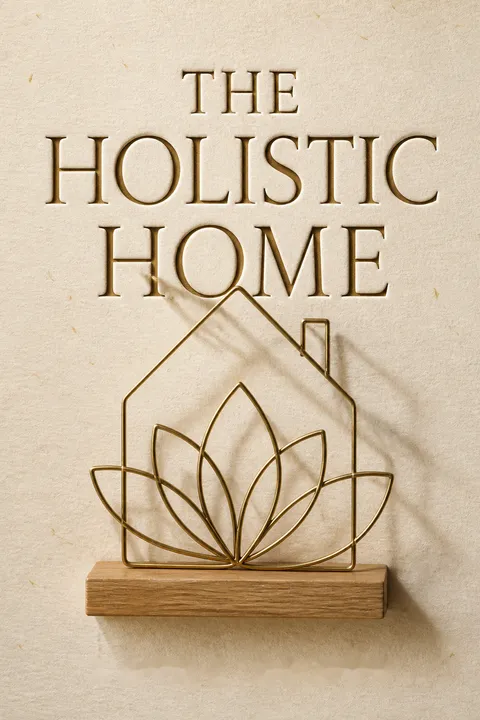
A whole-person approach. Benko calls this a Holistic Home: an approach that considers mind, body, spirit, and space together. It combines practical design and organization with personal intention and Feng Shui. The point is not to copy a decorative style or buy prescribed objects, but to make changes that fit the occupant and their aims.
The strongest version of this idea is modest and useful: rooms influence what people notice, how easily they act, and whether daily routines feel supportive. Benko’s corrected diagnosis also marks an important boundary. Her story does not show that rearranging a home treats cancer, and readers should not substitute symbolism for medical care. The home is best understood as one influence in a larger life, not a hidden medical instrument. That distinction preserves the value of environmental change without asking it to prove more than it can.
Clear clutter by changing the fear that keeps bringing it back.
Clutter has a backstory. Benko argues that removing objects without examining why they accumulated often produces only temporary order. She distinguishes physical clutter from mental clutter, such as indecision and worry, and spiritual clutter, the emotional weight she associates with a home’s atmosphere. Her client Karen had piles of broken furniture she hoped to repair. As her mother’s terminal illness worsened, Karen recognized that each broken item reflected her wish to fix what she could not control.
Begin with a small, honest task. Identify the feeling attached to the pile, then work in manageable stages. Keep, repair, give away, or discard objects according to their use and personal value. Benko suggests starting with a drawer or one room, rather than attempting a dramatic whole-house purge that could overwhelm someone already struggling.
The useful move here is turning cleanup into inquiry: what does this object help someone avoid, remember, or feel safe from? That question can make a practical task emotionally intelligible. But clutter is not a reliable diagnosis of fear or character. Limited time, money, mobility, grief, and caregiving can all shape a home. A compassionate approach asks what support is needed before assigning a psychological meaning. The aim is less shame and more choice, not a spotless room treated as proof of personal virtue.
Read your home's symbols as personal prompts, not universal diagnoses.
Objects carry associations. Benko invites readers to examine how art, furniture, photographs, and everyday arrangements feel to the people who live with them. In one consultation, a client described feeling alone in a room full of people. Her home displayed dozens of photographs of faces, creating a visual crowd that seemed to echo her unease. The arrangement gave them a concrete place to explore the feeling, though it cannot establish what caused it.
Personal meaning matters most. A mountain painting might encourage one person because it recalls a hard-won achievement, while another person could see the same image as daunting. Benko therefore rejects automatic prescriptions, such as adding a particular color or traditional object regardless of the occupant’s taste. Ask what an object means to you, and whether it supports the life you want to lead.
This approach is most persuasive when symbolism functions as a reflective tool. A room can make an unspoken preference visible, much as a journal entry gives shape to a vague concern. The interpretation should remain a hypothesis, not a verdict delivered by a consultant. The photograph-filled room, for example, may prompt a useful conversation, but the pictures do not prove the source of loneliness. Residents retain authority over their own meanings, and that makes the method more humane as well as more credible.
Use the bagua as a question map, not a verdict about fate.
A grid for reflection. The Bagua map divides a space into nine sections, or guas, associated with areas such as health, career, relationships, and creativity. In the school Benko practices, the map is aligned with the entrance, then placed over a floor plan, room, or property. She uses it to focus attention on particular parts of a home and the concerns occupants bring to a consultation.
Look for balance, not magic objects. The Five Element Theory describes Wood, Fire, Earth, Metal, and Water through cycles of support and control. Benko recalls a client whose home contained much Metal and little Wood; she suggested adding plants and green accents. These ideas can offer a design vocabulary, but a cluttered relationship area does not prove that a relationship is doomed. Treat the map as a prompt for observation and action, not a predictive instrument.
Maps are powerful partly because they organize attention. The bagua gives a reader a repeatable way to inspect a space, then connect observations to goals. Its structure is not the same as evidence that a room sector controls money or health. That distinction matters because the framework can still be useful without literal causation: a neglected corner may reveal deferred maintenance, or simply become a chosen place to begin. The practical benefit lies in focused reflection and follow-through, not in treating the grid as a guarantee.
Arrange your bed, desk, and stove to feel less vulnerable.
Choose a stronger vantage point. Benko gives particular attention to the bed, desk, and stove because people spend substantial time using them. Her preferred desk position lets a seated person see the entrance without sitting directly in line with it, with a solid wall behind. A bed should ideally allow the sleeper to see the door and have space around it. At the stove, the cook should be able to notice someone entering the room.
Small changes can matter. Benko describes a corporate arbitrator who made sure her team faced the door during negotiations, regarding that arrangement as a position of advantage. The practical logic is straightforward: visibility and support can reduce the feeling of being caught off guard. If a layout cannot be changed, she suggests a mirror as a way to see behind you.
These recommendations translate a traditional design principle into an everyday question: does the arrangement help a person feel oriented and in control? That is a plausible benefit even without accepting claims that furniture placement predicts promotion, finances, or relationship outcomes. The arbitrator’s example shows that people deliberately manage seating when status and attention matter. Still, a confident view of the doorway cannot replace preparation, fair workplace conditions, or clear communication. The layout can support agency, but it cannot create authority on its own.
Balance a room's energy for its purpose, not a gender stereotype.
Different rooms ask for different moods. Benko uses Yin and Yang to describe complementary qualities: Yin is quieter, softer, and more restful; Yang is brighter, more active, and more stimulating. A bedroom might benefit from softness and subdued light, while a kitchen or playroom can support more activity. The goal is not an identical mix everywhere, but enough contrast for the room’s use and its occupants’ needs.
Change what feels missing. Benko’s client George lived in a sharply angular, brightly lit apartment and wanted a more inviting home. She suggested softer fabrics, rounded forms, warmer colors, flowers, and gentler lighting. He made the space his own and later began a relationship. The story illustrates how design can invite different experiences, not proof that decor alone produced the relationship.
Yin and Yang work best here as a flexible vocabulary for contrast, rather than fixed labels for women and men. A person may need stimulation in one context and quiet in another, and a room can change as household routines change. George’s story makes the point vividly, but its sequence does not establish cause and effect: a softer apartment may have helped him host or feel more at ease, while other factors shaped his dating life. The useful question is whether the environment matches the activity and the person.
Decorate in your own voice, not someone else's polished version of you.
A home should feel inhabited. Benko contrasts soulful spaces with rooms that look staged or furnished entirely by someone else. The concern is not professional design itself, but losing the resident’s voice in the process. Her client Jane initially admired a designer’s finished home, then realized she did not care about its green palette or collection of antique car horns. After moving, Jane decorated her new condo herself and felt more at home in it.
Design for the life ahead. Benko recommends choosing objects for personal meaning, usefulness, and genuine enjoyment, while leaving room for change. A home need not be finished immediately or follow a single style. Make space for interests and routines you want to cultivate, and update the surroundings as needs evolve. A comfortable home is not a showroom; it is a place that supports the people who live there.
The chapter’s most valuable claim is about authorship. Making choices, even imperfect ones, can build a sense of ownership that a flawless room selected by someone else may not provide. This does not mean residents must do everything themselves: a designer can help translate needs into a workable plan. The key is whether the process preserves the client’s agency. A useful design question is not simply whether a room looks coherent, but whether its occupants recognize their habits, relationships, and preferences in it.
Make sustainability practical: own less, maintain more, and build daily rituals.
Care is part of design. Benko broadens sustainability beyond recycling to include simpler routines, timely repairs, natural materials, and reducing unnecessary consumption. She notes that a leaking faucet can waste about 10,000 gallons of water in a year, and argues that putting off repairs can burden both a home and its occupants. Her client Bea Johnson describes a zero-waste household organized around experiences and relationships rather than accumulating things.
Let the home support habits. Johnson’s family gathers at the dining table for work, meals, conversation, and a shared expression of gratitude. Benko also recommends making the home easier to maintain and limiting electronics in bedrooms. These actions connect environmental care with emotional comfort: fewer possessions mean less to store and manage, while repeated rituals give shared spaces a purpose.
This is the book’s most grounded version of sustainability because it links values to ordinary maintenance and consumption. A repair prevents a small problem from becoming a larger one, while buying less can reduce both household burden and material demand. Rituals may deepen a sense of care, but they are not a substitute for measurable environmental choices such as energy use, durable products, and waste reduction. The strongest approach combines both: design habits that feel meaningful, then check whether they also reduce harm or make daily life more workable.
Design shared spaces around the vulnerable person's actual experience.
Atmosphere affects a visit. Benko contrasts a cancer center waiting room she found cold, crowded, and impersonal with thoughtfully designed destinations such as a shopping center and a resort. For the hospital, she proposed better seating, cleaner check-in surfaces, water, calming imagery, and plants suited to the setting. Her point is that people arriving for care may already be anxious, so the environment should not add avoidable stress.
Details communicate priorities. At the shopping center, landscaping, clear directions, attentive service, and community support worked together to create a welcoming experience. At the resort, restrained signage and care for the surrounding land helped make the setting feel calm. These examples suggest that holistic design is not just an attractive room. It considers how people arrive, move, wait, receive help, and feel while they are there.
The comparison turns personal home design into a broader question of institutional responsibility. In a hospital, comfort is not a decorative luxury when patients are waiting in pain or uncertainty; clear communication, seating, and respectful service are functional parts of care. By contrast, a resort can use quiet discovery to create pleasure because guests arrive with different needs. Good design therefore begins with context and power: who has the least control in this space, and what would make their experience safer, clearer, or more dignified?
Analysis
The book’s lasting contribution is a practical method for making the home legible. Clutter, a blocked doorway, an unusable desk, or a room that feels borrowed can become a starting point for asking what is not working in daily life. The method is compelling because it turns abstract intentions into visible decisions: clear a surface, move a chair, make room for a partner, repair a leak, or create a place for family meals. It connects attention to action.
Its framework also moves between different kinds of claims. Some are readily plausible as design advice: clear pathways can improve usability, a visible entrance can reduce surprise, and personal objects can make a home feel more familiar. Other claims, such as a particular floor-plan sector influencing finances or an element imbalance mirroring illness, are presented through Feng Shui symbolism and client stories rather than demonstrated causal evidence. Those ideas can function as reflective metaphors, but they should not be mistaken for diagnosis, prediction, or treatment.
That distinction is especially important in a book that opens with cancer. Benko’s own story includes an initial diagnosis that was corrected, along with regular medical care. The responsible reading is not that environmental adjustments cured disease, but that the process helped her build a meaningful practice and attend to how she lived. Readers can keep the book’s most useful discipline while declining unsupported certainty: examine the space, notice what it makes easy or difficult, and test changes against lived results.
The most coherent principle is therefore not that a home controls fate, but that it participates in behavior. A room can reinforce routines, display priorities, or expose friction. When occupants treat these signals as invitations to investigate rather than proof of hidden forces, Feng Shui becomes a personalized design language, and the Holistic Home becomes an evolving project of care rather than a promised shortcut to health, wealth, or love.
Review Summary
Readers generally praise The Holistic Home for its practical and flexible approach to Feng Shui, emphasizing personalization over rigid rules. Many appreciate Benko's holistic perspective, combining traditional Feng Shui with modern wellness concepts. The book offers helpful tips on decluttering, organizing, and creating a harmonious living space. While some find certain ideas challenging to implement, most readers value the insights on how home decor can reflect and influence one's life. A few critics note scattered organization and promotional content in later chapters, but overall, the book is well-received for its fresh take on home design.
People Also Read







Glossary
Holistic Home
Integrated home and wellbeingBenko’s approach to shaping a living space in relation to its occupants’ mental, physical, emotional, and spiritual lives. It combines practical design, organization, wellness, sustainability, psychology, and Feng Shui. The aim is to create a home that reflects its residents and supports their needs, rather than follow one prescribed aesthetic or depend on symbolic objects alone.
Bagua map
Nine-part spatial guideA Feng Shui grid divided into nine sections, each associated with a life area such as health, career, relationships, or creativity. In the school Benko uses, the grid is aligned with the entrance and placed over a floor plan, room, or property. She uses it to organize attention and suggest areas for reflection or adjustment.
gua
Bagua map sectionOne of the nine divisions of the Bagua map. Each gua corresponds to a life area and, in Benko’s account, has related colors, elements, and sometimes body associations. The term is used within her Feng Shui method to identify a location on a room or floor plan, not as a standard architectural category.
chi
Feng Shui life energyA central Feng Shui concept referring to the energy or vitality understood to move through people and spaces. Benko discusses chi through the flow and atmosphere of a home, connecting it to such practical features as lighting, clear pathways, and maintenance. In this adaptation, it is treated as specialized Feng Shui language, not a measured physical force.
Five Element Theory
Five-phase balance frameworkA traditional Chinese framework involving Wood, Fire, Earth, Metal, and Water. Benko describes each element through associations with colors, shapes, seasons, emotions, and body systems, as well as cycles in which elements support or control one another. She applies the framework to home design and personal reflection; its symbolic associations should not be read as medical evidence.
Yin and Yang
Complementary opposing qualitiesA Chinese philosophical framework for understanding paired, interdependent qualities that change and balance one another. Benko applies it to design: quieter, softer, more restful qualities are Yin, while brighter, more active, stimulating qualities are Yang. A room’s balance is considered in relation to its purpose and occupants, rather than treated as a fixed formula.
commanding position
Visible, supported placementBenko’s term for arranging a bed, desk, or stove so that the person using it can see the entrance without being directly aligned with it, ideally with support behind them. She presents the arrangement as a way to feel more oriented and less vulnerable. It is a design recommendation, not a guarantee of success or safety.
Clearing ceremony
Intentional space-clearing ritualA ritual Benko describes for marking a fresh start in a home. Her version involves opening windows, letting in light, moving through the space with sage or another preferred material, and stating what the occupants wish to release or welcome. The practice combines sensory change and personal intention; it does not establish that a home contains objectively detectable residual energy.
Download PDF
Download EPUB
.epub digital book format is ideal for reading ebooks on phones, tablets, and e-readers.








