

Key Takeaways
See everyday cheating as a bargain with your self-image, not a calculation.
Two motives collide. Dan Ariely tests the Simple Model of Rational Crime, which predicts that people cheat by weighing the gain against the chance and cost of being caught. In a task with 20 simple number puzzles, participants who could destroy their answer sheets reported solving about six, while those whose sheets were checked solved about four. Raising the possible reward or making detection less likely did not substantially increase cheating. Most people took a small advantage, not the maximum available.
The inner compromise. Ariely calls this the fudge factor theory: people want the benefit of cheating and also want to see themselves as honest. They bend the truth only as far as they can explain away. At a performing arts center, installing basic sales records stopped losses that had continued even after a suspected thief was fired. The problem was many small, self-justified takings, not one villain.
The central shift is from asking whether people are honest to asking how they preserve an honest identity while bending a rule. That helps explain why stronger penalties may miss everyday misconduct: the person may not experience the choice as a deliberate crime. The framework also points toward institutional design, since clearer records and less ambiguity can reduce opportunities for self-excuse. Still, the experiments use modest stakes and short tasks. They illuminate a plausible mechanism, not the total amount of dishonesty in workplaces or society.
Put moral reminders at the exact moment temptation becomes actionable.
Timing matters. In one experiment, participants who first tried to recall the Ten Commandments did not cheat on the puzzle task, while those asked to recall books they had read showed the usual small amount of cheating. The effect appeared even though participants could not recall all ten commandments. By contrast, Princeton students who had received extensive honor-code training cheated when the code was not made salient just before the task. A reminder at the point of choice mattered more than a general ethics lesson delivered earlier.
Sign before reporting. In a tax-like experiment, people who signed a form before filling it in exaggerated their puzzle scores and travel expenses less than people who signed at the end. An insurance company test found a similar pattern: customers who signed an odometer form first reported an average of 26,100 miles, compared with 23,700 for those signing last. The true mileage was unknown, but the early signature reduced reported mileage.
These findings suggest that ethical conduct can depend on what is mentally present at the moment of decision, much as a checklist keeps a pilot focused on a safety-critical step. The useful design principle is not to lecture people about virtue, but to place a meaningful prompt directly beside the tempting action. A reminder can also become ceremonial if repeated without thought, so its wording and placement matter. The evidence supports a low-cost nudge, not a claim that reminders permanently change character.
Bring abstract transactions closer to the money and people they affect.
Distance loosens restraint. In an informal dorm test, cans of cola disappeared from shared refrigerators, but dollar bills left nearby were untouched. In a controlled version, participants cheated about twice as much when they received plastic tokens that could be exchanged for cash a few seconds later as when they received cash directly. The token made the dishonest act feel less like taking money.
Make consequences tangible. Ariely argues that noncash systems, abstract financial products, and indirect billing can make it easier to overlook who pays for a dishonest choice. The golf survey offered another example: players judged moving a ball with a club more acceptable than picking it up and placing it, even though both actions improved its position. The more indirect the action felt, the easier it was to invent a harmless explanation. Clear links between an action, its cost, and its recipient can narrow that gap.
This is a useful way to think about digital payments, complex fees, and workplace reimbursements: abstraction can make a transfer feel like bookkeeping rather than a decision with human consequences. Product and interface design can restore salience by showing the amount, the recipient, and the reason for a charge together. Yet direct contact with cash is not a moral cure. A person can still knowingly exploit someone face to face, while legitimate indirect systems often improve access and security. The design challenge is to reduce needless distance without confusing convenience with dishonesty.
Separate professional advice from rewards that quietly bias judgment.
Good intentions can tilt judgment. A dentist who bought an expensive crown-making machine began recommending crowns for harmless enamel lines. Ariely does not suggest that the dentist consciously chose profit over patients. Rather, the investment could make the treatment seem more valuable in the dentist's own eyes. Small gifts and payments can work similarly: in an art-rating study, people preferred works associated with the gallery that had paid them, even when they denied being influenced.
Disclosure is not a cure-all. In an adviser experiment, people with a financial incentive recommended a jar of coins was worth more than unbiased advisers estimated. When required to disclose that incentive, they inflated the estimate further; clients discounted the advice, but not enough to offset the added bias. Reduce conflicts where feasible, set decision rules in advance, and seek an independent second opinion for consequential choices.
The important insight is that bias does not require a dishonest professional. Incentives can shape what seems reasonable before anyone consciously weighs self-interest. This connects to the principal-agent problem, where one party makes decisions for another while holding different incentives and better information. Disclosure can help clients interpret advice, but it also risks making the adviser feel licensed to be more biased. Structural separation, independent review, and precommitted standards can do more than asking either side to rely on good intentions.
Schedule hard ethical choices before fatigue weakens your resistance.
Mental strain changes choices. In a study, participants asked to remember a seven-digit number chose chocolate cake more often than those remembering a two-digit number, who more often chose fruit. In another experiment, writing without common letters required repeated effort to suppress ordinary word choices. Those participants later claimed about three extra puzzle answers, compared with about one extra answer among participants given an easier writing task.
Protect the decision point. In a quiz study, depleted participants were more likely to select a premarked answer sheet that made cheating easier; together, their greater exposure to temptation and greater cheating led to almost three times the payment of the nondepleted group. A study of Israeli parole decisions also found more favorable rulings early in the day and after breaks. Put demanding decisions earlier when possible, and remove tempting shortcuts rather than expecting tired people to resist them.
The practical message is stronger than simply telling people to try harder: conserve attention and design away avoidable temptations. Fatigue can impair judgment across domains, making time of day and task load relevant to ethical as well as medical or financial decisions. The chapter's muscle-like account of willpower is memorable, but the experiments do not establish that self-control is a literal fuel tank that always empties in the same way. Sleep, stress, attention, and decision complexity may all contribute. The behavioral warning remains useful even if the mechanism is more than depletion alone.
Treat the first dishonest shortcut as a warning, not a harmless exception.
Clothing can signal inward. In an experiment, women were told that designer sunglasses were either authentic or counterfeit, although all the glasses were real. About 30 percent of those told they wore authentic glasses overstated their puzzle scores, compared with 74 percent told theirs were fake. The group given no information fell between them, at 42 percent. Ariely calls this self-signaling: people infer something about their own character from their actions and possessions.
Small lapses can spread. In a second task, people wearing glasses described as counterfeit cheated more, and some shifted from occasional cheating to cheating whenever the chance arose. The pattern resembled the what-the-hell effect, in which one violation makes further violations easier to excuse, as when a dieter abandons the plan after one indulgence. The experiment does not prove that every counterfeit purchase leads to wider misconduct. It does suggest that a knowingly dishonest act can alter how a person interprets the next one.
The deeper point is that behavior can shape identity, not merely express it. A small transgression may become evidence in a person's private story about what kind of person they are, lowering the psychological cost of another lapse. This resembles moral licensing, where a person treats one action as permission for another, although the studies here focus on dishonesty and self-perception. The counterfeit experiment used an artificial label and a narrow task, so it should not be read as a diagnosis of consumers. Its practical value is as a warning to address early misconduct before it becomes routine.
Audit your own stories; creativity can make self-serving choices feel principled.
We explain ourselves after acting. When women chose among identical pairs of stockings, they favored one position but gave reasons involving texture or quality, not placement. Ariely uses this kind of result to show how readily people invent plausible accounts of decisions whose real causes they cannot identify. In a test with an answer key, participants who used it to improve their scores later predicted that they would perform better on a new test, even when money rewarded accurate predictions. They had partly absorbed the inflated score as evidence of ability.
Creativity can rationalize. In tasks with ambiguous answers and incentives to misreport, people who rated themselves as more creative cheated more; intelligence did not predict cheating in the same way. Making answer-key use explicit, by requiring a deliberate cursor movement, stopped participants from taking unearned credit for their scores. Record the rule, the evidence, and the decision before seeing the outcome.
Ariely's account is a warning against treating confidence as proof of accuracy. People can sincerely believe explanations that protect their interests, especially when evidence is ambiguous. The suggested practice of documenting criteria before seeing results resembles preregistration in research and audit trails in organizations: both make post hoc storytelling harder. Creativity itself is not a vice; it is valuable for generating solutions. The risk arises when imaginative reasoning is used asymmetrically, expanding possibilities for one's own benefit while holding others to stricter standards.
Treat visible misconduct as a norm-setting event, not an isolated exception.
People copy their group. At Carnegie Mellon, an actor pretended to solve all 20 puzzles almost instantly, shredded his sheet, and left with the full payment. Participants who saw him, believing he was one of them, claimed about 15 correct answers on average, far more than those who only had an opportunity to cheat. When the actor wore a University of Pittsburgh sweatshirt, signaling that he belonged to a rival group, participants claimed about nine. Simply hearing that cheating was possible did not produce the same increase.
Small signals accumulate. A class pledge against laptop distractions worked at first, but students increasingly used unrelated websites after seeing classmates do so. The book compares this gradual shift to the Broken Windows Theory: promptly correcting minor visible disorder may prevent it from becoming normal. Publicly noticed honesty can also set a standard, not only misconduct.
The experiment distinguishes information about enforcement from information about belonging. Watching an in-group member cheat can communicate that the behavior is socially acceptable, which may matter more than the knowledge that punishment is unlikely. This is why managers and respected peers have influence beyond their formal authority: their actions help define local norms. The contagion metaphor should not be taken literally, and a lab performance cannot establish the scale of real-world spillovers. It does make a strong case for responding consistently to visible misconduct and making ethical behavior visible too.
Design teams so loyalty cannot quietly become permission to cheat.
Helping can enable harm. In a team version of the puzzle task, participants exaggerated their scores more when a partner would share the financial benefit. When participants were closely watched by a silent partner, cheating disappeared. But when partners could socialize and become friendly, their shared interest outweighed the monitoring effect, and reported scores rose by about four extra answers. Cheating increased further when the dishonest act benefited only the partner, giving the cheater a purely altruistic excuse.
Separate care from control. The team experiments suggest that trust and oversight are not opposites, but that social closeness can make rationalizations easier. Ariely also describes data on dental treatment in which long-standing patients were more likely to receive expensive white fillings in less visible teeth, despite cheaper, more durable alternatives. Maintain independent review for consequential decisions, and avoid making one close-knit group solely responsible for both approving and benefiting from its own work.
Collaboration produces genuine goods, including mutual support and shared knowledge, but it also creates a moral cover: a questionable choice can be framed as loyalty to colleagues or clients. This is a distinctive challenge for organizations that reward team outcomes while obscuring individual responsibility. Independent review can interrupt that dynamic, particularly when reviewers have no social or financial stake in the team's success. The evidence does not imply that teams are inherently corrupt, and intense monitoring can be costly. The aim is targeted accountability, not a workplace built on suspicion.
Audit routine gray areas, because small cheats outnumber spectacular fraud.
Ordinary dishonesty adds up. Across Ariely's experiments, a few participants cheated maximally, but many more exaggerated by a little. He argues that the aggregate cost of small acts, such as inflated expenses or exaggerated insurance claims, can exceed losses from rare, dramatic theft. In the basic puzzle task, participants in several countries showed similar average cheating. That does not mean cultures are identical: local norms determine which acts count as dishonest and how much bending feels acceptable. In one comparison, Wall Street bankers cheated about twice as much as junior congressional staffers.
Build in a reset. The book recommends fixing minor breaches early, using timely reminders, clear controls, independent checks, and visible examples of honesty. It also describes religious and secular rituals that let people acknowledge a mistake and begin again. A household freezer lock, paired with trust and a new responsibility for a maid who had been taking meat, helped stop the stealing. Accountability works best when it makes correction possible, not merely punishment inevitable.
The conclusion is neither that people are naturally virtuous nor that they are hopelessly corrupt. Most people pass up many chances to take what is not theirs, yet routine ambiguity gives small acts room to multiply. The distinction between shared human tendencies and locally defined norms is important: a laboratory task can reveal a mechanism without measuring corruption in a country or profession. The most useful response is therefore specific. Map recurring gray areas, make responsibility visible, and create credible ways to repair behavior before minor exceptions harden into organizational practice.
Analysis
Ariely's most valuable contribution is a change in the unit of analysis. Dishonesty is not presented mainly as a contest between a rational criminal and an effective police force. It is a recurring negotiation between material advantage and the wish to retain a decent self-image. The experiments make this negotiation concrete: people commonly take a modest advantage, while the size of the reward or the chance of detection often matters less than intuition predicts. That model explains why ambiguous rules, indirect transactions, conflicts of interest, exhaustion, and group norms are not peripheral details. They are the conditions that make self-justification easier or harder.
The book is also strongest when it turns psychology into design. A timely reminder, a signature before a claim, explicit evidence of who pays, independent review, or a rule established before results are known can change the choice architecture without assuming that people will become saints. These interventions are practical because they target the moment and mechanism of temptation rather than relying on abstract ethical education.
There are important limits. Most experiments use short, relatively low-stakes tasks, often with students, and measure self-reported behavior under constructed conditions. They show that a mechanism can operate, not how much it explains in a real corporation or how reliably it generalizes across settings. The language of a fudge factor can also overemphasize individual psychology. Large-scale fraud is shaped by power, incentives, governance, and the distribution of risk, not just by a person's private self-image. A worker and an executive may both rationalize, but they do not have equal authority or consequences.
The strongest application is therefore two-level: help individuals notice their own rationalizations, and redesign institutions so that ethically consequential choices are clear, reviewable, and separated from personal gain. This preserves the book's humane premise, that ordinary people can drift into misconduct, while avoiding the comforting mistake of treating structural failures as merely a collection of personal lapses.
Review Summary
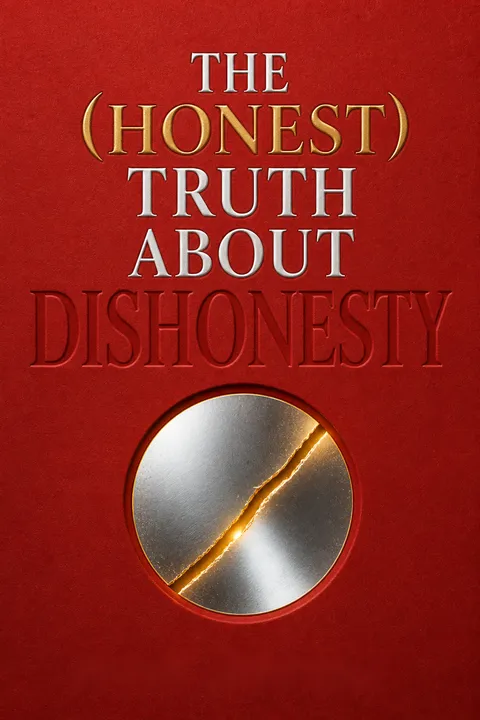
The (Honest) Truth About Dishonesty explores human dishonesty through behavioral experiments. Ariely argues that people cheat moderately to benefit themselves while maintaining a positive self-image. The book discusses factors influencing dishonesty, such as altruism, creativity, and social influences. Readers found the content thought-provoking and accessible, praising Ariely's writing style and experimental approach. Some critics felt the book was repetitive or lacked depth in certain areas. Overall, it offers insights into human behavior and decision-making, though its impact may vary depending on readers' prior knowledge of behavioral economics.
People Also Read






Glossary
Simple Model of Rational Crime (SMORC)
Crime as cost-benefit calculationA model in which a person decides whether to commit an offense by comparing its expected benefit with the likelihood of being caught and the severity of the punishment. Ariely uses it as a contrast to the psychological forces he studies, arguing that it does not adequately explain much everyday cheating.
fudge factor theory
Self-image limits small cheatingAriely's account of how people balance the desire to gain from dishonesty against the desire to see themselves as honest. People can rationalize a limited amount of cheating while protecting their moral self-image. The amount they can explain away is the fudge factor, which expands or shrinks with features of the situation.
self-signaling
Actions inform self-imageThe idea that people infer their own character, preferences, or abilities from observing their behavior, much as they infer those qualities in other people. A person may treat an action as evidence of being generous, honest, or capable, even when the action does not objectively establish that identity.
ego depletion
Self-control weakened by effortThe term used in the book for reduced ability to resist temptation after effortful self-control or demanding mental tasks. Ariely describes it through experiments in which participants who faced a taxing task later cheated more or chose a tempting opportunity more often. The book presents self-control as a limited resource, though the precise mechanism is not settled by these experiments.
what-the-hell effect
One lapse licenses moreA pattern in which an initial violation of a personal standard makes further violations easier to justify. The book compares it to a dieter who abandons the whole plan after one indulgence. In experiments involving counterfeit-labeled glasses and repeated opportunities to cheat, some participants shifted from occasional cheating toward taking every available opportunity.
social utility
Value placed on others' welfareThe motivation to help or benefit other people, including people with whom one feels connected. Ariely notes that concern for others can encourage generosity, but it can also rationalize dishonesty when cheating benefits colleagues, teammates, or friends. In that case, a person may understand a rule-breaking act as an act of loyalty or help.
the matrix task
Puzzle-based cheating measureAn experiment used throughout the book to measure small-scale dishonesty. Participants solve simple number puzzles under time pressure and are paid for correct answers. Researchers compare verified scores with scores participants report when they can destroy their worksheets, revealing how much people overstate their performance when given an opportunity to cheat.
FAQ
What's The Honest Truth About Dishonesty about?
- Exploration of Dishonesty: The book examines the psychology behind why people lie, cheat, and deceive themselves and others. It delves into the motivations and social influences that lead to dishonest behavior.
- Behavioral Economics Focus: Dan Ariely uses behavioral economics to explain how traditional rational models fail to capture the complexities of human dishonesty.
- Real-World Examples: Ariely supports his theories with experiments and anecdotes, illustrating how common dishonesty is and how it can be influenced by context and social norms.
Why should I read The Honest Truth About Dishonesty?
- Understanding Human Behavior: The book provides insights into the commonality of dishonesty, encouraging readers to reflect on their own moral choices.
- Practical Applications: Ariely offers advice on creating environments that promote honesty, relevant for both personal and professional settings.
- Engaging Writing Style: Written in an accessible manner, the book uses humor and anecdotes to make complex psychological concepts easy to grasp.
What are the key takeaways of The Honest Truth About Dishonesty?
- Dishonesty is Widespread: Ariely emphasizes that dishonesty is a common human behavior influenced by various factors, not just a trait of a few individuals.
- Fudge Factor Theory: This concept explains how people rationalize small dishonest acts to maintain a positive self-image.
- Influence of Environment: The book highlights how social norms and the presence of others can significantly impact our likelihood to cheat or act honestly.
What is the "Fudge Factor" in The Honest Truth About Dishonesty?
- Definition of Fudge Factor: It refers to the mental gymnastics people perform to justify minor dishonest actions while still viewing themselves as good individuals.
- Rationalization Process: Individuals often cheat just enough to benefit without crossing a moral line, maintaining their self-perception as honest.
- Real-Life Implications: This concept is crucial for understanding behaviors in various contexts, from tax reporting to academic integrity.
How does cognitive load affect dishonesty according to The Honest Truth About Dishonesty?
- Cognitive Load Explained: It refers to the mental effort required to process information, which can diminish ethical decision-making when individuals are mentally taxed.
- Experiment Findings: Ariely's experiments show that participants under cognitive load are more likely to make poor decisions, such as choosing unhealthy food options.
- Implications for Self-Control: When people are overwhelmed or tired, they are more susceptible to temptation, leading to increased dishonesty.
What role do conflicts of interest play in dishonesty in The Honest Truth About Dishonesty?
- Definition of Conflicts of Interest: These occur when personal interests interfere with professional responsibilities, often leading to biased decision-making.
- Impact on Professionals: Ariely illustrates how professionals may prioritize financial gain over clients' best interests due to these conflicts.
- Awareness and Regulation: The book emphasizes the need for awareness and suggests regulations to minimize their impact on ethical behavior.
What is the "What-the-Hell" effect mentioned in The Honest Truth About Dishonesty?
- Definition of the Effect: It describes a phenomenon where individuals, after making one small transgression, feel justified in committing further dishonest acts.
- Connection to Self-Image: Once a moral boundary is crossed, individuals may abandon their ethical standards, leading to a cascade of dishonest behavior.
- Real-Life Examples: Ariely connects this effect to dieting, where one indulgence can lead to a complete abandonment of dietary goals.
What experiments does Dan Ariely conduct in The Honest Truth About Dishonesty?
- Matrix Task Experiment: Participants can report inflated scores after shredding their answers, revealing how people cheat just a little when given the opportunity.
- Cognitive Load Studies: These studies show how cognitive load affects decision-making, leading to increased dishonesty.
- Self-Signaling with Fashion: Ariely explores how wearing counterfeit products influences self-perception and ethical behavior.
How does The Honest Truth About Dishonesty explain the role of social norms in dishonesty?
- Social Influence: Observing others engage in dishonest behavior can lead individuals to justify their own dishonest actions.
- In-Group vs. Out-Group Dynamics: People are more likely to cheat when they see members of their in-group behaving dishonestly.
- Impact of Monitoring: The presence of monitoring can counteract the influence of social norms, as individuals are less likely to cheat when watched.
How does the book address the concept of self-deception?
- Definition of Self-Deception: It is the process by which individuals convince themselves they are more honest than they truly are.
- Impact on Performance: Self-deception can lead to overestimating one's abilities, creating a cycle of dishonesty and inflated self-worth.
- Strategies to Combat Self-Deception: Increasing awareness and using moral reminders can help individuals make more honest choices.
What role does creativity play in dishonesty according to The Honest Truth About Dishonesty?
- Link Between Creativity and Dishonesty: Creative individuals are often better at rationalizing their dishonest actions.
- Experiments on Creativity: When participants are primed to think creatively, they are more likely to cheat.
- Implications for Society: The relationship raises questions about encouraging ethical creativity in various fields.
How can we reduce dishonesty in society based on the findings in The Honest Truth About Dishonesty?
- Moral Reminders: These can help individuals stay accountable to their values and reduce dishonest behavior.
- Monitoring and Accountability: Increasing oversight in environments where dishonesty is likely can deter unethical behavior.
- Cultural Change: Promoting a culture of honesty and integrity can help shift social norms towards more ethical behavior.
About the Author
Other books by Dan Ariely





Download PDF
Download EPUB
.epub digital book format is ideal for reading ebooks on phones, tablets, and e-readers.








