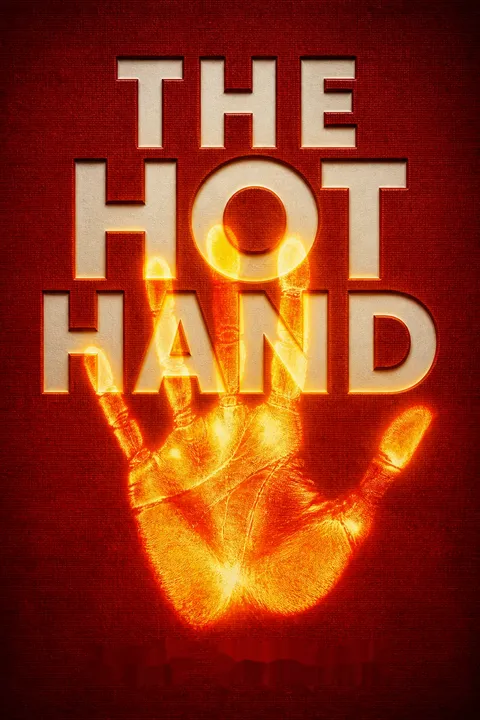


Key Takeaways
Treat streaks as hypotheses: skill sometimes rises, while randomness impersonates patterns.
The book’s hinge. A hot hand is a temporary rise in performance that makes someone more likely to succeed again. The author’s own high-school shooting run felt like magic; Stephen Curry’s 54-point game at Madison Square Garden made the same feeling visible on a grander stage. Yet decades of research once concluded that basketball players and fans were imagining the effect. Newer analysis found evidence that they were sometimes right. The answer is not that every streak signals a genuine change in ability, or that streaks are always imaginary. It depends on how outcomes are generated and whether performance or circumstances change.
Context changes the odds. Curry’s shooting, a roulette wheel, and a farmer’s harvest do not follow the same rules. A streak can reflect improving performance, an opponent’s response, random clustering, or several forces at once. The useful question is not simply whether streaks exist, but when recent success provides information about the next attempt.
What’s striking is how the book replaces a binary argument with a question about mechanisms. In causal reasoning, a run of outcomes matters only if it tells something about changing ability, conditions, or behavior. A sequence by itself cannot do that work. The same discipline helps outside sports: a salesperson’s winning month, for example, might reflect skill, a favorable market, or a lucky run of customers. The framework is powerful precisely because it resists a universal rule. Its limit is that identifying the mechanism can be harder than noticing the streak.
Expect random sequences to clump, not alternate like a tidy playlist.
Random rarely looks orderly. Spotify’s shuffle feature used a genuinely random algorithm, but listeners complained when songs by one artist played back-to-back. The company changed the system to distribute each artist’s songs more evenly. The result felt more random to listeners, although it was less random mathematically. People expect a random playlist to alternate neatly, just as they expect coin tosses to avoid long runs.
Small samples mislead. Psychologists Daniel Kahneman and Amos Tversky called the tendency to draw confident conclusions from too few observations the law of small numbers. In one study, both UCLA students and Shuar foragers expected fruit trees to be clumped, consistent with how resources occur in nature. The students also treated coin tosses as if they might form runs. Our pattern-seeking minds can be useful in a world of clustered resources, but they can also mistake noise for a signal.
The shuffle example exposes a useful distinction between statistical randomness and randomness that feels plausible to a person. A product can be mathematically correct and still frustrate users because their expectations are shaped by familiar patterns. Similar tensions arise in dashboards, classroom examples, and public communication about risk: showing raw randomness may invite people to invent a story, while smoothing it can conceal real variation. The practical lesson is not to distrust intuition entirely, but to ask whether the pattern comes from the process or from the mind interpreting it.
Separate a player’s hot streak from a roulette wheel’s independent run.
Two opposite mistakes. The hot-hand fallacy is the belief that success makes another success more likely, even when outcomes are independent. The gambler’s fallacy runs the other way: after several reds at roulette, a bettor expects black because the wheel seems overdue to balance itself. In casino records covering 24,131 bets, players increasingly bet against long runs of the same roulette result. Yet they also tended to keep playing after wins and to place more bets after winning.
Agency changes intuition. People treat a skilled person as if success can feed on itself, but they expect an impersonal mechanism to correct its recent imbalance. Those beliefs can coexist in the same gambler. The distinction matters: a basketball player can change effort, shot selection, or confidence, while a fair roulette wheel does not remember its last spin.
The contrast is a compact lesson in how people assign causes. When a person acts, observers readily imagine momentum or intention; when a machine produces outcomes, they expect a balancing force. Neither intuition is a dependable statistical test. A useful extension is to ask whether the system has memory: does the previous outcome alter the next attempt, or does it merely feel as if it should? Even that question needs care, because human systems can be partly independent and partly responsive. A shooter’s confidence may change while the shot remains difficult.
When skill responds to success, change the strategy, not just the forecast.
The game can change. Mark Turmell built NBA Jam around a simple reward: make several shots in a row, and the player catches fire, with the game treating the next attempt as nearly certain to go in. The arcade game made a streak feel like a superpower. Stephen Curry’s real breakthrough was less automatic but more consequential. After he caught fire against the Knicks, defenders trapped him, teammates found open shots, and the Warriors gave him greater license to shoot.
Opportunity has value. Curry’s performance helped him and his team reconsider how many three-pointers he should take. Before that game, he averaged about five three-point attempts; afterward, about ten. The change was not merely a prediction that his next shot would go in. His success altered his confidence, the defense’s attention, and the options available to his teammates. A streak can reshape the situation it predicts.
This is the book’s strongest example of feedback: belief in a player’s hot hand changes what opponents and teammates do, which changes the game itself. In organizational settings, a successful project can attract resources and attention, improving the odds of the next project without proving that the original team suddenly became infallible. That feedback can create genuine momentum. It can also create overconfidence. The practical challenge is to let evidence justify more opportunity without treating every burst of success as permission to ignore risk.
Talent needs favorable conditions before one success can recruit the next.
Success is not solitary. A study of creative careers found at least one hot-hand period in 91 percent of financially successful artists, 90 percent of published scientists, and 82 percent of directors whose films reached theaters. These runs lasted years, not a few minutes. Rob Reiner’s early successes gave him enough credibility to make the unconventional The Princess Bride. William Shakespeare’s burst of major tragedies came amid a plague that closed theaters, changed his company’s circumstances, and weakened competition.
Talent can be stranded. Rebecca Clarke’s compositions earned recognition, including in a blind contest, but gender prejudice and limited support helped derail her career. Her music was revived decades later, after a radio interview brought it to new listeners. The cases suggest that talent, opportunity, and timing combine to produce a creative streak. Dashun Wang’s research found clusters of high-impact work, but no dependable way to predict exactly when a person’s best period will begin.
The stories distinguish ability from the conditions that allow ability to become visible. In career research, access, collaborators, and reputation can create cumulative advantage: a strong first result can open doors to the next one. That helps explain why success clusters without reducing it to either pure talent or pure luck. It also invites a caution. Researchers often study people whose work survived long enough to be measured, so apparent career patterns may partly reflect selection. Clarke’s recovery shows why institutions and audiences matter, not just individual persistence.
Use durable principles where weather, markets, or luck reset the odds.
Some streaks do not travel. Nick Hagen farms sugar beets in a region where weather can ruin a harvest regardless of preparation. One good season does not guarantee another, and changing crops in response to recent prices can leave a farmer with expensive equipment and the wrong crop when conditions shift again. Hagen’s response is to prepare carefully, limit avoidable risks, and judge each season by enduring principles rather than a short run of results.
Investing poses a similar trap. David Booth built an investment firm around market efficiency, the idea that prices already incorporate available information and that consistently beating the market is difficult. Warren Buffett’s decade-long wager against selected hedge funds ended with the index fund far ahead: a $1 million investment in the hedge funds would have gained about $220,000, compared with about $854,000 in the index fund. The message is not that skill never exists, but that past winners are hard to identify in advance.
The farmer and the investor illustrate a boundary condition: when outcomes depend heavily on outside forces, a recent win may tell little about what comes next. Stable rules can protect people from chasing noisy results, especially when each response is expensive or irreversible. The analogy is not complete, since investment markets and farming have different structures and opportunities for control. Still, both stories clarify why a sound decision should be evaluated by its process and risks, not merely by whether the latest outcome was favorable.
Demand better data before declaring a pattern impossible.
The first verdict had a flaw. In 1985, Tom Gilovich, Robert Vallone, and Amos Tversky reported that basketball players did not shoot better after making several shots. Their work became the famous case against the hot hand. But the study had limited data and treated shots as if they were comparable, even though a guarded three-pointer and an open layup have very different odds.
New measures changed the picture. SportVU cameras tracked players and the ball, letting Harvard researchers account for shot difficulty and defensive pressure. They found that players took harder shots when they felt hot, and that the adjusted odds of making a shot rose modestly after recent successes. Later, Josh Miller and Adam Sanjurjo found a mathematical bias in the standard way researchers measured streaks. Correcting it changed the interpretation of earlier evidence. The old result was not proof that intuition was always right; it was evidence that the test had missed something.
This history is a case study in measurement, not simply in data volume. More observations help only when the measure captures the relevant differences and the statistical test matches the question. The distinction resembles a recurring problem in science: a null result can mean an effect is absent, or that the instrument is too blunt to detect it. The correction does not make the hot hand large or universal. It shows why scientific confidence should track the quality of the test, including assumptions that can remain invisible for decades.
Check for streak-driven judgment when fairness depends on consistency.
Decision-makers are not machines. A study of baseball umpires found that an umpire was 2.1 percentage points less likely to call a strike after calling two consecutive strikes. The pitch following those calls might be judged differently because of the sequence, not its merits. Similar effects appeared in asylum courts. Researchers studied more than 150,000 decisions by 357 judges, whose average grant rate was 29 percent. After granting asylum in two consecutive cases, a judge was 5.5 percentage points less likely to grant the next case than after denying two in a row.
Sequence can become a hidden penalty. For someone seeking safety, the previous applicant’s case should not determine the outcome. Yet judges may unconsciously try to make a run of similar decisions look more balanced. Reviewing cases independently, or presenting them in a different order, can help expose that bias. The book’s examples make the cost concrete: small shifts in judgment can have major consequences for the people on the receiving end.
The important move here is from personal bias to institutional design. Telling professionals to be impartial is weaker than arranging decisions so that recent outcomes are less likely to contaminate the next judgment. Random assignment does not guarantee fair treatment if a decision-maker’s response depends on sequence. Independent review and order variation are practical safeguards, though they require resources and can introduce their own inconsistencies. The book’s broader point is that statistical quirks become ethical problems when the affected person cannot choose the judge, umpire, or decision process.
Investigate anomalies with independent evidence before restoring a lost truth.
Reopen the case carefully. A painting by Vincent van Gogh depicting the landscape near Montmajour was dismissed as a fake and left in an attic for decades. Researchers reconsidered it using several kinds of evidence: the canvas weave, its materials and brushwork, Van Gogh’s letters, and a numbered inventory of his paintings. The number on the canvas matched a missing entry. In 2013, the Van Gogh Museum identified it as authentic.
Records can recover what records hide. Marvin Makinen and Ari Kaplan built a database from more than 98,000 Soviet prison cell records while investigating whether Holocaust rescuer Raoul Wallenberg had survived beyond the date the Soviet government claimed he died. They tested witness accounts against cell histories and found striking anomalies. Their evidence supported the claim that Wallenberg was held later than officially reported, though it did not resolve every question about his fate. In both cases, unusual clues became persuasive through corroboration, not confidence alone.
These investigations show how to treat an anomaly without turning it into a preferred story. The painting’s identity gained support from material, archival, and documentary evidence; the Wallenberg inquiry tested testimony against a detailed record system. This is a general principle of historical and forensic work: independent evidence is strongest when it comes from sources that do not simply repeat one another. Even then, an unexplained outlier is a lead, not a verdict. The discipline lies in stating what the evidence supports, and what it cannot yet establish.
Analysis
The book’s central achievement is to make the hot hand a problem of inference rather than a contest between intuition and statistics. A streak is not a single kind of event. It can emerge from chance clustering, improved performance, changing choices, or other people’s reactions. In basketball, a shooter’s belief can alter shot selection and defensive attention, so the process is not equivalent to independent coin tosses. In farming, weather can dominate the result, making recent success a poor guide to the next season. The practical question is whether the outcome-generating system carries information forward.
That distinction also explains why apparently contradictory errors coexist. People may expect a basketball player’s run to continue while expecting a roulette wheel’s run to reverse. The beliefs differ because people imagine agency in the player and mechanical balance in the wheel. Neither expectation should be accepted without examining the process. The book’s examples of umpires and asylum judges extend the question from prediction to fairness: sequence effects matter even when decision-makers are expected to judge each case on its merits.
The research history adds a further lesson. A landmark conclusion can be persuasive and still depend on a statistic that poorly captures the phenomenon. The initial basketball study helped reveal pattern-seeking, but its treatment of shot difficulty and the later-discovered sampling bias limited what it could establish. The correction does not license credulity. It demonstrates that data require interpretation, and that the assumptions behind a measurement deserve as much scrutiny as the result.
Across sports, art, finance, and history, the book’s most durable model is conditional skepticism. Notice streaks, ask what could produce them, and test whether the relevant conditions persist. A hot hand is neither a universal law nor a universal illusion. It is a claim about a particular system, at a particular time, supported only as strongly as the evidence and its measurement allow.
Review Summary
The Hot Hand explores the phenomenon of streaks in sports and other fields. Reviewers found the book's diverse stories entertaining but sometimes tangential to the main topic. Many praised Cohen's writing and research, though some felt the structure was disjointed. The book examines the debate over whether hot streaks are real or a cognitive bias, presenting evidence for both sides. While some readers found the book's conclusions unsatisfying, others appreciated its exploration of statistics, psychology, and sports analytics.
People Also Read




Glossary
hot hand
temporary rise in performanceA short period in which a person performs unusually well and may become more likely to succeed again. In basketball, the idea includes both a player’s felt confidence and the possibility that recent success reflects a real change in performance. The book argues that whether a hot hand exists depends on the activity and the evidence used to test it.
hot-hand fallacy
overreading a success streakThe mistaken belief that recent successes make another success more likely when the outcomes are actually independent or provide no useful evidence about what comes next. The phrase became associated with the claim that basketball players and fans exaggerate streaks. The book complicates that conclusion: some observed streak effects are real, but not every run indicates a genuine rise in ability.
gambler’s fallacy
expecting random outcomes to balanceThe mistaken expectation that an independent random process is due to produce the opposite outcome after a run. A roulette player who bets on black because the wheel has landed on red several times is treating past spins as if they change the next spin’s odds. The book contrasts this with the hot-hand belief that a successful person’s run will continue.
law of small numbers
overconfidence from small samplesKahneman and Tversky’s term for the tendency to treat a small sample as though it reliably represents a larger process. Because short sequences can look unusually streaky or unusually balanced by chance, people often infer too much from a few observations. The book applies this idea to sports, playlists, gambling, and other settings where people search for patterns.
flow state
absorbed, automatic performanceA mental state of deep involvement in an activity, often described by people who feel they are performing automatically and with little conscious effort. The book connects this experience to athletes who feel in the zone. A flow state explains what the hot hand can feel like, but the feeling by itself does not establish that performance has objectively improved.
Fisher-Yates shuffle
random sequence-shuffling methodAn algorithm that creates a random ordering of a finite set by repeatedly selecting an item from those that remain and moving it into a new sequence. Spotify initially used this method to shuffle songs. Because genuinely random results can place several songs by one artist together, the company altered its approach to make playback feel more evenly mixed.
SportVU
camera-based player trackingA system of cameras and software that tracks the locations and movement of players and the ball during basketball games. SportVU gave researchers information about shot location, defensive pressure, and other factors that older studies could not measure accurately. Its data helped test whether players took harder shots when they believed they were hot.
expected shooting percentage
estimated probability a shot succeedsA measure developed from detailed tracking data to estimate the chance that a particular basketball shot would go in. It accounts for relevant features such as the shooter’s location and defensive pressure. Comparing actual results with this estimate helps distinguish a player’s shooting performance from the difficulty of the shots selected.
Simple Heat
streak measure without shot difficultyA basic way of measuring a player’s apparent hotness by counting made and missed shots in sequence. It treats the outcomes as comparable, without accounting for differences in shot difficulty. Researchers studying basketball used more detailed measures because a run of difficult shots should not be evaluated the same way as a run of easy ones.
Complex Heat
performance beyond shot expectationsA measure of hotness that compares a player’s actual shooting results with the expected shooting percentage of the shots taken. By accounting for shot difficulty, it can show whether a player is outperforming expectations rather than merely making a sequence of easier attempts. The concept helped researchers test the hot hand with richer basketball tracking data.
FAQ
What's The Hot Hand: The Mystery and Science of Streaks about?
- Exploration of the hot hand: The book investigates the "hot hand" phenomenon, where individuals believe they are on a streak of success, especially in sports like basketball.
- Interdisciplinary approach: Author Ben Cohen combines insights from psychology, economics, and sports to explore how the hot hand appears in various fields beyond basketball.
- Real-life implications: It includes stories of figures like Stephen Curry to show how the hot hand affects decision-making and success in different contexts.
Why should I read The Hot Hand by Ben Cohen?
- Engaging storytelling: Cohen uses personal experiences and compelling narratives to make complex concepts accessible and relatable.
- Insight into human behavior: The book provides valuable insights into cognitive biases that influence perceptions of success and failure.
- Challenging common beliefs: It encourages readers to question widely held beliefs about luck and skill, prompting a deeper understanding of randomness.
What are the key takeaways of The Hot Hand?
- Hot hand is a myth: The book argues that the hot hand does not hold up under statistical scrutiny, as players do not perform better after consecutive successes.
- Cognitive biases at play: It highlights how humans are prone to seeing patterns in randomness, leading to misconceptions about performance streaks.
- Importance of context: While the hot hand may not exist statistically, understanding context can influence how we perceive success and make decisions.
What is the hot hand fallacy according to The Hot Hand?
- Definition: The hot hand fallacy is the belief that a person who has experienced success in a random event is more likely to continue succeeding.
- Historical context: Psychologists like Tom Gilovich argued that people misperceive randomness, seeing patterns where none exist.
- Cohen's argument: Cohen challenges this fallacy, providing evidence that the hot hand can exist and influence performance.
How does Ben Cohen support the existence of the hot hand in The Hot Hand?
- Statistical evidence: Cohen presents new studies showing a correlation between recent success and the likelihood of making subsequent shots.
- Real-world examples: Anecdotes from athletes like Stephen Curry illustrate how belief in the hot hand can lead to improved performance.
- Experimental research: Cohen discusses experiments, such as those by Miller and Sanjurjo, which show significant performance differences when players feel "hot."
How does The Hot Hand relate to decision-making in finance?
- Market efficiency: The book discusses how belief in the hot hand can lead investors to make poor decisions, similar to athletes misinterpreting performance streaks.
- David Booth's strategy: It highlights Booth's investment philosophy, advocating for a rational approach rather than chasing perceived hot hands.
- Cognitive biases in investing: The book illustrates how biases can lead investors to overestimate their ability to predict market movements.
What role does psychology play in The Hot Hand by Ben Cohen?
- Cognitive bias: The book explores how cognitive biases affect our perception of randomness and success, leading to flawed decision-making.
- Behavioral economics: Cohen integrates principles from behavioral economics to explain how beliefs about the hot hand influence actions.
- Impact on performance: The psychological state of feeling "hot" can lead to increased confidence and risk-taking, impacting performance outcomes.
What are the best quotes from The Hot Hand and what do they mean?
- “There is no such thing as the hot hand.”: This challenges the belief that success can be attributed to streaks of good luck.
- “People see patterns where there are none.”: Highlights the cognitive bias that leads to misinterpreting random events as meaningful patterns.
- “The absence of evidence is not evidence of absence.”: Encourages open-mindedness about the hot hand phenomenon, even if not yet proven.
How does The Hot Hand connect to broader themes in life?
- Belief and performance: The book illustrates how belief in one's abilities can impact performance in various life aspects.
- Understanding randomness: Cohen encourages reflection on how randomness and patterns are perceived, leading to better decision-making.
- Cognitive awareness: Promotes awareness of cognitive biases, helping individuals make more informed choices and avoid judgment pitfalls.
How does Ben Cohen use personal anecdotes in The Hot Hand?
- Relatable experiences: Cohen shares his own basketball experiences to illustrate the thrill of feeling "on fire."
- Real-world examples: Stories of athletes like Stephen Curry show how the hot hand manifests in different contexts.
- Engaging narrative: These anecdotes humanize the statistical and psychological concepts, allowing readers to connect emotionally.
What experiments are discussed in The Hot Hand?
- Miller and Sanjurjo's study: Experiments with semipro basketball players tested the hot hand in a controlled environment, supporting its existence.
- Gilovich, Vallone, and Tversky's original study: Cohen revisits this foundational research, highlighting its flaws and biases.
- Three-point shoot-out analysis: Analyzed NBA three-point contests to investigate the hot hand, isolating variables to assess streak impacts.
How does The Hot Hand relate to sports analytics?
- Integration of data: Discusses how advancements in sports analytics have changed understanding of player performance.
- Challenging traditional metrics: Cohen argues for more sophisticated analysis to capture nuances of player performance.
- Real-world applications: Insights can inform coaching strategies and player development, recognizing the hot hand for better decisions.
Download PDF
Download EPUB
.epub digital book format is ideal for reading ebooks on phones, tablets, and e-readers.








