

Key Takeaways
Genes and circumstances constrain happiness, but daily choices leave room to move.
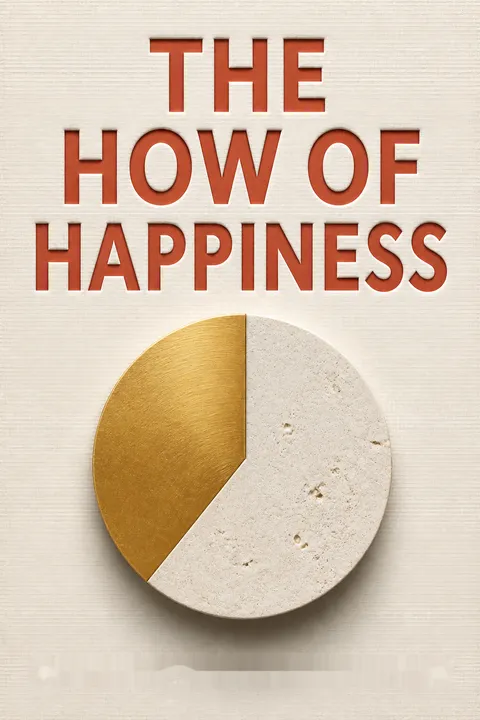
A useful map, not a measurement. Lyubomirsky’s model estimates that genetic differences account for about half of the differences in people’s happiness, life circumstances about 10 percent, and intentional activities about 40 percent. The point is not that each person can calculate a personal happiness pie. It is that genes and circumstances do not explain everything, leaving meaningful scope to influence well-being through thought and behavior.
Practice, not a lucky break. The book’s central claim is that lasting happiness can be cultivated by choosing and maintaining activities that suit the individual. Very happy people tend to invest in relationships, help others, act optimistically, pursue meaningful aims, savor daily experience, and cope constructively with hardship. No one needs to adopt every practice. The task is to find a small number that can be sustained.
The model’s strength is motivational: it redirects attention from fixed traits and distant circumstances toward choices that can be tested today. Its weakness is the risk of being read as a personal formula. The percentages describe differences across people in the research summarized by the book, not a precise partition of any one person’s happiness. That distinction matters, because a person facing poverty, illness, or danger may need material change and support, not a pep talk about mindset. Used as a map of possibility rather than a verdict, the model preserves agency without denying constraints.
Stop expecting a new house, paycheck, or face to deliver lasting joy.
The boost fades. Positive changes can feel wonderful at first, then become part of ordinary life. Psychologists call this hedonic adaptation: the tendency to grow accustomed to changes in circumstances and experience less of their initial emotional impact. The book recounts Neil, a successful rock musician who lost fame and wealth without losing his baseline happiness, and Denise, whose dramatic cosmetic surgery brought attention and confidence but no durable increase in well-being.
Desire moves the goalposts. Marriage, lottery winnings, and material upgrades can bring real short-term pleasure, yet rising expectations and comparisons with other people often erode the gain. The argument does not apply when basic needs are unmet. More money can improve life when it buys safety, food, shelter, or medical care. The practical lesson is to value circumstances without expecting them to do all the work of happiness.
This is a useful corrective to the habit of treating life as a sequence of upgrades: new status, new object, new self. Adaptation helps explain why acquisition often disappoints, while also showing why the same capacity helps people adjust to difficult conditions. The caution is not to confuse adaptation with proof that circumstances do not matter. A safe home or adequate income can be foundational, not decorative. The stronger application is to ask what a change can realistically provide, then invest in relationships and recurring experiences that do not depend on continually raising the price tag.
Choose happiness practices that feel meaningful, natural, and genuinely yours.
Fit beats a universal recipe. The Person-Activity Fit Diagnostic asks whether each activity feels natural, enjoyable, and valuable, and whether it is driven by guilt or external pressure. It recommends prioritizing the practices with the strongest fit. The book identifies three routes to fit: address a source of unhappiness, build on personal strengths or goals, and adapt the activity to one’s lifestyle. A busy person might choose a brief gratitude practice, while someone who dislikes religious practice can skip that option.
Start selectively. The diagnostic identifies four promising activities, but the author advises beginning with one or a few rather than attempting everything. Research described in the book found that people were more likely to continue, enjoy, and benefit from an activity when it suited them. If a practice feels forced or fails to help, adjust it or choose another rather than concluding that happiness cannot change.
Fit connects happiness practice to autonomy: people are more likely to persist when an action reflects what they value, rather than what they feel they ought to perform. This also guards against the self-help trap of turning every virtue into homework. A diagnostic can clarify preferences, but it cannot perfectly predict the future; an unfamiliar practice may become meaningful after a fair trial, while a seemingly ideal one may disappoint. Treat fit as a starting hypothesis, then evaluate both the experience of doing the activity and its effect on everyday life.
Make gratitude a fresh ritual, not another daily box to tick.
Notice what is already here. Gratitude means more than thanking someone for a gift. It includes recognizing what supports life now, appreciating a person’s contribution, or finding value in an ordinary moment. In studies described by Lyubomirsky, participants who recorded things they appreciated once a week became happier; those asked to do so three times weekly did not show the same benefit, possibly because repetition made the exercise feel routine.
Keep it sincere. A gratitude journal is one option, but people can also reflect quietly, tell someone what their help meant, or revisit a usually overlooked part of life. A student’s letter to a former teacher, written decades after school, explained how the teacher’s confidence had shaped his own. Such specific recognition can strengthen a relationship as well as improve the writer’s mood. Change the timing or form when gratitude starts to feel mechanical.
Gratitude is most persuasive when it sharpens attention rather than demands a cheerful interpretation. Recalling support can counter the mind’s tendency to treat ordinary benefits as invisible, and expressing thanks can give another person concrete evidence that their effort mattered. But gratitude should not become a method for silencing legitimate anger or denying deprivation. The weekly-versus-frequent finding also illustrates a broader principle: a practice can lose force through overuse. Its value depends not only on what people do, but on whether it remains meaningful to them.
Picture a hopeful future, then identify the steps that could make it real.
Optimism needs a route. The book distinguishes realistic hope from pretending life is perfect. In the Best Possible Selves exercise, a person imagines a future in which important goals have been achieved, then writes about it. In one study, participants who wrote about their best possible future for 20 minutes on several days showed improved mood and later well-being. Writing can reveal which aims matter and make them feel more approachable.
Test discouraging beliefs. When an obstacle appears, optimism can mean looking for other explanations and possible next steps, not denying the problem. Someone who fails to sell a car might blame the season rather than conclude they are hopeless at persuasion. The book recommends identifying pessimistic thoughts, checking the evidence, and generating plausible alternatives. Flexible optimism keeps risks in view while resisting the assumption that one setback predicts the whole future.
A future vision is useful when it does more than provide a pleasant mental escape. Writing can turn an indistinct wish into a coherent picture of values, conflicts, and possible actions. That makes hope operational: a desired outcome becomes a question about routes and resources. The important safeguard is realism. Positive thinking becomes counterproductive when it substitutes confidence for preparation or dismisses clear evidence. The book’s strongest version is not forced cheerfulness but a wider search for explanations and options than pessimism usually permits.
Interrupt rumination before it turns one setback into your whole identity.
Thinking is not always solving. Rumination is repetitive, passive dwelling on problems, feelings, or personal shortcomings. The research reviewed in the book links it with worse mood, less effective problem solving, reduced concentration, and more negative self-judgment. In a laboratory task, unhappy participants who received negative feedback were more likely to complete word puzzles with self-critical answers, while happier participants were less affected by the feedback.
Change the channel, then act. The book recommends absorbing distraction, mentally saying stop, setting a later time to think, talking with a steady confidant, or writing thoughts down. Once calmer, take a concrete step toward the underlying problem. Social comparison also feeds distress: unhappy participants became more upset when a supposed peer performed better, while happier participants’ self-assessments were less affected. Comparisons can inform or motivate, but repeated ranking invites a moving contest with no final winner.
The distinction between reflection and rumination is practical: reflection produces information or a decision, while rumination often repeats the same distress without changing the situation. Redirecting attention is therefore not necessarily avoidance; it can restore the mental capacity needed to respond. Still, distraction cannot resolve every serious problem, and a scheduled time for reflection may be useful when a decision truly requires thought. The book’s advice is strongest as a sequence: interrupt the spiral, regain perspective, and then address the part of the problem that is actually controllable.
Make kindness and close relationships recurring parts of your week.
Connection is an active investment. The book links happiness with strong relationships and argues that the link works both ways: supportive relationships make people happier, and positive feelings can help relationships grow. Its suggestions include reserving time to talk, showing appreciation, listening closely, and responding with genuine interest when someone shares good news. These practices apply to friends and family, not only romantic partners.
Give deliberately, not endlessly. In one experiment, people asked to perform five kind acts in a single day each week became happier, while those who spread the acts across the week did not show the same gain. A later study found that repeating identical acts could drain the benefit, while varying them helped keep the practice fresh. Kindness should be freely chosen and should not become exhausting caregiving or unwanted assistance. Small, considerate acts can help both giver and recipient feel more connected.
Relationships are not merely a pleasant side effect of happiness; they are infrastructure for coping, belonging, and mutual aid. The finding about celebrating another person’s good news is especially useful because it turns support into an observable behavior: attention, questions, and shared enthusiasm. Kindness, meanwhile, connects personal well-being to the welfare of others without reducing generosity to a transaction. The limit is important: care that is coerced, relentless, or resented can harm the caregiver. A sustainable practice respects both the recipient’s wishes and the giver’s capacity.
Face hardship with practical coping, without forcing a silver lining.
Match the response to the problem. Problem-focused coping means taking steps to change a situation, such as making a plan or seeking advice. Emotion-focused coping helps manage what cannot be changed, through acceptance, support, meaningful activity, or reframing. The book also describes expressive writing: putting a painful experience into words can help organize thoughts and create a more coherent account of what happened. Social support can ease distress, but an unsympathetic or conflictual confidant may make it worse.
Forgiveness is not permission. The author defines interpersonal forgiveness as reducing revenge and avoidance, ideally moving toward more benevolent feelings. It does not require excusing harm, forgetting it, restoring the relationship, or remaining unsafe. Some people report growth after trauma, but growth is not owed to anyone and does not make the trauma good. Persistent or severe depression requires professional care; happiness activities can complement established treatment, not replace it.
This section is strongest when it refuses to make resilience look like a moral obligation. People can survive, recover, or report growth, and these outcomes are not interchangeable measures of virtue. Meaning-making may help some people integrate an experience, but insisting on a lesson too soon can invalidate grief. Forgiveness likewise concerns a person’s relationship to resentment, not a duty to reconcile. The practical framework is compassionate and specific: change what can be changed, seek help for what cannot, and preserve boundaries while deciding whether forgiveness is useful.
Give attention to experiences that absorb you and pleasures you might miss.
Find the right challenge. Flow is intense involvement in an activity, often when its demands stretch a person’s skills without overwhelming them. Artists in Mihaly Csikszentmihalyi’s research described becoming so absorbed in creating that hunger and fatigue faded from awareness. Flow can occur in work, hobbies, conversation, or even a routine task reshaped with a small challenge. As skills improve, the activity may need new challenges to remain engaging.
Savor instead of rushing past. Savoring means deliberately generating, extending, or intensifying enjoyment by attending to a positive experience. It can involve enjoying a present moment, recalling a past one, or anticipating a future event. The book distinguishes savoring from flow: savoring includes noticing and appreciating the experience, while flow is immersion in it. Both require attention, which is easily diverted by plans, worries, and the next item on a list.
Flow and savoring offer two complementary ways to inhabit experience. Flow quiets self-consciousness through absorption; savoring brings conscious appreciation to what might otherwise pass unnoticed. Together they challenge the idea that pleasure must come from extraordinary events. The useful question is not simply whether an activity feels good, but whether it engages attention and leaves life richer. There is a boundary: absorption can become escape when it repeatedly displaces responsibilities or close relationships. Attention is powerful, but it still needs to be allocated wisely.
Build your life around self-owned goals, not borrowed status targets.
Choose goals that fit. The book favors goals that are personally meaningful, freely chosen, oriented toward gaining something positive, compatible with one another, and adaptable when circumstances change. Goals pursued mainly for status, money, or approval are less likely to satisfy than aims connected to growth, relationships, or contribution. A goal to become a teacher can feel very different when it expresses a genuine desire to teach rather than a parent’s plan for a child.
Make the next step concrete. Break large ambitions into manageable subgoals, decide when and how to act, and anticipate obstacles. The book’s example of kindergarten teacher Kurt Schwengel shows how a person can reshape work into a meaningful, engaging project through imagination and commitment. The process of pursuing a goal can provide structure, mastery, and social connection even before the goal is reached. If an old aim becomes impossible, revise the route or choose a new one.
Goals give direction, but direction alone is not enough. A person can work hard toward an aim that reflects someone else’s values, conflicts with other priorities, or depends on a reward that brings little satisfaction. The book’s emphasis on self-owned goals helps distinguish commitment from mere busyness. Its focus on activity is also insightful: ongoing learning and contribution can produce repeated experiences, whereas a completed purchase or status milestone may quickly feel ordinary. Flexibility prevents persistence from becoming stubbornness when the circumstances or the person have changed.
Keep happiness practices effective with effort, support, timing, and variety.
Make change renewable. The book’s Five Hows behind sustainable happiness are recurring positive emotion, good timing and variety, social support, motivation and commitment, and habit. Positive feelings can broaden attention and reinforce constructive behavior, but a practice repeated mechanically may lose its impact. Experiment with how often to do it, vary its form, and ask a supportive person to help maintain momentum. The goal is to make starting a helpful practice more automatic while keeping the practice itself fresh.
Care for mind and body. The twelve activities include meditation, physical activity, spiritual or religious practice, and acting in ways associated with happiness, such as smiling and engaging warmly. The book describes an exercise study in which aerobic activity helped older adults with depression, and an eight-week meditation study that reported changes in mood and immune response. Such activities are options, not cures or requirements. Choose those that fit, and seek clinical treatment for depression when needed.
The sustainability framework turns a list of positive actions into a theory of maintenance. It recognizes that motivation fluctuates, repetition can dull attention, and other people can make change easier to sustain. Habit is especially useful when it reduces the need to renegotiate a beneficial action each time. Variety then protects against turning the action into empty routine. Claims about bodily and psychological effects deserve appropriate caution: an intervention’s average result cannot guarantee an individual outcome. Tracking experience and adapting the practice are more reliable than treating any one technique as universal.
Analysis
The book’s central achievement is to make happiness a practical question without pretending it is wholly controllable. Its narrative begins by dismantling familiar fantasies of rescue through wealth, beauty, marriage, or a better address, then shifts toward deliberate activities that can be practiced in ordinary life. The interviews give that argument a human scale: Neil’s stable contentment after losing fame and Denise’s short-lived transformation make adaptation more memorable than a chart alone. The framework then moves from explanation to choice, offering a personalized diagnostic rather than a single prescription, and finally explains how practice can endure through motivation, social support, habit, timing, and variety.
The 50/10/40 model is rhetorically powerful, but its proportions concern population differences, not an individual’s fixed allotment of agency. Readers may overinterpret it as proof that circumstances barely matter. The book itself acknowledges the importance of basic needs and professional treatment, and that qualification is essential. The strongest reading is not that people should accept injustice or illness, but that changing circumstances is only one route to well-being and often an incomplete one.
The activities are also more coherent than a checklist suggests. Gratitude, savoring, and optimism train attention toward benefits and possibility. Kindness and relationship practices create social connection. Coping and forgiveness reduce the persistence of distress without requiring denial. Flow and goals turn time into engagement and development. These routes converge on recurring positive experience, but remain distinct enough to fit different people. The book’s most durable lesson is therefore methodological: select a practice, try it sincerely, observe whether it helps, and adjust rather than treating either failure or success as universal. Happiness emerges as an ongoing craft, not a permanent mood or a prize secured by one dramatic achievement.
Review Summary
The How of Happiness receives mixed reviews. Many praise its scientific approach and practical strategies for increasing happiness, finding it well-researched and personally helpful. Some appreciate the personalized activities and empirical evidence provided. However, critics argue the book oversimplifies complex concepts, relies too heavily on anecdotes, and fails to adequately explain the scientific studies cited. Some readers find the content repetitive or obvious. Overall, the book is viewed as a solid introduction to positive psychology for those seeking to improve their happiness, despite its limitations.
People Also Read






Glossary
The 40 Percent Solution
Change through intentional activitiesThe book’s model proposes that intentional activities, including patterns of thought and behavior, account for a substantial share of differences in happiness across people. The estimate is about 40 percent, alongside estimates for genetic differences and life circumstances. It is a broad model of potential influence, not a precise personal calculation or a promise that everyone can change happiness equally.
happiness set point
Baseline tendency for happinessA person’s relatively stable, biologically influenced baseline tendency for happiness. The book draws on twin research to argue that people often return toward this baseline after positive or negative life events. The set point is not the same as a person’s current happiness level, which can shift through experiences and intentional activities.
hedonic adaptation
Adjustment to changed circumstancesThe tendency to become accustomed to changes in circumstances and experience less of their initial emotional effect. A new home, higher income, or marriage may produce a temporary rise in well-being, but expectations and social comparisons can reduce that boost. Adaptation can also help people adjust to some difficult circumstances.
Person-Activity Fit Diagnostic
A tool for choosing practicesA self-assessment designed to help people select happiness activities suited to their preferences and circumstances. It rates whether an activity feels natural, enjoyable, and valuable, while also considering guilt and external pressure. The aim is to favor activities that a person is more likely to pursue with genuine motivation and sustained effort.
self-determined motivation
Motivation rooted in personal valuesMotivation to pursue an activity because it is enjoyable or expresses values that the person genuinely holds, rather than because of guilt, pressure, or a desire to please others. The book connects this form of motivation with persistence and a greater chance of benefiting from happiness practices and personal goals.
flow
Absorbed, challenging engagementA state of deep involvement in an activity, marked by concentrated attention and reduced awareness of time or self. Flow is most likely when a task’s challenge is well matched to a person’s skills. If the challenge is too low, boredom may result; if it is too high, anxiety may take over.
savoring
Extending enjoyment through attentionThoughts or actions that generate, intensify, or prolong enjoyment of a positive experience. Savoring may involve appreciating a present pleasure, reminiscing about a positive past event, or anticipating something good. Unlike flow, it involves noticing and appreciating the experience rather than becoming wholly absorbed in it.
posttraumatic growth
Reported growth after traumaPositive changes that some people report after confronting major trauma or crisis. These may include greater perceived strength, deeper relationships, increased compassion, or a changed philosophy of life. Growth does not mean that suffering was beneficial or necessary, and it can coexist with grief and distress.
ABCDE disputation technique
A method for challenging pessimistic beliefsA structured way to examine reactions to adversity. A identifies the adverse event, B the belief it triggers, and C the emotional or behavioral consequence. D means disputing the belief by examining evidence and alternatives. E refers to the renewed energy or perspective that may follow a more balanced interpretation.
The Five Hows Behind Sustainable Happiness
Conditions for sustaining well-beingThe book’s account of what helps happiness practices endure: recurring positive emotions, appropriate timing and variety, social support, motivation and commitment, and habit. These factors explain why a potentially useful activity may have only temporary effects when it becomes monotonous, unsupported, or too difficult to maintain.
FAQ
What's The How of Happiness about?
- Scientific Framework: The How of Happiness by Sonja Lyubomirsky provides a scientific approach to understanding and achieving lasting happiness, combining empirical research with practical strategies.
- Intentional Activities: The book emphasizes that 40% of our happiness can be influenced by intentional activities, empowering individuals to change their happiness levels through actions and thoughts.
- Personalized Journey: Lyubomirsky encourages readers to find happiness activities that align with their unique interests, values, and lifestyles, making the pursuit of happiness a personalized experience.
Why should I read The How of Happiness?
- Evidence-Based Strategies: The book offers scientifically validated methods to enhance happiness, making it a reliable resource for improving emotional well-being.
- Empowerment: It empowers readers by showing that happiness is not solely dependent on external circumstances or genetics but can be cultivated through deliberate actions.
- Comprehensive Framework: The book provides a comprehensive understanding of happiness, including the importance of gratitude, optimism, social connections, and coping strategies.
What are the key takeaways of The How of Happiness?
- Happiness Set Point: Approximately 50% of our happiness is determined by genetics, 10% by life circumstances, and 40% can be changed through intentional activities.
- Gratitude and Social Connections: Practicing gratitude and investing in social relationships are crucial for boosting happiness and emotional well-being.
- Personal Responsibility: Individuals have the power to shape their emotional well-being through intentional activities and personal responsibility.
What is the 40% solution in The How of Happiness?
- Intentional Activities: The 40% solution refers to the portion of happiness that can be influenced by intentional activities and behaviors.
- Personal Responsibility: It emphasizes that individuals have the power to shape their emotional well-being through deliberate actions.
- Practical Application: The book provides strategies and exercises to help readers tap into this 40% and enhance their overall happiness.
What are some effective happiness activities from The How of Happiness?
- Expressing Gratitude: Keeping a gratitude journal or expressing thanks to others can significantly increase happiness levels.
- Practicing Kindness: Engaging in acts of kindness benefits both the giver and the receiver, enhancing overall happiness.
- Cultivating Optimism: Writing about one’s best possible future fosters a more optimistic outlook, leading to increased happiness.
How does The How of Happiness define happiness?
- Subjective Well-Being: Happiness is defined as the experience of joy, contentment, or positive well-being, combined with a sense that one’s life is good, meaningful, and worthwhile.
- Interchangeable Terms: Happiness and well-being are used interchangeably, emphasizing the subjective nature of happiness.
- Personal Experience: The book encourages readers to explore their own definitions and experiences of happiness.
What role do social connections play in happiness according to The How of Happiness?
- Central to Well-Being: Social connections are described as the single most important factor for the survival and happiness of individuals.
- Bidirectional Relationship: Happy people are more likely to have strong relationships, and strong relationships contribute to happiness.
- Support During Stress: Good social relationships provide essential support during times of stress, enhancing resilience and overall well-being.
What are the myths about happiness that The How of Happiness addresses?
- Happiness Must Be Found: The myth that happiness is something to be found is debunked; it is something that can be created through intentional actions.
- Circumstances Determine Happiness: The belief that changing life circumstances will lead to lasting happiness is challenged, as only 10% of happiness is attributed to circumstances.
- Innate Trait: The notion that happiness is an innate trait is refuted; happiness can be cultivated through practice and effort.
How can I practice gratitude effectively as suggested in The How of Happiness?
- Gratitude Journal: Keep a journal where you write down three to five things you are grateful for each week to enhance well-being.
- Express Gratitude Directly: Write letters of gratitude to individuals who have positively impacted your life.
- Vary Your Practice: Change how and when you express gratitude to keep the practice fresh and engaging.
What is the significance of the Best Possible Selves exercise in The How of Happiness?
- Visualizing a Positive Future: This exercise involves writing about your best possible future, enhancing optimism and motivation.
- Boosting Happiness: Engaging in this exercise has been shown to increase happiness levels and reduce feelings of depression.
- Self-Discovery: It encourages self-reflection and helps individuals clarify their goals and values.
What are the twelve happiness activities mentioned in The How of Happiness?
- Practicing Gratitude: Regularly expressing gratitude can enhance well-being by shifting focus from what is lacking to what is abundant.
- Nurturing Relationships: Investing time and effort in relationships fosters emotional support and connection.
- Committing to Goals: Setting and pursuing personal goals provides a sense of direction and accomplishment.
How does the concept of "flow" relate to happiness in The How of Happiness?
- Definition of Flow: Flow is a state of complete immersion and engagement in an activity, often achieved during challenging yet enjoyable tasks.
- Flow and Happiness: Engaging in activities that induce flow can lead to increased happiness and satisfaction.
- Microflow Activities: Small, enjoyable tasks integrated into daily life help maintain a sense of engagement and joy.
Download PDF
Download EPUB
.epub digital book format is ideal for reading ebooks on phones, tablets, and e-readers.








