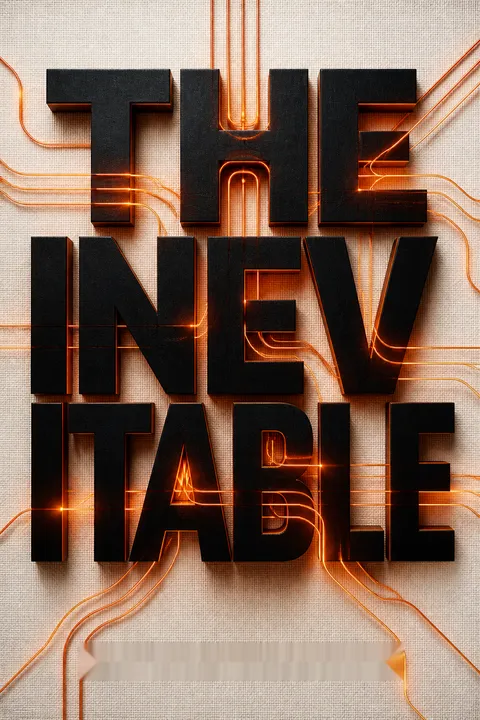


Key Takeaways
Read technological inevitability as a current, steerable direction, not a fixed fate.
Trends are not destinies. Kelly uses “inevitable” to mean that technology tends to favor certain broad outcomes, not that every product or social choice is predetermined. A global network was a likely result of connected computers; the exact internet we built was not. Instant messaging was foreseeable; the specific habits around it were not. The practical lesson is to distinguish the direction of a technological current from the decisions made within it. Trying to forbid a strong underlying tendency, such as digital copying, often fails. Engaging with it gives people a better chance to shape its consequences through design, norms, and regulation.
Momentum has human costs. These shifts can displace work, unsettle law, and concentrate power. Kelly argues for attentive engagement rather than blind acceptance: steer particular uses toward public benefit while recognizing that the broad current may persist.
This distinction is valuable because it avoids two familiar mistakes: imagining that technology is entirely under individual control, or treating its consequences as fate. A trend can constrain the menu of plausible choices without dictating which choice a society makes. That makes governance more important, not less. The argument is strongest when “inevitability” describes a technical pressure, such as low-cost copying, and weaker when it becomes a broad forecast about human behavior. Readers can use the idea as a prompt to ask both what a technology makes easier and which institutions can distribute its benefits or limit its harms.
Design for continual change instead of waiting for technology to be finished.
Maintenance is part of invention. Kelly argues that even software decays in practice: systems depend on changing devices, services, and standards, so a neglected upgrade can turn a small adjustment into a disruptive overhaul. He describes regular updating as a kind of hygiene. As tools keep changing, expertise becomes temporary. Everyone is a perpetual beginner, including experienced users confronting features and technologies that did not exist a few years earlier.
Progress arrives unevenly. Kelly calls a future of modest, ongoing improvement “protopia”: a process in which each day may be slightly better, while also creating fresh problems. The early internet illustrates how hard such change is to see. Executives dismissed it as a niche medium, while even its enthusiasts expected a more television-like future. Users, not major media companies, supplied much of the web’s content. The lesson: stay curious about awkward beginnings.
The “perpetual beginner” is not just a prediction about gadgets. It describes a shift in how competence is maintained: expertise increasingly includes learning, unlearning, and adapting. That can be liberating for newcomers, but it can also impose recurring costs on people with limited time, money, or access. Protopia offers a useful alternative to both technological utopianism and catastrophe narratives, provided small gains are not mistaken for guaranteed progress. The internet’s early misreadings also suggest a practical discipline: treat unfamiliar tools as experiments before judging them by the standards of the systems they might replace.
Pair specialized machine intelligence with human judgment instead of staging a job race.
AI is becoming a utility. Kelly expects artificial intelligence to spread as a service embedded in ordinary tools, rather than arrive only as a single humanlike machine. He points to three enabling changes: cheaper parallel computing, enormous stores of data, and improved learning algorithms. The resulting systems can master narrow tasks, from recognizing images to helping analyze medical symptoms. They do not need human-style consciousness to be useful; their different strengths are the point.
Work gets reorganized. Automation can replace routine tasks, perform work people cannot do, and create new work made possible by machines. In freestyle chess, teams combining human judgment with chess software outperformed both unaided people and standalone programs in the cited competition. Kelly’s broader proposal is cooperation with machines, not a contest against them. He warns that many occupations may change dramatically, though the pace and distribution of replacement remain uncertain.
The chapter’s most useful move is to replace the simple question “Will AI take jobs?” with a more precise one: which tasks change, who controls the tools, and who benefits from the added capability? A machine can be better at pattern recognition while still depending on human goals, context, and accountability. The chess example makes that complementarity vivid, but it does not prove every occupation will improve through collaboration. Some workers may lose bargaining power or be displaced before new roles appear. Preparing people to work with these systems therefore includes not only technical training, but choices about ownership, oversight, and transition support.
When copies become abundant, charge for the experience surrounding them.
Digital copies flow freely. Networks repeatedly reproduce the information passing through them, making perfect copies of music, video, software, and text cheap to distribute. Kelly argues that fighting this tendency is less promising than finding value around the copy. He calls such hard-to-duplicate qualities “generatives”: benefits created for a particular exchange, such as timely access, personalization, expert interpretation, authenticity, convenience, live embodiment, patron support, or help discovering worthwhile work.
Music shows the shift. Streaming makes vast catalogs easy to access, while listeners can organize playlists and follow other people’s discoveries. A musician may earn from performances, personal relationships with fans, or other services rather than relying only on selling recordings. Kelly describes a progression from rare fixed products, through cheap copies, toward fluid services that people can adapt and recombine. Copies still matter, but their surrounding relationships and uses become central to value.
The argument clarifies why free content does not mean that creators, expertise, or curation have no value. It redirects attention from controlling distribution to designing benefits that a bare file cannot provide. That is a productive business lens, although the listed generatives are not a universal recipe: a creator may have difficulty monetizing immediacy or community, and intermediaries can capture more value than artists. The deeper question is who supplies the scarce human contribution and who gets paid for it. Abundance can expand access while still producing precarious creative work.
Choose access for convenience, but preserve the power to leave and modify.
Use without owning. Streaming libraries, ride services, and cloud software let people use goods without storing, repairing, or updating them. Kelly links this shift to lighter products, mobile networks, real-time delivery, and platforms where many providers build services on shared infrastructure. Digital access can be especially efficient because one copy of a movie or software service can serve many people at once.
Convenience creates dependence. A subscription can supply continual updates and personalization, but it can also make switching difficult. Customers may contribute reviews, bug reports, and add-ons, becoming “prosumers,” both users and producers. Yet access often offers fewer rights than ownership, particularly the ability to change or control what is used. The central choice is not simply rent versus buy. It is whether a service provides enough reliability and convenience to justify dependence, and whether users retain meaningful alternatives.
Access is appealing because it turns maintenance into someone else’s problem, but that convenience can obscure a transfer of control. A person who owns a tool may repair or adapt it; a subscriber may only use it on the provider’s terms. This makes portability, interoperability, and the right to modify practical measures of agency, not technical niceties. The book’s comparison with shared public infrastructure is illuminating, yet private platforms are not automatically commons: their rules can change, and their owners can restrict participation. The useful test is whether access remains genuinely useful when a customer wants to leave.
Let crowds start the work, then add just enough governance to sustain it.
Participation scales through networks. People share material, coordinate around it, and sometimes collaborate on a common product. Wikipedia and open-source software show that unpaid contributors can produce resources used at enormous scale. The incentives are not always wages: participants may gain learning, reputation, enjoyment, or tools they themselves want. Crowdfunding extends this pattern by letting audiences pool support for projects before they exist.
Open does not mean leaderless. Kelly draws on a progression from simple sharing to cooperation, organized collaboration, and broader collectivism, with each step demanding more coordination. Wikipedia’s editable pages can be restored when damaged, but experienced editors provide continuity and judgment. A pure crowd can generate volume, while a small amount of oversight can improve reliability. The challenge is to make that oversight accountable and limited, so it supports participation instead of quietly closing the gates.
The book resists a romantic picture of crowds as automatically wise. Its more subtle claim is that networked participation lowers the cost of starting collective work, while durable projects still need mechanisms for resolving disputes and maintaining standards. This resembles a healthy balance between open entry and stewardship: too much control suppresses new contributors, while too little makes quality and trust fragile. The balance depends on the task. A photo-sharing community needs less formal review than a medical reference. The important design question is not whether hierarchy exists, but whether its authority is visible, proportionate, and open to challenge.
Use recommendations to discover your tastes, not merely reinforce them.
Abundance overwhelms attention. Kelly cites a torrent of new books, songs, films, posts, and products, far more than any person can assess. Recommendation systems help by comparing a user’s behavior with patterns across many other users. Amazon and Netflix, for example, use prior choices to suggest things someone may enjoy. Such filters can make obscure work easier to find and turn an overwhelming catalog into a more manageable stream.
Personalization can narrow vision. A recommendation engine may keep serving familiar material, a pattern the book calls a “filter bubble” or overfitting. Friends can create a similar echo when their tastes closely match. Kelly suggests balancing familiar recommendations with suggestions from wider social circles and with material outside one’s preferences. Filters also serve their operators’ goals, such as sales or time spent on a platform. Readers should ask what a filter is optimizing, and what it hides.
Filtering is not simply a technical convenience; it is a form of attention management. The same system that helps a person find a rare book can make unfamiliar viewpoints less visible. This means diversity cannot be measured only by the number of available options. It also depends on whether a person encounters options that differ from past choices. Recommendations become more trustworthy when users can understand their purpose, adjust them, and deliberately introduce novelty. The book’s proposed counterbalance is important, though exposure to difference alone does not ensure open-mindedness. People need room to question recommendations rather than accept them as a portrait of who they are.
Make screens participatory, and treat creative reuse as a core literacy.
Screens change how media works. Books encouraged sustained, linear reading; digital screens combine text, images, links, and interaction. Kelly calls this broader activity “screening.” A digitized book can be searched, annotated, linked to other writing, and discussed by readers. Moving images can also be replayed, searched, and rearranged. These capacities make media less like finished objects and more like material people can explore and use.
Remixing expands creation. Cheap tools let audiences make videos, music, and other works from existing pieces. Kelly connects this to economic growth: new things often come from rearranging what already exists. He argues that creative reuse should be judged by whether it transforms its source, rather than treated automatically as mere copying. Yet screens also compete for attention, and open reuse raises genuine questions about credit and compensation. The emerging literacy is not only reading media, but finding, interpreting, and responsibly reshaping it.
This view expands literacy beyond decoding words. When people can search, annotate, replay, and edit, they participate in the construction of meaning rather than merely receive it. That can deepen understanding, especially when a viewer compares versions or checks a source. But tools for remixing do not guarantee thoughtful work; they can also accelerate imitation and misinformation. The book’s transformation test is a useful ethical starting point, not a complete legal standard. Attribution, permission, and power still matter, particularly when one person’s work becomes another person’s raw material. Participatory media needs both creative freedom and visible credit.
Accept measurement only with visibility, accountability, and meaningful personal control.
Tracking can reveal personal patterns. Small sensors make it easier to collect information about sleep, movement, mood, and health. In a “Quantified Self” experiment, a person uses measurements to learn how an intervention affects them specifically. Kelly describes long-term tracking as a way to establish an individual baseline, since a population average may not reflect one person’s normal. He also warns that people can fool themselves, so repeated automatic measurements and careful comparisons matter.
Surveillance needs symmetry. Everyday systems record transactions, travel, media use, and physical activity. Kelly argues that simply trying to prohibit tracking may fail; societies must decide how it is governed. His term “coveillance” describes reciprocal watching, where people can know who collects their information, inspect how it is used, and hold collectors accountable. More personalization usually requires more disclosure, but consent must remain meaningful. Tracking without access, explanation, or recourse is not mutual visibility; it is one-sided power.
Personal measurement can improve self-understanding, but more data does not automatically produce better decisions. A baseline can expose patterns that memory misses, while poor interpretation can turn noisy measurements into false certainty. The same caution applies politically: reciprocal visibility is a compelling ideal, yet individuals and large institutions do not enter surveillance relationships with equal power. Transparency alone cannot correct that imbalance. Effective safeguards also require limits on collection, clear purposes, and consequences for misuse. The strongest principle here is conditional participation: data may be useful, but people need a real say in what is captured and what follows.
Spend less effort collecting answers, and more effort framing valuable questions.
Answers are becoming cheap. Search engines already respond to billions of queries, and connected data and machine intelligence make more answers easier to retrieve. Kelly’s concern is not that answers become useless, but that access to them changes where human effort matters. A good question may reveal a problem nobody had noticed, challenge an accepted explanation, or create a new field of inquiry. It can produce many further questions rather than close discussion.
The network is still forming. Kelly calls the emerging union of human minds, machines, and connected information the “holos,” a planetary layer of shared intelligence. It is not a finished supermind or a promised utopia. It is a developing system shaped by the links, searches, contributions, and choices people make. The book’s twelve forces, from sharing and tracking to questioning and becoming, overlap within this larger process. The future remains open at the level of particular decisions, even as connectivity deepens.
The emphasis on questions is a strong account of where human judgment can matter when retrieval is automated. Answers can settle known problems; questions help decide which problems deserve attention and what counts as evidence. That distinction also guards against treating a search result as understanding. Still, asking an original question is not automatically wiser than answering a practical one, and expertise remains essential for evaluating both. The “holos” is best read as a metaphor for interdependence, not as a single conscious entity. Its value depends on the quality of its institutions, incentives, and participation, not on scale alone.
Analysis
The book’s organizing insight is that digital technology has directional biases. Cheap copying encourages distribution; networks reward connection; sensors make measurement routine; and cloud services make shared access convenient. Kelly gathers these pressures into twelve ongoing actions rather than trying to predict which companies or devices will dominate. This is a productive form of futurism because it focuses on recurring patterns and invites readers to respond to them, instead of treating forecasts as a catalog of gadgets.
The narrative works by revisiting moments when the future was visible but misread. The internet’s early critics imagined a dull niche, while its advocates still pictured a more abundant television. The surprise was participation: users supplied the material and social labor that institutions had assumed would require professionals. This recurring lesson is stronger than any specific forecast in the book. New technologies often matter for the social behaviors they enable, not only for their intended function.
The book’s confidence in inevitability is also its central vulnerability. Physical and economic properties can make some outcomes easier, but laws, ownership, culture, and political power shape which outcomes prevail. A tendency toward tracking does not settle whether data belongs to citizens, companies, or governments. A shift toward access can be convenient while making customers dependent on private platforms. Calling a current inevitable may help readers prepare, but it can also make contestable arrangements seem natural.
Kelly’s most durable contribution is therefore not a claim that people should submit to technology. It is a method for distinguishing broad pressures from adjustable particulars. Readers can ask what a system makes cheap, what it makes difficult, whose participation it requires, and who captures the value it creates. The book’s ending, the emerging “holos,” gathers these concerns into a picture of planetary interdependence. Its significance is less that humanity becomes one mind than that decisions increasingly travel through shared networks. That makes the future neither fully predictable nor beyond human responsibility.
Review Summary
The Inevitable receives mixed reviews, with many praising Kelly's optimistic vision of technology's future impact. Readers appreciate his insights on AI, VR, and digital trends, finding the book thought-provoking and informative. Some criticize Kelly's overly positive outlook, arguing he glosses over potential downsides. The book's exploration of technological forces shaping society resonates with many, while others find it naive or privileged. Overall, readers value Kelly's unique perspective on future tech trends, even if they don't agree with all his predictions.
People Also Read










Glossary
Protopia
Incremental, ongoing progressA condition of gradual improvement rather than a perfected destination. Each day may bring small benefits, alongside new problems created by earlier successes. The term emphasizes progress as an imperfect, continuing process, not a final utopia.
Cognifying
Adding machine intelligenceThe process of making objects, services, or activities smarter by adding artificial intelligence. In Kelly’s account, this intelligence is often specialized and delivered through connected systems, allowing ordinary tools and industries to gain capabilities without becoming humanlike.
Generatives
Value beyond digital copiesQualities that cannot simply be copied and stored, but must be created in a particular transaction. Kelly identifies examples such as immediacy, personalization, interpretation, authenticity, accessibility, embodiment, patronage, and discoverability. They can make a widely available digital work worth paying for.
Prosumer
User who also producesA person who consumes a service while also contributing to its operation or improvement. Examples include users who report software bugs, answer other customers’ questions, create add-ons, or provide the content and reviews that make a platform valuable.
Lifestream
Chronological digital life recordA time-ordered stream of documents and events from a person’s electronic life. It can include messages, photographs, reminders, bills, and other records, arranged along a timeline so a person can browse past activity, current events, and future plans.
Lifelogging
Automatic continuous life recordingThe passive, largely automatic collection of information about a person’s activities and experiences. Unlike deliberate self-tracking, lifelogging aims to record broadly and may preserve far more data than a person immediately uses. Its central challenge is finding and interpreting meaningful material.
Coveillance
Reciprocal, accountable monitoringA model of monitoring in which the watched can also understand and scrutinize the watchers. It requires visibility into who collects information, how it is used, and whether it is accurate, alongside ways to hold collectors accountable. Kelly presents it as an alternative to one-sided surveillance.
Holos
Planetary human-machine networkKelly’s term for the developing whole formed by connected human intelligence, machine behavior, and natural systems. The holos describes an emergent planetary network, not a single humanlike consciousness. Its capabilities arise from interaction among people, devices, data, and institutions.
Zillionics
Qualities emerging at vast scaleKelly’s label for the qualitative changes that can appear when data, devices, or connections reach enormous scale. The idea is that a huge increase in quantity can create capabilities not found in isolated examples, requiring new ways to organize and process information.
Soft singularity
Human-machine interdependenceA future condition in which artificial intelligence, robots, tracking, filtering, and connected systems combine with human activity to create a complex interdependence. Unlike a scenario where superintelligent machines dominate people, this version centers on humans and machines becoming difficult to separate in practice.
FAQ
What's The Inevitable about?
- Exploration of Forces: The Inevitable by Kevin Kelly explores twelve technological forces shaping our future, such as "Becoming," "Cognifying," "Flowing," and "Accessing."
- Focus on Change: The book emphasizes that technological change is constant and inevitable, urging readers to understand these forces to navigate the future effectively.
- Cultural and Economic Impact: Each chapter examines how these trends will affect economics, culture, and personal identity, providing a comprehensive view of future transformations.
Why should I read The Inevitable?
- Insight into Trends: The book offers valuable insights into technological trends that will shape the next 30 years, helping individuals and businesses prepare for the future.
- Practical Advice: Kelly provides practical advice on embracing and adapting to changes, encouraging active and thoughtful engagement with technology.
- Engaging Narrative: Kevin Kelly's writing is informative and engaging, making complex ideas accessible through personal anecdotes and historical context.
What are the key takeaways of The Inevitable?
- Embrace Change: A key takeaway is the importance of embracing change rather than resisting it, as adaptation is crucial in a digital world.
- Focus on Processes: The book emphasizes that processes are more important than fixed products, suggesting that getting the process right leads to ongoing benefits.
- Collaboration and Attention: Kelly highlights the power of collaboration and the scarcity of attention in an information-rich world, underscoring the need for effective filtering.
What are the best quotes from The Inevitable and what do they mean?
- "Change is inevitable.": This quote underscores the book's central theme, encouraging readers to embrace change as a constant force in life.
- "Get the ongoing process right...": It highlights the importance of focusing on processes over products, suggesting adaptability and continuous improvement are key.
- "Banning the inevitable usually backfires.": This warns against resisting technological change, advocating for embracing and working with it instead.
What is "Cognifying" as described in The Inevitable?
- Definition of Cognifying: Cognifying involves adding intelligence to objects and systems, making them smarter and more responsive.
- Ubiquity of AI: Kelly argues that AI will become ubiquitous, embedded in various devices and services, enhancing their functionality.
- Impact on Society: This shift will transform daily interactions, requiring new skills and adaptability as machines perform tasks traditionally done by humans.
How does The Inevitable address the concept of "Flowing"?
- Shift to Services: "Flowing" describes the transition from ownership of fixed products to access to fluid services, emphasizing continuous updates.
- Cultural Transformation: This reflects a cultural shift towards valuing experiences over material possessions, influencing consumption and interaction with technology.
- Digital Economy: Kelly notes that the digital economy thrives on freely flowing copies, highlighting the importance of fluidity in modern services.
How does The Inevitable define "Accessing"?
- Shift from Ownership: "Accessing" emphasizes the growing importance of accessing goods and services rather than owning them.
- Benefits of Access: Advantages include reduced responsibility for maintenance and upgrades, exemplified by subscription services and sharing economies.
- New Business Models: This shift drives new business models like Uber and Airbnb, reflecting changes in consumer behavior and expectations.
What role does "Sharing" play in The Inevitable?
- Digital Socialism: Kelly suggests the sharing economy represents a new form of digital socialism, where resources are shared rather than owned.
- Collaborative Culture: The book emphasizes collaboration and cooperation, challenging traditional economic models and encouraging collective action.
- Cultural Shifts: Sharing fosters new cultural norms, shifting from ownership to access, and promoting a more interconnected society.
How does The Inevitable address the concept of filter bubbles?
- Definition of Filter Bubbles: Filter bubbles occur when algorithms tailor content to individual preferences, potentially isolating users from diverse perspectives.
- Consequences: This can lead to narrow worldviews and reinforce biases, particularly in political and social contexts.
- Solutions: Kelly suggests actively seeking diverse content and engaging with different perspectives to counteract filter bubbles.
What does The Inevitable say about the future of work?
- Automation and Displacement: The book predicts automation will replace many traditional jobs, emphasizing the need for new skills and adaptability.
- Emergence of New Roles: New roles will focus on managing and collaborating with intelligent systems, requiring a blend of technical and creative skills.
- Human-Machine Collaboration: Kelly envisions a future where humans and machines work together, enhancing productivity and creativity.
How does The Inevitable envision the future of education?
- Personalized Learning: The book predicts a shift towards personalized education, with technology enabling adaptive and engaging learning environments.
- Role of Technology: Online platforms, AI tutors, and immersive experiences will enhance learning outcomes and accessibility.
- Lifelong Learning: Continuous learning and skill development will be crucial, reflecting the rapidly changing job market.
What are the potential risks associated with the technological forces in The Inevitable?
- Privacy Concerns: Increased surveillance and data collection raise questions about privacy and autonomy, requiring ethical considerations.
- Social Fragmentation: Technology can lead to social isolation if not managed carefully, highlighting the need for genuine connections.
- Dependence on Technology: Over-reliance on technology may erode critical thinking skills, urging readers to seek balance in their tech relationships.
About the Author


Download PDF
Download EPUB
.epub digital book format is ideal for reading ebooks on phones, tablets, and e-readers.








