

Key Takeaways
Use more than facts: connect them into explanations you can own.
Knowing has layers. The book distinguishes three ways of knowing. Receptive knowledge is getting a true answer from a reliable source, like checking a map. Reflective knowledge means having reasons you can examine and defend. Understanding goes further: it grasps how facts relate, why something happens, and which question to ask next. In Plato’s dialogue about directions to Larissa, a lucky guess might get a traveler to the city, but it is less dependable than knowledge grounded in experience or evidence.
Explanations matter. A search can supply facts about a disease, a friend’s mood, or a route. Understanding links those facts into an account of causes and relationships. The central warning is that digital tools expand access to answers without necessarily strengthening the ability to make sense of them.
This distinction helps explain why information abundance can coexist with confusion. In cognitive science, a person can retrieve a fact accurately yet fail to transfer it to a new situation because the underlying relationships were never learned. The book’s emphasis on explanation therefore points toward a practical test: can the learner use an idea to interpret a different case, not merely repeat it? Still, understanding is not an all-or-nothing achievement. Specialists often reason well within narrow domains while remaining uncertain outside them, so intellectual humility belongs beside explanatory confidence.
Treat every search result as testimony, not as something you simply see.
Search is not sight. Google-knowing means acquiring beliefs through online search and the people whose information search results distribute. It feels immediate, but unlike ordinary perception, it depends on sources whose reliability may be unknown. The author tested this by answering questions offline: a dictionary helped with Bulgaria’s capital, a mechanic explained engines, and a library supplied an old phone book. Finding Austin’s best-reviewed restaurant that week proved impossible without the Internet.
Speed invites trust. Fast, automatic thinking helps people navigate daily life, but it also misses errors. In the Moses Illusion, people may overlook that Noah, not Moses, had the ark. In a famous attention experiment, about half of viewers counting basketball passes failed to notice a person in a gorilla suit. Online confidence can likewise outrun careful checking.
The comparison with perception is useful because it identifies a hidden shift in trust: interfaces make mediated claims feel like direct observation. Media literacy can counter this, but asking users to verify every claim is unrealistic when knowledge depends on specialists and shared institutions. The better goal is calibrated trust, with stronger checks for consequential claims and clearer signals of source quality. Search ranking is not the same as evidence quality, and a polished answer can disguise the difference.
Protect shared standards of evidence before disagreement becomes tribal warfare.
Disagreement needs rules. Online communities can repeatedly expose people to views they already favor. The result may be group polarization, where members move toward more extreme positions. The deeper danger is not simply that citizens disagree. It is that groups may stop sharing standards for deciding what counts as evidence. Then even fact-checkers become targets of suspicion, and disagreement about a claim turns into conflict over who is allowed to judge it.
Reasons support democracy. The author argues that public life requires citizens to offer reasons others can assess, even when those reasons do not persuade everyone. This respects other people as decision-makers rather than objects to manipulate. Institutions such as universities and scientific organizations matter because they can sustain shared practices of testing claims, criticism, and correction. The aim is common ground for argument, not uniform conclusions.
A shared evidentiary standard is not a demand for consensus. It is closer to a common language: people can disagree sharply while still understanding what would count as a reason to revise a view. This distinction is important in polarized settings, where calls for civility alone often leave the underlying dispute untouched. Institutions earn trust not by claiming neutrality, but by making methods visible and allowing criticism. Their standards must also be open to revision, or a common rulebook can become a tool for excluding unfamiliar evidence.
Defend truth without pretending any observer has a view from nowhere.
Constructed is not imaginary. Digital life contains literal artifacts, such as websites and files, alongside social artifacts, such as online identities and changing ideas of ownership. These are human-made, yet they have real effects. The author rejects the conclusion that all truth is therefore merely whatever a community accepts. An objective claim is one whose truth does not depend only on someone’s preference, even though every investigator sees from a particular perspective.
Accuracy preserves trust. Performer Mike Daisey described poor conditions in an iPhone factory, but some details in his account were false or misrepresented. His moral concern did not excuse presenting altered details as journalism. The same vulnerability appears in fake online identities, automated social media accounts, and misleading photographs. Transparency helps people inspect sources, but it cannot replace the need to assess evidence.
This position avoids two tempting extremes: pretending that observers have no standpoint, and treating every standpoint as equally reliable. Objectivity works better as a discipline of comparison, where claims face evidence and scrutiny from diverse perspectives. Social construction also requires careful distinctions. Money and legal status depend on shared practices, but their consequences are not imaginary; similarly, a constructed online narrative can shape real reputations. The challenge is to identify what depends on human agreement without assuming that every fact does.
Privacy protects your ability to decide who gets access to you.
Privacy is about agency. Information privacy involves protection from intrusion and some control over who can access personal information. Its value is not limited to hiding wrongdoing. If someone reads a person’s diary without consent, that person loses control over disclosure even if the intrusion is never discovered. Systematic surveillance creates a wider imbalance: one party can build a detailed picture of another while the observed person cannot see or contest that process.
Data pools invite use. The author compares large stores of personal information to swimming pools that attract children: even responsible owners need safeguards. The concern is not only malicious intent. Data collected for one purpose can become available for other uses, and extensive observation can influence behavior or enable manipulation. Privacy supports autonomy because people need meaningful control over what they share and how they present themselves.
The argument usefully shifts privacy from secrecy to power. A person can have nothing shameful to conceal and still need protection from profiling, coercion, or decisions made on hidden information. Privacy is not absolute, however. Targeted data use can improve services, and carefully limited investigation can protect the public. The crucial distinctions are purpose, scope, oversight, and the ability to challenge decisions. Consent becomes thin when data flows are too complex for ordinary people to foresee, so institutional safeguards matter more than unreadable agreements.
A crowd gets wise only when its members think independently and competently.
More votes are not magic. Francis Galton described a country fair where 787 people guessed an ox’s weight. Their average estimate was 1,197 pounds, just one pound below the actual weight. Such aggregation can outperform an individual when participants have some chance of being right and their judgments are sufficiently independent. The Condorcet Jury Theorem formalizes a related point: under suitable conditions, a larger group becomes more likely to reach the correct majority answer.
Crowds can fail together. If people copy one another, share the same bias, or lack relevant expertise, adding more voices may amplify error. In 2012, the prediction market Intrade assigned a 75 percent chance that the Supreme Court would strike down the Affordable Care Act’s mandate. It was wrong. Networked knowledge depends on the quality and independence of the people contributing to it.
The crucial variable is not crowd size but error structure. Independent estimates can cancel individual mistakes; copied estimates create correlated mistakes that grow stronger with scale. This is why the same platform can aggregate useful restaurant preferences yet perform poorly on a technical medical or legal question. A practical design principle follows: preserve independent judgment before revealing group opinion, and match the crowd to the task. Expertise is not always required, but the participants must have relevant information and a real chance of being correct.
Democratize knowledge by sharing access, credit, and the power to be believed.
Access is only a beginning. The Internet makes information easier to obtain and lets more people contribute through open-source projects, research-sharing sites, and crowdsourcing. But crowdsourcing can also outsource professional work to people without secure pay or ownership. The book notes that some Amazon Mechanical Turk workers earned only two to five dollars an hour, while many were educated professionals rather than casual hobbyists.
Recognition matters too. Epistemic equality means a fair claim to resources that support knowledge, including education, libraries, and Internet access. It also requires being treated as a credible participant. The author connects this to epistemic injustice: a person’s testimony is unfairly discounted because of identity or social position. Universities and open networks can widen participation, but access without status, fair compensation, or a voice in decisions leaves power unequal.
This distinction separates participation from influence. A platform may invite millions of contributions while concentrating ownership, visibility, and rewards in a few hands. That pattern appears beyond technology, from gig work to academic publishing. Equitable knowledge systems need more than broadband: they need attribution, fair compensation, accessible education, and procedures that take marginalized speakers seriously. Yet credibility cannot mean accepting every claim uncritically. The better standard is consistent scrutiny that does not mistake social prestige for evidence or social disadvantage for unreliability.
Use theory to interpret big-data patterns, not merely predict them.
Data needs a question. Big data can mean vast collections of information, methods for analyzing them, or companies and agencies that control those methods. In 2009, Google researchers used search terms to estimate flu activity, showing how online behavior could help track an outbreak in near real time. But a later critique found Google Flu Trends sometimes overestimated flu cases by as much as 30 percent.
Patterns need context. A correlation can support prediction without explaining why it occurs. Choices about what to measure, which people are represented, and what counts as success already rely on assumptions. A map of cultural history based on notable people, for example, reflected a narrow selection of mostly European, male figures. The numbers did not remove judgment; they carried earlier choices into the analysis.
Predictive systems can be valuable even when they do not explain causes, especially when timely warning matters. The danger comes from treating a useful proxy as the phenomenon itself. Search queries are traces of illness, not illness; an online map of notable figures is a map of a selection process, not culture in its entirety. Strong analysis therefore pairs prediction with a model of how the data were generated and checks who or what the data leave out. Quantification sharpens questions, but it does not choose them.
Move beyond Google answers by explaining causes and practicing skills.
Understanding takes work. It involves grasping how parts depend on one another, explaining why something happens, and recognizing which question to ask next. A search result can identify an answer about an apple tree, but understanding requires seeing how conditions such as rainfall relate to the tree’s fruit. Correlation alone may predict what happens without revealing what would change it.
Skill needs experience. The television character Chuck downloads facts and martial-arts abilities from a computer, but the story skips the practice and adaptation that make mastery possible. Real skills develop through trying, noticing errors, and adjusting to circumstances. The book argues that digital tools can provide useful facts and instruction, but they cannot simply transfer the learner’s own grasp of how a skill works. Understanding is an achievement, not a file to retrieve.
The emphasis on practice connects understanding to embodied learning: feedback from action helps people notice distinctions that instructions alone cannot supply. Digital simulation can still support this process, especially when it offers safe repetition and meaningful feedback. The important contrast is not screen versus world, but passive exposure versus active engagement. Nor should individual mastery be romanticized: experts often learn through teachers, tools, and communities. The individual must integrate the lesson, but the conditions that make that integration possible are frequently social.
Analysis
The book’s organizing insight is that digital technology changes not only how much information people possess, but what they count as knowing. A search engine can function as memory, a crowd as an information processor, and a data platform as both reference librarian and observer. Those conveniences can make access feel indistinguishable from understanding. Lynch’s distinctions between reliable uptake, reasoned belief, and explanatory grasp give readers a way to notice what has been gained and what may be missing.
The argument is strongest when it connects epistemology to civic life. Shared evidence standards are not merely academic preferences; they allow citizens to challenge power without reducing disagreement to coercion. Likewise, privacy is not framed as nostalgia for secrecy, but as a condition for agency in relationships where one side can know far more than the other. The book also resists simple technological pessimism. Digital networks can expose abuses, widen access, and aggregate knowledge, provided their incentives and participants support those functions.
A useful extension is to treat platforms as epistemic institutions. Their ranking rules, moderation practices, business incentives, and data access shape what people encounter and whom they trust. Individual critical thinking remains important, but it cannot compensate fully for systems that reward attention over accuracy or extract knowledge while withholding control from contributors. The proper response is therefore both personal and institutional: learn to question sources, while also demanding transparent methods and accountable infrastructure.
One tension deserves attention. The book gives understanding a distinctive role as an individual achievement, yet much sophisticated understanding is produced collectively through instruments, laboratories, and argument. This does not make understanding downloadable. It suggests instead that personal comprehension depends on well-designed social scaffolding. The deepest lesson is not to reject Google or big data, but to refuse the assumption that access, prediction, and understanding are interchangeable. A powerful information system can extend human judgment, but it cannot decide what deserves trust, what evidence means, or what kind of knowledge a democratic society should cultivate.
Review Summary
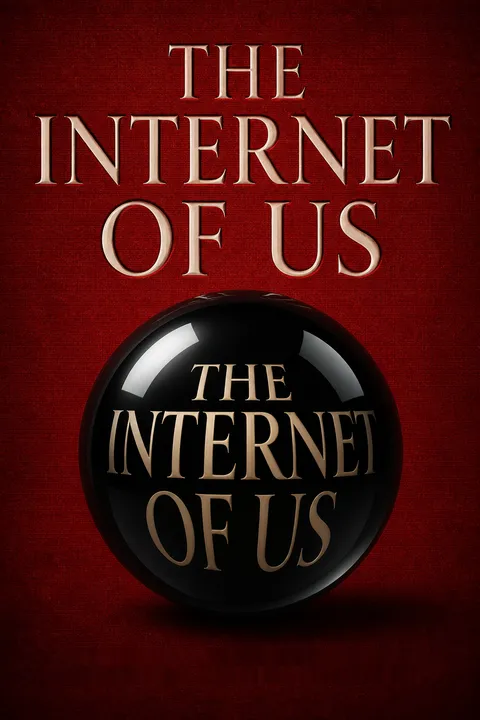
The Internet of Us receives mixed reviews. Many praise its philosophical approach to examining how the internet affects knowledge and understanding. Readers appreciate Lynch's insights on topics like Google's influence, information cascades, and privacy concerns. However, some find the book overly simplistic or repetitive. Critics note that while it raises important questions, it lacks depth in certain areas. Overall, reviewers agree it's a thought-provoking read on the impact of technology on human cognition and society, though opinions vary on its effectiveness in presenting novel ideas.
People Also Read







Glossary
Google-knowing
Online knowledge through testimonyKnowledge acquired through Internet search and digital sources, which usually transmit information produced by other people. It is fast and often useful, but it depends on the reliability of sources and on the user’s ability to assess them. Its ease can make mediated claims feel as immediate and trustworthy as perception.
receptive knowledge
Reliable uptake of factsKnowledge formed by reliably taking in information from the environment, often without conscious reflection. Perception is a central example: a person sees a nearby object and forms a belief about it. The process can work without the knower being able to explain why the belief is true, but its reliability depends on the source and circumstances.
information coordination problem
Establishing trust in shared informationThe social problem of exchanging accurate, justified information when people cannot directly inspect one another’s minds or independently verify every claim. Societies solve it partly through evidence, reasons, expertise, and shared standards for judging credibility. Without these practices, cooperation and public decision-making become difficult.
information cascade
Crowd influence on beliefA process in which people’s expressed opinions influence the judgments of those who encounter them later. As a visible pattern of agreement grows, people may follow the apparent consensus instead of relying on their own evidence. Cascades can spread useful information, but they can also accelerate rumors and collective error.
epistemic equality
Fair access to knowledge resourcesThe principle that people have a basic claim to fair access to resources that support knowledge, including education, libraries, and Internet access. The idea concerns more than the availability of information. It also concerns whether people can participate as credible contributors in the social exchange of knowledge.
epistemic injustice
Unfair dismissal of a knowerAn injustice that occurs when a person is unfairly treated as less credible or less capable of contributing knowledge, often because of identity or social position. It can exclude people from public discussion and limit their ability to describe their own experience. Fair participation requires standards of evidence without status-based dismissal.
Condorcet Jury Theorem
Conditions for accurate majority judgmentA mathematical result stating that, under specified conditions, a group’s chance of reaching the correct majority answer increases as the group grows. The voters must each be more likely than chance to be right, and their judgments should be sufficiently independent. Shared biases or imitation can undermine the result.
big data
Large-scale data and analysisThe book uses the term in three related ways: the enormous volume of digital data, the analytical techniques used to extract patterns from it, and the companies or agencies that use those techniques as part of their operations. Data analysis can reveal correlations and support predictions, but interpretation depends on assumptions and context.
understanding
Grasp of how facts connectA form of knowledge that involves seeing relationships among facts, grasping how or why something happens, and recognizing which questions matter. It often supports explanation and skilled action. Unlike simply receiving an answer, understanding requires the knower to integrate information and make the relevant connections.
FAQ
What's "The Internet of Us" about?
- Exploration of Knowledge: "The Internet of Us" by Michael Patrick Lynch explores how the internet and digital technology are transforming the way we acquire and understand knowledge.
- Comparison with Historical Changes: The book compares the current digital revolution to past technological shifts, like the invention of the printing press, emphasizing the profound impact on information distribution.
- Philosophical Inquiry: Lynch delves into philosophical questions about truth, understanding, and the nature of knowledge in the digital age.
- Impact on Society: The book examines how digital connectivity affects our social structures, privacy, and autonomy.
Why should I read "The Internet of Us"?
- Understanding Digital Impact: It provides insights into how digital technology is reshaping our cognitive processes and societal norms.
- Philosophical Perspective: The book offers a philosophical lens to view the challenges and opportunities presented by the digital age.
- Critical Thinking: Lynch encourages readers to critically assess the role of technology in their lives and its implications for knowledge and understanding.
- Relevance to Modern Life: As digital technology becomes increasingly integrated into daily life, understanding its effects is crucial for navigating the modern world.
What are the key takeaways of "The Internet of Us"?
- Networked Knowledge: Knowledge is becoming more networked, with digital technology facilitating the sharing and distribution of information.
- Challenges to Understanding: While we have access to more information, our ability to understand and critically engage with it is often undermined.
- Privacy Concerns: The book highlights the erosion of privacy and autonomy due to pervasive data collection and surveillance.
- Value of Understanding: Lynch emphasizes the importance of understanding as a creative and individual cognitive achievement, distinct from mere information acquisition.
How does Michael Patrick Lynch define "Google-knowing"?
- Definition: "Google-knowing" refers to acquiring information quickly and easily through digital means, particularly search engines like Google.
- Speed and Accessibility: It highlights the speed and accessibility of information in the digital age, making it a primary way of knowing for many.
- Dependence on Others: This form of knowing is heavily dependent on the reliability of sources and the testimony of others.
- Limitations: While convenient, Google-knowing can undermine deeper understanding and critical thinking.
What is the "Internet of Things" according to "The Internet of Us"?
- Definition: The "Internet of Things" (IoT) refers to the network of physical objects embedded with sensors and software, connected to the internet.
- Integration into Daily Life: IoT devices collect and exchange data, making everyday objects like refrigerators and thermostats part of the digital network.
- Impact on Privacy: The proliferation of IoT devices raises significant privacy concerns due to the vast amounts of data collected.
- Revolutionary Potential: IoT has the potential to transform industries and daily life by enabling smarter, more efficient systems.
How does "The Internet of Us" address the concept of privacy?
- Erosion of Privacy: Lynch discusses how digital technology and data collection practices are eroding personal privacy.
- Autonomy and Control: The book emphasizes the importance of controlling personal information to maintain autonomy and dignity.
- Surveillance Concerns: It highlights the dangers of surveillance and the potential for misuse of collected data by governments and corporations.
- Need for Regulation: Lynch advocates for stronger regulations to protect privacy and prevent abuses of power.
What is the "extended mind hypothesis" in "The Internet of Us"?
- Definition: The extended mind hypothesis suggests that cognitive processes can extend beyond the brain to include external devices and tools.
- Integration with Technology: Lynch explores how digital devices like smartphones and computers become part of our cognitive processes.
- Shared Cognitive Processes: The hypothesis implies that knowledge and understanding can be distributed across individuals and technology.
- Implications for Identity: This concept challenges traditional notions of individual cognition and identity.
What are the philosophical challenges discussed in "The Internet of Us"?
- Skepticism and Truth: Lynch addresses philosophical skepticism about the nature of truth and knowledge in a digital world.
- Fragmentation of Reason: The book explores how digital technology can lead to fragmented standards of reason and understanding.
- Objective vs. Constructed Reality: It questions the distinction between objective truth and socially constructed realities in the digital age.
- Role of Understanding: Lynch emphasizes the importance of understanding as a deeper form of knowledge that goes beyond mere information.
How does "The Internet of Us" compare digital knowledge to historical changes?
- Printing Press Comparison: Lynch compares the digital revolution to the invention of the printing press, highlighting similar shifts in information distribution.
- Written Word vs. Digital: The book contrasts the permanence and authority of the written word with the fluidity and accessibility of digital information.
- Revolutionary Impact: Both historical changes led to increased democratization of knowledge but also posed challenges to understanding and truth.
- Technological Evolution: Lynch examines how each technological advancement reshapes societal norms and cognitive processes.
What are the best quotes from "The Internet of Us" and what do they mean?
- "Knowing more and understanding less": This quote encapsulates the paradox of the digital age, where access to information doesn't necessarily lead to deeper understanding.
- "The Internet of Us": Refers to the interconnectedness of individuals through digital technology, blurring the lines between personal and collective knowledge.
- "Privacy is a worn-out idea": Challenges the notion of privacy in the digital age, questioning its relevance and feasibility.
- "Google-knowing is believing": Highlights the reliance on digital sources for information and the potential pitfalls of uncritical acceptance.
How does "The Internet of Us" address the democratization of knowledge?
- Increased Access: The book discusses how digital technology has made knowledge more accessible to a wider audience.
- Crowdsourcing and Collaboration: Lynch explores how the internet facilitates collaborative knowledge production and problem-solving.
- Challenges to Expertise: The democratization of knowledge can undermine traditional expertise and lead to misinformation.
- Epistemic Equality: The book advocates for equal access to knowledge as a fundamental right, emphasizing the need for digital inclusivity.
What is the role of understanding in "The Internet of Us"?
- Creative Act: Understanding is portrayed as a creative cognitive act that involves grasping relationships and dependencies.
- Beyond Information: It goes beyond mere information acquisition, requiring effort and insight to achieve.
- Value of Explanation: Understanding enables individuals to explain and predict phenomena, providing deeper insights into the world.
- Personal Achievement: Lynch emphasizes understanding as a personal cognitive achievement that cannot be outsourced or easily conveyed.
Download PDF
Download EPUB
.epub digital book format is ideal for reading ebooks on phones, tablets, and e-readers.








