

Plot Summary
Prologue
At fifteen, Mia Jacob is locked in a barn for reading and marked for a public punishment. She has hidden a hammer and one forbidden book, Nathaniel Hawthorne’s The Scarlet Letter.
Before dawn, she breaks the lock, crosses the fields, and reaches the library where her life first opened onto another possibility. Her escape is not yet explained; it arrives as a promise that the girl raised to be obedient will learn to save herself.
The opening gives the story’s central image before its causes: a girl passing from confinement into a library, carrying a book as both evidence of disobedience and instrument of survival. The sequence makes reading physical rather than abstract. Mia must break a lock, cross dangerous ground, and choose a destination. The episode also places self-rescue beside inherited stories: a novel about a shamed mother helps Mia recognize her own circumstances. By withholding the history behind the escape, the prologue turns the reader toward the family and institution that made it necessary.
Beacon Hill’s Runaway
At sixteen, Ivy Jacob discovers she is pregnant by Noah Brinley, a Harvard student who refuses to share the consequences. Her wealthy parents plan to send her to a restrictive school in Utah and arrange the baby’s adoption. After her father strikes her, Ivy leaves Boston rather than surrender her child.
In Harvard Square she meets Kayla, a runaway headed for a rural community in Blackwell, Massachusetts. Ivy uses her father’s credit card to buy them bus tickets, then abandons it at the station. The girls reach the farm after walking from town in the dark. Its leader, Joel Davis, welcomes them with the warmth Ivy has been denied, and she mistakes his attention for safety.
Ivy’s departure is an act of agency made under severe constraint. Her family treats pregnancy as a problem to manage, while Noah treats it as a private inconvenience; neither offers her a future she can choose. The Community appears to answer that abandonment by promising belonging. Yet Ivy arrives exhausted and vulnerable, so Joel’s focused kindness carries more force than a freely made choice would. Her flight is both resistance to her parents and the first step into a different system that will claim authority over her body.
The Orchard Wedding
Joel singles Ivy out, courts her in the orchard, and marries her soon after her daughter Mia is born. During labor he stays beside Ivy, strengthening her belief that he will protect them. The Community then takes Mia to its nursery, allowing Ivy only scheduled time with her baby. Ivy writes a letter to her former housekeeper, Helen Connelly, asking her to give it to Mia if the girl ever seeks the truth.
At the wedding, Ivy watches Evangeline hold the infant while Joel waits for her, and understands that her new family’s rules have already separated mother and child. She stays because she has little money, no independent support, and fears Joel would keep Mia if she tried to leave.
The marriage joins tenderness to control, making the Community’s coercion difficult for Ivy to name. Joel’s presence during childbirth is genuine comfort, but the institution immediately converts motherhood into a shared resource managed by its leaders. Ivy’s letter creates a private counter-record, a message that preserves the bond the rules deny. Her choice to stay is not simple consent: it is shaped by isolation, dependence, and a credible threat of losing Mia. The scene shows how an oppressive order can recruit love as its most effective instrument.
Kayla’s Last Knock
Kayla grows disillusioned with the Community and tells Ivy that Joel has left her pregnant while forbidding her to end the pregnancy. When Kayla comes to Ivy’s door during a snowstorm, Ivy stays silent, frightened of what hearing her friend might require. Kayla disappears, and a body later found in the woods is believed to be hers, after she tried to induce a miscarriage with poisonous herbs.
Joel presents the death as proof that Kayla lacked the strength to belong. He gives Ivy red boots, and she accepts the gift rather than reveal what she knows. The boots become a daily reminder that she did not open the door. Mia grows up inside the rules that made Kayla’s choices nearly impossible.
Kayla’s fate exposes the asymmetry hidden beneath Joel’s language of shared responsibility: he retains sexual and institutional power, while women bear the bodily and social costs. Ivy’s silence is not indifference but fear trained into habit, and that distinction does not spare her from guilt. Joel’s gift attempts to replace accountability with private affection, drawing Ivy back into their personal bond after public harm. For Mia, this becomes part of the atmosphere of childhood, even before she can interpret it: tenderness exists, but it must hide from power.
A Library Without Keys
At fifteen, Mia notices that townspeople have schools, books, and choices unavailable on the farm. At a market, Ivy finally tells her she grew up in Boston and points out the public library across the green. Mia slips inside and is overwhelmed by its shelves. An old book bears an inscription addressed to someone with her name, which she assumes may be a trap.
She returns often, reading Little Women and other novels until librarian Sarah Mott welcomes her openly and gives her a library card. Back at the farm, Mia finds a watercolor by Carrie Oldenfield Starr, Joel’s first wife, and hides it with her card. Books and art become the private record of a self the Community cannot define.
Mia’s first encounter with the library makes deprivation legible: she has been taught that the farm is the whole world, but the shelves reveal how much knowledge has been withheld. Sarah’s ordinary welcome matters because it counters the Community’s demand that every act of access be earned through obedience. The painting extends that discovery beyond literature, offering Mia a view of the land before Joel’s order reshaped it. Her hidden keepsakes form a small, self-authored archive, a way to preserve curiosity before she has the language to call it freedom.
The Orchard Goes Quiet
Near the end of the apple harvest, a truck rolls backward in the orchard and crushes Ivy. Mia recognizes her mother’s red boots as workers carry her body away. At the funeral, she clings to the ferns around Ivy’s grave and accuses Joel of ruining her life; he has men pull her away.
When Mia refuses her chores afterward, Joel cuts her hair and takes the braid, though he lets her keep the red boots. His attempt at consolation only clarifies his control. Mia understands that she and Ivy never made their planned escape, and that no one else at the farm will protect her. She begins to think of leaving without her mother.
Ivy’s death removes the one person who quietly made room for Mia’s disobedience. The accident is not a punishment, but it lands within a system that has already narrowed their options, turning chance into catastrophe. Mia’s public accusation breaks the Community’s demand for contained grief, and Joel answers by policing her body again. The boots become a material link to Ivy, while the severed braid demonstrates how easily the leader can disguise domination as discipline. Mia’s grief shifts from longing for rescue toward the frightening possibility of acting alone.
The Book At The River
After Ivy’s death, Mia plans to drown herself in the Last Look River. She takes The Scarlet Letter from the library, intending only to make her last day more bearable, but its story of a condemned mother and daughter makes her recognize the Community’s cruelty. She abandons the stones she meant to carry into the water and returns to the farm with the book hidden.
When Joel discovers her collection, he burns the books before the members and locks her in the sheep barn for punishment. Mia uses a concealed hammer to escape, then reaches the library and calls Sarah from behind the desk. Sarah risks helping her, drives her away from Blackwell, and brings her to her partner, Constance Allen, in Concord.
The novel does not rescue Mia by magic alone; it gives her a structure in which to understand what she has endured, and she must still choose to live and seek help. The abandoned stones mark a decisive change from imagined disappearance to action. Joel’s book burning makes censorship tangible and communal, forcing children to participate in the destruction of knowledge. Sarah’s response supplies what the text cannot: transportation, shelter, and an adult willing to accept risk. Survival emerges through both inward recognition and practical solidarity.
A Letter From Helen
In Concord, Constance takes Mia in as a niece and enrolls her in school under a new name. Mia visits her Boston grandparents, but her grandmother blames her for Ivy’s troubles and offers no welcome. Helen recognizes Mia, shows her Ivy’s untouched bedroom, and gives her the letter Ivy wrote after the birth.
It explains that Ivy’s parents intended to take Mia from her, that Joel was not Mia’s biological father, and that Ivy stayed at the farm because she feared losing her daughter. Joel later finds Mia at the library and tries to force her into his truck. Constance confronts him, and Mia refuses to go. Sarah and Constance help her build a life outside his authority.
The letter revises Mia’s understanding of her childhood without erasing its damage. Ivy’s secrecy had been intended as protection, but it also left Mia unable to distinguish chosen family from imposed family. Learning that Joel is not her biological father weakens the story he uses to claim ownership, while the rejection by her grandmother shows that biological kinship alone cannot guarantee care. Constance and Sarah offer a different model: belonging created through repeated acts of welcome, not through legal or ideological possession.
The Grave Between Worlds
Mia grows into a gifted student, studies library science, and takes a special collections job at the New York Public Library. Her success does not erase the fear Joel planted; she avoids intimacy and still checks records for news of him. When Constance develops incurable lymphoma, Mia returns to Concord to care for her and grieve beside Sarah.
After Constance dies, Mia visits Nathaniel Hawthorne’s grave with the book that saved her. In the cemetery, the world changes around her, and she awakens in 1837, decades before The Scarlet Letter is written. The transition carries her from a life shaped by the book into the life of its author, while grief and longing leave her especially open to the impossible.
Mia’s education and career establish a life built around the same doors that once offered escape, but her avoidance of intimacy shows that safety has not yet become ease. Constance’s illness brings the cost of loving others into the foreground: the people who gave Mia a home are mortal, and she cannot preserve them by retreating into books. Her arrival in Hawthorne’s century literalizes the reader’s movement into a story. The crossing is not simply wish fulfillment; it places Mia’s private survival beside the historical conditions that shaped the book she depends on.
A Stranger From 1850
In a Salem woodland, Mia meets Nathaniel Hawthorne, a talented but discouraged writer who believes himself destined to fail. She tells him that his future work will matter to her, though she withholds most of what she knows. They fall into an intense six-day relationship, sharing a cottage and the landscape around Salem.
Nathaniel’s sister Elizabeth discovers them and warns Mia that her brother’s life and work cannot be remade around her. She also shows Mia the hidden hill where women bury pregnancies they cannot safely continue. At Nathaniel’s family home, Mia’s nausea reveals that she is pregnant. Knowing that staying could alter his future and his writing, she spends one last night with him and leaves.
The romance tests Mia’s desire to be loved against her knowledge of the harm that can follow when a woman’s future is organized around a man. Elizabeth gives the historical setting its own political voice: she recognizes Mia’s freedom as enviable while understanding that her century offers few choices to women. The hidden burial hill makes that cost concrete rather than theoretical. Mia’s pregnancy intensifies the parallel with Ivy, but her decision to leave is not a rejection of love. It is an attempt to preserve both Nathaniel’s work and the possibility of choosing her own life.
The Writer’s Empty Room
After Mia disappears, Nathaniel searches for her, then retreats into grief. He stops writing, drinks heavily, and speaks of a woman from another time, while his family fears that he has lost his reason. Elizabeth fetches him from the wharves and insists that his talent still matters, even as she admits that women like her have no comparable freedom.
Their uncle Robert takes Nathaniel to Blackwell to fish on the Last Look River. There, the woods and the act of observing restore his attention to words. He begins filling a notebook with trees, colors, and local stories. Mia’s account of her life and Ivy’s letter will eventually give him the human story that his notes alone cannot provide.
Nathaniel’s breakdown exposes the cost of treating artistic purpose as a private refuge: when Mia leaves, he cannot separate grief from the work that once sustained him. Elizabeth’s intervention is both loving and self-aware; she protects his future while recognizing that the same culture gives him opportunities denied to her. Robert’s fishing trip does not cure sorrow, but returns Nathaniel to perception, the basic practice from which writing can begin. The section frames authorship as a collaboration between attention and experience, not as effortless genius.
The Painting Is A Deed
Back in her own time, Mia settles in New York but remains wary of Joel. Years later, he appears in Concord and tells Sarah he wants a deed he believes Mia took from the Community. Sarah gives Mia the hidden watercolor by Carrie Oldenfield Starr; its inscription shows that Carrie left her land to her husband.
The painting is the proof Joel has been seeking, though Mia had hidden it without understanding its significance. Sarah also returns Mia’s treasured book, Ivy’s letter, and other keepsakes. With Joel’s followers leaving and authorities investigating him, Mia could stay away. Instead, she decides to return to Nathaniel’s time, carrying the painting and the book that opened the path between their worlds.
The painting’s transformation from private artwork into a claim on land links the Community’s origin to the very object its rules tried to suppress. Mia had preserved it for beauty, not strategy, which makes her earlier act of keeping a self-directed life consequential in ways she could not foresee. Joel’s pursuit also shows that escape does not automatically dissolve an abuser’s claim; he continues to frame possession as entitlement. Sarah’s return of Mia’s keepsakes gathers her past into a portable inheritance, allowing Mia to act from memory rather than be ruled by it.
A Future She Chooses
Mia crosses back to 1837 through the grounds of Hawthorne’s birthplace, then travels to Blackwell and finds Nathaniel at the Jack Straw Tavern. They spend a final day together, and she tells him the truth about the book that saved her and the daughter she is carrying. She gives him Ivy’s letter, the source of the human story he needs to write.
At dawn, Mia lures Joel to the old barn by claiming the painting is hidden there. When he enters, she shuts the door and leaves a note directing the sheriff to him and the stolen objects. Rather than return to her former life, she stays in the past, determined to raise her child beyond Joel’s reach. Nathaniel begins writing The Scarlet Letter.
The ending does not make history harmless; Mia chooses a future inside a world with its own limits, but she refuses to let those limits dictate her intimate choices. Her defeat of Joel uses patience and knowledge rather than force, reversing the barn’s earlier meaning as a place of punishment. Giving Nathaniel Ivy’s letter turns private testimony into literature, while keeping the daughter connects the generations without repeating Ivy’s helplessness. The resolution joins reading, writing, and motherhood as forms of authorship: each can preserve a life, but none can substitute for the freedom to choose it.
Analysis
The novel builds its argument about freedom through competing forms of belonging. Joel’s Community calls itself a family, but its rules make love conditional on obedience and turn children into communal property. Ivy’s attachment to Mia remains genuine, yet fear keeps her from leaving; Mia inherits that love along with its silence. The contrast with Sarah and Constance is therefore structural, not merely sentimental. They give Mia shelter without claiming ownership, allowing care to support rather than replace her agency.
Books matter because they offer both recognition and rehearsal. The Scarlet Letter helps Mia identify the shape of her confinement, but it does not perform her escape. She must seek Sarah, accept Constance’s home, and later decide what risks to take. Reading becomes a form of attention: it enables Mia to see that her private suffering belongs to a wider pattern of women being denied control over their bodies and futures. The time crossing extends that insight across generations, bringing Mia face to face with the author whose work first gave it form.
The Hawthorne plot complicates the fantasy of rescue by making love costly and historical knowledge insufficient. Mia knows Nathaniel’s future, but knowledge cannot make their lives fit together without consequences. Elizabeth’s frustration sharpens this point: Nathaniel can write and travel, while she must defend his opportunity from the margins. In the final movement, Mia does not simply escape one past for another. She uses what she has learned to oppose Joel, preserve the truth of her mother’s love, and choose a future for her child. The book’s hope lies less in magic than in the people who turn recognition into shelter, and shelter into action.
Review Summary
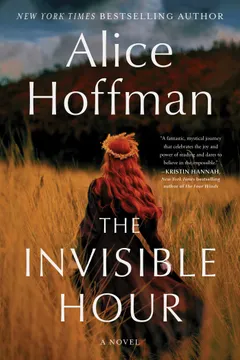
Reviews for The Invisible Hour are mixed, averaging 3.59/5. Readers consistently praise Hoffman's beautiful, lyrical prose and the compelling first half, which follows Mia's escape from a restrictive cult through her love of books, particularly The Scarlet Letter. However, many felt the abrupt shift into magical realism and time travel in the second half created a disjointed narrative. Common criticisms include rushed pacing, underdeveloped characters, and the book feeling too slim. The theme of literature's transformative power resonated strongly with readers across varying ratings.
People Also Read









Characters
Mia Jacob
The self-rescuing readerMia grows up in the Community, where obedience is praised and books are forbidden. Curious, observant, and initially unsure whether her unhappiness is a personal failing, she learns to trust her own perceptions through reading. Her bond with Ivy gives her a private sense of love that the Community cannot fully regulate. Mia is also wary of intimacy, shaped by the fear and loss of her childhood. Her central drive is not simply escape, but the chance to choose what kind of person and parent she will become.
Ivy Jacob
Mia’s defiant motherIvy is an intelligent, beautiful reader who resists the expectations of her wealthy Boston family but has little support when she becomes pregnant. She wants safety and lasting affection, making Joel’s early attentiveness powerfully persuasive. Beneath her compliant role in the Community, she keeps a private life of stories, secrets, and tenderness with Mia. Ivy’s deepest conflict is between protecting her daughter and protecting herself from a man who controls their environment. Her love is real, even when fear prevents her from acting as freely as she wishes.
Nathaniel Hawthorne
The haunted novelistNathaniel is a perceptive, self-doubting writer burdened by his family’s history and uncertain of his own talent. He notices suffering keenly, including the consequences of men’s power over women, but his imagination can also draw him away from ordinary life. His affection for his sisters, especially Elizabeth, reveals a more generous and attentive self than his dark moods suggest. Writing is both his vocation and a source of pressure: he fears failure, yet the stories he creates depend on his capacity to feel beyond himself.
Joel Davis
The Community’s rulerJoel is charismatic, disciplined, and skilled at making vulnerable newcomers feel individually seen. He presents control as care and demands that members surrender possessions, family ties, and private judgment to his communal vision. His authority rests not only on rules but on his ability to interpret disobedience as moral failure. Joel’s need to direct others is most visible in his treatment of women and children, whose choices threaten the orderly world he has constructed.
Sarah Mott
The librarian who intervenesSarah is Blackwell’s librarian, a practical woman who notices that Mia’s clothes and furtive visits signal more than ordinary adolescent mischief. She believes access to books should be welcoming rather than conditional. Her steady temperament lets her respond to Mia’s danger with concrete help, even when that help carries personal and legal risk. Sarah’s relationship with Constance gives her a secure private life, and together they offer Mia a model of care built through trust rather than authority.
Constance Allen
The home that opensConstance is Sarah’s partner, a warm and decisive woman whose small house becomes a refuge for Mia. She does not demand a full explanation before offering safety, and her response helps Mia experience family as a practice of welcome. Constance is protective without treating Mia as property, and her humor can meet fear without denying it. Her care gives Mia room to study, grow, and imagine a future that is not organized around survival.
Elizabeth Hawthorne
Nathaniel’s clear-eyed sisterElizabeth is Nathaniel’s sharp-minded older sister and his most exacting supporter. She understands his artistic gifts, but she also sees how easily romantic intensity can unsettle his work and health. Her skepticism toward Mia is mixed with curiosity and a clear sense of the restrictions imposed on women in her own time. Elizabeth’s intelligence has few acceptable outlets, so she often expresses it through practical judgment and loyalty to her family.
Kayla
The disillusioned newcomerKayla meets Ivy in Harvard Square while both are seeking a place beyond the control of their families. Her quick wit and initial confidence make the Community’s promises appealing, but she soon recognizes the gap between its language of equality and its restrictions on women. Kayla’s vulnerability is sharpened by her lack of outside support. Her story becomes an important warning to Ivy about the cost of silence and the danger of trusting a system that claims to protect everyone.
Helen Connelly
Ivy’s missed lifelineHelen works for the Jacob family and cares for Ivy with a tenderness her parents often fail to provide. She gives Ivy a key to her home and offers a dependable alternative to the family’s rules. Helen’s regret over what she did not ask or learn gives her a quiet, reflective quality. She understands that good intentions do not erase missed chances, and she remains alert to the possibility that Ivy’s daughter may one day need what Ivy once could not accept.
Noah Brinley
The absent first loveNoah is Ivy’s Harvard boyfriend, attractive and ambitious, but unwilling to share responsibility when she becomes pregnant. He values his education and family approval more than the future Ivy asks him to imagine. His retreat leaves her exposed to decisions made by others.
Kenneth Jacob
Ivy’s conflicted fatherKenneth is a successful Boston banker who believes problems can be solved through planning and influence. His fear for Ivy turns into an attempt to control her choices, and his anger at her pregnancy damages their trust. He is capable of regret, but pride and fear keep him from repairing the relationship while he still has the chance.
Catherine Jacob
The guarded grandmotherCatherine is Ivy’s mother, a woman shaped by grief, social expectation, and a difficult family history. She holds tightly to blame and respectability, making it hard for her to meet Mia with generosity. Her reserve shows how pain can become an inherited family language.
Robert Manning
Nathaniel’s steady uncleRobert is a practical fruit expert who has acted as a father figure to Nathaniel and his sisters. He respects Nathaniel’s mind while worrying that his nephew retreats too far into imagination. Fishing is Robert’s way of offering care without forcing confession, a patient invitation back to the natural world and ordinary routines.
Louisa Hawthorne
Nathaniel’s gentle sisterLouisa is Nathaniel’s younger sister, sensitive to the moods of those around her and deeply concerned for her family. Her gentleness contrasts with Elizabeth’s sharper practicality. She often tries to ease distress through direct acts of care.
Evangeline
The Community’s enforcerEvangeline helps Joel run the farm, school, and office. She is vigilant about rules and suspicious of attachments that fall outside the Community’s approved structure. Her close connection to Joel gives her influence, while her jealousy of Ivy complicates her role as caretaker. Evangeline represents how oppressive systems are maintained not only by their leaders but by people invested in their hierarchy.
Carrie Oldenfield Starr
The absent landownerCarrie is Joel’s first wife and the painter whose work survives in the Community’s neglected files. Her family remembers her as an educated woman with artistic ambitions. The land she once owned and the image she left behind connect Blackwell’s history to the lives of those who come after her.
Plot Devices
The Scarlet Letter
A book that opens escapeHawthorne’s novel gives Mia a language for recognizing the resemblance between her mother’s circumstances and the punishment of its fictional heroine. It changes her course at the Last Look River, where Mia has been considering suicide. Later, the book becomes the bridge between Mia and its author, and its inscription links their separate lives. It also gives Joel a means to follow her across time. The book’s movement between library, barn, and historical past turns reading into both shelter and a force that alters events.
Carrie’s Watercolor
Art conceals a land claimMia first keeps Carrie Oldenfield Starr’s watercolor because it shows the Berkshire landscape as it existed before the Community. Its significance is concealed in writing on the back, which later proves to be the evidence Joel wants for his claim to the land. The painting joins beauty to property, connecting the private act of preserving art with the public history of who owns a place. Because Mia saves it without understanding its legal importance, the object carries consequences beyond her original intention.
The Public Library
A door outside the rulesThe library offers Mia access to stories, knowledge, and people who do not demand allegiance before helping her. Sarah’s library card gives Mia a legitimate way to borrow books, while the hidden back door later becomes a route to safety. The library also links Mia’s home in New York to the historical world of Hawthorne, making it more than a setting. Across the story, its shelves represent a practical kind of freedom: the ability to encounter other lives and imagine choices beyond those imposed by the Community.
The Time Crossing
A reader enters literary historyMia’s movement between her own era and 1837 Salem makes her relationship with Hawthorne literal while testing the danger of changing the past. The crossing begins at a cemetery and recurs through places associated with the author and his work. Its rules are connected to the book: as Mia’s presence alters the story, the words begin to disappear, and she herself starts to fade. Time travel therefore creates both intimacy and pressure, forcing Mia to weigh love against the histories and choices her presence might transform.
Apples and Red Leaves
A recurring trace of BlackwellThe Look-No-Further apples tie the Jacob family, the Blackwell orchards, and Joel’s Community to the land’s longer history. Leaves appear as reminders of Joel’s claim over Mia and of the past she has tried to leave behind. The fruit also carries competing meanings: it can be a gift, a memory of Ivy, or an emblem of the rules that governed the farm. As these natural objects recur in different eras, they make the past feel present without requiring Mia to accept its authority.
About the Author
Other books by Alice Hoffman





Download PDF
Download EPUB
.epub digital book format is ideal for reading ebooks on phones, tablets, and e-readers.








