

Key Takeaways
Treat every scientific map as a growing island, not the whole world
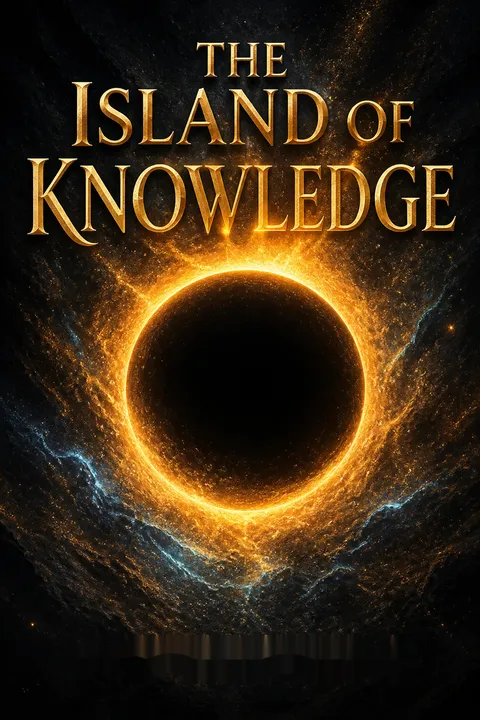
Knowledge has a coastline. Gleiser’s central metaphor is the Island of Knowledge: the body of scientific understanding built from observation, instruments, and theory. Around it lies what remains unknown. As the island grows, its boundary with the unknown grows too, exposing new questions that earlier generations could not even formulate. Instruments extend our senses, but every instrument has a range and every measurement has uncertainty. We detect only a portion of what exists, from invisible radiation to distant galaxies and subatomic particles.
Growth is not arrival. New discoveries can also push accepted ideas back into the water. The changing picture of the cosmos, from an Earth-centered system to an expanding universe, shows why no era should mistake its best account for a final one. The point is not to despair, but to keep exploring.
The metaphor captures a productive tension: evidence can increase confidence in particular claims while making the total scale of ignorance more visible. This resembles mapmaking, where better resolution reveals terrain that was already there but not previously represented. The caution is that expanding questions do not prove that knowledge can never converge on stable principles. Some explanations remain robust within clearly defined limits. Humility works best when paired with that distinction: scientific maps are revisable, but they are not arbitrary.
Pair better instruments with theories willing to be embarrassed
Tools redraw the world. Tycho Brahe measured planetary positions to about eight arc minutes, far more precisely than earlier naked-eye observations. Johannes Kepler used those records to study Mars. After years of trying to preserve circular orbits, he accepted that an ellipse fit the observations better. Galileo’s telescope delivered a different shock: mountains and craters on the Moon, more stars than the eye could see, and moons circling Jupiter all challenged the supposedly perfect, Earth-centered heavens.
Error can be productive. Earlier, alchemists developed practical laboratory techniques while pursuing mistaken ideas about turning metals into gold. Later, phlogiston and caloric offered plausible but ultimately discarded explanations for burning and heat. Their failures helped sharpen experiments and concepts. Science advances not by avoiding wrong turns, but by comparing explanations with evidence and revising them when they fail.
This history makes scientific progress look less like a march of genius and more like a collaboration between instruments, stubborn data, and people willing to revise their favorite picture. That is close to modern model testing: a theory earns trust by surviving attempts to expose its weaknesses, not by sounding elegant. Still, data never interprets itself. Instruments have blind spots, and researchers choose what to measure. The strongest safeguard is not simply more technology, but independent checks and transparent uncertainty.
Use extrapolation boldly, but label where evidence ends
Discovery needs informed bets. Scientists routinely extend successful theories beyond the places where they have been tested. Newton treated gravity as universal even though the available evidence came from Earth and the solar system. Einstein applied general relativity to the cosmos as a whole, though the theory had initially been tested closer to home. Without such extrapolation, science could not make predictions about unfamiliar territory.
Keep the tested core visible. Gleiser calls this a form of empirically grounded belief: confidence earned through a theory’s success, but not a substitute for evidence. A new theory should reproduce established results in the conditions where those results work. General relativity, for example, approximates Newtonian gravity in weak gravitational fields. That compatibility lets scientists use Newton for many practical calculations while turning to Einstein for extreme gravity.
Extrapolation is a necessary feature of science, not a lapse from it. Inductive reasoning takes patterns observed in limited cases and projects them beyond those cases, while new evidence may later narrow or overturn the projection. The useful discipline is to mark the difference between measured result, reliable inference, and speculation. That distinction also helps prevent mathematical elegance from being mistaken for confirmation. A beautiful theory can guide a search, but nature, not aesthetic preference, decides whether it survives.
Accept the cosmic horizon as a real boundary on evidence
Light takes time. Because the universe has a finite age and light travels at a finite speed, we can receive information only from a limited region. The Moon appears as it was about 1.3 seconds ago; the Sun, about 8.3 minutes ago. At greater distances, telescopes collect older light. The cosmic microwave background, the cooled remnant of early light, comes from roughly 400,000 years after the Big Bang, when the universe first became transparent to radiation.
Some evidence cannot arrive. The region beyond the cosmic horizon may exist, but its signals have not reached us and may never do so. Gleiser imagines future astronomers in a far-distant, accelerating universe who can no longer see receding galaxies. Without records from our era, they might mistake their local cosmic neighborhood for the whole universe. What can be observed is not necessarily the whole story.
The horizon is a vivid example of a limit imposed by the structure of the world, rather than by inadequate instruments. It also shows why scientific claims about the whole cosmos depend on assumptions that connect the observable region to what lies beyond it. Such assumptions can be reasonable and mathematically fruitful, but they are not direct observations. The distinction matters: a boundary on evidence is not proof that nothing exists beyond it, and neither is it permission to fill the gap with any story one prefers.
Demand a test before turning possible universes into established worlds
Inflation has observable consequences. Early cosmic inflation proposes a brief period of extremely rapid expansion. It was developed to address puzzles such as the universe’s near-flat geometry and the remarkably similar temperature of the cosmic microwave background in distant directions. Inflation also offers an account of how tiny early fluctuations could grow into the structures that became galaxies. Observations can constrain specific versions of the idea, though they do not settle every detail of what caused inflation.
A multiverse is a bigger claim. Some inflation models suggest that other expanding regions could form separate universes. A collision with a neighboring universe might leave a distinctive pattern in the microwave background, but finding such a pattern would not establish an endless multiverse. The Anthropic Principle says that observers can arise only where conditions permit life. That helps explain why we observe a life-compatible universe, but does not explain why those conditions exist.
The careful separation between a testable trace and a grand interpretation is essential. A signal consistent with a neighboring cosmic region would be intriguing evidence, but the leap from one event to a vast collection of universes would require additional reasoning. The Anthropic Principle is similarly useful as a selection effect: observers necessarily find themselves in places where observers can exist. Its weakness is explanatory reach. Selection can filter possibilities without identifying the mechanism that produced them.
At quantum scales, measurement changes which facts can be stated
The quantum description is probabilistic. In quantum mechanics, a wavefunction is a mathematical object used to calculate the probabilities of possible measurement results. Before a measurement, certain properties, such as an electron’s position, are not assigned one definite value by the standard account. Heisenberg’s uncertainty principle is not merely a flaw in equipment: it limits how precisely certain pairs of properties, such as position and momentum, can be specified together.
The observer is part of the setup. Gleiser’s anthropologist, Werner, studies a remote community, then is discovered and becomes part of its social world. His presence changes what he can observe. The analogy helps illustrate why measurement is not always detached, though quantum measurement is not simply a human observer disturbing people. The interaction with a measuring device matters; whether that means reality is created, or only described differently, remains disputed.
The distinction between measurement and conscious observation prevents a common mistake: quantum physics does not establish that human attention brings the universe into existence. A detector can register an event without a person watching it in real time. What remains difficult is explaining why one outcome is recorded when the theory assigns probabilities to several. The anthropologist story clarifies how observation can alter its subject, but it should not be treated as a literal account of quantum mechanics, where the mathematical structure is more precise and stranger.
Treat quantum nonlocality as real, but not as a messaging channel
Bell made the dispute testable. John Bell derived a mathematical inequality that limits the correlations expected if quantum particles carry local hidden properties. Experiments with entangled photons and other particles repeatedly violate those limits in the way quantum mechanics predicts. The results rule out a broad class of local explanations in which each particle’s outcomes were fixed in advance and influenced only by nearby causes.
Correlation is not communication. When distant partners measure entangled particles, their results are linked more strongly than local hidden-variable theories allow. The pattern does not provide a way to send a chosen message faster than light: each individual result is unpredictable, and the correlation becomes visible only when results are compared. The experiments unsettle classical intuitions about separateness, but do not show that people can transmit thoughts or signals through quantum effects.
Bell’s result is powerful because it turns a philosophical disagreement into an experimental one. It shows that nature cannot satisfy all the assumptions bundled into local, pre-existing explanations. It does not, by itself, select one interpretation of quantum mechanics or describe a controllable influence traveling between particles. That distinction protects a remarkable scientific result from inflated claims. The deeper lesson is not that every connection is possible, but that the ordinary picture of independent objects with fully local properties is incomplete.
Use mathematics as a powerful map, not proof of cosmic design
Mathematics begins in experience. People count objects, notice shapes, and recognize patterns. The Pythagoreans found simple numerical ratios in musical intervals and extended the idea of harmony to the heavens. Gleiser argues that mathematical concepts are human constructions shaped by our brains and experience, not evidence by themselves of a separate realm of perfect truths.
Useful does not mean ultimate. Mathematical structure can reveal real patterns. Dirac’s equation, developed to reconcile quantum theory with relativity, implied a positively charged partner to the electron, later identified as the positron. But many mathematical models do not describe nature, and successful equations remain tools for organizing evidence. Their effectiveness is impressive, yet it does not prove that the universe was designed according to a single human-readable formula.
The middle ground is richer than either extreme. Mathematics is not a free invention unconstrained by the world: counting, measurement, and experiment push back against our abstractions. Nor does its success prove that equations are messages from a cosmic mind. Mathematical structures can be objectively true relative to their assumptions while their relevance to nature remains an empirical question. This distinction explains both why mathematical discoveries can feel surprising and why elegance alone cannot tell physicists which structures describe the physical world.
Let Gödel and Turing temper dreams of complete formal intelligence
Formal systems have limits. Gödel’s incompleteness theorems show that a sufficiently powerful, consistent formal system cannot prove every true statement expressible within it, and cannot establish its own consistency using only its own rules. This is not the same as saying mathematics is inconsistent. Turing’s halting problem adds another limit: no single algorithm can correctly determine, for every possible program, whether it will stop or run forever.
Machines do not settle the mind question. These results challenge the dream that all reasoning can be reduced to a complete list of formal rules. But they do not prove that humans can solve every problem machines cannot. Claims that computers will soon reproduce consciousness also depend on assumptions about what consciousness is and what a brain simulation must capture. Processing power alone does not answer those questions.
Incompleteness is a warning against intellectual totality, not a shortcut to mysticism. Gödel’s results concern formal proof systems with specific properties; they do not demonstrate that human intuition stands outside logic or that artificial intelligence is impossible. Likewise, the halting problem establishes a limit on universal computation, not a verdict on every practical program. These distinctions make the results more useful, not less: they identify exact boundaries rather than turning mathematical limits into vague claims about human superiority.
Let scientific awe deepen meaning without pretending science answers everything
Science is a human practice. It offers powerful, shared ways to describe the natural world, but it does not exhaust every kind of understanding. A glass of wine with someone one loves can be described through chemistry, physics, and biology; those accounts do not replace the experience of taste, affection, or companionship. Gleiser argues that reducing every human question to measurable data would shrink the meaning of life rather than complete science.
Limits keep the search open. The origin of the universe, the meaning of existence, and the ultimate nature of reality are not all questions that current scientific methods can settle. Recognizing limits is not surrender. It is a reason to keep investigating what can be tested, to remain honest about uncertainty, and to value art, relationships, and reflection alongside scientific knowledge.
This ending resists two familiar errors: treating science as the enemy of meaning, and asking science to provide every kind of answer. Different forms of understanding can complement one another without becoming interchangeable. A physical account of love may explain its mechanisms while leaving its lived significance intact. The caution is that calling something beyond science should not shield factual claims from evidence. Respect for mystery is most valuable when it coexists with intellectual discipline and a willingness to learn.
Analysis
The book’s strongest contribution is its account of scientific knowledge as powerful, cumulative, and permanently situated. Its historical episodes make that claim concrete: Tycho’s measurements enable Kepler’s revision of the heavens; instruments expose phenomena that earlier theories could not accommodate; and once-successful explanations such as caloric are abandoned. The Island metaphor unites these stories by separating two ideas often confused: the growth of reliable knowledge and the fantasy of possessing a complete view.
The argument is most persuasive when it identifies practical limits. Every detector has finite reach and precision, while the cosmic horizon places a boundary on information available to observers. It is also valuable when it distinguishes a speculative possibility from an established result, particularly in discussions of inflation, the multiverse, and anthropic reasoning. This gives readers a useful standard for evaluating ambitious claims: ask what was measured, what was inferred, and what remains conjectural.
The book is less secure when it moves from a current limit of explanation to a claim of permanent unknowability. A horizon limits direct access, but conclusions about inaccessible regions can still be constrained by theories and observations from within the visible universe. Likewise, Bell experiments exclude local hidden-variable accounts, not every realist interpretation or every possible future theory. Quantum mechanics’ measurement problem remains serious, but it does not establish that consciousness creates physical reality. Gödel’s theorems also apply to formal systems under specific conditions, not to human knowledge as a whole.
These qualifications strengthen rather than weaken the book’s central position. Scientific humility is not the assertion that knowledge must stop; it is the discipline of refusing to confuse a successful description with a final explanation. The book’s enduring lesson is that inquiry thrives when confidence is proportional to evidence, and wonder survives without being used as evidence. Science can transform our picture of reality while remaining a human, revisable account of the world, not a promise to explain every dimension of experience.
Review Summary
The Island of Knowledge receives mostly positive reviews for its exploration of the limits of scientific understanding. Readers praise Gleiser's accessible writing style, engaging historical overview of science, and thought-provoking philosophical insights. Many appreciate his argument that there will always be unknowns in science, expanding our "island of knowledge" while increasing our awareness of what remains unknown. Some readers found certain sections, particularly on quantum physics, challenging to follow. Overall, the book is commended for its compelling discussion on the nature of scientific inquiry and human knowledge.
People Also Read






Glossary
Island of Knowledge
Growing body of knownsGleiser’s metaphor for accumulated scientific and technological knowledge. The island expands as observation and theory reveal more of the world, but its coastline also lengthens, bringing more unknown questions into view. It represents science as an open-ended process rather than a journey toward a guaranteed final account of reality.
natural constructivism
Revisable scientific descriptionGleiser’s view that scientific theories are human constructions based on measurement, reasoning, and mathematical models. They aim to describe nature reliably and can be tested against evidence, but they are neither timeless revelations nor final accounts. Their success is real, while their scope and concepts remain open to revision.
cosmic horizon
Limit of cosmic informationThe boundary of the region from which information could have reached us during the universe’s history, given the finite speed of light and the universe’s expansion. Space may continue beyond this boundary, but signals from beyond it cannot currently inform direct observations of those regions.
displaced energy
Energy above the stable stateGleiser’s accessible term for energy stored when matter or a field is away from its lowest-energy state. In cosmological models, such energy can produce negative pressure and accelerate expansion. As the field moves toward its stable state, the acceleration may change or cease. The related phrase false vacuum energy is common in this discussion.
wavefunction
Quantum probability descriptionA mathematical function used in quantum mechanics to calculate the probabilities of possible measurement outcomes. In the interpretation described by Gleiser, it does not straightforwardly represent a physical wave made of matter. Its evolution predicts probability amplitudes, while a measurement yields a particular recorded result.
entanglement
Correlated quantum stateA quantum relationship in which the properties of multiple particles must be described together rather than independently. Measurements on separated entangled particles show correlations that cannot be explained by local hidden-variable models. Entanglement does not allow observers to send controllable information faster than light.
decoherence
Loss of quantum interferenceThe suppression of interference between different possible quantum outcomes through interactions with the surrounding environment. Decoherence helps explain why large, complex systems appear classical rather than displaying obvious quantum superpositions. It clarifies the emergence of classical behavior but does not by itself explain why a particular measurement outcome occurs.
Bell's theorem
Test of local explanationsA result showing that theories combining local causes with pre-existing hidden properties must obey limits on correlations between distant measurements. Quantum mechanics predicts violations of those limits, and experiments observe them. The theorem rules out that class of local explanations, but it does not establish faster-than-light communication or identify one definitive interpretation of quantum mechanics.
Anthropic Principle
Observer-based selection effectThe reasoning that observers can find themselves only in conditions compatible with their existence. In cosmology, it is used to explain why measured physical conditions permit life, especially in multiverse proposals where many possible conditions may occur. Gleiser argues that it can select compatible possibilities without explaining why those possibilities exist.
Gödel's incompleteness theorems
Limits of formal proofResults showing that sufficiently powerful, consistent formal systems cannot prove every true statement expressible within them, and cannot prove their own consistency using only their own rules. They limit the ambition to derive all mathematics from a complete formal foundation. They do not show that mathematics is inconsistent or that human reasoning escapes formal limits.
FAQ
What is The Island of Knowledge by Marcelo Gleiser about?
- Exploration of knowledge limits: The book investigates the boundaries of scientific understanding, arguing that as our knowledge grows, so does our awareness of the unknown.
- Science and mystery coexist: Gleiser emphasizes that science is powerful but inherently limited, and that mystery and the unknowable are permanent features of our quest for meaning.
- Integration of disciplines: The narrative weaves together history, philosophy, and physics to trace how our worldview has evolved from ancient times to modern science.
Why should I read The Island of Knowledge by Marcelo Gleiser?
- Profound insight into science: The book offers a deep, accessible look at how scientific knowledge evolves and where it encounters fundamental limits.
- Bridges science and human meaning: Gleiser connects scientific ideas to broader human concerns about existence, consciousness, and the search for meaning.
- Inspiration for curiosity: Readers are encouraged to embrace uncertainty and mystery as sources of creativity and wonder, making the pursuit of knowledge an endless journey.
What is the "Island of Knowledge" metaphor in The Island of Knowledge by Marcelo Gleiser?
- Knowledge as an island: Gleiser likens all accumulated knowledge to an island surrounded by a vast ocean of the unknown, illustrating the limits of what we can know.
- Expanding shores of ignorance: As the island grows with new discoveries, its boundaries touch more unknowns, meaning that increased knowledge also reveals new mysteries.
- No final destination: The metaphor underscores that there is no ultimate "Theory of Everything"; knowledge is always provisional and expanding.
What are the key takeaways from The Island of Knowledge by Marcelo Gleiser?
- Knowledge is inherently limited: Both our tools and the nature of reality itself impose boundaries on what we can know.
- Science is a human construction: Scientific theories evolve with new data and methods, making our understanding of reality contingent and provisional.
- Embrace mystery and curiosity: The unknown is not a failure but a source of inspiration, fueling the ongoing quest for meaning.
- Interplay of science and philosophy: Understanding science’s limits requires philosophical reflection, especially on concepts like infinity, the multiverse, and consciousness.
What are the main scientific concepts explained in The Island of Knowledge by Marcelo Gleiser?
- Relativity and the speed of light: The book covers Einstein’s theories, showing how the constancy of light’s speed reshaped our understanding of space and time.
- Quantum mechanics and uncertainty: Gleiser explains wave-particle duality, Heisenberg’s Uncertainty Principle, and the observer’s role in quantum reality.
- Cosmology and the universe’s structure: Topics include the expanding universe, cosmic microwave background, inflation, and the multiverse hypothesis, all illustrating the limits of what we can observe.
How does Marcelo Gleiser describe the role of the observer in quantum physics in The Island of Knowledge?
- Observer affects reality: In quantum mechanics, measurement doesn’t just reveal properties—it produces them, blurring the line between observer and observed.
- Entanglement and nonlocality: Gleiser discusses how entangled particles act as a single system, challenging classical ideas of separability and locality.
- Interpretational challenges: The book presents various interpretations of quantum mechanics, highlighting the unresolved mystery of the observer’s role.
How does The Island of Knowledge by Marcelo Gleiser address the relationship between science and religion?
- Belief as a creative force: Both science and religion rely on belief—science through hypotheses and models, religion through faith in the unknowable.
- Different approaches to the unknown: Religion explains the unknown with the sacred, while science seeks empirical explanations, leading to different worldviews.
- Historical examples: Gleiser illustrates how figures like Newton and Einstein used belief to extend their theories, showing belief’s essential role in scientific creativity.
What does The Island of Knowledge by Marcelo Gleiser say about the nature of reality and our perception of it?
- Reality is instrument-dependent: Our perception of reality changes with the tools and methods we use, making reality contingent on our observational reach.
- Cognitive fabrication of "now": The book argues that our sense of the present is an illusion created by the brain, challenging intuitive notions of time.
- Limits imposed by cosmic horizons: The finite speed of light and the universe’s age create a cosmic bubble, beyond which we cannot obtain information.
How does Marcelo Gleiser explain the limits of scientific measurement and technology in The Island of Knowledge?
- Measurement precision is limited: All measurements have error bars; no measurement is perfectly exact, and instrument precision sets the boundaries of what we can know.
- Technology bounds knowledge: Our ability to probe nature depends on the energy scales and precision of our tools, leaving some phenomena inaccessible.
- Evolving knowledge: As technology advances, new phenomena become accessible, but new unknowns also emerge, ensuring knowledge remains incomplete.
What does The Island of Knowledge by Marcelo Gleiser say about the limits of mathematics and logic?
- Gödel’s incompleteness theorems: The book explains that any sufficiently complex mathematical system is incomplete, with true statements that cannot be proven within the system.
- Turing’s halting problem: Gleiser discusses how it’s impossible to algorithmically determine whether any arbitrary program will halt, showing limits to computation.
- Implications for knowledge: These results highlight that human knowledge and reasoning cannot be fully captured by formal systems or machines.
How does The Island of Knowledge by Marcelo Gleiser explore the relationship between consciousness and quantum mechanics?
- Quantum measurement and consciousness: The book presents the idea that consciousness may play a role in the measurement process, as suggested by physicists like Wigner and Wheeler.
- Challenges and debates: Gleiser discusses thought experiments like Wigner’s friend and Wheeler’s delayed choice, which suggest consciousness influences physical reality.
- Limits of understanding: The book acknowledges that consciousness may be beyond human cognitive capacity to fully understand, linking the mystery of mind to the unknowable in quantum physics.
What is the significance of the multiverse concept in The Island of Knowledge by Marcelo Gleiser?
- Multiverse as theoretical possibility: The book introduces the multiverse as a collection of many universes, each with different physical properties or laws, arising from modern cosmology and string theory.
- Limits of testability: The multiverse hypothesis is fundamentally untestable, as other universes lie beyond our cosmic horizon and cannot be observed.
- Anthropic reasoning and critique: Gleiser discusses the Anthropic Principle as an explanation for life-permitting constants, critiquing it as accommodating rather than truly explanatory.
About the Author
Other books by Marcelo Gleiser
Download PDF
Download EPUB
.epub digital book format is ideal for reading ebooks on phones, tablets, and e-readers.








