

Plot Summary
Prologue
In October 1965, war correspondent Dickey Chapelle races her young niece and nephew to the Wisconsin Historical Society, carrying boxes of photographs, letters, and field notes. She is donating the record of a career spent documenting conflict, insisting it may help future correspondents show how history looks from the front.
Her brother Robert hears something more final in the gesture and asks if she is coming home. Dickey says her real home may be in South Vietnam, where she hopes to make one last photograph that could spare children the wars she has covered.
The opening gives the archive a double meaning. Dickey describes it as a practical guide for other reporters, but the donation also resembles a reckoning with a life she has spent refusing to pause and examine. Her brother reads the gesture as a possible farewell, while Dickey keeps her attention on the future and on the children she hopes her work might protect. The image she takes of them playing turns her camera briefly toward ordinary life. That choice introduces the tension between witnessing violence and wanting a world in which children need not inherit it.
The Marriage Comes Apart
At a Christmas gathering in 1954, photojournalist Dickey Chapelle watches her husband, Tony, become intimate with Helga, a German immigrant the couple had helped. Tony is much older, drinks heavily, controls their shared work, and has concealed a previous marriage and son from Dickey.
Her mother's constant criticism has trained her to doubt her own judgment, while her beloved Aunt George urges her to stop accepting mistreatment. After Dickey catches Tony and Helga in bed, she takes her hidden savings, cameras, and field gear and leaves. She rents a small apartment and begins building a life without him, though money, Tony's harassment, and her mother's disapproval keep the separation painful.
Dickey's exit is not a sudden triumph of self-confidence. It follows years of dependence, emotional manipulation, and the belief that she must keep peace with people who diminish her. The affair makes the private pattern visible, but the decisive act is practical: she takes her emergency money and equipment and secures a room of her own. Photography has given her independence in the world, yet her marriage has kept her negotiating for permission at home. Leaving Tony begins the longer task of trusting her own perception, a task that will recur whenever authority tells her that her instincts are foolish.
A Platoon Takes Her In
Dickey trains with young Marines at Camp Pendleton, keeping pace with recruits and documenting their work even as major magazines reject her proposed story. Sergeant Bob Morrisey and his family give her the belonging she has missed since the Pacific war.
When her military accreditation is formally restored, the old disgrace of disobeying orders at Iwo Jima finally lifts. Back in New York, Dickey wins a research and communications job with Leo Cherne's organizations, earns a legal annulment from Tony, and proves she can support herself.
Her mother dies in 1956, leaving Dickey grieving and newly untethered. When Soviet-backed Hungarians rise against their government, Dickey sees a chance to return from office work to the people and conflicts she believes Americans must witness.
The Marines offer Dickey something more durable than praise: a group whose standards are explicit and whose acceptance depends on shared effort. Regaining accreditation repairs a professional injury, but it also forces her to recognize that courage and discipline are not identical. Her new office job brings financial agency and access to Cold War policy, while her mother's death removes a difficult source of emotional authority. The convergence of these changes makes the Hungarian uprising feel less like an assignment than a summons. Dickey's impulse to go is generous, but it is also entwined with her need to belong where danger gives her purpose.
Budapest Opens, Then Closes
When Hungarian resistance fighters briefly push Soviet power out of Budapest, Dickey's boss, Leo Cherne, travels there with antibiotics and brings back photographs of young fighters and civilians. The images become unbearable when Dickey learns that Soviet tanks have crushed the uprising, a photographed fiancée has lost her partner, and a young resistance fighter is missing.
Dickey persuades Leo to help send her to Austria under a Life magazine assignment and a humanitarian cover. At the border, she joins author James Michener and other reporters in helping Hungarian families cross an icy canal, then interviews refugees in Vienna. She sees that relief supplies are scarce and that some medicine has not reached the people who need it.
This episode makes the gap between a public promise and lived consequence tangible. American broadcasts have encouraged Hungarian hopes, but the United States will not send troops; Leo's photographs register the cost of that mismatch without turning it into a simple tale of rescue. Dickey's work shifts between reporting and direct aid, and the dying refugee children make the camera feel insufficient. Her frustration with the missing antibiotics is ethically understandable, yet it also sharpens her tendency to treat urgency as permission. The border offers her a model of solidarity, but the failure of political promises makes her increasingly unwilling to wait for institutions.
The Bridge Behind Her
Dickey pressures the International Rescue Committee to release antibiotics for Hungarian families and for Ferenc Welsch, a guide trying to reach his wife and baby. Her colleagues warn her not to cross into Hungary, where Soviet guards now patrol the border. After the refugees' wooden bridge is destroyed, Dickey still accompanies Ferenc and another guide across a dangerous log crossing, carrying medicine and a hidden camera.
They lose their way in fog, stumble into a stream, and meet Russian-speaking guards. The guards arrest Dickey and Ferenc. At Budapest's Fö Street prison, officials separate them, call her a spy, and subject her to isolation, starvation, interrogation, and threats of execution. Her choice to act alone has become a trap.
Dickey's humanitarian motive does not cancel the recklessness of the crossing. The sequence exposes a recurring weakness in her moral logic: because a need is real and a delay may cost lives, she assumes that her own intervention is necessarily the right one. The broken bridge literalizes the shrinking space between aid and danger, while the hidden camera makes her vulnerable to being classified as a spy. Once captured, she cannot control how her actions are interpreted. The prison strips away the professional identity that usually steadies her, forcing her to confront the difference between choosing risk and being wholly subject to another person's power.
Poetry Through Fö Street
In solitary confinement, Dickey scratches a daily count into her cell wall and clings to exercise learned at Camp Pendleton. A guard's gift of a German poetry book and an unexpected Christmas meal give her small footholds against despair; another guard stages a mock execution to terrorize her.
After seven weeks, the authorities release her following a short trial, but Ferenc remains imprisoned. Back in the United States, Dickey discovers that Leo has shut her out and will not help the Hungarian guides she promised to support.
She resigns, then accepts Jim and Mari Michener's invitation to recover at their Pennsylvania home. Mari cares for her and urges her to write about the prison; Jim's book preserves her courage under a concealed identity.
The prison does not simply test Dickey's bravery; it breaks the habits by which she has kept herself intact. Routine, language, and bodily movement become survival tools when professional recognition and external control disappear. The contrast between the guards' cruelty and the small acts of kindness complicates her instinct to divide people neatly into sides. Release also fails to restore her previous life: Leo's rejection and the abandoned guides make freedom feel morally unfinished. Mari and Jim provide care without demanding performance, allowing Dickey to begin interpreting her experience rather than merely outrunning it.
Castro's Mountain Republic
In late 1958, Reader's Digest sends Dickey to Cuba, where Fidel Castro's rebels allow her into their mountain stronghold because she protected Hungarian resistance contacts. Her cameras and trench knife are withheld during the journey, but she secures a replacement camera and reaches the Sierra Maestra with a young rebel guide.
There she meets Castro and Ernesto Che Guevara, observes radio broadcasts and prisoner appeals, and joins the women of the Mariana Grajales Platoon on patrol.
The women describe imprisonment and sexual violence under Batista, while their discipline wins Dickey's admiration. During the fight for Maffo, a jeep carrying Dickey crashes after its brakes fail. She is injured, but the rebel advance continues and Batista's rule collapses.
Cuba offers Dickey the closest thing she has found to a chosen family, and she earns trust by living among the women rather than treating them as background to male leaders. Her willingness to share danger produces intimate knowledge, but it also weakens the distance required to assess a cause clearly. The rebels' appeal to mercy toward captured soldiers contrasts with Batista's brutality and strengthens Dickey's hope that political change can be humane. The crash punctures the romance of the campaign without ending it. Her injuries expose how easily a reporter's sense of belonging can make risk feel like proof of loyalty.
The Revolution Turns
After returning to Cuba in 1959, Dickey sees that the country she once celebrated is changing. Her old rebel companions Felipe and Raquel describe censorship, political indoctrination, religious persecution, and plans to flee with their children. Dickey also sees Fidel preside over the televised trial of William Morgan, an American who had fought beside the rebels and now opposes communism.
The public spectacle ends with Morgan sentenced to death. Dickey recognizes that her favorable reporting helped build Castro's reputation, and she can no longer treat the revolution as uncomplicated liberation. Her account angers Fidel's government, which warns her away from Cuba. The man who had welcomed her as a friend now makes any return dangerous.
The decisive revelation is not that a revolution can become authoritarian, but that Dickey's own work helped shape what Americans believed about it. Her intimacy with the rebels made her reporting powerful and emotionally credible; it also made her vulnerable to their preferred story. Morgan's televised trial turns political violence into public theater, converting the camera's promise of exposure into an instrument the regime can also manipulate. Dickey's banishment makes her a critic of a cause she once served, but she does not retreat into easy cynicism. She keeps looking for people whose stated ideals match their treatment of the vulnerable.
A Village Beyond the Jungle
In 1961, Dickey parachutes into Laos with Royal Lao troops and American advisers, documenting a covert conflict that official accounts barely acknowledge. A helicopter crashes and a soldier dies in a booby trap, while the surviving force suffers heavy losses.
Dickey learns that Aunt George has died before she can return to Wisconsin. In Saigon, General Bernie Yoh connects her with Father Augustine Nguyen Lac Hoa, a Chinese refugee, Catholic priest, and military leader. Father Hoa welcomes her to Binh Hung, a fortified settlement built by displaced families.
Its school, church, canal-side homes, and disciplined Sea Swallows show her a community that combines defense with care for civilians and prisoners. Dickey feels, for the first time, that she may have found a home.
The movement from Laos to Binh Hung links two forms of resistance: covert military action that leaves bodies behind, and a community trying to make security visible in everyday life. Aunt George's death removes Dickey's most intimate source of affirmation just as Father Hoa offers another kind of paternal welcome. The village appears to answer her longing for belonging without asking her to abandon her vocation. Yet its safety depends on armed vigilance, so the apparent refuge is never outside the war. Dickey's attraction to Binh Hung is emotionally real, but the narrative lets its fragility remain in view.
The Sea Swallows' Daughter
Dickey joins Sea Swallow patrols with Tien, a young interpreter whose family treats her as one of their own. She learns that the Viet Cong killed a child at a border cross and threatened other children, a terror that helped create Father Hoa's defensive force. On a later patrol, the Sea Swallows survive an ambush, but Dickey's camera is ruined when she wades into deep water.
During a mission to protect a village mass, rebels attack and Ming, Tien's young cousin, dies on poisoned stakes. Father Hoa still leads the community to worship, and Dickey becomes feverish during Tien's wedding. The village's tenderness and its losses arrive together, making her belonging feel precious rather than invulnerable.
Binh Hung gives Dickey a working example of the alternative she has been seeking: force disciplined by a duty to protect rather than humiliate. But the child's murder, Ming's death, and the wrecked camera show that ethical conduct cannot guarantee safety or preserve every witness. Dickey's affection for Tien's family deepens her commitment while also revealing the personal costs of embedding herself. Her illness at the wedding collapses the distinction between observer and participant: she is no longer merely documenting a community's grief but sharing its bodily exhaustion. The chapter complicates her longing to call any place a safe home.
Vinh Quoi's Burning
When Dickey returns to Vietnam in 1962, a helicopter brings her to Vinh Quoi, a satellite village destroyed by Viet Cong fighters. She photographs the dead but honors an old man's refusal to have his daughter and grandson pictured. Survivors return to find relatives gone, and Tien's force has lost thirty men in another ambush.
During the funeral, Tien's sister Lai performs a sword dance that turns mourning into a public act of resistance. Dickey carries the image forward as a reminder of what the villagers defend. Her Vietnam reporting wins major recognition, including a National Geographic cover and a photography award, but Father Hoa's command is later removed from him. The community she imagined as a refuge is becoming more exposed.
The old man's refusal marks a crucial ethical limit: documenting suffering does not give a photographer ownership of another person's grief. Lai's dance answers the destruction not by denying loss but by giving the community a form through which to mourn and continue. Dickey's award-winning image brings recognition, yet no photograph can reverse the deaths or protect Father Hoa's authority. The contrast between professional success and political vulnerability is deliberate. Dickey increasingly understands that images can mobilize attention, but they cannot substitute for the relationships and institutions that determine whether a community can endure.
Hialeah's Loaded House
In 1963, Dickey rents a Miami house as a safe base for Commandos X, Cuban exiles trying to move weapons into Cuba and bring refugees out. Her friend Felipe, once a rebel alongside Castro, now fights the regime that displaced his family.
Dickey helps assemble explosives and upgrade a speedboat, despite warnings from General Lansdale that Felipe's anger and associates are making the operation dangerous. Federal agents raid the house after missing nitroglycerin remains visible in the refrigerator.
The group later loses its weapons to the Coast Guard. In 1964, Felipe is captured during another mission and executed in Cuba. Reader's Digest rejects Dickey's account, and Father Hoa loses command of Binh Hung. Dickey leaves the work brokenhearted but resolves to return to Vietnam.
The episode repeats Dickey's central danger in a new political setting: solidarity can become complicity when a cause is pursued through covert means and compromised allies. She sees the danger in the mercenaries but discounts warnings about Felipe because she knows his family and understands his grievance. The federal raid and the seized arsenal expose the gap between clandestine action and the public support the exiles hope to win. Felipe's fate and the loss of her reporting leave Dickey with no clean victory. The parallel removal of Father Hoa's command further undermines her belief that good leadership alone can keep a community safe.
The Last Return East
Back in Vietnam, Dickey covers river patrols and watches the conflict grow more impersonal as American involvement expands. U.S. Navy adviser Harold Meyerkord gives her a South Vietnamese insignia after she helps expose a mine cache, but he is later killed in combat. At a Marine camp, Dickey stops soldiers from abusing a captured Viet Cong fighter and photographs the prisoner until the men release him and give him water.
At home, she clashes with antiwar students who call her a hawk, then admits to her brother that she cannot make peace even in her own life. In 1965 she nevertheless secures accreditation to return with the Marines. Binh Hung, Father Hoa, and the losses of friends remain with her as she prepares for another assignment.
The prisoner episode is a moral pivot because Dickey's camera does more than record harm: it interrupts it. Her authority comes not from rank but from making the soldiers see themselves as witnesses to their own conduct. Yet her conflict with the students reveals the limits of that method; her experience cannot by itself bridge the gulf between their fears and her convictions. The losses of Harold and Father Hoa strip away the consoling idea that a principled force can remain untouched by a larger war. Dickey continues toward the front, but her sense of purpose now includes restraint and reconciliation as well as exposure.
One More Patrol
In October 1965, Dickey leaves her papers at the Wisconsin Historical Society, says goodbye to Aunt Lutie, and returns to Vietnam with the National Observer. General Wallace Greene awards her the Marine Corps eagle, globe, and anchor insignia she has long wanted, then orders her to keep her head down.
With fellow correspondent Henri Huet, she joins young Marines near Da Nang. One soldier dies during their transport, and Dickey names a later operation Red Snapper.
Afterward, she intervenes when Marines bind a captured Viet Cong youth with barbed wire, photographing the abuse until the soldiers cut him free and give him water. She records the young men, their families, and her own sense of belonging, then marches out on patrol beneath a rainbow.
Dickey receives the emblem she has wanted, but the award cannot make her safer or resolve the contradictions in her work. Her final deployment gathers the people and practices that have shaped her: military camaraderie, the camera as testimony, and the insistence that enemies remain human. The boy's release offers a small, concrete success against the machinery of war, not a grand solution. Her final recording moves among memory, faith, grief, and ordinary affection, suggesting that her purpose has widened beyond being first or winning recognition. She walks forward still committed, but with less certainty that any single image can stop what she has witnessed.
Epilogue
On November 4, 1965, a Marine ahead of Dickey sets off a booby trap. Shrapnel fatally wounds her, and she dies within minutes. Henri Huet photographs the scene, believing she would have wanted the moment recorded. Marines bring her body home for a funeral with full honors.
Donations raised in her name later fund a children's field hospital near Chu Lai, dedicated as the Dickey Chapelle Memorial Dispensary. The book closes on the consequence she could not secure for herself: her reporting does not end war, but the work of her witnesses and friends helps provide care to children caught in it.
The ending refuses to turn Dickey's death into proof that her life was either meaningless or gloriously ordained. Her final injury is sudden and caused by the same kind of hidden danger she spent years trying to make visible. Henri's photograph preserves the moment, while the dispensary converts public memory into practical care. That outcome is modest beside Dickey's ambition to end war, but it is not abstract: children receive treatment because people respond to her name and work. The memorial therefore completes the book's argument about images. They cannot end violence alone, but they can help direct resources toward those who survive it.
Analysis
Dickey's career is driven by a paradox: she wants to make war visible so that people will oppose it, yet she repeatedly seeks the closeness of soldiers and insurgents because danger gives her purpose, fellowship, and a sense of home. The novel neither dismisses this as thrill-seeking nor treats her conviction as pure altruism. Her courage produces real access and, at times, practical help, but her impatience also crosses boundaries, endangers networks, and confuses moral urgency with personal authority. The Hungarian crossing makes that cost unmistakable.
The camera is the book's central ethical instrument. It can carry evidence from a prison border or village massacre into distant homes, but it cannot guarantee that viewers will act. Dickey must also decide when not to photograph, as when a grieving grandfather refuses her lens. The distinction matters: bearing witness is not the same as possessing another person's suffering. Her photographs become most consequential when they alter behavior or direct aid, not when they win acclaim alone.
The political story repeatedly overturns simple allegiances. Batista's brutality makes Castro's rebellion compelling; Castro's trials and repression expose the danger of treating revolutionary charisma as proof of justice. In Vietnam, Father Hoa offers a contrasting model: defense remains answerable to the dignity of prisoners and the welfare of civilians. Yet even Binh Hung cannot remain a protected moral island. Its losses show that humane leadership can resist violence without controlling its spread.
Dickey's emotional education is therefore not a conversion from action to passivity. She learns that peace requires restraint inside the very relationships and encounters where she once acted on impulse. The archive, the photographs, and the memorial clinic all make the same modest claim: no image ends war on its own, but truthful attention can preserve people from disappearance and move others toward care. Her legacy is not the final picture she hoped to make, but a chain of witnesses and acts of aid that outlasts her.
Review Summary
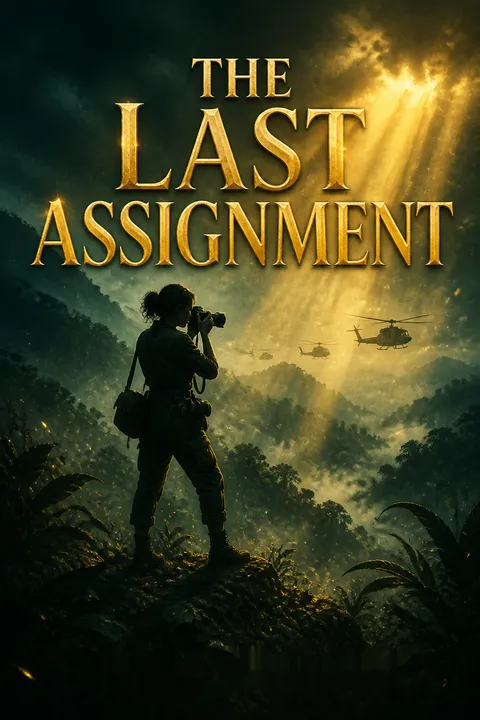
The Last Assignment is a compelling historical fiction novel about Dickey Chapelle, a trailblazing female photojournalist and war correspondent. Readers praise Robuck's vivid storytelling, bringing Chapelle's courageous life to the forefront. The book covers Chapelle's experiences in various conflicts, including Hungary, Cuba, and Vietnam. Many reviewers appreciate learning about this remarkable woman and her contributions to journalism. While some found the pacing slow at times, most highly recommend the book for its portrayal of a fearless woman who risked everything to document the realities of war.
People Also Read









Characters
Dickey Chapelle
The combat witnessA small, quick-witted American photojournalist, Dickey measures herself against the pilots, explorers, and Marines she admires. She wants to be first because she fears being overlooked, but her deeper drive is to make distant suffering impossible to ignore. She is generous, physically brave, funny, impulsive, and often too eager to treat danger as evidence that she belongs. Her camera lets her enter lives that institutions would rather keep unseen, while also giving her a shield from intimacy. Across her assignments, she must distinguish courageous witnessing from reckless intervention and learn that telling a story well includes respecting the people who do not want to be photographed.
Tony Chapelle
The controlling mentorDickey's much older husband and first photography teacher, Tony combines genuine professional influence with possessiveness and emotional manipulation. He wants to be seen as her rescuer and teammate, yet resents her success and independence. His drinking, financial recklessness, and demands for care place Dickey in the role of caretaker rather than equal partner. Tony's presence helps explain why she has difficulty trusting her own judgment in intimate relationships, even as her work takes her confidently across the world.
Aunt George
Dickey's fearless wingmanDickey's namesake aunt is a bohemian poet who understands her niece's appetite for movement and refuses to confuse unconventionality with failure. She offers humor, loyalty, and a language of possibility when Dickey's mother or husband tries to make her smaller. Their bond is unusually intimate because George supports Dickey without demanding that she become safer or more conventional. Her presence gives Dickey a model of affection that can challenge her and still remain firmly on her side.
Aunt Lutie
The family anchorWarm, practical, and deeply attached to family, Aunt Lutie offers Dickey a place to rest and a steady current of concern. She cannot fully understand why her niece chooses danger over domestic security, but she keeps welcoming her home and tries to protect her from the consequences. Her care is expressed through food, hospitality, and persistent questions about Dickey's future. She represents the life Dickey could choose, even when Dickey cannot remain in it.
Robert Chapelle
The worried brotherDickey's younger brother is an Army veteran, geology instructor, husband, and father whose life is rooted in Wisconsin. He loves his sister but worries that her attraction to conflict has become self-endangering. Robert's challenges are not rejections of her work; they come from seeing how her choices affect the family that waits for her. He provides a grounded counterpoint to Dickey's conviction that a meaningful calling justifies almost any personal risk.
Stevie Blick
The chosen sisterStevie begins as Dickey's assistant and becomes her closest friend in New York. Practical, observant, and affectionate, she helps Dickey navigate professional life and chooses clothes suited to assignments that require her to pass as an ordinary tourist. Stevie's humor makes Dickey feel accepted without pretending that her risks are harmless. She repeatedly urges caution, but she does not withdraw her love when Dickey ignores her advice. Their friendship gives Dickey a chosen form of home that travels with her.
Leo Cherne
The institutional patronThe influential head of the Research Institute of America and the International Rescue Committee hires Dickey for her intelligence and clarity. He gives her access to policy circles and, when the Hungarian crisis breaks, helps open a route to the field. Leo believes in humanitarian work but also bears responsibility to organizations whose reputations and limits shape his decisions. His support and later estrangement expose the distance between an institution's mission and its willingness to accept the costs of an individual worker's choices.
James Michener
The witness and advocateThe novelist and reporter James Michener encounters Dickey while helping Hungarian refugees. He treats her as a colleague, joins her at the border, and takes her work seriously when other institutions judge her mainly by the trouble she causes. His friendship offers a form of recognition that does not depend on her being useful or fearless. Through his attention, Dickey begins to imagine that her experiences can be recorded without being reduced to scandal or bravado.
Mari Michener
The restorative friendMari Michener meets Dickey in Vienna and quickly becomes a trusted friend. Her own experience of wartime internment gives her particular sensitivity to Dickey's trauma, and she offers care without turning recovery into an obligation to perform strength. At the Michener home, she feeds Dickey, protects her privacy, and encourages her to write about prison. Mari's steadiness helps Dickey understand that resilience can include receiving care from someone else.
Bob Morrisey
The Marine Corps allyA Marine sergeant Dickey befriends through her earlier service, Bob welcomes her into the Morrisey family and treats her as a trusted comrade. He helps her reconnect with military life and celebrates her return to accredited reporting. His concern is candid: he respects her courage but sees when it shades into carelessness. Bob embodies the fellowship Dickey seeks in uniform, while reminding her that comradeship includes the duty to keep one another alive.
Fidel Castro
The revolutionary charmerCastro is a commanding, volatile leader whose energy draws Dickey and many observers into the Cuban revolution's promise. He welcomes her reporting and values its ability to shape public opinion, while expecting loyalty from those he calls friends. Dickey is impressed by his attention to soldiers and ordinary Cubans, but she initially mistakes charisma and anti-Batista resistance for guarantees of political freedom. Castro represents the danger of allowing personal access to substitute for scrutiny of how power is exercised.
Che Guevara
The severe strategistA physician turned revolutionary commander, Che is calm and intensely focused, a contrast to Castro's noisy presence. He leads troops effectively and speaks in terms of discipline and political transformation. Dickey finds him compelling but unsettling, particularly when his treatment of prisoners and his ideological commitments complicate the humanitarian image of the rebellion. Che forces her to attend to what leaders do, rather than relying on the values they claim to serve.
Father Augustine Nguyen Lac Hoa
The village soldier-priestFather Hoa is a Chinese refugee, Catholic priest, and military leader who builds a community of displaced families in South Vietnam. He believes armed defense must remain subordinate to protecting people and winning trust. His treatment of prisoners, respect for different faiths, and patient attention to village life give Dickey a model of leadership unlike the theatrical authority she sees elsewhere. He becomes a mentor whose spiritual teaching asks her to confront anger, forgive herself, and recognize that peace begins in concrete relationships.
Bernie Yoh
The strategic bridgeGeneral Bernie Yoh is a Chinese Nationalist veteran and American liaison who connects Dickey with Father Hoa and the Sea Swallows. A musician as well as a strategist, he sees both the military and human dimensions of their work. Bernie supports Dickey's reporting but understands the limits of American protection and warns her when she becomes too deeply entangled in covert operations. He serves as a link between local resistance and international power, while urging her to recognize what each can and cannot provide.
Felipe
The divided patriotFelipe is a Cuban naval officer who joins Castro's rebellion and later opposes the government it creates. He is devoted to his wife, Raquel, and their children, and his attachment to Cuba makes exile feel like a wound rather than a new beginning. Dickey admires his courage and trusts their shared history, which makes it harder for her to judge the increasingly dangerous methods around him. His story tests her conviction that knowing someone's motives is enough to know the consequences of their choices.
Raquel
The exile family's heartRaquel is Felipe's wife and a mother trying to protect her children from the political repression that has uprooted their family. She speaks plainly about what life under Castro means for education, religion, and personal choice. Her appeal asks Dickey to see the Cuban struggle not only as a contest between governments but as a family's attempt to live safely and freely. Raquel's presence keeps the risks of Felipe's work tied to the people who must bear its consequences.
Henri Huet
The steady correspondentHenri is a French-Vietnamese photojournalist who becomes Dickey's colleague in Southeast Asia. Fluent in local languages and attentive to the people around him, he shares the demands of war reporting without competing with her for access. His calm presence helps Dickey navigate unfamiliar operations and notice when her emotions are overtaking her judgment. Henri understands that reporters must survive to tell what happened, a practical wisdom Dickey respects even when she continues to take risks.
Tien
The young Sea SwallowTien is an eighteen-year-old interpreter and Sea Swallow whose confidence and humor ease Dickey's entry into Binh Hung. He is devoted to his family and betrothed, Anh, while accepting the danger of defending the community where they live. Tien's mix of youthful bravado and real responsibility makes the village's young fighters more than symbols of resistance. Through him, Dickey comes to understand that the future she hopes to protect already has names, relatives, and plans.
Nelson West
The hard-won Marine allyNelson West is a Marine adviser who initially doubts that Dickey belongs in combat. Her conduct in the field changes his assessment, and he becomes a protector and colleague who understands both her skills and her physical limits. Nelson's respect is meaningful because he does not offer it as a favor; he sees her take responsibility under pressure. His presence also connects Dickey's reporting to the young American servicemen whose families wait far from the fighting.
Plot Devices
Dickey's camera
Witness made portableThe camera gives Dickey access to stories that would otherwise be dismissed as rumor or distant policy. Her photographs carry evidence of refugees, combat, and the people hidden behind official accounts. Yet the camera is not a neutral instrument: a flash can frighten a refugee, an image can violate a grieving family's wishes, and the presence of a lens can alter what soldiers do. Dickey's work repeatedly asks whether exposure serves the person photographed as well as the audience. Her camera is both vocation and shield, a tool that can reveal suffering but cannot repair it by itself.
Military accreditation
Access earned, then testedDickey's lost and restored military accreditation marks the difference between personal daring and professional responsibility. Her earlier disobedience at Iwo Jima costs her access to future conflicts, while Marine training and formal reaccreditation reopen that world. The credential helps her join soldiers and enter places ordinary reporters cannot, but it never guarantees safety or editorial freedom. Later assignments reveal that governments and publishers can still censor her work or deny its value. Accreditation therefore functions as both permission and constraint, forcing Dickey to negotiate rules that she experiences as obstacles but sometimes needs for her own protection.
Letters and recordings
A life preserved in fragmentsLetters, cables, television appearances, and Dickey's final radio recordings interrupt the action with her own changing account of events. They show how she explains danger to family, negotiates with editors, and tries to make her motives legible to people far away. The forms also expose gaps between what she tells others and what she privately fears. Her archives matter because she believes future readers will need a record, but the documents are never a complete or perfectly objective account. They preserve a working correspondent's perspective as it is revised by grief, friendship, and experience.
Poetry and prayer
Language against despairIn the Hungarian prison, remembered lines and a guard's gift of poetry help Dickey preserve thought when routine and isolation threaten to erase it. Later, prayers and hymns link her to relatives, refugees, and soldiers across languages and conflicts. These practices do not offer an easy escape from violence. They give her a way to endure fear and to question whether anger can be transformed into something less destructive. The motif connects private survival with Father Hoa's teaching that peace begins in the individual and spreads through relationships, even when political outcomes remain uncertain.
The Sea Swallow patch
Belonging made visibleThe Sea Swallow insignia identifies a force that protects the families of Binh Hung and symbolizes the trust Dickey earns through service among them. Unlike a medal awarded by a distant institution, the patch comes from a community whose daily life she has shared. It stands alongside her parachutist wings and military decorations, but carries a different emotional weight: it connects her to a place and people rather than merely certifying a skill. The patch also sharpens the story's question of belonging, since Dickey can be accepted by a village without being able to keep it safe from the wider war.

Download PDF
Download EPUB
.epub digital book format is ideal for reading ebooks on phones, tablets, and e-readers.








