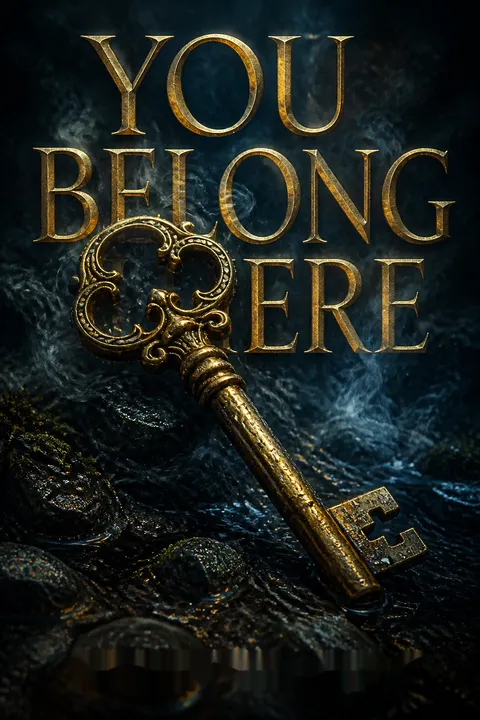


Plot Summary
Prologue
Twenty years earlier, two local men died in a fire at Wyatt College, and Beckett Bowery’s roommate, Adalyn Vale, became the prime suspect before disappearing. As police bulletins hardened suspicion into a public story, Beckett moved through confusion, denial, and anger.
She had known Adalyn as her closest friend, yet could not explain what had happened or why Adalyn had fled. The police began to suspect Beckett was helping her hide. The old case left Beckett with a fear that lasted long after the headlines faded: perhaps the friend she trusted had been a stranger all along.
The prologue frames the novel as a contest between an event and the story that survives it. Public suspicion quickly gives Adalyn a fixed role, while Beckett is made responsible for explaining an absence she cannot explain. The sequence of emotional reactions also establishes that Beckett's uncertainty is not simply investigative; it is intimate. She must ask whether she misunderstood her closest friend, and whether silence makes her complicit. The headlines compress a complicated past into a clean accusation, foreshadowing how the present will again turn incomplete evidence into a seemingly coherent account.
The Return to Wyatt
Beckett Bowery drives her eighteen-year-old daughter, Delilah, back to Wyatt Valley for college move-in, though Delilah applied to Wyatt without telling her and won a full scholarship. Beckett has spent two decades avoiding the town where two men died in a fire and her roommate vanished under suspicion.
At her parents’ house, she learns a nearby home burned two weeks earlier, reportedly empty and damaged by faulty wiring. The explanation should comfort her, but the scorched lot pulls old memories sharply into the present. That night, Beckett walks to the wreckage and sees a fresh ember glow in the dumpster before it dies. Someone has been there, and the ordinary account of an accidental fire no longer feels secure.
The return is driven by a collision between a daughter’s freedom and a mother’s unfinished history. Delilah’s scholarship makes her choice materially difficult to oppose, while Beckett’s silence about the past has helped make Wyatt more alluring to her. The newly burned house supplies an immediate, physical echo of the old tragedy, turning memory into evidence Beckett cannot dismiss. Her discovery of the ember marks a shift from retrospective dread to present-tense suspicion. The town is not merely the setting she fled; it is a place where old patterns may still be active.
The Past Has Offices
During orientation, Beckett recognizes Violet Harvey, now Violet Wharton, and learns her son Bryce is also starting at Wyatt. Violet invokes the old campus tradition known as the first howling, then links it to the vanished Adalyn, a reminder that the town still treats the case as living history. Beckett also discovers that Cliff Simmons, her former high-school boyfriend, is now an associate dean.
At the Low Bar, Detective Fred Mayhew, who questioned Beckett after the old fire, recognizes her name. Each encounter makes her feel that her return has already been noticed. After she drives back to Charlotte, an unfamiliar sender welcomes her home with a campus image. Beckett dismisses it as an automated notice, but the timing unsettles her.
This section converts the past from a private memory into a social network with present-day power. Violet, Cliff, and Mayhew are not ghosts in a literal sense; they are people whose current roles give them access to Delilah, campus records, and the town’s interpretation of events. Beckett’s unease grows because she cannot tell whether old acquaintances are simply living their lives or watching her. Her instinct to minimize the anonymous message shows how practiced she has become at containing fear. Yet the pattern of recognition makes avoidance impossible: Wyatt remembers her even when she has tried not to remember Wyatt.
A Roommate Named Adalyn
In a flashback, Beckett arrives at Wyatt College believing that growing up on campus makes it her natural home. Her new roommate, Adalyn Vale, is a wealthy Maryland legacy attending under an agreement with her parents, not from any deep desire to study there.
The two recognize a shared feeling of being directed into lives they did not choose, and their friendship takes hold quickly. Beckett knows the campus’s hidden routes from childhood, including the steam tunnels beneath its buildings.
She also understands the yearly first-howling game, when masked seniors chase freshmen through the woods. Town children have their own version, moving unseen beside the college students. Beckett’s familiarity gives her confidence, but the tunnels and the game also establish how easily a prank can conceal real danger.
Beckett and Adalyn form an alliance around a paradox: both are privileged in ways, yet neither feels fully in control of her future. Their friendship offers recognition, but it also intensifies their appetite for risk. Beckett’s local knowledge becomes a source of status and intimacy, while Adalyn’s restless appetite for novelty raises the emotional stakes of their shared adventures. The parallel versions of the howling game show how a community can maintain a tradition even when its participants imagine different rules. What begins as belonging through secret knowledge also creates the conditions for misjudgment.
Pearls on the Bar
By senior year, Beckett and Adalyn spend Friday nights at the Low Bar, where local men Charlie Rivers and Micah White challenge them to a dart game. When Adalyn cannot pay her escalating tab, Charlie grabs her and Micah demands her pearl necklace instead. Beckett pays, but the men take the pearls, and Adalyn later scratches a word into Charlie’s truck with her dorm key.
Cliff, who has drifted back into her life, warns Beckett that the men are coming during the next howling. Beckett steals the ornate tunnel key from the college archives, intending to use the tunnels to keep Charlie and Micah away from the women. Adalyn turns the warning into a plan to confront them, and Beckett follows her into the night.
The necklace scene exposes a conflict that the ritual of games cannot contain. Adalyn treats the exchange as a contest she can control, but Charlie’s physical force reveals the unequal power beneath the performance. Beckett responds by paying, then joins a retaliatory plan that makes her feel loyal and capable. The stolen key is more than access: it converts Beckett’s inherited knowledge of Wyatt into an instrument of control. Her belief that she can manage danger by understanding the rules is precisely what makes the coming mistake plausible.
The Tunnel Door Closes
On the snowy night of the howling, Charlie and Micah chase Beckett and Adalyn into Beckett Hall. The women enter the steam tunnels, planning to split up and lock the men behind an inner door, whose mechanism closes automatically.
Beckett intends to keep the men contained until they pass her; she does not understand how badly the plan can go wrong. She escapes the tunnels and finds the storage barn burning near the old president’s house. Students stare at the flames while Beckett calls for help and searches for Adalyn.
Charlie and Micah die in the fire. Adalyn is gone, and the tunnel key is missing. Police question Beckett, then the college pressures her to transfer abroad. She leaves Wyatt with no clear account of what Adalyn did or where she went.
The catastrophe grows from an error of scale: Beckett imagines that a dangerous encounter can be contained by a clever mechanism, but the tunnels make separation and rescue difficult. Her intention matters, yet it cannot undo the consequences of closing a door in a place designed to seal itself. The fire then transforms a private feud into a public tragedy, and the college’s response prioritizes institutional calm over Beckett’s future. Her departure is both escape and expulsion in her memory, leaving guilt unresolved and making the absence of Adalyn a permanent interpretive problem.
The First Howling Returns
Seven weeks into Delilah’s first semester, Beckett receives a call from her daughter just after two in the morning. The line carries the valley wind, then cuts off. Delilah does not answer further calls or messages, so Beckett drives through the night to Wyatt. Building manager Lenny lets her into the dorm, but Delilah’s room is empty; roommate Hana and resident adviser Raven offer no useful explanation.
Beckett spots Bryce emerging breathless from a hidden trail and follows the route to Cryer’s Quarry. There she retrieves a red mask with eyeholes cut into it from the water. The banned game has returned. Back at her parents’ house, Beckett finds a threatening message written across her old bedroom wall, addressed to Delilah.
The call activates Beckett’s old fear before she has facts enough to judge it. The sound of the wind is both a natural signal of the season and a trigger tied to her earlier failure to find Adalyn. Her search follows a concrete chain, from an empty dorm to Bryce’s unexplained emergence and the mask at the quarry. These clues validate her concern without yet proving that Delilah has been harmed. The message in Beckett’s room shifts the threat from the campus into the family’s private space, making the daughter’s disappearance feel targeted rather than merely adolescent.
A House Full of Warnings
Beckett discovers signs that someone has been using her parents’ empty house, including a missing spare key and a fresh drink cup. While searching upstairs, she finds the message aimed at Delilah and hears an intruder move through the kitchen below, then escape through the back. Outside, she finds Cliff near the burned property and confronts him; he denies entering the house and checks Delilah’s campus access record.
It shows her entering Beckett Hall shortly before midnight, with no recorded exit. Cliff admits Delilah sought a transfer from her entire dorm. Beckett visits Violet, whose son Bryce denies seeing Delilah and claims he stayed in. Beckett then calls Trevor, Delilah’s father, and asks him to help search.
The house becomes a crime scene before Beckett can establish who has entered it. Missing keys, an intruder, and a message on the wall make privacy feel provisional, while Cliff’s access to student records gives him both practical value and reason for suspicion. Beckett’s investigation is partly shaped by old loyalties: she turns to Cliff and Violet because their past ties make them legible, even as neither gives her a complete picture. Asking Trevor for help marks a crucial change. Beckett no longer insists that she alone can manage the danger surrounding her daughter.
Delilah Comes Home
At a campus police meeting, Beckett and Trevor watch footage of a hooded person using Delilah’s phone to enter Beckett Hall. The investigators cannot establish where the person went afterward, and Beckett fears the woods are involved.
She and Trevor search separately while Beckett canvasses nearby homes. One resident remembers Delilah asking about the recent house fire; another neighbor confirms seeing a light in Beckett’s old bedroom. Returning to the house, Beckett finds the screen door disturbed and hears the dryer running below.
In the basement, she discovers Delilah sitting on the floor, exhausted and bruised. Delilah says she became lost in the woods, dropped her phone, and waited for daylight before finding her way back. Trevor returns, and the family reunites.
The reunion resolves the immediate fear of Delilah’s disappearance but not its causes. Her survival depends on a sound decision to stop moving through unfamiliar woods in darkness, an act of self-protection that contradicts Beckett’s assumption that rescue must come from a parent. The footage complicates relief because the person entering Beckett Hall may not be Delilah, while the neighbors show she had been investigating the fire. The family’s embrace restores physical closeness, but the marks on Delilah’s body and the missing phone leave the story incomplete.
A Body in the Pit
The next morning, police and emergency vehicles rush toward Wyatt College, and the school orders a lockdown. Beckett slips through the woods and learns from Carly, a deli worker, that her sister Sierra found a girl’s body in the construction pit where the student center once stood.
Police keep the identity secret while they search for an active threat. When the lockdown lifts, Delilah tells Beckett she had been sleeping in the campus theater, not at her grandparents’ house, because her roommate’s belongings and then her own things had gone missing.
After Delilah reports the theft, the disturbance continues, and her laptop disappears. She kept the problem from her mother because she expected Beckett to take her home. A detective later questions Delilah about her missing hours.
The body changes the meaning of the previous night: Delilah is no longer simply a missing student but a possible witness whose movements may intersect with a death. The lockdown demonstrates how quickly an institution can shift from promising safety to controlling information. Delilah’s explanation also reveals a second kind of disappearance, her quiet withdrawal from the dorm after repeated intrusions. Her secrecy is not a rejection of her mother so much as an attempt to preserve agency. Yet withholding the truth leaves Beckett and the authorities to build theories from incomplete evidence.
Adalyn’s Name Returns
Beckett finds Delilah’s shattered phone inside the house’s old dumbwaiter, where someone has hidden it. That night, Detective Mayhew identifies the victim tentatively as Adalyn Vale, alive under another name until her recent return to Wyatt.
The next night, Beckett climbs into the dumbwaiter shaft and finds the original skeleton key from the campus tunnels beside the phone. Delilah insists she lost the phone at the quarry, where she went searching for it after a location app showed its last position there.
She saw a shape in the water, heard someone approach, and hid in the woods until morning. She denies entering Beckett Hall. The hooded figure on the footage remains unidentified, while the key confirms someone has been using the old routes.
The recovered phone is an object with competing meanings: it may be a lost possession, a planted clue, or a link between Delilah and a crime she does not understand. Adalyn’s identification makes Beckett’s past physically present, while the tunnel key connects the old tragedy to current access and concealment. Delilah’s account is credible in its fear but compromised by her earlier omissions, a distinction the police may not honor. The scene asks how truth can survive when people conceal details for understandable reasons and evidence arrives in fragments.
The Secret Payment
Beckett’s mother returns from Peru and reveals that she helped Adalyn escape after the old fire. She found Adalyn near campus with the stolen tunnel key, brought her home, and drove her out of the valley before police could find her. Adalyn had said Beckett trapped the men, though Beckett insists she did not know the door would seal them in.
Years later, after Adalyn’s parents died and her money ran out, she began returning each fall for cash Beckett’s parents left in the house. They had also sold pieces from her father’s collection to support her, a decision that cost him his college position and helped force a mortgage on the family home. Adalyn had been in the house again, but someone else had taken the phone.
The confession revises the family history that Beckett thought she understood. Her mother did not merely preserve the past; she actively altered its outcome, helping Adalyn escape and financing the life that followed. The secret support complicates moral judgment: it is an act of loyalty to a frightened young woman and a long concealment from Beckett. The parents’ sacrifices also expose how institutions protect reputations selectively. Beckett must now distinguish two kinds of secrecy, protection that preserves life and concealment that leaves others unable to understand the cost.
The Son of Charlie Rivers
Beckett learns from Sierra that Adalyn had been visiting the deli and may have followed Delilah around town. At the same time, she discovers that Bryce is Charlie Rivers’s son, raised by Violet and her wealthy husband, Joseph Wharton.
Bryce had worked for campus security employee Dill Lawrence, whose keys later went missing, giving Bryce potential access to dorms and buildings. Beckett connects him to the stolen belongings and the threats in her childhood bedroom.
The anonymous FordGroup messages reveal a witness from the old night, and Beckett assumes Cliff is behind them. She goes to Cliff’s house, finds him unconscious near the stairs, and sees a shadow escape toward campus. Calling Trevor to protect Delilah, Beckett follows the runner into Wyatt Hall.
The investigation’s logic shifts from a ghost story about Adalyn to an inherited conflict involving the children of the dead. Bryce’s lineage offers motive, while his access to keys offers opportunity, but Beckett’s conclusions remain vulnerable to the same habit that shaped the old case: turning partial evidence into a complete story. The FordGroup clue sends her toward Cliff, whose past involvement with Charlie and Micah makes him an emotionally persuasive suspect. Finding him injured breaks that certainty and forces Beckett to follow the immediate danger rather than the most satisfying explanation.
The Witness in the Tunnels
The shadow leads Beckett to the open entrance of the steam tunnels, where Violet confronts her. Violet admits she was driving Charlie’s truck on the old howling night and saw Beckett’s mountain tattoo in the headlights, making her the witness behind the messages.
She says Bryce meant to frighten Delilah at Cryer’s Quarry, but encountered Adalyn instead; Adalyn died in the water. Violet checked the body, then moved it to the construction pit and planted Delilah’s phone to implicate Beckett’s daughter.
She attacks Beckett and threatens to set the tunnels alight. Beckett uses her phone to reveal that Mayhew is listening on the line. Police arrive as Violet flees the tunnel entrance, and they arrest her. Beckett admits her role in trapping Charlie and Micah.
The climax brings the novel’s two games into direct contact: the old pursuit through tunnels and the new attempt to frighten Delilah at the quarry. Violet’s account makes the central violence less tidy than a simple revenge plot. Bryce’s prank became lethal, and Violet’s response transformed grief into a deliberate frame-up. Beckett’s confession counters that manipulation with an act she controls: she will no longer let another person carry her culpability or her daughter’s. The phone, once hidden evidence, becomes a witness because Beckett chooses to make the truth audible.
A Debt Beckett Accepts
After Violet’s arrest, Beckett is taken into custody for her part in the deaths of Charlie Rivers and Micah White. Trevor reaches her before police lead her away, and Delilah pushes through the crowd to embrace her. Beckett later accepts a plea to involuntary manslaughter, receiving a three-year sentence rather than forcing her family through a trial.
The choice does not erase the years of secrecy or the harm done to the victims’ families, but it prevents Delilah from becoming the sole focus of the investigation. In prison, Beckett counts the days and replays the choices that brought her there. Her thoughts return to the tunnel door, the key, and the daughter whose existence began after she left Wyatt.
Beckett’s legal responsibility is distinct from Violet’s manipulation and Bryce’s actions, but the novel refuses to let her treat that distinction as innocence. Her plea turns belated accountability into a form of care: she accepts the consequences of her own role rather than allowing suspicion to settle on Delilah. This is not a simple redemption, because the victims and their families remain part of the moral accounting. The arrest also makes the mother-daughter bond more honest. Beckett has spent years trying to protect Delilah from the past; now she protects her by naming her own part in it.
Epilogue
After 423 days served, Beckett still measures time in hours, visits, and letters. She has pleaded guilty and expects to serve less than the full three-year sentence, but the days in prison make every old choice newly available for review.
She wonders whether she could have saved Charlie and Micah by refusing the game, or whether a different choice would have erased the life she built with Delilah. As release approaches, she imagines her daughter and Trevor waiting outside. The final countdown carries her away from the cell and toward the family she once feared she could not keep.
The epilogue refuses the comforting arithmetic of punishment. Beckett can count her sentence, but she cannot calculate whether a different past would have produced a better life. The same choices that led to harm also led, indirectly, to Delilah’s existence and to Beckett’s bond with Trevor. That does not excuse the crime; it explains why regret cannot function as a clean alternative history. The final movement toward home is therefore neither acquittal nor erasure. It is a return made possible by accepting that love and culpability can occupy the same life.
Analysis
You Belong Here treats a place as an archive that stores not only buildings and records but habits of concealment. Wyatt College’s tunnels, the Bowery house’s attic and dumbwaiter, and the woods around Cryer’s Quarry all offer routes out of sight. Each appears to promise control. Beckett believes that local knowledge can make a dangerous game manageable; her parents believe that a hidden escape and quiet financial support can protect her; Violet believes that moving a body can protect her son. In each case, concealment postpones consequences and transfers them to someone else.
The novel’s most consequential inheritance is not simply the old crime. It is the pattern of adults deciding what younger people can bear to know. Beckett hides the reason she fled Wyatt, Delilah hides her housing crisis and the quarry, and Violet’s family history shapes Bryce without his mother’s past being openly acknowledged. Their omissions are not identical, but each narrows the space in which another person can make an informed choice. Delilah’s secrecy begins as self-reliance; Beckett’s begins as protection; the difference matters, but neither is harmless.
The book also questions how institutions and communities manufacture certainty. The college wants reputational damage contained, the town preserves a charged version of the vanished Adalyn, and police evidence can make a hooded stranger look like Delilah. The novel’s mystery depends on misreadings, yet its deeper concern is not that truth is unknowable. It is that people often prefer a story that makes their loyalties and fears easier to manage.
Beckett’s final accountability does not erase her love for Delilah or settle the grief of the victims’ families. It refuses the comforting fiction that good intentions cancel consequences. Her movement toward honesty is therefore less a clean redemption than a change in what she is willing to carry openly. The title’s promise of belonging remains deliberately unsettled: home can be a place of attachment, a source of danger, and a history one must finally stop editing.
Review Summary
You Belong Here receives mixed reviews, with an average rating of 3.61 out of 5. Many readers praise Miranda's atmospheric writing and the dark academia setting. The story follows Beckett Bowery as she returns to her college town when her daughter attends the same school where a tragedy occurred years ago. Reviewers appreciate the mother-daughter dynamic and the slow-burning suspense. Some criticize the pacing and character development, while others find the twists and ending satisfying. Overall, it's considered a solid thriller, though not Miranda's best work.
People Also Read




Characters
Beckett Bowery
Haunted single motherBeckett is a ghostwriter and the fiercely self-reliant mother of Delilah. She is skilled at shaping other people’s stories, yet avoids telling her own, especially the story of the fire at Wyatt College and her vanished roommate. Her instinct is to act quickly and protect the people she loves, but that decisiveness can become control when fear takes over. She trusts evidence, memory, and her knowledge of the campus, while also recognizing how easily each can be distorted by guilt. Her central psychological tension lies between wanting to be seen and fearing what others will conclude when they see her clearly.
Delilah Bowery
Independent college freshmanDelilah is Beckett’s eighteen-year-old daughter, an aspiring theater student who chooses Wyatt College despite her mother’s unspoken dread. She is expressive, curious, and proud of handling problems herself, qualities that make her both resilient and vulnerable when she keeps trouble from the adults who might help. Her closeness with Beckett is genuine, but adulthood changes the terms of their relationship: Delilah wants room to make mistakes without being treated as a child. She also has a separate, affectionate bond with her father, Trevor. Her choices press Beckett to confront the difference between protecting a daughter and controlling what she is allowed to know.
Adalyn Vale
Beckett’s magnetic roommateAdalyn is Beckett’s college roommate, a Maryland legacy whose family expects her to complete a degree she did not choose for herself. Charming, daring, and alert to the power of a game, she draws Beckett into a friendship that feels like an escape from the roles imposed on them. Adalyn is fascinated by people and by the hidden stories they carry, but her appetite for risk can make danger look like another contest to win. Her pearls, her shifting identity, and her attraction to movement all reflect a person who wants a life larger than the one her family arranged.
Trevor Dayton
Delilah’s devoted fatherTrevor is Delilah’s father and Beckett’s former partner. An art historian and careful planner, he tends to approach uncertainty by gathering information and making practical lists. His calm can steady a crisis, though it sometimes reads as distance to Beckett, who needs emotional commitment as much as sound judgment. He has built a loving relationship with Delilah despite living apart from her, and she trusts him with matters she hesitates to tell her mother. His presence forces Beckett to reconsider the consequences of the decision she made when they were young and the possibilities she still avoids naming.
Cliff Simmons
Dean with a divided pastCliff is Beckett’s former high-school boyfriend, now an associate dean at Wyatt College. In youth he moved easily between social groups, making him difficult for Beckett to read; adulthood has given him institutional authority without removing his guardedness. He shares the town’s history with the men at the center of the old tragedy and has reasons to be cautious about what he says. Cliff’s presence unsettles Beckett because it embodies a life she left behind, but his own choices show that people who remain in a place can be changed by it just as profoundly as those who flee.
Violet Wharton
Local mother and old classmateViolet, born Violet Harvey, is a former Wyatt Valley classmate who now lives in the Estates with her husband Joseph and her son Bryce. As a young woman she was sharp, magnetic, and willing to use humor as a weapon; in adulthood she presents herself as a composed parent with a life established beyond her hometown. Her relationship with Beckett is shaped by old social boundaries and the shared experience of raising children near the college. Violet is alert to how a town distributes attention and sympathy, and she carries a strong protective impulse toward her family.
Bryce Wharton
Violet’s watchful sonBryce is Violet’s tall, withdrawn son and Delilah’s fellow freshman at Wyatt. He tends to keep his shoulders hunched and his presence unobtrusive, even when his movements draw attention. As a young man entering a college and town shaped by inherited histories, he occupies an uncertain place between family identity and the community that raised his parents. His connections to campus and local families make him part of the social web Beckett is trying to understand. Bryce’s quietness leaves others to interpret him, sometimes accurately and sometimes through their own fears.
Maggie
Beckett’s estranged childhood friendMaggie grew up with Beckett and remained in Wyatt Valley, where she now raises twin boys with her husband, Bill. Practical and loyal, she has built a life rooted in the family farm and the rhythms of the town. Her friendship with Beckett once offered a calmer counterweight to Beckett’s impulsiveness, but years of distance have left apologies and unanswered questions between them. When Beckett returns, Maggie’s willingness to help reveals that affection can survive neglect, though it cannot make the past disappear.
Fred Mayhew
Detective with old doubtsFred Mayhew was a young officer during the investigation into the old fire and is now a detective with the Wyatt Valley police. He knew the local men involved and has long regarded Beckett as someone who may know more than she admits. His investigative manner is patient and watchful, relying on silence as much as direct questions. Mayhew represents the persistence of an unresolved case, but he is also a local person shaped by its loyalties and omissions. Beckett cannot easily decide whether his attention is a threat, an opportunity, or both.
Charlie Rivers
Local man from Beckett’s pastCharlie is a local man who grew up alongside Micah White and Cliff Simmons. His forceful manner and attachment to the town’s social hierarchy help define the tensions between local residents and Wyatt students.
Micah White
Charlie’s longtime companionMicah is Charlie’s close friend and a familiar presence in the local circle that Beckett and Adalyn encounter at the Low Bar. His physical confidence reinforces the imbalance between the college women and the older men.
Hana
Delilah’s guarded roommateHana is Delilah’s freshman roommate, a reserved student whose dark clothes and quiet manner make her difficult for Beckett to read. Their incompatible habits contribute to Delilah’s discomfort in the dorm, though Hana’s perspective remains largely outside Beckett’s reach.
Raven
Dorm resident adviserRaven is the resident adviser in Delilah’s dorm. She enforces the college’s rules about visitors and student privacy, creating a practical barrier when Beckett arrives searching for her daughter.
Genevieve Ryan
Theater mentor and friendGenevieve, known to Delilah as Gen, is an upperclassman and theater student who helps introduce Delilah to stagecraft. She represents the friendships and creative community Delilah is building away from home.
Sierra
Delilah’s local friendSierra is a local young woman who spends time with Delilah around town. Her familiarity with the trails and the quarry gives her a perspective Beckett lacks, while her connection to Delilah offers a route into the daughter’s life beyond the dorm.
Carly Mathers
Sierra’s watchful sisterCarly works at the deli with her sister Sierra. Alert to the town’s informal knowledge networks, she becomes one of the people Beckett encounters while trying to understand what happened near campus.
Lenny Leonard
Dorm building managerLenny manages Delilah’s residence hall and handles its maintenance. His access to the building and easy familiarity with the students make him an early point of contact during Beckett’s search.
Beverly Lawrence
Neighbor with local knowledgeBeverly lives near Beckett’s parents and is the mother of Dill, a campus security worker. She is observant and willing to help, offering Beckett a view into the neighborhood’s small, interlocking relationships.
Dill Lawrence
Campus security workerDill works campus security and is Beverly’s son. His position gives him practical familiarity with the college grounds and its access procedures.
Joseph Wharton
Violet’s husband and developerJoseph is Violet’s husband and a local property developer. He has provided a comfortable home for his family and maintains a business presence in the area around Wyatt Valley.
Paul Signs
Head of campus policePaul leads Wyatt College’s campus police. He coordinates the response to Delilah’s disappearance and the later campus emergency, balancing the college’s security needs with the limits of its surveillance.
Amanda Christianson
Campus police investigatorAmanda is a campus police patroller who interviews students and reviews the available security footage. Her knowledge of the student community gives her an investigative role distinct from Beckett’s personal understanding of the town.
Beckett’s parents
Professors guarding historyBeckett’s mother, a psychology professor, and father, an anthropology professor, raised her in the life of Wyatt College. Both are intellectually curious and accustomed to observing behavior, but their care often takes the form of expectation or withheld information. Their attachment to the town and its history differs from Beckett’s urge to escape it. Their house, filled with archives, keepsakes, and hidden spaces, reflects a family that has preserved the past without fully explaining it.
Plot Devices
The First Howling
Tradition becomes coverA yearly chase through the woods begins as a college initiation ritual, while local teenagers develop their own hidden version alongside it. The wind’s first howl signals the game and gives its participants an excuse to move through campus and forest at night. In the present, the tradition returns despite being banned, letting people disguise pursuit, trespass, and fear as harmless play. It also links Delilah’s disappearance to Beckett’s memories of the night Charlie and Micah died.
The Skeleton Key
Access carries culpabilityThe ornate key opens the old steam tunnels beneath Wyatt College. Beckett steals it from the archives to carry out a plan with Adalyn, then believes it disappeared with her. Its later appearance in the family home connects the present investigation to the original crime and raises questions about who used the tunnels, who knew the routes, and what Beckett’s role meant. The key makes the college’s buried architecture a physical record of decisions that its official history has obscured.
The Dumbwaiter
A hiding place becomes evidenceThe old dumbwaiter in Beckett’s parents’ house links the kitchen to the basement and functions as one of the home’s many concealed spaces. Beckett discovers Delilah’s shattered phone inside it, then finds the missing tunnel key in the shaft. The device turns an antique household feature into an investigative passage: objects can be hidden there, but their discovery also exposes the family’s unspoken history. Its cramped interior forces Beckett to enter the literal structure of the house to retrieve evidence.
Campus Access Records
Surveillance leaves gapsBuilding cameras and student card scans provide partial timelines but never a complete account of movement. The footage shows a hooded person using Delilah’s phone to enter Beckett Hall, while the scan log places Delilah there shortly before midnight. Because there are no cameras at every exit or trail, authorities cannot confirm who entered, where the person went, or whether the footage depicts Delilah. The system creates leads while reminding Beckett that records can misidentify a person and leave crucial spaces unseen.
FordGroup Messages
An old witness reaches outAn anonymous contact first approaches Beckett with a lucrative memoir offer, then sends increasingly personal messages after she returns to Wyatt Valley. Their phrasing and the name FordGroup point toward a witness connected to the old night and Charlie Rivers’s truck. The messages make Beckett feel watched and draw her back toward Cliff, but they also serve as a warning that someone remembers the crime from a position she never considered. Their meaning is concealed until the present and past stories finally intersect.
About the Author
Other books by Megan Miranda

Download PDF
Download EPUB
.epub digital book format is ideal for reading ebooks on phones, tablets, and e-readers.








