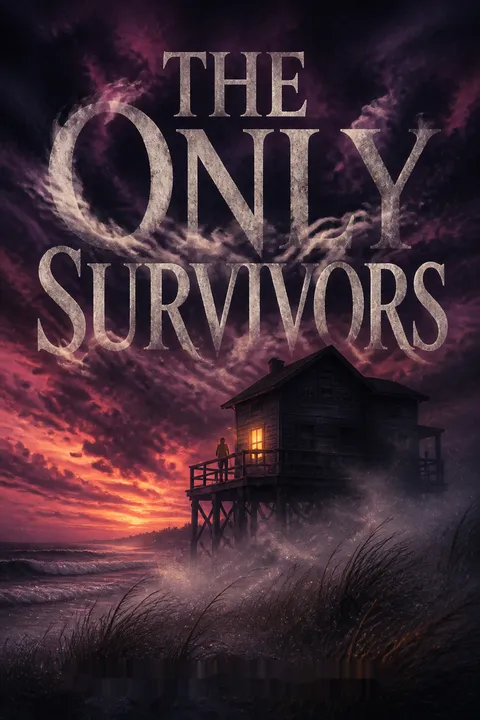


Plot Summary
Prologue
Cassidy Bent has spent months preparing to skip the annual reunion at a remote Outer Banks rental house, severing contacts and ignoring the group email. Then an unfamiliar number sends her the obituary of Ian Tayler, one of the survivors she has not spoken to in months. Ian died three months earlier, and Cassidy never knew.
The news breaks her plan to disappear. She leaves her boyfriend, Russ, and drives to the coast, pulled back toward the seven people who remain from the original nine. Their yearly promise began after a deadly school trip, but Cassidy has come to suspect that returning together may keep them bound to the worst thing they survived.
The opening makes absence the story’s first active force. Cassidy is not summoned by affection alone; Ian’s obituary exposes the cost of her self-imposed disappearance, while the unknown sender quietly violates the boundary she thought she had established. Her drive back is both loyalty and compulsion. The annual promise once offered a structure for surviving guilt, but its repetition has turned remembrance into confinement. By introducing the reunion as something Cassidy resists and nevertheless obeys, the prologue establishes her central conflict: she wants an ordinary life, yet keeps measuring safety through the people and choices she cannot leave behind.
Ian's Empty Place
Cassidy reaches The Shallows, the weatherworn beach house owned by Oliver King, and finds Brody, Grace, Joshua, and Amaya already there. The familiar room assignments and greetings disguise how much has changed: Brody is a father, Ian is dead, and nobody has found a way to talk about either fact. Joshua has claimed Ian’s upstairs room, provoking Amaya and Grace.
When Cassidy names the dead man whose space they are arguing over, the group turns against one another instead of settling the dispute. Cassidy escapes to the dunes, unable to bear the old ritual of counting who might need saving. By the time she returns, Amaya has vanished, taking her car and luggage after another tense exchange with Joshua.
The reunion’s domestic details make the group’s history tangible: a room can be reassigned, but the act feels like an attempt to edit a person out of the past. Cassidy notices what others avoid naming, yet her attention also traps her in the role of witness rather than participant. The argument over Ian’s room exposes a group that has learned to manage grief through rules and silence, not conversation. Amaya’s departure matters because the person who created their annual ritual is the first to reject its enclosure. The house promises shelter, but its familiar routines already function like a mechanism for keeping everyone in place.
The Phone in the Surf
Walking alone along the beach, Cassidy finds a cracked phone in the wash and carries it back, hoping to locate its owner. That night, a call to the unknown number that brought her Ian’s obituary makes the recovered phone vibrate. She realizes the messages came from the device in her room, though nobody admits to sending them.
Meanwhile, Brody reveals that someone has contacted the group about a possible account of the old disaster, and Joshua has advised everyone not to cooperate. Searching her junk email, Cassidy finds Ian’s private message from five days before his death. He had tried to reach her because someone was seeking him out, and he trusted her to respond. His number matches the phone she found.
The phone turns a familiar object into a breach between past and present. Its damaged condition mirrors Cassidy’s broken access to Ian: she can receive a signal from him, but cannot yet recover the whole message. Her deleted contacts and filtered email are not neutral housekeeping; they have made her unreachable at precisely the moment a friend needed her. The group’s instinct to refuse outside questions contrasts with Ian’s attempt to ask for help. The mystery therefore grows from two kinds of silence, the silence imposed by the pact and the silence Cassidy created to escape it.
Amaya Chooses the Climb
Ten years earlier, the school vans plunge from a mountain road into a swollen Tennessee river. After escaping the wreckage, the survivors gather on a rocky ledge with injured classmates and teachers still missing.
Amaya, the student who organized the volunteer trip, sees the water rising and insists they climb rather than wait. Cassidy backs her, and the others follow, while Clara resists leaving the injured behind. The group reaches the road and is counted by a passing truck driver, but the rescue brings no relief.
They have abandoned people who may still have been alive. After Clara later returns to the gorge on the accident’s first anniversary and dies there, Amaya gathers the remaining survivors and proposes that they meet each year so no one faces that week alone.
Amaya’s decision is practical and morally costly: in a landscape where waiting means death, leadership requires choosing which losses cannot be prevented. Cassidy’s support links her to Amaya before friendship exists, making their later bond a memory of shared judgment. Clara’s refusal to leave the injured shows that the survivors did not experience the choice as simple, even when necessity made it urgent. The pact is born from a failed attempt to control what comes next. It offers mutual recognition, but it also makes a recurring ceremony out of a decision none of them can revise.
The Lowest Card
Earlier in the night, the stranded students debate whether anyone should enter the river to look for help or missing classmates. Oliver proposes a vote, and the group accepts his attempt to impose order. When Brody draws the lowest card, he refuses to enter the water and reveals that he cannot swim.
The group turns toward Jason, Oliver’s friend, who volunteers instead. They secure luggage cables around Jason and lower him into the current, but the line goes slack and the hooks return empty.
Brody understands that the group nearly forced him into the same fate, and Hollis’s comfort cannot erase his sense of betrayal. Elsewhere on the rocks, Oliver searches for his father’s red-handled knife, which has already passed among the survivors and vanished.
The card draw converts a collective emergency into a procedure that makes responsibility seem evenly shared. Yet the procedure does not make the choice fair: Brody’s refusal is treated as a problem, and Jason becomes expendable once he volunteers. Oliver’s leadership creates action but also helps distribute guilt across the group. The missing knife adds a second uncertainty to the night, a physical object whose custody no one can establish. These events reveal the survivors’ lasting pattern: they use rules, votes, and partial accounts to manage decisions that remain morally personal.
Grace Keeps the Knife
Hollis escapes the submerged van alone, crawls through the woods, and spots the flare Grace has lit. She crosses the river and reaches the others expecting to find Brody, but he is bent over Ben Weaver, who has been stabbed during a struggle. Grace had taken Oliver’s knife while the group searched the wreckage.
She saw Ben in danger and did not help until Clara pulled the blade from her hand. Amaya had also been trying to separate Brody and Ben, leaving the circumstances of the wound confused in the dark. When the survivors climb away, they do not report the missing knife or explain every decision made beside the river. Each leaves with a different version of what happened.
Hollis’s return disrupts the group’s assumption that survival has already been settled. She arrives with a clear memory of her own escape, only to enter a scene whose violence is obscured by darkness, panic, and competing loyalties. Grace’s possession of the knife introduces a dangerous gap between seeing harm and preventing it. Clara’s intervention briefly interrupts that gap, but does not produce a shared account. The scene shows how trauma can preserve sharply different fragments rather than one stable memory. Those fragments later become leverage, because each survivor knows enough to suspect another and too little to feel secure.
The Ghost House Watches
On the beach, Hollis and Joshua race into rough surf; Hollis returns limping with a deep cut on her heel, while Brody tends the wound. Cassidy notices the emergency gear in Brody’s car is meant for being stranded, not ordinary first aid. She also meets Will, a local neighbor who calls the rental the ghost house because it sits empty except for the survivors’ annual visit.
Will says he saw Oliver on the pier before the others arrived and remembers Ian visiting during winter. That evening, he warns Cassidy to prepare for a coastal surge. Oliver’s early arrival and Ian’s secret visit transform the rental from a neutral meeting place into a location connected to events the group has concealed.
The beach episode makes the group’s fear physical again: Hollis is injured by an unseen object, and Brody’s preparedness exposes how deeply he expects disaster to recur. Will serves as an outside observer who sees the group’s rituals more clearly than they do. His nickname for the house challenges their private understanding of The Shallows as a refuge. The crucial revelations are modestly delivered, as local observations rather than dramatic accusations. That matters because the mystery is built from details the survivors dismiss: a car arriving early, a winter visitor, a house that is never rented to anyone else.
Amaya's Warning
As the coastal storm closes roads and evacuates the campground, Cassidy and Joshua search the Blue Whale motel for Amaya. Joshua carries a photograph of himself with her, revealing a brief relationship he had hidden from the group; he says she ended it after a rupture with her father. Their search finds no trace of her, and they fear the empty trunk of her car before confirming it is harmless.
Back at The Shallows, Cassidy discovers a note under Amaya’s bed urging her to leave immediately. The power fails, and the survivors wait through the storm with no way out. Amaya’s car remains at the motel, her phone stays unreachable, and the warning makes Cassidy suspect that someone has been watching them.
The storm removes the group’s usual escape routes just as private relationships begin to surface. Joshua’s photograph complicates his hostility toward Amaya, while the motel search forces him and Cassidy into a temporary alliance. The note appears to offer a clear explanation, but its author is uncertain; its urgency produces fear without usable information. Cassidy’s recurring impulse to account for every person turns Amaya’s absence into a personal emergency. The island’s isolation intensifies the central psychological problem: proximity can feel like protection, yet the survivors have spent years using closeness to conceal what they know from one another.
Ian Died at the Shallows
During the blackout, Cassidy finds Ian’s leather jacket in the upstairs closet, along with a restaurant receipt dated just before his death. A power outage later exposes a camera wired near the router. Oliver denies installing it, then admits Ian had asked him to come to the house in February. Oliver arrived too late and found Ian dead in his own bedroom.
Rather than call authorities, he carried Ian to his car and left him at a mainland rest stop, fearing what the discovery might mean for him. Cassidy also realizes the camera may belong to Ian, not an unknown watcher. After she shares the warning note, Grace joins her in leaving the island through the closed road barriers, while the others stay behind.
Oliver’s confession changes the mystery from a question of who watched the survivors to a question of what each one did after Ian’s death. His choice to move the body echoes the group’s original habit of managing appearances before confronting consequences. The camera, first interpreted as evidence of an intruder, may instead be Ian’s attempt to document something. Cassidy’s departure with Grace marks a break from the annual pact, but it is not yet freedom: she carries Ian’s phone and jacket, the material remains of a story the group has tried to contain.
The Knife in the Treehouse
After dropping Grace at her parents’ home in Long Brook, Cassidy visits Ian’s mother. She learns that Ian had deteriorated after Clara’s death and that his family had worried about his paranoia. In his bedroom, his mother gives Cassidy a photograph from an early reunion; a picture of Clara is taped behind it.
Cassidy then visits the school’s memorial library, where twelve plaques name those who died in the accident. At the Tayler home, she retrieves a small box Ian once hid in his childhood treehouse. Inside is Oliver’s missing red-handled knife. Ian had kept it for years, even though he never told Cassidy, who once believed they had shared everything. The knife is now the clearest physical link to Ben’s wound.
Cassidy’s return to Long Brook strips away the protective distance she has maintained from the people and places associated with the disaster. Ian’s mother supplies a history Cassidy missed, showing that his decline was not fully visible to the person who once felt closest to him. The memorial library gives public permanence to twelve losses, while Clara remains emotionally present through a photograph hidden behind the survivors’ image. Finding the knife in Ian’s private refuge makes memory material, but not self-explanatory. The object proves concealment; it does not, by itself, identify who used it.
Josh Brings the Letter
Joshua appears uninvited in Cassidy’s apartment after she returns from Long Brook. He has received a letter describing his actions during the accident and suspects someone is preparing a tell-all. He admits that he took a job with Amaya’s family law firm after realizing they already knew what the survivors had concealed.
He believes Clara had approached the firm before her death. Cassidy tells him she found the knife, and Joshua reveals that he saw Ian take it during the night of the crash. He also acknowledges that Cassidy saved him from the submerged van. Rather than demand the knife, he leaves her the letter and drives toward Amaya’s home in Tennessee to make sure she is safe.
Joshua’s visit turns his long-standing antagonism into a relationship with a debt underneath it. His employment at the law firm was not simply a career change; it placed him inside the institution that helped preserve the survivors’ shared account. The letter makes private memory newly actionable, while his confession about the knife links Ian to evidence that has survived for a decade. Cassidy’s rescue of Joshua explains a history of resentment without making it disappear. Their exchange suggests that old obligations can be acknowledged without being mistaken for trust.
Clara's Brother Was Russ
Cassidy finds her private journals missing from a locked safe, though her identity papers and settlement documents remain untouched. The notebooks contain her detailed reconstruction of what each survivor did that night.
Using the password written on Ian’s restaurant receipt, she opens his security-camera app and watches his last recorded day at The Shallows. Ian meets a man from the campground who demands evidence and compensation for his sister, Clara. The man says Clara told him the survivors had done terrible things.
Cassidy recognizes that Russ, her boyfriend, is Clara’s brother, Russell Poranto, and understands he used Ian’s phone to summon her. Russ had pursued the journals and gathered private details to pressure the group. Cassidy receives a message from Amaya and drives toward Tennessee.
The journals turn Cassidy’s coping practice into both evidence and vulnerability. She wrote to impose sequence on a night that remained fragmented, but the act of recording also made her the keeper of information other people feared. Ian’s camera reveals that he was trying to preserve proof and protect the group, even as he was being pressed by Clara’s brother. Russ’s intimacy with Cassidy was built on selective truth: he understood her loneliness and used it to reach the material she had hidden. The revelation joins the personal betrayal to the larger dispute over whether Clara was ever counted among the victims.
Cassidy Ran Into the Road
As Cassidy drives toward Amaya’s home, the oldest memory finally sharpens. At the roadside stop before the crash, Cassidy had wandered into the woods, then discovered the vans were leaving without her. She sprinted through the trees and onto the road in front of them, desperate to be seen. Mr. Kates swerved when he spotted her, and the vans plunged from the mountain route.
Ian had been the classmate who first noticed her distress and later helped her through the wreck, but he never exposed her role. Cassidy’s journals recorded what she observed about everyone else while leaving her own action nearly absent. Her guilt is no longer only about whom the group abandoned; it is also about the moment she set the disaster in motion.
The revelation does not make Cassidy the sole cause of the tragedy, but it breaks the moral distance she has maintained from it. She has spent years examining other people’s choices while placing herself at the edge of the record. Her invisibility was partly a wound and partly a defense: if she remained an observer, she could avoid naming her own agency. Ian’s silence now reads as protection, though it also kept Cassidy from confronting the truth. The scene complicates blame by distinguishing an impulsive act from its catastrophic consequences without erasing either.
The Gorge Reunion
Cassidy reaches Amaya’s home and finds Joshua already there, then the others arrive after Amaya’s phone sends a distress message. Russ appears with a gun, holding Amaya and Joshua under threat. He says he wants to know who killed Clara and Ben, and offers to destroy Cassidy’s work if the group names someone. Cassidy reveals that she has the knife and claims Ian recorded Russ.
Russ denies killing Ian, saying he left him after their meeting and returned to find him overdosed. Grace identifies Brody as Ben’s attacker, but Russ counters that Ian believed Ben’s wound was accidental. Grace admits she held the knife and failed to stop Clara later. Amaya explains she pulled Ben away from Brody, causing him to fall against Grace.
Russ’s demand reproduces the survivors’ original emergency in a new form: a group is pressured to choose one person who will bear the cost. Grace’s accusation of Brody shows how quickly self-protection can masquerade as certainty. Amaya’s account makes the knife wound a collision of actions rather than a cleanly planned attack, while Grace’s admission about Clara leaves the question of responsibility unresolved. Russ seeks a verdict, but the scene offers a more difficult truth: the survivors’ shared silence has blurred the line between direct violence, failed intervention, and collective abandonment.
Whoever You Can
Outside, Russ orders Grace toward the ravine and demands that the others confess to the police. When he swings the gun, Grace runs, and the group follows them toward the river. Cassidy reaches the edge as Russ and Grace struggle; a shot sounds, and one of them falls. Cassidy catches Grace and presses a hand against her wound, while Russ disappears over the drop.
The others call emergency services, then give police an account that conceals some of what happened. Cassidy recovers her journals from Russ’s car and destroys them, keeping the promise she once made to Ian. The survivors form a new pact, less about returning each year than accepting that they cannot untangle every choice or determine exactly what happened to Clara.
The climax gives Cassidy a choice that her habitual mental tally could never settle in advance. She reaches for Grace, not because Grace is innocent, but because she is the person within reach. That action contrasts with the earlier decisions shaped by votes, fear, and deferred responsibility. Destroying the journals is not a claim that the past no longer matters; it is a refusal to let Cassidy’s private reconstruction become Russ’s weapon or the group’s final authority. Their new pact remains morally compromised, but it is founded on a more honest awareness of what they cannot know.
Analysis
The novel’s central suspense grows from a moral problem rather than a simple question of who committed a crime. The survivors did not merely endure a disaster; they made decisions under pressure, saw other people endangered, and then built a shared account that allowed them to keep living. The annual reunion preserves their bond while also reinforcing the boundaries of that account. Their pact can therefore be read as both mutual care and collective containment.
Cassidy’s narration is shaped by her identity as an observer. She notices other people’s gestures, possessions, and histories with unusual precision, yet her own role remains obscured from her until the memories of the first hour return. Her journals seem to promise objective knowledge, but they reveal the limits of observation: a record made from one person’s position can become evidence, interpretation, and weapon at once. Her eventual choice to destroy them does not settle the past. It prevents one private account from becoming a substitute for the testimony the group has avoided giving.
The novel also distinguishes kinds of responsibility without cleanly separating them. Brody’s fight, Amaya’s attempt to pull Ben away, Grace’s possession of the knife, Cassidy’s action on the road, and the survivors’ decision to leave the injured all have different degrees of intention and consequence. Russ wants a single answer that can vindicate his sister and punish someone, but the story resists granting him a simple verdict. Clara’s death remains uncertain, and Russ’s grief turns into coercion rather than justice.
The recurring question of whom to save evolves from a private thought experiment into an ethical demand. Cassidy cannot undo what she failed to do, nor can she know with certainty who caused every loss. At the gorge, she acts on the person she can reach. The ending suggests that responsibility is not the same as omnipotence: people must answer for their choices, but they cannot rescue everyone, reconstruct every truth, or make survival innocent.
Review Summary
The Only Survivors receives mixed reviews, with some praising its atmospheric setting and suspenseful plot, while others criticize its slow pacing and underdeveloped characters. Many readers appreciate Miranda's skill in creating tension and delivering unexpected twists. The story, following a group of survivors from a tragic accident who reunite annually, is described as a slow-burn mystery with compelling flashbacks. Some reviewers found the ending satisfying, while others felt it was predictable. Overall, opinions vary widely, with ratings ranging from 1 to 5 stars.
People Also Read








Characters
Cassidy Bent
The reluctant observerCassidy is a careful event planner who prefers lists, quiet work, and the ability to leave a room without being noticed. As a teenager, she often felt invisible among louder classmates; after the accident, that sensitivity became a habit of watching everyone closely and recording what she saw. She is compassionate but not naturally trusting, and her constant mental exercise of deciding whom she would save reveals both care and an effort to control danger through anticipation. Her connection to Ian is among her most intimate bonds, while the annual reunion keeps her tied to people she might otherwise have chosen to leave behind. Cassidy’s central tension is between observing other people’s lives and accepting her own part in them.
Amaya Andrews
The burdened organizerAmaya is the daughter of a prominent local legal family and the student who organized the volunteer trip. Raised to take responsibility and make decisions, she is both capable and deeply affected by the consequences of having to choose under pressure. Her mother’s history of leaving Cuba and her father’s expectations give her competing models of courage, duty, and belonging. In adulthood, she works in emergency response and community support, remaining close to the region linked to the survivors’ worst memory. She created their annual reunion as a form of mutual care, but her own need for distance complicates the role she has taken on. Amaya’s authority is not effortless; it is a burden she keeps trying to carry.
Ian Tayler
The absent confidantIan is Cassidy’s closest connection among the survivors, a warm, observant classmate who reaches out to her during the first months after the accident. Their shared grief brings them into an intense relationship that gives Cassidy a sense of being seen. Ian has his own history with several members of the group, so his loyalties do not begin or end with Cassidy. He is troubled by the past and increasingly isolated, while addiction complicates how others interpret his distress. His quiet kindness often appears in practical acts, such as noticing when someone needs help. Ian represents the danger of treating closeness as proof that one person can fully understand another.
Oliver King
The composed gatekeeperOliver is Cassidy’s former neighbor and the owner of The Shallows, the house that gives the survivors a fixed place to gather. In school he occupied an unremarkable middle ground, but he is now a successful financier accustomed to making decisions and controlling practical details. He remembers preferences, secures the annual rental, and often organizes the group without asking permission. Beneath that competence is a persistent anxiety about wasting his second chance at life. Oliver’s polished composure can make him seem dependable, though his need to manage uncertainty sometimes leads him to act before others understand what he has decided. The house expresses his wish to preserve a place where the group can remain connected.
Joshua Doleman
The guarded opportunistJoshua is a sharp-tongued lawyer who still lives in the town where the survivors grew up. As a student, he was often disengaged and slow to act when overwhelmed; in adulthood, he has learned to use precision, persistence, and argument as forms of control. He works at the law firm connected to Amaya’s family and has access to the history surrounding the survivors’ settlement. His relationships are difficult to read because he tends to express concern through suspicion or provocation. He and Cassidy share a bond shaped by a life-or-death moment neither discusses easily. Joshua’s guardedness protects him from vulnerability, but it also leaves people unsure whether his actions come from loyalty, self-interest, or both.
Grace Langly
The soothing interpreterGrace is a trauma therapist whose warmth, close attention, and confidence can make others feel understood. She has been Clara’s closest friend since childhood and is skilled at shaping a group’s emotional atmosphere, often calming arguments before they become open conflict. Her work gives her a vocabulary for guilt and recovery, but professional insight does not free her from the same fears as the people around her. Grace tends to believe that naming a feeling can make it manageable, and she is drawn to what other people keep hidden. Her care is genuine, yet her need to interpret events can become a way of controlling how they are understood. She embodies the gap between helping others process pain and confronting one’s own.
Brody Ensworth
The charming rescuerBrody was the popular athlete of the class and remains socially confident, quick to joke, and easy to approach. He is now an emergency medical technician and a father, roles that give his old charm a more practical expression. His relationship with Hollis began in school but left lasting strain, and he often masks discomfort with friendliness. Brody is more vulnerable than his public ease suggests, particularly around water and the prospect of being judged as weak. He is capable of caring for others under pressure, but the group’s past has made trust difficult. His character links the desire to be admired with the desire to be useful, two motives that do not always lead him toward the same choice.
Hollis March
The disciplined escapeeHollis is a former transfer student who became known for her quiet intensity and striking appearance. She is now a personal trainer whose routines, athletic goals, and carefully managed public image provide structure. In school, she felt underestimated, especially in her relationship with Brody, and she is alert to moments when others assume they know her limits. Her physical discipline can look like serenity, though it often functions as a way to keep fear and uncertainty at a distance. Hollis is independent and capable, but she has never entirely settled into the survivors’ ritual. Her guardedness makes her difficult to read, while her instinct to move, train, and leave gives her a distinct response to confinement.
Russ
The attentive newcomerRuss enters Cassidy’s adult life as a dependable, easygoing partner who shares her everyday tastes and seems interested in building a future. He tutors mathematics and offers the kind of steady attention Cassidy has long wanted. His relationship with her develops quickly because he appears to understand her without demanding that she explain everything. Russ is not part of the survivors’ usual social world, which makes him seem like a route beyond it. His calm manner and apparent trustworthiness contrast with the suspicion Cassidy carries into most relationships. He represents the possibility of an ordinary life, but his presence also raises the question of how much either partner truly knows about the other.
Clara Poranto
The vanished truth-tellerClara was Grace’s closest friend, generous in her loyalties and deeply affected by the people left behind in the river. She had an especially strong attachment to Ben, whose injury later becomes central to the survivors’ unspoken history. Clara is remembered as someone who could not easily accept a decision that left others behind, even when the group believed there was no alternative. Her connection to Grace and Ian reaches back to childhood, giving her a place in the group’s history before Cassidy became close to them. Clara’s presence persists through the survivors’ avoidance, their memories of the anniversary, and the people who continue to believe her story deserves recognition.
Will
The watchful neighborWill is a local resident and metal detector enthusiast who lives near The Shallows. He is sociable, observant, and comfortable approaching Cassidy, partly because the survivors’ yearly gathering has made them familiar to the neighborhood. His knowledge of the beach, the house, and its visitors comes from years of watching the coast and the people who pass through it. Will offers Cassidy practical help during the storm, but his curiosity about the group makes her unsure how much to share. He provides an outsider’s view of a ritual the survivors regard as private, revealing how visible their supposedly secluded life has become.
Ben Weaver
The volatile classmateBen is a clever, provocative student whose confidence often crosses into recklessness. His parents’ position in the school community gives him a sense of protection, and he is accustomed to testing authority. He clashes with Grace’s teacher, Mr. Kates, shortly before the accident and is involved in the conflict that leaves him injured. Ben’s relationships with Grace, Clara, and Brody are charged by rivalry, attraction, and resentment. Because the survivors remember his final hours differently, he becomes less a fully known person than the center of an unresolved account. His presence exposes how quickly fear can turn suspicion into blame.
Jason
The reluctant volunteerJason is Oliver’s friend and a student who volunteers to enter the river when the group cannot agree on another way to search for help. He is dependable enough that Oliver trusts him to support a dangerous plan. His decision is made under pressure, with classmates watching and the water rising, so the word volunteer carries more weight than freedom. Jason’s fate becomes one of the earliest burdens the survivors share, especially for Oliver and Brody.
Mr. Kates
The young teacherMr. Kates teaches creative writing and is only a few years older than his students. Grace admires his attention to her work and feels he understands her in a way other adults do not. His presence on the trip blurs, for Grace, the boundary between school authority and personal attachment. He is one of the adults whose decisions and fate become inseparable from the accident, although the students have limited ability to understand what happened around him.
Plot Devices
The Shallows and the pact
A refuge turned enclosureOliver’s beach house gives the survivors a repeatable setting for their annual reunion. Its remote location, shared rooms, familiar routines, and single road in make it feel removed from the world that remembers the accident. The pact Amaya proposes after Clara’s death gives the gathering a stated purpose: no one should face the anniversary alone. Over time, the house and promise also discourage the survivors from speaking beyond their group. The setting functions as both sanctuary and containment, allowing the characters to return to one another while keeping their shared version of the past intact.
Ian's recovered phone
A signal from the deadCassidy finds Ian’s damaged phone in the surf and discovers that it sent the messages that drew her back to The Shallows. Its contents are initially inaccessible, but a repaired screen and a working charge allow her to inspect photographs, contacts, and the security-camera application. The phone links Ian’s last days to the reunion and provides a route into his recorded encounter with Clara’s brother. It also makes the distinction between a message of concern and a deliberate lure uncertain. The device carries both evidence and absence: it can show who was present, but not fully explain what happened after they left the camera’s view.
Cassidy's journals
Memory made into evidenceAt a therapist’s suggestion, Cassidy writes detailed accounts of the accident and the survivors’ actions, hoping to make her fragmented memories understandable. She hides the notebooks in a fireproof safe and rarely reads them, but their existence becomes a source of danger once others learn what they contain. Ian once asked her to destroy them, while Russ steals them and uses their details to pressure the group. The journals are powerful because they combine observation with interpretation: they preserve what Cassidy remembers, but cannot guarantee that her conclusions are complete. Their eventual destruction forces Cassidy to choose between retaining a record and refusing to let it control the survivors’ future.
Oliver's missing knife
A weapon without a witnessOliver brings his father’s red-handled switchblade on the school trip, and the survivors use it during their improvised attempts to help the injured. The knife passes between people while the group argues, searches the wreckage, and tries to rescue those still trapped. After Ben is wounded, it disappears, leaving no shared account of who last held it or how it was used. Ian secretly keeps the knife for years, and Cassidy later finds it in the box hidden in his childhood treehouse. The weapon is both physical evidence and a test of memory, but its presence alone cannot settle whether Ben’s injury was intentional.
The hidden camera
A partial witnessA small security camera installed inside The Shallows initially makes the survivors suspect an intruder is watching them. Cassidy later finds that the camera is linked to Ian’s phone, and its recordings preserve part of his final meeting with Russ. The footage explains why Ian was trying to document the encounter and gives Cassidy a way to identify the man pressing him for evidence. It does not record every part of the conversation or what happens outside its frame, so it cannot answer the questions the survivors most want resolved. Its limited view mirrors the novel’s larger problem: proof can clarify events without making them whole.
FAQ
Synopsis & Basic Details
What is The Only Survivors about?
- Haunted by a past tragedy: A group of high school classmates, survivors of a horrific accident, reunite annually at a beach house, grappling with shared trauma and secrets.
- A mysterious death and a pact: When one of them dies unexpectedly, a pact to meet each year is tested, forcing them to confront their past and the possibility of a hidden threat.
- Unraveling secrets and lies: The story follows Cassidy Bent as she uncovers unsettling truths about the accident and the people she thought she knew, blurring the lines between victim and perpetrator.
Why should I read The Only Survivors?
- Intricate mystery and suspense: The novel masterfully weaves a complex mystery with a slow-burn suspense, keeping readers guessing until the very end.
- Exploration of trauma and guilt: It delves deep into the psychological impact of trauma, exploring themes of guilt, survival, and the burden of keeping secrets.
- Compelling characters and relationships: The characters are flawed and complex, and their relationships are fraught with tension and hidden agendas, making for a captivating read.
What is the background of The Only Survivors?
- A tragic accident: The story is set against the backdrop of a devastating accident that occurred ten years prior, where a group of high school students were caught in a storm and a river surge.
- A pact for survival: The survivors made a pact to meet annually at a beach house, The Shallows, as a way to cope with their trauma and keep each other safe.
- A decade of secrets: The story explores the long-term effects of trauma and the secrets that have festered over the past decade, creating a tense and suspenseful atmosphere.
What are the most memorable quotes in The Only Survivors?
- "There was a gravity to this ritual week, to the past, to them. The only survivors.": This quote highlights the inescapable pull of the past and the bond that ties the group together, despite their desire to move on.
- "Maybe everything we touched together turned to ash.": This quote captures the sense of unease and the destructive nature of their shared history, suggesting that their presence together is a source of pain.
- "It had been a mistake to believe I could just disappear.": This quote reveals Cassidy's internal struggle and the realization that she cannot escape her past or the people she is bound to.
What writing style, narrative choices, and literary techniques does Megan Miranda use?
- First-person perspective: The story is told from Cassidy's point of view, creating a sense of intimacy and allowing readers to experience her internal struggles and suspicions.
- Non-linear timeline: The narrative shifts between the present and the past, gradually revealing the events leading up to the accident and its aftermath, building suspense and tension.
- Foreshadowing and red herrings: Miranda uses subtle foreshadowing and red herrings to keep readers guessing, creating a sense of unease and uncertainty throughout the story.
Hidden Details & Subtle Connections
What are some minor details that add significant meaning?
- The name "The Shallows": The name of the beach house, The Shallows, is ironic, as it becomes a place where the characters are forced to confront the depths of their trauma and secrets.
- The recurring mention of water: Water is a recurring motif, symbolizing both the trauma of the accident and the ever-present threat of the past resurfacing.
- The description of the house: The house's weatherworn exterior and isolated location mirror the characters' fragile state and their desire to escape the outside world.
What are some subtle foreshadowing and callbacks?
- The mention of a tell-all: The rumor of a tell-all about the accident foreshadows the unraveling of the group's secrets and the potential for their past to be exposed.
- The recurring image of the river: The river, where the accident occurred, is a recurring image that serves as a constant reminder of the trauma and the choices they made to survive.
- The description of the storm: The approaching storm foreshadows the emotional turmoil and the confrontations that are about to unfold, mirroring the internal conflicts of the characters.
What are some unexpected character connections?
- The connection between Russ and Clara: The revelation that Russ is Clara's brother adds a layer of complexity to the story, revealing his motive for manipulating the group.
- The relationship between Josh and Amaya: The reveal of a past relationship between Josh and Amaya adds tension and suspicion to their interactions, suggesting a hidden history.
- The bond between Ian and Cassidy: The depth of Ian's connection with Cassidy is revealed through his email and the fact that he reached out to her before his death, highlighting their shared trauma and understanding.
Who are the most significant supporting characters?
- Russ Poranto: As Clara's brother, Russ is a key antagonist, driven by a desire for revenge and a need to uncover the truth about his sister's death.
- The unnamed man on the beach: The man with the metal detector, Will, serves as an outsider who observes the group and provides Cassidy with clues about their past and the secrets they keep.
- The motel receptionist: The receptionist at the Blue Whale motel, though a minor character, provides a crucial piece of information about someone else looking for Amaya, adding to the sense of unease and suspicion.
Psychological, Emotional, & Relational Analysis
What are some unspoken motivations of the characters?
- Oliver's need for control: Oliver is driven by a need to maintain control over the group and the situation, stemming from his own insecurities and the burden of responsibility.
- Brody's desire for redemption: Brody is haunted by guilt and seeks redemption for his actions during the accident, leading him to be overly protective and vulnerable.
- Grace's need for validation: Grace seeks validation through her role as a therapist, using her skills to manipulate and control the group, while also trying to convince herself of her own goodness.
What psychological complexities do the characters exhibit?
- Cassidy's survivor's guilt: Cassidy struggles with survivor's guilt, constantly questioning her choices and feeling responsible for the deaths of her classmates.
- Ian's paranoia and addiction: Ian is haunted by the trauma of the accident, leading to paranoia and addiction, which ultimately contribute to his death.
- Josh's cynicism and self-preservation: Josh is cynical and self-preserving, using his sharp wit and legal knowledge to protect himself, while also harboring a deep-seated fear of vulnerability.
What are the major emotional turning points?
- Cassidy's discovery of Ian's email: The discovery of Ian's email to Cassidy reveals his desperation and her guilt, setting her on a path to uncover the truth.
- The reveal of the hidden camera: The discovery of the hidden camera at The Shallows creates a sense of paranoia and mistrust, forcing the group to confront the possibility that they are being watched.
- The confrontation with Russ: The confrontation with Russ forces the group to confront their past and the choices they made, leading to a dramatic climax and a final reckoning.
How do relationship dynamics evolve?
- The breakdown of trust: The group's unity is tested as secrets are revealed, leading to a breakdown of trust and the formation of new alliances.
- The shifting power dynamics: The power dynamics within the group shift as characters reveal their true motives and agendas, leading to confrontations and betrayals.
- The search for connection: Despite the tension and mistrust, the characters are drawn to one another, seeking connection and understanding in the face of their shared trauma.
Interpretation & Debate
Which parts of the story remain ambiguous or open-ended?
- The true nature of the accident: The exact circumstances of the accident and the choices that led to it remain somewhat ambiguous, leaving readers to question the official story.
- The extent of Russ's manipulation: The extent of Russ's manipulation and his true motives are left open to interpretation, leaving readers to wonder if he was truly seeking justice or simply revenge.
- The future of the survivors: The ending leaves the future of the survivors open-ended, suggesting that their journey of healing and reconciliation is ongoing.
What are some debatable, controversial scenes or moments in The Only Survivors?
- The decision to leave others behind: The group's decision to leave some of their classmates behind during the accident is a controversial moment, raising questions about their morality and the choices they made to survive.
- Grace's actions and motivations: Grace's actions and motivations are open to debate, as she is revealed to be a complex and flawed character, capable of both empathy and manipulation.
- The nature of the pact: The meaning and purpose of the pact are debatable, as it is both a source of comfort and a burden, binding the group together while also trapping them in the past.
The Only Survivors Ending Explained: How It Ends & What It Means
- A new pact: The ending suggests that the survivors have formed a new, unspoken pact, one that acknowledges their shared trauma and the need to move forward, even if it means leaving some secrets behind.
- The cycle of guilt and redemption: The ending highlights the cyclical nature of guilt and redemption, suggesting that the survivors will continue to grapple with their past, but they have also found a way to move forward.
- The power of truth and forgiveness: The ending emphasizes the importance of confronting the truth and the power of forgiveness in the healing process, suggesting that the only way to truly survive is to let go of the past and embrace the future.
About the Author
Other books by Megan Miranda



Download PDF
Download EPUB
.epub digital book format is ideal for reading ebooks on phones, tablets, and e-readers.








