

Plot Summary
The Wrong Northern Lights
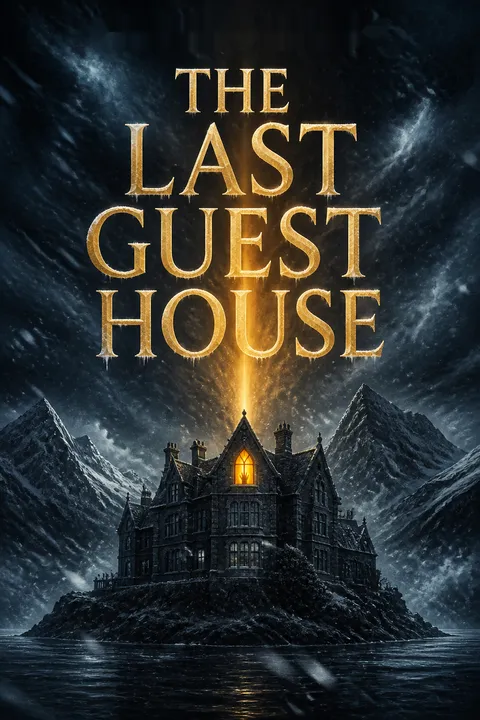
Elita opens the story with the memory of her mother’s ashes blowing back into her face, then reveals that she is sixteen but still looks much as she did at six. Her mother died ten years earlier, and Elita has lived hidden inside The Loch House ever since. Elsewhere, police officer Nicola McKenna, her six-year-old son George, and Nicola’s partner Matt Barber drive through a worsening snowstorm toward a hotel Matt booked for a romantic getaway.
The booking is for the following week, and every nearby room is taken. A receptionist sends them to the isolated Loch House, the only place with space. On the way, Nicola stops to inspect a scarecrow that resembles a body. They reach the guest house with the storm closing behind them.
The opening pairs Elita’s bodily stillness with Nicola’s forced movement through a dangerous landscape. Each woman is already constrained, though in different ways: Elita by an invisible life inside the house, Nicola by a relationship she is preparing to leave. The mistaken booking is more than a convenient mishap. It brings a family carrying private tensions into a place where hidden histories have been physically built into the walls. Elita’s first-person account also establishes an important limit on what readers know: she has pieces of the past, but not a reliable explanation for it.
A House With Rules
The hosts, Dorothy and Henry Hill, greet the family with strict demands: guests must surrender their phones and stay indoors after nine. Their eccentric manners and Henry’s damaged throat unsettle Nicola, but the storm makes leaving impractical.
At dinner, Nicola meets fellow guests Bea Alderman, Sunita, Bruce, and the young couple Steph and Joey Coombs. Bruce explains that ten years earlier, The Loch House owner Amelia Evans and her guests were found dead. The guests had been poisoned; Amelia had been shot.
Dorothy confirms that the killers were never caught and says the anniversary makes her fear their return. Later, George tells Nicola he saw a small blonde girl waving from an upstairs window. Dorothy insists that no other child is staying there, leaving Nicola with a question the house seems determined to keep.
The guest house turns hospitality into a system of control: phones disappear, doors are locked, and ordinary requests become tests of obedience. The old murders make those rules seem either protective or sinister, and the guests cannot yet tell which. George’s sighting complicates the adults’ certainty, especially because Dorothy denies something her grandson is convinced he saw. His perception is easy to dismiss because he is young, yet the story repeatedly gives children access to truths adults overlook. The guests’ different reactions also establish the social pressure of the house: fear spreads through the group, while Bruce seems to watch it as closely as the crime.
The Missing Little Boy
After the guests discuss the killings in the living room, Nicola notices a camera concealed in the ornate ceiling. Bruce has spotted it too, and he privately tells her that he once worked as a detective on the case.
He shares a detail never released to the press: a dying witness reported that two men had searched the house for a child on the night Amelia was killed. Before Nicola can learn more, George disappears. The hosts resist a full search, and Matt discovers that windows have been nailed shut. The group finds missing SIM cards and a dead landline, while the storm seals off the road.
Nicola searches rooms and questions guests, but her growing panic is complicated by Matt’s attempts to control her movements. The child’s disappearance makes the hidden camera feel less like eccentric security than surveillance with a purpose.
The missing child turns the house’s architecture and rules into evidence. A camera is no longer merely intrusive, the nailed windows no longer merely strange, and the old case’s suppressed detail suddenly points toward a living person. Nicola’s professional instincts should help her organize the search, but her fear for George narrows her attention and makes her vulnerable to others’ influence. Matt’s possessiveness is visible in small actions before it becomes a crisis. Bruce’s confident account offers an apparent ally, but his secrecy also makes expertise hard to distinguish from performance.
The Gun At Midnight
When Joey insists on leaving to seek help, Henry blocks the exit with a shotgun. A falling tree crashes outside, distracting Henry as Bruce, Matt, and Joey struggle for the weapon. The gun fires, grazing Bruce’s arm, and the guests restrain Henry with Matt’s belt.
Joey leaves on foot despite the storm, hoping to reach help, while the others keep searching for George. Hidden in the house’s passages, Elita watches the disturbance with George beside her. She has welcomed him as her first real friend, but the gunshot convinces her that danger has returned.
When George begs to go back to Nicola, Elita cannot guide him through the concealed panels. Dorothy eventually brings him back to the group and claims he was asleep in a laundry basket, prompting him to hide the truth about Elita.
The shotgun changes the guests from uneasy visitors into a group forced to manage immediate danger without outside help. Joey’s decision to leave is brave but also exposes how little the group can rely on ordinary rescue. Meanwhile, Elita’s attachment to George reproduces the isolation she has endured: she wants to protect him, but her protection means keeping him away from his mother. Dorothy’s invented laundry-basket explanation restores George physically while deepening the family’s habit of concealment. The house’s hidden passages make secrecy practical, not metaphorical, and every act of shelter risks becoming another form of confinement.
A Friend Behind Walls
Elita’s hidden room contains monitors connected to cameras throughout the guest house, books, games, and the possessions she has taken from visitors. She tells George that she has been hidden there since her mother’s death and has never grown out of her childlike body.
George accepts her without recoiling, and Elita, starved for company, asks him to stay. She soon realizes that holding him there repeats what was done to her. Dorothy finds them and persuades Elita to let George return, promising that the family will seek a life outside the house once the danger has passed.
George rejoins Nicola and says he hid in the laundry basket, protecting Elita’s secret. Nicola’s relief is immediate, but Steph’s pointed questions about where he really went make it clear that the night’s dangers have not ended.
George gives Elita something she has lacked: contact that does not begin with fear or pity. His simple acceptance briefly loosens her belief that she is too strange to belong anywhere. Yet friendship cannot erase the difference between their circumstances. Elita has power over George in the hidden room, and she initially uses it to keep him close, turning a need for companionship into a repetition of captivity. Letting him return is her first meaningful choice against the logic of fear. Dorothy’s promise of a wider life offers hope, but it remains conditional on a danger the adults still refuse to explain.
Larry’s Real Name
Joey returns with a stranded motorist named Larry, but Matt later catches him and Joey questioning George about a special girl. Steph drops her fake pregnancy padding, and the pair reveal that they have been helping Larry search the house. Sunita, previously a quiet guest, joins them and takes command.
Larry identifies himself as Ronan Watts, son of music mogul Ronnie Watts and brother of Caleb. He claims Amelia was his partner and Elita his daughter, and says he wants to rescue her from Dorothy and Henry.
Dorothy counters that Ronan and Caleb belonged to a violent religious cult, the Fellowship of Jesus Christ, which pursued Amelia after she fled. Podcast reports threaded through the story have already linked the Watts brothers to abuse, drugs, and suspicious deaths, making Ronan’s tale impossible to accept at face value.
The apparent strangers become a coordinated force, and the house’s earlier oddities take on a sharper meaning: false identities, staged vulnerability, and selective access have all helped the searchers get inside. Ronan’s claim to be a father gives his violence a persuasive surface, especially to Nicola, whose own history makes family separation an emotional pressure point. The competing accounts from Ronan and Dorothy reveal how both sides use protection as a justification for control. The podcast episodes widen the story beyond the guest house, but their polished certainty is not the same as proof. Public narratives, like family narratives, can be shaped to recruit belief.
The Chosen Girl Emerges
Elita leaves her hidden room and enters the living room, where Ronan’s followers hold the guests at gunpoint. She confirms that she is the girl they have been seeking, but insists that Ronan leave George and her grandparents unharmed.
Bea then reveals why she came: her sister Linda was one of the guests killed ten years earlier, and she recognized Ronan. She has secretly put sedatives into the group’s soup and tea, sparing Matt. Ronan collapses, but Steph still has Henry’s shotgun.
Nicola and Bruce try to escape with George; Steph fires, and Matt lunges to take the weapon. The blast does not directly wound him, but he collapses from a brain bleed caused by his earlier fall. Nicola retrieves Elita from Sunita, and police are finally summoned.
Elita’s appearance interrupts the adults’ competing stories with a person who can no longer be treated as an idea, a prize, or a threat. Her demand that George and the others be spared asserts agency without resolving the danger surrounding her. Bea’s revenge has a double edge: the sedatives help break the hostage situation, but her concealment has also kept everyone guessing about her motives. Matt’s death is especially destabilizing because it is not a clean consequence of the final gunshot. The earlier struggle has already injured him, showing how violence accumulates through the night before anyone understands its full cost.
The House Gives Up Its Dead
Six months later, Nicola returns to The Loch House with Liam, while George receives therapy and Elita has entered foster care with a family prepared to support her. The truth about the old murders has emerged: Caleb confessed before his death that he and Ronan poisoned the guests, and Ronan shot Amelia.
The brothers had also murdered their father Ronnie and his wife Heather for the inheritance. Ronan had not come to reunite with Elita; he wanted to take her to the dying Caleb as the cult’s chosen figure. The night exposes another secret.
Nicola had killed her abusive former partner Gav and staged his death as an accident; Matt had used that knowledge to keep her from leaving him. Doctors determine that Matt died from a brain bleed after the earlier fall. Nicola lays flowers at the house and leaves, choosing not to return.
The resolution refuses a simple division between rescue and harm. Elita is freed from a life shaped by fear, yet she must begin that life while grieving her mother and facing an uncertain future. Nicola’s hidden crime complicates her identity as a police officer and survivor, while Matt’s care for her and George coexisted with coercive control. Their relationship cannot be reduced to villain and victim, but its tenderness did not cancel its threat. The final confessions also expose the cost of treating charisma as evidence: the Watts brothers used spiritual language and family claims to disguise greed and violence. Leaving the house is not erasure, but a deliberate refusal to let it define the next chapter.
Analysis
The novel builds its suspense from competing claims of protection. Dorothy and Henry hide Elita because they believe the outside world is dangerous; Ronan claims he wants to rescue her; Nicola tries to protect George while struggling to recognize control inside her own relationship. In each case, care can become coercive when the person supposedly being protected is denied a choice. The secret passages literalize that paradox. They shelter Elita from the people who seek her, but also keep her out of public life, friendship, and ordinary care.
The story’s two child characters offer a counterpoint to adult certainty. George responds to Elita without treating her as an omen or a spectacle. His acceptance is small, but it cuts through the competing explanations adults have built around her body. Elita’s condition is real; the messianic status imposed on her is not. The cult’s language turns difference into destiny, while the hidden room turns fear into a life sentence. Her eventual move toward foster care therefore matters not as a neat cure, but as the beginning of a life in which other people can support her without making her a symbol.
Nicola’s arc complicates the thriller’s moral categories. She is trained to recognize abuse, yet Matt’s dependence and blackmail hold her as firmly as violence once did. Her own concealed killing of Gav further unsettles the distinction between survivor and perpetrator. The novel does not excuse her actions, but shows how shame and fear can make a person accept another form of captivity. Matt’s death, caused by an earlier injury rather than the final shot, similarly resists the clean logic of punishment. His tenderness was real, and so was his coercion.
Finally, the podcast format makes truth a process rather than a single revelation. Each episode revises a public story, while the characters confront how much has been hidden, misremembered, or strategically framed. The final confessions clarify who committed the murders, but they cannot restore the dead or return Elita’s lost childhood. The book’s hard-won resolution is therefore not perfect closure. It is the possibility of making choices beyond the house that once seemed to contain every available future.
Review Summary
The Last Guest House receives mixed reviews, with an average rating of 3.81 out of 5. Many readers praise its atmospheric setting, creepy vibe, and intriguing locked-room mystery. The story follows Nicola, Matt, and George as they stay at a strange guesthouse with strict rules during a snowstorm. Some readers found the plot gripping and unpredictable, while others felt it was slow-paced or lacked depth. The inclusion of true crime podcast segments was divisive, with some enjoying the added dimension and others finding it unnecessary.
People Also Read




Characters
Elita
Girl behind the wallsElita is Amelia’s daughter, hidden in The Loch House and still physically resembling the child she was when her mother died. She is intelligent, observant, and hungry for ordinary companionship, learning about the outside world by watching guests through cameras and reading their belongings. Her isolation has made her both imaginative and socially uncertain. She wants to be treated as a person rather than a curiosity, yet fear has taught her to mistake concealment for safety. Her friendship with George lets her experience acceptance, while her memories and her grandparents’ explanations leave her unsure what to believe about her past.
Nicola McKenna
Police mother on holidayNicola is a Lincolnshire police officer and George’s devoted mother. Her work has trained her to notice danger and treat vulnerable people with dignity, but those instincts do not always translate into the choices she makes at home. Having survived an abusive relationship, she is alert to violence yet can still be drawn into relationships that promise safety through dependence. Nicola’s protective love for George is fierce, and the crisis at The Loch House forces her to distinguish responsibility from obedience. She is practical under pressure, compassionate toward strangers, and more vulnerable than her professional confidence suggests.
George
Quiet child in dangerGeorge is Nicola’s six-year-old son, a gentle, observant child who often absorbs more than he says. His past has made him cautious and unusually accommodating, but he remains curious enough to explore the concealed spaces of The Loch House. He responds to Elita’s difference with kindness rather than alarm, recognizing her as a person before he understands her circumstances. George’s dependence on his mother is central to the adults’ choices, and his silence can protect someone he cares about even when it leaves the people searching for him frightened.
Matt Barber
Orderly, possessive partnerMatt is a headmaster who values order, planning, and the promise of a stable family. He cares deeply for Nicola and George, and his practical kindness is real, but insecurity shapes how he interprets Nicola’s independence. He wants commitment, domestic security, and a future he can plan in advance; her police work and emotional distance make him feel excluded. Matt’s careful manners can conceal resentment when events slip beyond his control. He is neither simply a safe alternative to Nicola’s abusive past nor a straightforward monster, and that ambiguity makes his relationship with her difficult to name.
Dorothy Hill
Eccentric grieving hostDorothy runs The Loch House with Henry and fills its bleak rooms with flamboyant clothes, royal memorabilia, and unusual rules. Her theatrical manner can make her seem unserious, but grief and fear sit close beneath it. She is protective of her family and capable of bending rules for George, even as she withholds information from the guests. Dorothy’s instinct to shield those she loves has hardened into secrecy, making her care difficult to distinguish from control.
Henry Hill
Silent, devout housekeeperHenry is Dorothy’s husband, a very tall, withdrawn man whose throat cancer has left him speaking with difficulty. He handles much of the practical work at The Loch House and maintains a private room filled with religious objects. His silence makes him hard for guests to read, while his devotion and protectiveness can turn severe under pressure. Henry’s physical frailty does not make him harmless, and his choices are shaped by a powerful conviction that the family must be defended.
Ronan Watts
Charismatic family seekerRonan is the son of music magnate Ronnie Watts and the brother of Caleb. He presents himself as a man driven by concern for his family, with an easy confidence that can hold a room’s attention. His polished manner contrasts with the urgency of his actions, and he is skilled at framing coercion as care. Ronan’s personal history connects the guest house’s hidden child to a wider world of money, celebrity, and religious devotion.
Bea Alderman
Restless spiritual travellerBea arrives as a flamboyant, outspoken traveller who quickly unsettles the other guests with her questions and predictions. Beneath the theatricality is a woman carrying a private reason for coming to The Loch House. She is perceptive about Nicola’s strained relationship and alert to other people’s performances, though she often expresses insight in a way that alienates them. Bea wants answers about the past and is willing to make herself conspicuous to get them.
Bruce Hawthorn
Obsessive case investigatorBruce is a solitary local whose knowledge of the old murders and police procedure makes him appear authoritative. He watches the guests carefully, sometimes seeming to enjoy their fear, but he also recognizes that the house is hiding more than its hosts admit. His interest in The Loch House case has occupied him for years, blurring the line between genuine investigation and role-playing. Bruce is both a useful source of information and a person Nicola has reason to question.
Steph Coombs
Anxious young travellerSteph arrives with Joey as a seemingly vulnerable pregnant traveller planning a final holiday before motherhood. She is warm with George and quick to seek comfort from her husband, but she is also attentive to the shifting power in the house. Her apparent fragility encourages others to underestimate her. Steph’s conduct makes the contrast between performed helplessness and deliberate action one of the story’s recurring tensions.
Joey Coombs
Musician and mountaineerJoey is a musician and experienced mountaineer travelling with Steph. He appears easygoing and affectionate, but becomes forceful when he believes the group is trapped without help. His willingness to face the storm earns Matt’s trust, while his attentiveness to Steph makes him seem a devoted partner. Joey’s mixture of warmth and determination helps him move between the guests’ everyday worries and the escalating danger.
Sunita
Quiet yoga instructorSunita presents herself as a reserved yoga instructor scouting the area for a retreat. She speaks little at dinner and seems composed while other guests grow anxious. Her calm presence gives Nicola a brief sense of safety, but she remains difficult to read. Sunita’s restraint shows how easily a quiet manner can be mistaken for neutrality, especially in a group where everyone is hiding some part of their purpose.
Caleb Watts
Troubled spiritual leaderCaleb is Ronan’s younger brother, raised amid wealth, family grief, and the music industry. Public accounts describe a man who turned from substance use toward extreme religious belief and gathered followers around his spiritual claims. He is central to the history that connects Amelia and Elita to the Watts family. His story complicates the difference between sincere belief, delusion, and the use of faith to justify power.
Amelia Evans
Mother guarding a secretAmelia is Dorothy and Henry’s daughter and the former owner of The Loch House. Her diaries give Elita a record of a mother who loved her intensely while fearing for her safety. Amelia’s guardedness and decision to live on the remote island make more sense as fragments of her history emerge. She is present in the story through memory, testimony, and the life her daughter has been forced to lead.
Gav
Abusive former partnerGav is George’s biological father and Nicola’s former partner. His violence shaped Nicola’s understanding of danger, separation, and the difficulty of leaving an abusive home. His memory remains part of the family’s emotional landscape even while Nicola tries to give George a more secure childhood.
Liam
Nicola’s trusted colleagueLiam is Nicola’s police colleague and shift partner. He knows how she works under pressure and offers the professional companionship she rarely finds in her relationship with Matt. His patient support gives Nicola room to consider what she wants, rather than what someone else has planned for her.
Linda Alderman
Painter tied to the caseLinda is Bea’s sister and a landscape painter who came to Skye seeking inspiration. Her connection to The Loch House gives Bea a personal stake in the old mystery and turns her curiosity into a search for answers.
John Evans
Amelia’s absent husbandJohn is Amelia’s husband, who left the island after she inherited The Loch House. His absence is one more uncertainty in the account of Amelia’s past and the life she built around her daughter.
Ronnie Watts
Music industry patriarchRonnie is a wealthy music producer whose family history reaches into the guest house mystery. His sons’ troubled upbringing and the public attention around his household provide the background for the podcast’s wider case reports.
Heather Watts
Charity-minded second wifeHeather is Ronnie’s much younger wife, remembered publicly for charity work and opposition to drug abuse. Her place in the Watts family story gives the podcast another unresolved case to examine.
Plot Devices
The hidden passages
Concealed life inside wallsThe Loch House contains concealed rooms and routes left from its earlier use as a refuge. They let Elita move unseen, maintain a private room, and watch the guests through cameras. The passages make the novel’s central secret physically plausible, while turning familiar domestic spaces into places where someone may be present without being noticed. They also create a moral complication: the hidden architecture can shelter a child from danger, but it can equally keep her from ordinary life.
The anniversary storm
Isolation with a deadlineA blizzard strands Nicola’s family and the other guests at The Loch House on the tenth anniversary of the original murders. The weather makes the hosts’ rules seem plausible, prevents immediate police help, and gives the intruders cover to arrive. Because the storm echoes the conditions of the earlier killings, the guests cannot easily decide whether Dorothy and Henry are reacting to a real threat or repeating an old trauma.
Mystery on the Mic
A public record of secretsPodcast episodes appear between the main chapters, returning over time to the Watts family and the Loch House murders. Their hosts share victim profiles, disputed theories, cult allegations, and developments around Caleb and Ronan. The podcast broadens the story beyond the guest house and lets readers assemble background information before the characters can verify it. Its confident tone is also deliberately imperfect: public reporting can expose hidden histories, but it can preserve speculation and mistaken assumptions alongside useful facts.
Elita’s condition
A body mistaken for prophecyElita’s progeria has left her looking much as she did at six, even though she is sixteen. Her appearance shapes her isolation and helps explain why she is regarded by some as miraculous or chosen. The condition is not a supernatural power, but other people’s beliefs turn it into a tool for religious authority and exploitation. By grounding the mystery in a medical reality, the novel separates Elita’s actual needs from the meanings that adults impose on her.
Download PDF
Download EPUB
.epub digital book format is ideal for reading ebooks on phones, tablets, and e-readers.








