

Plot Summary
The Diamonds Become Dust
A battered package leaks brown grit outside New York’s Natural History Museum, and guard Curly Tuttle is frozen in place while administrator Digby Greenlaw panics. Laboratory tests rule out anthrax and identify diamond dust. Mineralogist Wilfred Sherman recognizes the colored fragments as the museum’s stolen collection, pulverized into powder.
Director Frederick Collopy tries to delay the news, but reporter Bill Smithback learns the truth and exposes the destruction on the front page of the Times. The revelation triggers public fury and threatens Collopy’s position. The diamonds are not merely missing; someone has deliberately erased their beauty, value, and identity, then sent the remains back to the institution that once displayed them.
The opening turns a routine security scare into a public reckoning. The package first exploits post-terrorism fear, then reveals a crime aimed less at profit than at symbolic annihilation. Sherman’s expert recognition makes the loss intimate: each color identifies a singular object, so the powder is not interchangeable industrial material. Collopy’s instinct to control the story compounds the damage, while Smithback’s reporting converts private institutional shame into public pressure. The museum’s authority depends on preservation and trust; the pulverized collection attacks both at once. The initial mystery therefore concerns not simply who stole the diamonds, but what kind of hatred would destroy what it had risked everything to possess.
A Tomb Buys Time
With protests gathering outside, anthropology chair Hugo Menzies urges Collopy to answer the scandal with a major exhibition. A ten-million-euro donation arrives from Count Thierry de Cahors, earmarked to restore the long-forgotten Tomb of Senef.
Collopy accepts, and Menzies appoints archaeologist Nora Kelly to lead the project, despite her unfamiliarity with Egyptology and the six-week deadline. Nora proposes staging the ancient tomb robbery as an educational sound-and-light experience.
The museum hires Adrian Wicherly, a celebrated young Egyptologist, and maintenance expert Seamus McCorkle locates the sealed entrance beneath the building. When they break through, the team discovers an enormous, richly painted tomb hidden behind the museum’s storage rooms for decades.
The museum responds to a crisis of legitimacy by making spectacle serve as repair. The donation supplies money, but also a convenient story of renewed purpose; the rushed timetable reveals how urgently the institution wants to replace public anger with wonder. Nora’s appointment gives her a professional opportunity while forcing her to set aside her own archaeological work. Her plan tries to make history vivid without abandoning its educational value, but the project’s growing theatrical ambition begins to challenge that balance. The tomb’s physical rediscovery mirrors the museum’s public strategy: an impressive hidden inheritance is brought into view, yet the act of opening it will expose more than the institution expects.
The Tomb’s Old Blood
As Nora studies the museum archives, she traces the Tomb of Senef from Napoleon’s Egyptian campaign to its installation in New York. She also uncovers a suppressed 1930s case: several people connected to the tomb were murdered, including museum benefactors, and one body was placed in its sarcophagus.
The museum blamed the closure on subway construction, but a curator’s note shows officials deliberately rerouted the passageway to bury the exhibit and end the killings. The forgotten murders sharpen the present-day rumors of a curse. During the modern installation, computer technician Jay Lipper and his partner Teddy DeMeo work late inside the tomb, unaware that the old site’s danger may be returning.
The archival investigation turns the tomb from a dormant exhibit into a contested memory. The museum did not simply forget the site; it manipulated public works to make forgetting permanent. That history weakens its claim to be a neutral custodian of the past. Nora’s discovery also supplies a rational basis for the curse rumors without proving supernatural causes. The murders were real, but the institution’s choice was concealment rather than explanation. By bringing the tomb back as a public performance, Collopy and Menzies repeat the old pattern of using the site for institutional ends. The archives show that secrecy itself has become part of the danger surrounding Senef.
The Show Turns Savage
During a late-night test, Lipper’s carefully assembled show unexpectedly loads its routines, and strange sounds draw him into the deeper tomb. DeMeo returns with pizza, follows the dragging noises, and is killed in the darkness.
Museum cleaner Mary Johnson discovers his mutilated body in the sarcophagus and collapses in shock. Lipper, now behaving like a violent predator, escapes into the museum attics and slashes guard Wilson Bulke before Captain Laura Hayward leads a team through the collections and captures him.
Days later, Wicherly suffers a similar sudden mental collapse, attacks Nora in her office, and is shot by a museum guard. Medical examinations find comparable brain damage in both men, leaving Hayward convinced the supposedly separate crimes have a common cause.
The violence converts the exhibition’s simulated robbery into an actual sequence of desecrations. Lipper’s transformation is especially disturbing because he helped build the machinery that now appears to have shattered his own judgment. DeMeo’s death and the use of the sarcophagus repeat details from the archival murders, inviting both police and museum staff to interpret coincidence as curse. Hayward resists that explanation by following evidence, but the matching brain injuries refuse an easy account. The attacks also reveal competing institutional priorities: the museum wants its opening intact, while Hayward must treat an enormous building as an active crime scene. The tomb’s theatricality has escaped its intended boundaries.
A Prison Becomes a Channel
FBI agent Aloysius Pendergast waits in solitary at Herkmoor, framed for killing his friends by his brother Diogenes. Agent Spencer Coffey pressures Warden Gordon Imhof to isolate Pendergast and break him, while Lieutenant Vincent D’Agosta risks his career to help free him.
Working with the secretive engineer Eli Glinn, D’Agosta surveys the prison and collects samples from its drainage stream. Pendergast uses that old drain to send coded messages on scraps of cloth, directing the escape plan from inside.
In a separate cell, he studies the compulsive drummer imprisoned next door, eventually earning enough trust to communicate with him. The prison’s rules and routines become information that Glinn can exploit, but Coffey’s cruelty raises the stakes.
Herkmoor is designed to make movement impossible, yet its systems also create predictable patterns. Glinn treats the prison less as a wall than as a machine whose inputs can be measured. Pendergast’s messages through the obsolete drain expose a small seam between official control and neglected infrastructure. His approach to the drummer adds a less mechanical form of intelligence: he learns by entering another person’s rhythm rather than demanding explanation. Meanwhile, Coffey and Imhof mistake isolation for mastery. Their punitive measures do not silence Pendergast; they give him time, structure, and a channel. The plot’s rescue effort therefore grows from close attention to systems and to people.
Diogenes Wins Constance’s Trust
While Pendergast is imprisoned, Diogenes enters his Riverside Drive mansion and approaches Constance Greene, Pendergast’s ward. Constance attacks him, but he restrains her and presents himself as a fellow victim of Pendergast’s cruelty. He leaves a tame white mouse, then returns with poetry, gifts, and stories about the childhood he claims was stolen from him.
Constance, isolated in the house and longing to be understood, begins to doubt the guardian she loves. Diogenes uses art, absinthe, and carefully chosen confidences to draw her into an intimate relationship. Afterward, he leaves a letter claiming her sister Mary was murdered to prolong Constance’s life, and places a scalpel beside it, urging her to kill herself.
Diogenes’s most effective weapon is not force but the appearance of recognition. He reads Constance’s isolation accurately, then turns that knowledge into leverage by making emotional intimacy feel like evidence. His gifts appeal to her neglected senses, while his account of shared suffering undermines her confidence in Pendergast. The manipulation works because Constance’s dependence is real: she has lived under guardianship, secrecy, and an unusually restricted life. The letter then reverses the tenderness he cultivated, converting self-discovery into self-condemnation. His cruelty is precise because it borrows the language of care. Constance’s vulnerability is not foolishness; it is the result of a life in which very few people have offered her a choice.
Pendergast Escapes in Disguise
Coffey has Pendergast placed in a yard with Carlos Lacarra, a violent inmate, expecting the gang to kill him. Pendergast survives the attack and kills Lacarra in self-defense, then persuades the gang to follow an escape plan. During their staged breakout, the prisoners draw guards away while Pendergast hides behind a reflective screen, drugs a guard, and takes his uniform.
He uses a timed computer loop, a stolen access card, and D’Agosta’s hidden supplies to cross the prison’s security zones. Pendergast then disguises himself as the dead Lacarra, allowing D’Agosta to remove him in a morgue vehicle. The escape leaves Herkmoor believing its no-escape record intact, while Pendergast reaches Glinn’s headquarters badly injured but free.
The escape succeeds by exploiting what the prison values most: order, classification, and confidence in its own records. Each deception has a narrow window, so Pendergast’s survival depends on exact timing rather than brute force. His use of Lacarra’s body is morally costly, and he refuses to call the killing anything but premeditated, even when Glinn explains its necessity. That refusal distinguishes tactical calculation from ethical absolution. D’Agosta’s role likewise carries consequences: he has already risked his police career, and the escape deepens his exposure. Herkmoor’s apparent success at recapturing everyone becomes the cover for the one prisoner it cannot account for.
The Sealed Memory Opens
Glinn concludes that Diogenes’s unfinished plan is driven by an injury Pendergast does not remember. Under pressure, Pendergast enters a disciplined memory exercise and reconstructs the New Orleans mansion where the brothers grew up.
He sees his nine-year-old self lead seven-year-old Diogenes into a forgotten room containing a terrifying device built by their ancestor, magician Comstock Pendergast. Pendergast bullied his brother into entering the machine first, then stopped short of following.
A frightening projected spectacle trapped Diogenes, who eventually fired a gun that damaged one eye. Their parents concealed the incident as illness, and Pendergast repressed it. His silence afterward, meant to protect his own mind, convinced Diogenes that his brother had never cared enough to apologize.
The revelation complicates the brothers’ opposition without excusing Diogenes’s later crimes. Pendergast was a child who acted from rivalry and curiosity, but his coercion had consequences he could not understand. The adults’ cover story then converted an event into a family secret, leaving both boys alone with distorted interpretations. Pendergast’s amnesia protected him from unbearable guilt, yet it also prevented repair. Diogenes experienced that silence as a second injury. The memory crossing therefore changes the conflict from a contest between an innocent pursuer and a monstrous fugitive into a relationship shaped by accident, concealment, and failed recognition. Responsibility survives even when intention and memory do not.
Constance Chooses the Hunt
After reading Diogenes’s letter and finding the scalpel he has left for her, Constance does not follow his instructions. She takes the weapon and sets out after him instead. At the museum, Hayward sees Viola Maskelene among the gala guests and realizes Diogenes may be using his long-prepared identity inside the institution.
She goes to Glinn’s headquarters, finds D’Agosta and the escaped Pendergast, and chooses not to arrest Pendergast. The three race back to the museum. Pendergast recognizes the Tomb of Senef exhibition as a recreation of the childhood device that injured Diogenes, and understands that the opening, broadcast live, is the target of his final crime.
Two acts of refusal converge here. Constance rejects the identity Diogenes assigns her as a life that ought to end, while Hayward refuses the safer bureaucratic choice of arresting Pendergast. Both women act against the roles others have constructed for them. Constance turns vulnerability into pursuit, though her decision is born from manipulation and grief, not uncomplicated empowerment. Hayward’s choice risks her career because evidence has not caught up with instinct. Pendergast’s recognition finally supplies the missing causal link between childhood and the present attack. The museum gala is no longer a public relations event; it is the stage on which Diogenes intends to make strangers share his original terror.
The Tomb Becomes a Weapon
Once the VIP audience enters the sealed tomb, Diogenes’s hidden system overrides the planned educational show. Lasers, strobes, low-frequency sound, and fog assault the guests, while grotesque images provoke panic and violent confusion.
Hayward, D’Agosta, and Pendergast cannot open the doors or reach the audience by radio. Pendergast identifies the danger, and D’Agosta disables the broadcast link, but Diogenes has built an independent power source inside the tomb. With Bill Smithback’s reluctant help, Pendergast makes an explosive and breaches a weak section of the subway wall.
Inside, they smash the strobes and find a concealed generator powering the attack. Pendergast cuts it, ending the assault before it can cause still greater harm. Diogenes, disguised as Menzies, escapes in the confusion.
The attack weaponizes the exhibition’s central promise: to make visitors feel present inside an ancient robbery. Diogenes replaces historical illusion with sensory coercion, stripping away the audience’s ability to distinguish representation from threat. His chosen techniques make the crowd’s bodies part of the spectacle, while the live broadcast would have extended the attack beyond the museum. Pendergast and his allies succeed by abandoning orderly procedure: they cut the broadcast, breach a wall, and destroy equipment. That urgency saves lives but cannot undo the damage. The climax’s ethical tension lies in the difference between spectacle and consent. The guests entered to be entertained; Diogenes used their attention as an involuntary instrument.
The Hunter Becomes Prey
Diogenes flees by train, but Constance finds his compartment and fires at him, forcing him to leap from the moving train. He escapes to Florence and tries to turn her pursuit into an ambush in a dark alley. Constance anticipates him, attacks from above, and wounds him before he can kill her.
Though he gets away, she follows a clue from their earlier conversations: a poem by Carducci that points to Stromboli, the volcanic island associated with the legendary entrance to hell. Pendergast traces her route through a convent, a bus, and the library where she studied the poem. He reaches the island as Diogenes and Constance climb toward the active volcano, each convinced the other must die.
Constance’s pursuit reverses the intimacy Diogenes exploited. She remembers his language, studies it, and uses his own cultural references to locate him. Her first attacks are imperfect, but each failure teaches her to act with greater deliberation. Diogenes, who once managed her through close observation, now becomes the object of her scrutiny. Pendergast follows through forensic patience rather than emotional haste, reading the fibers and movements that others overlook. The island’s mythic association with an underworld reflects the brothers’ shared history, but the chase remains materially grounded in wounds, money, transit, and exhaustion. Constance is not magically transformed; she is learning how costly action is in the world beyond books.
The Volcano Decides
On Stromboli, Diogenes barricades himself in his villa, then drives Constance toward the volcanic slopes. He expects her to follow the familiar trail and waits to ambush her, but she takes an older route and reaches the ridge first. Pendergast climbs after them through wind, ash, and falling lava. At the edge of the Sciara del Fuoco, he sees the brothers locked together and both tipping into the gorge.
He reaches down expecting to pull up Diogenes, but the hand gripping the rock belongs to Constance. Pendergast hauls her to safety; Diogenes disappears into the volcanic chasm. Constance survives, injured and exhausted, while Pendergast is left facing the consequences of the brotherhood he had only just begun to understand.
The confrontation makes survival depend on recognition, not dominance. Diogenes assumes Constance will behave as a pursuer he can predict; she defeats that assumption by changing the route and making him react. Pendergast’s instinct is to save his brother, even after years of violence, but he ultimately rescues Constance instead. The physical grip at the cliff edge crystallizes the novel’s moral question: kinship creates obligations, yet it does not erase the claims of the living person within reach. Diogenes’s apparent death ends the immediate pursuit without repairing the damage he caused. The volcano offers no verdict or absolution; it only makes the brothers’ conflict irreversible.
The Living Rebuild
Back in New York, Pendergast’s case is cleared after evidence from Diogenes’s belongings confirms the frame-up, while the FBI issues new warrants for the fugitive’s crimes. D’Agosta attends his disciplinary hearing, unsure whether his part in the prison escape will cost him his career.
Hayward arrives and publicly takes his hand, making clear that she is willing to face the consequences with him. At the Feversham Clinic, Nora and Smithback visit Margo Green, who is slowly recovering from the drug-induced coma Diogenes inflicted.
The museum plans to reopen the Tomb of Senef with a revised show, and Nora sees her colleague’s return as part of the work of rebuilding. Yet Pendergast remains absent, consumed by guilt and unable to settle the past.
The immediate crisis ends through imperfect forms of repair. Legal systems correct the false charge against Pendergast, but D’Agosta still must face consequences for breaking their rules. Hayward’s gesture turns private affection into a public commitment, accepting that loyalty may carry professional risk. Margo’s slow recovery resists the thriller’s tendency to treat survival as a clean reset; she returns to life weakened, with care and time still required. The museum’s decision to reopen the tomb shows how institutions metabolize catastrophe by adapting the display rather than abandoning it. These resolutions are meaningful but incomplete. The people saved from Diogenes’s plan must rebuild relationships and bodies, while Pendergast’s guilt remains unresolved.
A Future No One Planned
On the island of Capraia, Pendergast and Egyptologist Viola Maskelene share a quiet meal while Constance wanders nearby. Pendergast admits he kept Constance too sheltered and allowed Diogenes to exploit her hunger for experience.
He hopes travel and eventual retreat at a Tibetan monastery will help them heal. Viola offers Constance a place assisting with her future archaeological work in the Valley of the Kings. When Pendergast tries to persuade Constance that Diogenes is gone and the ordeal is finished, she refuses to call it over.
Then she reveals that she is pregnant. Her news breaks through his carefully managed plan for recovery, binding the consequences of Diogenes’s manipulation and the brothers’ past to a future none of them anticipated.
The final revelation refuses the comfort of a closed case. Pendergast imagines healing as a sequence he can arrange: travel, distance, then retreat. Constance’s pregnancy makes that plan inadequate, because her body carries a consequence that cannot be filed away with the dead. Her refusal to accept his declaration of safety is also a claim to interpret her own experience. Viola offers a practical alternative to isolation, one rooted in work and shared knowledge rather than protection alone. The ending shifts the emotional question from whether danger has ended to what responsibility means after danger. The future arrives not as resolution, but as a demand for relationship, care, and choice.
Analysis
The novel builds its thriller from a conflict over who gets to interpret the past. The museum displays history as an asset, but its suppression of the Tomb of Senef’s murders shows that preservation can become a form of institutional concealment. Nora’s effort to make the tomb educational is therefore shadowed by the question of what a public story leaves out. Diogenes takes this problem to an extreme: he turns historical performance into bodily coercion, making an audience experience terror without consent.
The brothers’ conflict gives the spectacle a more intimate source. Pendergast’s forgotten childhood action helped shape Diogenes, but a family cover story and years of silence transformed accident into grievance. The memory revelation complicates guilt without erasing responsibility. Pendergast cannot control what he remembers, yet he must answer for the harm his actions caused. Diogenes, by contrast, makes injury the organizing principle of his identity and attempts to distribute it to strangers. His pain explains his plan, but does not justify it.
Constance’s story examines the cost of protection when it becomes confinement. Her education and intelligence do not prepare her for experience, and Diogenes exploits that imbalance by presenting seduction as understanding. Her pursuit of him is an act of agency, but it is also shaped by betrayal and anger. The ending refuses to present survival as simple recovery: Margo remains frail, Pendergast remains burdened, and Constance’s pregnancy opens a future that cannot be managed as a neat resolution.
Across these strands, the book distinguishes knowledge from wisdom. Technical expertise, scholarship, forensic skill, and institutional authority all have limits when people use them to hide, manipulate, or dominate. The characters who make progress do so by attending to specific evidence and to other people’s needs. Their best acts are not displays of control, but moments of recognition: Hayward trusting her judgment, D’Agosta risking his position, Nora guiding a panicked crowd, and Pendergast reaching for Constance instead of the brother he may still feel responsible for.
Review Summary
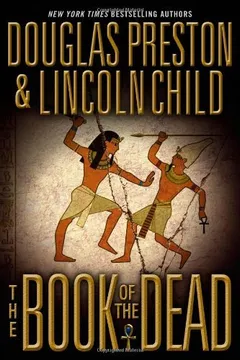
The Book of the Dead is the final installment in the Diogenes trilogy within the Pendergast series. Readers praise its thrilling plot, complex characters, and unexpected twists. Many enjoy the Egyptian themes and museum setting. Some found the ending disappointing or implausible. The book is best read after the previous two in the trilogy. Overall, fans appreciate the unique blend of science, history, and suspense that Preston and Child deliver, though a few felt it didn't quite live up to earlier entries in the series.
People Also Read



Characters
Aloysius Pendergast
The haunted investigatorAn FBI special agent with exceptional discipline, wide learning, and an unsettling calm, Pendergast is both investigator and the central target of his brother’s scheme. His loyalty to friends is real but often expressed through secrecy and self-denial, which can leave others feeling shut out. He treats evidence as a path toward truth, yet his own repressed memory shows that intelligence cannot guarantee self-knowledge. His relationship with D’Agosta tests his capacity to accept help, while his guardianship of Constance forces him to confront the difference between protecting someone and allowing her a life of her own. Guilt, restraint, and responsibility shape his choices.
Diogenes Pendergast
The brilliant adversaryPendergast’s younger brother is a gifted planner, practiced performer, and deeply private man who treats identity as something to design and discard. He is drawn to beauty, scholarship, and sensory refinement, yet turns those interests into tools for control. His need to make others experience his own pain gives his schemes a personal logic, although it never excuses their cruelty. He understands people acutely and uses that understanding to cultivate dependence, confusion, and fear. His relationship with Aloysius is shaped by rivalry, resentment, and a history neither brother has fully faced. Diogenes’s capacity for patience makes him especially dangerous.
Constance Greene
The sheltered scholarConstance is Pendergast’s ward, an intensely intelligent young woman whose unusual history has left her highly educated but inexperienced in ordinary life. Her knowledge gives her precision and independence of thought, while years of seclusion leave her vulnerable to anyone who offers genuine-seeming attention. She often relies on intellect to contain emotions that are too large or unfamiliar to name. Her bond with Pendergast combines affection, dependence, and unspoken longing, and her interactions with Diogenes test her ability to distinguish empathy from manipulation. Constance’s central struggle is not a lack of strength, but learning how to exercise agency beyond the protected world others have built around her.
Vincent D’Agosta
The loyal streetwise copA New York police lieutenant and Pendergast’s close friend, D’Agosta is practical, emotionally direct, and willing to act before institutions catch up. His instincts often identify danger early, but his loyalty can push him into decisions that threaten his career and relationships. He is protective without Pendergast’s reserve, which makes him a bridge between the agent’s private world and ordinary human attachment. His estrangement from Laura Hayward exposes the cost of keeping secrets in the name of protection. D’Agosta’s courage is not effortless; he is often frightened, angry, or uncertain, but continues because he believes people should not be abandoned to systems that have failed them.
Laura Hayward
The evidence-driven captainA capable NYPD homicide captain, Hayward combines methodical investigative habits with a sharp instinct for inconsistencies. She has built a career in a force where authority is not always freely granted to women, so competence and control matter deeply to her. That discipline can make her guarded in private life, especially after her relationship with D’Agosta becomes strained by his secrecy. She is not content to let a technically convincing case stand when the underlying truth feels wrong. Hayward’s central tension is between the rules that protect legitimate policing and the judgment required when those rules are being manipulated.
Nora Kelly
The museum archaeologistAn archaeologist at the Natural History Museum and Smithback’s wife, Nora is grounded, curious, and committed to the integrity of the objects she studies. Her research on ancient pottery reflects a mind that finds meaning in patterns and patient evidence. When asked to rescue the museum’s reputation by directing the Tomb of Senef exhibition, she accepts responsibility even though it displaces her own work. Nora resists turning scholarship into mere entertainment, yet understands that public engagement can bring history to life. Her professional confidence and practical courage are tested by the violence surrounding the exhibit, while her marriage to Smithback gives her a source of affection and honest friction.
William Smithback
The restless reporterA New York Times reporter and Nora’s husband, Smithback is ambitious, improvisational, and alert to the detail that turns a routine story into a revelation. His appetite for a scoop can make him intrusive, but his curiosity is matched by loyalty to the people he loves. He is proud of his journalistic instincts and occasionally needs to be reminded that not every moment belongs to the press. His marriage to Nora is affectionate and lively, though his work often intrudes on their time together. When danger becomes immediate, Smithback’s reporting instincts give way to practical courage, even when the task is frightening and physically costly.
Viola Maskelene
The adventurous EgyptologistA British Egyptologist with expertise in New Kingdom tombs, Viola is energetic, independent, and more comfortable with fieldwork than academic display. Her rugged manner contrasts with the polished image many people expect from a celebrated scholar. She brings curiosity and humor to Nora’s project and refuses to let a frightening past define her relationship with New York. Viola’s professional eye catches inconsistencies in the Tomb of Senef, while her personal connection to Pendergast gives her a stake in the larger conflict. She offers practical companionship rather than easy consolation, and her willingness to imagine a future with others makes her an important counterweight to the story’s isolation.
Hugo Menzies
The affable department chairChairman of the museum’s Anthropology Department, Menzies is a cultured administrator who supports Nora and knows how to persuade colleagues. He values the museum as a public institution but is also skilled at managing appearances, especially during a crisis. His warm manner helps him gain trust across professional ranks, while his enthusiasm for spectacle reveals how readily educational aims can be made to serve public relations. Menzies’s authority gives him influence over the exhibition and its staff, placing him at the center of the museum’s decisions.
Frederick Watson Collopy
The embattled museum directorCollopy leads the Natural History Museum and cares deeply about its prestige and long institutional history. Under public pressure, he initially reaches for damage control, then must choose whether to trust the more ambitious plan proposed by Menzies. His concern for the museum is sincere, but it is entangled with his desire to preserve his own reputation. Collopy’s decisions show how institutional leaders can confuse protecting an organization with protecting its image.
Eli Glinn
The calculating engineerGlinn runs the secretive engineering firm Effective Engineering Solutions and helps D’Agosta plan Pendergast’s escape. A wheelchair user with a precise, analytical manner, he treats complex systems as problems that can be modeled and tested. His confidence in prediction makes him an effective strategist, though he can sound indifferent to the human cost of his plans. Glinn respects competence and presses Pendergast to confront the memory he has buried, believing that understanding the past is necessary to prevent future harm.
Gordon Imhof
The rigid prison wardenThe warden of Herkmoor, Imhof prizes discipline, respect, and the appearance of complete control. His concern with order makes him receptive to Coffey’s pressure against Pendergast, even when the proposed measures cross ethical lines. Imhof is neither a simple brute nor a neutral administrator; he wants to succeed within a system that rewards visible control. His conflict with Coffey exposes how authority can become complicit when personal pride is mistaken for institutional duty.
Spencer Coffey
The vindictive FBI agentAn FBI agent pursuing Pendergast, Coffey has a personal grievance that compromises his judgment. He presents his pressure tactics as necessary law enforcement, but his need to dominate the prisoner steadily overtakes his responsibility to the case. Coffey’s manipulation of Imhof demonstrates how ambition and resentment can distort procedure from within. He is a useful contrast to Hayward: both operate within law enforcement, but only one remains willing to question whether a persuasive case is also a true one.
Adrian Wicherly
The gifted guest scholarA young British Egyptologist hired to help build the Tomb of Senef exhibition, Wicherly is brilliant, polished, and accustomed to admiration. He can explain complex material with ease, but his charm sometimes conceals entitlement, particularly in his treatment of Nora. His expertise makes him valuable to the project, while his confidence encourages him to dismiss warnings that do not fit his expectations. Wicherly represents the gap between intellectual mastery and sound judgment.
Jay Lipper
The gifted effects designerA computer effects consultant, Lipper designs the technical machinery that will animate the tomb’s staged robbery. He is imaginative and exacting, but overworked and impatient with his assistant, Teddy DeMeo. His interest in games and digital worlds gives him a vocabulary for immersive illusion, even as the museum’s rushed schedule leaves little room for caution. Lipper’s work helps blur the boundary between historical display and sensory spectacle.
Teddy DeMeo
The overconfident technicianDeMeo assists Lipper with the tomb’s electronics. He is muscular, sociable, and full of confidence, but his jokes and interruptions often irritate his more focused colleague. His practical technical work helps bring the exhibition to life, even when he does not receive equal credit for it.
Wren
Constance’s watchful caretakerA librarian and longtime presence in Pendergast’s mansion, Wren acts as Constance’s nominal guardian. Nervous, eccentric, and deeply protective, he recognizes that her emotional life is more precarious than her formidable education suggests. His concern can feel restrictive, but it comes from genuine knowledge of her unusual history. Wren notices small changes others miss, including the signs that Constance is keeping secrets.
Proctor
The discreet household aidePendergast’s chauffeur and trusted aide, Proctor is quiet, observant, and far more capable than his formal role suggests. He assists D’Agosta and Glinn without drawing attention to himself. His reserve mirrors the private culture of the Pendergast household, but his loyalty is expressed through dependable action rather than explanations.
Carlos Lacarra
The feared prison gang leaderKnown as Pocho, Lacarra leads a violent prison gang and commands authority through intimidation. His presence in Herkmoor becomes central to the pressure placed on Pendergast. Lacarra’s reputation makes him dangerous, but his reliance on fear also leaves him vulnerable to someone who understands how to unsettle his control.
Wilfred Sherman
The grieving mineralogistThe museum’s mineralogy chairman, Sherman identifies the stolen diamonds in the returned grit. His technical knowledge turns an ambiguous package into proof of an extraordinary loss. His grief reflects the curator’s sense of responsibility toward objects entrusted to his care.
Curly Tuttle
The steadfast museum guardAn elderly guard who has spent years in the museum’s entrance booth, Curly is familiar to staff and visitors alike. His patience and quiet routines make him part of the building’s living memory. When the suspicious package arrives, he is caught in a crisis far beyond his ordinary duties.
Margo Green
The recovering museum curatorAn anthropologist and editor at the museum, Margo is a friend and colleague of Nora’s. Her intelligence and professional commitment are clear even while illness keeps her away from work. She values companionship and the museum’s intellectual life, and her recovery becomes a reminder that the consequences of violence persist long after a crime scene is cleared.
Plot Devices
The Tomb of Senef
A stage for buried historyThe Egyptian tomb is both an archaeological site and the centerpiece of the museum’s public recovery campaign. Its history includes suppressed murders and a deliberate closure, while its newly built sound-and-light show creates the conditions for Diogenes’s attack. The tomb’s chambers, well, sarcophagus, and hidden service spaces shape the action and supply the imagery through which the brothers’ childhood trauma is reenacted. Its curse is not treated as reliable supernatural evidence; it is a cultural story that makes visitors more receptive to fear. The structure binds institutional secrecy, historical display, and present danger in one physical location.
The Prison Drain
A hidden communication lineAn obsolete drain in Pendergast’s solitary cell empties beyond Herkmoor’s perimeter into a stream. Pendergast uses tiny writing made from improvised materials to send instructions through the drain, while D’Agosta’s collection of waterway debris gives Glinn a way to discover and recover the messages. This channel turns a neglected flaw in the prison’s infrastructure into a lifeline. It also links two forms of intelligence: Pendergast’s improvisation inside the cell and Glinn’s systematic analysis outside it.
The Memory Crossing
A locked childhood returnsPendergast uses an advanced meditative discipline to enter his own mental archive and reconstruct an event his conscious mind has suppressed. Glinn’s questioning helps him move through the memory rather than retreat from it. The exercise reveals how his childhood action affected Diogenes and why both brothers carry distorted understandings of the same event. The memory palace is not merely a storehouse of facts; it is a psychological structure with a sealed room at its center. Opening that room changes Pendergast’s understanding of the present threat, though it does not absolve him.
The Sound-and-Light Show
Entertainment becomes assaultThe museum’s planned show uses programmed lights, projections, sound, and fog to immerse visitors in an imagined tomb robbery. Diogenes secretly alters the system, turning those effects into a neurological attack that provokes disorientation, panic, and violence. The audience’s expectation that every effect is part of the performance delays recognition of the danger. The independent generator and hidden control routines complicate attempts to shut the show down, forcing Pendergast and his allies to find the source physically. The device transforms the museum’s attempt to make history vivid into an assault on the present.
Carducci’s Poem
A literary trail to StromboliDiogenes recites lines from an Italian poem while trying to seduce Constance and reshape her sense of intimacy. After she rejects his attempt to define her future, she recalls the poem and studies it for its hidden geographical significance. Its legend connects the Gothic image of an entrance to hell with Stromboli, allowing her to infer where Diogenes has gone. Pendergast follows the same trail through red wool fibers left in the library book. Literature thus serves both as manipulation and evidence: a shared reference becomes a map neither brother intended Constance to use.
Aloysius Pendergast Series


About the Author


Download PDF
Download EPUB
.epub digital book format is ideal for reading ebooks on phones, tablets, and e-readers.








