

Plot Summary
The Bus Becomes a Trap
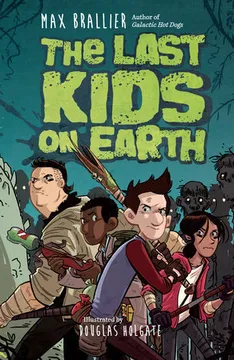
Thirteen-year-old Jack Sullivan is riding to school with his only friend, Quint Baker, when bully Dirk Savage steals Quint’s foul-smelling lunch. Jack stands up to Dirk, but a scream outside cuts off their argument. A monster grips the bus, tips it skyward, and crushes it until the children spill onto the pavement.
In the panic, Jack spots June Del Toro, the student editor he has a crush on, dodging a zombie and slipping into the school. She and Jack lock eyes before the door shuts. Jack and Quint escape toward the woods, then split up to check their homes. The monster attack has turned an ordinary school morning into a fight for survival, and scattered the people Jack most wants to keep safe.
The outbreak strips away the school’s familiar pecking order in seconds, but Jack’s first response is still shaped by it: he acts when Dirk targets Quint. His instinct to protect a friend predates any heroic identity. June’s brief glance becomes more important to Jack than the scale of the disaster because, amid an uncontrollable catastrophe, he seizes on one personal promise. The locked school door makes that hope unreachable, while the bus’s collapse establishes the blunt physical danger that will keep testing his comic bravado.
Nine Days Above Ground
Jack reaches home to find his foster family, the Robinsons, gone. When the walkie-talkie Quint gave him falls from the tree house, Jack is too frightened to climb down and retrieve it. He hides for nine days, listening to the radio report that survivors may be safer out west, until the broadcasts stop.
Once he ventures out, he turns his tree house into a defended base and makes a game of survival, awarding himself Feats for dangerous tasks. His camera helps him record the monsters, while his rules keep him from stabbing zombies who used to be people. Jack believes June is still somewhere in Wakefield, so he adds his most important challenge: finding and rescuing her. A private crush becomes the purpose that gets him moving again.
Jack’s Feats are not simply a joke layered over danger. They give him a way to measure progress when the adults and institutions that might have protected him have vanished. His refusal to kill zombies preserves a moral distinction between people and monsters, even when survival would be easier without it. The rescue challenge also exposes a blind spot: Jack imagines June as someone waiting for him to act. His wish to be needed helps him overcome fear, but it risks confusing care with control.
Blarg Finds His Scent
Forty-two days after the outbreak, Jack visits the wrecked CVS for a tiny screwdriver to repair his broken walkie. A towering monster named Blarg smashes through the roof and traps him in the store. Jack bites the creature to loosen its grip, strikes its head with his splintered baseball bat, and drops through the damaged ceiling into the pharmacy.
He snatches the repair kit, escapes, and photographs Blarg from beneath an abandoned porch. The monster searches for him by scent before stomping away, leaving Jack convinced it will track him again. Back at the tree house, Jack repairs the walkie and transmits. At dawn, the device crackles with a familiar voice. His lonely routine is about to change.
The camera turns Jack’s fear into observation: he names the monster, records its appearance, and gives Quint evidence that may later matter. Yet the encounter also unsettles Jack’s playful framing of danger. Blarg studies him and hunts by scent, behaving less like a rampaging beast than a deliberate predator. The repaired walkie offers a different kind of opening. Jack has spent weeks making himself the sole author of his survival; a signal from another person threatens that isolation in the best possible way.
Quint Returns to Wakefield
Jack makes sure the voice is not a zombie trick, then learns Quint is alive and waiting at home. The route is blocked by two Dozers, enormous brutes, until Quint fires a roof-mounted arrow launcher and clears Jack a path.
Jack has to dash through a backyard full of zombies before Quint pulls him inside and barricades the door. Quint has been studying the creatures, but his parents are missing and his babysitter has become a zombie. He refuses to abandon his research until Jack persuades him that the tree house is worth joining by promising homemade Mountain Dew.
Quint loads his equipment into Big Mama, his heavily modified mother’s pickup. The boys drive back together, restoring their friendship and giving Jack a partner for the search for June.
Quint’s return is both reunion and negotiation. He has made knowledge his refuge, cataloguing monsters where he cannot know what happened to his parents. Jack does not argue that research is useless; he offers a reason to leave the house and share life again. Big Mama embodies Quint’s practical brilliance, but driving it back to Jack’s tree house also makes that brilliance communal. Their friendship survives not because they are alike, but because each can pull the other away from a damaging extreme.
Rover Chooses Jack
Before the boys can search widely for June, Jack ventures out for gasoline. From a rooftop, he watches Blarg mistake a zombie for prey and devour it, confirming that the monster remains nearby and dangerous. At a parked minivan, Jack notices a family photograph; its happy household sharpens his grief over never having a lasting home of his own.
Then a shaggy creature charges him, knocks him down, and turns out to be more interested in playing than eating. Jack brings the doglike monster back to the tree house, where it follows despite his attempts to send it away. Quint sees a research risk, but Jack sees a companion and names it Rover. The new pet makes the fortress less lonely, even as it adds another creature to protect.
The family photograph briefly breaks through Jack’s practiced jokes. His envy is not for a holiday or a possession, but for the ordinary permanence of a home. Rover’s arrival answers that longing imperfectly: a monster cannot restore the family Jack missed, yet its stubborn affection offers a relationship that does not depend on paperwork or a placement ending. Jack’s decision to keep Rover is impulsive, but it also shows him choosing connection when caution would be easier.
Dirk Joins the Outcasts
Jack and Quint begin searching Wakefield for June, starting at Parker Middle School. While Jack practices driving Big Mama near the docks, he nearly hits a figure in the road. It is Dirk, now alone and hunted. When a Winged Wretch swoops at Jack, Dirk shoves him clear and hurls the monster into a building. Jack invites Dirk to the tree house despite Quint’s objections, and Dirk climbs into the truck.
On the ride, he reveals that he saw a girl resembling June searching for food at the Food Frenzy weeks earlier. Jack takes the sighting as proof she may have survived, though Quint notes it is not recent. The search gains a lead, and the boys gain an uneasy new companion whose strength is matched by old habits of intimidation.
Dirk’s rescue of Jack reverses the bus encounter without erasing it. The boy who once used his size to frighten classmates now uses it against a monster, while Jack chooses to include him before Dirk has earned easy trust. Quint’s resistance keeps the old injury visible rather than pretending friendship can be declared into existence. Dirk’s clue about June gives the group a shared purpose, but the uncertainty of the sighting prevents hope from becoming certainty.
Birthday Gear Meets Blarg
Quint sends Jack and Dirk to a hardware store for parts for a secret project. They draw the zombies away with the Scream Machine, which blasts recorded screams, and begin collecting supplies. As they reach a Ping-Pong table, Blarg appears.
Dirk hauls the heavy table toward Big Mama while Jack drives, then Quint’s butter-slick devices send the pursuing monster sprawling. Back at the tree house, Dirk presents the Ping-Pong table as a birthday gift for Quint; Quint accepts Dirk’s handshake, a small but real change in their uneasy relationship.
The boys spend the following days strengthening their home, digging a moat and gathering defenses, while Jack continues calling for June. Their reprieve is active rather than safe: Blarg remains a threat, and the tree house is becoming a place the three friends build together.
The Ping-Pong table serves two purposes at once. It is a makeshift shield during the escape and a gift that gives Dirk a way to acknowledge Quint without a speech. Their handshake matters because it follows repeated friction, not because one kind gesture erases the past. Meanwhile, fortifying the tree house turns Jack’s private refuge into shared labor. The boys are no longer just surviving beside one another; they are investing in a common home that Blarg’s pursuit may soon put at risk.
June Behind Locked Doors
Quint’s new saddle sends Rover stampeding out of the yard with Jack on his back. The ride carries them up Bear Hill, where Jack spots June’s distinctive sweatshirt hanging from a middle-school window.
He gathers Quint and Dirk, and they drive across town, racing past the Octo-Beast and the Stone Tower Monster before crashing Big Mama near the school. Zombies surround them, so the boys force their way inside instead of retreating. The halls appear empty until a tangled ball of zombies rolls after them, sweeping up bodies as it barrels through the corridors.
Locked behind a set of doors, Jack, Quint, and Dirk face being crushed. Someone unlocks the doors from the other side. June steps out, armed with a sharpened broom handle, and Jack’s long search reaches its target.
Jack finds June not through a sound plan but through Rover’s uncontrolled ride. The accident gives him a vantage point he would not have chosen, making his impulsiveness both a liability and the source of discovery. The school then reverses the expected rescue story: June opens the doors and saves the boys from the zombie mass. Her first appearance with a weapon establishes competence before Jack can impose his fantasy of himself as her rescuer. The encounter begins to expose the gap between his romantic quest and her actual needs.
June Chooses Company
June rejects Jack’s claim that she needs rescuing and insists her parents will return. She allows the group to stay overnight, but plans to remain at the school. Before dawn, Jack finds her on the roof, throwing tennis balls at zombies to vent frustration.
As they play, June explains that she hid in a closet during the first days of the outbreak. Later, her parents passed in an army convoy; they saw her, but soldiers would not let them stop. Jack argues that she can join the group and still be found.
Their joking gives June room to relax, and she agrees to go with them in the morning. Then the group sees Blarg waiting outside beside the zombies and Big Mama. Quint uses Jack’s photographs to realize the monster sees poorly in darkness, making their escape a race against sunrise.
June’s decision comes through play rather than Jack’s heroic pitch. The rooftop game lets her release anger and laugh without asking her to surrender her judgment. Her account of the convoy explains why leaving feels like betraying the only evidence she has that her parents can return. The choice to accompany the group is therefore hers, not a reward for Jack’s persistence. Blarg’s presence immediately changes the stakes: their newly formed trust must now survive a threat Jack helped bring to the school.
Light-Up Shoes Bait Blarg
The four children arm themselves with whatever the school offers, including Quint’s chemistry belt and Jack’s recovered slingshot. Outside, zombies swarm them, and Big Mama’s headlights reveal their position to Blarg.
Jack strips the tape from his childish light-up shoes and runs, drawing the monster away while his friends escape. At a dead end, he fires one of Quint’s acid capsules into Blarg’s face, but the chemical transforms the creature into a more dangerous form. Rover charges in, knocks Jack onto his back, and carries him through the streets as Dozers block their route.
Big Mama catches up, with Dirk driving and June and Quint aboard. Together they reach the tree house as its defenses activate. Jack’s diversion has bought the others time, but Blarg follows them to the place they call home.
Jack’s shoes begin as a source of embarrassment, the kind of small humiliation he has tried to cover with jokes. In the dark, their flashing lights become a tactical advantage, showing how survival repurposes even the details he once wanted to hide. Jack’s choice to draw Blarg away is brave, but the acid’s unexpected effect shows the limits of improvised plans. He survives because Rover and the others intervene, not because he can manage the danger alone.
The Treehouse Holds
Blarg tears through the tree house’s outer defenses, and Jack refuses to abandon the home he has built with his friends. Quint’s juice grenades burn the monster while a catapult pelts it with junk.
June swings to a neighboring roof to distract it, giving Rover a chance to bite Blarg’s leg, though the monster throws Rover and Quint to the ground. Dirk returns from Quint’s workshop with razor discs and an explosive football launcher, driving Blarg into the moat, where its ankle breaks.
Jack and Quint use their old, unreliable throwing-and-catching game to send the splintered bat into Jack’s hands. Jack leaps from the diving board and drives it into Blarg’s forehead scar. The monster falls. The group survives, and Jack completes his Feat, though June never needed rescuing; she chose to join them.
The final blow belongs to Jack, but the conditions for it are made by everyone: Quint’s inventions, Dirk’s weapons, June’s distraction, Rover’s attack, and the home’s defenses. Even the bat’s path depends on a shared game the boys once failed at. The climax revises Jack’s idea of heroism without dismissing his courage. June is not a prize recovered from danger, and Jack’s achievement is less the rescue he imagined than the community he helped assemble. Their victory is decisive for now, but their plan to rearm the tree house keeps safety provisional.
Analysis
The novel gives apocalypse the scale of a monster movie but measures its consequences through a child’s ordinary absences: a friend’s voice on a walkie, a family photograph in a car, the hope that parents will return. Jack’s comedy is not evidence that he misunderstands danger. It is a method for staying active inside it. His Feats turn fear into tasks, but the story also tests the limits of that method when June refuses the part he has written for her.
The most important shift is from imagined rescue to chosen community. Jack begins by treating June as the reward for his heroism, while June has survived through her own judgment and wants to make her own decisions. Their relationship changes when Jack listens, plays, and gives her space to choose. Quint and Dirk undergo a parallel adjustment: the scientist and the bully must move beyond their private defenses and contribute to a shared effort. Rover makes that community stranger and more tender, while Blarg keeps it under threat.
The book’s inventions, games, and improvised weapons turn children’s creativity into practical agency. Yet no one wins alone. Jack’s final strike depends on Quint’s knowledge, Dirk’s force, June’s nerve, Rover’s loyalty, and a home built for collective defense. The ending offers neither a return to safety nor a cure for grief. It offers a more modest and more credible victory: the children have made a family by protecting one another, and they have a place worth defending. Jack completes his imagined feat, but its meaning has changed. June was not a damsel waiting to be saved. The real achievement is that she joins a group where she can belong without surrendering her independence.
Review Summary
The Last Kids on Earth is a fun, action-packed middle-grade series about kids surviving a monster apocalypse. Readers praise its humor, illustrations, and engaging characters. The story follows Jack Sullivan and his friends as they battle zombies and monsters while living in a treehouse. Many found it entertaining and perfect for reluctant readers, though some criticized its portrayal of female characters. Overall, it's a popular choice for kids who enjoy adventure and comedy, with a Netflix adaptation further boosting its appeal.
People Also Read

Characters
Jack Sullivan
Apocalypse-born improviserJack is a thirteen-year-old foster child who has learned to treat instability as something to outrun with humor, nerve, and a camera. He sees danger through video-game logic, inventing Feats that give frightening tasks a finish line. Beneath the swagger is a boy who has lost homes and expects good things to disappear, which helps explain both his hunger for a permanent family and his wish to be a hero to June. Jack is resourceful, loyal, and quick to act, but his confidence sometimes outruns his judgment. His story asks whether he can make room for other people’s needs instead of casting them in the roles he has imagined.
Quint Baker
Inventor and field scientistQuint is Jack’s best friend, a precise and inventive boy who answers uncertainty by gathering evidence. He studies monsters, builds equipment, and often sounds more like a laboratory supervisor than a middle-schooler. His scientific habits are both a genuine strength and a shelter from grief: with his parents missing, research gives him a problem he can work on rather than a loss he cannot solve. Quint is cautious where Jack is impulsive, yet he is not simply a sidekick or a voice of reason. His willingness to leave his laboratory, contribute his inventions, and risk embarrassment in front of others shows a quieter desire to belong and participate.
June Del Toro
Self-reliant student editorJune is the sharp, demanding editor of Parker Middle School’s student newspaper. Before the apocalypse, she pushed Jack to photograph stories that mattered rather than only action. In the school, she relies on observation, improvised weapons, and routines that help her endure isolation. Her confidence is real, but it does not cancel fear or grief; she is especially attached to the possibility that her parents may return. June dislikes being treated as a fantasy or a helpless assignment. Her guarded wit and practical judgment make her a counterweight to Jack’s romanticized heroics, and she responds most readily when other people respect her ability to decide for herself.
Dirk Savage
Schoolyard bruiserDirk is Parker Middle School’s imposing bully, a boy whose size and intimidation have made other students wary of him. His rough manner masks a more complicated social position: he is alone, accustomed to relying on strength, and poorly equipped to ask for companionship. In a world where monsters are physically stronger than children, Dirk’s confidence can be useful, but it does not make him invulnerable. His presence unsettles Quint because of their shared history, and Jack must decide whether old grievances outweigh the possibility of helping another survivor. Dirk’s blunt humor and unexpected gentleness sit close to his aggression, making him difficult to reduce to a single role.
Rover
Four-legged monster companionRover is a shaggy, powerful monster with the manner of an overeager dog. Jack encounters him while gathering gasoline and discovers that the creature’s first charge is playful rather than predatory. Rover follows Jack home despite attempts to send him away, creating an immediate bond that Quint views more cautiously. His size makes him dangerous to underestimate, while his loyalty gives Jack a kind of companionship he has rarely had. Rover’s presence also complicates the group’s plans: affection does not make a monster easy to control.
Blarg
Scent-tracking monsterBlarg is a towering, intelligent predator who first corners Jack in the CVS. Unlike many creatures that simply attack whatever they find, Blarg studies Jack and tracks him by scent. Its immense strength makes it a threat to every refuge Jack builds, while its attention to one particular boy gives the danger a personal edge. Jack’s photographs help Quint examine the monster’s physical traits, but observation does not make Blarg predictable. Blarg embodies the limits of Jack’s game-like confidence: this is an adversary that can watch, learn, and pursue.
Mr. Mando
Former science teacherMr. Mando is Jack and Quint’s science teacher. Before the apocalypse, he confiscated Jack’s slingshot for shooting pennies at chemical flasks. That ordinary school discipline later gives the weapon a small but meaningful history, tying the children’s new survival tools to the lives they had before the monsters arrived.
Plot Devices
Feats of Apocalyptic Success
Turns survival into a gameJack invents challenges that reward him for completing risky tasks, from exploring abandoned houses to locating June. He records proof with his camera and gives each feat a score or sense of achievement. The system converts fear into manageable objectives, letting Jack act when the world offers no reliable rules. It also reveals his desire to be remembered as a hero, especially through the imagined rescue of June. The device changes meaning as he meets other survivors: success becomes less about Jack earning points alone and more about what the group can do together.
Jack’s Monster Camera
Turns danger into evidenceJack photographs the monsters he encounters, partly because he wants to be a photojournalist and partly because recording them gives him something useful to do with fear. He and Quint use the images to study creature traits, and the photographs later help Quint notice that Blarg struggles to see in low light. The camera therefore links Jack’s playful identity as an adventurer to Quint’s scientific method. It is not merely a record of past danger; what Jack notices and preserves can shape the group’s decisions when another encounter comes.
The Tree House
Shelter becomes a shared homeJack turns his foster brother’s tree house into a fortified base with supplies, a map, and defenses against the monsters around Wakefield. At first it represents his determination to survive alone. When Quint, Dirk, June, and Rover enter his life, the tree house becomes a place the group can improve and defend together. Its moat, barricades, and catapults are practical tools, but they also make the idea of home visible: the children are willing to work for a place that belongs to all of them. The defenses become essential when Blarg reaches the yard.
Quint’s Inventions
Make ingenuity a weaponQuint builds devices from whatever the children can salvage. Big Mama is his modified pickup truck; the Scream Machine draws zombies away with recorded screams; other inventions include butter-slick launchers, chemical capsules, and the tree house’s defensive equipment. These contraptions give the children options against creatures larger and stronger than themselves, while their flaws preserve the danger of experimentation. Quint’s creations also make knowledge social: his research becomes most useful when Jack, Dirk, and June help carry it into the field. Several devices are crucial to the group’s escape and confrontation with Blarg.
Jack’s Light-Up Shoes
Turn embarrassment into baitJack’s foster mother gave him shoes that flash red with every step, and he initially sees them as childish and tactically dangerous. He covers the lights with duct tape, trying to hide a detail that makes him feel ridiculous. In the dark outside the school, he removes the tape and uses the flashing shoes to draw Blarg away from his friends. The shoes transform an object associated with shame into a deliberate tool. Their payoff fits Jack’s larger development: the things he wants to conceal can become useful when he stops treating embarrassment as proof of weakness.
The Last Kids on Earth Series
About the Author
Other books by Max Brallier
Download PDF
Download EPUB
.epub digital book format is ideal for reading ebooks on phones, tablets, and e-readers.








