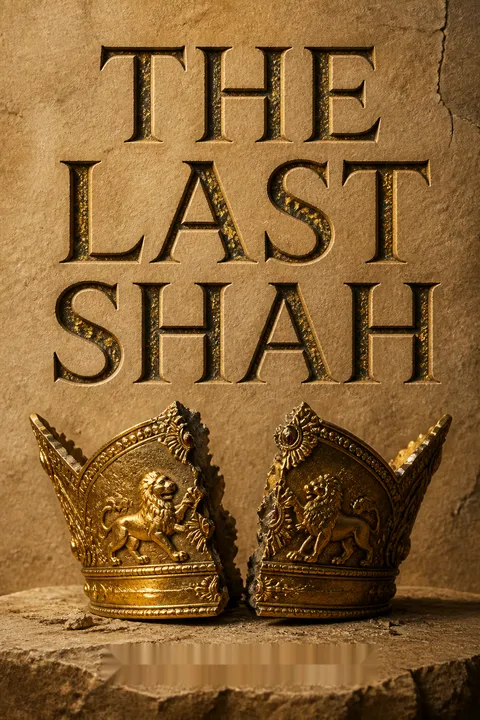


Key Takeaways
Build a state with institutions, not a ruler's personal command
Power without ballast. Mohammad Reza Shah wanted to modernize Iran through centralized rule. He believed an autocrat could act faster than a parliament, and that a loyal technocratic class could carry out his plans. His weakness was the mismatch between ambition and temperament: he sought absolute authority but repeatedly hesitated in crises, leaving others to make hard decisions. His father, Reza Shah, had also tried to remake Iran by force, but the traditional political class helped preserve the monarchy after his fall in 1941.
The state grows brittle. The younger shah steadily removed independent politicians, weakened the parliament, silenced the press, and promoted obedience over judgment. By the revolution, few officials felt able to act without his direction. The monarchy fell not simply because it had enemies, but because it had dismantled the institutions and experienced leaders that might have helped it respond.
What's striking is that the shah's weakness was not a shortage of power, but the way power was organized. A system can look formidable while remaining unable to gather honest information, debate alternatives, or act without one person's permission. The book's account makes political institutions look less like obstacles to leadership than like its shock absorbers. The shah's modernization did produce tangible gains, but the lack of independent channels for correction made those gains poor protection against a crisis.
Iran resisted Soviet partition because its politicians bargained from unity
A political class still mattered. After Allied forces occupied Iran in World War II, experienced politicians helped preserve the country despite a young monarch, a collapsed army, and competing British and Soviet ambitions. In 1946, Soviet-backed separatists established an autonomous government in Azerbaijan. Prime Minister Ahmad Qavam negotiated with Moscow while delaying the oil concession it wanted, and relied on growing Western pressure to secure the withdrawal of Soviet troops. Once they left, the separatist government quickly collapsed.
Rivalry became leverage. The book calls Qavam's approach positive equilibrium: maintaining relations with competing powers and using their rivalry to defend Iran's independence. The method depended on a functioning parliament, political networks, and leaders able to bargain. Iran's politics were imperfect and elite-dominated, but they still transmitted local concerns and gave national leaders room to maneuver.
The Azerbaijan episode recasts political pluralism as a source of national capacity. Qavam could bargain because he was not the only person with authority, and the state was not simply an extension of the palace. His strategy was hardly clean or democratic by modern standards, but it shows why institutional strength cannot be measured only by administrative efficiency. The limitation is equally important: this was an elite system with narrow participation. Its success depended on leaders who could negotiate, not on equal political voice for everyone.
Oil sovereignty can win the crowd and still bankrupt the state
A just grievance, a hard problem. The Anglo-Iranian Oil Company paid Iran an unfair share of profits and gave Iranian workers poor conditions. In 1951, Prime Minister Mohammad Mossadeq led the nationalization of the industry, a popular assertion of sovereignty. But Iran struggled to sell its oil after Britain organized a boycott, and Mossadeq assumed other oil companies would take over the business. They did not. His slogan of an economy independent of oil could not replace the revenues the country needed.
The coup had many authors. As the crisis deepened, Mossadeq weakened parliament and the monarchy, and alienated former allies. Iranian politicians, military officers, clerics, and street networks organized against him. The CIA and British intelligence planned Operation TPAJAX and assisted the effort, but the book argues that Iranian actors and public support were central to the successful overthrow in August 1953. The coup was neither purely foreign-made nor free of foreign intervention.
This episode separates the legitimacy of a demand from the competence required to govern after winning it. Nationalization answered a real injustice, yet symbolic control of an asset could not substitute for the machinery to operate, market, and finance it. The distinction is useful beyond oil: movements often excel at naming what is wrong while underestimating the systems needed to repair it. The account also resists a tidy explanation of the coup, although disagreement about the relative weight of foreign and Iranian actors remains central to how the event is remembered.
A coup restored the shah, but taught him the wrong lesson
Restoration became a mandate. After the 1953 coup, the shah interpreted his return as proof that the nation wanted him to rule. In practice, the coup had depended on an Iranian opposition coalition, military officers, clerics, and a popular attachment to the monarchy, alongside American and British involvement. The shah instead concluded that he had to prevent powerful politicians from ever challenging him again.
Loyalty replaced judgment. He pushed aside strong prime ministers such as Fazlollah Zahedi and Ali Amini, reduced parliament to a compliant body, and created SAVAK, the state intelligence and security service. Its surveillance and repression became notorious, but it was also less capable than its reputation suggested. The court rewarded officials who followed orders and discouraged independent action. This secured the shah's immediate control while leaving the state increasingly dependent on his personal direction.
The crucial mistake was treating a successful emergency coalition as evidence that institutions were expendable. The coup returned the shah to the throne, but it did not show that he could govern alone. His response converted a moment of rescue into a long-term design for dependence. This is a revealing distinction between control and resilience: control reduces the number of actors who can challenge a ruler, while resilience requires capable actors who can solve problems when the ruler cannot.
Modernize lives without silencing the people who live them
Progress with no political channel. The White Revolution, launched in 1963, combined land reform with rapid modernization. The program redistributed land to millions of peasants, expanded education and health services, promoted industrial growth, and gave women the right to vote. Literacy rose from 14.6 percent in the mid-1950s to 47.5 percent before the revolution. These changes altered daily life and helped create a growing urban middle class.
Success changed expectations. The shah expected material improvement to secure political passivity. But new students, professionals, and urban residents wanted influence over national decisions, not only schools, jobs, and consumer goods. The state allowed little meaningful opposition, while corruption and uneven planning undermined trust. The reforms were real, but the political bargain attached to them was unstable: citizens were expected to benefit from national change without gaining a voice in directing it.
The book's paradox is that development can weaken a regime when it enlarges the population's capacities faster than its rights. Education creates people who can compare official claims with lived experience, while urban growth brings new groups into contact with the state. The shah's reforms therefore did more than improve material conditions; they expanded the number of people able to imagine alternatives. Yet development itself does not dictate a democratic outcome. The political result depends on whether institutions can absorb new demands rather than treating them as disloyalty.
America alternated between reform pressure and arming its indispensable shah
Washington's advice changed with its needs. American presidents often urged the shah to spend less on the military and broaden his political base. John F. Kennedy's administration pressed for land reform and a smaller army, and managed to secure some troop reductions. But in the 1970s, Richard Nixon and Henry Kissinger treated Iran as a regional surrogate while the United States sought to limit its own commitments. The shah gained far greater freedom to buy American weapons, even as Pentagon officials worried that Iran could not absorb them.
The shah was no simple client. He played the United States and Soviet Union against one another, built commercial ties with Moscow, and used rising oil prices to increase Iran's regional power. He helped secure the Persian Gulf after Britain's withdrawal and intervened in Oman. Washington's strategic reliance enabled his rule, but American officials also repeatedly warned about its fragility.
The relationship is best understood as a shifting bargain, not a story of one country simply controlling another. U.S. officials could press reform when they believed Iran needed it, then relax those demands when they valued the shah's regional role more. The shah used the same relationship to gain arms and recognition while retaining room to maneuver. This account also shows the limit of external leverage: influence over a partner's purchases does not automatically create political legitimacy inside that partner's country.
A disciplined clerical network made Khomeini's uncompromising message hard to out-organize
An opposition with infrastructure. By the 1970s, political parties and independent associations had been weakened, but Iran's mosques and clerical networks remained deeply rooted in cities, towns, and villages. Ayatollah Ruhollah Khomeini, exiled for his opposition to the shah, could reach supporters through sermons, recordings, and trusted intermediaries. Religious commemorations offered recurring occasions for public gatherings, and protests mourning the dead could generate new protests forty days later.
An alliance built on ambiguity. Secular liberals, nationalists, leftists, merchants, and religious conservatives opposed the shah for different reasons. Khomeini became their focal point by refusing compromise and presenting a future government in terms broad enough to attract groups with conflicting hopes. His earlier writings advocated clerical rule, but in public he also offered assurances about elections, freedom, and oversight rather than direct clerical government. His followers had organization and a clear objective; the opposition's other groups had neither a shared plan nor equal reach.
Khomeini's advantage was not only conviction. It was an organizational network that could turn shared anger into synchronized action, while his rivals often depended on temporary alliances. Broad promises helped assemble the coalition, but they postponed the question of what the new order would actually permit. The book emphasizes the strategic skill in this ambiguity without treating it as harmless. A coalition can be powerful precisely because members imagine different futures, and that makes its eventual settlement of power especially consequential.
Late concessions looked like weakness because the shah had erased credible politics
An opening without trust. Economic growth slowed in the mid-1970s, inflation rose, and frustration over corruption and political exclusion intensified. In 1978, the shah tried to liberalize, but his moves came after years of repression and did not restore independent institutions. An official newspaper attack on Khomeini sparked protests; the Rex Cinema fire, which the book attributes to Islamist militants, was blamed on the regime; and the army's killings at Jaleh Square further destroyed trust.
The state could not respond coherently. The shah alternated between concessions and force, while his advisers struggled to tell him what was happening. Strikes eventually shut down key sectors, including oil production, which fell from 5.8 million barrels a day before Black Friday to near zero by January 1979. The army had been shaped to prevent coups, not to make independent decisions. No trusted institutions remained to turn reform into a credible settlement.
The sequence shows why timing matters in political reform. When a government has spent years making opposition illegal, a sudden invitation to speak does not automatically create trust; it can instead reveal how much pent-up conflict already exists. The shah's hesitations compounded that problem, but the crisis was not simply a communication failure. The state lacked intermediaries with public credibility and officials with authority to act. Concessions are most persuasive when institutions make them durable, not when they appear to be a ruler's temporary tactic.
The Islamic Republic broke its promises before the revolution's coalition could settle
A provisional government without power. After the monarchy fell, Mehdi Bazargan's moderate government tried to restart the country while clerical leaders built rival institutions. Revolutionary committees, courts, and the Revolutionary Guards operated beyond the government's effective control. The new authorities executed officials, including men who had been promised amnesty, and suppressed rivals across the political spectrum. Bazargan resigned after the occupation of the U.S. embassy, which lasted 444 days and helped the clerical leadership displace its more cautious competitors.
Power entered the constitution. The 1979 constitution established velayat-e faqih, or guardianship of the jurist: the principle that a senior Islamic jurist would direct the state during the Hidden Imam's absence. The new system gave the supreme leader sweeping authority over the military and political order. Women lost rights, religious minorities faced persecution, and liberals and leftists were pushed aside. The revolution's promises of freedom did not constrain the institutions created in its name.
The aftermath underlines that a revolution's shared enemy does not guarantee shared commitments. Once the old government fell, groups that had cooperated against it faced a contest over who could command the new state. Khomeini's side had parallel organizations, armed supporters, and a constitutional design that concentrated authority. The contrast between public promises and institutional rules is especially instructive: political language can reassure a coalition, but durable arrangements reveal who actually holds power.
Iran's revolutions changed rulers faster than citizens' demand for representation
The argument outlasts the dynasty. Takeyh presents modern Iranian politics as a recurring struggle between rulers seeking to centralize power and citizens seeking a meaningful role in government. The Pahlavi monarchy built schools, industries, and a larger middle class, but denied that class political representation. The Islamic Republic replaced the monarch with clerical authority, then suppressed many of the groups that had helped bring it to power.
Material gains cannot settle the political question. The book's conclusion compares the two regimes' reliance on patronage, exclusion of capable reformers, and difficulty meeting public expectations. Its point is not that the systems were identical, but that both weakened their capacity to adapt by treating demands for change as threats. Iran's twentieth-century revolutions repeatedly changed the people at the top without resolving the dispute over who gets to shape the state.
The book's most durable contribution is its insistence that political legitimacy cannot be inferred from growth, military strength, or longevity alone. Those measures can describe a state's resources without showing whether people consider its rules acceptable. The comparison between monarchy and theocracy is strongest when it identifies a shared governing habit, the exclusion of independent voices, rather than equating their ideologies or outcomes. That distinction keeps the history from becoming a simple cycle of identical regimes and focuses attention on how each handles demands for representation.
Analysis
Takeyh's account is a political history organized around a paradox: the shah's capacity to transform Iran grew as his capacity to govern its political life diminished. The monarchy produced rapid social change, expanded education, redistributed land, and built regional influence. Yet it weakened the institutions that might have interpreted those changes, negotiated conflicts, or corrected policy. The resulting state was not merely unpopular. It had become informationally and operationally dependent on a ruler whose own record showed hesitation in crises.
This emphasis makes the book more than a reassessment of the 1953 coup. Takeyh distinguishes the coup's foreign assistance from the Iranian coalition that made it possible, then shows how the shah drew a destructive lesson from his restoration. That interpretation counters a familiar single-cause story, but it also places substantial weight on elite agency. The early political order had meaningful bargaining and communication channels, yet it remained oligarchic and sharply unequal. Its preservation of sovereignty should not be confused with broad popular representation.
The book's treatment of modernization is similarly double-edged. Reforms were not a sham: land distribution, literacy, public health, and women's political rights changed Iranian lives. Their failure as a foundation for legitimacy lay in the political terms attached to them. Citizens were expected to receive benefits without influence, and the new educated middle class made that bargain increasingly difficult to sustain. Material advancement became a source of expectation as much as gratitude.
The revolution's victory depended on Khomeini's organizational reach and refusal to compromise, not simply on the shah's failures. The distinction matters because state collapse does not automatically produce a more open order. The post-revolutionary institutions quickly concentrated authority and excluded former allies. Across the narrative, the central test is therefore not whether a ruler can impose change, but whether a political system can absorb disagreement, correct mistakes, and survive the loss of its central figure.
Review Summary
Readers generally found The Last Shah informative and well-written, praising its balanced perspective on Iranian history from the 1940s to the 1979 revolution. Many appreciated the book's insights into key figures like Mohammad Mossadeq and Ayatollah Khomeini. Some readers noted the author's revisionist take on events like the 1953 coup. While most found the book engaging and enlightening, a few criticized it for perceived bias or lack of depth in certain areas. Overall, reviewers recommended it for those seeking to understand modern Iran's complex political history.
People Also Read






Glossary
positive equilibrium
Balancing great-power rivalryA foreign-policy strategy used by Iranian leaders such as Ahmad Qavam to preserve national independence by maintaining relations with competing great powers and using their rivalry as leverage. It required careful bargaining: Iran sought support against domination by any single power without granting one patron control over its political or economic life.
negative equilibrium
Avoiding great-power alignmentMohammad Mossadeq's approach to protecting Iranian independence by keeping the country outside the Cold War alignment of competing powers. He rejected the older strategy of playing one great power against another, believing that neutrality would reduce foreign interference. In practice, his government still sought outside support during the oil crisis, complicating its claim to stand apart.
positive nationalism
Alignment with the United StatesThe shah's post-1953 foreign-policy doctrine, which held that Iran should take an active side in the Cold War by aligning with the United States. The policy aimed to deter Soviet influence, suppress the Tudeh Communist Party, and secure American support for Iran's military and international standing. It marked a departure from Mossadeq's neutralist approach.
White Revolution
Shah-led modernization programThe shah's state-directed reform program, formally introduced in 1963. It included land redistribution, profit-sharing for factory workers, literacy and health initiatives, expanded industrial development, and women's suffrage. The reforms brought substantial social change, but the shah used them to weaken older power centers while continuing to deny the growing middle class meaningful political participation.
SAVAK
Iranian intelligence and security serviceThe state security and intelligence organization established in 1957 with American and Israeli assistance. SAVAK gathered domestic and foreign intelligence and targeted political opponents, including through surveillance and interrogation. Although it became a symbol of the shah's repression, Takeyh describes it as less effective than its fearsome reputation suggested and increasingly answerable to the monarch.
Operation TPAJAX
Covert operation against MossadeqThe 1953 CIA and MI6 operation intended to remove Prime Minister Mohammad Mossadeq and install Fazlollah Zahedi. It included propaganda efforts, contacts with military officers, and pressure on the shah to dismiss Mossadeq. Takeyh argues that foreign intelligence services assisted the effort but did not control all the Iranian political, military, clerical, and popular forces involved.
velayat-e faqih
Guardianship of the juristThe constitutional principle that a qualified Islamic jurist should exercise supreme political authority during the Hidden Imam's absence. In Iran's 1979 constitution, it gave the supreme leader broad powers over the armed forces, state appointments, and the direction of government. The doctrine turned Khomeini's argument for clerical supervision into the foundation of the Islamic Republic's political system.
Download PDF
Download EPUB
.epub digital book format is ideal for reading ebooks on phones, tablets, and e-readers.








