

Key Takeaways
Thinking can aim your life, but only action builds the result.
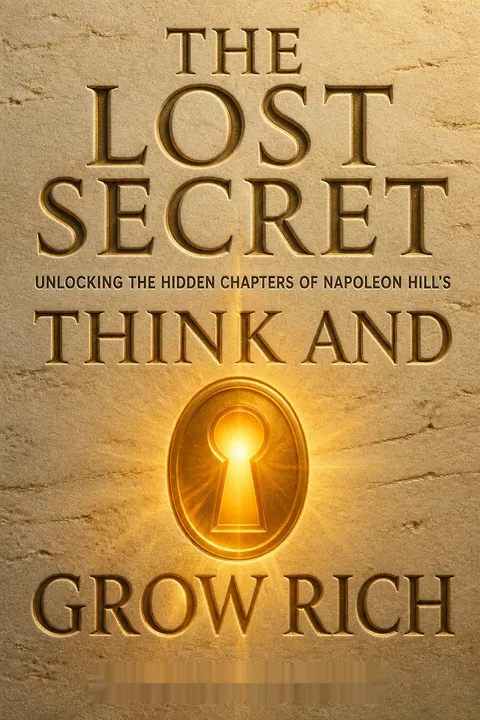
A story with a caveat. Monica Main frames the book through her own path from childhood poverty to business success, followed by a crisis in which wealth no longer felt like a satisfying life. She recounts receiving copies of two supposed missing chapters from a man who said his stepfather worked for Think and Grow Rich's publisher. Main could not verify the man's story or obtain the original documents, so the chapters' authenticity remains uncertain.
Thought is a beginning. The practical thread running through the book is less mysterious: choose a goal, build belief and focus, learn what the goal requires, and act persistently. Main's adaptation adds a metaphysical explanation, but her own stories repeatedly show that plans and behavior, not thought alone, carry desire into the world.
The uncertainty around the purported chapters matters because the book sometimes presents speculation as recovered history. Readers can still assess the ideas on their usefulness without treating the document's provenance as settled. The strongest version of the book's thesis is a practical one: attention influences which opportunities people notice, and belief can help them persist long enough to act. That account preserves the motivational force while avoiding the much larger claim that thought itself creates material wealth.
Name the desire precisely enough to guide a real next step.
Make wanting definite. Main calls a deeply felt, clear aim a Burning Desire. As a twelve-year-old, she focused on moving from Florida to California and studied a map of Los Angeles, imagining a future there. Her family moved within six months, though the move resulted from her uncle's decision, not a plan she controlled. She never became an actress, the dream that first drew her west, but the experience taught her that a strong aim can redirect attention and choices.
Desire needs effort. Hill's story of Edwin Barnes makes the point in business terms: Barnes traveled to meet Thomas Edison, hoping to become his partner. He started in menial work and persisted until an opportunity emerged. The aspiration gave him direction; his willingness to begin below his eventual ambition gave it a path.
A specific aim is useful because it changes what counts as a relevant opportunity. It can also reveal the next experiment to try, even when the final route is unknown. The California story, however, does not show that visualization caused the family move. It illustrates how people make meaning from coincidence and how a clear preference can shape their readiness to act. Keeping that distinction helps ambition stay bold without treating every favorable event as proof of a cosmic guarantee.
Rehearse the mindset you need, then pair it with concrete action.
Give words emotional force. Auto-Suggestion is Hill's term for deliberately repeating thoughts or statements to influence the subconscious mind. Main recommends writing down a goal, imagining its achievement, and reading the statement regularly, especially before sleep and after waking. She also suggests present-tense affirmations, such as identifying as a writer, and gentler bridge statements when a bold claim feels unbelievable from one's current circumstances.
Make rehearsal usable. Main's Book of Magic combines written goals, drawings, and images; her nightly visualization routine focuses on the desired result and its emotional meaning. Hill's practical instructions also include naming what one hopes to earn, what value one will offer, and a plan for acting. The intended point is not to recite words mechanically, but to connect them to confidence and behavior.
Mental rehearsal can make an unfamiliar goal feel more imaginable and keep it salient during daily decisions. The bridge statement is especially useful because it avoids asking someone to deny an obvious gap between present reality and aspiration. Still, vivid images of success can become comforting fantasy if they exclude obstacles and practice. Rehearsing the process, including likely setbacks and responses, makes visualization a better preparation tool than simply imagining a happy ending.
Use the Zone as focused readiness, not a law of physics.
A state, not a substance. Main uses the Zone to mean a mood of heightened energy, optimism, and openness to ideas. She tries to reach it through breathing, meditation, music, movement, gratitude, and attention to what feels exciting. She also uses Source Energy, ether, and vibration to explain this state, arguing that positive feeling attracts matching people and events and that negative feeling blocks them.
Keep the practical part. The exercises can help someone pause, notice their mood, and choose where to direct attention. Main also recommends reducing inputs she sees as draining, including news and social media. Yet anecdotes about business success, gifts, or timing do not establish that a person's thoughts alter the physical world through quantum forces.
The book's language of vibration works best as a personal metaphor for emotional and attentional states. Feeling calmer or more hopeful can change how someone communicates, weighs risk, and notices options. Those effects are plausible without invoking a physical frequency that attracts wealth. The references to quantum physics and water experiments do not demonstrate the proposed manifestation mechanism. Treating the Zone as a way to regulate attention preserves its practical value and avoids confusing metaphor with scientific evidence.
Turn inspiration into a small plan, then revise it against results.
Ideas need a route. Main describes intuition, dreams, and sudden insights as possible messages from a higher intelligence. She tells how she chose a school for her daughter partly because one option felt wrong and a crossing guard at another gave her a welcoming signal. Her Sixth Sense, following Hill's terminology, refers to hunches or inspirations that seem to arrive beyond deliberate reasoning. The useful instruction is to notice such signals, not automatically obey them.
Make the next move concrete. Main recommends brainstorming an idea into branches, breaking work into manageable tasks, and setting a near-term goal. Her conclusion offers a four-week plan: define a realistic target, identify steps for each week, and adjust if the plan is difficult to fill in. A fifteen-minute daily writing habit, she argues, can turn a large project into steady progress.
Intuition can be treated as a hypothesis generated from experience that has not yet reached conscious explanation. That makes it worth examining, but not infallible. A gut feeling about a school or business can reflect useful pattern recognition, anxiety, or bias. Testing it with small actions and observable feedback creates a disciplined middle ground between dismissing intuition and mistaking coincidence for instruction. The book's planning advice supplies that missing test: movement produces information, and information can improve the next step.
Turn specialized knowledge into a tested offer before taking on debt.
Knowledge earns through use. Hill distinguishes general knowledge from specialized knowledge organized toward a practical purpose. Main argues that education matters when it helps someone offer a useful product or service, and recommends learning sales, marketing, and investing. Her own work centers on publishing and marketing; she also describes real estate niches and online businesses as possible paths, while urging readers to choose work that fits their interests and abilities.
Calculate before committing. One example warns against opening an oversized dessert shop without checking the economics. At five dollars per square foot, a 1,000-square-foot storefront costs about $5,000 monthly in rent. At five dollars per sale, more than 1,000 sales would be needed just to cover rent, before staff, inventory, or utilities. Main's Other People's Money advice concerns borrowing and credit leverage, which can amplify losses as well as opportunity.
This is among the book's most grounded business advice: a customer's willingness to pay, the cost of reaching that customer, and the margin left after expenses matter more than enthusiasm alone. A simple break-even calculation can prevent an expensive mistake. The book is less careful when it presents particular industries or incorporation as universal prescriptions. Business structure, borrowing, and investment choices depend on jurisdiction and circumstance, so general encouragement should not replace qualified financial or legal advice.
Persist toward the aim, but stay flexible about the route.
Persistence is trainable. Main retells Hill's account of singer Kate Smith, who kept seeking performance opportunities until Broadway work followed. Hill links persistence to a definite purpose, desire, self-reliance, plans, accurate knowledge, cooperation, willpower, and habit. Main distinguishes force of will, a focused commitment to an aim, from willpower, which she describes as forcing oneself through an unwanted task.
Change failed plans. Hill's planning advice is to replace a plan that does not work rather than treating one setback as proof that the goal is impossible. Main applies this to her own life, describing decisions to leave unworkable relationships and confront business problems. She also argues that fear of criticism keeps people from taking risks, so persistence means tolerating other people's disapproval while continuing to learn.
The combination of commitment and revision is stronger than either stubbornness or constant reinvention. A clear aim helps someone endure rejection, while changing the method makes persistence responsive to evidence. The distinction matters because effort alone does not validate a strategy. When the costs keep rising and the evidence stays poor, continuing can become a sunk-cost trap. Persistence is most productive when it includes checkpoints, learning, and permission to redefine the route without abandoning the underlying value.
Guard your attention while keeping candid allies close.
Choose your inputs. Main believes that media, social feeds, and discouraging people can weaken focus and confidence. She advises readers to limit those inputs and, in the purported lost chapters, to conceal plans from people likely to ridicule them. Her metaphor is the crab bucket: one crab climbing out is pulled back by the others.
Build constructive company. Hill's Master Mind Principle describes people working together in harmony toward a definite purpose. Main presents her staff and imagined mentors as sources of ideas, encouragement, and collaboration. The practical version is to seek peers who will help develop a plan and support its execution, while remaining attentive to which relationships repeatedly undermine that work.
Attention is a limited resource, and the people around a project can either protect it or scatter it. A small group of trusted collaborators can supply expertise and accountability that solo motivation cannot. But sorting people into high and low vibrations risks turning disagreement into evidence of bad character. Good allies do more than cheerlead: they can challenge weak assumptions, flag risk, and still respect the goal. The strongest boundary is selective openness, not automatic withdrawal from critics or difficult relationships.
Examine inherited beliefs without turning trauma into personal blame.
Old meanings can linger. Main recounts being told as a young child to choose broken candy rather than the attractive lollipops she wanted. As an adult, she connected the memory to a sense of being worth less than others. She calls such a formative memory a stem incident, a past event that she believes can shape later assumptions and behavior. Her proposed tools include journaling, reflecting on the event from an adult perspective, reframing self-talk, and seeking a safe setting or therapist.
Notice patterns, not verdicts. Main also describes using a mental eraser image to loosen painful feelings after a breakup. These are personal techniques, not proof that every current difficulty comes from one childhood event. Her broader point is to question beliefs that quietly steer choices, while making room for the fact that memory, relationships, and recovery are complex.
Writing about a painful memory can help people organize experience and notice beliefs that influence present choices. The book is right to mention professional support when reflection becomes difficult. Its risk is implying that people create their own suffering through low energy or that a single hidden memory explains a life pattern. Trauma is not a personal failure, and recollections can be incomplete or reinterpreted. Reflection is safest when it increases understanding and agency without assigning blame or pressuring someone to uncover a definitive root cause.
Channel intense desire into creative effort, not magical guarantees.
Redirect the energy. Hill's term Sex Transmutation means redirecting sexual desire toward creative work or another goal. He argues that this powerful drive can support imagination, courage, and persistence. Main adds a more specific suggestion: sexual pleasure can create an intense feeling state that someone might associate with a chosen aim. She also warns that this approach can be unfocused and recommends meditation and breathing as safer, more reliable ways to concentrate.
Keep the claim modest. The practical idea is that strong emotion can be channeled into work rather than left as distraction. Main's assertion that orgasmic feeling can help manifest an external result is her metaphysical interpretation, not an established mechanism. The reader can retain the idea of redirecting motivation without accepting that an intense feeling summons a particular outcome.
The broader principle resembles emotion regulation: an intense state can be noticed and deliberately directed toward a meaningful task. That does not mean emotion provides evidence that a goal is destined to happen. The book's sexual technique is also not necessary for creativity, and its usefulness will vary across people and contexts. Its own caution about clarity is valuable: before using any powerful motivational ritual, define the intended action and ensure it fits the person's values and boundaries.
Make prosperity serve human needs, not merely an empty appetite.
Success needs a purpose. Main describes building a multimillion-dollar business and then feeling depressed and disconnected despite the home, cars, and status she had acquired. She advises readers to connect ambition with meaningful service, such as creating a product that solves a problem or work that improves other people's lives. In her account, service gives wealth a human purpose instead of making accumulation the only measure of success.
Purpose still meets reality. Main invokes Aerosmith singer Steven Tyler's creative partnership and songwriting as an example of work energized by shared purpose. She calls the deepest creative state the Nova, a term from a dream she recounts. Whether or not that state is mystical, the practical lesson is that skill, collaboration, and work that matters to someone else can make ambition more sustaining.
The book's personal counterexample to wealth worship gives its advice emotional weight: reaching a financial milestone did not automatically resolve dissatisfaction. Service can connect work to visible beneficiaries, while collaboration can make creative effort more durable. It should not be treated as a guarantee against depression or as a reason to ignore material needs. A useful test is whether the work creates demonstrable value for others and remains compatible with the worker's own health, relationships, and financial constraints.
Analysis
The book is a hybrid of motivational guide, entrepreneurial advice, memoir, and metaphysical teaching. Its narrative begins with Main's dissatisfaction amid outward success and an encounter that leads her to two allegedly omitted chapters of Think and Grow Rich. The discovery story gives the adaptation a sense of mystery, but the text itself offers no independent authentication: the copies are described as barely legible, the source cannot be reached, and no original manuscript is produced. The chapters should therefore be read as claims attributed to Hill, not established archival material.
The most useful throughline is behavioral. A defined aim directs attention; rehearsal can strengthen commitment; learning, planning, and repeated action create opportunities; and setbacks call for revised methods. Main's concrete business examples, particularly her rent calculation, are more persuasive than claims that thought vibrations physically attract money. The book itself repeatedly concedes that thinking without doing is insufficient, even as other passages suggest that visualization can bring objects or wealth directly. That tension is central, not incidental.
A careful reader can separate the work's motivational practices from its scientific language. The text invokes quantum physics, brain frequencies, water experiments, and a universal ether, but it does not establish that these ideas explain manifestation. Its strongest psychological interpretation is simpler: mood affects attention, beliefs affect persistence, and focused goals influence choices. Those mechanisms can matter greatly without proving supernatural causation.
The book also alternates between empowering agency and overassigning responsibility. Encouraging readers to question inherited beliefs can help, while implying that poverty, illness, or harm results from low vibration can unfairly burden people facing structural or traumatic conditions. The most balanced reading keeps the practical disciplines, goal clarity, reflection, skill-building, useful relationships, and flexible action, while treating mystical explanations as personal belief rather than verified fact.
Review Summary
The Lost Secret receives overwhelmingly positive reviews, with readers praising its valuable insights and practical advice. Many consider it an essential companion to "Think and Grow Rich," offering modern perspectives and additional content. Readers appreciate the book's potential to transform mindsets and achieve success in various aspects of life. They highlight its rereadability and the abundance of actionable information. Reviewers emphasize the book's impact on personal development, financial success, and goal achievement. Some readers found it so compelling that they immediately started rereading it to fully absorb its teachings.
People Also Read







Glossary
Burning Desire
A compelling, definite aimMain and Hill use this term for a goal that is more than a casual wish. It is clear enough to guide choices and emotionally compelling enough to support sustained effort. In the book's practical account, desire must be joined to planning and action; it is not presented as a substitute for them.
Auto-Suggestion
Repeated self-directed messagesHill's term for deliberately directing thoughts or statements toward the subconscious through repetition, belief, and feeling. Main applies it through written intentions, affirmations, and visualization, often practiced before sleep or after waking. The book treats it as a way to strengthen a chosen mindset, though its claims about subconscious manifestation go beyond what its examples establish.
Zone
A heightened positive stateMain's name for a state of energized, optimistic focus in which a person feels open to ideas and less caught in doubt. She suggests reaching it through breathing, meditation, movement, music, gratitude, and attention to exciting goals. She also connects it to metaphysical claims about attracting matching circumstances.
Source Energy
A universal guiding powerMain's broad spiritual term for a higher intelligence or creative source that she believes can provide inspiration and guidance. She uses it interchangeably with terms such as the Universe, Infinite Intelligence, and ether. These are elements of the book's worldview, not scientifically demonstrated explanations for how ideas or external events occur.
Sixth Sense
A channel for hunchesHill's term for an intuitive capacity through which inspirations, plans, or ideas seem to arrive outside ordinary deliberate reasoning. Main describes dreams, bodily feelings, and perceived signs as possible expressions of it. Her practical advice is to notice such impressions and act on useful ones, though the book does not establish that they come from a supernatural source.
Master Mind Principle
Coordinated, purposeful collaborationHill's idea that people who cooperate harmoniously around a definite purpose can generate greater power than they could individually. Main applies it to business teams, peer groups, and imagined mentors. Its practical value lies in shared knowledge, encouragement, and coordinated effort, rather than in the book's more mystical description of a psychic connection.
Sex Transmutation
Redirecting sexual driveHill's term for shifting sexual desire toward creative work, ambition, or another purpose. Main interprets this as channeling intense sexual energy into focus and motivation, and discusses self-pleasure as one possible method. She cautions that the technique may be unfocused and favors meditation and breathing for general goal visualization.
stem incident
A formative painful memoryMain's label for a childhood or adolescent experience that she believes may shape later assumptions about worth, safety, or capability. She recommends writing about the event and considering how its meaning may influence present behavior. The term reflects her personal framework, not a clinical diagnosis, and the book advises seeking professional support when needed.
Download PDF
Download EPUB
.epub digital book format is ideal for reading ebooks on phones, tablets, and e-readers.








