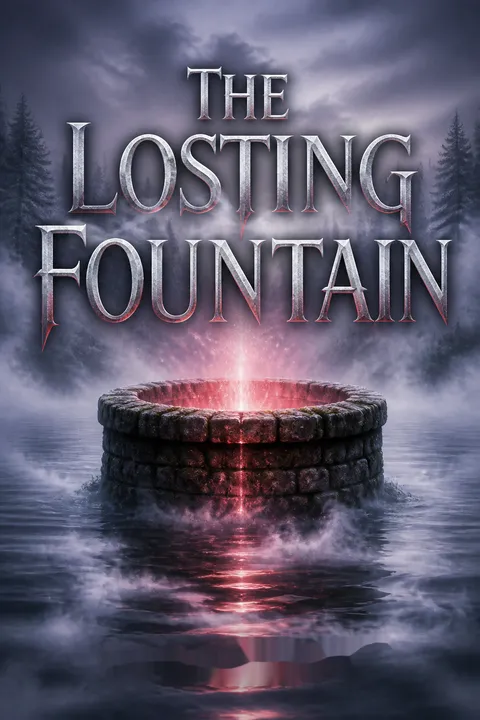


Plot Summary
The Stone Beneath the Well
In 1913, Ember has learned to find brief quiet beside the farm’s well, where a strange visitor rises from the water. The pale, sharp-toothed being never speaks, but on this visit she places a cold burgundy stone in Ember’s hand. Since Ember’s brother Hank died, music has sometimes sounded in her mind, and the visitor’s presence makes it swell.
Ember keeps the stone close, though she cannot know what it is. At home, her father’s cruelty and her mother’s grief leave her increasingly unseen. The well offers no explanation, only a gift and the unsettling sense that someone has noticed her. Ember holds on to both as the rest of her life narrows.
The stone is more than a supernatural clue: it gives Ember a private relationship that does not depend on her family recognizing her. Its coldness makes the gift tangible while its unexplained origin keeps comfort from becoming certainty. The silent visitor also mirrors Ember’s circumstances. Both are present but difficult for others to understand, and both communicate through gestures rather than shared language. The music links this encounter to a deeper world before Ember has any framework for interpreting it. Her willingness to accept the stone is not childish credulity so much as a survival instinct: she trusts the one connection that does not ask her to deny what she feels.
The Boy Behind the Fence
In 1989, Sam grows up confined to a neat suburban house because his mother believes his power makes the outside world dangerous. When he wanders, a chorus of sounds follows him and can spill into other people’s minds. As a child, he frightens his mother by causing his pet rabbit to die and revive; later, a man dies while Sam is hiding in his truck.
His mother’s warnings and shelter feel like imprisonment, even as Sam suspects she is hiding a reason for keeping him home. On his sixteenth birthday, he finds her dead and discovers a letter explaining that his uncontrolled power has been hurting her. Sent to live with his distant father, Sam hears the Sounds promise a place where he will belong.
Sam’s isolation is both protection and injury. His mother recognizes that his power can harm others, but secrecy leaves him to interpret restraint as rejection and care as captivity. The letter comes too late to repair their relationship, so Sam receives explanation without the possibility of response. That distinction matters: knowing his mother feared his power does not immediately free him from believing she feared him. The Sounds exploit that wound by offering belonging in the language of home. Their appeal is effective because it does not begin with ambition; it begins with the promise that Sam will no longer have to be alone.
A Stranger in the Pool
In the present, seventeen-year-old Miles reaches his school pool early and finds a waterlogged stranger inside, carrying a pipe and moving like a corpse that has forgotten how to walk. Miles escapes the locked room, and the stranger beats himself to death against its steel door.
Reports of similar attackers have already unsettled the country: they cannot be identified, speak incoherently, and appear to have been dead for decades.
Miles’s winged friends, Simon and Gabby, explain that these strangers are emerging because the barriers between worlds are splitting. Their arrival is connected to Miles, and more dangerous creatures may follow. Gabby tells him to leave with them that night for the Fountain, the place his birth mother once visited.
The pool attack turns Miles’s private childhood knowledge into an urgent public danger. His lifelong visits from Simon and Gabby have made the impossible familiar, but the stranger’s violence forces him to see that familiarity as inadequate protection. The undead attacker is not simply a monster to defeat; it is evidence that the world’s boundaries are failing in ways ordinary institutions cannot explain. Miles accepts the journey partly because he trusts Gabby and partly because he wants to understand his absent birth mother. Duty and personal longing therefore pull him toward the same destination, though he is not yet sure which motive is stronger.
A Wing in the Silo
By fourteen, Ember has become skilled at disappearing into the farmhouse’s corners. She worries that her father, Paul, and her uncle Joe will hurt the winged girl they have trapped in an old silo. After sneaking out, Ember brings the girl water and food, learns she is called Selah, and hears about a place where lost things and the people seeking them can meet.
Selah recognizes the burgundy stone as part of that place, though she leaves it with Ember. She also needs Ember to return with her. Ember is afraid her family will hunt them, but the prospect of leaving feels less frightening than staying. For the first time, someone asks her to come along rather than fade away.
Ember’s first act of courage is not a rescue performed without fear. It is the decision to enter the silo while fully aware that her father may punish her. Selah’s attention helps Ember name the pattern she has endured, but does not erase her uncertainty or dictate what she must do. Their alliance is built on mutual need: Selah cannot return without Ember, while Ember needs evidence that another life is possible. The stone’s recognition strengthens their connection, yet Selah refuses to take it from Ember. That small restraint gives Ember a form of agency she rarely experiences at home.
The Farm Opens Elsewhere
Paul takes Ember to the silo to retrieve Selah, intending to decide what to do with the winged captive. Selah moves too quickly for the men to stop her. She presses her hands to Paul’s temples, stripping away the rage that has governed him, then lifts Joe and leaves him dead on the floor.
Ember still returns to the farmhouse to say goodbye to her mother, Ruth, who responds with contempt rather than affection. Selah tells Ruth that her neglect helped leave Hank alone, and Ember finally understands that her mother will not ask her to stay. The girls walk into the fields, where a lake and an island have appeared. The island welcomes them, and the Philosopher Alma greets Selah there.
Leaving the farm does not give Ember the farewell she wants. Ruth’s indifference confirms that Ember has been hoping for a relationship her mother cannot or will not offer. Selah’s anger on Ember’s behalf is protective, but it also risks reproducing the cruelty the girls are trying to escape; Ember has to interrupt it. The sudden lake transforms departure into a literal crossing, making a hidden choice visible in the landscape. The island’s welcome is not a promise of safety, but it gives Ember something the farmhouse withheld: a place where her presence is expected and her consent matters.
Crossing Under Teeth
Sam follows the Sounds’ directions to a condominium pool, steps through its gate, and finds a lake instead. Unable to swim, he drags driftwood into the water and clings to it through hours of unseen creatures, finally reaching the island with a bleeding leg. Miles arrives by a different route: the island grows a bridge from living trees and vines for him, Simon, and Gabby.
A stranger from the woods climbs onto it, and the bridge rots beneath her touch. Gabby cuts her loose before she can drag Miles into the lake. The island has admitted Miles, but the attack shows that the creatures are already pressing against its defenses. Sam, exhausted and alone, enters the forest without knowing where to go.
The crossings reveal that access to the island is not the same as belonging or safety. The living bridge appears to recognize Miles, yet it cannot prevent a hostile stranger from reaching him. Sam’s route is harsher: the Sounds provide directions but not practical help, and survival depends on his own improvisation. These different arrivals establish two forms of vulnerability. Miles has trusted companions but little understanding of the danger; Sam has powerful abilities but no human support. The lake turns each passage into a test, while the unseen creatures suggest that the Fountain’s failures are no longer contained within its own world.
The Island Keeps Records
Alma takes Ember through the Hatchery, where winged caretakers tend children, and the vast Library, where objects sought by people in other worlds wait in labeled drawers and shelves. She explains that the island appears across different times, which it calls whens, and that the Fountain reunites seekers with what they have lost while judging those who come only to take.
Miles visits the cemetery where his birth mother, Ava, is buried and learns that part of her remains in the Fountain. Alma and Selah explain that Ava had felt more at home on the island than in her human life, and that the island once sent her away. Ember recognizes the ache in that history: belonging can be offered, then withdrawn.
The island’s institutions make its moral logic concrete. The Library preserves objects because their loss can alter a seeker’s life; the Hatchery preserves children through collective care rather than private ownership. These systems challenge Ember’s assumption that family and belonging must come from the people who raised her. Ava’s history complicates that lesson, however. The island can offer refuge and still make a harmful decision in the name of helping someone. By pairing its beauty with its failures, the story prevents the Fountain from becoming a simple sanctuary and prepares Ember to question the authority of those who govern it.
A Letter in the Walls
The island swallows Sam into an underground pit after he challenges the Sounds. Trapped among pale insects, he learns he can kill them with his mind and burn them by touch; he uses that power to destroy roots overhead and escape. After a coyote dies and returns in agony, Sam burns it away, horrified by what he can do and disturbed by the relief he feels.
Meanwhile, Ember and Selah find Sam’s bag in a hidden Academy room and read his mother’s letter, which describes his power and begs him to be kind. Miles and Gabby discover records and maps in a chamber connected to the Fountain. Then Ava rises from its cistern and confirms that someone else is driving the attacks in Miles’s world.
The letter gives Sam a moral warning without giving him the support needed to follow it. His abilities solve immediate threats, but each use teaches him that violence can restore control when he feels trapped. The coyote’s suffering unsettles him because it exposes a difference between killing and ending pain, a distinction he cannot yet manage. In parallel, Ember and Miles encounter the private evidence of other people’s choices: a mother’s fear, a government’s records, and Ava’s continued concern for her son. The hidden rooms make knowledge feel both intimate and dangerous. Understanding the crisis requires entering spaces where authority has left its mark.
The Jury’s Boy
Captured and brought before the island’s Philosophers, Sam learns that the Sounds are Beatrix, the human Jury who governs the Fountain. Alma explains that Beatrix has grown erratic and that the creatures in the lake are no longer reliably controlled. When Alma listens to Sam’s history, he admits how badly he wants a home but refuses to help her reach Beatrix.
He discovers Alma has read his mother’s letter and sees her care as another attempt to control him. Sam kills the guard outside his room, forces Alma to guide him through the tunnels, and kills her on the way out. He reaches the shore, only to find the gate has returned him to where he began. His escape has become another enclosure.
Learning the Sounds’ identity does not resolve Sam’s confusion; it gives his pain a target. Beatrix has used the intimacy of an inner voice while withholding her own identity, a manipulation that made her seem like the only companion who understood him. Alma offers sympathy, but her reading of the letter repeats Sam’s experience of being watched without permission. His violence is therefore both a choice and the result of a damaged capacity to distinguish care from coercion. The returned shore makes the cost immediate: Sam has escaped one captor only to discover that his rage cannot manufacture belonging.
The Lake Turns Predatory
When the group sneaks to the shore, Miles, Ember, Gabby, Selah, and Simon witness Groundskeepers fighting a creature that has dragged a dead seeker from the lake. Gideon forbids them to cross, then sends them to the Academy. There, Selah challenges the Philosophers’ tradition and Magdalene’s growing influence, while the others discover they are being kept under guard.
At dawn, Zebedee takes Selah to the Fountain, chains her inside a cage, and sinks her below the surface to force Beatrix to appear. Miles finds the cage and dives in, using Zebedee’s key to pull Selah free. She returns to the water almost immediately, convinced Beatrix is still trapped below. The island’s disorder has become a deliberate cruelty.
The threat now comes from both the creatures and the people claiming to protect the island. The dead seeker makes the Fountain’s malfunction visible as human loss, while Zebedee turns its power into a weapon against Selah. His scheme depends on Beatrix’s affection, reducing love to a lever he can pull. Miles’s rescue rejects that calculation, but Selah’s return shows that loyalty can also become self-endangerment. The episode unsettles the distinction between institutional duty and moral action. Tradition has not prevented harm; it has given the powerful a vocabulary for excusing it.
The Hatchery’s Last Song
As creatures from the lake advance on the Hatchery, Ember and Simon reach the Nursery and warn the caretakers. Ember hums the music she has heard since childhood, and the song quiets the frightened children while seeming to stop the monsters outside. The keepers carry the babies through the tunnels, but the cocoons in the larger Hatchery cannot be moved in time.
Simon goes outside to draw the creatures away. One catches him before help arrives and tears open his body. Ember comes out to find him dead, then uses the song’s strange power to fill another creature with light and drive it back. On a ridge, Sam watches her power and learns from Beatrix that she groomed him as a possible successor before abandoning him to the island.
The Nursery forces the characters to make choices under unequal conditions. Ember’s song protects those who can be carried, while Simon chooses to draw danger away from those who cannot defend themselves. His courage saves time but costs him his life, refusing the comforting idea that bravery guarantees survival. Ember’s power grows through care rather than domination: she calms the children before she turns against the monster. Sam sees this from a distance, just after learning Beatrix treated him as a tool. The contrast exposes two possible uses of power, one organized around control and one around protection, without making either path painless.
A Well of His Own
Ember confronts Sam, and he attacks her in the grey landscape of his mind. She withstands his power, grows white ghost-wings from the scars on her back, and drives him into a deep well within his own inner world, leaving him alive but unable to reach anyone. Below the Fountain’s surface, Selah fights the creature wearing Beatrix’s eyes and throws it into the abyss.
Ava saves Selah, revealing that the monstrous being has never erased the person beneath it. With Sam contained and Beatrix’s remaining presence gone, the Fountain’s falls stop. The creatures turn back toward the water, and the island’s immediate assault ends. Ember has stopped Sam, but she has not escaped the grief of Simon or Alma.
The climax does not defeat violence by simply overpowering it. Ember uses Sam’s own mental landscape to contain him, preventing his destructive reach without killing him. That choice marks a difference between restraint and the control that shaped his life. Beneath the Fountain, Selah’s refusal to abandon Beatrix leads her into danger, while Ava’s rescue demonstrates that a monstrous body can still contain an individual relationship and history. The stopped falls register a political and emotional rupture: Beatrix’s rule is over, but the island must decide what comes next. Survival restores possibility, not innocence.
Epilogue
With Beatrix gone, the creatures return to the Fountain, and Miles chooses to go home. He reaches Hannah after eighty-seven days away and promises to stay. Ember hopes to remain on the island and care for its children. Gabby joins the Groundskeepers in Simon’s memory, while Simon is buried beneath a tree. Zebedee escapes to the far shore and begins gathering power there.
Sam remains trapped in the well of his own mind, but finds pieces of a strange stone and hears water beyond the wall. Selah and Ember walk together toward an unknown horizon, where Selah postpones the question of what lies across the lake. The lost are not all restored, but some finally know where they belong.
The ending offers different kinds of return rather than a single universal repair. Miles goes back to the family that raised him, while Ember chooses a possible home she has not yet secured. Gabby turns grief into service, though her resolve still carries anger. Simon’s burial gives his community a ritual of remembrance instead of reducing his death to utility. Zebedee’s escape prevents the island’s victory from becoming a clean ending, and Sam’s final glimpse of water leaves open the possibility of change without promising redemption. The Fountain can reunite people and objects, but it cannot reverse every loss. Its most durable gift is the chance to choose what one does with what remains.
Analysis
The novel makes loss active. A missing ring, a dead sibling, an absent mother, and an abandoned child are not equivalent experiences, but each can alter the shape of a life. The Fountain gathers these losses into a system that offers return, yet the book refuses to equate restoration with justice. The Jury’s decisions can be compassionate or cruel; the island’s shelter can nurture children and still make devastating mistakes. Its moral authority must therefore be examined, not merely trusted.
The three teenagers embody different responses to being unseen. Ember has learned to disappear because neglect makes visibility painful. Miles is loved at home but remains curious about a mother and history he cannot reach. Sam has been isolated in the name of protection until he mistakes control for the only form of care available. Their stories converge because the island needs more than supernatural ability: it needs people capable of questioning what its institutions call necessary. Ember’s strength grows through care, Miles learns that loving Ava does not diminish Hannah, and Sam’s power becomes most dangerous when he treats injury as permission to injure others.
The repeated stories of seekers give the fantasy a moral texture. Marshall’s recovered watch can restore a small piece of his life, while Harvey’s greed turns the Fountain’s promise into a trap. These tales suggest that objects matter through relationships, not market value. The main characters complicate that lesson by showing that people, too, can be misjudged as objects: Sam is treated as an experiment, Selah as leverage, and Ember as a problem before she is recognized as a person. The ending offers no cure for grief and no simple homecoming for everyone. Instead, it asks whether people can make a more humane choice with what remains after loss.
Review Summary
The Losting Fountain receives mixed reviews averaging 3.72/5 stars. Readers praise the intricate worldbuilding, unique premise involving three teens from different time periods (1913, 1989, present day) converging at a magical fountain, and the dark fantasy atmosphere. The writing quality is consistently noted as well-crafted. However, many criticize the numerous POV switches (approximately six), short chapters that create emotional distance, underdeveloped characters, and unclear worldbuilding despite the interesting concept. Some found the pacing slow and disjointed. Violence and gore are present but no sexual content. Opinions range from "captivating" to "boring," with character attachment being the primary divisive element.
People Also Read


Characters
Ember
The unseen farm girlEmber, born November and known by her nickname, is a strong, observant fourteen-year-old living on a farm in 1913. After her brother Hank’s death, she is left in a home where her father is cruel and her mother emotionally absent. Her instinct is to notice who is frightened or overlooked, even when her own needs go unmet. Ember is cautious about trusting others, but she is not passive: when she sees Selah in danger, she acts before she has a complete explanation. Her longing to be seen coexists with a fierce capacity to care, making her more than a rescued child. She wants belonging, but also needs the freedom to decide what belonging means.
Sam
The dangerous isolated boySam is a brilliant, lonely teenager whose unusual mental power frightens the people closest to him. He has grown up with little contact beyond his mother, and his confinement has left him resourceful but inexperienced in empathy and ordinary relationships. He experiences care as restriction because no one has explained his abilities in a way he can accept. The promise of a home therefore reaches him at a vulnerable point. Sam is capable of tenderness and shame, but fear and anger can quickly overwhelm both. His central struggle is not simply whether he has power, but whether he can choose what to do with it when he feels betrayed or trapped.
Miles
The searching swimmerMiles is a seventeen-year-old runner and swimmer raised by his aunt and uncle, whom he regards as his parents. He is athletic, loyal, and generally grounded, though he has long wondered about Ava, his birth mother, and the island she once visited. His friendship with Simon and Gabby gives him a trusted connection to the uncanny long before the crisis begins. Miles wants to protect the people he loves, and he is drawn toward danger when he believes they may be at risk. His impulse to help can outrun his understanding, but it comes from genuine compassion rather than a hunger to be heroic.
Selah
The wayward winged guideSelah is a winged resident of the island who once cared for young children in the Hatchery and later became a keeper of the Fountain. She is perceptive, persuasive, and more willing than most to question the judgments of the island’s leaders. A profound personal loss has made her wary of attachment, though she remains deeply capable of devotion. Selah sees Ember’s worth before Ember can fully see it herself, and she treats the girl as a partner rather than a charge. Her courage is matched by a tendency to carry responsibility alone, a habit that can put both her and those she loves in danger.
Gabby
The watchful winged sisterGabby is Simon’s older sister, a winged islander who has watched over Miles since childhood. Serious, authoritative, and protective, she often acts as the person who sees danger before others are ready to acknowledge it. Her confidence can make her seem inflexible, but it grows from responsibility rather than vanity. Gabby has a deep attachment to Simon and a long, complicated connection to Ava, whose choices shaped her sense of duty. She is accustomed to guiding and guarding others. Her challenge is to distinguish protection from control, especially when someone she loves insists on making a dangerous choice.
Simon
The eager winged brotherSimon is Gabby’s younger winged brother and Miles’s longtime friend. He is curious, affectionate, and more openly playful than his sister, though he understands the island’s dangers better than his age and manner suggest. Simon brings warmth to frightening situations and often helps others feel less alone. His loyalty to Gabby is strong, but he also forms genuine bonds beyond his family, particularly with Miles. He tends to see the best in people and places, a quality that makes him generous but sometimes vulnerable. Simon’s courage is quiet and practical: he wants people protected, not praised.
Ava
Miles’s absent birth motherAva is Miles’s birth mother and Gabby’s former caretaker and friend. She was drawn to the island from a young age and found its orderly, sheltered world easier to inhabit than her human life. Ava is sensitive, kind, and particular, but struggles with the demands of motherhood and with feeling at home among her family. Her history connects Miles’s private questions to the island’s political and emotional past. Ava is more than an absent parent in the story: she represents the possibility that love and belonging can coexist with choices that hurt other people.
Alma
The steady PhilosopherAlma is a Philosopher, an island leader who combines practical care with a thoughtful understanding of the Fountain’s history. She welcomes Ember and helps explain the island without pretending that its choices have always been right. Alma is especially attentive to children and outsiders, perhaps because she sees how easily institutions turn vulnerable people into problems to manage. Her kindness is not naïve; she can be firm when a person’s safety requires it. Alma carries regret over earlier decisions and tries to meet uncertainty with honesty, even when she has no answer that can undo the harm.
Beatrix
The island’s human JuryBeatrix is the human Jury who makes final judgments about seekers and lost things at the Fountain. Once a Hatchery keeper, she has held authority for a long time and is responsible for maintaining the boundary between worlds. The islanders respect her position, but her distance from the community has become increasingly consequential. Beatrix believes decisive judgment is necessary to preserve the island’s purpose. Her role places her at the intersection of care, punishment, and power, where even a leader who once served well can become difficult to question.
Magdalene
The tradition-minded PhilosopherMagdalene is a Philosopher who prizes established authority and the island’s traditional, single-Jury system. Sharp-tongued and politically alert, she treats disagreement as a challenge to order rather than an invitation to reconsider it. Her interest in the island’s leadership makes her a formidable presence in the Academy. Magdalene is not easily read by the young visitors, who have to distinguish her actual actions from their assumptions about what she controls.
Zebedee
The smiling power seekerZebedee is a winged Philosopher and Academy official whose polished manners conceal a taste for influence and spectacle. He wants to be close to authority and is skilled at presenting self-interest as initiative. Zebedee can be charming when it serves him, but his respect for other people’s boundaries is thin. His conduct reveals how institutional cruelty can wear the appearance of procedure, especially when no one with greater authority is present to object.
Gideon
The Groundskeeper captainGideon is a respected Groundskeeper who oversees the people responsible for the island’s land and menagerie. He is disciplined, observant, and accustomed to making hard decisions under pressure. Gideon values safety and cooperation, but he does not confuse either with comfort: he expects people to follow instructions when the danger is immediate. His leadership earns trust because he takes responsibility for what his team sees and does, rather than hiding behind the island’s traditions.
Ruth
Ember’s grieving motherRuth is Ember and Hank’s mother, living in the aftermath of a family shaped by violence and grief. She keeps the household running but has withdrawn emotionally from Ember. Her grief over Hank has hardened into blame, leaving little room for her younger daughter’s needs. Ruth is not presented as a simple absence: she is a parent whose suffering has narrowed her ability to care, with painful consequences for the children around her.
Paul
Ember’s violent fatherPaul is Ember’s father, a harsh and controlling man whose moods govern life at the farm. He treats his daughter as an inconvenience and expects her obedience, while his grief and anger have made the household increasingly dangerous. Paul’s authority depends on fear rather than trust. His relationship with Ember helps explain why the prospect of an unfamiliar island can feel less threatening than remaining at home.
Joe
The threatening uncleJoe is Ember’s uncle and Paul’s accomplice in the farm’s threatening household. He treats Selah as an object to be captured and shows little concern for Ember’s safety. His bluntness and appetite for control make him a direct danger to both girls.
Hannah
Miles’s devoted motherHannah is Miles’s aunt and the woman who raised him as her son. Loving, steady, and involved in his everyday life, she is the parent who taught him that home is something people build through repeated acts of care. Her bond with Miles stands apart from his curiosity about Ava; he does not need to replace one mother with another to value what Ava means.
Sam’s Mother
The frightened protectorSam’s mother raises him alone and confines him because she fears the harm his uncontrolled abilities may cause. She loves him, but she has no reliable help or language for explaining what is happening. Her protective choices become indistinguishable from imprisonment in Sam’s eyes. She represents the painful limits of care when fear and secrecy take the place of shared understanding.
Dennis
Sam’s distant fatherDennis is Sam’s estranged father, a man who has allowed distance to grow rather than work to repair it. After Sam’s mother dies, he takes Sam into his household, but their relationship begins without trust or intimacy.
Juliette
Sam’s careful stepmotherJuliette is Dennis’s wife. She tries to welcome Sam into their home and is careful about how she addresses him, but her kindness cannot instantly overcome his resentment or grief.
Zane
The measured PhilosopherZane is a Philosopher who speaks with calm authority during the island’s political crisis. He considers the safety of the island and the worlds beyond it, and is wary of the consequences if the Jury’s power fails.
Isabis
The questioning PhilosopherIsabis is one of the Philosophers, thoughtful and willing to question the harshness of the island’s system. Her perspective offers a counterweight to those who defend tradition without examining what it costs.
Plot Devices
The Losting Fountain
Reunites loss and longingThe Fountain is a mysterious source of water at the island’s center and a meeting place for lost things and those seeking them. Some seekers find it on their own; others are guided there by island keepers. Objects that have shaped a seeker’s life wait in the Library, while the Fountain’s Jury decides what may be returned and what consequences await those who come to take more than they need. The Fountain also forms a boundary between worlds and times. When its balance fails, creatures and poisoned water can escape into human places. Its generosity and danger come from the same source.
The Island’s Many Whens
Braids separate timelinesThe island can appear in different places and eras, which its inhabitants understand as different whens. People from 1913, 1989, and the present can meet there because the island gathers them into a shared now. Time does not move at the same rate for everyone, and paths into the island vary according to the traveler: a living bridge, a hidden gate, a lake that appears in a field. This device allows the three teenagers’ separate lives to converge without erasing their different histories or the consequences waiting in their own worlds.
The Waiting Library
Stores sought-for objectsThe Library holds the things people have lost and continue to seek: rings, books, toys, maps, letters, and countless ordinary objects. Its organized shelves make the Fountain’s purpose physical. A lost object matters not because it is valuable on its own, but because its absence can redirect a person’s life. The Library also preserves stories, including examples of seekers who recover something modest and those who are destroyed by greed. Its contents help Ember understand that loss can start a chain of consequences, while reunion offers a chance, not a guarantee, of a different path.
The Jury and the Lake
Judges seekers, commands creaturesThe human Jury guides the Fountain’s decisions, controls the creatures within its waters, and determines whether seekers receive what they came for or face punishment. The role exists because the island’s long-lived residents believe a human can better understand human longing and frailty. The story tests that arrangement when the Jury becomes unreliable and the island’s inhabitants disagree about whether authority should remain with one person. Without sound judgment, the creatures that guard the Fountain become a threat to the island and to the worlds beyond it.
The Stone and the Song
Connects Ember to the FountainThe burgundy stone Ember receives from the water visitor stays cold against her skin and links her life on the farm to the island. The music she has heard since childhood also returns in the Hatchery, where it soothes the young. Together, the stone and the song give Ember a way to sense the Fountain’s presence and to act when words or ordinary strength are not enough. Their meaning is revealed gradually, allowing Ember’s connection to the island to emerge through repeated experience rather than through a single explanation.
Download PDF
Download EPUB
.epub digital book format is ideal for reading ebooks on phones, tablets, and e-readers.








