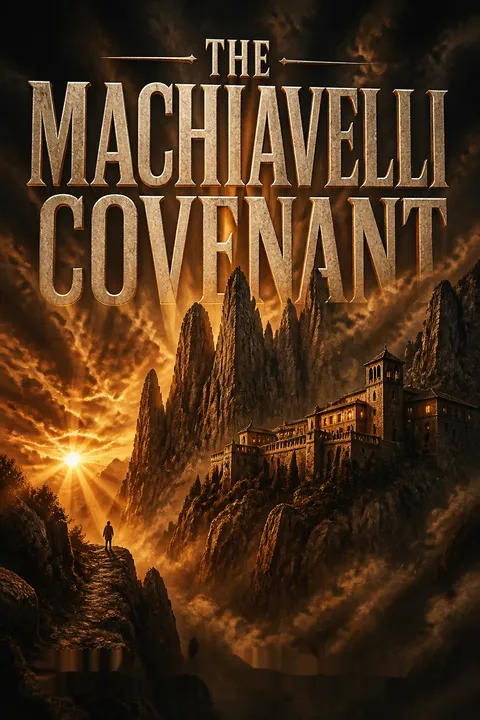


Plot Summary
Caroline's Last Message
Nicholas Marten, an American living under another name in England, returns to Washington when Caroline Parsons calls for him. They were once in love; now she is dying from an aggressive infection, days after her congressman husband, Mike, and their twelve-year-old son, Charlie, died in a plane crash.
In the hospital, Caroline manages to tell Marten that she had been meant to join them on the plane, and that someone has killed her family and is killing her too. She recalls a doctor who frightened her at the clinic where she was treated, a white-haired man with unusually long fingers and a small tattoo on his thumb. Caroline dies as the president arrives, leaving Marten with a warning he cannot dismiss.
Caroline's death is both intimate loss and the story's first piece of evidence. Marten does not return as a detective pursuing an abstract case; he returns because a woman he still loves has asked him to witness her final hours. Her accusation arrives through a failing body, so grief and uncertainty are inseparable. The physical details she leaves behind matter precisely because they are concrete: a changed flight plan, a clinic, a distinctive hand. Her trust gives Marten an obligation, but it also draws him back toward the violent history he fled.
A Suicide Rewritten
Caroline's notarized letter gives Marten access to her and Mike's papers, but her lawyer soon orders him out of the Parsons home before he can examine them. Earlier, Marten had gone to Dr. Lorraine Stephenson's Georgetown house after she refused to discuss Caroline's treatment. Stephenson runs from him into the dark, then points a pistol at herself and dies.
Marten flees, afraid police will identify him and uncover the past that forced him to leave Los Angeles. The police later tell him Stephenson was murdered, and reporter Peter Fadden explains why the death stayed secret: someone decapitated her after Marten left. At Caroline's memorial, police arrest Marten and put him on a plane out of Washington.
The sequence makes investigation itself dangerous. Marten's instincts tell him to press Stephenson, but his pursuit leaves him beside her when she dies and gives the conspirators a chance to recast what happened. His silence protects his hidden identity while weakening his credibility. The altered body turns a witnessed suicide into a public murder, showing how an institution can manufacture the version of events that investigators are allowed to see. Marten is not simply barred from justice; he is made vulnerable by the very facts only he can explain.
The Committee's Missing Witnesses
On the day after Caroline's death, Marten searches Mike Parsons's congressional record and finds that his last committee work involved a classified inquiry into a supposedly dismantled South African biological-weapons program.
A missing word in Caroline's halting warning seems to point toward the committee. Marten contacts Fadden, a Washington Post reporter and friend of his murdered confidant Dan Ford. Fadden reveals that the inquiry examined the work of Merriman Foxx, former head of South Africa's Tenth Medical Brigade, whose unit developed covert pathogens and delivery systems.
Foxx testified that the weapons and research had been destroyed. Fadden also confirms that Foxx is white-haired and still in Washington during the relevant period, giving Marten a name to match Caroline's memory.
The committee transforms a private suspicion into a political trail. Marten's search is deliberately improvised, moving from a fragment Caroline could barely speak to public records and then to a reporter's sources. The key tension is not yet proof of murder but the suspicious gap between the committee's classified subject and Foxx's confident account of a program's destruction. Fadden supplies context without resolving the case, a useful check on Marten's grief-driven certainty. The investigation now has a scale beyond one family, while Marten still has almost no institutional protection.
Foxx's Marked Thumb
Marten follows the trail to Malta, where Foxx lives, and arranges a meeting by pretending to assist Congresswoman Jane Dee Baker with the hearing transcript. At dinner, Foxx dismisses questions about his old weapons program and denies knowing Stephenson. Marten notices the long fingers Caroline described and a tiny cross tattoo on Foxx's left thumb.
The gathering includes Reverend Rufus Beck, the congressional chaplain who summoned Stephenson when Caroline broke down, and photojournalist Demi Picard, who had earlier asked Marten about witches. Demi warns him to stay away, while Beck's familiarity with him suggests he remembers the hospital. Foxx leaves abruptly, and Marten realizes he has exposed his interest without gaining evidence.
Recognition arrives through bodily specificity rather than confession. The tattoo and hands connect Caroline's memory to Foxx, but they establish identity, not the full crime. Foxx's public composure and private irritation make denial part of his defense: he controls what can be said by keeping the exchange on technical testimony. Beck and Demi complicate the encounter because each appears to know more than Marten does, yet neither offers a clear explanation. The scene changes Marten's task from finding the suspect to surviving contact with a network that may already be tracking him.
The President Refuses
While Marten investigates in Europe, President John Henry Harris tries to repair relations with France and Germany ahead of a NATO summit. His national security adviser, James Marshall, and longtime political confidant Jake Lowe privately urge him to remove the French president and German chancellor through assassination, claiming a sudden Middle Eastern crisis would require unquestioning support at the United Nations.
Harris refuses. Later, at former press secretary Evan Byrd's home in Madrid, the same inner circle returns with the vice president and senior cabinet officials.
They demand authorization for the killings and admit that Mike Parsons was killed because he learned too much about Foxx's program. The plane crash also killed Charlie, and Caroline was infected afterward. Harris understands that refusal makes him a target.
Harris's crisis begins with betrayal by people whose familiarity has functioned as proof of safety. The proposed assassinations are presented as emergency pragmatism, a way to make lawlessness sound like responsible statecraft. Harris refuses not because he misunderstands the political stakes, but because he recognizes that the proposed remedy destroys the legitimacy it claims to protect. The second meeting strips away any remaining ambiguity: this is organized power using the presidency as an instrument. His personal grief for the Parsons family now joins his public duty, making escape the only available form of resistance.
Two Men on the Run
After leaving Byrd's house, Harris escapes the Madrid hotel through its ventilation ducts and hides in the city, disguised without his hairpiece and dressed as an ordinary traveler. In Barcelona, Marten follows Demi after she leaves Malta, where she has been seeking access to Foxx through Beck.
At lunch, Demi explains that the tattoo marks a secret coven and describes a legend about the Machiavelli Covenant, a society that binds its members through ritual murder. A German civil engineer, Klaus Melzer, tails Marten and runs into a truck when Marten pursues him. A newspaper photograph of Marten beside the dead man helps Harris locate him. Harris arrives at Marten's hotel room and reveals that the government is conspiring against him.
The story's two lines finally meet through mutual exposure. Marten's trail has attracted surveillance; Harris's escape has made him dependent on a stranger whose grief he has already noticed. Demi offers a mythology that sounds extravagant, but the thumb mark and the pursuit give it material weight. The accidental death of Melzer is a moral complication: Marten's effort to confront a watcher helps cause the man's death, then leaves him holding the man's identity and a new threat. Harris's arrival converts Marten from investigator into partner, and makes their separate dangers inseparable.
Barcelona's Closing Net
Harris tells Marten that Lowe, Marshall, and the others intend to assassinate the French and German leaders during the Warsaw summit, then unleash a biological catastrophe in the Middle East. As Spanish police search Barcelona, Marten and Harris evade a hotel raid with Demi's help. They leave with Miguel Balius, a limousine driver who becomes their guide through checkpoints and country roads.
Meanwhile, Fadden tries to alert a trusted friend in Geneva and is intercepted by a man with an umbrella; he disappears, though Marten does not yet know what happened to him. Demi leads the group toward Montserrat, where Beck has arranged a meeting with Foxx. Her motives remain uncertain, but Foxx is their only lead to the conspiracy's plans.
The pursuit converts private trust into a practical resource. Miguel's local knowledge and Demi's access to Beck matter as much as Harris's political authority, which he can no longer use safely. The state machinery searching for its own president is particularly unstable: its agents believe they are protecting him, while the people directing them intend to control or kill him. Fadden's interruption widens the cost of speaking, even before his fate is known. By choosing Montserrat, the fugitives accept a dangerous convergence: the same place may expose Foxx's crimes and deliver them into his hands.
Foxx's Laboratory Below
At Montserrat, Foxx welcomes Marten and Harris into his hidden laboratories, presenting plant research as evidence that he has abandoned weapons work. Marten challenges him about Caroline, Stephenson, and the missing pathogens.
Foxx denies everything, then bites a poison capsule concealed in a tooth rather than answer. Before his death, Marten and Harris restrain him and try to force information from him. They search deeper and find rows of preserved human bodies, evidence that Foxx has experimented on ordinary people while disguising his work as natural illness.
Gas begins pouring into the chamber, forcing them into an old mining tunnel. The president's rescuers close in above, but the two men keep moving through the dark with only matches and improvised light.
Foxx's cultivated benevolence is a second layer of concealment: useful crops and humanitarian language do not erase the bodies beneath the mountain. His suicide prevents the fugitives from learning the plan's specifics, leaving them with proof of atrocity but no complete account of what is coming. Marten's violence toward Foxx is fueled by Caroline's death, and Harris has to stop him before anger destroys their chance of obtaining answers. The bodies make the horror legible while also making it politically fragile: without records or witnesses who can be trusted, visible proof may still be dismissed.
Hap Changes Sides
Secret Service agent Hap Daniels reaches Foxx's office ahead of the official recovery teams, but armed operatives arrive first, carrying Foxx's body and firing on Hap. Miguel finds the wounded agent and helps him escape. In the tunnels, Hap learns that the president is still alive and joins Miguel and local teenagers José, Amado, and Hector in the search.
He can no longer trust his deputy, Bill Strait, or the officials directing the rescue. The group finds Marten and Harris underground, then moves through chimneys and narrow passages while search teams sweep the tunnels. Amado and Hector are captured and questioned, buying the others time. Hap's injuries slow them, but Miguel and José refuse to leave him behind.
Hap's choice is a crisis of professional identity. His duty has always been to protect the president, but the official chain of command now points toward the president's capture. He therefore has to distinguish loyalty to an office from obedience to the people temporarily occupying it. That distinction costs him blood and the certainty of institutional support. The local teenagers and Miguel supply a different kind of loyalty, grounded in personal obligation rather than rank. Their aid does not make the escape easy; it makes it possible by replacing a compromised system with relationships that can still be tested face to face.
Demi's Family Tomb
At Montserrat, Demi learns that the story she told Marten was false: she has no missing sister. She has spent years searching for her mother, Teresa Ferrara, who vanished when Demi was eight. Her father's warning and a sketch marked with the Aldebaran symbol led her to scholar Giacomo Gela, who described the violent rites of Aradia Minor.
Luciana reveals a chest beneath the church floor containing urns for generations of Demi's female relatives, including Teresa. An empty urn bears a date one day away, and Luciana tells Demi it is meant for her. The coven's ceremonies have not been harmless tradition. Demi has been brought to the hidden church as a sacrifice, and her photographs cannot reach the outside from her underground cell.
Demi's fabricated sister story is not a casual deception but a protective shell around a lifelong wound. Her search for her mother began in childhood abandonment, then became a self-imposed promise after her father's warning. Luciana turns family history into a mechanism of control: the urns make the ritual seem hereditary and inevitable, while the missing date assigns Demi a future before she can choose one. The revelation reframes the coven's pageantry. Its tenderness toward children and animals is not evidence of innocence; it is camouflage that teaches witnesses to misread violence as blessing.
The Aragon Escape
Harris insists on reaching the Aragon resort, where he had been scheduled to speak to the New World Institute, because its members may be able to hear the truth before the Warsaw killings.
After escaping a gas-filled laboratory through abandoned mine tunnels, the president, Marten, Hap, Miguel, and José evade soldiers, helicopters, and satellite surveillance. They use reflective survival blankets to confuse thermal imaging, cross streams in darkness, and slide down a treacherous shale chute.
Miguel deliberately draws the search toward himself, giving the others time to continue. The group reaches the resort's vineyards before dawn, steals groundskeeper uniforms and an electric cart, and slips toward the church where the Institute's meeting is about to begin.
The trek strips political power down to endurance, navigation, and shared risk. Harris cannot command his way through the mountains; he has to accept help from a wounded protector, a limousine driver, and a teenager who knows the terrain. The reflective blankets and stolen uniforms turn ordinary objects into temporary shelter from a vast surveillance apparatus. Yet the escape is not a clean victory. Miguel's diversion leaves him exposed, and the resort is still guarded. The president's determination to speak is therefore both political strategy and a demand that the dangers they have survived produce public consequence.
The Covenant Signs In
Inside the church's control room, Harris, Marten, and Hap watch the Institute's members provide identifying information and DNA samples before the ceremony. The group includes Vice President Hamilton Rogers, Congresswoman Jane Dee Baker, and Harris's senior advisers, along with powerful international figures.
The cameras then reveal the heads of Giacomo Gela, Stephenson, and Fadden, each displayed as a warning to anyone who might expose the society. Reverend Beck and Luciana lead the ritual, while Cristina waits onstage.
Harris realizes that the meeting is not merely a gathering of compromised officials: it is the Covenant's binding ceremony, preserving proof of each member's attendance and complicity. The vice president publicly presents himself as the next American president.
The electronic registration system modernizes the Covenant's old blood journal without changing its underlying logic. DNA and recorded faces make complicity harder to deny, while the staged ritual gives power an emotional spectacle that members share. The roster crosses political parties and national borders, revealing that the group does not depend on ordinary ideological agreement. Its bond is mutual exposure and mutual benefit. The three severed heads show what happens to those who break that bond. Harris's discovery is therefore not just that his advisers betrayed him, but that he is facing an institution designed to make betrayal structurally difficult.
Fire at the Altar
As Luciana prepares to burn Demi and Cristina, Harris orders a blackout to release the church's electronic locks and create a brief chance to escape. Marten and José enter the darkened sanctuary with flashlights and tin snips.
Marten crosses the flames and cuts Demi free while José draws the guards' attention. Machine-pistol fire kills Cristina before Marten can reach her, and bullets wound José. Reverend Beck retreats to a control room and starts the system meant to flood the church and tunnels with explosive gas, destroying the Covenant's evidence.
Hap leads the survivors out, but the Spanish police surround them. Major Woody Woods arrives in a Chinook just in time, and the group lifts off as the church and underground complex explode behind them.
The rescue is a moral refusal of the logic that powerful people may be sacrificed to preserve a political objective. Hap initially argues that saving Demi would expose the president, but Harris insists that survival without moral action would reproduce the Covenant's own calculus. The blackout allows a narrow intervention, not a clean rescue: Cristina dies, José is shot, and Demi emerges physically and psychologically devastated. Beck's timed destruction shows the conspirators understand evidence as a threat. Their attack fails to erase every witness, but it ensures that truth will arrive amid damage and uncertainty.
Auschwitz Replaces Warsaw
Harris escapes the compromised recovery plan and flies to a German air base, where he warns the French and German leaders and changes the NATO meeting's venue from Warsaw to Auschwitz. At the former death camp, Marten recognizes Victor Young, a man he had seen watching him in Washington, and fears the killer of two Chantilly jockeys is targeting the leaders.
The Secret Service identifies Victor as a possible sniper and delays the ceremony while scanning the security photographs. Victor has smuggled an M14 inside a television equipment case and positioned himself near the podium. Dogs and agents close in before he can fire. Bill Strait reaches the hiding place and kills him, while Marten confirms the shooter's identity.
Changing the venue is more than a logistical adjustment: Harris places the meeting beside a historical record of state-sponsored extermination, refusing to let the proposed genocide remain an abstract security scenario. Marten's recognition of Victor converts a past killing into an imminent threat, proving that Foxx's death has not ended the danger. Victor's apparent access to credentials and equipment suggests a network still has reach, even as the main conspiracy is collapsing. The interruption costs the president time and spectacle, but it prevents the leaders from standing together in the sniper's line of fire.
Truth at Auschwitz
With Victor dead and the threat contained, Harris addresses the NATO leaders, Congress, and a worldwide television audience. He discloses that senior American officials demanded authorization to assassinate the French president and German chancellor, and that he fled after refusing them.
He identifies the Covenant as an international organization embedded in political and economic institutions, and describes the biological experiments and ritual murders he witnessed.
The vice president, secretaries of state and defense, the chairman of the Joint Chiefs, and the White House chief of staff are taken into custody in London; investigations begin in Europe as well. Marten watches from the crowd, then declines a public role and turns toward home, carrying the cost of what he has seen.
Harris chooses testimony over the safer language of a private inquiry. He has no complete account of Foxx's biological plan, and the destruction of the laboratories has erased crucial evidence, but silence would let the plot continue under the cover of his supposed illness. Speaking at Auschwitz makes the moral comparison unavoidable without pretending the crimes are identical. The address risks political collapse and international backlash, yet it restores agency to the people whose leaders were meant to act in secret. Marten's departure marks a different form of courage: he has helped expose the crime, but does not seek to become its public hero.
Epilogue
Two months later, public outrage and investigations continue, while the evidence from Foxx's destroyed complex remains incomplete. In a private meeting, Harris tells Marten that records implicate Foxx in the death of his wife, whose brain cancer was deliberately induced.
Marten's thoughts return to Victor's final encounter with Bill Strait: Victor recognized the name Richard, and Strait had reached him with suspicious certainty. Marten concludes that Strait may have been Victor's unseen handler, though he has no proof. Back in Manchester, he lies awake considering whether the Covenant has truly been destroyed. A sharp knock at his door ends the book before he can learn who is outside.
The epilogue refuses the comfort of a completed conspiracy plot. The arrests and public speech create accountability, but the missing biological plan, incomplete records, and possible infiltration of the Secret Service leave the machinery of secrecy partly intact. Harris's revelation about his wife joins his bereavement to Marten's, making their alliance rest on losses neither man can reverse. The final suspicion about Strait is carefully provisional: it may be sound inference or the exhaustion-driven pattern making of a survivor. The knock converts that uncertainty into immediate suspense, suggesting that knowledge itself has made Marten vulnerable again.
Analysis
The novel makes conspiracy frightening not because it is invisible, but because it can borrow the appearance of ordinary institutions. A physician treats a grieving patient, a committee reviews a weapons program, a security team searches for a president, and a religious community gathers for ceremony. Each activity has a plausible public explanation. The horror emerges when these familiar structures are connected and shown to serve private power. Foxx's laboratories, the Covenant's evidence system, and the administration's false rescue story are different forms of the same technique: control what can be seen, then control what the visible facts are allowed to mean.
Marten and Harris respond from opposite positions. Marten has no formal authority and must build a case from memory, observation, and relationships. Harris possesses the presidency but discovers that office alone cannot guarantee truth or loyalty. Their alliance works because each supplies what the other lacks: Marten's investigative skepticism and Harris's understanding of institutions. Both are also driven by grief. Caroline's murder draws Marten back toward violence; Harris's losses make his political responsibility painfully personal. Their restraint is imperfect, but the story treats it as a necessary struggle rather than a settled virtue.
Demi's search adds another register of inheritance. The Covenant turns family descent into a means of selecting victims, while Demi interprets her mother's disappearance as an unfinished bond she must honor. The same symbols can therefore mean belonging to the powerful or longing for the lost. The novel's central ethical question is whether truthful exposure can restrain institutions built to outlast individual witnesses. Harris's speech chooses public truth despite incomplete proof, and the epilogue refuses to certify that this choice has ended the danger. Accountability begins, but vigilance remains necessary.
Review Summary
The Machiavelli Covenant received mixed reviews, with an average rating of 3.61/5. Some readers found it thrilling and engaging, praising its fast-paced action and intricate plot. Others criticized its length, repetitiveness, and implausible storyline. The writing style was divisive, with some enjoying the short chapters and others finding the prose stilted. Many readers compared it to Dan Brown's works. Common complaints included plot holes, underdeveloped characters, and excessive use of certain phrases. The book's political conspiracy theme and international settings were generally well-received.
People Also Read








Characters
Nicholas Marten
Exiled homicide investigatorMarten is an American landscape architect in Manchester, living under a changed identity after violence in the Los Angeles Police Department forced him and his sister into exile. His love for Caroline Parsons brings him back to the United States, where his detective's habits turn her fragments of memory into a trail through congressional records, a South African weapons inquiry, and Merriman Foxx. He is observant and capable, but his pursuit is not emotionally neutral: grief makes him reckless, especially when Foxx's crimes become personal. Marten's practical loyalty to Harris and the people he meets in Spain gradually balances the solitary self-protection that has kept him alive.
John Henry Harris
Isolated American presidentHarris is a former senator from California who became president after his predecessor died and won reelection in a close contest. He is reflective, politically experienced, and deeply shaped by the death of his wife, Lori, and by his friendship with Mike and Caroline Parsons. His advisers mistake his measured manner for pliability. When they demand political assassinations, he refuses and acts with unusual independence, relying on practical knowledge from his working life to evade capture. He values counsel and trust, but the crisis forces him to decide whom to trust when his own government is compromised.
Caroline Parsons
Marten's dying confidanteCaroline is the wife of Congressman Mike Parsons and mother of Charlie, as well as Marten's former great love and lifelong friend. Warm, resilient, and attentive to other people's burdens, she has built a life in Washington that Marten can only glimpse after her death. Even while gravely ill and grieving her husband and son, she tries to give Marten clues about the people she believes are responsible. Her few specific observations become the foundation of his investigation. Caroline's private strength and the care with which she protects her sister from distress shape how Marten understands her final request.
Merriman Foxx
Bioweapons scientist in hidingFoxx is a former South African military scientist who commanded the Tenth Medical Brigade and testified before a classified congressional inquiry into its weapons programs. White-haired and physically formidable, he is accustomed to managing both scientific and military systems. He presents his later research as peaceful agricultural innovation, a claim that makes his public benevolence difficult to separate from his history of covert work. Foxx's composure, technical confidence, and guarded pride make him an unusually dangerous adversary. His connections to Stephenson, Beck, and the Aldebaran symbol place him at the crossing point of politics, science, and secret ritual.
Demi Picard
Journalist seeking her motherDemi is a French photojournalist whose assignments give her access to prominent clergy and politicians. Her curiosity about the Aldebaran symbol and her connection to Reverend Beck appear at first to be professional tactics, but they are rooted in a private, lifelong search for her mother. Intelligent, resourceful, and guarded, she uses photography not merely to document events but to preserve evidence and communicate beyond the reach of those she investigates. Demi's self-reliance can become secrecy that endangers both herself and others. Her fierce attachment to her mother explains why she continues even when the clues she finds carry clear warnings.
Hap Daniels
President's protective agentDaniels is the special agent in charge of Harris's Secret Service detail, a disciplined protector whose first instinct is to keep the president alive and out of public reach. The conspiracy turns that professional duty into a moral test because the people directing the official rescue may be the threat. Daniels relies on training, practical judgment, and loyalty built through years of service, but he must learn to question his own chain of command. His direct manner can clash with Marten's urgency, yet his experience and willingness to act independently become essential to the fugitives' survival.
Rufus Beck
Chaplain with hidden tiesBeck is a respected African-American minister, congressional chaplain, and pastor to the Parsons family. His gentle public manner gives him access to politicians in moments of grief and crisis, including Caroline's breakdown after her husband and son are buried. He is also connected to Foxx and to the secretive gatherings Demi wants to investigate. That contrast makes him difficult to read: the language of pastoral care can coexist with proximity to people who exploit trust. Beck's authority comes not from force but from the ability to make others feel safe enough to follow him.
Lorraine Stephenson
Parsons family physicianStephenson is a prominent Washington physician who treats the Parsons family and other political figures. After Caroline's collapse, she gives her an injection and arranges treatment at a clinic, placing her at the beginning of Caroline's fatal illness. Her professional standing makes her presence in the case consequential, while her fear of being returned to Foxx hints at a compromised relationship with the people around her. Marten's brief encounter with her leaves him with more questions than answers.
Peter Fadden
Washington Post investigatorFadden is a veteran political reporter and a trusted friend of the journalist Dan Ford. Rough-edged, skeptical, and protective of his professional independence, he will not treat Marten's suspicions as a story until they connect to verifiable facts. His knowledge of congressional procedure and Washington's informal channels helps identify Foxx and the classified inquiry. Fadden's skepticism is not indifference; it is a method for keeping belief accountable to evidence.
Jake Lowe
President's political adviserLowe is Harris's longtime friend and chief political adviser, a heavy presence in the president's inner circle. He understands the political cost of the transatlantic rift and is skilled at translating strategic ambition into practical argument. His relationship with Harris rests on years of shared work, which makes their political intimacy a source of both influence and danger. Lowe tends to think in systems, leverage, and outcomes, a habit that can make extraordinary abuses sound like manageable policy.
James Marshall
National security strategistMarshall is Harris's national security adviser, a towering, analytical figure who frames international crises as problems demanding swift, decisive action. He presents the imagined collapse of the Middle East as justification for extreme measures, then presses the president to accept assassination as policy. His composure and technical command make him persuasive within the administration, but his confidence in engineered outcomes leaves little room for law, dissent, or uncertainty.
Hamilton Rogers
Vice president with ambitionRogers is Harris's younger, more conservative vice president, selected partly for his ability to strengthen the ticket. He is forceful in public and comfortable with the language of national security. His place in the succession makes him especially consequential when Harris refuses the proposed operation. Rogers represents the constitutional danger of a conspiracy that can use normal lines of succession to turn an illegal plan into an apparently lawful command.
Bill Strait
Daniels's Secret Service deputyStrait is Daniels's deputy on the presidential detail, a broad, capable agent who knows the procedures and rhythms of executive protection. His work during the search for Harris appears professional and dependable, and he is positioned close to sensitive operations. That access makes him an important figure in the larger question of whom the president's protectors can trust. His steady bearing gives other agents reason to rely on him.
Miguel Balius
Limousine driver turned allyMiguel is a Barcelona limousine driver with an Australian background, a knowledge of local roads, and a cheerful instinct for helping difficult passengers. He first assists Marten and Harris as a professional, then becomes personally committed to keeping them safe. He knows the mountains and the people who live around them, and his loyalty is practical rather than ideological. Miguel's easy humor gives the fugitives moments of human warmth without making light of the danger.
José
Teenage guide through tunnelsJosé is a local teenager who knows the mountain paths, shafts, and abandoned tunnels around Montserrat. Fear is not absent from him; at one point he refuses to descend farther because he believes the lower passages contain the dead. Yet he repeatedly chooses to help, guided by family loyalty and a growing bond with the people he is protecting. His local knowledge becomes indispensable when technology and official maps fail.
Luciana Lorenzini
Aldebaran's high priestessLuciana is an Italian hotel owner and the senior ritual figure in the Aldebaran coven. Her striking appearance and carefully controlled manner make ceremony feel like performance, while her confidence gives her authority over the group's followers. She understands how symbols, family tradition, and staged acts can shape what an audience believes. Through Demi's investigation, Luciana becomes the human face of the coven's hidden hierarchy.
Victor Young
Manipulated marksmanVictor is an unremarkable-looking American recruited by a man he knows only through phone calls as Richard. Lonely and repeatedly unsuccessful in work, he is vulnerable to a handler who offers purpose, approval, and a patriotic story about preventing terrorism. Victor is a skilled shooter, but his understanding of the people he targets comes entirely from instructions supplied by someone else. He mistakes obedience for belonging and violence for service.
Cristina Vallone
Coven ritual figureCristina is a young woman connected to Foxx, Beck, and the Aldebaran community. Her gentle manner and apparent calm make her role in the ceremonies difficult for Demi to understand. She is presented as both a participant in the coven's traditions and a figure around whom the ritual is organized. Her presence raises questions about what the group teaches its members to believe about sacrifice, death, and belonging.
Ian Graff
Marten's landscape supervisorGraff manages Marten at Fitzsimmons and Justice and is responsible for delivering the delayed Banfield landscape project. He is educated, generally easygoing, and quick-tempered under deadline pressure. His ordinary workplace concern gives Marten a reminder of the life he is trying to return to, even as the investigation keeps pulling him away.
Amado
Miguel's local nephewAmado is Miguel's nephew and one of the teenagers who knows the mountain tunnels. His courage is tested when authorities capture and question him. He is young, frightened, and caught between family loyalty and the pressure of a large security operation.
Hector
Amado's tunnel companionHector explores the old mine passages with Amado and knows routes through the rock that the search teams do not. His firsthand knowledge of the lower tunnel system helps connect the surface search to Foxx's hidden transportation network. He is a local teenager whose curiosity has brought him close to danger.
Rebecca
Marten's protective sisterRebecca is Marten's sister, living under a changed identity in Switzerland after the events that drove them from Los Angeles. Marten's determination to keep her safe shapes his reluctance to appear publicly beside the president. Her life beyond the main action represents the fragile ordinary future he has tried to protect.
Teresa Ferrara
Demi's vanished motherTeresa is Demi's Italian-born mother, who disappeared from Paris when Demi was a child. The few belongings she left behind, especially a drawing marked with the Aldebaran symbol, become the first clues in Demi's lifelong search. Teresa's absence shapes her daughter's sense of identity and her determination to learn what happened.
Plot Devices
The Aldebaran Mark
A symbol of complicityThe small balled cross tattooed on left thumbs links Foxx, Stephenson, and members of the secret society to the older Aldebaran tradition. Demi learns that the mark belongs to a coven whose ceremonies are tied to a more powerful organization. In the final gathering, electronic images and DNA samples update the old practice of recording members' names and bloody thumbprints. The sign works first as a clue, then as a badge of membership, and finally as evidence that a ritual has been designed to bind powerful people through shared guilt.
The Hidden Laboratories
A concealed biological arsenalFoxx's laboratories lie within the mountain beneath Montserrat and connect to the Aragon resort through old mining tunnels and a monorail. Their clean public-facing rooms display research into crops and nutrition, while deeper chambers hold preserved human bodies and equipment designed to conceal the nature of his experiments. The hidden complex gives the plot physical proof of Foxx's crimes, but its gas system and timed destruction also show how carefully the evidence has been protected from discovery.
The Missing President
A false rescue operationHarris's escape from the Madrid hotel creates the public story that he has been moved to an undisclosed location after a terrorist threat. The cover story keeps the administration functioning and gives the conspirators a way to control the search. Harris exploits the same security assumptions that are meant to protect him, using ventilation ducts, disguises, cash, and unmonitored movement. The device creates suspense while turning an ordinary protection detail into a contested instrument of power: the rescuers may be acting on orders that serve the plot, not the president.
Victor's Assignments
A handler manufactures purposeVictor receives targets, travel plans, lodging, weapons, and reassurance from Richard, a voice he trusts but has never met. The handler tells him that his killings prevent terrorist attacks, using Victor's loneliness and desire for respect to make murder feel like meaningful service. His assignments connect an assassination at Union Station, the Chantilly killings, and the threat at the NATO summit. The device reveals how a conspiratorial organization can recruit an ordinary person not through ideology alone, but through attention, structure, and the promise that someone finally depends on him.
The Father's Warning
A private clue becomes inheritanceDemi's father's letter warns her away from her mother's fate, while her mother's sketch of the Aldebaran mark gives her a direction to follow. The warning both protects and provokes her: because it offers no explanation, it makes the silence around her mother's disappearance feel deliberate. The drawing connects a family mystery to the coven and eventually to the Covenant's ritual system. For Demi, the clue is not merely a plot mechanism; it gives form to an old child's belief that her mother might still be found.
About the Author

Download PDF
Download EPUB
.epub digital book format is ideal for reading ebooks on phones, tablets, and e-readers.








