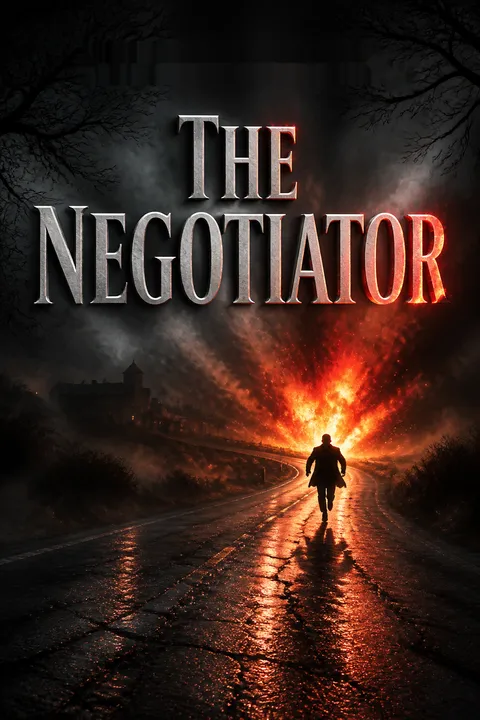


Plot Summary
Prologue
During a ransom exchange in Sicily, a negotiator has arranged the return of a kidnapped girl after weeks of work. He follows the agreed procedure, places the money down, and watches her walk toward safety. Then local police open fire before the child is clear.
The negotiator lunges for her, but a bullet strikes her first. He cradles her body as the shooting ends, and the failure hardens into a recurring nightmare. The memory explains why he later distrusts rushed rescues and why every negotiation becomes, for him, a test of whether patience can keep another child alive.
The opening makes professional competence inseparable from helplessness. The negotiator has done the careful work that should protect the child, yet the local police mistake their own gunfire for control and undo the agreement. His guilt is not simply survivor’s remorse. It is the belief that expertise ought to overcome other people’s mistakes, an impossible standard that makes every later decision feel morally absolute. By beginning with a failure rather than a triumph, the story gives his patient methods a cost: delay may endanger a hostage, but haste has already taught him that rescue can become another name for death.
Oil Makes Enemies
In November 1989, Soviet Marshal Ivan Kozlov reads a report warning that the USSR may exhaust its oil reserves within eight years. He sees the proposed American Soviet arms reductions as a chance to redirect military money toward energy, but fears losing the army's power.
Across the Atlantic, oil magnate Cyrus Miller studies a parallel forecast: America is becoming dangerously dependent on Middle Eastern crude. President John Cormack's bold Russian language appeal for peace and a new disarmament treaty convinces Miller that the president is an obstacle, while defense contractors fear the weapons contracts the treaty would cancel. Kozlov secretly orders a plan to seize Iran's oil. Miller begins searching for a way to control Saudi oil and remove Cormack.
The opening conflict is built from material anxiety rather than an abstract contest between ideologies. Both powers face energy constraints, but their leaders interpret scarcity differently: Gorbachev and Cormack see military spending as a resource to reclaim, while Kozlov and Miller see disarmament as surrender of leverage. Their private calculations turn oil into a cause that can excuse almost anything. The story also places real economic pressures beside self-serving forecasts. Scarcity is genuine, but the characters' certainty that only force can answer it reveals how easily national security becomes a language for protecting institutional power.
The Alamo Group Forms
Miller recruits Saudi expert Robert Easterhouse, who proposes using Shi'ah militants to massacre the Saudi royal family during a televised celebration, then provoking the United States to occupy the oil fields. Miller and shipping magnate Melville Scanlon agree to finance the scheme, expecting new oil contracts and influence.
Defense manufacturers Peter Cobb, Ben Salkind, and Lionel Moir join their private Alamo Group, which also seeks Cormack's resignation so Vice President Michael Odell can reverse the arms treaty.
They hire disgraced former CIA officer Irving Moss to design a crisis that will break the president. Meanwhile, Kozlov has Major General Zemskov prepare Plan Suvorov, a secret invasion of Iran. The plots share a target in Cormack's treaty, though their sponsors do not yet understand how closely their schemes will converge.
The conspirators convert separate grievances into a coalition by treating the president as a single removable obstacle. Miller's oil ambitions, the contractors' lost orders, and Kozlov's fear of military decline are not identical motives, but each can be made to sound like patriotism. Easterhouse's elaborate Saudi design adds another layer: he imagines mass murder as a route to regional stability, exposing the moral danger of plans that promise order only after destroying the people who might resist them. Naming the group after the Alamo lets its members recast self-interest as heroic defense, a myth they use to quiet their own doubts.
Simon Taken at Oxford
Simon Cormack, the president's only son, is studying at Oxford under a small Secret Service detail. On a morning run across Shotover Plain, he passes a disguised produce van and is seized by masked men. Their gunman kills two American agents and a British police sergeant who try to protect him.
The kidnappers transfer Simon from the van to a Volvo, burn the van in a barn, and drive him to a concealed house with a bolted cellar. In Washington, the president learns from British Prime Minister Margaret Thatcher that Simon has vanished. He hands crisis management to Odell so he can support his sedated wife, Myra. British police seal the crime scene, but the killers have left almost no usable evidence.
The kidnapping turns a private family bond into an international emergency, but the scene's precision also establishes the kidnappers as professionals. The small protective team was chosen to preserve Simon's ordinary student life, a compromise shaped by the son's wish not to be treated as a public exhibit. That effort at normality becomes part of the vulnerability the attackers exploit. Cormack's immediate decision to separate presidential duties from parental care is not emotional weakness; it is an attempt to keep both roles functioning. Yet the story shows how little institutional preparation can protect a family once violence is designed around its routines.
Quinn Takes the Call
The White House turns to Quinn, the former hostage negotiator living quietly in rural Spain. He agrees to return only if he works for Simon's parents, controls contact with the kidnappers, and operates from London without a crowd of officials around him.
FBI agent Sam Somerville and CIA officer Duncan McCrea accompany him, while Scotland Yard's Nigel Cramer manages the investigation. Quinn arranges an embassy phone line and refuses to treat the first callers as genuine until one answers a question about Simon's childhood.
The reply confirms the boy is alive. Zack, the kidnapper who makes contact, demands five million dollars. Quinn's friendly manner gives Zack someone to talk to, while Quinn's refusal to promise quick payment keeps the ransom from inflaming the situation.
Quinn's method depends on separating emotional reassurance from material concession. He speaks warmly to a man who has killed three protectors, not because he forgives him, but because a frightened kidnapper may transfer anger onto the hostage. The officials around him often measure progress by how quickly they can seize the caller; Quinn measures it by whether the caller will keep communicating. His demand to represent the parents rather than the government recognizes that a hostage case is not merely a law enforcement operation. The institutional machinery wants control and visible action. Quinn wants a relationship stable enough to keep Simon alive.
The Negotiation Breaks
Quinn gradually reduces Zack's demand and learns that Simon is being fed and kept alive, but he rejects Washington's wish to accept a large ransom too quickly. He argues that an apparently generous offer could make the gang believe it has been cheated and provoke violence.
FBI officer Kevin Brown grows impatient, and his unauthorized raid on Green Meadow Farm ruins a British police operation without finding Simon. Later, a false radio report claims an exchange is imminent and promises arrests. Zack hears it and threatens to kill the boy.
Convinced that official interference will destroy the trust he has built, Quinn demands diamonds, then leaves the bugged Kensington apartment alone with them. He uses a decoy case and a fresh phone number to contact Zack beyond the authorities' reach.
This failure grows from competing definitions of responsibility. Brown wants to prevent criminals from escaping, while Quinn believes that visible pursuit can be lethal when the hostage is still under their control. The mistaken raid and false broadcast are not simply operational blunders; they expose the way institutions generate action to satisfy their own anxiety. Quinn's departure is a breach of authority, but also the consequence of being unable to protect the negotiation from people who claim to support it. The book refuses to make his choice clean. He has sound reasons to fear interference, yet by going alone he also removes safeguards and accepts the entire risk himself.
The Roadside Explosion
Quinn meets Zack and his armed crew inside an abandoned London warehouse, wearing a convincing imitation bomb made from chocolate packaging and marzipan. The bluff lets him inspect Simon before surrendering the diamonds.
Zack later releases the boy and Quinn on a country road, but a concealed receiver detonates an explosive belt fastened around Simon's waist. The blast kills him within sight of the approaching rescue teams. Police experts trace the belt's parts to Soviet manufacture, including a tiny detonator associated with the space program.
The evidence enrages American public opinion and makes the Nantucket Treaty politically toxic. Cormack withdraws from public life, unable to function through his grief, while Odell and the Cabinet begin quietly considering whether the president can remain in office.
The explosion overturns the moral logic of the negotiation: Quinn has secured the hostage's release, but release proves not to be safety. The belt is especially cruel because it transforms a gift of clothing into an invisible execution device, and the delayed detonation makes the rescue party part of the trap's final spectacle. Soviet components seem to offer a clear explanation, but they arrive before motive or chain of custody is established. Public grief therefore hardens into political certainty faster than evidence can support. Cormack's collapse is not a failure of leadership alone. His private loss is being converted into a public weapon against the policy that gave his presidency meaning.
A False Soviet Trail
As Cormack retreats into mourning, Senator Bennett Hapgood publicly identifies the bomb as Soviet-made. Crowds attack Soviet offices, and the White House reluctantly confirms the forensic finding. The Soviet Union denies involvement, but the arms treaty appears doomed.
British investigators continue searching while Quinn, blamed by FBI officials for the failed exchange, is held for questioning and then released. His colleague Sam argues that he genuinely tried to save Simon and persuades the authorities to let him pursue the kidnappers.
In Moscow, Gorbachev learns that the KGB's Vladimir Kryuchkov suppressed a report about five American industrialists secretly visiting a Soviet military base. Gorbachev orders further inquiries. Meanwhile, Kozlov's invasion plan remains hidden, and Miller's team exploits the public's certainty that the Kremlin must be responsible.
The apparent Soviet clue works because it satisfies an audience already primed to interpret conflict through national rivalry. The forensic facts are real, but their meaning is not self-evident. This distinction between evidence and attribution is central to the conspiracy: the device implicates the Soviet state precisely because its origin is so legible. Hapgood's public accusation gives grief a target, and the riots show how quickly uncertain blame can become physical danger. Gorbachev's inquiry offers a countercurrent, but its delay matters. The novel depicts truth as vulnerable not only to lies, but to the speed with which political systems reward the explanation that best serves their immediate needs.
Tattoos Lead to Bodies
Quinn and Sam follow a spider tattoo glimpsed on one kidnapper's hand. In Antwerp, Quinn learns from local thug Kuyper that the design belonged to former Congo mercenaries. Kuyper identifies the missing giant as Paul Marchais, but Marchais is already dead, posed on a Ferris wheel at a Belgian theme park.
A car crash in Holland delays Quinn and Sam long enough to establish they could not have reached Marchais in time to kill him. They trace Marchais's old partner, Janni Pretorius, to a bar in Den Bosch, where Dutch police discover Pretorius's body hidden in a cellar. The men Quinn is hunting are being killed before he can question them. A hidden watcher seems to know each destination before Quinn arrives.
The tattoo turns the past into a practical map. Quinn reads a small bodily mark as evidence of a shared military history, then uses his knowledge of mercenary networks to connect men scattered across countries. Yet the trail is also being manipulated: each discovery comes after the person who could explain it has been silenced. The deaths create a double pressure, because Quinn must investigate while avoiding the suspicion that he is killing the witnesses himself. Sam's presence shifts the story from solitary pursuit toward partnership, but the pair's intimacy does not remove the danger. Instead, it gives Quinn something more personal to lose as the pattern closes around them.
Zack Names the Paymaster
Quinn places a coded newspaper notice, and Zack arranges a private meeting in Paris. He identifies himself as Sidney Fielding and admits that an unknown American hired the mercenaries, paid them in advance, and promised the ransom would be theirs to keep.
Zack insists his gang did not intend to kill Simon. He says Corsican operative Orsini bought the boy new clothes without authorization, giving someone the chance to plant the explosive belt. Before Quinn can secure Zack's cooperation, a rifleman shoots him outside the café.
Quinn and Sam escape through the back, where Sam discovers that her Harrods handbag is a bugged duplicate. The surveillance explains how their movements were tracked, but it also means the conspirators now know Quinn has begun to uncover them.
Zack's account changes the moral shape of the kidnapping without making him innocent. He is a professional criminal who participated in a lethal abduction, yet he claims the child's murder exceeded the bargain. The distinction matters because it points toward a sponsor with a separate agenda. Quinn's discovery of the handbag's transmitter shows that the conspiracy is not merely monitoring institutions from afar; it has penetrated the intimate space between two investigators. The attempted killing of Zack removes the one witness willing to talk, while his final account supplies a causal clue: the belt entered the story through the boy's replacement clothes.
Corsica Yields No Name
Quinn sends Sam to Spain for protection and follows Orsini to the Corsican village of Castelblanc. He disguises himself as a tourist and waits through the day, but the villagers know he is coming. Orsini's young relative tries to kill Quinn with a shotgun; Quinn survives by using a dummy in his room as a decoy.
He wounds Orsini during their pursuit into the maquis, then kills him when Orsini fires again. Orsini never reveals the American who paid him. Before Quinn can leave Corsica, a KGB officer has him abducted to the Soviet embassy in London. General Kirpichenko says the Soviet leadership did not order Simon's murder and shares evidence tying Miller's group to a secret visit to Marshal Kozlov's base.
The Corsican sequence places Quinn inside a community whose silence has its own logic. The villagers protect Orsini not because they know the whole conspiracy, but because outsiders and authorities have long meant danger to them. Quinn's survival depends on craft and patience, yet the final confrontation ends in the same failure that began his career: the person who might answer dies before he can help. The KGB encounter complicates the easy Soviet explanation without absolving Soviet actors. Kirpichenko's candor is strategic, but his account gives Quinn a new frame: a state can be blamed through its own technology by enemies who understand what that blame will do.
The Spy Becomes Bait
Kirpichenko gives Quinn a Canadian passport and a route back to the United States, warning him that the answer lies among American power brokers. Quinn reaches Vermont under the name Roger Lefevre and rents an isolated cabin.
He sends Sam a letter falsely claiming Orsini revealed the paymaster, knowing the monitored letter will reach the White House committee and draw the conspirators into action. He later discovers Moss's private notebook contains one impossible Washington phone number. Sam helps test its coded variations and finds an unlisted Georgetown line.
The clue implicates someone with privileged access to the crisis, but Quinn's apparent success also makes him a target. Sam and CIA officer Duncan McCrea travel north to meet him, believing the CIA's David Weintraub is coming with them.
Quinn uses deception not as a way to control other people absolutely, but to make their hidden assumptions visible. The false letter is a deliberate provocation: if someone fears the manuscript, they may expose themselves by moving against its supposed author. This is a chess-like strategy built on limited information, and it carries an ethical cost because Sam becomes part of the bait. Her cooperation reflects trust in Quinn, while the institutions monitoring her treat that trust as a vulnerability. The cabin's isolation promises safety, but its usefulness to Quinn also makes it an ideal place for an enemy to corner him.
Moss Returns from Vietnam
At the Vermont rendezvous, McCrea points a pistol at Quinn and Sam, while the man posing as David Weintraub reveals himself as Irving Moss, the former CIA torturer Quinn once expelled from Vietnam. Moss explains that he recruited McCrea years earlier and used him to monitor Quinn in London.
He arranged the bomb belt through Orsini, planted the transmitter that killed Simon, and sent McCrea to kill mercenaries before they could talk. Moss plans to murder Sam, frame Quinn, and burn the cabin.
While Moss reads Quinn's deliberately incomplete manuscript, a camouflaged KGB operative named Andrei shoots him in the clearing. Quinn returns to the cabin and kills McCrea as he attacks Sam. Quinn frees her, but the evidence has not yet exposed Moss's American sponsors.
The betrayal is effective because McCrea's helpfulness was never a separate performance from his espionage. His errands and mild manner made him disappear inside the ordinary routines of the investigation. Moss, meanwhile, embodies a state institution's discarded violence returning as private power: his old habits survive after official employment ends. The rescue by Andrei prevents a second killing, but it does not make the KGB benevolent; the agent intervenes because Moscow needs the conspiracy exposed. Quinn's personal history with Moss gives the confrontation an intimate moral charge, linking the present plot to his first encounter with cruelty and to the act that once defined his sense of right and wrong.
The Georgetown Number
After hiding Sam and completing a true account of the conspiracy, Quinn deciphers the impossible telephone number in Moss's notebook. One sequence of reversals and subtractions resolves to a protected Georgetown number belonging to Treasury Secretary Hubert Reed, a trusted member of Cormack's crisis team.
Quinn calls Reed while impersonating Moss and claims to hold a manuscript naming the conspirators. Reed agrees to pay five million dollars for it. Quinn then calls Cormack directly and arranges for a separate copy of the evidence to reach the White House.
At a midnight meeting near the Vietnam Veterans Memorial, Reed takes the manuscript and gives Quinn a Swiss bank draft. The exchange confirms that Reed has used his access to feed the plotters information from inside the administration.
The coded number is a small, technical clue with enormous political consequences. It converts suspicion about an unnamed insider into a specific relationship between the conspiracy and the president's own emergency circle. Reed's involvement matters because a security breach from inside the White House cannot be solved by simply expanding surveillance or tightening procedure; the machinery itself has been compromised. Quinn's bargain with Reed also repeats the logic of the kidnappers' ransom, but reverses its purpose. Money buys access to evidence rather than silence. His separate delivery to Cormack ensures the truth cannot be confined to the private exchange.
Cormack Takes Back Office
The manuscript sends investigators to the Alamo Group. Miller, Scanlon, and Moir are arrested; Scanlon's confession also exposes Easterhouse's planned Saudi coup, which the Saudi government moves to stop. Cobb dies by suicide before arrest, Salkind escapes, and Kozlov is detained in Moscow.
Reed disappears in his Cadillac and is later reported dead in the Potomac. Cormack receives Quinn's account, believes it, and calls off the hunt for him.
In a televised address, he explains that the conspiracy targeted him to destroy the Nantucket Treaty and that the kidnappers killed Simon as part of that plan. He remains president rather than resigning. Quinn gives his five million dollar payment to a veterans' hospital, then leaves for Spain with Sam, who agrees to marry him.
The resolution restores political agency without pretending that justice can reverse private loss. Cormack returns to public speech because he finally understands why Simon was killed, not because grief has disappeared. Naming the conspiracy gives his son a place in history other than as an inexplicable casualty, and it strips the plotters of the uncertainty they had used as cover. The outcomes remain uneven: some conspirators are punished, one escapes, another dies by suicide, and Reed's death leaves a final ambiguity around accountability. Quinn's donation refuses the ransom's intended conversion into private wealth. His departure with Sam offers not a cure for trauma, but a choice to build a life beyond the case.
Analysis
The novel treats conspiracy as a contest over interpretation. Oil shortages, arms reductions, and military technology are real pressures, yet the characters repeatedly turn them into moral permission for violence. Miller calls his intervention patriotic, Easterhouse calls his coup a route to regional peace, and Kozlov presents invasion as a defense of the Soviet Army. Each man mistakes the scale of his plan for proof of its legitimacy. The plot's most consequential deception is therefore not a forged document or hidden weapon, but the conversion of self-interest into public virtue.
Quinn offers a contrasting ethic based on limits. Negotiation requires him to speak respectfully to a kidnapper without confusing tactical empathy with forgiveness. His restraint is not passive: he reads behavior, delays concessions, and uses deception when institutions or criminals make direct action dangerous. Yet the book also examines the cost of his self-reliance. His refusal to trust systems helps him survive, but it isolates him and exposes others, especially Sam, to risks he cannot fully control. Competence does not grant moral immunity.
Simon’s death reveals how states and political movements exploit bereavement. The Soviet-made device provides a fact that can be mobilized into a conclusion before investigators know who used it. Public anger follows the available story, while Cormack's grief removes him from the political arena his opponents want to control. The eventual truth repairs some of that damage, but cannot restore the son or erase the suffering that made the scheme possible.
The ending resists a simple victory. Cormack regains the capacity to lead, Quinn and Sam choose a future together, and several conspirators face consequences, but some escape or die before trial. Justice arrives through evidence and disclosure, not through a clean return to the world before the crime. The novel's sharpest warning is that institutions are most vulnerable when their members believe that protecting the institution permits them to sacrifice the people it exists to serve.
Review Summary
The Negotiator receives mostly positive reviews, praised for its complex plot, global settings, and suspenseful storytelling. Readers appreciate Forsyth's detailed research and geopolitical insights. Some find the beginning slow but enjoy the thrilling second half. Critics note outdated Cold War themes and stereotypical characters. The protagonist Quinn is viewed as an intriguing, multifaceted character. While not considered Forsyth's best work, many readers find it an engaging and entertaining thriller that keeps them guessing until the end.
People Also Read
Characters
Quinn
The hostage negotiatorQuinn is a former soldier and experienced hostage negotiator who has retired to a vineyard in southern Spain after a rescue ended in a child's death. He is observant, physically capable, and suspicious of procedures that put institutional comfort ahead of a hostage's survival. His manner can be blunt, but he understands that a frightened criminal may need reassurance before he can be steered toward surrender. Quinn's deepest conflict is between his wish to withdraw from violence and his inability to ignore a family facing the same helplessness he has known. He trusts practical evidence more than authority, though his confidence in his own instincts can isolate him from allies.
Sam Somerville
The FBI field agentSam is a capable FBI agent assigned to observe Quinn and report his actions to Washington. She is intelligent, socially perceptive, and comfortable using charm as a professional tool, yet her work does not erase her capacity for genuine attachment. Close quarters with Quinn reveal a more personal loyalty than her assignment requires. She often serves as a bridge between his solitary instincts and the agencies demanding information from him. Sam's courage is practical rather than theatrical: she keeps working under pressure, asks direct questions, and accepts risk when she believes someone is worth trusting.
John Cormack
The bereaved presidentCormack is an academic turned president, known for intellectual clarity, personal honesty, and a preference for direct speech. He believes arms control can create security without requiring either superpower to threaten the other, making him a poor fit for people who profit from permanent confrontation. His bond with his only son is unusually intimate, and his public reserve conceals how deeply family life anchors him. Cormack's leadership is shaped by a belief that moral purpose and practical policy can reinforce each other. The crisis tests that belief by forcing him to confront how private grief can be manipulated by people who treat public office as a lever.
Simon Cormack
The president's Oxford sonSimon is the only child of John and Myra Cormack, studying medieval history at Oxford during a year abroad from Yale. He wants the ordinary independence of a student, not the conspicuous protection that comes with his father's office. His athletic discipline and affection for his parents suggest a young man still forming his own adult identity while remaining closely tied to home. Simon is not merely a political symbol: his routines, childhood memories, and ability to endure isolation make the human stakes of the crisis concrete. His presence forces officials and negotiators to confront the difference between protecting a national institution and protecting one particular person.
Michael Odell
The acting crisis managerOdell is Cormack's vice president, a self-made Texan whose folksy manner can conceal political intelligence and discipline. More conservative than Cormack, he nevertheless respects his friend and participates in the administration's decisions rather than treating disagreement as disloyalty. When the kidnapping incapacitates the president emotionally, Odell must manage the crisis while balancing public responsibility against private friendship. He is decisive, impatient with bureaucratic delay, and more emotionally expressive than Cormack. His central tension is the uncomfortable distance between serving as a trusted second and recognizing that the presidency may soon become his.
Irving Moss
The discredited CIA operativeMoss is a former CIA officer whose career includes clandestine work in Vietnam and Central America. He is intelligent, patient, and skilled at surviving within institutions while concealing impulses that other people find monstrous. His resentment of those who dismissed him has not diminished his appetite for control. Moss treats secrecy as protection and other human beings as instruments, a combination that makes him dangerous even when he appears calm. His history links the novel's present conspiracy to the darker practices of covert warfare, where moral limits can be discarded under the excuse of necessity and later return in private hands.
Duncan McCrea
The eager CIA juniorMcCrea is a junior CIA field officer sent to London to watch Quinn and pass along useful information. He presents himself as diffident, cheerful, and eager to help, qualities that make him easy to underestimate. His professional ambition is mixed with a desire for approval from senior officers, and he adapts readily to the routines of others. McCrea's mild manner is important to the story's psychology: people often read friendliness as harmlessness, especially when it is paired with youth and deference. He represents the danger of judging loyalty by a person's surface behavior rather than by the choices that behavior serves.
Cyrus Miller
The Texas oil magnateMiller is the elderly founder of Pan-Global Oil, a self-made businessman who prizes information, national sovereignty, and personal control. He regards America's dependence on Middle Eastern oil as a threat and interprets his political convictions through a deeply personal relationship with God. That faith gives him confidence, but also shields his ambitions from moral scrutiny: plans that serve his interests can appear to him divinely justified. Miller's combination of business intelligence and rigid cultural prejudice makes him persuasive to men who fear economic decline. He sees compromise not as prudence but as a danger to the country he believes he has helped create.
Robert Easterhouse
The Saudi security expertEasterhouse is a former airborne colonel and computer security specialist who knows Saudi institutions, oil systems, and political divisions intimately. He is drawn to order and efficiency, partly because his military career and physical injury have taught him how quickly control can be lost. His knowledge gives him unusual influence among American businessmen seeking access to Saudi resources. Easterhouse frames intervention as a cure for corruption and regional instability, but his certainty leaves little room for the people who would pay for his plans. He is driven by a grand vision of reorganizing the Middle East, not simply by profit, which makes his idealism as dangerous as greed.
Hubert Reed
The Treasury insiderReed is a shy, financially gifted Treasury secretary and a longtime friend of Cormack, whose family trusts he once managed. He is more comfortable with budgets and investment strategy than with the coercive machinery of law enforcement. His mild manner can make him seem politically unthreatening, and colleagues value his steady judgment during difficult decisions. Reed's position at the center of government gives him access to information that most outsiders can only guess at. He represents the intimate trust on which a crisis team depends, and the unsettling possibility that personal familiarity can make a person difficult to question.
Ivan Kozlov
The Soviet marshalKozlov is the aging Soviet Chief of Staff, a decorated soldier who rose through decades of service and believes the Red Army must never again be forced into retreat. A report on dwindling oil reserves convinces him that military resources and national survival are bound together. He respects competence and frank analysis, but his loyalty to the army outweighs his trust in political reform. Kozlov sees strategic planning as a soldier's duty, even when it reaches beyond defense. His perspective provides a counterweight to Gorbachev's reform agenda and shows how institutional pride can turn economic fear into military ambition.
Mikhail Gorbachev
The reforming Soviet leaderGorbachev wants to modernize the Soviet economy and reduce the military burden that prevents investment in industry and energy. He is politically shrewd, personally energetic, and more willing than many of his colleagues to hear unwelcome information. His relationship with Cormack is founded on the hope that cooperation can deliver security without another arms race. Yet he governs a system whose agencies and senior officials do not always share his aims. Gorbachev's position reveals the difference between a leader's declared policy and the actions carried out in a state's name.
Zack
The hired kidnap leaderZack is a former mercenary who organizes the Oxford kidnapping and handles contact with Quinn. He is cautious, practical, and accustomed to assessing danger, but the operation places him in an environment where every delay increases the risk of discovery. He wants money and a clean escape, not a political cause. His relationship with his employers is transactional, which leaves him vulnerable when they know more than he does and control the larger plan. Zack's manner combines professional calculation with mounting strain, making his exchanges with Quinn a contest over both trust and fear.
Dominique Orsini
The Corsican operativeOrsini is a Corsican gunman with a facial scar and a reputation for work in criminal circles around southern France. He operates within a culture of loyalty and silence that offers protection but also limits what outsiders can learn. His connection to the kidnapping is mediated by other men, making him both a dangerous professional and a possible source of crucial information. Orsini's presence brings the investigation into a world where family, local allegiance, and violence overlap, and where a stranger's arrival can be understood as a threat before he speaks.
Nigel Cramer
Scotland Yard's lead detectiveCramer is a veteran Metropolitan Police officer placed in charge of the British investigation. He values methodical evidence gathering and understands that aggressive pursuit can endanger a hostage. Though frustrated when Washington takes control of negotiations, he recognizes Quinn's expertise and offers practical cooperation. Cramer is a procedural thinker, but not a bureaucrat indifferent to human cost. His steady work contrasts with the political pressure surrounding the case, and his persistence keeps the criminal investigation moving when the negotiator's private approach seems to have failed.
Melville Scanlon
The oil shipping magnateScanlon is a Texas shipping entrepreneur whose fortunes have risen and fallen with the oil trade. He is shrewd, commercially minded, and wary of being excluded from lucrative contracts. His resentment toward Saudi shipping restrictions makes Miller's proposal attractive, even when its implications grow more extreme. Scanlon's good-ole-boy manner masks a capable businessman who thinks in terms of risks, logistics, and reward. He is among the conspirators most alert to practical consequences, though self-interest keeps him involved longer than his discomfort should allow.
Peter Cobb
The defense contractorCobb leads an armored vehicle company whose advanced weapons depend on Pentagon contracts. He opposes the treaty because cancellations threaten his business and the livelihoods attached to it. Unlike Miller, he does not present himself as a prophet of national destiny; his concerns are corporate survival and the economic damage he expects from disarmament. He is capable of recognizing when a plan has crossed a moral line, but fear of ruin makes it difficult for him to withdraw cleanly. His conflict shows how financial dependence can draw reluctant participants into political extremism.
Ben Salkind
The electronics manufacturerSalkind runs a technology company tied to major defense projects and fears that arms reductions will destroy valuable contracts. He is more cautious about violence than Miller and repeatedly recognizes the ethical danger of the group's plans. His objections do not immediately free him from the coalition, because professional survival and collective pressure pull in the opposite direction. Salkind's role shows how a person can see the likely consequences of a conspiracy and still remain entangled through money, loyalty, and fear of standing alone.
Lionel Moir
The weapons engineerMoir is an avionics executive whose work on advanced weapons makes him vulnerable to the treaty's cancellation of defense programs. He is technically proud and can explain the capabilities of the systems his company builds, but the political value of those systems is not the same as their human cost. Within the Alamo Group he shares the contractors' fear of economic collapse and grows uneasy as the plans become more violent. Moir's perspective links military technology to the people and companies that create it, showing how technical brilliance can be recruited into political agendas.
Plot Devices
The Soviet-made belt
False trail to MoscowThe belt given to Simon contains an explosive triggered remotely through a concealed receiver. Its components, including an unusually restricted miniature detonator, are traced to Soviet production. This evidence supplies a convincing public explanation for the murder and helps destroy confidence in the Nantucket Treaty. Its deeper function is to make the Soviet Union appear responsible even though the origin of a device does not establish who placed it or why. The belt turns a forensic fact into a political weapon, while the delayed explosion makes Simon's apparent release part of the attack.
The spider tattoo
Mercenary network markerQuinn recalls a spider tattoo on the hand of one of the masked men at the warehouse. He researches the design through a security consultant's archive and learns it is associated with an old Belgian extremist group and Congo mercenaries. The mark gives Quinn a lead that ordinary police evidence cannot provide, allowing him to identify Marchais and then search for associates from the same campaigns. Its usefulness depends on Quinn's personal memory and knowledge of soldiers' habits. The tattoo also turns the kidnappers' shared past into a trail, though someone else is killing the men before Quinn can fully follow it.
The phone trace pattern
Hunt without interceptionZack calls from public booths across towns north of London, using busy periods and brief conversations to frustrate police tracing. Brown plots the locations on a map and notices that the calls cluster around an area that contains no calls at all. By asking local rental agents about secluded properties near that center, Brown eventually finds Green Meadow Farm. The method demonstrates that repeated evasions can create a pattern even when no single call provides a reliable location. The same phone network later supplies another kind of clue when Quinn deciphers an impossible Washington number in Moss's notebook.
The false manuscript
Bait for hidden enemiesQuinn tells Sam, in a letter he expects the authorities to intercept, that Orsini revealed the paymaster and that he has written a complete manuscript. The claim is false at first, but it provokes the conspirators into moving against him. That reaction brings Moss and McCrea to the Vermont cabin, where Quinn learns how they monitored the investigation and arranged Simon's murder. The device reflects Quinn's use of strategic misdirection: he cannot force an enemy to reveal himself, but he can make the enemy fear what he believes Quinn already knows. Its success depends on the adversary's urgency and vanity.
The coded phone book
Insider identification keyMoss keeps contacts in a small book using initials and a deliberately meaningless telephone number. Quinn and Sam test simple reversals and number shifts until one transformed sequence produces an actual unlisted Georgetown line. The number belongs to Hubert Reed, linking the conspiracy to a senior official inside Cormack's crisis team. This device makes the final identification depend on patient pattern testing rather than confession or surveillance. It also echoes the book's broader structure: the facts are present, but their meaning is concealed by the way they have been arranged.
FAQ
Synopsis & Basic Details
What is The Negotiator about?
- High-Stakes International Thriller: The Negotiator centers on the kidnapping and murder of Simon Cormack, the son of the U.S. President, in England, triggering a global crisis. The story follows Quinn, a retired, maverick hostage negotiator, as he is reluctantly drawn back into a world of espionage and political intrigue to recover the President's son.
- Geopolitical Conspiracy Unveiled: Beneath the surface of the kidnapping, the narrative uncovers a vast, multi-layered conspiracy involving powerful American industrialists, Soviet military hardliners, and a network of mercenaries. Their aim is to destabilize international relations, specifically to derail a crucial arms reduction treaty between the U.S. and the U.S.S.R., and to secure control over Middle Eastern oil reserves.
- Quest for Truth and Justice: As Quinn navigates a treacherous landscape of deception, betrayal, and violence across Europe and America, he races against time to identify the true masterminds behind the plot. His relentless pursuit of justice leads him to confront his own past traumas and challenge the very authorities he is meant to serve, ultimately exposing a shocking truth that reaches the highest echelons of power.
Why should I read The Negotiator?
- Masterclass in Espionage: Frederick Forsyth delivers a meticulously researched and intricately plotted thriller, offering a deep dive into the mechanics of international intelligence, military strategy, and high-stakes negotiation. Readers seeking a complex, realistic portrayal of global power struggles will find it compelling.
- Psychological Depth & Moral Ambiguity: The novel excels in its character development, particularly with Quinn, a protagonist haunted by past failures, and the morally ambiguous figures he encounters. It explores themes of duty, revenge, patriotism, and the corrupting influence of power, forcing readers to question where true loyalty lies.
- Propulsive, Twisting Narrative: With its relentless pace, unexpected alliances, and shocking betrayals, The Negotiator keeps readers guessing until the very end. The story's ability to weave together seemingly disparate plotlines into a cohesive and explosive climax makes it an unforgettable reading experience for fans of political thrillers.
What is the background of The Negotiator?
- Cold War Détente & Economic Pressure: The story is set against the backdrop of the late Cold War (1989-1991), a period of thawing relations between the U.S. and U.S.S.R. symbolized by the Nantucket Treaty. However, both superpowers face immense internal economic pressures, particularly an impending oil crisis for the Soviets and budget deficits for the Americans, which drive desperate measures.
- Geopolitical Oil Dependence: A central theme is the Western world's increasing reliance on Middle Eastern oil, particularly from Saudi Arabia and Kuwait. This vulnerability fuels the motivations of characters like Cyrus Miller, who seeks to secure American control over these vital resources, reflecting real-world concerns about energy security.
- Post-Vietnam Trauma & Mercenary Culture: The novel draws heavily on the lingering psychological scars of the Vietnam War, particularly for characters like Quinn and Irving Moss, whose past experiences shape their present actions and moral compasses. It also explores the shadowy world of mercenaries, ex-soldiers for hire, who operate outside conventional military structures.
What are the most memorable quotes in The Negotiator?
- "Noh, ya skazhu: mi po-idyom drugim putyom.": President Cormack's powerful, Russian-language declaration at Vnukovo, meaning "But I say, we will/must go another way," directly quoting Lenin. This bold, symbolic gesture for peace immediately establishes Cormack's idealistic vision and sets the stage for the political backlash that follows, highlighting the deep ideological divides he attempts to bridge.
- "Better that one young lamb go to the slaughter than that the whole flock perish.": Cyrus Miller's chilling justification for Simon Cormack's murder, delivered during his fervent prayer. This quote encapsulates Miller's extreme, self-righteous patriotism and his willingness to sacrifice individual lives for what he perceives as the greater good of America, revealing the dangerous depths of his moral corruption.
- "You are in check, Mr. Quinn, but perhaps not yet checkmate.": General Kirpichenko's cryptic advice to Quinn, using a chess analogy, as he provides him with a new identity and a book on Tigran Petrosian, "the Great Deceiver." This quote symbolizes the intricate, strategic game of espionage and deception that Quinn is caught in, suggesting that even when seemingly defeated, a clever player can still find a path to victory.
What writing style, narrative choices, and literary techniques does Frederick Forsyth use?
- Journalistic Precision & Detail: Forsyth's writing is characterized by its meticulous attention to detail, often presenting technical specifications, organizational structures, and geographical descriptions with journalistic accuracy. This creates a highly realistic and immersive world, lending credibility to even the most elaborate plot points, a hallmark of his political thrillers.
- Omniscient, Shifting Perspective: The narrative employs an omniscient third-person point of view that frequently shifts between various characters and locations globally. This allows Forsyth to build a panoramic view of the conspiracy, revealing different facets of the plot and the motivations of diverse players, from Moscow to Houston to London, without being confined to a single character's limited knowledge.
- Foreshadowing & Interweaving Plotlines: Forsyth masterfully uses subtle foreshadowing, such as Quinn's recurring nightmare or the detailed descriptions of military hardware, to build suspense. He also employs a complex, multi-threaded plot structure, introducing seemingly unrelated events and characters (e.g., Soviet oil crisis, U.S. defense contractors) that gradually interweave to reveal a grand, overarching conspiracy.
Hidden Details & Subtle Connections
What are some minor details that add significant meaning?
- Quinn's "Not Again" Whisper: In the prologue, after the Sicilian girl's death, Quinn whispers, "No, no, sweet Jesus, not again..." This seemingly minor detail reveals a deeper, unmentioned past trauma beyond the Sicily incident, hinting at a pattern of loss that fuels his later actions and his desperate need for redemption in Simon's case. It underscores his profound empathy for victims.
- The Spider Tattoo Motif: Julian Hayman's archive reveals the "Araignée" (spider) tattoo as a symbol of a defunct Belgian right-wing mercenary group. This seemingly obscure detail becomes a crucial identifier for Marchais and later helps Quinn connect the mercenaries to a specific, violent subculture, highlighting the deep research and interconnectedness of the criminal underworld.
- Hubert Reed's Unseen Death: The very last page mentions a "PRIVATE FUNERAL FOR TREASURY SECRETARY HUBERT REED: CONTINUING MYSTERY OF LATE-NIGHT DRIVE INTO POTOMAC." This subtle, almost throwaway detail reveals the ruthless efficiency of the conspirators, implying that Reed, who voted against the 25th Amendment, was eliminated to ensure the plot's success, showcasing the far-reaching and deadly consequences of challenging the powerful.
What are some subtle foreshadowing and callbacks?
- Weintraub's Role in Moss's Downfall: The narrative subtly reveals that David Weintraub was the CIA agent who "kicked" Irving Moss out of the Agency for torturing a child in Honduras. This past connection foreshadows Moss's deep-seated hatred for Weintraub and the CIA, providing a powerful, personal motivation for his involvement in the conspiracy and his desire for revenge against the "Company."
- The "Great Deceiver" Chess Analogy: General Kirpichenko gives Quinn a book on chess master Tigran Petrosian, known as "the Great Deceiver," advising Quinn to study his tactics. This is a direct callback to Quinn's later use of elaborate deceptions—the fake manuscript, the marzipan bomb—to outmaneuver his adversaries, highlighting the intellectual and strategic nature of his fight against the conspirators.
- Miller's "God-Given Gift of Oil": Cyrus Miller's fervent belief that oil is a "God-given gift" to be controlled by America, and his "conversations" with the Almighty, subtly foreshadow his self-righteous fanaticism. This religious zealotry justifies his extreme actions, including orchestrating Simon's murder, revealing the dangerous blend of patriotism and fundamentalism that drives the conspiracy.
What are some unexpected character connections?
- Quinn and Moss's Vietnam Encounter: The most unexpected connection is the shared past between Quinn and Irving Moss in Vietnam, where Quinn broke Moss's nose for torturing a child. This personal history, unknown to the reader until late in the book, transforms their dynamic from a simple hunter-and-hunted scenario into a deeply personal vendetta, adding a layer of poetic justice to their final confrontation.
- Easterhouse's Link to Miller's "God": Colonel Robert Easterhouse, the architect of Plan Bowie, is revealed to be the man Miller sought out after his "divine" revelation about Saudi oil. This connection shows how Miller's self-delusion of divine guidance directly led him to a highly capable but egomaniacal operative, illustrating the dangerous synergy between fanaticism and expertise.
- McCrea as Moss's Protégé: Duncan McCrea, the seemingly innocent CIA junior agent assigned to Quinn, is revealed to be Moss's long-time protégé and accomplice, recruited by Moss himself in Central America. This connection is a shocking betrayal, demonstrating the deep infiltration of the conspiracy and the extent of Moss's manipulative reach within the intelligence community.
Who are the most significant supporting characters?
- Irving Moss (The Fat Man): Moss is the operational mastermind behind the kidnapping and Simon's murder, driven by a psychopathic desire for revenge against the CIA and a lust for money. His past in Vietnam and Central America, his recruitment of McCrea, and his role in orchestrating the mercenaries make him the crucial link between the paymasters and the ground operation.
- Colonel Robert Easterhouse: The brilliant but egomaniacal architect of "Plan Bowie," Easterhouse provides the strategic blueprint for destabilizing Saudi Arabia. His deep knowledge of the Middle East and his ability to manipulate complex systems (like the Saudi security computers) make him indispensable to Miller's larger geopolitical ambitions, even as his own vision extends far beyond his employers'.
- General Vadim Kirpichenko: The newly appointed head of the KGB's First Chief Directorate, Kirpichenko becomes Quinn's unexpected ally. His internal power struggle within the KGB and his desire to clear the Soviet Union's name provide Quinn with crucial intelligence and resources, demonstrating that even in the Cold War, pragmatic alliances could form across ideological divides.
Psychological, Emotional, & Relational Analysis
What are some unspoken motivations of the characters?
- Quinn's Atonement for Past Failures: Quinn's deep-seated guilt over the Sicilian girl's death (the "not again" whisper) is an unspoken, powerful motivation. He accepts the Simon Cormack case not just for the President, but as a chance for personal redemption, to prevent another child's death on his watch, even if it means risking his own life and reputation.
- Miller's Self-Righteous Patriotism: Cyrus Miller's fervent prayers and belief in divine guidance mask a profound, almost messianic conviction that he alone understands America's true interests. His motivation is not merely greed, but a twisted form of patriotism, believing he is saving his country from perceived weakness and foreign dependence, justifying extreme violence as God's will.
- Kirpichenko's Internal Power Play: While publicly aiming to clear the Soviet Union's name, General Kirpichenko is also driven by an unspoken ambition to consolidate his power within the KGB and discredit his rivals, particularly Marshal Kozlov. His assistance to Quinn is a calculated move in a larger internal struggle for control within the Soviet hierarchy.
What psychological complexities do the characters exhibit?
- President Cormack's Stoic Grief & Decline: President Cormack, initially portrayed as a decisive and intellectual leader, exhibits profound psychological complexity in his response to his son's kidnapping and murder. His introverted nature prevents outward displays of grief, leading to a debilitating internal trauma, loss of concentration, and even suicidal ideation (reflected in his reading of Keats), showcasing the immense personal cost of public office and private tragedy.
- Irving Moss's Sadistic Vengeance: Moss is a chilling study in psychopathy, driven by a deep-seated sadism and a desire for revenge against those who exposed his past atrocities. His meticulous planning, his enjoyment of psychological torture (e.g., threatening Simon's fingers), and his ultimate betrayal of his own accomplices reveal a man devoid of empathy, whose actions are rooted in a twisted sense of personal justice.
- Quinn's Controlled Detachment: Quinn maintains a professional, almost detached demeanor throughout the crisis, a coping mechanism honed by years of dealing with extreme violence and human suffering. However, his internal struggle is evident in his moments of quiet reflection, his deep-seated hatred for kidnappers, and his eventual emotional connection with Sam, revealing a man who consciously suppresses his emotions to remain effective.
What are the major emotional turning points?
- Simon's Death on the Roadside: The most devastating emotional turning point is Simon Cormack's death by a booby-trapped belt, witnessed by the rescue team. This event shatters the hope of a peaceful resolution, plunging President Cormack into deep despair and transforming the mission from a rescue to a murder investigation, fueling Quinn's determination to uncover the truth.
- Quinn's "Marzipan Bomb" Deception: Quinn's audacious use of a fake Semtex bomb to confront Zack marks a critical emotional shift. It demonstrates his willingness to employ extreme psychological tactics, mirroring the ruthlessness of his adversaries, and highlights his personal investment in the mission, moving beyond conventional negotiation to direct confrontation.
- President Cormack's Public Address: The President's televised address, where he reveals the true nature of the conspiracy and his son's murder, is a powerful emotional turning point. It signifies his recovery from grief, his renewed resolve to lead, and his defiance against those who sought to destroy him, transforming his personal tragedy into a public call for justice and national unity.
How do relationship dynamics evolve?
- Quinn and Sam Somerville's Deepening Bond: Their relationship evolves from a professional "bird-dogging" assignment, where Sam is tasked with monitoring Quinn, into a deep personal and romantic bond. Sam's initial suspicion gives way to unwavering loyalty and affection, culminating in their decision to marry, symbolizing trust and partnership forged under extreme pressure.
- President Cormack and Michael Odell's Shifting Power: The crisis profoundly alters the dynamic between President Cormack and Vice President Odell. As Cormack succumbs to grief, Odell steps into an acting leadership role, gaining confidence and authority. While Odell initially considers invoking the 25th Amendment, Cormack's eventual recovery and defiant address restore his leadership, but the experience reshapes their political relationship.
- Quinn's Pragmatic Alliances with Adversaries: Quinn's relationships with figures like Nigel Cramer (Scotland Yard) and General Kirpichenko (KGB) evolve from initial distrust to pragmatic, albeit wary, cooperation. Despite their differing national interests and methods, they recognize Quinn's unique skills and integrity, forming temporary alliances that are crucial to unraveling the complex conspiracy.
Interpretation & Debate
Which parts of the story remain ambiguous or open-ended?
- The Full Extent of Soviet Complicity: While General Kirpichenko asserts that the Soviet government was not behind the conspiracy, the involvement of Marshal Kozlov and the use of a Baikonur-sourced detonator leave a lingering ambiguity about the depth of internal Soviet dissent and the potential for rogue elements within the KGB or military to act independently, or even with tacit approval from higher, unrevealed powers.
- **The Fate of Ben Salkind
About the Author
Other books by Frederick Forsyth

Download PDF
Download EPUB
.epub digital book format is ideal for reading ebooks on phones, tablets, and e-readers.








