

Key Takeaways
Treat every crypto claim as unproven until outsiders can verify its ledger.
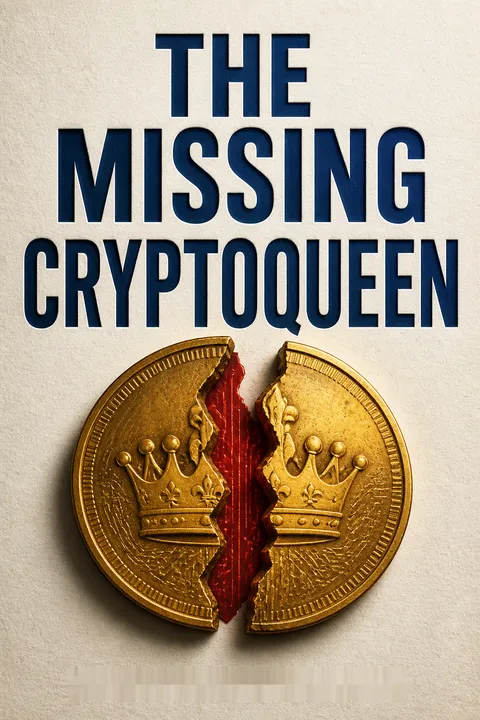
The Wembley contradiction. In June 2016, Ruja Ignatova told thousands at Wembley Arena that OneCoin had reached its coin limit, then announced a new system with 120 billion coins, 50 times the original supply. She promised the price would stay fixed and existing holders would receive twice as many coins. The crowd celebrated, despite the contradiction with OneCoin’s central promise: a fixed supply that nobody could change.
A ledger is the test. A blockchain is a record of transactions linked together so past entries are difficult to alter. Bitcoin’s ledger could be checked by outsiders; OneCoin’s was private. That difference mattered. Investors were asked to trust claims about scarcity, mining, and value without access to the evidence that would substantiate them.
What's striking is how the announcement turned a technical inconsistency into a loyalty test. The crowd's enthusiasm made dissent feel like rejecting a shared future, not checking a financial claim. Still, centralization alone does not prove fraud: many legitimate payment systems are centrally managed. The crucial distinction is whether users can verify the balances and rules they are promised, and whether an independent party can inspect them. A useful habit in any technology market is to ask not only what a system claims, but who can audit the claim without permission from its promoters.
A recruitment machine can sell a fantasy faster than technology can deliver.
The product was a promise. OneCoin paired cryptocurrency claims with multi-level marketing, or MLM: sellers earned commissions on their own sales and on sales made by people they recruited. The founders offered a 10 percent direct-sales commission and a further commission based on downline sales. Forty percent of commissions could be paid in OneCoin, encouraging sellers to keep faith in the coin itself.
Education as cover. Investors technically purchased training packages, which included tokens supposedly used to generate coins. The materials were often poor or copied, and buyers mainly wanted the coins and the chance of future gains. This structure let OneCoin spread through established MLM networks before its technology could be independently demonstrated. Promoters could earn from recruitment and sell a financial dream, while many customers knew little about cryptocurrency.
The scheme's distribution strategy resembles viral marketing, but with a crucial difference: each new recruit was also a source of cash and a recruiter of friends. Incentives rewarded growth in the network, not proof that the underlying asset worked. That design helps explain why technical understanding was unnecessary for expansion. It also calls for precision: MLM is a sales structure, not automatically a crime. The warning sign here was the mismatch between the supposed product and the actual engine of value, which was continual recruitment and investment.
Fear of missing Bitcoin made OneCoin's impossible returns feel like a second chance.
A familiar regret. OneCoin promoters repeatedly invoked stories of people who had bought Bitcoin cheaply and later made fortunes. Many prospects had heard of Bitcoin only after its price had risen, so OneCoin seemed like another opportunity to get in early. The book calls this fear of missing out, or FOMO: the anxiety that a valuable opportunity will disappear before someone acts.
Momentum looked like proof. At first, only a few dozen packages had sold. After events in Asia, word spread through friends, online presentations, and local sales teams. By Christmas 2014, OneCoin had passed 10,000 members. At company events, lavish staging, confident leaders, and cheering crowds made growth feel like validation. Some investors sold cars, borrowed money, or used savings to buy packages.
FOMO narrows attention: a prospect weighs the imagined cost of missing a windfall more heavily than the concrete risk of losing savings. Social proof intensifies that bias. When friends, relatives, and apparently successful promoters invest, the decision feels less like a wager and more like joining a consensus. The Bitcoin comparison supplied a vivid story, but not a sound forecast. A useful counterweight is to separate evidence about a technology from evidence that other people are excited about it. Popularity can explain demand; it cannot establish value.
Small cash-outs can certify a Ponzi scheme more effectively than promises.
A narrow exit window. OneCoin’s xcoinx site appeared to let holders exchange coins for euros. In practice, withdrawals were limited, and the exchange was controlled by the company rather than operating as an independent public market. The book describes a Ponzi scheme as one that pays earlier investors with money from newer ones. Small, selective payouts helped some users believe their account balances were real.
Two engines, one illusion. New investors funded the business, while the MLM structure recruited more buyers. Commissions rewarded active sellers; occasional xcoinx withdrawals reassured holders waiting for a larger payout. The company reportedly allowed about €10 million a week in withdrawals. When xcoinx closed in January 2017, that fragile proof disappeared. The author estimates real investor losses at €2.6 billion to €10 billion, based on uncertain records.
A limited payout is not merely a financial transaction; it is a piece of persuasive evidence that an investor can show to others. In behavioral terms, a firsthand success story can outweigh abstract warnings because it feels concrete and personal. The structure also creates a liquidity mismatch: account balances rise on paper while the cash needed to honor them depends on new inflows. That distinction matters in any investment. A displayed balance is an accounting claim, not proof that the asset can be sold at that price in sufficient volume.
Borrowed prestige can substitute for evidence when a technology is hard to inspect.
Credibility by association. OneCoin circulated material that made Ruja appear to have appeared on the cover of Forbes. In reality, the content was paid advertising in the Bulgarian edition, designed to resemble a magazine cover. She also spoke at an Economist-sponsored event, but the company’s marketing emphasized the prestigious setting without making the sponsorship clear. For investors unable to assess the technology, these signals stood in for technical proof.
Professional language helped. Lawyers, consultants, and other advisers produced opinions or materials that OneCoin could present as reassurance. Yet legal review of one part of a complicated business did not verify the coin’s price or blockchain. Ruja had also pleaded guilty in 2016 to offenses connected to the collapse of a German steel factory, a history not featured in the company’s polished public image.
This is a case of borrowed authority: people infer that a respected institution has validated a claim because its name appears nearby. The inference can be understandable, especially in a technical field where few customers can inspect the underlying system. But endorsement, sponsorship, legal advice, and technical verification are different things. Each answers a different question. The practical lesson is to check what an institution actually did, what it reviewed, and what it explicitly declined to certify. Prestige is a clue about access, not a substitute for evidence.
Trace the money, not the branding: offshore layers hid investors' deposits.
Small deposits became large transfers. Investors sent money through a web of companies and bank accounts. One route moved funds from OneCoin-linked payment companies into the Fenero Funds, investment vehicles created by lawyer Mark Scott. Payments were sent in large batches, often €5 million at a time. The fund was presented as serving wealthy European clients, while ordinary OneCoin investors had no idea their deposits were flowing into it.
An administrator found the seam. Fund administrator Apex began asking questions about the sources of money. A mistakenly forwarded email linked an investor, Irina Dilkinska, to OneCoin. Apex then refused further payments and filed a suspicious activity report. Scott moved the funds to another administrator. The book estimates OneCoin sold €4 billion to €15 billion in packages, with real losses potentially reaching €10 billion. Scott was convicted of bank fraud and money laundering in 2019.
The Fenero story illustrates how complex corporate structures can make money look respectable as it changes hands. Each intermediary may have a narrow view, while the full pattern emerges only by connecting records across banks, administrators, and countries. This is a principal-agent problem: institutions are hired to manage assets, but their incentives and information may not align with the people whose money is at stake. Regulation can create useful checkpoints, as Apex's questions show, but only if those checkpoints can see the source of funds and are willing to stop a transaction.
Test the mechanism yourself when insiders won't publish the evidence.
A simple test exposed the gap. In 2016, Norwegian blockchain specialist Bjørn Bjercke was approached to build OneCoin a blockchain, although the company claimed to have already launched one. He later obtained access to several OneCoin accounts and the website’s public transaction display. He moved coins between accounts and watched to see whether those transactions appeared in the display.
The records did not match. Across roughly 200 tests, his transfers never appeared on the purported blockchain display. The finding showed that user balances were not represented in the visible ledger. It supported the conclusion that the display was a simulation and that the coins investors saw in their accounts were database entries controlled by the company. The test was powerful because it was repeatable: it checked a specific claim against observable results instead of arguing about technical jargon.
Bjercke's method demonstrates a core principle of reproducible investigation: convert a broad claim into a prediction that can fail. If a transaction is recorded on a ledger, a corresponding entry should appear. Repeating the test with different amounts reduces the chance of overlooking a single anomaly. This does not make every user a blockchain engineer, but it shows why open interfaces and independent audits matter. A limitation remains: a failed test of one display does not reveal every internal system. It does, however, undermine the claim that the display verifies users' balances.
Recruitment turns victims into salespeople, then shame helps keep the scheme alive.
Trust moved down family lines. In Uganda, a young promoter named Daniel sold goats to buy OneCoin, then persuaded his mother, a plantain farmer, to invest money she had saved for a maize store. In London, investor Layla Begum brought in her mother and brother. These recruits were not only buying a promised investment; they were relying on people they trusted and passing the promise to people they loved.
Loss carried social costs. In a pyramid scheme, rewards depend primarily on recruiting new participants rather than selling a valuable product to outside customers. The book estimates that about 5 percent of investors received commissions or withdrawals, with most of that money going to the top 0.5 percent. Many others faced both financial loss and the painful knowledge that they had recruited friends or relatives. Embarrassment and fear of admitting the mistake helped delay recognition.
The scheme made social trust do the work of advertising. A message from a relative can feel safer than a message from a stranger, even when both repeat the same unsupported claims. Recruitment also blurs moral categories: someone may be deceived, profit briefly, and then pass the deception along. That complexity should not erase differences in knowledge or power. Senior promoters and organizers had greater access to information than many small investors. Recognizing the social mechanics helps explain persistence without treating every participant as equally responsible.
Ruja escaped after OneCoin's money crossed borders faster than investigators could.
A global scheme met national systems. Ruja left Sofia for Athens on October 25, 2017, after learning that the FBI might be closing in. The book traces money and companies across jurisdictions, from Bulgaria and Dubai to the Caymans, Ireland, and the United States. That sprawl complicated efforts to connect the people who raised funds, moved them, and controlled the assets. By spring 2022, several associates faced prosecution, but Ruja remained missing.
The ending stays uncertain. Reporting in the book places her possible movements in Bulgaria and Dubai, then considers sightings near the Mediterranean. None establishes her location conclusively. The author also describes a reported 2015 exchange involving about 230,000 bitcoin, whose value could have risen dramatically, but cannot confirm whether she retained or controlled them. The central distinction is between documented transactions and plausible theories about a fugitive's whereabouts.
The unresolved ending is not a narrative flaw; it reflects the limits of reporting when the subject uses intermediaries, secrecy, and international borders. It also underscores an institutional asymmetry: money can move through private networks quickly, while investigations require evidence that survives legal and national boundaries. The book is strongest when it marks that boundary between established fact and hypothesis. A reported sighting, an offshore ownership record, and a verified location are not interchangeable. Readers should preserve that distinction, especially when a dramatic theory feels satisfying.
Analysis
The book's central achievement is to make an abstract financial fraud legible as a sequence of human decisions. Its opening image, a founder promising to multiply balances before a cheering arena, establishes the contradiction at the heart of OneCoin: the company sold mathematical scarcity while changing the supply at will. From there, the narrative moves through the social machinery that made the claim believable, the infrastructure that hid the money, and the investigative work that tested the technology. That structure gives readers both the emotional scale of the damage and a practical way to understand the fraud.
OneCoin was not merely a fake cryptocurrency. It combined three familiar mechanisms: recruitment-driven sales, Ponzi-style payouts, and technological theater. Each helped compensate for the others. A few cash-outs made the coin appear liquid; a vast seller network made growth seem organic; opaque technology made ordinary verification difficult. Prestigious venues, legal opinions, and polished events supplied social evidence where technical evidence was missing. The scheme therefore exploited not just greed, but the way people use trusted relationships and institutional signals to make decisions under uncertainty.
The investigative arc also offers a model of disciplined skepticism. Bjørn Bjercke did not need to solve every part of OneCoin's code. He tested the narrower proposition that a real transfer between customer accounts would appear in the company's own transaction display. Repeated failures did not reveal every internal detail, but they invalidated a central piece of the company's public assurance. That is a useful standard for complex claims: test what can be observed, and state carefully what the test does and does not establish.
The book's ending resists false closure. Ruja's exact whereabouts remain unverified, and the possibility of substantial hidden wealth is not proof that she still controls it. This restraint matters. The story is gripping enough without turning conjecture into fact. Its broader implication is stark: public skepticism can expose a scheme, but effective enforcement also depends on institutions that can share information and follow money across borders before secrecy becomes an escape route.
Review Summary
People Also Read





Glossary
Blockchain
Linked transaction recordA digital ledger that records transactions in blocks linked to earlier blocks. In Bitcoin, many independent computers keep and verify copies, making it difficult for one person to rewrite past records. OneCoin claimed to use blockchain technology, but investigations found that its customer balances did not correspond to the transactions shown on its purported public display.
genesis block
Blockchain's first blockThe first block of transactions in a blockchain. Later blocks refer back to earlier ones, creating the chain's history. The term became part of OneCoin's launch theater: the company staged a public event to announce its first block, using the technical milestone to suggest that its promised cryptocurrency had become operational.
MLM
Recruitment-based sales structureMulti-level marketing is a model in which participants sell products and may earn commissions from people they recruit and from sales made within their recruited network. The book distinguishes the model from an illegal pyramid scheme, while showing how OneCoin used recruitment incentives and education packages to sell a coin whose claimed value was not supported by a functioning, verifiable market.
downline
A seller's recruited networkIn multi-level marketing, a downline is the chain of sellers recruited beneath a particular participant. Depending on the compensation plan, the participant may receive commissions based on sales made by people in that network. OneCoin promoters' downlines became a global sales force, spreading the investment pitch through personal relationships and generating commissions from new purchases.
Ponzi scheme
New money pays earlier investorsA Ponzi scheme uses money from newer investors to make payments to earlier ones, creating the appearance of profitable returns without the legitimate earnings investors were promised. It can continue while new funds arrive, but its obligations eventually exceed the money available. OneCoin's restricted exchange and occasional withdrawals helped make its fictional account balances seem redeemable.
pyramid scheme
Recruitment drives the rewardsA pyramid scheme relies primarily on recruiting new participants, rather than sales of genuine products to outside customers, to fund rewards for people already in the structure. The network must keep expanding to sustain payments. OneCoin combined this recruitment logic with cryptocurrency claims and education packages, making it difficult for many participants to distinguish sales commissions from returns on an investment.
Fenero Funds
Offshore investment vehiclesThe Fenero Funds were investment structures created by lawyer Mark Scott to receive and invest money connected to OneCoin. Funds from several companies flowed into them in large transfers, while the funds were presented to an administrator as capital from wealthy European clients. The structures later became central to investigations into money laundering and Scott's prosecution.
Dealshaker
OneCoin-linked online marketplaceDealshaker was an e-commerce platform where merchants could list products and accept OneCoin, promoted as a practical way to use the currency. In practice, the book describes a small, unreliable marketplace with inflated prices and problematic listings. Its launch helped redirect attention from OneCoin's closed exchange and unverified blockchain claims.
monkeys
Nominee asset holdersRuja used the term for people placed on company paperwork as nominal owners or directors while control remained elsewhere. Such nominees could obscure the beneficial owner's connection to a company or asset. The arrangement made ownership harder to trace, and after Ruja disappeared it also made it difficult for others to identify or access assets that might have been used to address OneCoin's obligations.
About the Author
Other books by Jamie Bartlett

Download PDF
Download EPUB
.epub digital book format is ideal for reading ebooks on phones, tablets, and e-readers.








