

Key Takeaways
Wall Street's dynasties began with immigrant packs, not inherited empires
The first capital was mobility. Joseph Seligman arrived from Bavaria as a teenager and built his first American business by carrying merchandise from farm to farm. His brothers followed, as did generations of German-Jewish immigrants who started as peddlers, opened shops, then moved into trade and finance. Family members abroad supplied introductions, goods, and customers, turning migration into a business network.
Success did not erase compromise. The Seligmans opposed slavery and left Alabama partly because southern life conflicted with their politics. The Lehmans, by contrast, bought enslaved people and accepted cotton in payment. Their rise was not a single morality tale: immigrant ambition opened doors, but some fortunes were made inside systems of exploitation.
What's striking is how much of this ascent depends on relationships rather than lone-genius grit. Migration networks supplied trust, information, and small amounts of capital before formal institutions were available to newcomers. That resembles social-capital theory, where connections help people reach opportunities otherwise closed to them. But the family success stories can also make structural barriers look like mere obstacles to overcome. The contrast between the Seligmans and the slaveholding Lehmans matters: upward mobility did not automatically produce principled politics, and immigrant vulnerability did not prevent participation in others' oppression.
Turn immigrant trade into finance by solving markets' missing links
Credit connected distant commerce. The Lehmans moved from selling goods to brokering cotton, arranging its transport, and financing growers. Goldman began with commercial paper, short-term business IOUs that a broker could buy at a discount and resell to banks. Telegraph cables and stock tickers then accelerated the flow of prices and orders between cities and continents, making finance less local and more immediate.
New firms widened the market. Goldman Sachs and Lehman Brothers eventually helped sell shares in consumer companies, whose value rested partly on brand, customers, and future earnings rather than factories alone. In 1906, Henry Goldman proposed a $40 million Sears offering after the owners sought a $5 million loan. The deal helped direct investment toward businesses that older railroad-focused banks overlooked.
The shift from goods to credit, and then to company shares, shows finance acting as connective infrastructure. It lets a business pay workers or expand before customers have paid, while giving investors a claim on future earnings. The Sears deal also exposes a persistent valuation problem: tangible assets are easy to count, while brand loyalty and expected growth require judgment. That judgment can fund genuinely productive firms, but it can also turn optimistic forecasts into expensive mistakes. The book's account makes financial innovation look neither inherently virtuous nor inherently predatory. Its consequences depend on what gets financed and how risk is priced.
Railroad rescue built fortunes, but concentrated power beyond public oversight
Reorganization meant control. After the Panic of 1893 pushed the Union Pacific into receivership, Jacob Schiff assembled investors to buy the railroad at foreclosure for about $58 million. Harriman then led repairs and acquisitions that made the line profitable again. The rescue required financial skill, political negotiation, and detailed knowledge of railroad operations.
A market fight became a public crisis. In 1901, Schiff and Harriman secretly accumulated Northern Pacific shares to force a settlement with rival railroad interests. The shares became so scarce that short sellers could not cover their bets, and the price briefly reached $1,000. The panic hurt bystanders, not just the moguls. The subsequent Northern Securities combination drew an antitrust suit, showing how private attempts to suppress destructive competition could also create monopolistic power.
The railroad stories make clear that markets are governed by rules, ownership structures, and access to information, not by prices alone. Coordinating rival lines can reduce ruinous rate wars and keep essential infrastructure operating. Yet the same coordination lets a handful of financiers decide who competes, who gets credit, and who absorbs losses. This is a classic governance problem: expertise may improve a system while private incentives diverge from public welfare. The Northern Pacific squeeze is especially vivid because the strategy succeeded financially while the resulting instability landed on investors who had no seat at the negotiating table.
Build institutions that turn private wealth into public capacity
Giving became organized service. Jacob Schiff treated aid to the poor as an obligation, not simply a generous choice. He helped build and supervise institutions including Montefiore Hospital, the Hebrew Orphan Asylum, and the Educational Alliance. His support for Lillian Wald helped establish the Henry Street Settlement, which brought nursing and other services into Lower East Side tenements. Schiff also intervened in labor disputes and supported civil-rights organizations.
Institutions outlast individual gifts. The German-Jewish elite funded hospitals, schools, job training, and relief groups as immigration increased. Schiff understood giving as a continuing responsibility and personally monitored the organizations he financed. That close oversight could keep services accountable, but it also reflected his belief that wealthy benefactors should direct communal priorities.
The lasting achievement here is institutional capacity: a donation can pay for one emergency, while a hospital or settlement house can serve a community for generations. In modern public-policy terms, philanthropy sometimes fills gaps where government services are absent or inadequate. Yet private provision raises a hard question about authority. Who decides which needs count, and who gets to shape the response? Schiff's hands-on stewardship brought resources and persistence, but it also concentrated decision-making in a wealthy leader. The account is strongest when it holds both facts together: civic generosity can expand public goods without becoming democratic governance.
Protect refugees without making their acceptance conditional on respectability
Relief began in uncertainty. After anti-Jewish violence in Russia triggered mass flight in 1881, New York's established Jewish leaders disagreed over how to help. Some feared impoverished arrivals would intensify antisemitism or damage the standing of German Jews. Schiff initially resisted creating an aid society, then became one of its leaders and helped fund shelters, employment services, and education.
Advocacy had limits. Schiff opposed severe immigration restrictions and pressed the government over Russia's discriminatory passport policy. He also backed the Galveston movement, which redirected immigrants toward jobs in the American interior. It resettled about 10,000 people from 1907 to 1914, far below his ambitions. Its sponsors preferred healthy, employable newcomers and asked that Sabbath-observant immigrants not be sent, revealing how help could come with demands to assimilate.
This history captures a recurring tension in refugee policy: advocates may resist exclusion while still sorting arrivals into the supposedly deserving and undeserving. Dispersal can ease overcrowding and connect people with jobs, but it can also treat newcomers as a problem to be managed rather than neighbors with preferences. The Galveston effort's modest results suggest that placement schemes cannot substitute for listening to migrants or creating durable local support. Schiff's work was consequential precisely because it joined private aid to political advocacy, even when his own community's anxieties narrowed the welcome it offered.
A bond issue can become a weapon, even when it looks like business
Credit carried political force. During the Russo-Japanese War, Japan struggled to borrow abroad because many bankers expected Russia to win. Schiff backed five Japanese loans totaling $180 million, more than one-fifth of Japan's wartime spending. He also worked to block Russian borrowing in American markets, tying access to capital to the czar's treatment of Jews.
The pressure had consequences. Schiff's support strengthened Japan's ability to continue the war, while his wider campaign aimed to weaken the Russian autocracy. He also funded George Kennan's effort to distribute anti-czarist literature among Russian prisoners held in Japan. These actions helped make Schiff a hero in Japan and a villain to the Russian government. They also supplied fragments of truth that antisemites later distorted into claims that he secretly controlled revolutions.
The episode illustrates economic statecraft: lenders can shape what governments are able to do without sending soldiers or passing legislation. Schiff's refusal to finance a persecuting regime gave moral pressure a material lever, while support for Japan carried a real military consequence. That mixture resists easy labels. It is not enough to call the loans humanitarian, since they enabled warfare; nor does profit alone explain the political risk he accepted. The broader question is who gets to decide when private credit should serve justice. Concentrated financial influence can challenge state abuses, but it can also substitute one unelected judgment for public deliberation.
Panics reveal when private credit needs public architecture
The 1907 crisis exposed a gap. America had no central bank able to supply money quickly when panic spread. Banks protected themselves by hoarding cash, while J. P. Morgan organized private rescues from his library. Paul Warburg argued that the country's decentralized banking system and fixed currency supply made it unusually vulnerable to shocks.
Reform required both expertise and politics. In 1910, Warburg joined Senator Nelson Aldrich and other financiers on a secret Jekyll Island trip to draft a central banking proposal. The plan helped shape the debate that produced the Federal Reserve Act in 1913, with regional banks and a national governing board. The secrecy was politically damaging, but the underlying problem was real: private rescue depended on a few bankers making decisions the public had not authorized.
A lender of last resort can stop a liquidity crisis from turning into a cascade of failures. That is the institutional lesson behind Warburg's argument: a banking system needs a mechanism for coordinated action when each bank's safest individual move is to withdraw credit. The Jekyll Island meeting also demonstrates the legitimacy problem of expert rule. The participants brought relevant knowledge, yet their private setting made reform look like insider capture. Sound policy depends not only on technical design but on transparent authority, public accountability, and a credible explanation of whose interests the system serves.
In wartime, ancestry becomes a loyalty test no citizenship can settle
One family held competing loyalties. At the outbreak of World War I, Jacob Schiff felt attached to Germany, his birthplace, while also identifying as an American and a Jew. His son Morti supported the Allies. Paul and Felix Warburg initially sympathized with Germany, while Otto Kahn backed the Allies. Henry Goldman remained openly pro-German, creating a rupture with his partners and contributing to his departure from Goldman Sachs.
Events forced choices. Schiff's position shifted after Germany sank the Lusitania. He later supported Allied financing once Russia's czar had fallen, but earlier had refused loans that might aid Russia. Public suspicion did not respect these distinctions. Naturalized citizens and German-Jewish families faced pressure to prove loyalty in a climate that treated ancestry as evidence against them.
The demand for a single, uncomplicated identity is politically useful and psychologically crude. People can feel attachment to a language or birthplace while opposing a state's policies, just as they can criticize a country they serve. Wartime suspicion collapses these distinctions because it rewards visible conformity over careful judgment. The book's family disagreements show that identity is not a fixed allegiance but a set of relationships and commitments that conflict under pressure. That complexity should not excuse genuine collaboration with an enemy, but neither should ancestry alone be treated as proof of disloyalty.
Separate real influence from conspiracy myths that turn bankers omnipotent
The myths borrowed real facts. Schiff financed Japan, opposed loans to czarist Russia, and supported anti-czarist propaganda. Those actions were then inflated into a false story that he financed Lenin and Trotsky or ordered the Romanov family's murder. The fabricated Protocols of the Elders of Zion supplied a broader fantasy of Jewish world control. Henry Ford's newspaper gave these ideas mass reach, publishing a sustained series that accused Jewish financiers of directing wars, markets, and governments.
Evidence matters most when it is inconvenient. The book does not erase Jewish bankers' substantial influence. It distinguishes documented deals and political advocacy from invented claims of total control. That distinction matters because conspiracy writing turns a real, limited capacity into an all-purpose explanation for events it cannot otherwise explain.
Conspiracy narratives often work by taking verifiable fragments and using them to smuggle in an unprovable total explanation. A real loan becomes proof of control over a war; a real political campaign becomes proof of secret command over a revolution. This is a form of motivated reasoning, where evidence is selected to confirm a prior suspicion and counterevidence is dismissed as part of the plot. The answer is not to pretend powerful bankers had no influence. It is to specify what they did, what they could not control, and which claims lack evidence.
Track a financial dynasty by what replaces its founding partnership
Family firms did not last unchanged. The Seligman network was unwound in 1897. Kuhn Loeb merged with Lehman Brothers in 1977, and its name soon disappeared. Seligman was eventually sold. M.M. Warburg survived, while Goldman Sachs endured the later upheavals and went public in 1999. The partnership model that once bound owners personally to risk gave way to larger corporations answerable to shareholders.
The names carried history forward. Goldman Sachs remains a major firm, while Lehman Brothers became associated with the 2008 financial collapse, a starkly different ending from its immigrant founders' careful start. The contrast makes the book's central story tangible: financial institutions evolve as their ownership, incentives, and public responsibilities change.
The movement from family partnership to publicly traded corporation is more than a change in legal form. Partners risked their own capital and reputations, while public companies can distribute risk among shareholders and managers. That shift can provide more capital and scale, but it can also weaken the personal accountability that family firms prized. Neither structure guarantees prudence: the Lehman collapse and Goldman Sachs's later public listing make clear that longevity is not the same as virtue. Institutional history is most useful when it asks how incentives changed, not simply whether a famous name survived.
Analysis
The book's central argument is that modern American finance and modern American Jewish life developed in overlapping, mutually shaping worlds. Immigrant merchants built firms that financed railways, industrial growth, and new consumer companies. The same wealth supported hospitals, settlement houses, schools, and organized advocacy for people facing persecution. These are not parallel stories. They are connected through people whose commercial influence gave them unusual capacity to respond to social crises, while their visibility made them targets of prejudice.
The narrative resists two tempting simplifications. It neither treats the bankers as an all-powerful cabal nor sanitizes them as uncomplicated heroes. Their institutions helped build national infrastructure, but railroad combinations concentrated private authority. Their philanthropy expanded services, but often placed wealthy donors in charge of communal priorities. Their origins involved genuine exclusion, yet some families also participated in slavery and exploitative labor systems. This uneven record makes the story more historically useful than a straightforward tale of immigrant triumph.
Schiff provides the book's organizing figure because he joined finance, political advocacy, and philanthropy in one career. His Japanese bond deals show how capital could become geopolitical leverage. His work for refugees and his defense of immigration show how financial and social influence could support people excluded by states. His later association with German identity during World War I also demonstrates how quickly a public career could be reframed through suspicion about loyalty.
The book's account of antisemitic conspiracy is strongest when it separates documented influence from fabricated omnipotence. Schiff and his peers did exercise real power. That fact gave demagogues raw material, but not proof of secret world control. The distinction is crucial: historical accuracy requires neither concealment of elite power nor acceptance of claims that turn a small, visible group into a universal cause. The story ultimately asks how societies can recognize concentrated influence, preserve civic accountability, and refuse the false explanations that prejudice offers in its place.
Review Summary
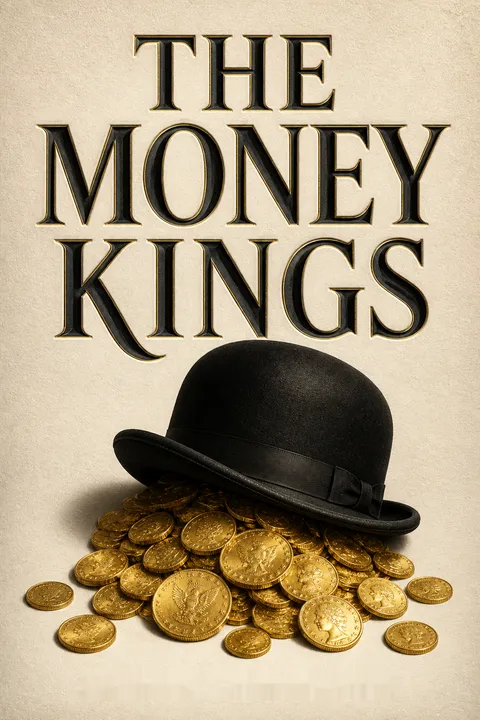
The Money Kings receives generally positive reviews for its well-researched exploration of Jewish immigrants who shaped Wall Street and modern America. Readers appreciate the historical insights and fascinating stories, though some find the extensive detail and numerous characters challenging to follow. The book is praised for its examination of antisemitism, philanthropy, and the complex dynamics of finance and politics. While some reviewers note slow pacing in parts, most recommend it for those interested in financial history and Jewish-American experiences.
People Also Read




Glossary
commercial paper
short-term business debtA short-term promise by a business to repay borrowed money, often used to finance inventory or bridge the gap before customers pay. Brokers such as Marcus Goldman bought these notes at a discount and resold them to banks, earning a small margin. The trade connected merchants who needed quick cash with financial institutions able to supply it.
community of interest
cooperation among corporate rivalsA financial arrangement in which competing companies or railroads acquired stakes in one another or coordinated their activities to reduce destructive competition. Bankers such as Jacob Schiff and J. P. Morgan helped organize these arrangements. They could stabilize rates and operations, but they also concentrated control and sometimes created monopolistic combinations vulnerable to public and legal challenge.
tzedekah
religious duty to giveA Jewish concept that Schiff understood as justice or obligation, rather than optional generosity. It framed assistance to poor and vulnerable people as a responsibility attached to wealth. Schiff set aside a portion of his income for charitable work and believed that effective philanthropy required personal oversight, a view that made his giving both active and strongly directed.
Galveston movement
immigrant resettlement through TexasA 1907 to 1914 effort, backed by Jacob Schiff and allied Jewish organizations, to route Jewish immigrants through Galveston, Texas, and place them in jobs farther west. Its sponsors hoped to relieve pressure on New York and spread opportunity. It settled about 10,000 people, but depended on employer demand, government cooperation, and restrictive judgments about which immigrants were suitable.
money trust
alleged banking power cartelA Progressive Era accusation that a small group of Wall Street financiers controlled American money and credit through overlapping partnerships, stock ownership, and corporate directorships. The Pujo Committee investigation did not prove a secret cartel in the literal sense, but it documented extensive connections and influence among major banks and corporations, intensifying calls for public regulation.
The Protocols of the Elders of Zion
forged antisemitic conspiracy textA fabricated document, first published in Russia in the early twentieth century, that falsely claimed Jewish leaders had plotted to control governments, finance, and society. Antisemites used it to recast political and economic upheaval as evidence of a secret Jewish plan. Ford's newspaper and other propagandists helped circulate the forgery widely in the United States and abroad.
FAQ
What is The Money Kings by Daniel Schulman about?
- Epic story of Jewish immigrants: The book chronicles how Jewish immigrant families transformed Wall Street and shaped modern America, focusing on their rise from humble beginnings to financial powerhouses.
- Intersection of finance and identity: It explores how these families balanced their Jewish heritage with their roles as financiers and American citizens, highlighting their influence on finance, philanthropy, and social reform.
- Historical context: The narrative situates these families within major events like the Civil War, World Wars, and the creation of the Federal Reserve, showing their impact on American and global history.
Why should I read The Money Kings by Daniel Schulman?
- Unique perspective on finance: The book offers a fresh look at the origins of modern American finance through the lens of Jewish immigrant families, going beyond traditional Wall Street histories.
- Rich historical and cultural detail: Schulman’s research uncovers lesser-known episodes, such as the Galveston Movement and the families’ responses to antisemitism, providing a nuanced understanding of their challenges and achievements.
- Inspiration and legacy: Readers gain insight into resilience, innovation, and philanthropy, learning how these families used their influence to support social causes and shape American society.
Who are the main families featured in The Money Kings by Daniel Schulman, and what roles did they play?
- The Schiffs: Led by Jacob Schiff, they were central to Kuhn Loeb & Co., influencing banking reform, philanthropy, and Jewish communal leadership.
- The Warburgs: A German-Jewish dynasty, they bridged European and American finance, with Paul Warburg instrumental in creating the Federal Reserve.
- The Lehmans, Seligmans, and Goldmans: Founders of major Wall Street firms, they financed railroads, industry, and infrastructure, and contributed to Jewish and civic causes.
- Interconnected dynasties: Through marriages and partnerships, these families created powerful transatlantic networks that shaped global finance.
How did Jewish immigrant families overcome adversity in America according to The Money Kings by Daniel Schulman?
- Starting from the bottom: Many began as peddlers or small merchants, facing poverty and social exclusion, which honed their business skills and resilience.
- Building businesses and networks: They leveraged family and community ties to transition into banking and finance, supporting each other’s ventures.
- Facing and combating antisemitism: Despite discrimination in business and society, they responded by building their own institutions and engaging in philanthropy.
- Community support: They established social welfare programs, schools, and charities to assist new immigrants and foster integration.
What was the impact of antisemitism on the Jewish banking families in The Money Kings by Daniel Schulman?
- Social and business barriers: Families like the Seligmans faced exclusion from hotels, clubs, and elite circles, despite their financial success.
- Public prejudice and propaganda: Antisemitic stereotypes and conspiracy theories, including those promoted by Henry Ford and the Nazis, targeted these families.
- Institutional responses: They created their own social clubs, charities, and communal organizations to counter exclusion and support their communities.
- Resilience and advocacy: Leaders like Jacob Schiff used philanthropy and political engagement to fight discrimination and aid Jewish refugees.
How did the Jewish banking families influence Wall Street and American finance, as described in The Money Kings by Daniel Schulman?
- Railroad financing and reorganizations: Families like the Seligmans and Kuhn Loeb played pivotal roles in funding and restructuring major railroads, shaping the nation’s infrastructure.
- Investment banking innovations: Firms such as Goldman Sachs and Lehman Brothers pioneered new financial instruments and underwriting for emerging industries.
- International alliances: Through marriages and business partnerships, they established transatlantic networks that facilitated global finance and diplomacy.
- Philanthropy and social leadership: Their wealth funded both Jewish and broader social causes, intertwining finance with civic responsibility.
What role did Jacob Schiff play in American finance and Jewish philanthropy according to The Money Kings by Daniel Schulman?
- Investment banking leadership: Schiff transformed Kuhn Loeb & Co. into a powerhouse, leading major railroad financings and corporate reorganizations.
- Philanthropic pioneer: He supported Jewish and secular causes, including orphanages, hospitals, and educational institutions, often preferring anonymity.
- Political and social activism: Schiff used his influence to aid Jewish immigrants, oppose antisemitism, and support Zionism, notably financing Japan during the Russo-Japanese War.
- Legacy of integrity: He was known for his ethical leadership, combining financial acumen with a strong sense of justice and responsibility.
What was the significance of the Galveston Movement in The Money Kings by Daniel Schulman?
- Immigration deflection strategy: Led by Jacob Schiff, the movement aimed to redirect Jewish immigrants from crowded East Coast cities to the American interior via Galveston, Texas.
- Easing urban congestion: The initiative provided better opportunities for immigrants and helped shape Jewish American demographics in the Midwest and South.
- Challenges faced: The movement encountered resistance from nativists and logistical difficulties, but persisted through determined advocacy and support services.
- Legacy: Though it ended by 1914, the Galveston Movement exemplified the intersection of finance, philanthropy, and social engineering.
How did the Jewish banking families contribute to the creation of the Federal Reserve System, according to The Money Kings by Daniel Schulman?
- Paul Warburg’s advocacy: Warburg, drawing on European central banking models, was a key architect of the Federal Reserve System.
- Collaboration with policymakers: He worked closely with President Wilson and Treasury officials to design and pass the Federal Reserve Act in 1913.
- Response to financial crises: The Panic of 1907 exposed flaws in the U.S. banking system, motivating reforms championed by Warburg and others.
- Controversy and legacy: Their involvement sparked antisemitic conspiracy theories, but ultimately modernized American finance.
What was the impact of the Russo-Japanese War on the Jewish banking families in The Money Kings by Daniel Schulman?
- Financing Japan’s war effort: Jacob Schiff and Kuhn Loeb & Co. provided critical loans to Japan, motivated by opposition to Russian antisemitism.
- Shifting global power: This financial support helped Japan defeat Russia, altering the balance of power in East Asia.
- Diplomatic and social consequences: Schiff’s actions enhanced his international stature but also intensified antisemitic backlash.
- Enduring legacy: The episode demonstrated the global reach and influence of Jewish financiers.
How did the Jewish banking families respond to World War I and its aftermath in The Money Kings by Daniel Schulman?
- Support for the Allies: The families provided financial and philanthropic support to the Allied war effort and relief for war victims.
- Navigating divided loyalties: With German roots and American citizenship, they faced complex personal and diplomatic challenges.
- Postwar diplomacy: They participated in peace negotiations and efforts to stabilize Europe’s economy, advocating for Jewish refugees.
- Philanthropic mobilization: Organizations like the Joint Distribution Committee coordinated massive relief efforts for Jewish communities.
What are the best quotes from The Money Kings by Daniel Schulman and what do they mean?
- On leadership and ethics: Jacob Schiff said, “One needs to have God in his heart...such a person is naturally a leader,” emphasizing moral authority as the foundation of leadership.
- On philanthropy: Schiff stated, “The surplus wealth we have gained...belongs to our fellow-beings; we are only the temporary custodians,” reflecting the Jewish concept of tzedekah and social responsibility.
- On antisemitism: Henry Ward Beecher observed, “There is not another race...that is in such a sense a benefactor...and there is not another people...treated so like despicable miscreants,” highlighting the paradox of Jewish contributions and persecution.
- On legacy: Rabbi Stephen Wise said of Schiff, “No man can take his place...Schiff is gone, and with him passes the Schiff era,” underscoring his unique and irreplaceable impact on Jewish philanthropy and finance.
About the Author
Other books by Daniel Schulman
Download PDF
Download EPUB
.epub digital book format is ideal for reading ebooks on phones, tablets, and e-readers.








