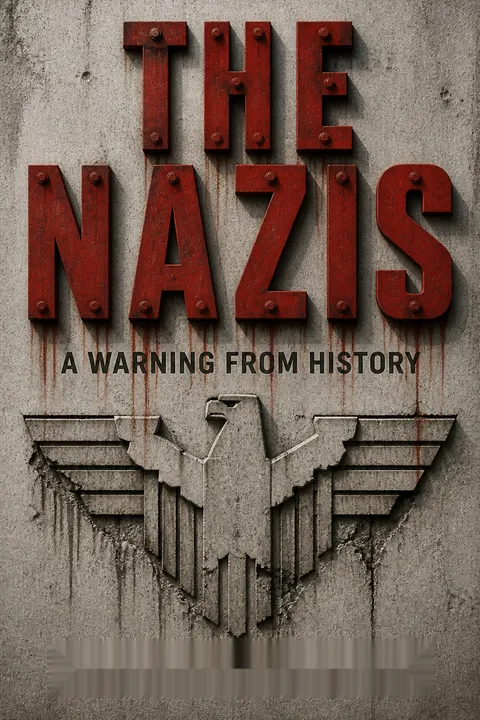


Key Takeaways
A crisis can empower extremists, but elites still choose to hand them the keys
The vote was not destiny. In 1928, after years of campaigning, the Nazis won just 2.6 percent of the vote. During the Depression, their support surged to 37.4 percent in July 1932, making them the largest party, but not a majority. Economic distress opened an opportunity; it did not make Hitler’s appointment inevitable.
Conservatives opened the door. President Hindenburg had rejected Hitler’s bid for power, and Nazi support had begun to fall. Yet Franz von Papen and other conservative figures persuaded Hindenburg to appoint him Chancellor in January 1933. They expected to control or contain him. Their calculations, alongside the weakening of democratic government, helped put the Nazis inside the state.
The distinction between gaining votes and gaining power is essential. Political crises can make radical solutions attractive, but access to government often depends on decisions made by people who believe they can manage the radicals. That creates a recurring institutional hazard: established leaders may treat democratic norms as negotiable when those norms obstruct a preferred outcome. The history also resists a comforting story in which a whole nation was simply hypnotized. Public support mattered, but so did elite bargaining, misjudgment, and the failure to defend a system that opponents openly intended to dismantle.
Political faith often grows from belonging and injured pride, not policy
A story of betrayal. Many Germans felt their army had not truly been defeated in 1918. The myth that politicians at home had betrayed soldiers turned defeat into a conspiracy, while the Versailles settlement, inflation, unemployment, and fear of Communism deepened resentment. Antisemitism supplied a scapegoat: Jews were falsely cast as symbols of both revolutionary politics and exploitative wealth.
A movement that felt alive. The Nazis offered young recruits camaraderie, status, street action, and a promise of national renewal, more than a detailed policy program. Their appeal depended on existing grievances: Hitler’s speeches persuaded people already receptive to his message, while others found him crude. Rees’s interviews show how political allegiance could feel like faith, even when it rested on false claims and violent exclusion.
The book’s strongest account of political appeal is psychological without making it uniquely German. People can interpret personal and national uncertainty through stories that restore pride, assign blame, and offer membership in a purposeful group. That helps explain why factual rebuttal alone may not dislodge an identity-based belief. It also sharpens a moral point: emotional need explains vulnerability, but does not erase responsibility. The same desire for community can sustain mutual aid or become a route into exclusion, depending on how leaders define who belongs and who is blamed.
Make ordinary complicity visible; terror often runs on neighbors, not spies
Few police, many informants. In the Lower Franconia district, which had about a million residents, the Gestapo had only 28 officials. Research on its files found that ordinary citizens brought roughly 80 percent of political-crime cases to the authorities. The secret police were frightening, but they were not omnipresent. Their reach depended heavily on voluntary reports from people who were not necessarily Nazi Party members.
The regime also won consent. Some Germans welcomed lower unemployment, public works, and a sense of order after years of upheaval. In a postwar survey in 1951, more than 40 percent recalled the 1930s as good times. That memory does not cancel persecution. It shows how benefits for some, fear for others, and the exclusion of targeted groups could coexist in everyday life.
This account complicates the familiar image of a dictatorship maintained only by omniscient police. A small agency can become powerful when social relationships supply information and when citizens learn that reporting others is useful or safe. That does not mean coercion was absent: denunciation took place in a climate where dissent could bring severe punishment. The sharper lesson is that consent and fear are not opposites. A regime can reward conformity, direct violence toward minorities, and still leave many people feeling that ordinary life is improving.
A leader can govern by making subordinates guess what will please him
Power without clear orders. Rees uses the phrase working towards the Führer for a system in which officials anticipated Hitler’s wishes and acted on their own, often seeking later approval. Competing offices and unclear responsibilities created disorder rather than efficient government. Yet that disorder did not prevent radical policy. It encouraged officials to compete by showing initiative in directions they believed Hitler favored.
A policy grows from a case. The child-killing program began after a father petitioned Hitler to end the life of his disabled child. Hitler authorized a doctor to act, and officials created procedures that expanded the practice. Doctors assessed forms without seeing the children, and local staff eventually selected victims themselves. More than 5,000 children were murdered. The episode shows how ideology, bureaucratic ambition, and discretionary power could turn one decision into a wider crime.
This is a model of how an authoritarian system can radicalize without a single comprehensive plan. Ambiguous signals do not necessarily restrain officials. When advancement depends on anticipating a leader’s preferences, uncertainty can reward the most zealous interpretation. Responsibility therefore travels in both directions: the leader establishes the values and grants authority, while subordinates choose to extend those values into practice. The case also shows why administrative confusion is not a safeguard against atrocity. Without clear accountability, blurred authority can make harmful initiatives easier to launch and harder to stop.
Treat racial hierarchy as an operating plan, not merely hateful rhetoric
Ideology shaped policy. Hitler’s pseudo-Darwinian view treated human societies as permanent contests in which the strong deserved to dominate. Lebensraum, meaning living space, was the Nazi claim that Germany needed to expand eastward for land and resources. These ideas were not decorative slogans. They justified conquest, enslavement, population removal, and the denial of basic rights to people classified as inferior.
Poland became a laboratory. Nazi authorities expelled Polish families, seized their homes and property, and attempted to reshape the population according to racial categories. The district leaders Arthur Greiser and Albert Forster applied different standards to who could be classified as German, producing arbitrary outcomes even within families. The underlying purpose remained brutal: make room for German settlers and reduce Poles to a subordinated workforce.
The connection between belief and administration matters because prejudice becomes more dangerous when it defines who may own property, move freely, learn, work, or live. In this case, racial hierarchy organized both everyday theft and state policy. The Polish examples also show how bureaucratic categories can make violence appear procedural rather than personal. Yet the variation between local rulers warns against imagining ideology as a perfectly uniform machine. Local discretion changed people’s immediate fates, even while the system’s overall direction remained coercive and racist.
The invasion of the USSR was planned by institutions, not just one fanatic
A shared decision. Operation Barbarossa was the German invasion of the Soviet Union, launched in June 1941. Hitler’s drive for conquest and racial empire mattered, but the book rejects the excuse that the campaign was only one dictator’s delusion. Army Chief of Staff Franz Halder had considered intervention before Hitler’s final decision, and military leaders helped prepare the invasion. The army also accepted orders that authorized executions and collective reprisals.
Confidence had evidence, and prejudice. German leaders drew confidence from the rapid defeat of France, the Red Army’s poor showing against Finland, and Stalin’s purges of Soviet officers. They underestimated Soviet capacity and treated the people they planned to conquer as racially inferior. Millions of German troops entered the war expecting a short campaign, but the plan had joined strategic calculation to an ideological war of annihilation.
The institutional emphasis prevents a familiar form of absolution: attributing every crime to Hitler while treating the military as a passive instrument. The evidence presented here instead connects planning, professional judgment, and ideological consent. It also distinguishes explanation from inevitability. German leaders had reasons, however flawed, for believing victory possible; those reasons do not make the invasion defensive or excuse the criminal orders. A useful historical question is not only who gave the final command, but which organizations prepared it, normalized it, and carried it out.
The Holocaust emerged through escalating choices, not one neat master blueprint
Persecution changed form. Before the war, Nazi policy focused on excluding Jews from German life and forcing them to leave. The invasion of the Soviet Union in 1941 brought mass shootings by the Einsatzgruppen, mobile killing units that followed the German army. Their targets widened from Jewish men to women and children. Deportation, ghettos, and killing projects developed amid wartime decisions and local initiatives, rather than following one settled plan that had existed from the beginning.
Coordination followed killing. At the Wannsee Conference in January 1942, senior officials coordinated the deportation and murder of Jews across German-controlled Europe. The meeting did not initiate the genocide, but it helped organize a process already underway. At Treblinka, a killing center in occupied Poland, about 800,000 people were murdered in 13 months. Roughly 50 Germans, 150 Ukrainians, and more than 1,000 coerced Jewish workers operated the camp.
The evolving-policy account avoids two distortions: that genocide appeared fully formed in 1933, or that it was merely an accidental by-product of war. The narrative traces how a fixed commitment to antisemitic exclusion met new circumstances, expanding power, and officials prepared to kill. The distinction between initiating and coordinating is especially important for Wannsee, whose symbolic status can obscure the violence already taking place. A process can be historically contingent and still be intentional at each stage. Contingency explains the route, not the perpetrators’ choices.
Racist occupation turned potential allies into enemies and civilians into targets
Liberation became domination. Some Ukrainians initially welcomed German troops because they had suffered under Soviet rule. Aleksey Bris, who worked as an interpreter for the occupiers, later joined Ukrainian nationalists after witnessing German abuse. Nazi officials rejected Ukrainian independence, restricted education, and treated local people as a labor force. German military authorities also contributed to civilian starvation, including in Kharkov, where residents ate animals, plants, and, in extreme cases, human remains.
Violence spread across the countryside. German forces and Soviet partisans both attacked civilians, whom they suspected of helping the other side. The book estimates that about 13 million Soviet civilians died under German occupation and notes that 3.3 million of 5.7 million Soviet prisoners of war captured by Germany died. Soviet partisan groups could also terrorize villagers. These facts do not make the forces equivalent: Nazi policy deliberately treated whole populations as expendable.
Occupation exposes the practical cost of dehumanizing people who might otherwise cooperate. The initial welcome in parts of Ukraine was a political resource, but Nazi leaders rejected partnership because equality contradicted their racial project. The account also resists a tidy division between a criminal SS and an innocent army: military institutions helped produce civilian suffering. Including partisan violence makes the picture more complete, provided it is not used to flatten the fundamental difference between Nazi conquest and the resistance it provoked.
The Red Army learned to survive by adapting, not simply by enduring
Retreat became a skill. Early Soviet disasters reflected poor deployment, purged leadership, and Stalin’s insistence on holding positions. In 1942, after another costly defeat near Kharkov, Soviet forces increasingly used staged withdrawals to avoid encirclement. Commanders studied German methods and improved coordination among infantry, tanks, artillery, and communications.
Deception and coordination paid off. Maskirovka is the Soviet practice of concealing military intentions through camouflage and deception. Before Operation Uranus, the Soviet counterattack that encircled the German Sixth Army at Stalingrad, forces hid their movements and created false signs of defensive preparations. The operation gathered more than a million soldiers without the Germans recognizing its scale in time. Soviet success came from learning and planning, even as Stalin’s regime continued to rely on executions, penal units, and coercive discipline.
The Red Army’s recovery is not a simple story of heroic endurance. It depended on tactical learning, industrial output, deception, and a gradual willingness to revise earlier assumptions. That makes the contrast between 1941 and 1942 more instructive than a claim that Soviet victory was inevitable because of size alone. At the same time, adaptation took place inside a deeply coercive state. Recognizing military effectiveness should not obscure the cost of its methods or turn survival into proof that every decision by Soviet leaders was sound.
When Hitler could not win, he chose national ruin over surrender
No peaceful route out. Hitler had dismantled institutions that might have constrained or removed him. Army officers who considered resistance faced an oath of personal loyalty, a leader skilled at reviving their commitment, and fear of what defeat by the Soviet Union might bring. The failed assassination attempt of July 1944 triggered mass arrests and executions, further warning potential opponents against action.
Defeat became another target. In March 1945 Hitler ordered the destruction of German resources that might help the advancing enemy, even though defeat was approaching. His own people, he believed, had proved unworthy of him. The regime continued to execute Germans accused of weakening the war effort. Hitler killed himself on 30 April; Germany surrendered days later. His rule ended in a country devastated by the war it had chosen and prolonged.
The ending ties personal dictatorship to the destruction of institutions. When no legitimate mechanism can remove a leader, opposition must risk conspiracy, and the regime can make even defeat dangerous for its own citizens. Oaths, fear, loyalty, and complicity each constrained action, but none absolves those who sustained the war. The book’s warning is not that every crisis produces Nazism. It is that unchecked authority and dehumanizing politics can make surrender, accountability, and even the survival of one’s own society seem less acceptable than continued ruin.
Analysis
Rees builds the history around a difficult proposition: Nazism was neither an inexplicable eruption of German madness nor the mechanical execution of a single blueprint. It became possible through a convergence of political crisis, emotional appeal, elite miscalculation, institutional weakness, racial ideology, and individual decisions. The eyewitness method gives this argument unusual force. A Nazi functionary can seem courteous at dinner and still administer murder; a Gestapo with few officers can depend on ordinary informants; a soldier can describe a crime without seeing himself as its author. Such testimony disrupts the distance that makes atrocity appear alien.
The book’s central analytic strength is its refusal to treat disorder as moderation. Rival offices, vague commands, and administrative improvisation did not slow radical policy. They encouraged subordinates to anticipate what the leader wanted and to compete in fulfilling it. This helps explain why the Holocaust is presented as a developing process: the absence of a single early master plan does not lessen the deliberate choices that made mass murder possible. The distinction between an initial intention and subsequent implementation is essential, particularly when describing Wannsee.
The broad scope also makes the Eastern Front central rather than incidental. Nazi racism shaped both the invasion’s aims and the treatment of civilians, prisoners, and Jews. The Soviet story, meanwhile, shows a state capable of catastrophic error and brutal coercion, yet also of learning, adapting, and defeating Germany. That complexity challenges accounts built around either Nazi invincibility or effortless Soviet inevitability.
Oral testimony has limits. Memory can protect the speaker, soften responsibility, or reorganize events around later knowledge. Rees’s juxtaposition of testimony with documents, administrative records, and population statistics is therefore crucial. The result is not a verdict that every German acted alike, but a more unsettling account of how ordinary motives and institutions can serve extraordinary crimes. The warning is specific: democracy can be weakened before a dictator takes office, and participation can look like pragmatism long before people admit what they helped build.
Review Summary
The Nazis: A Warning from History is praised for its comprehensive examination of Nazi Germany, based on interviews and first-hand accounts. Readers appreciate its insights into the mindset of ordinary Germans and Nazi officials, as well as its coverage of the Eastern Front. The book is commended for its readability and historical accuracy, though some note its graphic content. Many reviewers highlight its relevance as a cautionary tale for modern times, emphasizing the importance of understanding how seemingly civilized societies can descend into barbarism.
People Also Read

Glossary
Lebensraum
Nazi expansionist living spaceA German term meaning living space, used by Hitler to argue that Germany needed more territory to sustain its population and power. In Nazi policy, the proposed expansion was directed eastward. It was inseparable from racial hierarchy: conquest was meant to seize land and resources, displace or kill existing populations, and establish German domination.
working towards the Führer
Anticipating Hitler’s wishesA description of how officials in Nazi Germany often acted without receiving a specific order from Hitler. They interpreted his broad aims, initiated policies they believed he would approve, and sought retrospective confirmation. The practice helps explain how a divided, chaotic administration could still produce radical measures, while preserving Hitler’s authority and leaving subordinates responsible for their own choices.
Operation Barbarossa
German invasion of the USSRThe codename for Germany’s invasion of the Soviet Union, launched on 22 June 1941. Nazi leaders expected a swift military victory and planned to conquer territory, seize resources, and create an empire based on racial domination. The campaign was also explicitly framed as a war of annihilation, with military orders authorizing executions and collective violence.
Einsatzgruppen
Mobile Nazi killing unitsSpecial German units that operated behind the advancing army, particularly in occupied Soviet territory. Their duties included killing people identified as political enemies, officials, and Jews. The units’ actions expanded rapidly during the invasion of the Soviet Union, from shootings of selected groups to the mass murder of Jewish men, women, and children.
Final Solution
Nazi genocide of European JewsThe Nazi term for the program to deport and murder the Jews of Europe. Its meaning and practical form developed during the war, rather than existing as one fully settled plan from the regime’s beginning. By 1942, officials used the phrase to describe coordinated deportation and extermination, concealed in administrative language.
maskirovka
Soviet military deceptionA Soviet military practice of disguising forces and intentions to mislead an opponent. During Operation Uranus, Soviet units concealed their movements, staged misleading preparations, and obscured the scale and direction of the planned attack. This deception helped the Red Army concentrate forces against the German-held flanks around Stalingrad.
Operation Uranus
Soviet encirclement at StalingradThe Soviet offensive launched in November 1942 against the German-held flanks around Stalingrad. Rather than attacking the strongest German forces directly, the Red Army struck the weaker Romanian, Hungarian, and Italian positions. The two advancing Soviet forces met near Kalach, encircling Germany’s Sixth Army and marking a major shift in the campaign.
FAQ
What’s The Nazis: A Warning from History about?
- Historical Overview: The book provides a detailed account of the rise and fall of the Third Reich, focusing on how Adolf Hitler and the Nazi Party gained power in Germany.
- Eyewitness Accounts: Laurence Rees includes testimonies from individuals who experienced Nazi rule, offering diverse perspectives on the impact of the regime.
- Ideological Focus: It explores the psychological and ideological motivations behind Nazi actions, examining how ordinary people justified their support for the regime.
Why should I read The Nazis: A Warning from History?
- Insightful Analysis: The book offers a deep understanding of the Nazi mentality and the historical context that allowed such a regime to flourish.
- Award-Winning Work: Laurence Rees is an acclaimed author, and his book is based on extensive research and interviews, providing a credible account of the era.
- Lessons for Today: It serves as a cautionary tale about the fragility of democracy and the dangers of totalitarianism, relevant for modern society.
What are the key takeaways of The Nazis: A Warning from History?
- Power of Ideology: The book illustrates how deeply ingrained beliefs can drive individuals to support extreme ideologies, leading to horrific consequences.
- Role of Ordinary People: It highlights the complicity of ordinary citizens in the Nazi regime, showing how societal pressures can lead to moral compromises.
- Historical Relevance: Understanding the past is crucial for recognizing and combating similar patterns in contemporary politics.
How did the Nazis come to power according to The Nazis: A Warning from History?
- Political Chaos: The Nazis exploited the political instability and economic turmoil in post-World War I Germany, gaining support through promises of national revival.
- Charismatic Leadership: Hitler's charisma and ability to connect with the emotions of the German people played a significant role in his rise.
- Manipulation of Democracy: The Nazis used legal means to gain power, such as elections, but quickly dismantled democratic institutions once in control.
What role did propaganda play in the Nazi regime as discussed in The Nazis: A Warning from History?
- Control of Information: The Nazis controlled media and information to shape public perception, using propaganda to promote their ideology.
- Cult of Personality: Hitler was portrayed as a larger-than-life figure, creating a cult of personality that discouraged dissent.
- Emotional Manipulation: Propaganda evoked strong emotional responses, rallying the populace around nationalistic and anti-Semitic sentiments.
How does The Nazis: A Warning from History address the Holocaust?
- Systematic Dehumanization: The Nazis dehumanized Jews and other targeted groups, laying the groundwork for the Holocaust through propaganda and laws.
- Eyewitness Accounts: The book includes testimonies from survivors and perpetrators, providing a personal dimension to the historical events.
- Moral Responsibility: Rees emphasizes the complicity of ordinary people in the Holocaust, urging readers to confront uncomfortable truths about human nature.
What insights does The Nazis: A Warning from History provide about the Nazi-Soviet War?
- Brutality of Conflict: The book highlights the extreme violence and brutality that characterized the Nazi-Soviet War.
- Ideological Warfare: The conflict was not just a military struggle but also an ideological battle, with both sides committing atrocities.
- Consequences of Totalitarianism: The narrative illustrates the devastating impact of totalitarian regimes on societies.
How does The Nazis: A Warning from History explore the psychology of the Nazis?
- Understanding Motivation: Rees delves into the psychological factors that drove individuals to support the Nazi regime.
- Emotional vs. Rational Decisions: Many former Nazis acted out of emotional conviction rather than rational thought.
- Charisma and Manipulation: Hitler's charisma played a crucial role in manipulating the emotions of the German people.
What does The Nazis: A Warning from History suggest about the future of democracy?
- Fragility of Democratic Systems: Rees warns that democracy can be easily undermined by charismatic leaders who exploit crises.
- Historical Lessons: The book serves as a reminder that the lessons of history must be learned to prevent the rise of totalitarianism.
- Role of Education: Rees advocates for teaching this history in schools to foster a more just and democratic society.
How did the Nazis justify their actions during the Holocaust in The Nazis: A Warning from History?
- Racial Ideology: The Nazis believed in the superiority of the Aryan race, justifying extermination as racial purification.
- War Justification: They framed genocide as necessary in the context of a total war against perceived enemies.
- Dehumanization of Victims: By portraying Jews as a dangerous influence, the Nazis desensitized the public to atrocities.
What were the consequences of Nazi policies as outlined in The Nazis: A Warning from History?
- Widespread Suffering: Nazi policies led to the deaths of millions, including six million Jews during the Holocaust.
- Destruction of Societies: The war and Holocaust devastated communities, leading to long-lasting trauma.
- Legacy of Guilt and Shame: The aftermath left a complex legacy of guilt and shame, prompting discussions about accountability.
What does The Nazis: A Warning from History say about the role of ordinary Germans during the Nazi regime?
- Complicity and Apathy: Many ordinary Germans were complicit in the regime's actions, either through participation or acceptance.
- Fear of Repercussions: Fear of reprisals for dissent often silenced opposition, leading to conformity.
- Moral Responsibility: The book emphasizes the importance of individual moral responsibility in the face of injustice.
Download PDF
Download EPUB
.epub digital book format is ideal for reading ebooks on phones, tablets, and e-readers.








