

Key Takeaways
After illness, heavier patients sometimes survive longer, but that is not a weight-loss prescription.
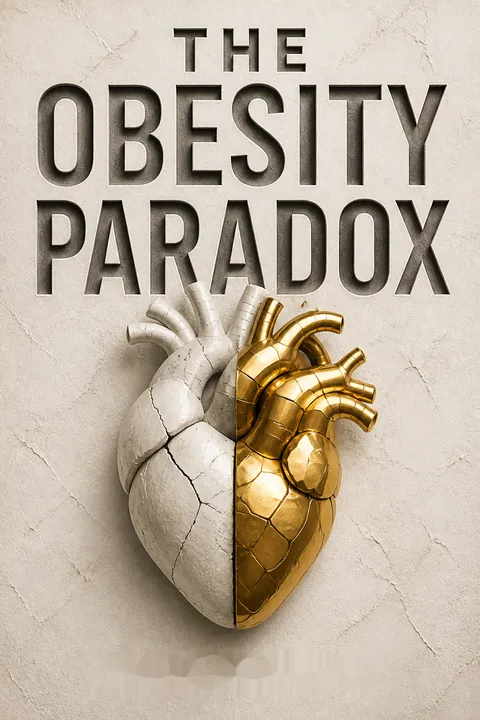
The paradox is conditional. The obesity paradox describes research findings in which people who are overweight or mildly obese and already have certain chronic diseases sometimes survive longer than normal-weight patients with the same conditions. It has been reported in heart disease, kidney disease, diabetes, cancer, and other illnesses. It does not mean that obesity prevents disease or that gaining weight improves health for everyone.
The evidence began with patients. In a study of 209 people with heart failure, Lavie and colleagues found that higher body-fat percentage was associated with better survival. Later analyses involving hundreds of thousands of heart patients found similar patterns. These are associations, not proof that fat itself caused the survival advantage. The book suggests possible roles for energy reserves, muscle, fitness, genetics, and illness-related weight loss.
What's striking is how sharply a person’s prognosis can differ from their risk of developing disease in the first place. That distinction appears across medicine: a factor associated with disease onset may not predict survival once illness is established. There is also a statistical caution. Studying only people who already have a disease can distort relationships among its possible causes, a problem known as selection bias. The paradox is therefore a valuable signal for further research, not a clinical instruction to gain weight or abandon treatment.
Use BMI as a rough signal, not a personal verdict on health.
A height-weight shortcut. Body mass index, or BMI, divides weight by height squared. It is convenient for comparing populations, but it cannot distinguish fat from muscle, show where fat is stored, or measure fitness and metabolic health. A muscular athlete may be classified as obese, while someone with a normal BMI may have little muscle and unhealthy levels of internal fat.
The mortality data complicate the categories. A 2013 analysis of 97 studies and about 2.9 million people found the lowest mortality among those in the overweight BMI range. The association does not show that extra weight improves health, and mortality is not the same as quality of life or disease risk. The book argues for looking alongside BMI at fitness, blood pressure, glucose, cholesterol, and other relevant measures.
BMI’s strength is also its limitation: it is cheap, repeatable, and easy to compare, which makes it useful for population research. Individual risk, however, rarely fits neatly into a single threshold. This is a familiar measurement problem: a proxy can be informative without capturing the underlying trait perfectly. The book’s argument is strongest when it treats BMI as one clue among several. It becomes less secure when a mortality association is used to imply that a particular BMI is optimal for a particular person.
Build fitness and muscle before making thinness your measure of progress.
Capacity matters. Lavie treats cardiorespiratory fitness, the ability to deliver and use oxygen during activity, as a major health marker. He also stresses muscular strength and endurance. In one long-running study of men, a one-unit increase in fitness, measured in metabolic equivalents, was associated with 15 percent lower all-cause mortality and 19 percent lower cardiovascular mortality over time. These are observational findings, but they underline why fitness can reveal more than weight alone.
Muscle is working tissue. It uses glucose, supports everyday function, and provides protein reserves during illness. In a study of patients after a major cardiovascular event, those with both higher muscle mass and higher body fat had lower three-year mortality than those low in both. The practical message is to value strength and aerobic capacity, not just a smaller body.
Fitness is compelling partly because it measures what the body can do, rather than only how it looks. That makes it relevant to function, resilience, and independence, especially with age. The evidence cited here is largely observational, so it cannot establish that increasing fitness alone produces the full observed reduction in mortality. Still, the pattern is consistent with a useful clinical principle: capacity can be improved even when body weight changes little, and that improvement is meaningful in its own right.
Pay attention to fat location, especially when a normal BMI hides a larger waist.
Fat has different addresses. Visceral fat surrounds organs in the abdomen. The book describes how it can release fatty acids and inflammatory signals into circulation, affecting the liver and other tissues. Subcutaneous fat under the skin, and fat stored around the hips and thighs, may behave differently. Lower-body fat can hold fatty acids rather than sending them to organs where they may disrupt metabolism.
A normal weight can still conceal risk. In a study following nearly 13,000 people for about 14 years, normal-weight participants with central obesity had higher cardiovascular and overall mortality than normal-weight participants without it. Yet waist size is not a universal verdict: in some studies of people already living with heart disease, larger waists were associated with better survival. The book’s point is to assess location in context, not to treat any measurement as destiny.
This distinction moves the discussion beyond the misleading idea that all body fat is biologically interchangeable. It also explains why a single scale reading can miss relevant differences in body composition. But waist measures, like BMI, remain screening tools rather than complete diagnoses. Their meaning depends on age, health status, and the population being studied. The seemingly conflicting findings are not necessarily incompatible: a measure may predict risk before disease and behave differently among people who are already ill.
Think of body fat as an active organ, not inert energy storage.
Fat does more than store. Fat tissue helps insulate and cushion the body, stores energy, and produces or processes hormones. Fatty acids are also important components of cell membranes and nerve insulation. The book describes fat cells as participants in appetite, blood pressure, inflammation, immune function, and energy metabolism, not as passive containers that merely expand when someone eats too much.
The effects depend on context. Some signals released by fat tissue can contribute to metabolic problems, especially when fat accumulates around organs. Other functions support normal physiology, and stored energy can matter during serious illness or inadequate nutrition. This is why the book resists treating fat as wholly harmful. It does not follow, however, that more body fat is always beneficial or that every claim about fat’s protective effects is equally well established.
The shift from storage depot to endocrine organ is a powerful change in perspective: it replaces a simple calorie container with tissue that communicates across the body. That perspective helps explain why location and metabolic state matter. It also invites careful language. Calling fat an organ does not make every amount or distribution healthy, just as calling inflammation a defense mechanism does not make chronic inflammation harmless. The useful lesson is biological complexity, not a new reason to romanticize excess weight.
Investigate blood-sugar instability instead of assuming weight explains every metabolic problem.
The disorder may precede the appearance. The book argues that insulin resistance and blood-sugar problems can occur in people of normal weight, while many heavier people do not show the same metabolic abnormalities. It calls attention to the lean paradox: a person may look slim yet have metabolic risks commonly associated with obesity.
A reporter’s warning sign. Jeff O’Connell, a thin and athletic writer, discovered that he was prediabetic despite his appearance. His fasting glucose was around 116 mg/dL. Further testing revealed large swings in blood sugar, including sharp drops after his body produced too much insulin. The story illustrates why appearance alone can miss a problem. It does not establish one diet as suitable for everyone; the book recommends taking metabolic concerns to a clinician and considering activity and nutrition together.
O’Connell’s story makes an invisible risk legible: the body’s metabolic state cannot be reliably inferred from its outline. That is a broadly useful lesson in medicine, where symptoms and outward appearance often fail to reveal early dysfunction. The book’s emphasis on blood sugar is persuasive, though its language sometimes gives inactivity and carbohydrate intake more explanatory weight than the evidence in a single case can support. A personal story can clarify a possibility, but it cannot estimate how common that pathway is.
Break up long sitting periods, even if you already schedule regular workouts.
A workout is not the whole day. Studies discussed in the book found that people spent an average of more than nine hours a day sitting, including some who met exercise recommendations. Prolonged sitting was associated with changes in blood sugar, blood fats, blood pressure, and other measures. Some research also suggested that exercise did not fully offset the risks associated with extensive sitting.
Add movement between sessions. The book recommends standing, walking, taking stairs, or briefly moving around during the day. These small bouts are not presented as a substitute for exercise; they help reduce long stretches of inactivity. The broader point is that physical activity includes ordinary movement as well as formal workouts. A person who exercises and then remains seated for most of the day may still have substantial room to move more.
This insight corrects a common accounting error: treating exercise as a deposit that cancels every hour of inactivity. Daily movement is better understood as a pattern than as a single appointment. The evidence on sitting is mostly observational, and comparisons to smoking can overstate the certainty or magnitude of risk. Even so, interrupting sedentary stretches is a practical, low-barrier way to make movement part of ordinary life rather than an all-or-nothing fitness project.
Choose sustainable exercise for health, not extreme training to prove fitness.
Benefits have a dose. The book favors regular moderate activity, such as brisk walking, and describes major health benefits from relatively small amounts. It also reviews studies in which very high volumes of endurance exercise were associated with heart changes and reduced mortality advantages compared with more moderate running. In one study, runners averaged better outcomes than nonrunners, while the lowest mortality was observed among those running about 15 miles per week.
Association is not a warning against movement. The author stresses that too little exercise is the larger public-health concern. The studies on extreme training do not prove that endurance exercise caused the observed harms, and they do not imply that ordinary activity is dangerous. The practical advice is to increase exercise gradually, allow recovery, and seek medical guidance when health conditions or concerning symptoms make that appropriate.
The dose-response framing is more useful than the slogan that more exercise is always better. Exercise is a potent intervention, and training goals differ: competitive performance is not the same objective as long-term health. The caution deserves proportion, however. Observational studies of endurance athletes cannot cleanly separate training effects from underlying health, genetics, or selection into sport. For most readers, the book’s central emphasis remains movement, with moderation serving as a guardrail rather than a reason to fear exercise.
Build health goals around habits and biomarkers, not crash diets.
Measure what matters. Lavie recommends discussing blood pressure and metabolic measures with a clinician, including glucose, hemoglobin A1c, cholesterol, triglycerides, and inflammation markers when appropriate. He also favors regular movement, strength work, adequate sleep, less added sugar, and a dietary pattern that can be sustained. The Mediterranean-style approach he describes emphasizes vegetables, fruit, beans, nuts, fish, whole grains, and olive oil, with fewer processed foods and processed meats.
Make the plan personal. The book rejects a single diet or ideal weight for everyone. It suggests preventing gradual weight gain rather than pursuing rapid loss at any cost, and says weight-loss decisions should reflect health circumstances, not just appearance. These are general ideas, not individualized treatment. Anyone with a chronic condition, abnormal test results, or plans for major dietary or exercise changes should work with a qualified health professional.
This advice replaces a vague goal, lose weight, with observable behaviors and health measures. That shift can make progress more concrete while reducing the risk that a normal-looking number conceals poor metabolic health. It also respects adherence: a theoretically perfect eating plan has little value if it cannot be maintained. Biomarkers require interpretation, though, and a favorable result does not guarantee future health. The strongest version of this approach pairs measurement with ongoing clinical judgment rather than turning each lab value into a new score to chase.
Separate correlation from cause before accepting a dramatic obesity headline.
A pattern is not a mechanism. The book repeatedly distinguishes correlation, when two things vary together, from causation, when one produces the other. Obesity is associated with many conditions, but illness can also cause weight loss, and smoking can affect both weight and mortality. These factors can make thinner groups appear less healthy even when thinness itself is not the cause.
Ask what the study measured. A headline about obesity deaths may rely on estimates that do not account for fitness, smoking, health care, or other influences. The book’s example of hormone therapy shows why: early studies suggested protection against heart disease, but later trials found a different effect, and differences among participants helped explain the discrepancy. Contradictory findings should prompt better questions and studies, not a swing from “fat is always bad” to “fat is good.”
This is the book’s most durable scientific lesson. It asks readers to distinguish a measurable association from a causal claim, and to notice when a headline hides the study design. A further complication is reverse causation: disease can change weight, so the observed direction may run opposite to the headline’s implication. The obesity paradox challenges an oversimplified rule, but it does not erase strong evidence that severe obesity can increase health risks. Scientific skepticism is most useful when it scrutinizes both conventional wisdom and contrarian conclusions.
Analysis
The book’s most valuable intervention is not the claim that extra weight is protective. It is the insistence that weight, fitness, body composition, disease status, and metabolic health are different variables that should not be collapsed into one number. That distinction is especially important because the obesity paradox is primarily an observation about outcomes among people who already have chronic disease. It does not directly answer whether intentional weight loss prevents disease, improves function, or extends life in a different population.
The evidence presented is predominantly observational. Large cohorts and meta-analyses make a recurring association harder to dismiss as random noise, but they cannot by themselves isolate the mechanism. Smoking, illness-related weight loss, muscle mass, access to care, and the decision to study only diagnosed patients can all reshape the apparent relationship between BMI and survival. In causal inference, selecting participants on the basis of disease can itself create misleading associations between risk factors. This possibility does not invalidate the paradox; it makes careful interpretation essential.
The book is also at its strongest when it shifts attention from appearance to function. Cardiorespiratory fitness and muscle strength are measurable capacities, and the cited studies make a compelling case that they carry information BMI misses. The practical implication is not that body weight is irrelevant, but that efforts to improve health should not be judged only by pounds lost. Movement, metabolic testing, and clinical context offer a fuller picture.
Some claims are framed more confidently than their evidence warrants, particularly the emphasis on inactivity as the chief cause of population weight gain and the suggestion that intense endurance training can damage longevity. The text itself acknowledges uncertainty, but readers should retain that caution. Its advice is best understood as a corrective to weight-only thinking, not a substitute for current medical guidance or an endorsement of obesity. The lasting message is methodological: measure more than one thing, distinguish risk from prognosis, and do not mistake a paradoxical finding for a universal rule.
Review Summary
The Obesity Paradox challenges conventional wisdom about weight and health. Many reviewers found it informative and thought-provoking, appreciating the author's scientific approach and willingness to question established beliefs. The book argues that being overweight or mildly obese may not be as harmful as commonly thought, and that fitness is more important than weight for overall health. Some readers found the writing repetitive or confusing, while others considered it life-changing. The book's main message is to focus on fitness rather than weight loss alone.
People Also Read







Glossary
Obesity paradox
Higher weight, better survivalA pattern reported in observational studies where overweight or mildly obese people with certain established chronic diseases have better survival than normal-weight patients with the same diseases. It describes an association in particular patient groups, not proof that excess weight prevents illness or that people should gain weight.
Body mass index
Weight relative to heightA screening measure calculated by dividing a person’s weight in kilograms by the square of their height in meters. BMI is used to classify weight categories in populations, but it cannot distinguish fat from muscle or show fat distribution, fitness, or metabolic health. The book treats it as a rough reference rather than a complete individual health assessment.
Cardiorespiratory fitness
The body’s oxygen-use capacityThe ability of the heart, lungs, blood vessels, and working muscles to deliver and use oxygen during physical activity. The book treats this capacity as a health marker that adds information beyond body weight. In research, it can be estimated through exercise testing and expressed using metabolic equivalents, or METs.
Metabolically healthy obesity
Obesity without measured metabolic abnormalitiesA category used for people classified as obese who do not show some common metabolic risk factors, such as high blood pressure, unfavorable blood lipids, insulin resistance, or elevated blood sugar. The category does not mean that obesity is harmless for every person in it, or that health status cannot change over time.
Lean paradox
Unhealthy metabolism at low weightThe observation that some people who appear slim or have a normal BMI nevertheless have metabolic problems associated with obesity, including insulin resistance or abnormal blood sugar. It illustrates why outward appearance and body weight cannot reliably establish metabolic health.
TOFI
Thin outside, fat insideAn abbreviation for “thin outside, fat inside,” used to describe someone whose slim appearance may conceal excess internal or visceral fat and related metabolic risks. The term highlights the limits of judging health by body shape alone; it is descriptive, not a diagnosis.
Visceral fat
Fat surrounding abdominal organsFat stored deep in the abdomen around organs such as the liver, pancreas, and kidneys. The book describes it as metabolically active and potentially more harmful than some fat stored beneath the skin or around the hips and thighs, partly because its released fatty acids can affect organ function and insulin regulation.
Obesogens
Chemicals that disrupt metabolic signalsA term coined by biologist Bruce Blumberg for environmental substances proposed to interfere with hormone and metabolic signaling in ways that may favor fat-cell development or fat retention. The book names examples found in some plastics, personal-care products, pesticides, and other exposures, while presenting their effects as an area of ongoing research.
Metabolic syndrome
A cluster of metabolic risk factorsA combination of risk factors that raises the likelihood of heart disease, stroke, and diabetes. The book describes features including abdominal obesity, high blood pressure, elevated fasting blood sugar, high triglycerides, and low HDL cholesterol. A person can have some individual risk factors without meeting the full criteria for the syndrome.
Aerobics Center Longitudinal Study
Long-term fitness and health cohortA large observational research program used in the book to examine relationships among physical activity, cardiorespiratory fitness, body composition, and health outcomes. Its extensive records support comparisons of fitness levels and mortality, but, as with other observational studies, its findings show associations rather than proving that a measured factor caused an outcome.
FAQ
What's The Obesity Paradox about?
- Challenging Norms: The Obesity Paradox by Carl J. Lavie explores the idea that being overweight or mildly obese can correlate with better health outcomes, especially if individuals maintain fitness.
- Focus on Fitness: Lavie emphasizes that fitness is a more critical determinant of health than weight alone, arguing that fit individuals often have better health outcomes than those who are thin but unfit.
- Scientific Evidence: The book presents numerous studies supporting the obesity paradox, showing that overweight individuals with chronic diseases often have better survival rates than their normal-weight counterparts.
Why should I read The Obesity Paradox?
- Revolutionary Insights: The book provides a fresh perspective on obesity and health, essential for understanding the complexities of body weight and fitness.
- Empowering Message: Lavie encourages focusing on fitness rather than weight loss, promoting a healthier relationship with food and exercise.
- Expert Author: Written by Dr. Carl J. Lavie, a leading cardiologist, the book is grounded in extensive medical research and clinical experience.
What are the key takeaways of The Obesity Paradox?
- Fitness Over Fatness: Maintaining a good level of fitness is more important for health than achieving a specific weight or BMI.
- Obesity Paradox Explained: Overweight individuals with chronic diseases often have better prognoses than their thinner peers, challenging the notion that weight alone determines health outcomes.
- Importance of Body Composition: Not all fat is harmful; body composition plays a crucial role in health, advocating for a nuanced understanding of fat.
What is the obesity paradox according to The Obesity Paradox?
- Definition of the Paradox: The obesity paradox refers to the observation that overweight and moderately obese individuals with certain chronic diseases often have better survival rates than those of normal weight.
- Health Outcomes: Patients with heart disease, diabetes, and other conditions may fare better if they are overweight, suggesting protective benefits of body fat.
- Research Support: Numerous studies validate the obesity paradox, showing higher BMI groups can have lower mortality rates compared to those with normal BMI.
How does fitness impact health according to The Obesity Paradox?
- Key to Longevity: Fitness is a significant predictor of health and longevity, often outweighing the negative effects of excess body fat.
- Muscle Mass Importance: Higher muscle mass is better protected against chronic diseases, as muscle enhances metabolism.
- Cardiorespiratory Fitness: Crucial for overall health, improving heart function and reducing cardiovascular disease risk.
How does The Obesity Paradox redefine obesity?
- New Definitions of Health: Obesity should be viewed in terms of metabolic health and fitness rather than weight alone.
- Metabolically Healthy Obesity: Some individuals classified as obese do not exhibit typical health risks, challenging the binary view of health and obesity.
- Focus on Individual Differences: Health profiles are unique, and factors like genetics, lifestyle, and fitness levels should be considered.
What role does body fat play in health according to The Obesity Paradox?
- Essential Functions: Body fat serves critical functions, including energy storage, insulation, and hormone production.
- Protective Benefits: Certain types of fat, particularly subcutaneous fat, can have protective effects against diseases.
- Fat Distribution Matters: The location of fat in the body influences health outcomes, with visceral fat being more harmful.
What is the significance of BMI in The Obesity Paradox?
- Flawed Measurement: BMI does not accurately reflect body composition or health status, failing to account for muscle mass and fat distribution.
- U-Shaped Mortality Curve: Research shows the lowest mortality rates in individuals with a BMI in the overweight range, suggesting BMI cutoffs may need reevaluation.
- Need for Comprehensive Assessment: A holistic approach to health assessment should include fitness levels, body composition, and metabolic health.
How can I apply the principles from The Obesity Paradox to my life?
- Focus on Fitness: Prioritize physical activity to improve health, regardless of weight, by engaging in regular exercise you enjoy.
- Monitor Health Metrics: Track important health indicators like blood pressure and cholesterol rather than focusing solely on weight.
- Adopt a Balanced Diet: Embrace a nutritious diet that supports metabolic health, such as the Mediterranean diet.
What lifestyle changes does The Obesity Paradox recommend?
- Prioritize Physical Activity: Regular exercise is crucial for maintaining health, regardless of weight.
- Focus on Nutrition: A balanced diet supports overall health, emphasizing good nutrition over extreme dieting.
- Mindset Shift: Promote self-acceptance and understand that fitness is more important than achieving a specific weight.
What are the best quotes from The Obesity Paradox and what do they mean?
- “It’s not doomsday to have extra fat on you, especially if you maintain a certain level of fitness.”: Encourages focusing on being active rather than obsessing over weight loss.
- “The real killer today isn’t necessarily obesity.”: Suggests inactivity and poor lifestyle choices are more detrimental than obesity itself.
- “Fitness is achieved primarily through regular, intermittent physical activity.”: Highlights the necessity of consistent exercise for health.
What are the environmental factors influencing obesity discussed in The Obesity Paradox?
- Obesogens and Endocrine Disruptors: Environmental chemicals can interfere with hormonal regulation and contribute to weight gain.
- Sedentary Lifestyle Influences: Modern conveniences and technology have decreased physical activity levels, contributing to obesity.
- Cultural Attitudes Towards Food: Societal norms and food marketing influence dietary choices, impacting obesity rates.
Download PDF
Download EPUB
.epub digital book format is ideal for reading ebooks on phones, tablets, and e-readers.








