

Key Takeaways
Treat the blockage as raw material for a different route forward.
A barrier can instruct. The book begins with a king who blocks a road with a boulder to see how his people respond. Many complain or turn back. One traveler searches for a branch, makes a lever, and shifts the stone. Beneath it lies a reward. The story captures the book’s central claim: a difficulty can reveal a tool, skill, or route that an easy passage would never have required.
Turn trouble into a method. This is not a call to pretend that pain is pleasant. It is a prompt to ask what remains possible, what the obstacle exposes, and how it can be used. Holiday organizes the response around clear seeing, purposeful effort, and the capacity to endure what effort cannot change.
The parable is memorable because the traveler changes tactics rather than simply applying more force. That resembles engineering design: constraints often make a solution visible by ruling out familiar approaches. The crucial distinction is between finding agency within a hard situation and declaring that the situation is good. The latter can romanticize suffering or blame people for barriers imposed by illness, discrimination, or poverty. The more defensible lesson is narrower and more useful: acknowledge the cost, then search for leverage that the cost has not removed.
Separate the event from your verdict before deciding what it means.
Facts and judgments differ. Holiday presents John D. Rockefeller as a model of composure during the financial panic of 1857. Rather than treating economic upheaval as proof that his prospects were finished, Rockefeller watched how businesses behaved and learned how exposed they were to sudden change. Years later, when investors offered him about $500,000 to buy oil wells, he returned without investing because the opportunity did not seem sound, despite the excitement around him.
Look before reacting. The event itself and the label attached to it are not the same thing. Calling a setback disastrous may add fear without adding useful information. Rockefeller’s later control of a vast share of the oil market illustrates how disciplined observation can help someone act while others are swept up by panic or enthusiasm.
This resembles cognitive reappraisal, the practice of examining an initial interpretation before treating it as reality. It can interrupt the familiar chain from alarming event to impulsive response. The useful skill is not forced optimism, but better separation of observation from assumption. Still, emotions are not simply chosen at will, and a crisis can involve genuine loss. Composure is best understood as a way to regain room for judgment, not as evidence that distress is irrational or that every bad outcome conceals a business opportunity.
Spend effort where your choices can still change the outcome.
Find the available lever. Pitcher Tommy John damaged a major ligament in his throwing arm in 1974. Doctors said that without an experimental operation his baseball career was over; the chance of returning after surgery was only about one in one hundred. John chose the operation and committed to rehabilitation. He went on to win 164 more games, and the procedure became known by his name.
Sort influence from circumstance. The book draws on the Stoic distinction between what a person can govern, such as choices, effort, and attitude, and what remains outside personal control, such as other people’s decisions or the economy. John could not guarantee a recovery. He could choose whether to pursue the narrow possibility and work toward it.
This is a practical version of an internal locus of control: attention goes to the factors a person can influence rather than to endless argument with fixed conditions. The distinction is powerful when it redirects energy toward a next step. It should not become a rule that every outcome is under individual control. John had a rare opportunity, medical support, and a particular capacity to train. The lesson is to identify genuine levers, not to treat every constraint as a test of willpower.
Start before confidence arrives, then let action teach you.
Practice can alter a disadvantage. Demosthenes, who became a celebrated Athenian speaker, began with a speech impediment and little formal support. He trained by speaking with pebbles in his mouth, practicing while running uphill, and rehearsing long speeches. He also studied law to challenge guardians who had mishandled his inheritance. The work built skills that he could use in court, where he eventually won his case.
Action creates evidence. Demosthenes did not wait to feel naturally gifted before beginning. He turned a weakness into a training problem and improved through repeated effort. Holiday’s point is that thought and frustration cannot perform the work itself. Once a problem is clear enough to act on, a first attempt can produce information and momentum that reflection alone cannot supply.
The story echoes behavioral activation, an approach in psychology that uses meaningful action to counter withdrawal and passivity. Starting can generate feedback, competence, and motivation, rather than requiring motivation to appear first. Demosthenes also shows why action should be specific: he practiced the exact capacities his goal demanded. But motion is not automatically progress. A person can work furiously on the wrong problem, so action needs a clear aim and regular checks on whether the effort is improving the situation.
Treat failure as feedback, and redesign the next attempt.
A failed attempt can teach. Holiday describes Thomas Edison testing thousands of materials while developing an incandescent light. Each unsuccessful filament narrowed the search, and bamboo eventually worked. The lesson is not that every failure is secretly a success. It is that a failed attempt becomes useful when it changes what someone tries next.
Test before overbuilding. The book also explains the start-up idea of a Minimum Viable Product, a basic early version of a product made to learn how customers respond before investing heavily in a polished release. Applied beyond business, the principle is to make experiments small enough to survive, inspect the result honestly, and adjust. Failure that is repeated without learning is wasted effort; failure that updates the plan can make the next attempt more informed.
This is close to experimental design: isolate a question, try a version, observe what happens, and revise. Small tests can reduce the cost of being wrong and loosen the grip of ego on an initial plan. The important condition is a learning loop. Failure does not reliably produce insight by itself, especially where feedback is noisy or the cost is borne by others. A useful experiment defines what evidence would change the plan before the result arrives.
When direct force stalls, change the angle instead of pushing harder.
Choose the less defended route. George Washington’s Continental Army was undertrained, undersupplied, and smaller than the British forces. Holiday emphasizes that Washington often avoided a direct clash, using movement, surprise, and limited attacks to preserve his army. Strategist B. H. Liddell Hart’s survey of more than 280 military campaigns, as reported in the book, found that only six decisive victories came from direct attacks on an enemy’s main force.
Make strength irrelevant. The strategic lesson reaches beyond battle. A large rival may be strongest in a head-to-head contest, while an overlooked customer need, alternative channel, or neglected relationship offers a less costly opening. The aim is not to prove toughness by attacking the hardest point. It is to find an approach where limited resources can matter.
The indirect approach is a useful correction to the instinct that effort should look like confrontation. In negotiation, competition, and conflict, changing the conditions can be more effective than trying to overpower an opponent on familiar ground. The historical examples illustrate a strategy, not a universal law: campaign outcomes have many causes, and a study of past battles cannot settle every modern decision. The principle is strongest as a question: where is the pressure least useful, and what alternative route makes the goal attainable?
Rehearse setbacks now, so surprise cannot spend your judgment.
Imagine the project has failed. The book describes a premortem, a planning exercise in which a team assumes a project has already gone badly and works backward to identify likely causes. This differs from a postmortem, which reviews failure after it happens. The Stoic practice of premeditatio malorum similarly involves imagining disruptions in advance, such as illness, delay, or a plan being blocked.
Pair risk with a response. The purpose is not to predict every mishap or brood over worst cases. It is to create contingencies and set more realistic expectations. Asking what could go wrong, and what the team would do in response, makes a setback less likely to trigger frantic improvisation. When a risk cannot be prevented, anticipation can still prepare people to absorb it and continue.
Premortems counter a common planning bias: people tend to imagine smooth execution and underweight obstacles that are ordinary but inconvenient. Naming failure modes early can also make it easier for a junior colleague to voice concerns before the group is committed. The exercise needs boundaries, however. An endless catalogue of catastrophe can become rumination rather than preparation. Its value comes from converting a plausible risk into a decision, a backup, or a consciously accepted uncertainty.
Accept what cannot move, then choose your response deliberately.
Acceptance is not surrender. Holiday recounts a fire that destroyed much of Thomas Edison’s research and production campus when Edison was sixty-seven. The losses included records and prototypes, and insurance covered only part of the damage. Edison did not spend the crisis consumed by regret. He began rebuilding, and the business resumed production within weeks.
Use what remains. The Stoic Art of Acquiescence means recognizing external facts that cannot be reversed and ceasing to waste effort wishing them away. Holiday also invokes amor fati, a more active posture of embracing what has happened as material for one’s response. Neither idea requires approving of injustice or avoiding grief. The practical distinction is between what must be faced as fact and what can still be changed through action.
Acceptance can prevent a painful event from consuming the energy needed for recovery. In modern psychological terms, acknowledging reality is often a prerequisite for flexible action, not a vote of approval. Edison’s response makes the distinction vivid: the fire could not be undone, but rebuilding remained possible. The approach has limits when applied carelessly. Encouraging someone to love a loss can silence grief or excuse preventable harm. Acceptance should clarify the next responsible act, not protect the people or systems that caused the damage.
Train your inner reserve before crisis arrives.
Resilience is practiced. Holiday uses Theodore Roosevelt’s childhood asthma to show preparation as a form of will. Roosevelt’s father built him a gym, and he exercised regularly for five years to strengthen his body. The book calls the capacity to draw on internal steadiness an Inner Citadel: a mental and moral refuge that must be built through practice rather than assumed to exist automatically.
Strength can be shared. Navy pilot James Stockdale, imprisoned in North Vietnam for more than seven years, organized support among fellow prisoners, including those who felt ashamed after giving information under torture. His sense of duty helped him keep going, while the group helped others endure. Inner strength, in this account, is not simply toughness. It includes habits, preparation, and relationships that help a person meet conditions they cannot control.
The fortress metaphor usefully shifts resilience from a heroic trait to something cultivated before pressure peaks. Roosevelt’s physical training and Stockdale’s prisoner network point to two forms of preparation: personal routines and social support. That second form matters because resilience is often treated as solitary grit, when people depend on institutions, relationships, and material resources. The image of an invulnerable inner core can also mislead. Preparation does not prevent fear or trauma; it can provide structure and support while those experiences are present.
Let mortality sharpen your priorities before crisis makes the choice for you.
Time is a real constraint. Michel de Montaigne was nearly killed after falling from a moving horse. Holiday describes the experience as changing how Montaigne regarded death and his remaining life; he went on to write influential essays and serve in public life. The Stoic reminder memento mori means remembering that life is finite, not rehearsing fear of death for its own sake.
Spend attention accordingly. Awareness of mortality can make trivial disputes, status chasing, and postponed ambitions look different. It encourages a person to ask what deserves effort while time is available. The book links this perspective to its larger method: no one can control how long life lasts, but people can choose where to direct their present attention and how to behave toward others.
Mortality can function as a prioritization tool: a finite horizon helps distinguish commitments that matter from those that merely feel urgent. Montaigne’s story gives that idea an unusually concrete turning point. The practice is not equally helpful for everyone, however. For some people, repeated focus on death may intensify anxiety rather than clarify action. Its strongest use is practical and bounded: let finitude inform decisions, then return attention to the work, relationships, and responsibilities available today.
Analysis
The book’s lasting value is less a promise that adversity produces success than a repeatable discipline for meeting uncertainty. Its three-part structure moves from interpretation, to effort, to endurance. First, question the story attached to an event. Next, act with enough flexibility to learn from resistance. Finally, accept that outcomes are not fully controllable. This sequence is psychologically useful because it separates problems that require a change in judgment from those that require effort, strategy, or grief.
The historical portraits make abstract Stoic ideas vivid. Rockefeller’s restraint, Demosthenes’ training, Washington’s indirect strategy, and Stockdale’s leadership under captivity show different expressions of composure and agency. Yet these are illustrative biographies, not controlled evidence that a particular mindset reliably causes success. The book selects people whose obstacles became part of a triumphant narrative. Many people endure comparable hardship without wealth, recognition, recovery, or a satisfying resolution.
That selection creates a necessary caution. The claim that people can choose their response is empowering when it identifies a real sphere of action. It becomes unfair when used to imply that oppression, illness, or poverty are merely errors of perception. Some obstacles demand collective change, material support, or protection, not just individual adaptation. Likewise, post-traumatic growth is possible, but suffering is neither a prerequisite for character nor a guarantee of growth.
The strongest reading therefore treats the book as a practical toolkit, not a moral verdict on people who struggle. Its tools include distinguishing fact from interpretation, directing effort toward controllable factors, testing alternatives, planning for disruption, and building support before crisis. The central reframing is not that every obstacle is secretly beneficial. It is that an obstacle does not automatically dictate the meaning or the next move. That modest claim preserves the book’s urgency while avoiding the trap of turning resilience into blame.
Review Summary
The Obstacle Is the Way receives mixed reviews. Many praise its practical approach to Stoicism and its motivational message, finding it helpful for overcoming challenges. Critics argue it oversimplifies complex ideas and relies too heavily on anecdotes. Some appreciate Holiday's writing style and historical examples, while others find it repetitive and lacking depth. The book's core message—viewing obstacles as opportunities for growth—resonates with many readers, though some question its originality and applicability to real-world situations.
People Also Read


Glossary
Perception, Action, and the Will
A response to adversityThe book’s three connected disciplines for confronting obstacles. Perception means seeing events clearly rather than through panic or assumption. Action means applying deliberate, flexible effort to the problem. The will is the capacity to endure, accept, and retain one’s principles when circumstances cannot be changed. The disciplines reinforce one another rather than operating as isolated steps.
The Inner Citadel
Inner resilience built through practiceA Stoic metaphor for the steadiness and judgment within a person that external events cannot directly command. The book stresses that this inner refuge is not an inborn guarantee of toughness. It is strengthened through preparation, repeated mental practice, physical discipline, and habits that help a person remain composed when fortune shifts.
apatheia
Freedom from irrational disturbanceA Stoic term used in the book for calmness that comes from freedom from irrational or extreme emotion. It does not mean feeling nothing. Rather, it means not allowing panic, rage, or despair to govern judgment and action. The purpose is to preserve attention for responding to the actual problem.
premeditatio malorum
Advance rehearsal of adversityA Stoic exercise of imagining possible setbacks before they occur. A person might consider how illness, delay, bad weather, or another person’s failure could disrupt a plan, then decide how to respond. The practice is intended to reduce surprise, improve preparation, and manage expectations, not to predict every outcome or dwell endlessly on catastrophe.
Art of Acquiescence
Acceptance of unchangeable factsThe book’s name for recognizing external conditions that cannot be altered and ceasing to waste effort resisting their existence. Acquiescence is not passivity or approval. It applies to what is beyond effective action, allowing attention to shift toward a workable response, a different route, or the acceptance of unavoidable consequences.
amor fati
Active embrace of what happensA Latin phrase meaning love of fate, used for an affirmative stance toward events that have occurred, including difficult ones. In the book, it goes beyond grudgingly tolerating a setback: it means treating what happened as material for renewed effort. It does not imply that every event is painless, fair, or beneficial in itself.
Minimum Viable Product
Basic product for early feedbackA simple early version of a product that includes its essential idea and only limited features. It is released or tested to learn how customers respond before a company invests in a more elaborate version. In the book, the concept illustrates how small, relatively inexpensive failures can provide information that improves later attempts.
premortem
Imagine failure before startingA planning exercise in which a person or team assumes that a project has failed and works backward to identify plausible causes. The exercise surfaces risks while there is still time to change the plan, prepare alternatives, or accept uncertainty. It differs from a postmortem, which analyzes a failure after it has happened.
memento mori
Remember that life is finiteA Latin phrase meaning remember that you are mortal. The book presents it as a recurring reminder that time is limited and death is not under personal control. The intended use is not morbid fixation, but sharper perspective: prioritize worthwhile work, treat the present as valuable, and avoid spending life on trivial distractions.
FAQ
What's "The Obstacle Is the Way" about?
- Core Concept: The book by Ryan Holiday explores the ancient philosophy of Stoicism and how it can be applied to modern life to turn obstacles into opportunities.
- Philosophical Approach: It emphasizes the idea that challenges and setbacks are not just to be endured but can be transformed into advantages.
- Historical Examples: Holiday uses historical figures like Marcus Aurelius, Thomas Edison, and Amelia Earhart to illustrate how obstacles can be overcome.
- Practical Guide: The book serves as a manual for developing resilience, persistence, and a positive mindset in the face of adversity.
Why should I read "The Obstacle Is the Way"?
- Timeless Wisdom: It offers insights from Stoic philosophy that are applicable to personal and professional challenges today.
- Actionable Advice: The book provides practical strategies for dealing with obstacles, making it useful for anyone facing difficulties.
- Inspiration: Through stories of historical figures, it inspires readers to see challenges as opportunities for growth.
- Self-Improvement: It encourages readers to cultivate inner strength and resilience, which are essential for success and happiness.
What are the key takeaways of "The Obstacle Is the Way"?
- Perception, Action, Will: The book is structured around these three disciplines, teaching how to perceive obstacles correctly, take effective action, and cultivate inner will.
- Turning Obstacles Upside Down: Challenges can be transformed into opportunities by changing our perspective and approach.
- Persistence and Resilience: Success often requires relentless persistence and the ability to endure setbacks without losing motivation.
- Amor Fati: Embrace and love everything that happens, seeing it as necessary and beneficial for personal growth.
How does Ryan Holiday define "Perception" in the book?
- Objective View: Perception is about seeing things clearly and objectively, without letting emotions cloud judgment.
- Control Emotions: It involves controlling emotions and maintaining an even keel, especially in challenging situations.
- Focus on the Present: Living in the present moment and not being overwhelmed by past regrets or future anxieties.
- Opportunity in Obstacles: Finding the opportunity within every obstacle by altering perspective and recognizing what is within one's control.
What is the "Discipline of Action" according to "The Obstacle Is the Way"?
- Directed Action: It's about taking deliberate and purposeful action towards overcoming obstacles.
- Persistence: Emphasizes the importance of persistence and not giving up in the face of challenges.
- Flexibility and Creativity: Encourages creative problem-solving and adapting strategies as needed.
- Pragmatism: Focuses on what works, rather than what is ideal or perfect, to achieve goals.
How does "The Obstacle Is the Way" explain the concept of "Will"?
- Inner Strength: Will is described as the internal power that remains unaffected by external circumstances.
- Endurance: It involves enduring hardships with resilience and maintaining a positive attitude.
- Acceptance: Accepting what cannot be changed and finding meaning in adversity.
- Greater Purpose: Aligning personal struggles with a larger cause or purpose to find strength and motivation.
What are some of the best quotes from "The Obstacle Is the Way" and what do they mean?
- "The impediment to action advances action. What stands in the way becomes the way." This quote encapsulates the book's central theme that obstacles can be transformed into opportunities.
- "Amor fati: that one wants nothing to be different, not forward, not backward, not in all eternity." It means loving one's fate and accepting everything that happens as necessary.
- "Persist and resist." This quote emphasizes the importance of persistence and resisting the urge to give up in the face of challenges.
- "Objective judgment, now at this very moment. Unselfish action, now at this very moment. Willing acceptance—now at this very moment—of all external events." It highlights the Stoic practice of focusing on what can be controlled and accepting what cannot.
How does Ryan Holiday use historical examples in "The Obstacle Is the Way"?
- Illustrative Stories: Holiday uses stories of historical figures like Marcus Aurelius, Thomas Edison, and Amelia Earhart to demonstrate how they turned obstacles into opportunities.
- Real-Life Applications: These examples show how Stoic principles have been applied successfully in various contexts and eras.
- Inspiration and Motivation: The stories serve to inspire readers by showing that overcoming adversity is possible and often leads to greatness.
- Diverse Contexts: The examples span different fields, including politics, science, and exploration, illustrating the universal applicability of the book's concepts.
What is the role of Stoicism in "The Obstacle Is the Way"?
- Philosophical Foundation: Stoicism provides the philosophical underpinning for the book's approach to overcoming obstacles.
- Practical Philosophy: It is presented as a practical philosophy that can be applied to everyday challenges and personal development.
- Core Principles: Key Stoic principles such as perception, action, and will are explored in depth as tools for dealing with adversity.
- Historical Influence: The book highlights how Stoicism has influenced great leaders and thinkers throughout history.
How can "The Obstacle Is the Way" help in personal development?
- Mindset Shift: It encourages a shift in mindset from seeing obstacles as negative to viewing them as opportunities for growth.
- Resilience Building: Provides strategies for building resilience and mental toughness in the face of challenges.
- Goal Achievement: Offers practical advice for taking action and persisting towards goals despite setbacks.
- Self-Reflection: Encourages self-reflection and acceptance, helping readers align their actions with their values and purpose.
What is the significance of "Amor Fati" in "The Obstacle Is the Way"?
- Love of Fate: "Amor Fati" means loving one's fate and accepting everything that happens as necessary and beneficial.
- Positive Acceptance: It encourages a positive acceptance of life's events, seeing them as opportunities rather than setbacks.
- Empowerment: By embracing fate, individuals can find empowerment and freedom from resentment or regret.
- Philosophical Practice: It is a key Stoic practice that helps individuals maintain a positive outlook and resilience in the face of adversity.
How does "The Obstacle Is the Way" address the concept of failure?
- Failure as a Feature: The book suggests that failure is an essential part of the process of learning and growth.
- Iterative Process: Encourages viewing failure as an opportunity to iterate, improve, and find new solutions.
- Resilience in Failure: Emphasizes the importance of resilience and persistence in overcoming failures and setbacks.
- Learning Opportunity: Failure is presented as a valuable learning opportunity that can lead to greater success in the long run.
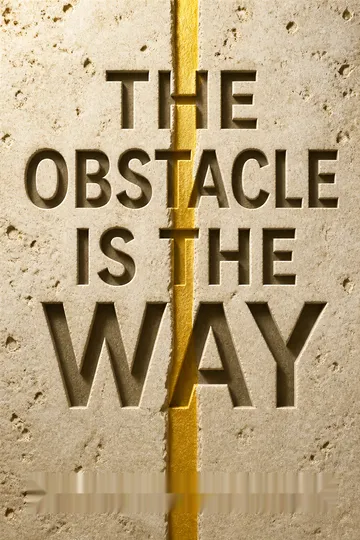
The Way, The Enemy, and The Key Series
About the Author
Other books by Ryan Holiday



Download PDF
Download EPUB
.epub digital book format is ideal for reading ebooks on phones, tablets, and e-readers.








