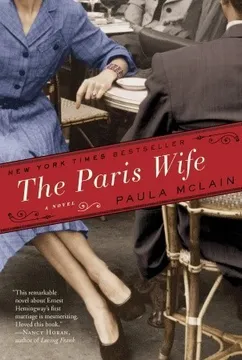


Plot Summary
Prologue
In 1924, Hadley and Ernest Hemingway return to Paris with their young son, Bumby, and settle into a cramped apartment above a sawmill. Their days have found a rhythm: Ernest writes upstairs, while Hadley cares for the baby and tries to make a home in a city still haunted by the war.
She believes their marriage is secure, built through daily acts of trust. Then she remembers Pauline Pfeiffer, the stylish American friend who is about to enter their kitchen. Hadley can already see how easily the two women might become friends, even as she senses that Pauline’s arrival will alter the shape of their life.
The opening frames Hadley’s account as a memory shaped by foreknowledge. She recalls the marriage not as a simple romance but as a household assembled through repeated, ordinary gestures: work, childcare, meals, and the decision to trust. The sawmill’s ceaseless noise gives that domestic calm an unstable undertone, while Hadley’s preview of Pauline introduces dramatic irony. Her confidence is real, but the reader knows it is not protection. The prologue’s emotional tension comes from watching Hadley name a threat before she can understand its full meaning.
A Life Kept Small
Before Chicago, Hadley Richardson has spent years confined by grief and family caution. Her father’s suicide left the household under her mother Florence’s control; then Hadley’s beloved sister Dorothea died after a fire, deepening Hadley’s depression. Hadley’s earlier injuries and recurring migraines gave her family another reason to treat her as fragile, while her older sister Fonnie’s orderly life made Hadley feel stalled.
When Florence dies in 1920, Hadley faces the choice her mother once feared for her: remain in the familiar rooms where she has learned to disappear, or risk a life of her own. She accepts her friend Kate Smith’s invitation to Chicago, hoping the journey will interrupt her long withdrawal.
Hadley’s history makes her later choices more than romantic impulsiveness. Loss has taught her to imagine herself as delicate, and her family has reinforced that identity by managing her rather than trusting her. Yet curiosity survives beneath the imposed quiet: she watches, reads, and longs to enter the lives she can only observe. Her trip to Chicago is therefore an early act of self-authorship. It does not erase grief, but it moves Hadley from passive endurance toward chosen experience, a distinction that will matter when love later threatens to consume her independence.
Chicago After Midnight
At Kate’s Chicago gathering, twenty-eight-year-old Hadley meets Ernest Hemingway, a witty, restless young man who moves easily among the party’s writers and friends. They dance, and Ernest soon asks her to read an unfinished sketch. Hadley recognizes a forceful, comic voice in the pages and gives him the encouragement he has been seeking.
He takes her to dinner, where their conversation shifts from literary ambition to his memories of serving as an ambulance driver in Italy and being wounded at the front. Kate warns Hadley that Ernest is young and careless with women, but Hadley returns to the party and keeps seeing him. On her last night, he kisses her after she tumbles down a snowy dune, then sees her onto the train home.
Their first bond is built through reciprocal recognition. Hadley sees the writer beneath Ernest’s bravado, while Ernest responds to her steadiness and attentive reading. Her encouragement is intimate because it reaches the ambition he is least able to protect from rejection. At the same time, Kate’s warning gives Hadley information she chooses not to use as a boundary. The relationship begins with both clarity and risk: Hadley is not merely swept along, but she is already willing to treat Ernest’s need as something she can answer.
Letters Across the Miles
Back in St. Louis, Hadley receives Ernest’s letters, which turn their brief courtship into a daily intimacy. He writes about his work, his ambition, and his painful attachment to Agnes von Kurowsky, the nurse who rejected him after he was wounded. Hadley also understands that Kate once loved Ernest, though she delays telling him how much Kate’s warning troubles her.
When Ernest’s letters grow scarce, Hadley fears he has chosen a chance to write in Rome over her. Instead, he proposes that she join him there as his wife. She accepts, despite knowing little about his family or his future prospects. In Chicago, Kate admits her past love and hurt, but cannot explain her earlier hostility, leaving Hadley to proceed with unanswered questions.
The letters allow Hadley to feel chosen before she has evidence that Ernest can offer lasting security. She recognizes his wounds and treats his candor as proof of trustworthiness, while he turns marriage into both a declaration and a solution to his uncertainty. Their correspondence also makes Hadley’s imagination an active participant in the romance: distance leaves room for hope to complete what daily life has not tested. Kate’s unspoken history complicates the apparent intimacy. Hadley is entering a marriage with affection, but also with significant information left outside it.
A Wedding by the Lake
Hadley meets Ernest’s family in Oak Park and recognizes in his forceful mother, Grace, an echo of her own difficult mother. Ernest resents being treated as a child, but Hadley sees how strongly his family still shapes him.
During their engagement, he takes her to a makeshift rooftop camp and they become lovers. Hadley experiences desire as a discovery of her own, not simply a concession to Ernest. They marry in September 1921 beside Walloon Lake, with Kate serving as a bridesmaid despite her earlier heartbreak.
Their honeymoon at the Hemingway family cottage brings tenderness, but also a glimpse of Ernest’s fear and dependence: he sleeps with a light on because darkness brings back the war. Hadley believes their care for each other can answer those fears.
Marriage gives Hadley an experience she has long lacked: chosen closeness that does not require her to become passive. Yet the scene also establishes a pattern in which she interprets Ernest’s vulnerability as a responsibility she can meet. His fear is genuine, but her belief that love can steady it risks turning partnership into caretaking. The wedding’s lake setting joins freedom with danger. Ernest’s beloved childhood landscape offers continuity, while the light he needs at night signals that the past remains physically present in their shared life.
Paris Replaces Rome
The newlyweds begin in a shabby Chicago apartment, living largely on Hadley’s modest trust income after Ernest quits a newspaper job troubled by financial scandal. His writing brings little success, and his war nightmares leave him shaken enough that Hadley fears he may share her father’s despair.
A dinner with writer Sherwood Anderson changes their prospects. Anderson urges Ernest to choose Paris, where writers and artists gather, rather than Rome. Soon afterward, Hadley inherits eight thousand dollars from her uncle, making the move possible.
Anderson supplies introductions to Gertrude Stein, Ezra Pound, James Joyce, and bookseller Sylvia Beach. In December 1921, Hadley and Ernest sail for France, betting their money and their marriage on Ernest’s chance to become a writer.
The move to Paris is both practical escape and artistic wager. Hadley’s inheritance converts a fragile dream into a shared project, but it also deepens her investment in Ernest’s success. His distress after the war complicates the image of the confident young writer; ambition gives him direction, yet does not cure his fear. Anderson’s advice provides a new geography for that ambition, while the introductions create access to a literary world neither spouse fully understands. Hadley helps make the journey possible, even as the work that defines it belongs chiefly to Ernest.
The Apprenticeship Begins
Their first Paris apartment is cold, crowded, and far from the fashionable cafés, but Ernest embraces its working-class neighborhood while Hadley struggles with homesickness. He rents a tiny garret for writing and begins building a disciplined routine.
Through Anderson’s introductions, he meets Pound, whose advice and reading lists sharpen his ambitions, and Stein, whose criticism pushes him to strip his prose down and begin his Michigan novel again. Hadley befriends Stein’s companion Alice Toklas and tries to find her place among the artists’ spouses.
She supports Ernest’s work, but his long hours leave her alone. Their days acquire a pattern of separate labor, then reunion in cafés and at home, where Hadley increasingly measures her own life against the creative world surrounding them.
Paris expands Ernest’s artistic possibilities while narrowing Hadley’s social role. The same city that offers them intellectual community gives Ernest a recognized vocation and leaves Hadley translating, hosting, and waiting at its edges. She is not simply excluded; she actively helps sustain the conditions in which his work can grow. That labor, however, is difficult to name as ambition of her own. Stein and Pound offer Ernest tools, but their influence also makes the couple’s imbalance more visible: one spouse’s apprenticeship becomes the organizing principle of both lives.
The War Comes Back
After a reporting assignment takes Ernest to Genoa, Hadley discovers how dependent she has become on his presence. The couple later travel with Ernest’s war friend Chink Dorman-Smith through Switzerland and cross the snowy Great St. Bernard Pass, where Hadley’s flimsy shoes split and Ernest suffers altitude sickness.
Her persistence surprises her, and the journey gives her a first sense of strength outside the apartment. In Milan, Ernest revisits the hospital where he recovered from his wounds and recounts the night he was hit.
He and Hadley continue to Schio and Fossalta, but the towns and battlefield have changed beyond recognition. Ernest finds only a small fragment of shell. Soon afterward, his newspaper sends him to cover the violence and refugee crisis in Turkey.
The Alpine crossing gives Hadley a counter-story to the family identity of frailty: she continues despite pain, bad equipment, and the demands of the terrain. Ernest’s return to Italy moves in the opposite direction, toward memories that resist the couple’s hope of mastering the past. The clean, altered battlefield unsettles him because it offers no visible confirmation of what happened. The shell fragment cannot restore the lost scene; it only proves that memory and place have separated. His new assignment will intensify that separation by sending him toward living catastrophe.
Turkey’s Yellow Road
In Turkey, Ernest reports on Greek and Armenian refugees fleeing the burning of Smyrna. He records hunger, illness, violence, and families driven along rain-soaked roads, while his own war memories return.
Isolated and sick with malaria, he begins an affair with an Armenian woman after fighting a British soldier who approaches her. He leaves money and his hotel address, then recognizes that he has chosen the act himself and knows it will wound Hadley.
In Paris, Hadley receives little news, cooks with Marie Cocotte, and tries to keep fear from turning into whiskey drinking. When Ernest returns feverish and lice-ridden, Hadley nurses him through days in bed. They do not discuss the affair; his illness and their relief at reunion bury the breach without repairing it.
The parallel experiences expose an asymmetry in what each spouse is asked to carry. Ernest confronts mass suffering and uses sex to feel temporarily alive, then returns to Hadley for care without disclosing the choice. Hadley’s silence is not forgiveness so much as a strategy for preserving the relationship when she has too little information to judge it. The refusal to speak lets tenderness resume, but it also converts an injury into an unexamined debt. Ernest’s reporting makes him witness to others’ pain, while his private conduct shows how easily self-awareness can coexist with self-exemption.
The Missing Valise
As Ernest’s work begins to attract serious attention, Hadley packs his manuscripts into a small valise so he can show them to Lincoln Steffens in Lausanne. While she briefly leaves her train compartment at the Paris station, someone steals the case.
It contains nearly everything Ernest has written: stories, poems, sketches, and drafts, including copies she thought would protect the originals. She tells Ernest when she reaches Lausanne, and he returns to Paris to search the apartment and confirm the loss.
He is devastated, though he insists he can write the material again. At the conference, Hadley watches him resume his duties while privately imagining the empty cupboard. Their shared future now depends on whether he can begin again, and whether he can forgive her.
The theft becomes a rupture because the manuscripts are both Ernest’s accumulated labor and a material expression of Hadley’s devotion. She packed them to help his career, but her care becomes linked to a loss she cannot reverse. Ernest’s claim that he can recreate the work protects them from immediate collapse, yet it cannot restore trust or the years embedded in the pages. The empty cupboard gives the injury a physical form. From here, their marriage carries an unspoken question: can love survive when one partner feels that the other has endangered the core of their identity?
A Son, Then Toronto
During a winter stay in Switzerland, Hadley discovers she is pregnant. Ernest is frightened that a child will interrupt the writing life he has only just begun to recover, and the lost manuscripts still shadow their arguments.
A story of Ernest’s earns strong praise, helping him return to work. They travel to Toronto for the birth, where Ernest takes a newspaper position and Hadley gives birth to John Hadley Nicanor Hemingway, known as Bumby, while Ernest is away reporting.
His new editor humiliates him, and the cold, costly city leaves the family isolated. Ernest cannot write fiction and grows increasingly low. Hadley finally agrees to spend their savings and return to Paris early, choosing the place where Ernest can work over the security of staying in Toronto.
Bumby’s birth enlarges Hadley’s sense of purpose, but it does not automatically make the marriage more secure. Ernest experiences fatherhood through the pressure it places on his vocation, while Hadley experiences it as a relationship that gives her a new center. Toronto sharpens their difference: the stable job that should provide safety becomes a threat to Ernest’s sense of self. Hadley’s decision to return to Paris is loving and clear-eyed, yet it repeats a pattern in which she absorbs the cost of keeping his artistic life possible.
Fame Finds Its Shape
Back in Paris, Ernest works among the cafés and literary circles he once dismissed. His book In Our Time earns admiring reviews, and his status rises. Hadley cares for Bumby, practices piano when she can, and forms friendships with Kitty Cannell and Pauline Pfeiffer, a fashionable journalist who becomes a regular visitor.
On a 1925 trip to Pamplona, Ernest becomes absorbed by bullfighting and the volatile group around Duff Twysden, Harold Loeb, and Pat Guthrie. He turns their rivalries into a novel, The Sun Also Rises, shaping himself as Jake Barnes and Duff as Brett Ashley. Hadley reads the draft with pride and pain: Ernest has transformed their circle into art, but has left her out of the book entirely.
Recognition changes the couple’s balance. Ernest’s work now brings invitations, readers, and a public identity, while Hadley’s contribution remains intimate and largely invisible. The novel’s transformation of lived events into fiction gives Ernest creative freedom but makes Hadley confront the limits of being his closest witness. Her absence from the book is not simply a personal slight; it dramatizes how the artist can claim experience as material while the spouse who helped sustain that life remains outside its representation. Hadley can admire the work and feel excluded by it at the same time.
Pauline Crosses the Line
Pauline’s friendship with Hadley deepens, and Ernest increasingly values her literary judgment. During a trip through the Loire Valley, Pauline grows distraught among the châteaux and finally cries in a garden. Her sister Jinny confirms what Hadley has begun to suspect: Pauline and Ernest care for each other.
Back in Paris, Hadley confronts Ernest, who refuses to discuss the truth and leaves her alone with his evasion. He later admits, in effect, that he has been involved with Pauline. Hadley slaps him, then watches him return to work as if the betrayal has not stopped his writing. Their marriage is no longer protected by silence; the affair has become a fact neither can fold back into friendship.
Pauline’s betrayal is especially destabilizing because she has entered the marriage through Hadley’s trust. The friendship gives her access to the couple’s routines, language, and private spaces, so her desire cannot be treated as an external temptation. Ernest’s refusal to answer Hadley directly shifts attention from his actions to her supposed impropriety in naming them. This is a form of control through silence: he preserves his freedom to act while denying her the clarity needed to respond. Hadley’s confrontation marks a change from accommodation to explicit moral judgment.
Three Lives at Antibes
At Antibes, Hadley, Ernest, and Pauline occupy neighboring rooms and attempt an uneasy shared routine while Bumby recovers from whooping cough. Hadley understands that the lovers are meeting privately, yet keeps the household functioning and joins them on the beach. One day she swims far from shore and lets herself sink, testing the possibility of not returning.
She chooses to surface, then refuses Pauline’s invitation to jump from the rocks and walks back to the hotel alone. Ernest and Pauline later come to her room together, behaving like caretakers. Hadley tells them to leave. The next year, after another Pamplona fiesta and weeks of bitter quarrels in San Sebastian, she and Ernest agree that the marriage is over.
Hadley’s near-drowning is a private crisis, not a romantic gesture: she tests how much of herself remains beneath the role of wife and accommodating friend. Choosing the surface is a minimal but decisive act of self-preservation. Her refusal to dive with Ernest and Pauline makes that choice relationally visible; she will not join their shared performance of ease. The apparent household unity at Antibes depends on Hadley’s silence and labor, not genuine consent. Once she names its damage, the arrangement loses its claim to be a viable marriage.
Hadley Ends the Waiting
After returning to Paris, Hadley asks Ernest and Pauline to spend a hundred days apart before he decides whether he still wants a divorce. Pauline leaves for the United States, but Ernest continues visiting Hadley and Bumby.
Their familiar tenderness and physical closeness return at times, making the separation harder rather than restoring trust. Hadley retreats to Chartres with Kitty to think. There she writes Ernest that she will not make him wait any longer and will accept the divorce, while asking that they keep their future contact focused on practical matters.
Ernest agrees, promises Hadley the royalties from The Sun Also Rises, and praises her as Bumby’s mother. The marriage ends through Hadley’s decision to stop bargaining for a love Ernest has already chosen to leave.
The hundred day pact gives Hadley a temporary structure when emotion has made every choice feel impossible. Its failure is not that the lovers remain attached, but that their attachment does not produce a trustworthy life for her. Hadley’s letter turns an imposed waiting game into a decision she controls. She does not deny love or pretend the marriage was meaningless; she refuses to let love serve as a reason to remain indefinitely available. Her release is therefore neither triumph nor simple resignation. It is an act of boundary making.
A Paper Boat West
In 1927, Hadley and Bumby leave Paris for the United States and settle for a time in Carmel, California. Hadley learns that Ernest and Pauline have married. As Bumby builds a sand trench near the surf, she reads the news and folds Ernest’s letter into a paper boat. She and her son let it float away.
The image does not erase the years they shared, but it gives Hadley a way to watch the past move beyond her reach. She has already chosen not to fight for the marriage, and now begins to imagine a life that is not organized around Ernest’s needs. Her grief remains, but it no longer dictates every next step.
The paper boat makes mourning an action rather than a declaration. Hadley does not destroy the letter in anger or keep it as a relic; she reshapes it and releases it into the water with Bumby beside her. The gesture acknowledges that the past still matters while refusing to make it a permanent home. The child’s presence also relocates Hadley’s responsibility: she must build a future with Bumby, not merely preserve the story of her marriage. Her recovery begins as a practice of letting go without falsifying what she loved.
Epilogue
Hadley returns to Paris with Bumby and later marries journalist Paul Mowrer, whose steadiness allows her to love again without surrendering her balance. Ernest and Pauline leave France, while Ernest’s literary stature and self-created public legend grow. In 1961, he calls Hadley to remember their Paris years and admits that he ruined their marriage.
Later that summer, Hadley learns that he has died by suicide, as her father and Ernest’s father had. The news does not cancel her affection or surprise her. She returns inwardly to the beginning, to the girl arriving in Chicago, and recognizes how much that first love changed her.
The epilogue refuses both romantic absolution and simple condemnation. Ernest’s late acknowledgment offers Hadley a truth she did not receive during the marriage, but it arrives after the consequences are irreversible. His suicide also links the men in Hadley’s history without claiming that inheritance makes their deaths inevitable. Hadley’s life with Paul shows that love can follow loss without replacing the past. Her final return to the girl who first met Ernest gathers the novel’s central transformation: she remembers being changed by him, but no longer defines herself only through him.
Analysis
The Paris Wife presents marriage as a shared life whose meaning is continually negotiated through work, care, sex, money, and truth. Hadley and Ernest begin with a genuine reciprocity: she recognizes his talent, and he draws her back into experience after years of grief. But their partnership becomes increasingly organized around Ernest’s vocation. Hadley’s practical and emotional labor helps make his writing possible, while the culture around them treats that labor as natural rather than creative. Her devotion is not portrayed as weakness; it is an intelligent commitment that gradually becomes costly when Ernest assumes it will absorb every injury.
The novel also distinguishes artistic transformation from moral absolution. Ernest turns war, travel, friendship, and bullfighting into fiction, finding form in what Hadley experiences as disorder. That power gives his work force, but it lets him control which parts of shared life enter the record. Hadley’s omission from The Sun Also Rises makes this tension intimate. She can recognize the achievement and feel its exclusion at once. Art preserves experience, but it does not necessarily honor everyone who helped create the conditions for it.
Postwar Paris supplies a social setting in which freedom is celebrated and fidelity can look provincial. Yet the novel does not simply oppose modernity to tradition. Hadley’s wish for durable love is not a failure to understand her age; it is a value she has chosen. The surrounding marriages reveal that unconventional arrangements can be liberating for some and destructive for others. What matters is not whether a couple follows convention, but whether both people can speak honestly and consent to the life being made.
Hadley’s final strength is therefore not that she stops loving Ernest. She learns that affection cannot substitute for mutual responsibility. By ending the waiting, she preserves the truth of their years together without making that truth a command to remain. Her memory can hold Ernest’s tenderness, brilliance, selfishness, and damage at once. The book’s emotional achievement lies in allowing love to remain real after it has ceased to be a livable home.
Review Summary
Reviews for The Paris Wife are largely positive, averaging 3.82 out of 5. Many readers praise McLain's atmospheric depiction of 1920s Paris and her authentic portrayal of Hadley Richardson's voice. Fans of historical fiction appreciate the rich detail and emotional depth, while critics note the novel can feel flat or overly reliant on its source material. Hadley's passive character frustrates some readers, though others find her deeply sympathetic. Most agree the book inspires curiosity about Hemingway's life and works.
People Also Read










Characters
Hadley Richardson
The steadfast witnessHadley is an observant, affectionate woman shaped by grief, family restraint, and a long habit of doubting her own strength. She is drawn to Ernest’s vitality and talent, but her capacity to support him can blur into self-erasure. She notices details others miss and often understands emotional consequences before she is ready to act on them. Music, motherhood, friendship, and travel give her forms of identity beyond marriage, though she struggles to claim them. Her central tension is not whether she loves Ernest, but whether love requires her to accept every arrangement he wants. Her steadiness is both a resource and a vulnerability.
Ernest Hemingway
The hungry young writerErnest is ambitious, physically confident, and intensely responsive to praise, yet war memories and fear of failure unsettle the certainty he projects. He wants to write with precision and authority, and he treats the work as central to his identity. He can be tender with Hadley and deeply dependent on her care, but also selfish when his desires conflict with her needs. His competitiveness, pride, and hunger for new experience strain friendships as his reputation grows. The novel presents him as neither a finished literary hero nor a simple villain, but as a gifted man whose need to feel alive repeatedly outruns his capacity for honesty.
John Hadley Nicanor Hemingway
The beloved sonKnown as Bumby, Hadley and Ernest’s son becomes the center of Hadley’s daily care and a source of warmth for both parents. His arrival reshapes their finances, routines, and ideas about the future. He is too young to understand the adult fractures around him, but his needs make their consequences immediate: travel, work, illness, and separation must all be managed around his safety. Bumby also gives Hadley a relationship in which her presence is unquestionably important, even as she must learn that motherhood cannot repair her marriage.
Pauline Pfeiffer
The polished confidantePauline is a fashion journalist with money, intelligence, social confidence, and a perceptive eye for books. She befriends Hadley and becomes part of the Hemingways’ daily life, offering encouragement and companionship. Her self-possession distinguishes her from Hadley, whose gentler approach is rooted in loyalty and domestic intimacy. Pauline wants a sweeping, consequential love and is willing to act decisively in pursuit of it. Her presence raises difficult questions about friendship, desire, and the unequal freedoms available to women in their circle.
Kate Smith
Hadley’s candid friendKate is Hadley’s old school friend and the person who brings her into Chicago’s lively social world. Bold, funny, and socially perceptive, she warns Hadley about Ernest before admitting that she once loved him herself. Her protectiveness is mixed with private hurt, but she eventually chooses friendship over resentment and stands beside Hadley.
Florence Richardson
Hadley’s formidable motherFlorence is a forceful, judgmental presence whose concern for Hadley often takes the form of restriction. Her approval is difficult to earn, and her ideas about women, marriage, and propriety shape the household. Hadley’s complicated love for her survives alongside resentment and the lasting influence of her mother’s judgments.
Fonnie Richardson
The dutiful older sisterHadley’s older sister is orderly and conventionally capable, qualities their mother values. She worries that Hadley is too vulnerable for Ernest, though her own unhappy marriage complicates her advice. Fonnie’s caution comes from a wish to protect Hadley, but it also reflects the narrow life she believes a woman can safely choose.
Roland
Fonnie’s subdued husbandRoland is bookish, apologetic, and more sympathetic to Hadley than Fonnie often is. His strained marriage makes him a quiet ally in the Richardson household, though he struggles to assert himself.
Dorothea Richardson
Hadley’s lost sisterDorothea is Hadley’s older sister and one of the few family members who offers her warmth and understanding. Her kindness gives Hadley a brief experience of being accepted without correction.
Grace Hemingway
Ernest’s commanding motherGrace is artistic, talkative, and accustomed to directing family life. Ernest resists her authority, while Hadley recognizes similarities between Grace and Florence Richardson. Her influence helps explain Ernest’s sensitivity to control and criticism.
Dr. Hemingway
Ernest’s quieter fatherErnest’s father is a physician and outdoorsman whose gentleness contrasts with Grace’s forceful personality. Ernest associates him with fishing, hunting, and practical knowledge, memories that feed his sense of what a man should be.
Sherwood Anderson
The guiding mentorAnderson recognizes promise in Ernest’s writing and helps him find his way into the Paris literary community. His advice redirects the couple from Rome to Paris, and his support gives Ernest access to influential writers and editors. Their friendship also becomes complicated by Ernest’s need to escape comparison and indebtedness.
Gertrude Stein
The exacting literary mentorStein is a celebrated salon host whose artistic judgment matters greatly to Ernest. Her advice encourages him to simplify and sharpen his prose. Hadley admires her and hopes for a friendship that is not merely mediated by Ernest, while Stein’s unconventional household offers another model of intimacy and artistic partnership.
Alice Toklas
Stein’s precise companionAlice manages the social and domestic edges of Stein’s salon with brisk intelligence. She often draws Hadley into the role of the writer’s wife, making visible the gendered boundaries of the literary circle.
Ezra Pound
The restless poetry advocatePound is an energetic poet and critic who connects Ernest to modern literary movements and presses him to study, revise, and take his work seriously. His confidence in Ernest is valuable, but his unconventional attitudes toward marriage and children offer a model that unsettles Hadley.
Dorothy Shakespear
Pound’s poised wifeDorothy is an elegant painter and Pound’s wife, whose quiet manner contrasts with his forceful talk. She becomes a friendly presence for Hadley and offers glimpses of a marriage shaped by arrangements Hadley herself finds difficult to accept.
Chink Dorman-Smith
Ernest’s war companionChink is an Irish soldier and Ernest’s close friend from the Italian front. Courteous, capable, and wry, he shares memories Ernest rarely discusses with Hadley and helps make their travels in Switzerland feel companionable.
Kitty Cannell
Hadley’s independent allyKitty is a stylish, frank woman who becomes one of Hadley’s few independent friendships in Paris. Her skepticism about marriage contrasts with Hadley’s faith in lasting vows, but she offers practical loyalty when Hadley is in crisis.
Duff Twysden
The magnetic socialiteDuff is a witty, unconventional woman whose boldness fascinates Ernest and unsettles Hadley. She moves freely through the expatriate circle and becomes an important presence during the Pamplona trip, where private desires and public loyalties collide.
Donald Stewart
Hadley’s gentle confidantDon is a humorous writer who values decency and straightforward attachment. His warmth gives Hadley a rare source of sympathy outside her marriage, especially when the expatriate circle grows cruel and unstable.
Scott Fitzgerald
The brilliant, troubled novelistScott is a successful writer whose charm and drinking conceal deep instability. He recognizes Ernest’s talent and later helps him revise the opening of The Sun Also Rises. His own marriage and conduct show Hadley a more volatile version of the artistic life.
Zelda Fitzgerald
The dazzling risk takerZelda is vivid, theatrical, and difficult to predict. Her behavior both entertains and alarms Hadley, while her marriage to Scott offers a glimpse of how performance, jealousy, and risk can become part of a couple’s public life.
Gerald and Sara Murphy
The generous Riviera hostsGerald and Sara Murphy are wealthy, stylish hosts who help create the social world of the Riviera. Their generosity gives Hadley practical support, while Ernest both benefits from and resents their money and influence.
Marie Cocotte
The household’s steady handMarie Cocotte is the Hemingways’ capable cook and housekeeper, later helping care for Bumby. Her practical kindness gives Hadley support in Paris and during periods when Ernest is away.
Paul Mowrer
Hadley’s later companionPaul is a journalist and poet whom Hadley knows through Ernest’s professional circle. His steadiness offers a contrast to the intensity and uncertainty of her first marriage.
Plot Devices
Hadley and Ernest’s letters
Intimacy across distanceLetters turn a short Chicago courtship into a sustained emotional relationship. Ernest shares professional hopes and memories of Agnes, while Hadley answers from St. Louis and waits for his replies. Their correspondence lets each imagine a shared future before they have tested everyday life together. Later, the letters also make absence tangible: Ernest’s silence during his assignments magnifies Hadley’s fear, while Pauline’s messages intrude on the marriage even when she is elsewhere.
The stolen manuscript valise
Loss made materialHadley packs Ernest’s writing into a valise so he can share it with Lincoln Steffens, but the case is stolen at the Paris station. The missing pages stand for years of work and become a lasting source of guilt and mistrust. Ernest’s effort to begin again produces new writing, but recovery does not undo the emotional damage. The valise links Hadley’s wish to help with the fear that her care has harmed the person she loves most.
The war’s remembered wounds
Past invading the presentErnest’s injury in Italy, his nightmares, and his reporting on refugees make the war a continuing pressure rather than a closed chapter. Places such as Fossalta and Milan trigger memories that he cannot control, while his work forces him to witness new suffering. The war helps explain his hunger for danger and intensity, but it does not excuse his choices. Its presence also echoes Hadley’s history of family suicide, making care and fear inseparable in their marriage.
Bullfighting and the novel
Life transformed into fictionThe bullfights in Spain give Ernest a new subject and a way to shape the messy rivalries of his social circle into The Sun Also Rises. The arena’s formal danger fascinates him because it turns fear into a visible test of skill. Hadley watches the same events and relationships as both wife and witness, then discovers that Ernest has made a novel from their experience without including her. The device shows the power of art to preserve experience while also rearranging or excluding the people who lived it.
Water and the shoreline
A measure of survivalWater recurs through Hadley’s childhood memories, Ernest’s Michigan world, their travels, and the final crisis at Antibes. Hadley remembers feeling as if she were drowning after Dorothea’s death, and later lets herself sink beneath the Mediterranean while considering whether to return. Her choice to surface marks a private decision to live, even when the life she has built is collapsing. The image makes emotional danger physical without turning Hadley’s recovery into a single clean resolution.
Download PDF
Download EPUB
.epub digital book format is ideal for reading ebooks on phones, tablets, and e-readers.








