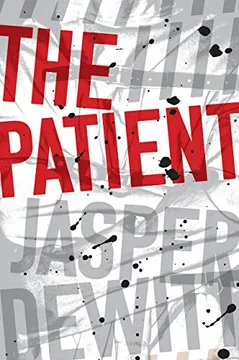


Plot Summary
Prologue
The story arrives as a supposedly recovered online confession by a psychiatrist writing under a pseudonym. An author’s note claims the original posts were archived before their forum disappeared, while warning that names and places were changed. This frame asks readers to weigh a medical professional’s account against his own fear that trauma or illness may have distorted it.
The recovered-manuscript frame makes uncertainty part of the story’s machinery before Parker encounters Joe. Its claim of documentary provenance invites belief, but the concealed identities and Parker’s own doubts keep that belief provisional. The reader occupies a position resembling the forum audience: asked to assess testimony without access to verification. That structure sharpens the book’s central conflict between clinical explanation and experiences that resist proof. It also gives Parker’s confession two motives at once: warning others and trying to determine whether telling the story is an act of responsibility or evidence that he, too, has been altered.
A Job at the Asylum
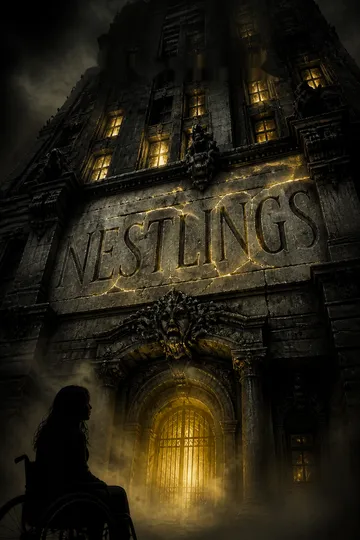
Parker, a newly trained psychiatrist, chooses Connecticut State Asylum over prestigious hospitals because his mother’s institutionalization taught him to care about people the system abandons. His fiancée, Jocelyn, is completing a Shakespeare doctorate nearby, making the post personally convenient as well as morally appealing.
On his interview visit, an orderly named Graham is wheeled into the elevator, restrained and raging after an encounter with a patient. Parker takes the job, then learns that Joe, a long-term resident, has been kept alone for decades and is avoided by nearly everyone.
Nurse director Nessie warns Parker that even brief duties near Joe leave staff shaken. Her warning deepens his curiosity, and he secretly finds Joe’s full name so he can inspect the old paper records.
Parker’s choice of a neglected state hospital grows from childhood guilt as much as professional conviction. His mother’s suffering has taught him to interpret institutional neglect as a moral failure he might personally repair. That history gives his altruism force, but also makes it vulnerable to exploitation: he approaches Joe not only as a clinician but as someone trying to undo an earlier helplessness. The opening elevator encounter supplies a concrete counterweight to his idealism. Graham’s restraint suggests danger before Parker understands its source, while Nessie’s fear marks the boundary the institution has built around Joe. Parker crosses that boundary first through curiosity, then through a sense of duty.
The File Goes Dark
The dusty file shows that six-year-old Joe first entered the hospital with night terrors about a creature in his bedroom walls, then left after a short stay. He returned the next day transformed: silent, violent, and soon able to target adults with intimate insults.
Later records describe disastrous room assignments, including an assault on a vulnerable child and a paranoid roommate’s fatal fall from a window. The notes are incomplete, and an overnight recording ordered after these incidents is missing from the records system.
A former director’s letter says staff cannot diagnose or cure Joe and recommends keeping him isolated. Reading the history unsettles Parker, especially when the child’s terror stirs memories of his own mother’s breakdown and his lingering belief that he should have saved her.
The file presents diagnosis as a sequence of failed attempts to make Joe legible. Each new label or treatment seems to precede a change in his behavior, but the records cannot establish whether medicine caused the shift, merely documented it, or concealed something else. Their gaps are as consequential as their entries: a missing tape and an absent name turn administration into a source of suspense. Parker’s childhood memories complicate his reading. He recognizes a patient’s suffering through his own history, but that recognition may become a clinical blind spot, encouraging him to treat empathy as evidence. The file thus makes the archive both indispensable and suspect.
Nessie’s Empty Chair
Soon after Parker discovers Joe’s history, Nessie is found dead after a fall from the hospital roof, officially judged a suicide. Her loss leaves the understaffed ward struggling, and Bruce, Parker’s abrasive supervisor, responds by demanding that doctors medicate patients more heavily and carry more cases.
Parker volunteers for extra work and includes Joe among the patients he wants to treat. Medical director Rose G., who previously discouraged contact, intervenes when Bruce threatens him.
She admits that doctors assigned to Joe have suffered severe breakdowns or died, and she refuses to discuss the cause in advance. Before approving Parker, Rose asks what he fears most; his answer is being unable to protect someone he loves. She warns him against attachments, then gives him Joe’s records and makes him the patient’s doctor.
Nessie’s death converts Parker’s abstract fascination into personal urgency, but the story carefully withholds certainty about why she died. The institution’s official explanation and Joe’s possible connection remain in tension, showing how a bureaucratic conclusion can settle a case without resolving its meaning. Bruce’s response reveals a workplace organized around survival and workload rather than care. Rose, by contrast, recognizes the danger yet grants Parker access after testing his self-knowledge. Her question about his deepest fear functions as both screening and warning: she understands that Joe’s threat may be tailored to the person who encounters him. Parker’s answer exposes the emotional vulnerability beneath his professional confidence.
The Patient Seems Sane
Parker’s first visit unsettles his expectations: Joe is physically slight, conversational, and quick to mock the hospital’s assumptions. He remembers a child once assigned to his room and offers an explanation that complicates the file’s account of an assault.
Parker leaves uncertain, then listens to the old tapes and reads the fuller notes Rose supplied. The first recording captures an ordinary frightened child describing the wall creature; the second contains an orderly’s panicked breathing and sounds Parker interprets as flight, with a faint, troubling laugh underneath.
Rose’s notes end in an abrupt resignation, which Parker reads as proof that she helped preserve a false story. He begins to suspect the hospital has imprisoned a sane man for convenience, though he cannot explain every detail.
Joe’s lucidity is not proof of innocence, but it changes the emotional balance of the case. Parker’s professional skepticism gives way to sympathy because Joe’s account is coherent and because the records are demonstrably incomplete. The tapes deepen rather than settle the conflict: silence can imply manipulation, failed recording, or a sound that cannot be captured. Parker selects the interpretation most consistent with his growing belief that the institution has abused Joe. This is a psychologically credible error, not simple foolishness. His desire to recognize an abandoned person echoes his history with his mother, and each piece of ambiguous evidence becomes easier to read as confirmation.
A Childhood Kept Hostage
In later sessions, Joe describes parents who valued appearances over him and recalls his father beating him after he befriended a stray cat, while his mother failed to intervene. Parker believes the account and recognizes in Joe’s self-blame an echo of his own childhood guilt about his mother.
When Parker asks why Joe has not left, Joe explains that the institution’s file makes escape impossible and says Nessie had once been too loyal to expose the hospital. Parker concludes that doing nothing would make him complicit in unlawful confinement. He consults Jocelyn, who challenges him to trust his judgment, then plans a covert release: leave his coat and keys in Joe’s room, trigger a fire alarm, and use the evacuation to clear a route out.
Joe’s story works because it joins specific injury to a familiar psychological pattern: a child assumes responsibility for the harm adults inflict. Parker recognizes that pattern from his own past and responds with belief rather than detachment. The connection creates genuine rapport, but it also makes Parker unusually susceptible to Joe’s framing. His decision to free Joe is therefore both ethical protest and an attempt to repair an old failure through a new patient. Jocelyn’s role is important because she does not simply endorse his plan; she asks him to take responsibility for his own judgment. Yet his confidence outruns the evidence, turning care into a risky unilateral act.
The Escape Is Stopped
Parker begins the escape plan, but Bruce and the orderly Hank catch him outside Joe’s room before the fire alarm is triggered. Bruce says he warned Rose that Parker would interfere, while Hank holds him fast. As they prepare to take Parker upstairs, an unnatural laugh comes from Joe’s room.
Parker recognizes it as the sound from his nightmare about his mother, but neither man reacts. In Rose’s office, Parker meets Thomas, the retired doctor who first treated Joe.
Rose explains that she had monitored Parker because his long, apparently positive sessions differed from the reactions of earlier clinicians. Joe had also told Hank that Parker intended to help him escape. The revelation leaves Parker unable to tell whether Joe confided in him or used him.
The failed escape reverses Parker’s sense of agency. He believed he was rescuing Joe from an abusive institution; instead, Joe has apparently exposed his plan to the staff, while the sound Parker hears receives no confirmation from the men beside him. That mismatch isolates him more effectively than a direct threat would. Rose’s surveillance complicates the image of her as a simple jailer: she has been testing Parker’s response, though her methods remain ethically troubling. Thomas’s arrival promises expertise but also shifts power away from Parker. The scene makes perception a social problem: a terrifying experience that no one else acknowledges can be dismissed as illness, even by the person who felt it.
The Cat in the File
Rose recounts that her treatment once seemed to calm young Joe and draw him close to her. She gave him a cat as a test of his empathy; after six days of apparently gentle care, she found the animal mutilated and a private childhood nickname scrawled nearby.
The episode drove her to resign and attempt suicide. Thomas argues that Joe may be an abused child whose dissociation turned him into the monster he imagined, and he interprets Parker’s sympathy as another calculated manipulation.
Parker sees unresolved problems in that theory: the original creature may have existed, and Joe’s knowledge of private fears exceeds what anyone admits telling him. Rose permits him to visit Joe’s parents’ estate and examine the bedroom where the night terrors began.
Rose’s account changes the case from a dispute about institutional greed into a history of intimate psychological injury. Her attachment to Joe was not merely a lapse in clinical boundaries; it answered a private longing to feel needed, making his apparent recovery emotionally persuasive. The mutilated cat destroys that belief and leaves her with shame as well as fear. Thomas offers a psychologically coherent explanation, but coherence is not the same as proof. Parker’s objections are valuable because he notices data the established interpretation cannot absorb, yet his supernatural alternative is itself shaped by the fear and guilt the case has activated. The scene asks whether expertise can correct bias when every explanation protects its author’s sense of control.
Bones Behind the Wall
At the family estate, Joe’s mother, Martha, describes his early night terrors and the failed attempts to help him, including a sculpted monster made from his drawings. She says that after Thomas’s first treatment, Joe returned home convinced he could confront the creature, then soon became frighteningly altered.
Parker searches the untouched bedroom and finds torn carpet, bloodstains, and fragments of a child’s fingernails leading to the wall Joe said the monster entered.
With Martha’s fire axe, he breaks through the plaster and discovers a small human skull hidden inside a cavity. The remains overturn every theory based on Joe’s later behavior: Parker concludes that the real child died there and that something else took his place. Martha sees the bones but cannot make sense of them.
The hidden remains transform the room from a setting for childhood fears into evidence of a crime that ordinary clinical records never found. The route of blood and torn fingernails makes the discovery physical and specific; Parker does not reach his conclusion through intuition alone. Still, the bones establish a murdered child, not the exact nature of what followed. His interpretation arises from joining the corpse to the creature story and Joe’s changing behavior. This is the novel’s most forceful collision between material evidence and supernatural inference. Martha’s inability to understand the remains mirrors the reader’s position: something undeniable has been uncovered, but its meaning exceeds the available systems of explanation.
The Thing Admits Nothing
Parker returns to the hospital carrying the axe and a pocket recorder, determined to make the being in Joe’s body acknowledge what it did. It sheds its human appearance, displaying wounds, maggots, and a face that echoes Parker’s worst childhood nightmare.
Parker refuses to give it a new identity to imitate and confronts it with the discovery in the wall. The creature indicates that it killed the boy, then describes its interest in learning how humans become prey.
It offers Parker the chance to understand others’ fears, but he recognizes the offer as another attempt to exploit his wish to protect people. When Parker checks the recording, only his own words and the ordinary patient’s pleading voice are audible. He destroys the tape, unable to prove what he saw.
Parker’s confrontation gives him knowledge but denies him evidence. The creature’s apparent admission matters to him, yet the recorder preserves only sounds compatible with an ordinary psychiatric crisis. The gap between experience and proof makes his victory unstable: he can refuse the creature’s invitation, but he cannot persuade an institution to act on an account it cannot verify. The exchange also exposes the creature’s predatory logic. It seeks not simply to frighten Parker but to learn how care, empathy, and identification can be turned against their owner. Parker’s refusal to name or define it is a small act of resistance, because the creature appears able to use imposed identities as tools.
The Ward Loses Its Prisoner
That night, Parker dreams of the hospital flooding with blood and filth; the next day, Rose tells him a blackout allowed someone to unlock Joe’s room and secure ward. Police search for a supposedly ill, nonviolent man, unaware of the hidden remains or Parker’s account.
Thomas soon dies at home, and Martha is found dead after falling from her son’s bedroom window. Weeks later, Jocelyn is attacked after leaving the library and describes a man matching Joe’s appearance.
Parker and Jocelyn leave the region, marry, and rebuild a life marked by her depression and his guilt. He opens a private practice for children with fears and delusions, wary of stories about monsters that ask to be recognized. He ends by warning caregivers not to dismiss a child’s terror too quickly.
The ending refuses a clean victory. The creature escapes, the police pursue the wrong version of Joe, and Parker’s private account remains unsupported by the evidence he tried to collect. Thomas’s and Martha’s deaths deepen the uncertainty rather than explain it, while Jocelyn’s assault gives Parker’s failed rescue a lasting personal cost. His later practice is an attempt to convert guilt into vigilance, but vigilance itself carries danger: he may see a supernatural pattern where a child needs ordinary care. The final warning is therefore ethically double-edged. It insists that adults listen closely to children, while the story leaves open whether belief, skepticism, or either taken too far can become another form of harm.
Analysis
The Patient makes the limits of psychiatric knowledge its central source of horror. Parker begins with a humane but dangerous premise: because the institution has abandoned Joe, the compassionate act must be to trust him and intervene. The narrative does not mock that impulse. It shows why his attention matters, then reveals how easily care can be recruited into a patient’s account when the caregiver’s own history is activated. Parker’s memories of his mother make him alert to institutional cruelty, but they also create a powerful confirmation bias. He sees another abandoned person and wants to repair what he could not repair as a child.
The book’s competing explanations are carefully asymmetrical. Thomas’s theory of abuse and dissociation is medically intelligible, but the hidden remains and unexplained knowledge strain it. Parker’s supernatural theory fits those anomalies, yet it cannot be demonstrated by the recordings or accepted by the hospital. Neither framework delivers complete certainty. The reader is placed in the same bind as the clinicians: dismissing the extraordinary may expose vulnerable people to danger, while treating every fear as literal truth can also cause harm.
The institution is not a simple villain. Its neglect, secrecy, and financial dependence on Joe’s confinement make it culpable, but its caution has been shaped by real injuries and failed treatments. The hospital’s procedures both contain risk and perpetuate a system that no longer knows whom it is protecting. Parker’s final work with children offers a response rather than a solution. He chooses to listen closely, knowing that listening may require skepticism as well as belief. The ending’s warning is therefore not that every monster is real, but that adults should not use the word imagination to end inquiry before they understand what a child is experiencing.
Review Summary
People Also Read






Characters
Parker
The guilt-driven psychiatristParker is a gifted young psychiatrist who chooses a poorly funded state hospital over more prestigious work because his mother’s institutionalization left him determined not to abandon difficult patients. He is observant and intellectually ambitious, but his wish to repair past helplessness can blur the line between empathy and proof. He is drawn to Joe partly as a clinical mystery and partly because Joe seems like another person discarded by the system. His relationship with Jocelyn offers both intimacy and a check on his confidence, though his decisions can place that bond under strain. Parker’s central psychological conflict is whether responsibility means acting despite uncertainty or recognizing when the need to rescue has begun to distort judgment.
Joe
The sealed patientJoe is a long-term patient whose history is difficult to separate from the hospital’s contradictory records. He appears physically unimposing and, in conversation with Parker, wry, lucid, and capable of describing loneliness and mistreatment. His years of isolation have made him intensely alert to how others see him, while his complaints about the institution invite both sympathy and suspicion. Joe’s relationship with Parker develops through conversation, small acts of trust, and stories about his childhood. The central question surrounding him is not simply what diagnosis fits, but how much of his apparent self is visible to the people who claim to understand his case.
Jocelyn
Parker’s steadfast partnerJocelyn is Parker’s fiancée, a perceptive doctoral student researching Shakespeare, whose work and relationship both demand patience under pressure. She understands that Parker’s commitment to patients is tied to his childhood and pushes him to examine whether he trusts his own judgment. Her support is not passive approval: she asks him to consider the consequences of choices that will affect them both. Jocelyn’s intelligence and emotional directness provide a counterweight to Parker’s tendency to treat moral conviction as sufficient evidence. Their bond gives the story a domestic center outside the hospital, where professional risk has consequences for someone Parker loves.
Rose G.
The guarded medical directorRose G. leads the hospital with formidable intelligence and a controlled manner shaped by years of responsibility for Joe’s case. She is both gatekeeper and investigator: she restricts access, watches new doctors closely, and weighs what they can withstand before assigning them to him. Her history with Joe is more personal than her professional manner first suggests, though she works hard to keep vulnerability from becoming visible. Rose’s decisions reflect a conflict between institutional duty, fear of exposing staff to harm, and the desire to understand a case that has defeated her predecessors. She respects careful reasoning, but her secrecy makes it difficult for Parker to know when he is being protected or tested.
Thomas A.
The retired case authorityThomas A. is the former medical director who first treated Joe and later shaped the hospital’s strict rules for handling the case. Brilliant, proud, and unsparing, he believes long experience has taught him the limits of treatment. His relationship with Rose is that of mentor and former supervisor, though their shared history contains unresolved pain. Thomas trusts clinical explanations and sees Parker’s confidence as a familiar danger. His authority rests partly on knowledge and partly on his willingness to make decisions others would rather avoid.
Nessie
The ward’s protective nurseNessie is the experienced nursing director whose practical competence steadies an understaffed hospital. She cares for staff as well as patients and knows more about Joe’s daily condition than most doctors do. Her protective instincts are fierce, but her warnings come from distress rather than contempt for Parker’s ambition. She represents the invisible labor that keeps the ward functioning, and her long familiarity with the institution gives her a perspective no file can replace.
Bruce P.
The hostile supervisorBruce P. supervises Parker’s ward and favors medication, efficiency, and strict control over extended individual attention. He is abrasive and often lazy, but his hostility toward Parker is mixed with concern about the consequences of approaching Joe. Bruce’s style reflects an institution where cynicism can masquerade as competence and caution can look indistinguishable from self-interest. His relationship with Parker begins as a contest for authority and shifts as the danger of Joe’s case becomes harder to ignore.
Martha
Joe’s anxious motherMartha is a wealthy, polished woman whose composure conceals years of worry about her son. She remembers his childhood night terrors and the many attempts the family made to stop them, yet she also carries doubts about whether she understood what he needed. Her relationship with Parker begins with hope that a new doctor may finally reach Joe. The family’s privilege protects its reputation but does not spare Martha from helplessness, and her account of the past becomes essential to Parker’s investigation.
Charles
Joe’s status-conscious fatherCharles is Joe’s father, a wealthy man concerned with his family’s standing and his son’s future. He resists formal psychiatric care at first, fearing that a diagnosis could damage Joe’s prospects, and favors attempts to manage the frightening episodes within the home. His decisions reflect a household where appearances and parental authority shape how suffering is addressed.
Hank
The watchful orderlyHank is a powerful orderly assigned to keep watch on Parker as he works with Joe. He follows instructions and helps stop Parker’s attempted escape plan, making him a visible expression of the hospital’s security system. His quiet physical presence heightens Parker’s sense that he is being observed.
Graham
The shaken orderlyGraham is the orderly Parker sees restrained during his first visit to the hospital. His furious reaction to an encounter in Joe’s room gives Parker an early, unsettling glimpse of the patient’s reputation before he understands its cause.
Plot Devices
The recovered forum posts
Frames uncertain testimonyThe book presents Parker’s account as a series of archived posts from a vanished medical forum, introduced through an author’s note that claims identifying details were altered. This device makes the story feel like testimony rather than a conventional retrospective, while leaving its authenticity unresolved. The dated installments also control the flow of information: readers learn events as Parker chooses to recount them, including his doubts about his own sanity. The frame supports the horror without certifying it. Even at the end, the reader must decide whether the account is a warning, a confession, or the record of a mind struggling to explain trauma.
Joe’s incomplete records
Turns files into evidenceParker’s access to Joe’s paper file introduces a history that is fragmented, redacted, and difficult to interpret. The missing years, censored reports, and unavailable recordings invite competing explanations: neglect, institutional concealment, or a case that resists documentation. Later, the fuller file and old tapes do not simply correct the first version; they give Rose and Thomas grounds for their own theories. The records therefore function as both evidence and trap. Each new document seems to clarify Joe while creating another question about who wrote it, what was omitted, and whether clinical language can capture what occurred.
Fear shaped to its witness
Makes terror personalJoe’s reported ability to expose or reproduce another person’s private fears links the hospital’s history to Parker’s childhood trauma. It first appears in accounts of staff and patients being driven into panic, then becomes central to Rose’s experience and Parker’s confrontation. The device makes psychological knowledge feel like a physical threat: a person’s most vulnerable memory can be turned against them without an obvious weapon. Its precise explanation remains contested by the characters, which preserves the novel’s uncertainty about whether the effect is supernatural, manipulative, or a form of shared delusion.
The wall creature and hidden remains
Joins fear to physical evidenceThe creature Joe described as a child gives the story its first image of an impossible presence, while the sculpture made from his drawings carries that image into the family home. Years later, Parker follows bloodstains and torn carpet to a concealed cavity in the bedroom wall, where he finds a child’s remains. This discovery joins the childhood account to a verifiable crime without proving every part of Parker’s supernatural interpretation. The wall becomes both a literal hiding place and the point where the story’s competing explanations meet.
The failed recordings
Denies objective proofSeveral recordings promise to settle what happened around Joe, but each leaves room for doubt. An old tape carries a faint sound Parker hears as inhuman laughter, while his pocket recorder captures only his own side of the later confrontation and the patient’s ordinary voice. The recordings turn technology into a test of credibility rather than a solution. They show how evidence can preserve sound yet fail to establish meaning, especially when the central claim concerns a phenomenon that may not be perceptible to everyone in the room.
Download PDF
Download EPUB
.epub digital book format is ideal for reading ebooks on phones, tablets, and e-readers.








