

Plot Summary
Prologue
Newspaper reports announce that Abraham Norton Perina, a Nobel-winning immunologist and adoptive father of forty-three children, has been accused of sexual abuse by one of his sons. Two years later, another report records his conviction and prison sentence. Ronald Kubodera, Perina’s former research fellow and closest friend, introduces the memoir from which the book is built.
He insists that Perina’s scientific achievements outweigh the accusations and presents the memoir as a chance to restore his reputation. The account therefore begins with a verdict already in dispute: the reader is invited to hear Perina’s defense while being warned that its editor has a powerful reason to believe him.
The frame makes the memoir’s claim to truth part of the plot. Kubodera appears to offer editorial restraint, yet his stated purpose is to rehabilitate Perina, and he dismisses the accuser before the memoir has begun. The two newspaper reports establish a public record that the first-person narrative will try to overrule. This creates a productive asymmetry: Perina controls the memories, Kubodera controls the editing, and the reader must notice what their alliance makes visible as well as what it leaves out. The opening asks for trust while quietly supplying reasons to withhold it.
The Creek Takes His Mother
In rural Indiana, young Norton and his twin, Owen, treat their dreamy mother as both a playmate and a target, teasing her when she doubts what she has seen. After she dies beside the creek, the town doctor blames mosquitoes and invents a disease, but an autopsy identifies a brain aneurysm instead.
Norton is less moved by the mystery of his mother’s distracted life than by the gap between the doctor’s confident explanation and the evidence. The mistake becomes an accidental lesson: disease is a real puzzle, not a story that authority can settle by assertion. Norton begins to imagine medicine as a way to uncover hidden causes, though his curiosity will increasingly prize discovery over the people caught inside it.
The creek is the first model for Norton’s thinking: an apparently ordinary place conceals forces that can suddenly become destructive. His response to his mother’s death is not simply grief. He converts it into an intellectual problem, preferring the autopsy’s material cause to the town doctor’s invented certainty. That habit foreshadows both his scientific strength and his moral limitation. He distrusts explanations without evidence, yet he also learns to regard human suffering as an opening into knowledge. His mother remains emotionally obscure to him, and that obscurity becomes a pattern: Norton is drawn to what can be investigated more readily than to what must be understood through attachment.
Leaving Lindon Behind
Norton’s aunt Sybil, a perceptive physician whose gifts have few outlets, feeds his scientific curiosity with microscopes, specimens, and books. She dies in 1945; the following year his father is found dead outside the neglected farmhouse, leaving Norton and Owen to arrange a sparse funeral and return briefly to the home they had hoped to escape.
The brothers travel to Italy together, and Norton discovers an unexpected tenderness toward his twin, though neither knows how to speak plainly about their bond.
He enters medical school that autumn, impatient with clinical idealism and drawn instead to biological inquiry. His family has given him both a model of curiosity and a warning about passivity, but Norton turns loss into momentum rather than a reason to stay.
The family gives Norton competing inheritances. Sybil represents disciplined curiosity, while his father’s inertia provokes Norton’s wish to become consequential. Owen supplies a different counterweight: intimacy and imagination that Norton experiences deeply but rarely knows how to express. The deaths of Sybil and their parents loosen the brothers’ shared past, yet Norton interprets the resulting freedom as permission to leave, not as a demand to mourn. His ambition is therefore partly reactive. He seeks a life large enough to escape the smallness he associates with Lindon, while carrying forward the emotional reticence he learned there.
Smythe Sends Him Away
At Harvard Medical School, Norton joins Gregory Smythe’s famous laboratory, where he performs routine animal experiments and sees how a rigid hierarchy can smother independent thought. Smythe invites him to dinner, talks more about academic rivals than science, and breaks down in tears.
Norton leaves convinced that the laboratory is a trap, and the senior researchers soon dismiss him from it. Near graduation, surgeon Adolphus Sereny offers him a place on an anthropological expedition to a little-known Pacific country, U’ivu.
The proposal comes through Smythe, who had recommended Norton despite their disastrous evening together. Norton accepts at once. The rejected student who could not imagine a conventional career now has a way out of the institution that had tried to define him.
Smythe’s dinner functions as an anti-initiation. Norton sees that prestige does not guarantee intellectual substance, and the older scientist’s collapse unsettles him more than the laboratory’s cruelty. Yet Norton’s interpretation is self-protective: he turns his unease into proof that he is destined for a different, grander path. Smythe’s recommendation provides that path without requiring Norton to confront how little control he has over his future. The expedition promises freedom from hierarchy, but it will also let Norton mistake unfamiliarity for ethical permission. His readiness to go without adequate information is not just youthful courage. It is an appetite for escape that outruns judgment.
Tallent’s Impossible Quest
In 1950 Norton meets Paul Tallent, the handsome Stanford anthropologist organizing the expedition, and Esme Duff, his research associate. Their guides carry the team from U’ivu across the sea to Ivu’ivu, a remote island feared even by local people.
Tallent tells Norton a creation story in which a sacred turtle connects humans to gods, then a darker legend about Manu’eke, a man who gains endless life but loses his mind and his place among his people. Tallent has come looking for an isolated tribe said to live by those old customs.
Norton thinks the search sounds like chasing a fable, but the jungle’s strange animals, fruit, and shifting terrain begin to loosen his confidence in ordinary explanations. He follows Tallent deeper into the forest.
Tallent’s story supplies the expedition with a map before any physical evidence exists. Norton recognizes the danger of letting myth dictate observation, yet he is also seduced by the possibility that the world exceeds his established categories. The contrast between his skepticism and Tallent’s patient conviction is not a simple contest between science and superstition. Tallent treats narrative as a way of listening to a culture; Norton wants it to become a testable claim. Their different methods will produce a discovery neither can fully control. The jungle matters because it unsettles Norton’s confidence in what counts as plausible, without yet giving him a reliable method for distinguishing wonder from evidence.
The Dreamers Appear
Norton first encounters Eve, a mute, disoriented woman living alone in the forest, then helps Tallent and their guide Fa’a find seven more people in similarly impaired condition. Norton examines them and initially estimates their ages from their bodies.
Tallent corrects him: three guides who look like the newcomers are only around forty, while Eve appears much older. The group’s tattoo marks those who have reached sixty years, an age the islanders consider almost impossible.
Mua, one of the newcomers, recounts his father Vanu’s arrival on Ivu’ivu generations earlier, and island memories point to people living for well over a century. Norton cannot yet explain the mismatch between youthful bodies and failing minds, but the dreamers turn Tallent’s legend into a medical question.
The dreamers make age legible through contradiction. Their bodies appear vigorous, while memory, perception, and speech have deteriorated; Norton’s medical training can describe the symptoms but not yet explain their coexistence. His first estimates fail because he assumes that visible age behaves consistently across people. The tattoo and oral histories replace that assumption with cultural evidence, though the evidence arrives through translation and imperfect memory. This episode also establishes the asymmetry of the encounter: the researchers can measure the islanders, but the islanders cannot readily correct the researchers’ interpretations. Norton’s attention is genuine, yet the dreamers are already at risk of becoming specimens before they can be understood as people.
The Ninth Hut’s Secret
The expedition reaches a village whose residents appear young, though Norton notices that no one seems old. He explores its storage huts and finds a special ninth hut marked by a polished turtle shell.
During a boys’ coming-of-age rite, he witnesses an adult sexual ritual that shocks Esme and exposes how differently the villagers organize childhood and custom. Later, the chief’s sixtieth-birthday ceremony centers on killing and eating a sacred turtle, an act Norton recognizes as the vaka’ina described in the island stories.
Questioning Mua, he learns that reaching sixty earns a person the right to eat the turtle, but that the honored elder may eventually become a mo’o kua’au, a mindless outcast. Norton now has a possible mechanism, but not yet proof of what causes the transformation.
The village resists the fantasy of an untouched Eden. Its material order is careful and abundant, but its rituals include practices that unsettle the outsiders and expose the limits of their moral vocabulary. Esme’s distress and Norton’s attempt at cultural relativism do not make the rite ethically simple; they show how observation can be used to suspend judgment without resolving questions of power or consent. The ninth hut gathers the village’s central contradiction: the community honors longevity through ceremony while treating mental decline as grounds for expulsion. Norton begins to see a social system built around a biological danger, but his desire for a neat causal answer risks flattening the lives governed by it.
Norton Steals a Turtle
Mua guides Norton, Tallent, and Fa’a to a hidden lake filled with sacred turtles. Norton infers that eating one may preserve the body while damaging the mind, and secretly returns at night to take a turtle for study.
When Fa’a tries to stop him, the animal brushes the guide’s hand; Fa’a believes the contact has cursed him. Norton refuses to eat the turtle himself but cuts it apart and carries its flesh away. As the team prepares to leave Ivu’ivu, they take Eve, Mua, Vanu, and Ika’ana to study in America, while four others remain behind.
Fa’a, overwhelmed by the belief that he has doomed himself, later dies by suicide before the boat arrives. Norton boards with the four surviving subjects and his stolen evidence, carrying both a scientific opportunity and a harm he has chosen not to prevent.
Norton crosses from observing a taboo to violating it for experimental access. His choice is not impulsive ignorance: he has assembled enough evidence to understand that the turtle matters profoundly to the islanders, yet he treats that knowledge as secondary to confirmation. Fa’a’s terror makes the cost immediate and personal, though Norton cannot accept the guide’s belief as scientifically real. The contrast does not excuse the harm; it shows how Norton’s standards of evidence can become a shield against obligations he considers irrational. His refusal to eat the turtle himself also reveals an asymmetry: he accepts the risk of taking the substance from its context while reserving his own body from its consequences.
The Mice Keep Living
Back in California, Norton and his assistant Cheolyu Ryu feed small portions of the stolen turtle to laboratory mice, while control animals receive ordinary turtle meat. The treated mice outlive their natural span, and Norton’s 1953 paper claiming extended human longevity is met with ridicule.
Adolphus Sereny repeats the experiment, and his 1956 results persuade the scientific establishment that Norton’s finding is real. Yet the mice’s bodies remain healthy as their behavior deteriorates, repeating the dreamers’ pattern.
Norton publishes evidence of this mental decline, but the warning cannot halt interest in the promised lifespan. Tallent visits and fears that the island will be overrun; Norton’s discovery has become valuable enough to summon the very forces that his research cannot control.
The laboratory turns a culturally embedded event into a reproducible result, granting Norton scientific authority while reducing the original context to a supply problem. The mice validate his hypothesis and expose its cost at the same time. Their prolonged survival is not a clean triumph, but the profession first responds to the headline result and only later to its accompanying deterioration. Norton is right to insist on evidence, yet publication makes evidence portable, available to institutions with resources and commercial motives. The experiment thus dramatizes a central conflict of the book: knowledge can be true and still become destructive when its value is defined by what can be extracted, replicated, and sold.
Ivu’ivu Is Overrun
On later visits, Norton sees researchers arrive with tents, machinery, and plans to collect the turtles. The lake grows muddy and its population dwindles; the village adopts foreign goods and clothing, while the island’s forests are cut and catalogued.
During a 1961 expedition, Tallent disappears without leaving a clear trail. Norton searches but cannot learn whether Tallent chose to vanish, was lost, or met another fate. The turtle population is eventually exhausted, so later laboratories can reproduce the animals’ life-extending effect but cannot identify a lasting remedy for their mental decline.
The dreamers, meanwhile, deteriorate in sterile American facilities. Norton recognizes his role in exposing the island, but his work and reputation continue to grow even as the society that made his discovery possible is being dismantled.
The island’s destruction is not an accidental backdrop to scientific progress; it follows from the conversion of a place into a resource. Norton’s papers help open the route, while pharmaceutical companies bring the infrastructure needed to exploit it at scale. His regret does not reverse the consequences, and his continued research shows how easily responsibility becomes a feeling rather than a change in behavior. Tallent’s disappearance sharpens the loss: the person who first approached Ivu’ivu as a culture to encounter becomes unreachable just as the island is remade for outsiders. The vanished turtles leave a bitter structure of knowledge: the effect is known, the cost is documented, and the means of correction are lost.
A House Fills With Children
In 1968 Norton brings home Muiva, a neglected child from U’ivu, and finds himself drawn to the daily work of teaching, feeding, and raising him. More adoptions follow, at first boys and later girls, until the Bethesda house becomes a crowded household of children who often resent the man who rescued them.
Norton receives the Nobel Prize in 1974 for identifying Selene syndrome, but the award does not resolve his unease or his growing dependence on each new arrival.
He keeps returning to U’ivu, partly to witness its decline and partly to find children who need a home. In 1980, at the airfield, he reluctantly takes in Victor, a severely ill and unsocialized boy whose father insists Norton accept him. Norton names him after the pilot who carried them away.
Adoption begins as care, but Norton’s account gradually exposes a second motive: he is trying to reproduce the intimacy he once felt around a boy on Ivu’ivu. The children receive shelter, education, and opportunity, yet Norton also looks to them for emotional completion, a demand they cannot knowingly satisfy. The Nobel Prize magnifies his public image as benefactor without clarifying the private imbalance of power in his household. Victor enters at the point when Norton’s pattern has become compulsive rather than wholly deliberate. His reluctance to adopt him suggests that Norton senses the burden, but he again acts as if taking responsibility is the same as understanding what responsibility requires.
Victor Refuses His Name
Victor’s infections respond to treatment, but he arrives with almost no language or social habits, and Norton patiently teaches him to eat, speak, and manage daily life. As a teenager, Victor challenges the family’s Western names and insists on being called Vi.
Norton refuses to accept the change, then uses a different name to punish him. On Christmas Eve, after Norton accidentally calls him Victor again, Vi locks him outside in the cold and refuses to let him back in. Norton is found at dawn, shaking and humiliated.
He strikes Vi in front of the family, condemns him, and locks him in the basement. The boy eventually returns to the household, but Norton mistakes temporary quiet for resolution, while their relationship settles into a cycle of provocation and control.
The name dispute condenses a larger struggle over who gets to define Victor. Norton sees naming as an act of rescue and authority; Victor experiences it as an imposed identity that erases his origins. Their argument becomes dangerous because Norton cannot distinguish disobedience from rejection of the debt he believes Victor owes him. The Christmas episode reverses their usual hierarchy: Norton is trapped outside his own home, dependent on the child he claims to have saved. His retaliation restores control physically but not relationally. The basement becomes a private lesson in power, and the apparent calm that follows encourages Norton to mistake submission for trust.
The Missing Fragment
The memoir first presents Victor’s later years as a grim but manageable standoff. A postscript, restored after the narrative, reveals what Norton omitted: after Victor destroys a crystal bowl given by Owen, Norton enters the sleeping boy’s room and sexually assaults him.
Norton repeats the assaults on subsequent nights, combining violence with claims of affection and punishment. Victor eventually reaches out to Owen, who helps him contact the police and find legal support.
The late fragment changes the earlier account of Christmas: Norton’s control was not merely harsh parenting, and Victor’s resistance was not a childish game. The missing pages expose the deliberate concealment at the heart of the memoir, while making the boy’s accusation the consequence of sustained abuse rather than a sudden act of revenge.
The postscript is a formal rupture that forces readers to reinterpret everything Norton has said about authority, affection, and gratitude. He narrates abuse as love and discipline, revealing a psyche that converts entitlement into tenderness without recognizing the contradiction. The omission is also an act of control: Norton decides which events can enter his life story, while Kubodera’s editing initially protects that decision. Victor’s silence and resistance are not evidence of moral failure; they are the limited forms of agency available to someone dependent on his abuser. The fragment makes the book’s central question ethical as well as epistemic: what happens when the person who controls the record also controls the people in it?
The Nobel Laureate Convicted
Police arrest Norton in 1995, and the remaining children are removed from his care. Norton experiences Owen’s support for Victor as the deepest betrayal, though Owen believes the accusation and helps his nephew secure a lawyer. At trial, Victor testifies against Norton, who refuses his attorney’s advice to change his plea.
The jury convicts him of sexual assault, and he receives a twenty-four-month sentence. In prison, Norton writes the memoir at Kubodera’s request, presenting his scientific life as a defense against the charges and blaming those who abandoned him.
Kubodera remains loyal, edits the pages, and publishes them as an attempt to restore Norton’s reputation. The book’s later disclosures undermine that project, leaving the reader to distinguish Perina’s genuine discoveries from the self-serving story he tells about his family.
Norton experiences accountability as persecution because his self-conception depends on seeing generosity as proof of goodness. His scientific stature becomes, in his mind, a defense against intimate harm, as though public achievement could cancel private coercion. Owen’s decision breaks Norton’s preferred account of family loyalty, but it also gives Victor access to a witness and a legal process outside Norton’s household. Kubodera’s devotion complicates the frame: loyalty may sustain friendship, yet it can also become complicity when it edits away evidence. The conviction does not erase Norton’s scientific contribution; rather, the book insists that achievement and abuse coexist without one serving as absolution for the other.
Epilogue
After Norton’s release from prison, Kubodera helps him disappear. In his epilogue, Kubodera describes a remote new life with Norton, admitting that he has left his university, colleagues, and family behind but insisting that choosing Norton was right.
A final newspaper report confirms that both men are missing and that Norton transferred his assets to Kubodera. The location remains undisclosed. Kubodera’s account offers no public reconciliation or legal resolution, only the two men’s private escape from the consequences they have faced.
The ending refuses the comfort of either punishment completed or redemption achieved. Norton leaves prison, but the narrative does not show him accepting responsibility; Kubodera instead makes loyalty the governing value and helps him evade the world that convicted him. His choice echoes the memoir’s earlier defense, now enacted rather than merely argued. The pair’s hidden life can feel like a private refuge, but it is also an extension of the book’s struggle over who controls the story and who is allowed to disappear from it. The final report restores public fact without revealing the fugitives’ destination, leaving the reader with concealment rather than closure.
Analysis
The novel builds its argument through competing records. Norton’s memoir gives him the power to order his life as a sequence of discoveries, sacrifices, and betrayals; Kubodera’s introduction lends that account the authority of friendship; the newspaper reports and late postscript expose the costs of accepting either man’s version without scrutiny. The frame makes reading resemble investigation, but the evidence is not neutral. It is selected, delayed, and emotionally defended.
Norton’s science begins in a real strength: he distrusts confident explanations unsupported by evidence. Yet that skepticism does not reliably become ethical humility. He treats Ivu’ivuan stories as data when they advance a hypothesis, ignores their authority when they restrain him, and takes a sacred animal despite understanding the taboo. Once the turtle’s effect is reproducible, scientific validation accelerates extraction rather than care. The island’s destruction is not a rejection of knowledge itself; it is a critique of knowledge detached from responsibility and from the people whose lives make it possible.
The adoption plot repeats the same structure in the intimate sphere. Norton gives children material security, but he also imagines their dependence as evidence of his goodness and as a remedy for his loneliness. Victor’s refusal to accept the identity Norton assigns him threatens that arrangement. The postscript then makes plain that Norton’s language of love can conceal coercion, while his memoir’s omissions attempt to preserve the opposite account. The book refuses a simple choice between recognizing Perina’s scientific achievement and condemning his abuse. It insists that neither truth cancels the other, and that a record shaped by power must be read for the people it turns into objects, whether subjects in a laboratory or children in a home.
Review Summary
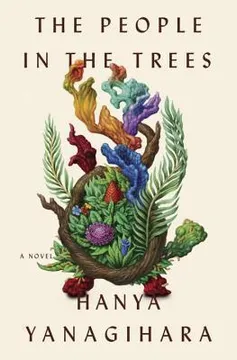
The People in the Trees is a polarizing debut novel that explores themes of colonialism, scientific ethics, and morality. Many readers praise Yanagihara's masterful writing and complex characterization, particularly of the protagonist Norton Perina. The story, based on real events, is described as disturbing, thought-provoking, and beautifully crafted. Some reviewers found the pacing slow at times and the content unsettling. Despite its controversial subject matter, the novel is widely regarded as a powerful and unforgettable work that leaves a lasting impact on readers.
People Also Read





Characters
Abraham Norton Perina
Ambitious field physicianNorton is a brilliant, restless physician who prefers biological mysteries to the routines of clinical medicine. He is impatient with hierarchy, eager for distinction, and drawn to places that promise a life beyond the one he knows. His scientific curiosity is genuine, but it often narrows his attention to what can be measured or claimed. In relationships, he can be generous and attentive while also expecting those he helps to affirm his own importance. His memoir presents him as an explorer betrayed by a shallow world, so readers must weigh his intelligence against his self-justifying account. He is compelling partly because his gifts and his capacity for harm are not separate selves.
Ronald Kubodera
Loyal editor and witnessRon is Norton’s longtime research fellow, friend, and editor. He values loyalty as a form of intimacy and takes pride in having remained close to Norton when others withdrew. That devotion makes him an unusually attentive witness, but it also limits his distance: he repeatedly treats Norton’s reputation as a cause worth defending. His prefatory and closing accounts reveal a man who wants to shape public memory as much as preserve it. Ron’s habit of narrating his own fidelity invites the reader to consider the difference between standing by someone and seeing them clearly.
Paul Tallent
Anthropologist chasing a mythTallent is a gifted, reserved anthropologist whose fieldwork begins with a willingness to follow stories that more cautious scholars might dismiss. He studies people by observing the systems and meanings that organize their lives, and his pauses often say more than his explanations. Norton is fascinated by his beauty and composure, but also frustrated by his opacity and by the emotional distance between them. Tallent’s willingness to entertain uncertainty contrasts with Norton’s need to turn discovery into proof. He embodies both the imaginative reach that makes the expedition possible and the ethical restraint Norton repeatedly tests.
Esme Duff
Competitive field researcherEsme is Tallent’s research associate, experienced in U’ivu and confident in her place on the expedition. She is practical, observant, and protective of the anthropological work, though Norton experiences her as possessive and difficult. Her discomfort with practices she considers unacceptable exposes the limits of cultural relativism, while her rivalry with Norton turns their shared research into a contest for usefulness and recognition.
Owen Perina
Norton’s poetic twinOwen is Norton’s twin brother, a poet whose interests in language, art, and politics differ sharply from Norton’s scientific single-mindedness. Their shared childhood gives them an intimacy neither is comfortable naming, and their relationship moves between affection, competition, and long silences. Owen sees dimensions of family life that Norton tends to dismiss, but he can also be self-righteous and difficult. He represents the path Norton did not take, and the emotional history Norton cannot fully turn into a scientific account.
Victor Perina
Restless youngest adopteeVictor is a neglected child Norton brings from U’ivu, physically ill and initially unfamiliar with ordinary social routines. He learns through observation and persistence, gradually acquiring language and the everyday habits expected of a child in Norton’s home. As he grows, he is attentive to identity and resistant to being defined by others. Victor’s relationship with Norton is shaped by their unequal dependence: Norton sees himself as rescuer and authority, while Victor develops a sharper sense of his own history and boundaries. His quietness can conceal both careful observation and a refusal to cooperate.
Sybil Perina
Scientist aunt and mentorSybil is Norton and Owen’s aunt, a pediatrician whose intelligence and curiosity make her the most active adult in their childhood. She encourages Norton’s interest in science with specimens, instruments, and books, and offers him a model of ambition that their father does not. Her professional life is constrained by her era, but her influence travels further than those constraints: Norton carries her curiosity into medicine.
Norton’s mother
Dreamlike motherNorton’s mother is beautiful, poor, and difficult for her sons to understand. She drifts through domestic life with an inwardness they misread as foolishness, and her uncertain memory makes the boys feel both powerful and uneasy. Norton recalls her with a mixture of irritation and fascination, while Owen gives her a more enduring place in his imagination. Her opacity shapes Norton’s early habit of treating emotional mysteries as things he can leave unexplained.
Joseph Perina
Indolent farm patriarchNorton’s father is a wealthy Indiana farmer and railroad timetable administrator who appears content with an unambitious life. His ease irritates Norton, who longs for a demanding purpose, yet the family’s security gives the brothers freedoms they do not recognize as privileges. Joseph’s passivity contrasts with Sybil’s drive and helps form Norton’s conviction that achievement must be actively pursued.
Eve, or Pu’u
Elusive island elderEve is a woman Norton encounters alone in the forest, unable at first to communicate with the expedition and focused largely on finding food. Her physical strength and limited awareness make her difficult for the researchers to categorize. Norton studies her closely, while her presence unsettles the distinction between a patient, a person, and a scientific subject. She remains a human being whose inner life the observers can only partially reach.
Mua
Elder with vital memoriesMua is one of the islanders Norton studies, a man whose memory is uneven but whose recollections carry the expedition toward crucial questions. He can be patient with the outsiders and abrupt when tired, and his account of his family connects individual lives to a history far beyond the researchers’ expectations. His difficulty communicating does not make him an empty specimen; it makes the limits of the visitors’ methods more apparent.
Fa’a
Guide and boar hunterFa’a is an Ivu’ivuan hunter who guides the expedition because he has encountered the mysterious people Tallent hopes to find. He is brave, skilled in the forest, and more emotionally responsive to the island’s sacred customs than Norton understands. His loyalty to his community and his careful treatment of the dreamers reveal a gentleness that sits beside his competence as a hunter.
Adolphus Sereny
Senior medical sponsorSereny is a respected surgeon and educator who gives Norton a route out of medical school by recommending him for Tallent’s expedition. Later, he is willing to test Norton’s findings in his own laboratory. His professional standing provides the legitimacy Norton initially lacks, while his relationship with Norton is shaped by scientific judgment rather than personal intimacy.
Cheolyu Ryu
Quiet laboratory assistantCheolyu is a visiting scholar from Korea who works in Norton’s laboratory. Reserved in conversation and meticulous in practice, he helps care for the mice and the human subjects while Norton directs the research. His steadiness makes him essential to the experiments, though Norton often treats their working relationship as a practical arrangement rather than a friendship.
Gregory Smythe
Disgraced scientific mentorSmythe is a celebrated Harvard scientist whose theory about cancer draws Norton into laboratory work. His authority and personal instability complicate the young researcher’s view of professional greatness. He is both a gatekeeper who can redirect Norton’s career and a warning about confusing reputation with sound inquiry.
The village chief
Keeper of village orderThe chief leads the Ivu’ivuan village through earned authority rather than inherited position. He oversees ceremonies, negotiates with the outsiders, and speaks with measured reserve. His care for village boundaries reflects a society whose customs make sense within its own history, even when Norton cannot accept or fully understand them.
John Naples
Cruel country doctorNaples is the small-town doctor who offers Norton a confident but false explanation for his mother’s death. His contempt for the boys and his impatience with uncertainty make him an early example of the authority Norton learns to distrust.
Plot Devices
Kubodera’s edited memoir
A defense with omissionsThe narrative is presented as Perina’s prison memoir, selected and lightly edited by Ronald Kubodera, whose stated purpose is to restore his friend’s reputation. Newspaper reports, editorial notes, the memoir, and the later postscript do not agree in their treatment of Perina’s conduct. The changing frame makes the reader compare claims against omissions and notice how loyalty can shape an archive. It is not merely a container for the story: the act of editing becomes one of the story’s central conflicts, because Perina and Kubodera try to control how the past will be remembered.
The opa’ivu’eke turtle
Life extended, mind diminishedThe sacred turtle is embedded in Ivu’ivuan myth and ritual before Norton discovers its biological effect. Its consumption preserves the body far beyond an ordinary lifespan, while the mind deteriorates. The turtle connects the islanders’ ceremonies, the dreamers’ condition, Norton’s laboratory experiments, and the later scientific rush to exploit Ivu’ivu. Its importance lies in the difference between the promise researchers want and the compromised reality they observe. The creature is both a scientific object and a sacred being, and the conflict between those meanings drives Norton’s most consequential choices.
The dreamers
A living measure of timeThe dreamers are islanders whose bodies remain strong while their memories, senses, and social capacities fail. They give Norton and Tallent evidence that the island’s legends describe a real condition, but they also reveal the human cost of treating extraordinary longevity as a triumph. Their changing state follows them from forest to laboratory, where relocation and experimentation further complicate the researchers’ claims about what the condition itself causes. The dreamers turn an abstract question about immortality into the visible lives of individuals who need care, context, and more than measurement.
Ivu’ivuan myth and ritual
Cultural clues become evidenceStories of gods, turtles, and a man who loses his mind establish the terms through which the islanders understand longevity and exile. Norton initially hears these accounts as folklore, then uses ritual details, oral histories, and village rules to formulate a scientific hypothesis. The myths do not simply foreshadow a biological mechanism; they preserve social knowledge about its risks. Their role complicates the boundary between scientific observation and cultural interpretation, since Norton’s discovery depends on stories he is inclined to treat as raw evidence rather than as a worldview with its own authority.
Norton’s adopted household
Care entangled with possessionNorton’s growing family begins with practical rescue and becomes a central emotional structure in his life. The children receive a home and education, but Norton also invests their dependence with expectations they have not chosen. Their household exposes the difference between providing for someone and recognizing that person’s autonomy. Victor’s place in the family intensifies this tension, while the public image of Norton as a benefactor helps conceal the private imbalance of power. The adoption plot therefore links the book’s questions about scientific responsibility to its questions about parental authority and moral self-deception.
About the Author
Other books by Hanya Yanagihara


Download PDF
Download EPUB
.epub digital book format is ideal for reading ebooks on phones, tablets, and e-readers.








