

Key Takeaways
Stop chasing happiness in objects; examine the awareness in which they appear.
The book’s central claim. Lucille argues that happiness is not a prize delivered by a person, possession, or special state. It is the nature of consciousness, the presence in which thoughts, sensations, and the world are experienced. When a desired object arrives, the relief may feel like happiness coming from the object. His alternative reading is that desire briefly quiets, revealing a happiness that was already there. The object is a trigger, not the source.
Start with what is certain. Experience changes, but the fact of being conscious is immediate. Lucille asks readers to investigate that simple certainty rather than accept inherited ideas about where consciousness comes from. The book’s repeated invitation is not to adopt a new doctrine, but to look closely at experience and see whether awareness is as limited as the usual story says.
The useful shift is from acquisition to examination: instead of asking what will make a person happy, the reader asks what happens to the sense of lack when attention is no longer bargaining with experience. That can loosen consumerist and achievement-driven habits without requiring a rejection of ordinary pleasures. The larger claim, that awareness itself is happiness, is a metaphysical interpretation rather than a conclusion compelled by the initial observation. The distinction matters: the inquiry may be fruitful even for readers who remain unconvinced by the book’s account of consciousness.
Treat the body and self-image as experiences, not as the experiencer.
Separate sensation from story. Lucille distinguishes the body as directly felt from the body as a concept. A pressure or warmth may be present, but calling it a sensation in a particular body part adds an interpretation. The familiar picture of a self located inside the body is, in his view, another interpretation, not an immediate fact. The body and mind are things experienced; consciousness is what experiences them.
Use the distinction carefully. A car seen from the driver’s seat feels unusually close, but that closeness does not make the driver identical to the car. Lucille uses this kind of ordinary comparison to question why bodily intimacy should prove that awareness is contained within the body. He proposes first recognizing the body as an appearance, then investigating whether a boundary truly separates it from awareness.
This move resembles a basic phenomenological discipline: distinguish what is given in experience from the explanation added to it. That distinction can be useful without accepting the stronger claim that consciousness exists independently of the brain or is shared universally. It also need not diminish care for the body. Seeing bodily identity as an interpretation does not make injury, illness, or physical limits unreal in everyday life. The inquiry is most productive when it loosens rigid self-concepts rather than turning embodiment into an error to overcome.
Welcome the whole moment, not just the feeling you want to fix.
Do not turn acceptance into a tactic. Lucille warns that focusing narrowly on an unpleasant feeling in order to make it disappear can add another layer of resistance. Anger about being angry, for example, becomes part of the distress. He recommends allowing the whole situation to be present: bodily sensations, thoughts, sounds, and the impulse to change something. In this account, welcoming means ceasing to resist, not performing a special mental maneuver.
Include the body. The book treats unexamined bodily sensations as places where the sense of separation can hide. A reader might notice tension, boredom, or fear without immediately naming or explaining it. If a sensation remains after careful attention, it need not be forced to dissolve. The test is whether it still demands obedience or defines the person experiencing it.
The distinction between allowing an emotion and trying to control it is subtle but important. A person can approach a feeling with curiosity while still taking practical steps to change a harmful circumstance. Acceptance of an internal state does not require approval of its cause. The book’s language can sound as if every effort to relieve distress is suspect, but its strongest practical insight is narrower: adding shame and resistance to an emotion often makes clear observation harder. Compassionate attention and problem-solving can coexist.
Trace distress toward the imagined 'I' that claims ownership of it.
Follow the feeling upstream. Lucille’s self-inquiry asks not only what a feeling is, but what the supposed owner of the feeling consists of. In his specialized vocabulary, the I-thought is the thought that consciousness is a separate person, and the I-feeling is the bodily sense of being that person. Both can be noticed as experiences that arise and pass, rather than treated as an independent self.
Do not create an inner fixer. If anger appears, the wish to eliminate the anger can carry the same possessive sense of self as the anger itself. Inquiry follows the reaction toward the felt “me” behind it, then asks whether that “me” is anything more than thought and sensation. The aim is not to defeat the ego, but to see the assumed owner clearly enough that it loses authority.
This approach can reveal how emotions become personal narratives: a passing sensation becomes a grievance, a prediction, or a verdict about identity. That observation is especially useful when the narrative itself is amplifying distress. Yet a person’s story can also contain relevant information about past harm, present danger, or unmet needs. Investigating the self-story should not automatically replace listening to that information. The method works best as an additional angle of attention, not as a command to dismiss psychological history.
Use inquiry to loosen beliefs, then let thought fall silent.
Reason has a limited job. The book does not ask readers to stop thinking by force. Lucille uses reasoning to question assumptions such as “I am contained in the body” or “the world exists separately from consciousness.” He calls this kind of investigation higher reasoning: thought used to expose the limits of thought, rather than to build another fixed system. When a question is genuinely resolved, the mental argument can stop.
Understanding is not a new belief. In the foreword, a question is described as taking shape from an openness of not knowing. A useful answer dissolves the question rather than feeding endless debate. Lucille regards the moment of understanding as something that cannot be captured as an object in memory. The reasoning matters as preparation, but the reader is warned not to mistake a convincing argument for direct realization.
The strongest feature of this account is its refusal to treat spirituality as a choice between blind belief and blank-mindedness. Reason can identify hidden assumptions and clarify what a person has actually experienced. But the book also marks a boundary: first-person certainty about being conscious does not, by itself, establish that all people share one consciousness. Keeping that distinction clear protects the inquiry from circular reasoning. Thought can open a question, while further claims about reality still require their own justification.
Stop mistaking spiritual highs for the peace that never comes and goes.
A dramatic state is still a state. Lucille cautions against treating ecstasy, blankness, or unusually vivid peace as proof of lasting freedom. These experiences begin and end, so pursuing their return can turn a glimpse into another object of desire. He recalls a person who cherished a vivid experience from decades earlier; the memory had become a standard against which ordinary life seemed dull. The book redirects attention from the excitement surrounding an experience to the awareness in which it appeared.
Circumstances may reveal, not produce. A person describes finding stillness after playing music with friends. Lucille argues that the music did not manufacture peace; focused, goal-free activity had simply quieted the usual preoccupation. The lesson is not to avoid music or pleasure, but not to depend on repeating a particular experience as the route to happiness.
Peak experiences can feel persuasive because their intensity seems to certify their meaning. Lucille’s distinction helps separate an event’s emotional force from the interpretation attached to it. This is a valuable safeguard against turning meditation into a hunt for increasingly unusual states. At the same time, intense experiences can carry personal meaning and may influence how someone understands their life. They need not be dismissed as traps. The practical question is whether the experience supports a more flexible relationship with ordinary life or creates nostalgia and comparison.
Make meditation ordinary: no special state, posture, or future payoff.
Meditation is not an achievement. Lucille defines meditation as being present without trying to arrange what appears. He compares this to a baby who is awake, fed, and comfortable, simply taking in what is there without a project. A comfortable posture can help by reducing distraction, but pain is not a spiritual requirement. The aim is not to manufacture silence or force thoughts to stop.
Carry it into daily life. A bus ride, a wait at the dentist, or a pause between tasks can become an opportunity to notice experience without grasping at it. Lucille says meditation is not separate from ordinary activity when it involves openness rather than a special setting. If fear or boredom appears, the instruction is not to demand a different mood, but to notice what is present without turning it into a problem to solve.
This makes meditation less dependent on ideal conditions and less vulnerable to perfectionism. The emphasis on ordinary moments also prevents practice from becoming a private performance that has little connection to relationships or work. Still, structure can be useful: a regular sitting period may help someone build attention or calm an overwhelmed mind. The book’s critique is most persuasive when it targets the belief that a particular posture or mood guarantees awakening, not when read as a reason to abandon supportive routines.
Let non-separation deepen intimacy, while still responding to harm.
Impersonal does not mean uncaring. Lucille uses “impersonal” to mean free from the belief that each person is an entirely separate center of consciousness, not cold or distant. In his account, less self-protection can make a person more receptive to another’s experience. He argues that action can still follow: the response to a harmful situation should account for the whole situation, rather than arise only from resentment or a wish to punish.
Do not confuse acceptance with passivity. The book explicitly allows for practical intervention, including protective action when needed. It describes impartial attention as a way to respond more clearly, not as an instruction to tolerate abuse. The teacher-student relationship is also framed as a meeting of shared awareness rather than a reason to put a teacher on a pedestal. The point is to reduce the imagined distance between people, not erase their distinct needs or circumstances.
The ethical promise here is that a less defensive self-concept could make listening and care more possible. But the book’s language about accepting every event as part of a larger whole can become dangerous if applied to victims as a reason not to intervene. Compassion requires attention to consequences, power, and safety, not only an inward sense of unity. The most defensible reading joins its call for impartiality with ordinary moral judgment: people can resist harm without hatred, and care can include firm boundaries.
Separate unavoidable pain from the extra suffering built around a self.
Distinguish sensation from resistance. Lucille accepts that physical pain is part of bodily life, while arguing that psychological suffering often grows from the thought that a separate person has been wronged, threatened, or deprived. Fear in response to immediate danger is different in his account from fear built around imagined future scenarios. When pain or fear arrives, he recommends noticing both the original sensation and the reaction against it, without assuming either defines the self.
A demanding example. The book recounts a story told by William Samuel about a Taoist interpreter who, while fleeing enemy soldiers, paused to admire distant mountains. Samuel later learned that the interpreter’s wife and sons had been killed. Lucille presents the scene as an example of presence amid catastrophe, not as evidence that loss or trauma should be painless.
The distinction can help readers notice when anticipation and self-judgment are adding a second burden to physical discomfort. But it should not be treated as a universal account of trauma, grief, or mental illness. Psychological suffering can involve conditions and histories that are not resolved by changing one’s interpretation of self. The wartime anecdote is evocative, yet a single story cannot establish what another person felt or what others should be able to bear. Inquiry may accompany treatment and support; it should not replace them.
Question the doer without using nonduality to excuse inaction.
The personal chooser is questioned. Lucille argues that thoughts and decisions arise without being selected by a separate inner agent. He portrays the body-mind as shaped by conditions, while locating ultimate freedom in consciousness rather than in the individual personality. This challenges habitual guilt and pride: actions need not be treated as the property of a completely independent self.
Action still happens. The book does not say that a person should simply sit still. It says that action can arise from the full situation, including the needs of others, and that refraining from action is also consequential. Lucille’s distinction is between action driven by a separate self’s fears and action that responds to circumstances without carrying resentment forward. The practical question becomes less “Who deserves blame?” and more “What response is needed now?”
This view can loosen shame and the fantasy of total self-control, but it risks blurring the difference between explaining behavior and excusing it. A causal account of why someone acted does not settle how others should protect people, assign responsibility, or prevent further harm. The book’s insistence on responsive action helps, but its metaphysics does not supply a complete public ethic. A reader can retain the useful challenge to self-righteousness while still holding individuals and institutions accountable for consequences.
Analysis
The book’s distinctive method is to move repeatedly from ordinary experience to a radical metaphysical conclusion. A sensation is noticed before its label; a thought is seen as something appearing; the presumed owner of both is examined in turn. This progression gives the teaching its practical force. It does not require a reader to begin with religious faith, and its recurring tests are immediate: what is present before interpretation, and what exactly is meant by “I”?
The crucial leap comes when Lucille moves from the undeniable fact of awareness to the claim that awareness is universal, timeless, and the substance of the world. The first claim is phenomenological: experience is known from a first-person perspective. The later claims are ontological: they describe what reality ultimately is. The former does not logically prove the latter. Contemporary cognitive science often studies consciousness through correlations among brain activity, attention, memory, and report. Such research does not settle every philosophical question about subjectivity, but it does mean that the book’s critique of materialism should not be mistaken for a scientific refutation of brain-based accounts.
Its practical psychology is strongest when it distinguishes an emotion from the additional resistance, prediction, or identity-story wrapped around it. That distinction can help people pause before reacting. Its limits appear when the same language is applied to severe trauma, illness, injustice, or grief. Not every painful response is merely a mistaken belief in a separate self, and freedom from resentment is not the same as freedom from danger or the need for help.
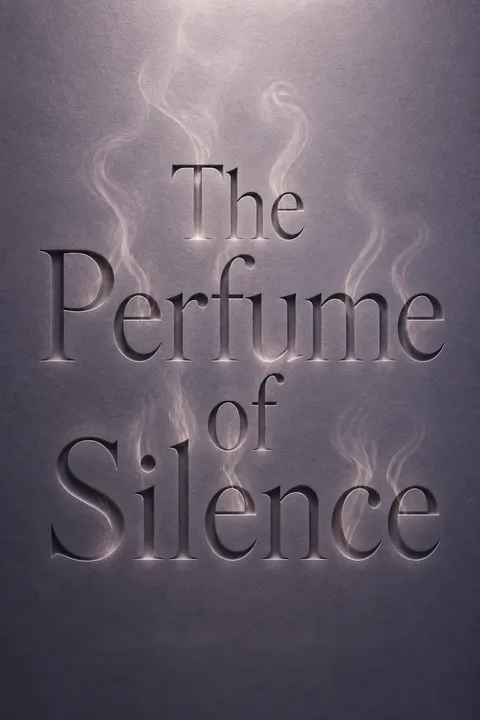
The most balanced reading therefore treats the book as a disciplined invitation to investigate experience, not as a settled theory of physics, medicine, or ethics. Readers can test its practices of attention and non-grasping while keeping its largest claims open to question. Its title points to the method: words may direct attention, but the intended insight is supposed to be recognized in the silence around them.
Review Summary
The Perfume of Silence is highly praised for its profound insights into non-duality and consciousness. Readers find Lucille's writing style beautiful, inspirational, and accessible. The book is lauded for clarifying complex concepts, offering practical guidance, and addressing common spiritual questions. Many reviewers consider it a masterpiece that deepens their understanding of truth and self. Lucille's unique approach, combining intellectual rigor with humor and warmth, is particularly appreciated. The book is recommended for both newcomers and experienced seekers on the spiritual path.
People Also Read






Glossary
Consciousness
Awareness itselfLucille uses consciousness to mean the non-objective awareness in which thoughts, sensations, and perceptions appear. It is not the mind, a personal self, or a measurable mental state. He treats it as self-knowing and universal, and argues that objects have no independent existence apart from it. These are the book’s philosophical claims, not definitions accepted by every scientific or philosophical account.
I-thought
Thought of a separate selfThe I-thought is the mental idea that awareness belongs exclusively to a personal body-mind. It can appear in explicit statements about being a particular person, or in the implied sense that a separate individual owns an experience. Lucille distinguishes it from the bare use of “I” to refer to awareness without attaching a personal identity.
I-feeling
Felt sense of separate selfThe I-feeling is the bodily or emotional impression of being a separate person, often experienced as a subtle sense of location or contraction. Lucille treats it as an appearance that can be noticed, rather than as the true subject of experience. His inquiry asks whether this feeling is the self or something that appears in awareness.
Welcoming
Nonresistance to experienceWelcoming is Lucille’s term for allowing the totality of present experience to be as it is, without trying to preserve, reject, or manipulate one selected part. It is not meant as a technique for making discomfort disappear. In his account, it begins to feel like an action but is ultimately understood as the cessation of resistance.
Higher reasoning
Inquiry that loosens beliefsHigher reasoning is the use of thought to examine assumptions about the self, consciousness, and reality. Rather than building a new doctrine, it tests whether inherited beliefs are supported by immediate experience. Lucille sees reasoning as useful up to the point where it exposes its own limits and leaves the mind open to a non-conceptual recognition.
Direct path
Start from awareness nowThe direct path begins from the possibility that awareness is already present and does not need to be acquired through future progress. Inquiry and meditation are used to notice mistaken identification with the body-mind, rather than to construct a perfected person. “Direct” describes the orientation of the inquiry, not a promise that change will be quick.
Maya
Apparent limitation of awarenessLucille uses Maya for the apparent illusion that consciousness is personal, bounded, or contained inside the body-mind. The limitations seem convincing because thoughts and sensations appear localized, but he argues that these too are appearances known by awareness. The term names a mistaken interpretation, not a separate force or substance.
Savikalpa samadhi
Awareness absorbed in objectsLucille uses Savikalpa samadhi for experience organized around an object, such as a thought, feeling, or perception, with awareness largely overlooked. In his presentation, the person seems absorbed in what appears and takes it to constitute the whole experience. The term is part of his account of three modes of awareness, not simply a synonym for ordinary concentration.
Nirvikalpa samadhi
Awareness without objectsNirvikalpa samadhi is Lucille’s term for recognizing awareness in the absence of perceived objects. He describes it as a non-objective experience of presence, peace, and the timelessness of consciousness. Because ordinary experience returns, this recognition can be followed by renewed attachment to an objectless state, which his framework treats as incomplete.
Sahaja samadhi
Awareness through all appearancesSahaja samadhi is the natural recognition that awareness remains present whether objects appear or not. Lucille describes it as the understanding that thoughts, sensations, and the world are not separate from consciousness. It differs from seeking an objectless state because ordinary experience is included rather than treated as an interruption of realization.
FAQ
What is The Perfume of Silence by Francis Lucille about?
- Exploration of consciousness: The book investigates the nature of consciousness as the fundamental, universal reality behind all experiences, thoughts, and perceptions.
- Non-duality and self-inquiry: It presents a non-dualistic approach, encouraging readers to question the distinction between the perceiver and the perceived, leading to the realization of the true Self.
- Practical spiritual guidance: Francis Lucille offers direct, accessible advice for meditation, self-inquiry, and integrating presence into daily life.
- Freedom and happiness: The ultimate message is that true happiness and freedom arise naturally when one recognizes their impersonal, limitless nature beyond the ego.
Why should I read The Perfume of Silence by Francis Lucille?
- Direct path to self-realization: The book provides a clear, practical approach to spiritual awakening, focusing on direct experience rather than complex philosophies or gradual practices.
- Addresses suffering and fear: It offers profound insights into the roots of psychological suffering and fear, especially the fear of death, and shows how to dissolve them.
- Universal relevance: The teachings are applicable to anyone interested in understanding consciousness, overcoming egoic limitations, and living a life of joy and presence.
- Accessible wisdom: Lucille’s style is gentle, clear, and non-dogmatic, making deep spiritual truths approachable for readers at any stage of their journey.
What are the key takeaways from The Perfume of Silence by Francis Lucille?
- Consciousness is universal and impersonal: Our true nature is not the body or mind, but the limitless awareness in which all experiences arise.
- Ego is a mistaken identity: Suffering stems from identifying with the body-mind as a separate self; freedom comes from recognizing this as an illusion.
- Meditation is effortless presence: True meditation is simply being present without intention, welcoming all experiences without resistance.
- Happiness is our natural state: When the sense of separation dissolves, life becomes a celebration of love, beauty, and understanding.
How does Francis Lucille define consciousness in The Perfume of Silence?
- Fundamental reality: Consciousness is described as the universal, impersonal presence in which all phenomena—body, mind, and world—appear and dissolve.
- Not limited to the body: It is not confined to individual experience but is the “screen” on which all experiences unfold.
- Beyond thought and perception: Consciousness is prior to and independent of thoughts, sensations, and perceptions; it is the witness of all that arises.
- Source of unity: Recognizing consciousness as our true nature dissolves the illusion of separation and reveals the unity of all existence.
What is the difference between ego and individuality according to The Perfume of Silence by Francis Lucille?
- Ego as mistaken identity: Ego is any thought or feeling that identifies consciousness exclusively with the body-mind, creating the illusion of separation and limitation.
- Individuality as unique expression: Individuality is the unique manifestation of consciousness in each human form, a natural diversity within the universal Self.
- Ego limits, individuality celebrates: While ego confines and restricts, individuality is a celebration of the infinite expressing itself uniquely.
- Freedom through self-inquiry: Liberation from ego comes by investigating the true nature of Self, not by eliminating individuality.
What practical meditation and self-inquiry advice does Francis Lucille offer in The Perfume of Silence?
- Be present without intention: Meditation is simply resting in presence, without effort, goal, or agenda—like a baby at peace.
- Welcome all experiences: Instead of resisting or rejecting thoughts and feelings, the book encourages welcoming the totality of experience without preference.
- Investigate the “I”-thought: Self-inquiry involves tracing the sense of “I” back to its source, recognizing it as a thought or feeling in consciousness.
- Integrate with daily life: Meditation is not separate from life; moments of awareness during daily activities are as valuable as formal practice.
How does The Perfume of Silence by Francis Lucille address suffering and the fear of death?
- Suffering from separation: Psychological suffering arises from the belief in a separate self that fears its own disappearance.
- Distinction between pain and suffering: Physical pain is part of the body’s experience, but psychological suffering is optional and rooted in misidentification.
- Freedom from fear: Realizing that consciousness is impersonal and does not die dissolves the root of fear, especially the fear of death.
- Living fully: This understanding leads to a life of joy, peace, and freedom beyond the ego’s limitations.
What is the role of the teacher in The Perfume of Silence by Francis Lucille?
- Teacher as a mirror: The teacher invites the student to look into the mirror of their own consciousness, revealing what is already present.
- Impersonal presence: The true teacher is not a separate person but an impersonal presence, facilitating realization beyond personal identities.
- Encourages freedom: A genuine teacher helps dissolve attachments and misconceptions, making realization accessible without reinforcing dependence.
- Facilitator, not giver: The teacher does not give anything new but points to the truth already within the student.
How does Francis Lucille explain the mind and its limitations in The Perfume of Silence?
- Mind as a tool: The mind is a process of thoughts and images, useful for survival and creativity but not the Self itself.
- Personalization of consciousness: The mind tends to personalize consciousness, creating the illusion of a separate self.
- Cannot reveal the Self: While the mind can help depersonalize consciousness, it cannot go beyond its own limits to reveal the true Self.
- Silence of mind: When the mind is silent and free from accumulated theories, the sense of separation vanishes, allowing the presence of consciousness to be recognized.
What is the significance of surrender in The Perfume of Silence by Francis Lucille?
- Letting go of the doer: True surrender means releasing the sense of a separate doer who wants, fears, or resists.
- Not an activity: Surrender is not something to be done intentionally; it is the cessation of resistance and acceptance of what is.
- Freedom from attachment: Surrender dissolves the impulse to escape from unpleasant states, allowing all experiences to flow freely in consciousness.
- Reveals natural peace: This attitude uncovers the natural state of peace and joy inherent in our true nature.
How does The Perfume of Silence by Francis Lucille describe the experience of understanding or insight?
- Timeless moment: Understanding occurs in a moment of silence, between the question and the answer, as a direct experience of consciousness recognizing itself.
- Beyond mental process: True insight is not about grasping a concept but about the disappearance of the question and the arising of new clarity.
- Unity of love and beauty: Moments of insight are accompanied by a natural silence and a sense of profound connection, expressing love, beauty, and understanding.
- Transformation of the mind: This direct recognition transforms the mind and dissolves the sense of separation.
What does Francis Lucille mean by “There Is No ‘There’” and the illusion of separation in The Perfume of Silence?
- Non-duality of experience: At the moment of direct experience, there is no separation between observer and observed; perception is just perception without a separate perceiver.
- Illusion created by mind: The sense of “there” or otherness is a conceptual overlay created by the mind, not an actual experience.
- Unity in consciousness: Recognizing that all perceptions arise in the same space of consciousness dissolves false boundaries and reveals unity.
- Present moment presence: There is only the present moment and presence; the idea of separation is an illusion called Maya.
Download PDF
Download EPUB
.epub digital book format is ideal for reading ebooks on phones, tablets, and e-readers.








