

Key Takeaways
Test every belief about reality against what experience actually shows
Start with what is present. Spira’s method begins with the current experience, not a theory about what must exist beyond it. The question is whether a familiar claim, such as “I am a body inside a world,” describes what is directly experienced or is an assumption layered onto it.
Treat language as provisional. A sentence such as “I see a car” is useful for everyday communication, but it divides experience into a separate observer and an outside object. The book asks readers to notice how such formulations can shape the way experience seems to be. Investigation does not replace old beliefs with new certainties. It tests them, and lets unsupported ones lose their authority.
The method resembles phenomenology, which examines how things appear before explaining them through theory. Its strength is practical: familiar assumptions become visible instead of passing as raw facts. Yet the boundary matters. The fact that everything known is known through experience does not prove that nothing exists beyond experience. The inquiry is most persuasive as a discipline for clarifying first-person experience, rather than as a decisive argument against external reality.
The knower cannot be found as an object, because it is what sees
Notice the knowing presence. Spira uses Consciousness to mean the awareness through which any experience is known, not a particular thought, sensation, or perception. Thoughts and bodily sensations can be noticed, so they are objects of awareness, not the awareness that knows them. He calls this basic capacity Knowingness: knowing as the nature of Consciousness.
Look where the search points. Like the paper beneath printed words, awareness is present through every experience but can go unnoticed while attention follows the contents. Trying to see awareness as one more object misses the point: whatever is seen is already being known. “Non-objective experience” names this knowing without a distinct object to observe. The invitation is recognition, not creating a special state.
This is a sharp account of a familiar puzzle in philosophy of mind: any proposed picture of the observer becomes another thing observed. It also resembles metacognitive practice, in which a person notices thoughts without treating them as the self. The limitation is that the argument establishes a difference between awareness and its contents more readily than it establishes that awareness is timeless or universal. That larger conclusion requires a further metaphysical step.
Experience is not outside awareness; its substance is awareness itself
Follow the claim deeper. The book develops its central idea in stages: appearances seem to be known by Consciousness, then to occur within Consciousness, and finally to be made of Consciousness. A wave is not separate from water; its shape changes, while its substance remains water. In this view, thoughts, sensations, and perceptions are changing forms of the same knowing presence.
Keep appearance distinct from separation. Spira does not say the world must disappear. He uses Maya for the play of appearances, while locating the illusion in their supposed independence from Consciousness. The painter Cézanne’s effort to convey nature’s enduring quality through fleeting visual forms offers an artistic parallel: changing appearances can disclose, rather than conceal, what sustains them.
The wave analogy makes nonduality intuitive: difference in form need not mean difference in substance. It also echoes idealist philosophies, which treat experience as fundamental rather than as a product of matter. But an analogy can illuminate a view without proving it. A wave is demonstrably water; the claim that every perceived object is awareness is not established by that comparison alone. The account is strongest as an interpretation of experience, not as settled physics.
Look for the separate self as an activity, not a hidden owner
The ego is something done. Spira redefines ego as the activity of identifying Consciousness exclusively with a body and mind, rather than as a permanent inner entity. He calls the felt narrowing of identity self-contraction. Likes, dislikes, fears, and desires reinforce the sense of being a fragment set against an outside world.
Inspect the supposed manager. In one parable, a servant spends years obeying an unseen master, then discovers the room is empty. The master represents the assumed separate self. Seeing that no independent owner can be found may not instantly erase habits, however. Like the servant’s routines, patterns of thought and feeling can persist through inertia even after their supposed rationale has weakened.
The image of a hidden master has a modern parallel in cognitive science: the self can be understood as a model assembled from memories, bodily signals, and social roles, rather than a single command center. That insight can loosen rigid identification. Still, a constructed self is not necessarily a useless self. Personal identity supports planning, accountability, and relationships. The distinction between rejecting a fixed essence and denying practical personhood is crucial.
Meditate by relaxing the effort to become someone else
Stop manufacturing a state. Spira describes meditation as allowing thoughts, bodily sensations, and perceptions to appear and disappear without trying to improve them. The awareness in which they occur does not need to be made peaceful or awakened. Meditation is recognition of what is already present, rather than a technique for producing a desired experience.
Undo the effort. A clenched fist must work to stay closed; opening it can feel like a new effort, but is actually the release of the earlier tension. The analogy suggests that meditation may feel like doing something because habitual self-control is already at work. If agitation or interference appears, that too can be noticed without becoming a fresh problem to solve.
This approach aligns with mindfulness practices that cultivate nonreactive attention: thoughts are observed rather than suppressed, which can reduce automatic entanglement with them. Its distinctive claim is that awareness itself needs no improvement. That can make practice gentler, but it should not be mistaken for passivity. Some mental states require active care, and acceptance of an experience is compatible with changing harmful circumstances.
Let desire reveal happiness instead of hiring objects to deliver it
Separate the object from the relief. The book argues that when a desire is satisfied, happiness seems to arrive with the object. But the object may instead end the agitation of wanting, allowing an already-present ease to be noticed. Because very different objects can seem to bring the same relief, Spira concludes that happiness cannot depend entirely on any one of them.
Meet the feeling directly. Rather than immediately distracting from a sense of lack or obeying its impulse, the reader is invited to notice it as bodily sensation. This does not mean desires must vanish. They can still guide action, but need not carry the burden of guaranteeing fulfilment. Desire can express enjoyment instead of serving as a rescue plan.
The distinction between wanting and enjoying has a useful counterpart in research on reward: motivational pursuit and the pleasure of obtaining something are related but not identical. That helps explain why acquisition can quiet craving without delivering lasting satisfaction. The account can also be overextended. Hunger, safety, and social connection are not merely mistaken searches for inner peace. Recognizing the role of desire need not invalidate real needs or the value of meeting them.
Memory links appearances; awareness, not clock time, supplies their continuity
Examine what time feels like. Spira argues that the past and future appear as present thoughts or images; a past event itself is not available now. Likewise, experience is never encountered as a sequence of moments from outside the present. The book calls this present not a brief slice of clock time, but the timeless ground in which ideas of time arise.
Notice how memory joins the dots. A computer animation can seem to show one dot circling, though it consists of separate dots appearing in succession. Similarly, recollections and present perceptions are linked by thought into a continuous personal history. Spira locates the experienced continuity in Consciousness, not in an independently perceived timeline. This does not make calendars useless; it questions what is directly experienced.
The distinction between lived time and measured time is a serious one in philosophy and psychology. Memory does help construct a coherent personal past, while attention makes the present feel immediate. Yet constructed does not mean unreal or arbitrary: memory can preserve evidence, and shared clocks coordinate real activities. The argument challenges the assumption that time is directly perceived as a container; it does not by itself settle whether time exists independently of experience.
Read waking, dreaming, and deep sleep as changing appearances in one presence
Compare the three conditions. In waking, experience includes sensory perceptions; in dreams, it is largely images and thoughts; in deep sleep, no distinct objects are recalled. Spira treats these as changing appearances within one Consciousness, rather than proof that an individual observer travels through three separate states. The return from sleep is not, in this view, the return of awareness itself.
Separate memory from existence. The absence of a memory of dreamless sleep does not establish that nothing was present, the book argues. It interprets the familiar feeling of having slept well as evidence of peace without objects. This is a contemplative interpretation, not a measurable report from sleep. It also does not establish that awareness survives bodily death, despite the book’s speculation about that possibility.
Sleep provides a powerful test case because ordinary awareness, memory, and self-narrative change dramatically across the night. The careful distinction between absence of recall and absence of experience is logically useful. But a morning report of restful sleep cannot, on its own, demonstrate conscious experience during dreamless sleep. The book’s account is best approached as a philosophical proposal about continuity, not as a finding established by sleep science.
Move from denying the self to including the world within it
Use two complementary inquiries. The Path of Discrimination examines what the self is not, loosening identification with the body and mind. The Path of Love extends the inquiry to experience as a whole, recognizing the world not as an alien outside but as included in the same reality. Spira presents these as movements from “nothing” toward “everything,” not as rival doctrines.
Do not stop at distance. Taking the position of a witness can help reveal awareness, but if the world remains permanently separate, division has only changed form. The book’s fuller invitation is to let thoughts, sensations, relationships, and perceptions be present without excluding them from awareness. The aim is not to erase individuality, but to loosen the boundary that turns it into isolation.
The movement from detachment to inclusion guards against a common spiritual shortcut: treating ordinary life as an obstacle to insight. It also resembles approaches in ecology and relational philosophy, where identity is understood through connection rather than separation. The challenge is practical: saying that others are included in the same reality does not automatically produce care. Inclusion becomes ethically meaningful only when it changes how vulnerability, conflict, and responsibility are handled.
Locate freedom in awareness, not in a private chooser behind actions
Question who chooses. Spira argues that the apparent individual doer is another appearance in Consciousness. A thought about “me” may arise after a sound, an impulse, or an action and then claim ownership of the sequence. The book’s example of hearing rain, deciding on tea, and tasting it asks readers to examine whether a separate agent can be found between these events.
Reframe freedom. In this account, freedom belongs to Consciousness as the capacity to identify with a limited self or to release that identification. It is not the power of an isolated person to control everything. The text also cautions against using “nothing can be done” as an excuse: if someone still feels like a separate doer, inquiry into that feeling remains relevant.
The critique of a single inner controller has parallels in neuroscience, where decisions emerge from interacting processes rather than a tiny executive in the head. That challenges simplistic ideas of agency without making deliberation meaningless. Spira’s broader claim that Consciousness has absolute freedom is more difficult to test. A useful reading preserves the insight that agency is distributed while retaining practical accountability for choices and their consequences.
Let nonduality deepen care without pretending every action is equivalent
Distinguish shared substance from equal consequences. Spira insists that seeing all experience as Consciousness does not make every thought or action equally wise. A rope mistaken for a snake and a rope correctly recognized may share the same underlying reality, but the mistake can still produce fear and harmful behavior. Relative distinctions remain important in ordinary life.
Do not turn acceptance into evasion. The book rejects the claim that everything is one, so suffering or wrongdoing should simply be tolerated. On its own terms, genuine inclusion means meeting what is present without pretending that harmful effects are unreal. Nonduality changes the interpretation of difference; it does not require denying pain, practical judgment, or the need to respond.
This distinction is essential wherever spiritual language risks becoming moral camouflage. A shared metaphysical ground does not cancel differences in consent, harm, or responsibility. Indeed, an expanded sense of connection can support wider concern, much as empathy can extend beyond familiar groups. Still, unity alone does not supply a complete moral system. Ethical action also needs attention to evidence, power, and the concrete consequences of choices.
Analysis
The book’s central move is methodological before it is metaphysical: suspend inherited descriptions of experience and inspect what is actually present. From there, it develops a sequence of reinterpretations. Awareness is not an object among objects; the apparent observer is not easily found apart from experience; and the world can be understood as an expression of the same reality as awareness. The repeated examples, from paper beneath writing to the changing images on a screen, make an abstract claim tangible by separating changing form from apparent substance.
The argument is most compelling as a critique of unexamined first-person assumptions. It asks whether a body is experienced as a complete object or as sensations and perceptions, whether a self is encountered directly or inferred from memory and thought, and whether time is felt as a container or reconstructed through remembered events. Those questions can alter attention even for readers who reject the book’s conclusions.
A key distinction is between phenomenological evidence and ontological conclusion. The observation that everything known is known through experience is difficult to dispute. The stronger claim that all reality is Consciousness does not follow automatically. It is a coherent interpretation, but alternatives remain: experience may depend on a world that is not itself experience, even if that world is only known through perception. The same caution applies to claims about awareness in deep sleep and its continuity beyond death.
The book’s practical contribution is therefore less a proof of cosmic oneness than a disciplined way of noticing how identity and separation are constructed in lived experience. Its most humane safeguard is the refusal to turn unity into indifference: appearances still matter, suffering still calls for attention, and clarity must affect conduct. Read in this way, the text is neither a scientific account of consciousness nor merely an invitation to believe. It is an extended contemplative experiment, powerful in what it reveals about experience, and open to debate in what it claims about the universe.
Review Summary
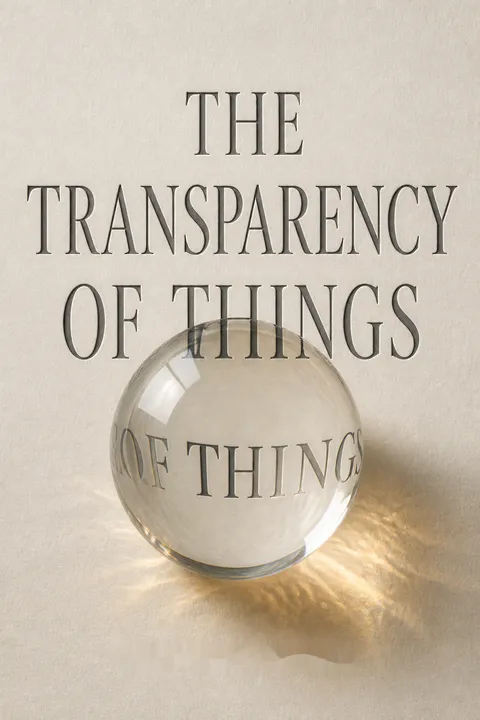
The Transparency of Things receives high praise for its clear articulation of non-duality concepts. Readers appreciate Spira's elegant explanations and poetic language, finding the book both challenging and enlightening. Many recommend reading it slowly, savoring each chapter. Some criticize its repetitiveness and density, suggesting it may not be suitable for beginners. Overall, reviewers commend Spira's ability to convey complex ideas in accessible terms, making it a valuable resource for those interested in consciousness and spiritual exploration.
People Also Read





Glossary
Consciousness
the knowing presenceSpira uses Consciousness to mean the presence through which any thought, sensation, or perception is known. It is not itself treated as an object with observable qualities. The book identifies this knowing presence with the deepest sense of “I,” and argues that it is also the reality expressed in every appearance.
Knowingness
knowing as basic natureKnowingness is Spira’s term for Consciousness understood as the act or capacity of knowing itself, rather than as a separate observer that performs a task. It is present whether or not a distinct object is noticed. In the book, knowing is not something Consciousness does; it is what Consciousness is.
Ego
identification as separateSpira redefines ego as an activity, not a permanent inner entity. It is Consciousness identifying itself exclusively with a body and mind, then treating that limited identity as a fact. The book argues that the apparent ego can be investigated and its habits may persist for a time even after the belief in a separate owner weakens.
self-contraction
felt narrowing of identitySelf-contraction is the apparent narrowing of open Consciousness into the identity of a separate body-mind. Spira associates it with selective attachment and resistance, including wanting certain experiences and avoiding others. These patterns seem to reinforce a boundary between “me” and “the world,” though the book treats that boundary as an interpretation rather than an independently experienced fact.
non-objective experience
knowing without an objectA non-objective experience is knowing without a distinct object, thought, or perception appearing as its content. Spira uses the term for the presence he associates with deep sleep and the intervals in which no object is noticed. It is not described as blankness from Consciousness’s perspective, although the thinking mind may represent it as a void.
Maya
the play of appearancesMaya refers to the changing display of names and forms through which experience appears. Spira does not treat appearances themselves as unreal. The illusion lies in taking them to exist independently of Consciousness or as fundamentally separate from it. Under this interpretation, appearances can seem to obscure reality or reveal it, depending on how they are understood.
Path of Discrimination
examining what self is notThe Path of Discrimination is the inquiry that distinguishes the knowing presence from objects such as thoughts, bodily sensations, and perceptions. By examining what can be observed, it weakens the assumption that the self is identical to a limited body-mind. Spira presents this as a useful movement toward recognizing Consciousness, not as the final word on experience.
Path of Love
including all experienceThe Path of Love is Spira’s description of recognizing the world and other appearances as included in the same reality as Consciousness. It complements discrimination, which first loosens identification with the body-mind. Love here means an inclusive identity with experience, rather than a passing emotion or an instruction to ignore practical differences and harm.
FAQ
What is "The Transparency of Things" by Rupert Spira about?
- Non-dual exploration of experience: The book is a contemplative investigation into the nature of experience, focusing on the non-dual understanding that our essential nature is consciousness itself.
- Deconstructing duality: Spira challenges the conventional subject-object, self-other, and mind-world divisions, suggesting these are mental constructs rather than facts of experience.
- Direct experience as the path: The book emphasizes looking directly at experience, rather than relying on inherited beliefs or philosophical theories.
- Seamless totality: Ultimately, Spira points to the realization that all experience is a seamless, indivisible whole, with no separate entities or objects apart from consciousness.
Why should I read "The Transparency of Things" by Rupert Spira?
- Clarity on non-duality: The book offers a clear, accessible entry point into non-dual philosophy, making complex ideas understandable through direct inquiry.
- Practical transformation: Readers are guided to see through the root of psychological suffering by exposing and dissolving false beliefs about self and reality.
- Meditative approach: The contemplative style encourages a shift from intellectual understanding to direct, lived experience of presence and awareness.
- Universal relevance: The insights apply to anyone interested in spirituality, consciousness, or the nature of reality, regardless of background or tradition.
What are the key takeaways from "The Transparency of Things" by Rupert Spira?
- Consciousness is primary: Our true nature is consciousness, not the body or mind, and all experiences arise within and as this consciousness.
- The illusion of separation: The sense of being a separate self is a mental activity, not an enduring reality; suffering arises from this misidentification.
- Objects are appearances in consciousness: The world, body, and mind are not independent entities but modulations or appearances within consciousness.
- Peace and happiness are inherent: Lasting peace and happiness are not found in objects or experiences but are inherent in the nature of consciousness itself.
- Direct investigation: Liberation comes not from adopting new beliefs but from directly investigating and seeing through the false assumptions about self and reality.
How does Rupert Spira define "consciousness" in "The Transparency of Things"?
- The ever-present knower: Consciousness is that which is aware of all experiences, the witnessing presence behind thoughts, sensations, and perceptions.
- Not an object: Consciousness cannot be known as an object; it is the subject, the knower, and is itself formless, limitless, and ever-present.
- The substance of all experience: Everything that appears—thoughts, sensations, perceptions—is made of consciousness, just as waves are made of water.
- Self-knowing and self-luminous: Consciousness knows itself simply by being itself; it does not require an object to be aware.
What is the main method or practice suggested in "The Transparency of Things" by Rupert Spira?
- Abide as you are: The core practice is to rest as the witnessing presence of consciousness, allowing all experiences to arise and subside without interference.
- Direct inquiry: Spira encourages questioning the reality of the separate self and the independent existence of objects, using direct experience as the only valid reference.
- Meditation as non-doing: Meditation is described not as an activity, but as the natural state of being aware, free from effort or manipulation.
- Returning attention to awareness: When attention is lost in objects, simply notice the presence of awareness itself, which is always already present.
How does "The Transparency of Things" by Rupert Spira address the concept of ego or the separate self?
- Ego as activity, not entity: The ego is described as an activity of consciousness identifying with a fragment (body/mind), not as a real, enduring entity.
- Pretending and forgetting: Consciousness pretends to be limited and then forgets it is pretending, leading to the experience of separation and suffering.
- Liberation through recognition: Seeing through the illusion of the separate self is the key to freedom; the ego dissolves when its non-existence is clearly seen.
- Habits may persist: Even after recognizing the absence of a separate self, old habits may linger but lose their power over time.
What does "The Transparency of Things" by Rupert Spira say about the nature of objects, the body, and the world?
- Objects as appearances: All objects, including the body and world, are appearances within consciousness, not independent realities.
- No substance outside consciousness: When sensing and perceiving are withdrawn, no objective qualities remain; everything is made of consciousness.
- The body as sensation: The body is not a solid object but a collection of sensations and perceptions appearing in consciousness.
- The world as perception: There is no evidence for a world existing outside perception; all perceptions arise within and as consciousness.
How does "The Transparency of Things" by Rupert Spira explain suffering and its resolution?
- Suffering from misidentification: Psychological suffering arises from the belief in being a separate, limited self.
- Dissolving beliefs: Suffering is resolved by exposing and seeing through the false beliefs and feelings that support the sense of separation.
- Peace is inherent: When the activity of self-contraction ceases, the peace and happiness inherent in consciousness are revealed.
- No need to change experience: The goal is not to manipulate or change experience, but to see it clearly as it is, which naturally dissolves suffering.
What is the role of meditation in "The Transparency of Things" by Rupert Spira?
- Meditation as natural being: True meditation is simply abiding as the presence of consciousness, not a technique or effortful practice.
- Cessation of effort: Meditation is the relaxation of the effort to be a separate self, much like unclenching a fist to reveal the natural openness of the hand.
- Allowing all experience: In meditation, thoughts, sensations, and perceptions are allowed to arise and pass without interference or identification.
- Ever-present state: Meditation is not a special state to be achieved, but the ever-present background of all experience.
How does "The Transparency of Things" by Rupert Spira address the relationship between consciousness and reality?
- Consciousness and reality are one: The essential discovery is that the fundamental nature of consciousness is identical to the fundamental nature of reality.
- No separation: There is no real division between the knower and the known, subject and object, self and world.
- Reality as seamless totality: All experience is a seamless, unified whole, with consciousness as both the substance and witness of all appearances.
- Happiness, peace, and beauty: The recognition of this unity is experienced as happiness, peace, and beauty, which are inherent in consciousness.
What are some key concepts or metaphors used in "The Transparency of Things" by Rupert Spira to illustrate non-duality?
- Mirror and reflection: Consciousness is like a mirror that reflects all appearances but is never changed or affected by them.
- Space and objects: Consciousness is likened to space, within which all objects (experiences) arise, but which is never limited by them.
- Waves and ocean: Experiences are waves arising in the ocean of consciousness; the waves are never separate from the water.
- The drop of milk: The seeking mind is like a drop of milk dissolving into water, eventually merging and losing its separate identity in consciousness.
What are the best quotes from "The Transparency of Things" by Rupert Spira and what do they mean?
- "Consciousness is the open Unknowingness on which every experience is written."
- This points to the ever-present, formless awareness that underlies all experience, which is so close and obvious it is usually overlooked.
- "The mind does not find Truth. It does not find Reality. It is dissolved in it."
- True understanding is not a mental achievement but the dissolution of the mind’s search in the direct recognition of reality.
- "We are already what we seek."
- The search for happiness, peace, or enlightenment is ultimately a search for our own true nature, which is always already present as consciousness.
- "There are not two things."
- This encapsulates the non-dual insight that all apparent divisions are conceptual; in reality, there is only one seamless totality—consciousness itself.
- "Meditation is not something that we do. Whether we know it or not, it is what we are."
- Meditation is not an activity or state to be attained, but the natural condition of being aware, which is our true self.
About the Author

Download PDF
Download EPUB
.epub digital book format is ideal for reading ebooks on phones, tablets, and e-readers.








