

Key Takeaways
Stop looking for happiness in acquisitions; examine the seeker itself.
Pleasure fades, seeking returns. A new possession, relationship, achievement, or activity may bring relief and joy. But when the feeling fades, people often blame the object and look for another. Spira argues that the object did not create lasting happiness. Getting it briefly quieted the search that had made happiness seem absent in the first place.
Spiritual goals can repeat the pattern. The search may shift from money or romance to meditation and enlightenment, but the underlying hope remains: a future experience will finally complete the seeker. Spira’s turning point is to ask who is searching and what happiness means before searching again. The book’s central claim is that peace, happiness, and love are not prizes to acquire, but qualities of our basic nature, overlooked while attention chases what comes and goes.
This account resembles hedonic adaptation: people often return toward their usual level of satisfaction after positive changes, so the next acquisition becomes tempting. The useful question is not whether relationships, work, or pleasure matter, but whether they can bear the impossible job of guaranteeing permanent contentment. Spira’s inward turn can loosen that burden. Still, a persistent search is not always spiritual confusion. Material insecurity, loneliness, and illness can require concrete change. Treating every unmet need as a mistaken quest for inner happiness would flatten real differences in circumstance.
Start with the one certainty: you are here, and aware.
Begin before biography. Spira asks readers to set aside second-hand descriptions of themselves and check what is immediately known. The simplest certainty is that one is present. The next is that this presence is aware: thoughts, sensations, and sights are known. The book calls this basic knowing presence aware Presence, meaning the immediately experienced fact of being and knowing.
Notice what changes. A headache appears and passes; thoughts and images also come and go. The knowing of them seems, in direct experience, to remain. Spira invites readers to test whether the knower can be found as another object, such as a sensation behind the eyes. If that sensation is also known, it is not the knowing itself. This is an experiential inquiry, not a demand to accept a spiritual doctrine.
The method is powerful because it starts from first-person evidence rather than inherited identity labels. Phenomenology, the study of how experience appears from the first-person perspective, also treats this starting point as philosophically serious. But a distinction matters: noticing that awareness is not experienced like a headache does not establish that consciousness exists independently of the brain. The inquiry clarifies what experience feels like from within; claims about what exists beyond experience require further argument. That boundary lets readers explore the practice without mistaking a compelling observation for proof of every metaphysical conclusion.
Treat the separate self as a habit of resistance, not a hidden entity.
A self can be assembled. Spira describes the separate self not as a little person inside the body, but as an activity: thought and feeling identify awareness with a limited body and mind, then resist what is happening and seek a better alternative. Memories, fears, and plans can reinforce the impression of a solid, continuous inner owner.
The pattern has a recognizable shape. A thought of failure may become the feeling that I am a failure. Loneliness may turn into a story about being fundamentally alone. Spira’s point is not that these thoughts and feelings never occur. It is that they are experiences being known, not a permanent self. He calls the presumed inner owner the separate self. Seeing it as a recurring process can make its demands less absolute without denying the practical person who keeps appointments, makes choices, and cares for others.
Cognitive science offers a useful parallel: the mind integrates memories, bodily signals, and social roles into a workable model of a continuing self. Such a model can feel like a fixed inner entity even though it is assembled and updated. This connection supports Spira’s distinction between experience and the story attached to it. It also adds needed nuance. A constructed self-model is not therefore useless or unreal in every sense. It helps people plan, take responsibility, and maintain relationships. Loosening identification can be liberating, while discarding ordinary agency can be harmful.
Let difficult feelings be present without confusing acceptance with inaction.
Peace is not a mood. Spira distinguishes the calm of a particular situation from peace as the absence of resistance to experience. A pleasant state can end, but he argues that awareness itself does not become agitated in the way thoughts and feelings do. Happiness, in this account, is not excitement or comfort. It is the absence of the felt demand that this moment must be replaced before life can be acceptable.
Allowing is not approval. A practical problem, such as a broken car or a health concern, may still call for direct action. The book’s target is the added psychological struggle that can turn a difficulty into a verdict on the self or a reason to reject the present altogether. Meeting a feeling without first pushing it away may make a clearer response possible. The invitation is to stop fighting the experience, not to stop addressing its causes.
This distinction has a close relationship to acceptance-based therapies, which encourage people to make room for uncomfortable thoughts and feelings while acting in line with what matters. Acceptance can reduce the extra distress created by avoidance, but it does not guarantee that pain disappears or that circumstances improve. Spira’s language of inherent peace may be helpful as a contemplative pointer; taken literally, it could sound dismissive to someone facing grief or danger. The practical test is whether acceptance increases contact with reality and supports wise action, rather than becoming a polished excuse for passivity.
Test the border between body and world in immediate perception.
Look before labeling. The book asks readers to examine what is directly experienced rather than assume a body inside a world of separate objects. With eyes closed, the apparent body is known through sensations. A hand resting on a table may feel like one continuous field of touch, even though thought divides it into hand and table. With eyes open, seeing likewise arrives as experience before thought sorts it into distinct things.
The claim is about experience. Spira uses these observations to argue that the boundary between self and world is not found in immediate experience, and that experience is not separate from awareness. He does not need readers to deny that a world exists beyond perception; the inquiry shows that such a world is not directly encountered apart from experiencing. His analogy of a creature with limited vision makes the point that perception may reveal only a partial view of reality.
This exercise resembles the scientific distinction between a stimulus and the perceptual experience through which it becomes meaningful. It can reveal how much ordinary seeing depends on interpretation, attention, and learned categories. The philosophical caution is important: the fact that a table is known through experience does not prove that the table is made of awareness. That conclusion goes beyond the observation. The practice is strongest as a way to notice the construction of boundaries and weakest when treated as a decisive refutation of an external world. Readers can retain the insight without settling that debate.
Follow the felt 'me' into the body, beyond clever non-dual ideas.
Understanding can stay superficial. Spira argues that a person may accept the idea that awareness is unlimited while still feeling a tight, vulnerable self in the head, chest, or elsewhere in the body. He describes this bodily sense of being someone as a network of sensations shaped by accumulated fear, hurt, and resistance. Thinking about those feelings is not the same as noticing them directly.
Explore without forcing an outcome. The proposed practice is to bring attention to a sensation associated with being me, allow it to be felt, and notice what remains when its story is set aside. The aim is not to suppress discomfort or manufacture a special state. Spira says that, when sensations are met without avoidance or indulgence, they may lose their apparent identity as the self and be experienced simply as sensations. He presents this as gradual for many people, not an instant transformation.
The emphasis on bodily experience helps prevent abstract spiritual ideas from becoming a way to bypass emotion. It also resonates with somatic approaches that attend to how stress and memory are felt physically. Yet physical sensations are not merely mistaken beliefs, and difficult feelings can have many causes. A trauma-informed approach avoids assuming that intense sensation should always be explored alone or without support. The sound principle is curiosity without coercion: bodily awareness can deepen understanding, but safety, pacing, and professional care remain relevant when distress is severe.
Use the now as experience, while keeping time as a useful model.
Past and future arrive as thoughts. When recalling breakfast or imagining tomorrow’s plans, the memory or image is experienced now. Spira uses this observation to question whether the present is a brief slice moving along an independently experienced timeline. He calls our basic presence eternal, not because it lasts forever in time, but because experience is always encountered in the present.
Do not confuse the map with the moment. The book describes the separate self as a pattern of resisting the present and pursuing a better imagined future. When that pattern eases, actions can still use memory and planning, but those mental tools need not define the whole of reality. A trip can be measured in hours, for example, even if its lived experience consists of successive moments of seeing, hearing, and feeling. The inquiry asks readers to notice the difference between lived immediacy and thoughts about time.
The distinction between present experience and thoughts about past or future is experientially accessible and can interrupt automatic rumination. Contemporary psychology also recognizes that memory and future simulation shape emotion and decision-making. That makes Spira’s treatment of time valuable as a contemplative lens, but too strong as a literal account of time itself. Clocks, causal histories, and future consequences matter, even if they are not present as sensations at this instant. The practical gain is not rejecting time, but noticing when mental time-travel becomes a form of escape from a situation that needs attention.
Enquire through three views: body-self, witness, and seamless experience.
The inquiry changes perspective. Spira outlines three ways of understanding the self. First, a person takes themselves to be a body and mind among separate objects. Second, they recognize themselves as the witness of thoughts, sensations, and perceptions. Third, the distinction between witness and witnessed is examined, until experience is understood as seamless rather than divided into an inner knower and outer world. The book associates these views with ignorance, understanding, and love.
Treat them as investigations, not badges. The process begins by asking who is experiencing, then checks whether that knower can be found as an object. It may extend from thoughts into bodily feelings and perceptions. Spira presents self-enquiry as direct examination, not merely repeating a question or adopting a belief that nothing needs to be done. A teacher, in his account, can offer questions tailored to a person’s experience, but no fixed formula replaces seeing for oneself.
This sequence works as a map of changing attention: from identifying with experience, to observing it, to questioning whether observer and observed are truly separate. Similar shifts appear in contemplative practices across traditions, although their interpretations differ. The map is useful because it makes inquiry more than a slogan. Its risk is that readers may treat the final view as a mandatory conclusion or mistake unusual states for proof. The book’s insistence on direct examination is a useful safeguard. A good guide should deepen discernment, not demand allegiance or turn personal authority into evidence.
Let art restore intimacy to ordinary sights, not just beautiful objects.
Beauty can interrupt categorizing. Spira presents art as a way of perceiving before the mind divides experience into a viewer and separate things. He discusses painters such as Cézanne and Bonnard, whose attention to familiar objects and scenes suggests that a humble carrot or floorboard can be seen with the same vividness as a face or landscape. The point is not that art makes objects permanently beautiful, but that it can reveal a freshness in perception often hidden by habitual labels.
Art becomes a form of knowing. In Spira’s account, beauty is not merely a pleasing feature possessed by an object. It is the felt intimacy of perception when the usual division between observer and observed relaxes. A work of art can invite this shift by arranging color, form, or language in a way that renews attention. Readers can apply the idea without visiting a gallery: pause with an ordinary sight long enough to notice seeing itself, before deciding what the thing is for.
This account connects art to attention rather than decoration. Research on aesthetic experience often emphasizes how artworks can reorganize attention, expectation, and emotional engagement, helping familiar scenes feel newly salient. That fits Spira’s claim that perception can become less automatic. It also leaves room for disagreement: beauty is culturally shaped, and art can sharpen distinctions as much as dissolve them. A painting may make a viewer notice texture, history, or conflict more precisely. Its value need not depend on reaching non-duality; renewed attention is already a meaningful transformation.
Analysis
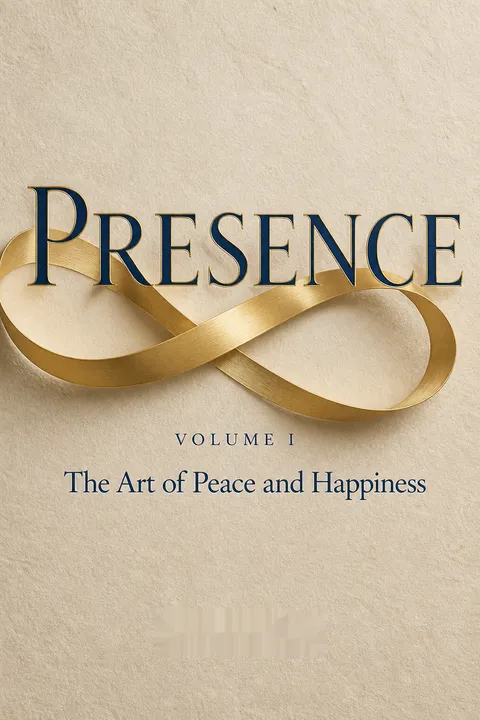
Presence, Volume I is a contemplative philosophy book built from short, overlapping inquiries rather than a linear argument or a conventional program. Its recurring movement is a turn away from sought-after objects and toward the one who seeks. Spira begins with the familiar disappointment of temporary pleasure, then asks readers to inspect the basic fact of being aware. From there, he reinterprets the separate self as a pattern of identification, bodily contraction, resistance, and longing. The book extends this inquiry from thought to sensation, perception, time, art, and relationships.
Its central strength is methodological. Instead of asking readers to accept a doctrine about consciousness, it repeatedly directs attention to immediate experience: What is actually present? Is the knower found as an object? Where is the boundary between a sensation called body and a sensation called world? The repetition is intentional, like returning to one musical theme from several angles. For readers willing to slow down, this can make abstract non-dual philosophy concrete.
Its central limitation is also clear. Observations about how experience appears do not by themselves prove that awareness is the ultimate substance of the universe, that the self survives bodily death, or that time is unreal. Those are metaphysical interpretations, not consequences everyone must accept. The book is most persuasive when it describes a practical shift in identification and least conclusive when it treats that shift as a final account of reality.
The advice also needs ethical grounding. Acceptance can reduce needless psychological struggle, but it must not be confused with tolerating abuse, neglecting medical care, or denying grief. Likewise, letting go of a rigid self-concept need not mean abandoning responsibility. Read as a disciplined inquiry into experience, the book offers a striking alternative to endless self-improvement: the possibility that the search for completion can be examined rather than obeyed.
Review Summary
Presence, Volume I by Rupert Spira receives high praise for its clear and accessible approach to non-dual teachings. Readers appreciate Spira's logical precision and use of analogies to convey complex concepts. Many find the book transformative, though some note it requires slow, contemplative reading. Critics point out repetition and a lack of practical instructions. The book is seen as an excellent introduction to non-duality, but some suggest acknowledging its roots in traditional teachings. Overall, it's highly recommended for those interested in exploring consciousness and the nature of reality.
People Also Read





Glossary
aware Presence
being that knows itselfSpira's term for the basic, directly experienced fact of being present and aware. It is not meant to describe a subtle object or a personal mind located somewhere in the body. The book uses it for what knows thoughts, sensations, and perceptions, and argues that this knowing is inseparable from being.
Self-enquiry
investigating the sense of selfA contemplative investigation into what the self is, based on direct experience rather than inherited beliefs. It may begin by asking who is aware, then examine thoughts, bodily sensations, and perceptions for evidence of a separate inner knower. Spira presents it as ongoing observation, not just repeating a question or adopting a spiritual conclusion.
separate self
the imagined inner ownerThe apparent individual who seems to exist inside a body, apart from an external world. Spira argues that this self is not a stable entity, but a pattern in which awareness is identified with bodily and mental experiences, followed by resistance and seeking. Its apparent solidity is reinforced by thoughts, feelings, memories, and bodily sensations.
pure experiencing
experience without subject-object divisionSpira's description of experience before thought divides it into a separate perceiver and perceived object. It refers to the immediate intimacy of seeing, hearing, sensing, or thinking, without assuming that an independent inner self encounters an independent outer thing. The term names an experiential perspective, not a scientific claim that external objects do not exist.
non-duality
absence of essential separationA view in which experience is not ultimately divided into a separate self on the inside and a separate world on the outside. Spira uses the term to point beyond the relationship between a knower and known objects, toward experience as seamless and intimate. He treats this as something to investigate directly, rather than merely a philosophical belief.
Separate Self Syndrome
suffering organized around separationSpira's playful proposed label for the widespread belief and feeling of being a vulnerable, separate individual. In his account, this sense of separation drives the search for happiness and the fear of disappearance or death. The phrase is not a clinical diagnosis; it summarizes the book's explanation of psychological suffering through identification with a limited self.
Download PDF
Download EPUB
.epub digital book format is ideal for reading ebooks on phones, tablets, and e-readers.








