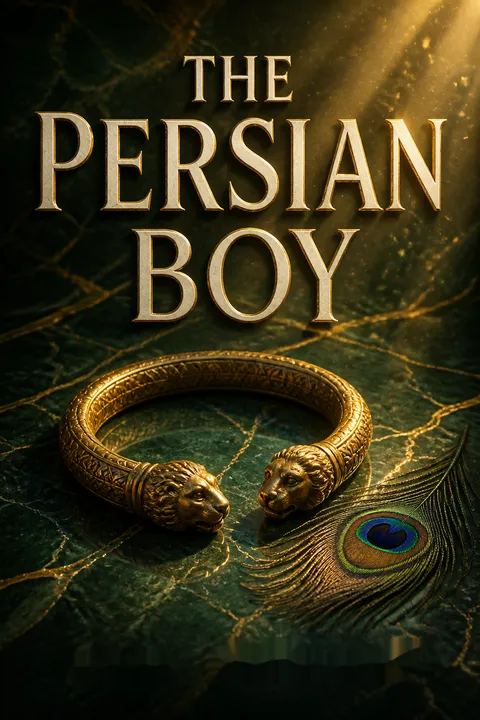


Plot Summary
The Hill-Fort Falls
At ten, Bagoas1 is being raised as the only son of Artembares,5 a Persian noble who teaches him that honor means resisting falsehood. When King Arses and his infant heirs are murdered, soldiers arrive at the family fort with a royal seal and kill Artembares,5 his wife, and apparently his daughters. His father,5 mutilated before execution, manages to name Orxines20 as the betrayer.
A captain takes Bagoas1 away, not from pity but because a boy can be sold. At Susa, dealers appraise his looks, then force him through castration and auction him to a jeweler's household. The child who expected to enter the royal court as a young nobleman becomes property, carrying his father's5 last accusation into slavery.
The opening makes political violence intimate before it becomes imperial history. Bagoas's father dies defending a lawful order, but the language of honor cannot protect a family from men who control seals, soldiers, and markets. The boy's survival is not a reward for virtue; it is the consequence of someone valuing his body as merchandise. That distinction shapes his later moral life. He retains the capacity to judge cruelty, yet must learn to exercise agency inside systems that deny him ordinary choices.
A Body for Sale
Bagoas1's owner, Datis,9 lends him to customers as a favor to business associates, and the boy endures repeated sexual exploitation without believing escape is possible. When a gentle carpet-seller treats him as a guest, Bagoas1 discovers how thoroughly his birth has become public property. Soon Datis9 sells him again, this time to Oromedon,6 a court eunuch who patiently trains him in music, riding, and the careful rituals of royal service.
Oromedon6 cannot undo the harm Bagoas1 carries, but he helps him recognize that pleasure need not always arrive with humiliation. He also prepares Bagoas1 for service to King Darius.4 The new household promises safety and distinction, yet Oromedon6 warns him not to mistake a king's favor for freedom.
The contrast between Datis and Oromedon is not simply cruelty against kindness. Both men operate within slavery, but Oromedon recognizes Bagoas as a person whose responses matter, while Datis treats him as an asset to circulate. Care gives Bagoas a first experience of agency, but it does not erase coercion or restore the life he lost. The distinction lets the novel examine how intimacy can be real even where power is unequal, without pretending that affection cancels the underlying injustice.
Darius's Persian Favorite
Darius,4 the new Persian king, recognizes Bagoas1 as Artembares5's son after hearing him sing a song from his father's5 household. He raises the boy from purchased companion to a favored courtier of noble birth, gives him a fine room, and treats him with lasting respect.
Bagoas1 learns to serve Darius4 without confusing courtesy with love, while watching the king's confidence erode as Alexander2 takes the Greek cities of Asia. After Darius4 loses at Issos, his mother,24 wife, children, and household fall into Macedonian hands.
Reports that Alexander2 preserves the royal women's safety seem unbelievable to the Persians, but they prove accurate. The contrast between Darius4's expanding crisis and Bagoas1's sheltered court life ends when the rival armies meet again.
Darius restores Bagoas's social identity, but not his lost childhood or bodily autonomy. The recognition matters because it names him as a son rather than an object, and because Darius's courtesy gives him a model of authority different from the men who first owned him. Yet royal protection remains contingent: Bagoas's security rests on a court already losing its grip on events. His loyalty becomes emotionally complex because gratitude to Darius grows inside a life still structured by service.
Darius Loses the Crown
At Gaugamela, Alexander2's attack breaks the Persian center, and Darius4 retreats from the field. In the flight toward the Caspian Gates, Bessos8 and cavalry commander Nabarzanes7 persuade the Baktrian lords to depose him and put Bessos8 in command.
Their attempted transfer of power collapses into betrayal: they bind Darius,4 then kill him as Alexander2 closes in. Bagoas,1 left behind with the royal household, hides beneath a fallen tent and escapes the plundering camp.
He finds a Greek mercenary column, kills a soldier who attacks him, and accepts help from Doriskos,12 a veteran who had earlier treated him with interest rather than contempt. Learning the Persian loyalists are heading toward Alexander,2 Bagoas1 sets out after them, carrying Darius4's memory and his own uncertain future.
The defeat is military, but the decisive wound is political: Persian elites repeat the treachery that once destroyed Bagoas's family. Their claim to rescue the empire is contradicted by their willingness to murder its king. Bagoas survives by combining skills learned under coercion with a moral loyalty that does not depend on Darius's success. Doriskos's aid gives him a rare choice, and choosing to continue toward the Persian loyalists marks a small but important shift from being moved by others to deciding where he will stand.
A Gift for Alexander
Nabarzanes7 shelters Bagoas,1 feeds and clothes him, and explains that Alexander2 may pardon a man who comes openly to negotiate. He offers Bagoas1 as a gift, not concealing that he hopes the beautiful young Persian will help secure favor.
Bagoas1 agrees because he has no safe livelihood to return to and wants to keep serving a king rather than fall back into the slave market. At Alexander2's camp, the conqueror asks whether he has come freely and whether he pleads for Nabarzanes7 because they were lovers.
Bagoas1 says no, and explains that he defends Nabarzanes7 because he understands the soldier's reasons. Alexander2 pardons the Persian lord,7 then takes Bagoas1 into his household. The first night exposes how little Bagoas1 understands the Macedonian king's private bond with Hephaistion.3
Bagoas's consent here is meaningful but constrained. He chooses among dangerous options, not from the freedom of someone untouched by slavery. Alexander's questions matter because he distinguishes willing service from possession, while Bagoas's defense of Nabarzanes reveals a moral code that survives even when gratitude and self-interest pull in different directions. The scene also introduces Hephaistion as more than a rival: he belongs to a private history Bagoas cannot enter simply by mastering court ritual.
The Persian Boy's Place
Alexander2 first keeps Bagoas1 at a distance, and the young Persian misreads the king's invitation as a summons to the bed. Hephaistion3's easy entrance makes clear that Alexander2 already has a beloved companion, while Bagoas1 is still an awkward foreign attendant.
Instead of withdrawing, Bagoas1 learns Macedonian habits, helps Alexander2 receive Persian envoys, and protects him from social mistakes his soldiers do not notice. At Zadrakarta, the king discovers Bagoas1's dancing talent and sees him humiliated when young squires turn a javelin game into a threat.
Alexander2 stops the abuse and publicly affirms his dignity. Later, while teaching Alexander2 Persian through stories of Cyrus, Bagoas1 and the king finally become lovers. Alexander2's affection makes service feel chosen, though Bagoas1 knows Hephaistion3 remains part of his beloved's life.
Bagoas gains intimacy through competence before he gains it through desire. His knowledge of Persian ceremony makes him useful in the political project Alexander is trying to build, while the squires' harassment shows how little that project has changed ordinary prejudice. The love affair is not a simple prize for endurance: it gives Bagoas joy and belonging, but also exposes him to jealousy and dependence. His awareness of Hephaistion prevents the romance from becoming a fantasy of exclusive possession.
Philotas Hides a Warning
In Baktria, a soldier named Dymnos recruits conspirators to kill Alexander.2 Dymnos's young associate refuses and passes the warning to his brother, who tells Philotas,17 the powerful commander of the Companion Cavalry. Philotas17 delays reporting it, and Alexander2 learns of the danger only after two more days have passed.
Bagoas1 sees the king's shock when he realizes that a boyhood friend may have put him at risk. Dymnos kills himself during arrest, while the Macedonian Assembly convicts Philotas17 and the other conspirators.
Alexander2 then sends a secret order to have Parmenion, Philotas17's father and commander of the western army, killed before he can retaliate or turn the troops. Bagoas1 comforts Alexander2 afterward, recognizing that the king has accepted a brutal necessity rather than an easy victory.
The threat turns friendship into a problem of statecraft. Alexander's loyalty to old companions makes him vulnerable, but once a warning is withheld, he must act against both personal trust and political risk. The killing of Parmenion shows how decisions made to prevent civil war can still carry the moral weight of murder. Bagoas does not excuse the cost; he understands why Alexander bears it. His role is to witness what the public language of necessity cannot make emotionally clean.
The Squires Turn Their Blades
As Alexander2 adopts Persian ceremony, the Greek philosopher Kallisthenes18 publicly refuses the prostration and persuades some Macedonians that it demeans free men. The gesture deepens resentment among young royal squires, already uneasy about Alexander2's Persian advisers and Bagoas1's influence.
Hermolaos,25 angered by a hunting reprimand, joins the disaffected circle. Bagoas1 notices Kallisthenes18 giving the boys unusual private attention and warns Alexander2 that something is wrong. When Epimenes finally reports that the squires plan to kill the king in his sleep, Alexander2 arrests the group.
Their trial ends in execution, while Kallisthenes18 is taken into custody and later dies in confinement. Alexander2 had dismissed Bagoas1's earlier suspicions; now he acknowledges that the warnings deserved attention.
The plot grows from a conflict over gestures into a struggle over who belongs in Alexander's emerging political world. The prostration is not merely etiquette: it makes Macedonian and Persian rank visible in the same room, and forces the soldiers to confront a hierarchy they did not choose. Kallisthenes turns a genuine question about liberty into factional grievance, while Alexander mistakes a public refusal for a contained disagreement. Bagoas's vigilance comes from lived experience of court betrayal, but it is also a response to being treated as someone whose perceptions count only after danger becomes undeniable.
The Apple at the Feast
At a feast in Marakanda, Alexander2 and the veteran commander Cleitus19 drink heavily while arguing over who deserves credit for Macedon's victories. Cleitus19 insists that Alexander2 owes his throne and survival to the army and his father Philip, then insults the king's Persian policies and points contemptuously toward Bagoas.1
Alexander2 hurls an apple at him. Friends drag Cleitus19 from the hall, but he returns and invokes an old battlefield rescue. Alexander2 grabs a spear and kills the man who once saved him.
Sobered by the act, he collapses into shame, refuses food, and shuts everyone out. Bagoas1 eventually reaches him with water and food, helping him accept the Macedonian belief that the god Dionysos had possessed both men. The explanation does not erase the killing, but it lets Alexander2 begin to live with it.
Cleitus's death is a collision between two definitions of loyalty. Cleitus believes a king must remember the men who made his victories possible; Alexander hears that demand as an attack on a project he believes exceeds Macedonia. Alcohol accelerates the break, but it does not create the political resentment beneath it. Bagoas's comfort helps Alexander survive his shame, yet the appeal to divine possession also shows how religious interpretation can soften responsibility. The novel leaves the act morally painful even as it gives the king a way back to ordinary life.
Roxane's Sweetmeat Trap
At a feast in Sogdiana, Alexander2 meets Roxane,13 the daughter of the chief whose mountain stronghold he has just taken. He chooses to marry her, hoping the union will help bind the conquered province to his empire. Bagoas1 hides his pain, then continues serving Alexander2 as husband and lover.
After the wedding, Roxane13 sends Bagoas1 a dish of sweetmeats prepared by Philostratos for her own wedding gifts. The handwriting alerts Bagoas,1 and he tests a sweet on a stray dog, which dies. He warns Alexander,2 who visits Roxane13 and learns she deliberately tried to poison him.
Alexander2 beats her to establish a boundary, then tells Bagoas1 that he has dealt with the danger. Bagoas1's position survives, but the marriage makes clear that love in a royal household can become a contest over access and power.
Roxane's marriage begins as an alliance, but private jealousy quickly intrudes into public politics. Bagoas's survival depends on noticing a small material clue, the scholar's handwriting, and acting before loyalty becomes fatal. Alexander's response protects Bagoas, yet the beating is not a resolution of the marriage's deeper imbalance; it is an assertion of authority within it. Bagoas understands that he cannot demand exclusivity, so his attachment requires a difficult discipline: he must stay emotionally present without pretending he controls the king's choices.
Poros at the Hydaspes
On reaching India, Alexander2 meets Kalanos,14 an ascetic philosopher who leaves his companions beneath a great tree to travel with the king. Kalanos14 challenges Alexander2's appetite for conquest, but the two develop a wary respect.
Across the Hydaspes, King Poros15 refuses submission and meets the Macedonians with elephants, chariots, and a disciplined army. Alexander2 feints for days in the rain, then crosses upstream during a storm and wins a hard battle. Poros15 continues fighting after defeat until Alexander2 approaches him as one king to another.
Impressed by his courage, Alexander2 restores Poros15's authority and gives him additional territory. The victory fulfills Alexander2's ideal of making former enemies partners, while Kalanos14 remains nearby as a reminder that conquest cannot answer every question about what a life is for.
Poros gives Alexander the rare opponent he can admire without diminishing. Their encounter lets the king transform victory into a relationship based on mutual recognition, rather than humiliation. Kalanos supplies a contrasting measure of achievement: he sees self-mastery as a freedom Alexander has not attained. Together, the two men expose the tension between Alexander's desire to understand the world and his habit of making it obey him. His generosity toward Poros is genuine, but it does not extinguish the longing that drives him onward.
The Beas Turns Them Back
After long campaigns, Alexander2 reaches the Beas and tells his commanders he intends to continue toward the Ganges and the eastern Ocean. His soldiers, soaked by relentless rain and worn down by years away from home, refuse.
Koinos speaks for them, naming their dead, their failing horses, and the families they may never see again. Alexander2 first withdraws, hoping they will reconsider, then accepts that he cannot take his army forward without breaking the bond that has carried them so far.
Kalanos14 tells him that desire itself can become a chain, while Alexander2 argues that great longing is what enables a person to make something new. Unfavorable omens help confirm the retreat. Alexander2 builds altars at the limit of his advance, then turns west, defeated in one ambition but still responsible for the men who refused him.
The mutiny is not a rejection of Alexander's achievements so much as a limit placed on his power by the bodies that made those achievements possible. Koinos speaks with loyalty, not rebellion, and that makes the refusal harder for Alexander to dismiss. The king's decision to turn back reveals a capacity for restraint, though not peace with the limit. His longing gives his empire its motion and its cost. Bagoas can affirm Alexander's dream, but he sees that the soldiers' exhaustion is not a failure of imagination.
Gedrosia Takes Its Price
Alexander2 chooses the brutal Gedrosian route on the return from India, hoping to discover a coastal passage for his fleet. Heat, sand, thirst, and lost water sources kill men and animals by the day. Bagoas1's horse dies, and he gives up walking when his strength fails.
Hephaistion3 rides back from camp, gives him water, and brings him in on his exhausted horse. Alexander,2 meanwhile, refuses a helmet of water so the parched troops will not envy him, then leads the march on foot despite the pain in his old Mallian wound.
A flash flood later sweeps away tents and camp followers. When the survivors finally reach watered Karmania, Alexander2 arranges food, rest, and celebrations. Bagoas1 dances in a public contest, and the soldiers crown him, welcoming the lover who helped keep their battered king alive.
Gedrosia strips away court distinctions until survival becomes the only rank that matters. Alexander's refusal to drink is a carefully public act: he converts physical deprivation into proof that he shares the soldiers' burden. Bagoas's collapse reveals his own limits, while Hephaistion's return forces him to acknowledge a bond he has envied. The desert does not purify the army or make its losses noble; it simply exposes what each person is willing to spend for others. Bagoas's dance afterward turns survival into a communal acknowledgment of affection.
Orxines Meets His Witness
Back in Persis, Bagoas1 recognizes the name of the new satrap, Orxines,20 from the last words his father5 managed to speak before execution. Alexander2 arranges a private signal so Bagoas1 can confirm the man at an audience. When Orxines20 appears, Bagoas1 recognizes him and stays.
Witnesses then accuse the satrap20 of murder, extortion, and robbing royal tombs, crimes Alexander2 investigates rather than treating the accusation as personal revenge. After Orxines20 is convicted, Alexander2 lets Bagoas1 oversee the hanging.
The task brings no satisfaction; Bagoas1 finds the execution repellent and asks his father's5 spirit to forgive him for not being a warrior. In Susa, Alexander2 also arranges marriages between Macedonian officers and Persian noblewomen, seeking to make two peoples kin rather than merely subjects.
The family grievance finally enters public judgment, but vengeance does not heal Bagoas's original wound. Alexander insists on proof, separating justice from a private desire to punish, then gives Bagoas the authority to complete the sentence. That authority feels less like triumph than a test of identity: Bagoas can honor his father without becoming the warrior his father imagined. The mass marriages extend the same political question outward. Can bonds between peoples be made through chosen kinship, or will they remain a ceremony imposed by the victorious?
Opis's Kneeling Soldiers
At Opis, Alexander2 announces that Persian soldiers will take commands in the army and that the Macedonian veterans may return home with generous pensions. The Macedonians hear replacement in the offer and erupt against him, accusing him of preferring the peoples he conquered.
Alexander2 arrests the ringleaders, then tells the rest that they are free to leave and that he will continue with a Persian army. When the soldiers realize he means it, they lay down their weapons and plead for forgiveness.
Alexander2 embraces them and declares them his kin, then holds a reconciliation feast where Macedonians and Persians share honors. Bagoas1 sees Alexander2 achieve the unity he has pursued since meeting the Persians, but understands that the old affection between king and army now carries a new strain.
The crisis reveals that Alexander's project of integration threatens the very people whose devotion made it possible. His response is not to punish the whole army or abandon the Persians, but to force the Macedonians to choose whether their bond survives a changed empire. Their return to him is emotional as well as political, and the feast gives that choice a ritual form. Yet reconciliation cannot restore the earlier simplicity. Bagoas recognizes that love between ruler and soldiers has become a negotiation over who gets to belong.
Hephaistion's Empty Bed
At Ekbatana, Hephaistion3 falls ill with abdominal cramps and fever. Alexander2 leaves festival events to sit beside him, and the doctor orders him to avoid solid food. Hephaistion3 briefly improves, then collapses after eating chicken.
Alexander2 blames the doctor for leaving him and orders him hanged. He spends the next days refusing comfort, cuts off his hair in mourning, and commands a vast funeral for Babylon. Bagoas1 does not leave the king, though Alexander2 barely sees him; when he finally returns to his own rooms, he accepts Bagoas1's presence.
The loss opens a grief so severe that even Alexander2's closest friends fear for his judgment. Bagoas1 understands that he can remain beside the king, but cannot replace the person who shared Alexander2's earliest life.
Hephaistion's death removes not simply a lover but Alexander's witness to childhood, ambition, and shared myth. Bagoas's love is real, yet its limit becomes painfully visible: he can care for Alexander's body and endure his grief, but cannot occupy the history that Hephaistion represents. The king's punishment of the doctor channels helplessness into action, while the haircut and funeral translate private devastation into public ritual. Bagoas's restraint is a form of care, though it costs him the reassurance of being seen.
A Campaign Against Grief
After a period of near-paralysis, Alexander2 takes his army into the Kossaian mountains and dedicates the campaign's dead to Hephaistion.3 The demanding operation draws him back into the habits of command: he identifies goat-tracks, takes fort after fort, and captures prisoners instead of indulging in indiscriminate revenge.
Bagoas1 travels with him and finds Alexander2's mind gradually returning through the discipline of the campaign. Once the passes are secure, they continue to Babylon, where Alexander2's architects complete the immense funeral pyre.
Hephaistion3 is burned in a ceremony that combines Persian and Macedonian honors. An embassy from the oracle at Siwah later declares him a divine hero, not a god. Alexander2 accepts the distinction and orders shrines, contracts, and sacrifices in Hephaistion3's name.
Work gives Alexander a structure in which grief can move without being denied. The campaign is still violent, but his treatment of prisoners shows that his return to action is not simply a return to rage. The funeral pyre magnifies private loss into imperial spectacle, while the oracle offers a limit to what ritual can promise: Hephaistion may be honored among heroes, but cannot simply be restored. Bagoas witnesses how public commemoration can help the living continue, even as it risks turning a singular person into an image.
Babylon's Dark Warning
As Alexander2 prepares new ports and an Arabian voyage, the Chaldean priests warn that Babylon is dangerous for him. He circles the city rather than enter by the western gate, but marshland blocks the eastern approach, and he decides not to let the priests dictate his route.
He enters amid ravens and other ill omens. In Babylon he learns Roxane13 is pregnant, news that briefly gives him the prospect of an heir. Later, a deranged soldier sits on the royal throne while the household waits. The seers insist the intruder must die, and Alexander2 obeys the law.
At a feast soon afterward, he develops a fever, but refuses to stop working or consult doctors. When Bagoas1 finds wine in the water cooler and Alexander2 recalls that the cupbearer Iollas brought it, suspicion enters the room without proof.
The omens matter because they expose Alexander's conflicted relation to fate. He listens, changes his route, then rejects the warning when obedience obstructs his plans. The pregnancy offers a future at the moment his own body begins to fail, while the throne incident turns an accidental gesture into a political threat. Bagoas's discovery of wine in the water is chilling precisely because it does not settle the cause of the illness. The uncertainty leaves him confronting a danger he cannot test or control.
The King Goes Quiet
Alexander2's fever worsens, and he continues receiving officers while struggling to breathe. When he cannot address the assembled Macedonians, he lets every soldier pass his bed and gives each one a look of recognition. Asked whom he leaves the kingdom to, he names the strongest, then gives his signet ring to Perdikkas.
Bagoas1 remains beside him as the generals begin calculating what the answer means. Near dawn, Alexander2 touches Bagoas1's hair and recognizes him before slipping beyond speech. The king dies with Bagoas1 at his side.
The commanders abandon the room to contest the succession, and armed factions soon fight over Alexander2's body. Bagoas1 shields the dead king from a thrown javelin, then waits while the embalmers prepare him, left with the private knowledge that the man he loved is beyond every kingdom.
The deathbed briefly restores the intimacy that imperial politics has spent the novel dividing. Alexander grants his soldiers a final acknowledgment, but his succession answer leaves the empire without a clear mechanism for continuity. The signet ring becomes a political object even before the body is cold. Bagoas's vigil offers a counter-image to the generals' scramble: he stays not to inherit authority but because he cannot leave the person behind. His final act of protection is both literal and symbolic, guarding a body that others already treat as a claim.
The Persian Boy Remains
After the generals leave, Bagoas1 stays alone with Alexander2's body through the heat of the day. He washes and combs the king's hair, then speaks privately to the dead man, hoping the gods will receive him gently and that his many victims can forgive him.
Kalanos14's earlier promise gives Bagoas1 comfort: the ascetic14 may be waiting to guide Alexander2 beyond death. When soldiers return in a struggle over the corpse, Bagoas1 stands between their weapons and the body and is wounded by a javelin.
The embalmers eventually take Alexander2 away. Bagoas1 has lost his lover, his king, and the political world that gave his service meaning, but his account preserves a human being behind the legend: generous, violent, ambitious, tender, and never reducible to a conqueror's name.
The ending refuses to let either intimacy or violence have the last word alone. Bagoas remembers the dead as a person capable of tenderness and of killing, and his hope for divine mercy does not erase the lives destroyed by conquest. The embalmers' removal of the body marks the transition from private grief to public relic, while Bagoas's narration resists that transformation by retaining ordinary details of touch and care. His survival is not a conventional victory. It is the labor of remembering without simplifying.
Analysis
The novel makes empire visible from the position of someone who is both intimate with power and excluded from ordinary forms of freedom. Bagoas1 can enter the royal bedchamber, advise on Persian etiquette, and witness decisions that shape continents, yet his body and status remain vulnerable to owners, kings, and political factions. That contradiction prevents the romance from becoming a simple ascent from slavery to privilege. Affection gives Bagoas1 agency and belonging, but never makes him Alexander2's equal in power.
Alexander2's project of fusing Macedonian and Persian life is tested in concrete rituals: who may approach the throne, who commands the army, whose customs count as civilized. His failures are often personal before they are constitutional. Cleitus19's death, the squire conspiracy, and the Opis mutiny show how quickly love of a leader can become resentment when people feel displaced. Yet Alexander2's sympathy for Persian excellence is not merely political theater. Bagoas1 sees him repeatedly share hardship, honor enemies, and take responsibility for decisions that cost him affection.
The novel also asks what it means to be remembered. Bagoas1 preserves Alexander2 as neither flawless hero nor convenient tyrant. He records the tenderness beside the violence, the generosity beside the hunger for new horizons. Public monuments and funeral rites turn people into symbols, while the narrator's attention to a song, a horse, a cup of water, or a hand on a fevered brow restores their private scale. Memory cannot undo conquest or loss. It can, however, refuse the simplification that turns a human life into an argument.
Review Summary
The Persian Boy is widely praised as a masterful historical novel and love story, offering an intimate portrayal of Alexander the Great through the eyes of his Persian eunuch lover, Bagoas. Readers appreciate Renault's vivid prose, meticulous research, and complex character development. While some find Bagoas' devotion excessive, most are captivated by the unique perspective on Alexander's conquests and personal life. The novel is lauded for its emotional depth, historical accuracy, and exploration of themes like power, love, and cultural differences in ancient times.
People Also Read


Characters
Bagoas
The Persian witnessA Persian aristocrat reduced to slavery as a child, Bagoas learns to survive through observation, grace, and an exact memory for what people reveal when they think no one important is watching. Castration and abuse estrange him from the manhood his father5 imagined for him, but do not extinguish his pride or his capacity for desire. He is both a trained courtier and a sharp judge of power, able to move between Persian formality and Macedonian informality without mistaking either for innocence. His deepest need is not rank but chosen affection, and his loyalty is strongest when it remains an act of will rather than obedience imposed by ownership.
Alexander
The restless conquerorKing of Macedon and conqueror of the Persian Empire, Alexander is driven by an appetite for discovery that makes every achieved frontier feel like the beginning of another journey. His soldiers trust him because he shares their hardship, remembers their service, and risks himself in battle. He is also theatrical, proud, and hungry for affection, capable of startling generosity as well as dangerous anger. His interest in Persian customs grows from genuine admiration, not merely strategy, and he tries to build a state in which peoples once treated as enemies can serve together. Bagoas1 sees both the human tenderness and the immense, sometimes destructive will behind his legend.
Hephaistion
Alexander's oldest companionAlexander2's boyhood friend, trusted military commander, and closest emotional companion, Hephaistion occupies a place in the king's life that predates conquest and court. He understands Alexander2's private habits and ambitions without needing them explained, and his presence anchors the king to a shared past. He is disciplined in responsibility, at ease with Persian customs, and capable of loyalty that can look like political alignment to those outside their bond. Bagoas1 must contend with the fact that Hephaistion is not simply a rival for affection but a partner in the story Alexander2 tells himself about who he is.
Darius
The Persian Great KingThe Persian king who takes Bagoas1 into his household, Darius combines regal courtesy with a deep investment in the ancient forms of kingship. He values beauty, ceremony, and personal loyalty, and he recognizes Bagoas1's noble parentage when the boy's song recalls Artembares5. His generosity gives Bagoas1 dignity and security, but his immense court and formal authority also stand in contrast to Alexander2's more direct relationship with soldiers.
Artembares
Bagoas's honorable fatherA Persian landholder from the old royal tribe, Artembares raises Bagoas1 in a code that treats faithlessness as the deepest moral failure. He is a loving father who wants his only son to grow into a warrior and a man of honor. His household becomes Bagoas1's measure of the life he lost, while his teachings remain a standard against which Bagoas1 judges rulers, servants, and himself.
Oromedon
The courtly teacherA senior eunuch in the royal household, Oromedon trains Bagoas1 in service, music, riding, and the subtle etiquette of power. Charming but clear-eyed, he understands that a favorite's position is never the same as freedom. His patience gives Bagoas1 a more humane experience of intimacy after years of abuse, and his warnings teach the boy to accept affection without expecting it to guarantee a permanent place.
Nabarzanes
The calculating Persian commanderA skilled Persian cavalry commander, Nabarzanes is proud of his people and searches for a ruler he can serve without shame. His political intelligence is matched by a readiness to make dangerous bargains, and he is unusually candid with Bagoas1 about ambition, guilt, and survival. He treats Bagoas1 with hospitality and recognizes his loyalty, even when their interests do not fully align.
Bessos
The ambitious satrapA powerful Baktrian satrap and cousin to Darius4, Bessos commands a formidable regional following. He sees Persian military survival through the interests of Baktria and is willing to challenge the old royal order when he believes it has failed. His blunt strength contrasts with Nabarzanes7's subtler political manner, making him a figure through whom the court's fractures become visible.
Datis
The acquisitive jewelerA wealthy Susa jeweler and Bagoas1's early owner, Datis measures people by their usefulness and market value. His household displays the casual authority owners exercise over enslaved servants, especially those whose beauty can be turned into profit.
Boubakes
The steady chief eunuchChief eunuch of Darius4's household, Boubakes is dignified, observant, and protective of the people entrusted to him. He represents an older Persian court culture built around ritual and hierarchy, yet he can recognize practical courage in Bagoas1. His steady care offers the young man a form of adult protection outside the bonds of erotic favor.
Artabazos
The elderly loyal lordA Persian noble of extraordinary age and long experience, Artabazos has lived through rebellion, exile, and the fall of kings. He is courageous without being rash and understands that loyalty sometimes requires persuading a ruler rather than merely obeying him. His antique sense of duty gives Bagoas1 a living example of Persian honor.
Doriskos
The mercenary with a codeA Greek mercenary serving in Persia, Doriskos is a veteran shaped by exile from home and the need to sell his skill as a soldier. He is candid, humane, and less interested in court distinctions than in keeping a promise. His brief companionship lets Bagoas1 encounter desire and kindness outside royal households.
Roxane
The Sogdian princessDaughter of a Sogdian chief, Roxane is celebrated for her beauty and carries herself with a confidence that does not conform to Persian court modesty. Her marriage to Alexander2 brings a conquered noble family into the imperial center. She is proud, politically alert, and accustomed to an intimate household culture unlike Bagoas1's, which makes her place beside the king a source of tension as well as alliance.
Kalanos
The Indian asceticAn Indian philosopher who leaves his ascetic companions to travel with Alexander2, Kalanos measures freedom by mastery of desire rather than possession or conquest. He speaks plainly to the king without seeking favor and accepts very little from the court. His relationship with Alexander2 is founded on intellectual respect, and his ideas challenge Bagoas1 to think about love, attachment, and what a person owes to the life he has chosen.
Poros
The Indian kingA powerful Indian ruler who commands elephants and a disciplined army, Poros meets Alexander2 as a king rather than a suppliant. His courage and self-command earn respect from the Macedonians and Persians alike. He is dignified without being submissive, and his political partnership with Alexander2 shows how defeated rulers can retain authority through mutual recognition.
Ptolemy
The clear-eyed generalAlexander2's half-brother and trusted general, Ptolemy combines military experience with a practical understanding of court politics. He often helps translate the king's intentions into action and is among the people who can speak frankly to him. His habit of observing events closely makes him a counterweight to the emotional intensity surrounding Alexander2.
Philotas
The proud cavalry commanderSon of the influential general Parmenion and commander of the Companion Cavalry, Philotas possesses rank, wealth, and a long history with Alexander2. He is proud of his standing and accustomed to being close to power. His position makes him a focal point for the danger created when private loyalties, military authority, and the king's security become entangled.
Kallisthenes
The proud Greek philosopherA Greek historian and philosopher attached to Alexander2's court, Kallisthenes believes Greek liberty and inherited political forms deserve protection. He is learned, austere, and conscious of his own intellectual standing. His discomfort with Persian ceremony places him at the center of debates about whether Alexander2's empire can create a shared political culture without erasing older identities.
Cleitus
The blunt Macedonian veteranA veteran commander who has served since the time of Philip, Cleitus is brave, outspoken, and deeply attached to Macedonia's military traditions. He believes Alexander2 must remember the soldiers and family members who made his rise possible. His frankness can be a form of loyalty, though his contempt for Persian customs makes him an embodiment of the resistance Alexander2 faces at home.
Orxines
The Persian satrapA high-ranking Persian lord whose polished manners and claims of public service conceal an appetite for authority. Orxines represents the danger of inherited status without the restraint that Bagoas1 associates with honor.
Niarchos
The admiral and explorerA Greek companion of Alexander2 from boyhood, Niarchos is a capable sailor whose loyalty connects military service to exploration. He leads the fleet along the Indian and Persian coasts and reports what he has learned with the directness of a practical commander. His friendship with Alexander2 is old, durable, and rooted in shared adventures.
Eumenes
The careful royal secretaryA Greek secretary who serves the Macedonian royal house and later holds high administrative authority, Eumenes is precise, politically alert, and protective of his dignity. He understands how a court works and knows that a small slight can gather factions around it. His difficult relationship with Hephaistion3 shows how personal resentment can spread through an institution.
Kassandros
The hostile Macedonian envoySon of Antipatros, the regent in Macedon, Kassandros arrives at Alexander2's court with an inherited political position and a strong sense of Greek status. He is proud, suspicious of Persian influence, and openly uncomfortable with the forms of the eastern court.
Sisygambis
The Persian Queen MotherMother of Darius4 and an elder figure of the Persian royal family, Sisygambis possesses a formidable presence and a keen understanding of kingship. Her relationship with Alexander2 is marked by an unusual mixture of rank, grief, and familial affection. Through her, Bagoas1 sees how political defeat can alter a royal household without erasing its dignity.
Hermolaos
The disaffected royal squireA young Macedonian assigned to the king's personal guard, Hermolaos is proud of his birth and impatient with reprimands. He belongs to a generation of attendants who must learn the discipline and political expectations of service around Alexander2.
Plot Devices
Bagoas's retrospective voice
An intimate imperial lensThe story is filtered through Bagoas1, an insider who can describe royal ceremony and also notice the hand that shakes while holding a cup. His perspective keeps Alexander2 human without making him fully knowable: Bagoas1 admits when he misunderstands a political decision, envies Hephaistion3, or learns important facts only afterward. The older narrator's memories also connect private events to public history, showing how a moment at a bedside can matter as much to him as a battle. This lens makes the empire legible through service, affection, and the physical details of daily life.
Persian honor and the Lie
A moral compass under pressureBagoas1 is raised to understand honor as fidelity and the Lie as betrayal. This inherited code helps him judge his father's5 murder, Darius4's treatment of him, Nabarzanes7's choices, and Alexander2's promises. It does not give him simple answers: loyalty can require disobedience, and a king may commit violence while claiming necessity. The framework therefore gives the story a moral vocabulary without turning the narrator into an infallible judge. Bagoas1 repeatedly tests the code against what he sees, rather than merely repeating what his father5 taught.
Court ritual and prostration
A visible test of unityPersian court gestures make rank legible through the body. A bow, a kiss, or a prostration can signal deference, alliance, or insult before anyone openly states a political position. Alexander2's adoption of Persian customs and the Macedonian resistance to them turn etiquette into a public argument over who belongs in the empire. Bagoas1 understands the gestures instinctively because he has grown up among them, while Macedonian soldiers interpret them through their own ideas of freedom. The ritual becomes a recurring instrument for dramatizing cultural negotiation rather than background decoration.
Fire, omens, and prophecy
Fate's political languageThe novel repeatedly places practical decisions beside sacred signs: eclipses, sacrifices, oracles, extinguished fires, and the appearance of animals. Characters interpret these events according to their beliefs and fears, and their interpretations influence real choices. Bagoas1's Persian reverence for fire differs from Alexander2's Greek and Egyptian religious references, but both men treat the divine as present in human affairs. Omens do not provide a neat explanation of events; instead, they reveal what characters already fear, desire, or cannot admit about their power.
Cyrus and Homeric models
Myth as a private scriptStories of Cyrus, Achilles, and Patroklos give Alexander2 and Bagoas1 models for kingship, courage, friendship, and grief. Alexander2 uses Cyrus as an ideal of rule that can unite peoples without making one a permanent master of another. Homeric friendship offers a language for the bond he shares with Hephaistion3, while Bagoas1 uses stories to reach the parts of Alexander2 that court protocol cannot touch. These myths shape behavior but do not dictate it; the characters must still decide whether they are living up to the ideals they admire.
FAQ
Synopsis & Basic Details
What is The Persian Boy about?
- A Journey of Survival: The Persian Boy tells the story of Bagoas, a young Persian nobleman who is captured, castrated, and sold into slavery. The narrative follows his journey through the Persian court, his service to King Darius, and his eventual relationship with Alexander the Great.
- A Unique Perspective: The novel offers a unique perspective on Alexander's conquests through the eyes of Bagoas, a character who is both an insider and an outsider in the Macedonian court. This allows for a nuanced exploration of power and influence, loyalty, and cultural clashes.
- A Blend of History and Fiction: Mary Renault masterfully blends historical events with fictional elements, creating a vivid and immersive portrayal of the ancient world. The story explores the personal and political dynamics of the time, focusing on the human aspects of historical figures.
Why should I read The Persian Boy?
- Intricate Character Study: The novel provides a deep and complex character study of Bagoas, exploring his emotional and psychological journey as he navigates a world of power, betrayal, and love. His resilience and adaptability make him a compelling protagonist.
- Rich Historical Detail: Mary Renault's meticulous research brings the ancient world to life, offering a vivid and immersive experience for the reader. The novel is filled with rich historical details, from the political intrigues of the Persian court to the military campaigns of Alexander the Great.
- Exploration of Complex Themes: The Persian Boy delves into complex themes such as power, loyalty, identity, and the nature of love. It challenges readers to consider the human cost of ambition and the enduring impact of historical events.
What is the background of The Persian Boy?
- Historical Setting: The novel is set in the ancient world, primarily in Persia and the regions conquered by Alexander the Great. It covers the period from the reign of King Darius III to the early years of Alexander's empire, providing a detailed look at the political and cultural landscape of the time.
- Cultural Context: The story explores the clash between Persian and Macedonian cultures, highlighting the differences in their customs, values, and political systems. It also delves into the social structures of the time, including the roles of eunuchs, slaves, and women.
- Political Intrigue: The novel is set against a backdrop of political intrigue and power struggles, both within the Persian court and in the context of Alexander's conquests. The characters are often caught in the crossfire of these conflicts, forcing them to make difficult choices about loyalty and survival.
What are the most memorable quotes in The Persian Boy?
- "It will take death to make me forget.": This quote encapsulates the profound trauma and pain Bagoas experiences after his castration, highlighting the lasting impact of his suffering and the depth of his emotional scars.
- "When we serve the great, they are our destiny. Count upon nothing, but make your own nest against the storm.": Oromedon's advice to Bagoas reflects the harsh realities of life in the ancient world, where individuals are often at the mercy of powerful figures. It emphasizes the importance of self-reliance and adaptability.
- "You have fine senses; for pleasure certainly, for pain therefore as much.": Oromedon's observation about Bagoas's sensitivity reveals a key aspect of his character, highlighting his capacity for both intense joy and profound suffering. It also suggests that his experiences have shaped his artistic abilities.
What writing style, narrative choices, and literary techniques does Mary Renault use?
- First-Person Perspective: The novel is narrated from Bagoas's first-person perspective, which allows readers to intimately experience his thoughts, emotions, and observations. This narrative choice creates a sense of immediacy and personal connection with the protagonist.
- Rich Sensory Detail: Renault's writing is characterized by its rich sensory detail, bringing the ancient world to life through vivid descriptions of sights, sounds, smells, and tastes. This immersive style enhances the reader's experience and creates a strong sense of place.
- Subtle Foreshadowing: Renault employs subtle foreshadowing and callbacks throughout the novel, creating a sense of dramatic irony and enhancing the reader's understanding of the characters' fates. These literary techniques add depth and complexity to the narrative.
Hidden Details & Subtle Connections
What are some minor details that add significant meaning?
- The Mirror: Bagoas's mother scolds him for looking in her mirror, saying he is too young to be vain. This seemingly minor detail foreshadows his later life, where his beauty becomes both a source of power and vulnerability. The mirror itself, engraved with a winged boy, symbolizes his lost youth and potential.
- The Monkey: The jeweler's wife's monkey, which Bagoas grows fond of, is sold, mirroring Bagoas's own experience of being bought and sold. This detail highlights the dehumanizing nature of slavery and foreshadows Bagoas's fear of being treated as a mere commodity.
- The Scythian Bow: Bagoas picks up a Scythian bow, which he uses for hunting. This seemingly minor detail foreshadows his later use of weapons and his desire to avenge his father's death, highlighting his growing sense of agency and his connection to his warrior heritage.
What are some subtle foreshadowing and callbacks?
- The Traitor's Name: Bagoas's father cries out the name of his betrayer, Orxines, before his death. This name resurfaces later in the story, revealing a connection to Bagoas's past and highlighting the cyclical nature of betrayal and revenge.
- Oromedon's Scar: Oromedon's scar, which he received while hunting, foreshadows the dangers and hardships that Bagoas will face in his life. It also serves as a reminder of the sacrifices and risks involved in serving powerful figures.
- The Battle Song: The battle song that Bagoas sings for King Darius, which his father's warriors used to sing, foreshadows his own journey into war and his connection to his heritage. It also highlights the cyclical nature of history and the enduring power of tradition.
What are some unexpected character connections?
- Bagoas and Oromedon: The relationship between Bagoas and Oromedon, his trainer, is unexpected in its depth and complexity. Oromedon's genuine care for Bagoas contrasts with the exploitative nature of his previous relationships, highlighting the possibility of kindness and connection even in the most dehumanizing circumstances.
- Bagoas and Artabazos: The connection between Bagoas and Artabazos, the exiled satrap, is unexpected but significant. Artabazos's kindness and respect for Bagoas's father create a sense of continuity and connection to his past, offering a glimpse of hope amidst his suffering.
- Bagoas and Doriskos: The brief but meaningful connection between Bagoas and Doriskos, a Greek soldier, highlights the possibility of friendship and understanding across cultural divides. Their shared experiences of war and displacement create a bond that transcends their differences.
Who are the most significant supporting characters?
- Oromedon: As Bagoas's trainer, Oromedon plays a crucial role in shaping his understanding of pleasure and desire. His kindness and skill provide Bagoas with a sense of agency and self-worth, contrasting with his previous experiences of exploitation.
- Artabazos: The exiled satrap, Artabazos, serves as a link to Bagoas's past and a symbol of Persian honor. His respect for Bagoas's father and his own integrity provide a moral compass for Bagoas in a world of shifting allegiances.
- Hephaistion: As Alexander's closest companion, Hephaistion's presence is a constant reminder of the complex dynamics of power and love. His relationship with Alexander and his interactions with Bagoas highlight the challenges of navigating a world of intense emotions and political intrigue.
Psychological, Emotional, & Relational Analysis
What are some unspoken motivations of the characters?
- Alexander's Need for Validation: Alexander's relentless pursuit of conquest and his desire for recognition stem from a deep-seated need for validation. His actions are driven by a desire to prove himself worthy of his father's legacy and to achieve a level of greatness that transcends mortal limitations.
- Bagoas's Search for Belonging: Bagoas's actions are often motivated by a desire for belonging and acceptance. His relationships with Oromedon, Darius, and Alexander are all attempts to find a place where he is valued and loved for who he is, rather than for his beauty or his skills.
- Hephaistion's Fear of Loss: Hephaistion's possessiveness and jealousy stem from a deep-seated fear of losing Alexander's love and attention. His actions are often driven by a desire to maintain his position as Alexander's closest companion, even at the expense of others.
What psychological complexities do the characters exhibit?
- Alexander's Internal Conflict: Alexander exhibits a complex internal conflict between his desire for conquest and his need for human connection. He is torn between his ambition to achieve greatness and his longing for love and acceptance, leading to moments of both ruthlessness and tenderness.
- Bagoas's Emotional Resilience: Bagoas demonstrates remarkable emotional resilience in the face of trauma and adversity. He is able to adapt to new circumstances and form meaningful relationships, while also grappling with the lasting impact of his past experiences.
- Darius's Inability to Adapt: Darius's inability to adapt to changing circumstances and his reliance on traditional methods of rule contribute to his downfall. His pride and inflexibility prevent him from recognizing the threat posed by Alexander, highlighting his psychological limitations.
What are the major emotional turning points?
- Bagoas's Castration: The act of castration is a major emotional turning point for Bagoas, marking the loss of his innocence and the beginning of his journey through a world of pain and exploitation. This event shapes his understanding of power, vulnerability, and the human body.
- Darius's Death: The death of King Darius is a major emotional turning point for Bagoas, marking the end of his first experience of love and loyalty. This event forces him to confront the fragility of life and the shifting nature of power.
- Alexander's Rejection: Alexander's rejection of Bagoas after their first night together is a major emotional turning point for Bagoas, forcing him to confront his own vulnerability and the limitations of his power. This event leads to a period of despair and self-doubt, before he finds a new sense of purpose.
How do relationship dynamics evolve?
- Bagoas and Darius: The relationship between Bagoas and Darius evolves from a master-slave dynamic to one of mutual respect and affection. Darius's kindness and generosity towards Bagoas offer a glimpse of hope amidst his suffering, but their relationship is ultimately limited by their unequal power.
- Bagoas and Alexander: The relationship between Bagoas and Alexander evolves from a master-slave dynamic to one of mutual love and understanding. Their connection is marked by both physical intimacy and emotional depth, but it is also complicated by their different backgrounds and the political realities of their world.
- Alexander and Hephaistion: The relationship between Alexander and Hephaistion is characterized by a deep bond of friendship and love, but it is also marked by jealousy and possessiveness. Their connection is a source of both strength and vulnerability for both men, highlighting the complexities of their relationship.
Interpretation & Debate
Which parts of the story remain ambiguous or open-ended?
- Alexander's True Feelings: The novel leaves open to interpretation the true nature of Alexander's feelings for Bagoas. While their relationship is marked by intimacy and affection, it is also complicated by Alexander's ambition and his relationships with other men.
- The Nature of Power: The novel raises questions about the nature of power and its impact on individuals and societies. It explores the corrupting influence of power, but also its potential to inspire greatness and change.
- The Meaning of Legacy: The novel leaves open to interpretation the meaning of legacy and the extent to which individuals can control how they are remembered. It suggests that legacy is not just about achievements, but also about the impact one has on the lives of others.
What are some debatable, controversial scenes or moments in The Persian Boy?
- Alexander's Treatment of Roxane: Alexander's treatment of Roxane, particularly his decision to beat her after their marriage, is a controversial moment that raises questions about his character and his views on women. This scene highlights the complexities of his personality and the limitations of his understanding of love and relationships.
- Bagoas's Relationship with Alexander: The nature of Bagoas's relationship with Alexander is a source of debate, with some readers viewing it as a genuine love story and others as a power dynamic. The novel's exploration of their intimacy and affection challenges traditional notions of love and sexuality.
- The Ending: The novel's ending, which sees Alexander's death and the subsequent power struggles, is a source of debate among readers. Some view it as a tragic conclusion to a life of ambition and conquest, while others see it as a commentary on the futility of human endeavor.
The Persian Boy Ending Explained: How It Ends & What It Means
- Alexander's Death: The novel concludes with Alexander's death, which is portrayed as a result of a combination of physical exhaustion, emotional turmoil, and the machinations of his enemies. His death marks the end of his ambition and the beginning of a new era of uncertainty and conflict.
- Bagoas's Survival: Bagoas survives Alexander's death, but his future is left open-ended. He is left to navigate a world without his protector, forced to rely on his own resilience and adaptability. His survival highlights the enduring power of the human spirit in the face of adversity.
- The Legacy of Love and Loss: The ending of "The Persian Boy" emphasizes the enduring legacy of love and loss. While Alexander's empire crumbles, the relationships he formed, particularly with Bagoas, leave a lasting impact on the world. The novel suggests that even in the face of death and destruction, love and connection can endure.
Alexander the Great Series
Download PDF
Download EPUB
.epub digital book format is ideal for reading ebooks on phones, tablets, and e-readers.








