

Key Takeaways
Treat early warnings as vital evidence, not threats to institutional calm
Silencing costs time. In Wuhan, doctors Zhang Jixian and Ai Fen noticed unusual pneumonia and warned colleagues. Li Wenliang shared the warning, then was forced to confess to spreading rumors. Officials delayed acknowledging person-to-person transmission, while censoring reports and restricting research. By the time Wuhan was locked down, millions of people had already traveled for Lunar New Year. The same pattern had appeared during the 2003 SARS outbreak: protecting the government’s image took priority over informing the public.
Trust is infrastructure. Taiwan treated the early reports as a reason to screen travelers and prepare, despite receiving little reliable information from mainland authorities. Its early response helped keep infections low. The lesson is not that every warning proves a crisis, but that suppressing uncertain information prevents others from testing it, learning from it, and acting in time.
What's striking is that transparency functions here as a practical health measure, not merely a democratic ideal. Early reports are imperfect, but open systems can compare them, correct errors, and coordinate action. Censorship makes even accurate information difficult to use. The same principle applies inside organizations: when bad news is punished, leaders receive a cleaner picture and make worse decisions. There is a real tension, since unverified alarms can cause panic. The answer is not to broadcast every rumor as fact, but to distinguish clearly between what is known, what is suspected, and what must be investigated.
Fix testing bottlenecks before exponential spread turns uncertainty into blindness
Preparation existed on paper. The United States had a pandemic response playbook and had run Crimson Contagion, an exercise that exposed shortages of protective equipment, unclear authority, and weak manufacturing capacity. Yet those warnings did not produce adequate preparation. The CDC’s first test kits produced false positives, and testing rules were too restrictive. A quality-control problem was compounded by disputes between the CDC and FDA over whether labs could modify the test or develop their own.
The delay had consequences. More than a month after the first known U.S. case, the CDC had conducted fewer than 500 tests. South Korea, which had its first case around the same time, had tested about 65,000 people. Without timely results, hospitals could not reliably isolate patients, trace contacts, or see how far the virus had spread. America lost a crucial chance to contain outbreaks before community spread became widespread.
Testing is a form of public infrastructure: its value depends on reach, speed, and reliable rules, not just on scientific ingenuity. The CDC could design a test quickly, but a design that cannot be manufactured, distributed, or authorized at scale is not an effective public tool. This is a familiar organizational trap: institutions optimize for procedural correctness within their own boundaries while the emergency crosses those boundaries freely. Rigorous oversight matters, especially when false results can harm patients. But oversight also needs a rapid pathway for resolving failures, with clear authority and accountability.
Layer public-health measures early, then sustain them through the dangerous period
The 1918 record offered a guide. Historian Howard Markel and colleagues compared how American cities responded to the influenza pandemic. Philadelphia held a large parade while the disease was spreading, then faced a surge in deaths. St. Louis acted earlier, canceling public gatherings, closing schools and entertainment venues, and coordinating local services. Its death rate was much lower. The researchers found that cities generally did better when they introduced several interventions early and kept them in place.
No single barrier is enough. Nonpharmaceutical interventions are measures that slow infection without medicines or vaccines, such as school closures, limits on gatherings, and isolation. Markel compared them to layers of Swiss cheese: each has gaps, but several layers can block more routes of transmission. When cities lifted restrictions too soon, infections rose again. The phrase “flatten the curve” described the goal: reduce the peak number of simultaneous cases so hospitals can care for patients.
This historical comparison is valuable because it turns a slogan into a testable proposition: timing, combination, and duration matter. It also shows why pandemic policy is difficult. Measures impose immediate costs, while their benefits often appear as deaths that do not occur, an outcome that is hard to see or celebrate. The 1918 evidence cannot be transferred mechanically to a more mobile, interconnected society, and historical records have limits. Still, the basic mechanism is clear: reducing contact lowers opportunities for spread, while ending restrictions before transmission is controlled can restore those opportunities.
Make masks a shared norm before protection becomes a partisan signal
Guidance lagged behind evidence. Early public health advice discouraged mask use by the general public, partly because officials feared shortages for medical workers and assumed the virus spread mainly through large droplets. Evidence of asymptomatic spread and airborne transmission changed that picture. At a Washington choir rehearsal, one infected singer was followed by dozens of infections; researchers judged that aerosols produced by singing likely helped spread the virus. The CDC recommended cloth face coverings in public in April.
A simple tool became political. Matt Pottinger, a White House official, pushed for masks after hearing from doctors in China and seeing their use in Taiwan and Hong Kong. Yet President Trump publicly refused to wear one, and mask use became a marker of political identity. The book cites a Kansas comparison in which infections fell in counties with mask mandates while rising sharply in counties without them. Masks were imperfect, but they could reduce transmission and help avoid harsher restrictions.
Masks illustrate how public-health communication can fail even when the underlying recommendation is simple. Changing advice is sometimes a sign that science is working, but unexplained reversals can look like incompetence or deception. Officials need to say what evidence changed and what remains uncertain. Social norms matter too: behavior becomes easier when it is ordinary and visibly shared, rather than treated as a test of allegiance. Masks do not replace ventilation, distance, or staying home when sick. Their strength is that they can be combined with those measures at comparatively low social cost.
Build one coordinated response instead of making states compete for survival
A federal vacuum became a state scramble. In March, President Trump told governors to find their own ventilators and protective equipment, while describing the federal government as a backup. States then bid against one another for scarce supplies. Federal agencies sometimes seized equipment that governors had ordered, and some officials hid shipments to keep them from being diverted. The Strategic National Stockpile had only about twelve million N95 masks, after an earlier supply had been used and not replenished.
Improvisation could not replace a plan. Governors in the Northeast coordinated closures across state lines because infections do not respect borders. Others relied on personal connections to secure equipment or tests. The resulting response was uneven and confusing, with no single system clearly allocating supplies according to need. In parallel, political officials promoted unproven treatments and disputed basic guidance, further weakening public confidence. The pandemic became fifty separate emergencies instead of one national mobilization.
A decentralized system can adapt to local conditions, but decentralization without coordination produces wasteful competition during a shared emergency. Procurement is a clear example: fifty buyers chasing scarce goods can raise prices and leave the least connected regions exposed. Central coordination, however, can also be slow or politically biased. A sound design needs both levels: national purchasing and transparent allocation, paired with local knowledge about hospitals and community needs. The deeper issue is not simply federal versus state power. It is whether decision-makers share information, clarify responsibilities, and explain how scarce resources are assigned.
Measure who bears the risk, because a pandemic magnifies old inequalities
Exposure followed social conditions. Black and Latino Americans were infected at much higher rates than white Americans in the early data described in the book. Many could not work remotely, faced greater exposure as essential workers, and lived in communities with fewer health resources. Dr. Ebony Hilton connected chronic illness to conditions such as pollution, limited access to healthy food, and gaps in prenatal care. Missing race and ethnicity data made those disparities harder to see and respond to.
The burden reached caregivers too. At Bellevue Hospital, staff converted offices and surgical areas into intensive-care space as patients arrived in waves. Doctors and nurses had to treat people without family at their bedsides, while also fearing infection themselves. Physician Lorna Breen, overwhelmed after working through New York’s surge, died by suicide. These stories show that the toll was not only a count of infections. It included unequal exposure, overloaded care systems, grief, and lasting psychological harm.
The pandemic did not create these disparities; it made their mechanisms harder to ignore. Health is shaped by work, housing, transportation, and access to care, so a medical threat can quickly become an economic and civic one. Measuring outcomes by race, occupation, and neighborhood is therefore essential for targeting support rather than treating the population as interchangeable. At the same time, group-level disparities should not be mistaken for fixed individual risk or used to stigmatize communities. Data must identify structural causes and guide resources, not turn vulnerable populations into explanations for the system’s failures.
Support workers and businesses without mistaking economic activity for safety
A health crisis can become an economic spiral. Economist Glenn Hubbard called the danger a doom loop: disrupted production reduces income, lost income weakens demand, and falling demand causes more business failures and job losses. Congress responded with large-scale aid, including forgivable loans intended to keep small businesses paying workers. Yet support did not automatically restore in-person spending. Research discussed in the book found that people avoided services because of infection risk, even when they had money to spend.
The damage was uneven. Restaurants, shops, theaters, and music venues lost customers or closed. Low-income workers often lost jobs when affluent customers stayed home. A study cited in the book estimated that the Paycheck Protection Program produced only a modest increase in employment relative to its cost, in part because funds did not always reach businesses that needed them most. Economic relief can cushion harm, but reopening alone cannot make people feel safe enough to return.
The key distinction is between liquidity and confidence. A loan or check can keep a household or firm afloat, but it cannot eliminate the reason customers are staying away. That makes disease control an economic intervention, not a competing priority. The harder policy question is how to preserve useful businesses and livelihoods while allowing obsolete arrangements to change. Emergency programs also need designs that reach small firms quickly without rewarding those best positioned to navigate bureaucracy. The book’s examples caution against treating headline market performance as proof that workers and communities are recovering.
Invest in vaccine science before a new virus makes the timetable urgent
Years of groundwork accelerated the response. Barney Graham and Jason McLellan had studied viral proteins and developed ways to stabilize them so the immune system could recognize them. Their earlier work on respiratory viruses helped them design a modified SARS-CoV-2 spike protein soon after the genome became available. Moderna used messenger RNA to instruct cells to make that protein. The candidate moved from design to clinical trials in about two months, far faster than the usual vaccine timeline.
Speed depended on prior knowledge. The result was not a sudden scientific miracle, but a rapid application of accumulated research, advanced imaging, and a flexible vaccine platform. The book also traces public distrust to past mistakes, fraudulent claims, and a history of vaccine harms, including the 1976 swine flu campaign, which was followed by Guillain-Barré cases. That history does not erase the value of vaccination, but it makes transparent safety monitoring and honest communication central to public trust.
The vaccine story is a case study in the value of maintaining scientific capacity between emergencies. Basic research often appears slow because its eventual application is unknown; when a crisis arrives, that accumulated knowledge can compress the timeline dramatically. The book also avoids treating skepticism as mere ignorance: real historical failures give some people reasons to demand safeguards. Trust is strengthened when evidence, risks, and uncertainties are explained plainly, not when institutions ask for unquestioning faith. Rapid development still requires careful trials and monitoring, because speed without credible safety systems would undermine the very uptake needed for public benefit.
Use catastrophe to rebuild institutions, not merely restore the old normal
Earlier plagues changed social arrangements. The Black Death killed a vast share of Europe’s population and shattered confidence in medieval medicine. In Italy, scarce labor strengthened workers’ bargaining power, while hospitals and boards of health developed new ways to organize care and quarantine. The plague also helped create conditions for new cultural and intellectual movements. Historian Gianna Pomata described crisis as both destructive and generative: people lose familiar ties, then try to make better ones.
Renewal is not automatic. The book places that possibility beside American histories of racial violence and political division. Lisa Cook’s research found that Black patenting fell sharply after the Tulsa massacre and never returned to its earlier peak, suggesting that violence can suppress opportunity long after an event ends. A shock may prompt institutional change, but it can also deepen exclusion. The result depends on whether leaders address the damage or simply restore the arrangements that left people exposed.
This historical lens resists two comforting myths: that societies inevitably improve after disaster, and that recovery means returning to the previous baseline. Crises can loosen old assumptions, but they also redistribute power and opportunity. The comparison between plague-era labor scarcity and modern inequalities is not a direct parallel; institutions, technologies, and political rights differ profoundly. Its value is as a question: who gains voice, who loses security, and which losses are treated as acceptable? Renewal becomes more than rhetoric when it changes the rules and resources that determine whose lives are protected.
Limit transmission now, because every replication gives variants another chance
The virus kept changing. SARS-CoV-2 produced variants with mutations that made them spread more efficiently. The B.1.1.7 variant identified in the United Kingdom was estimated to be 40 to 70 percent more infectious than earlier forms. Other variants carried changes that helped them evade some antibodies from prior infections, raising concerns about reinfection and vaccine effectiveness. The virus did not need intention or strategy; each round of replication created opportunities for genetic changes, some of which made it better adapted.
Reducing spread limits those opportunities. Vaccination was the strongest tool described for preventing infection and severe disease, while masks and other precautions could reduce transmission as vaccines were deployed. The more infections occurred, the more copies of the virus were made and the more chances existed for a consequential mutation. The book therefore frames variant control as a race between reducing transmission and viral evolution, not as a problem that ends once a vaccine is designed.
This is evolution at public-health speed: variation is random, but selection is not. Mutations that help a virus spread or evade existing immunity become more common because they leave more copies behind. That makes prevention valuable beyond protecting the person who avoids infection; it also reduces the number of evolutionary trials taking place across a population. No single measure can stop every transmission, and vaccines may differ in their performance against variants. The practical implication is layered risk reduction and continued surveillance, rather than assuming one successful vaccine or one declining wave ends the contest.
Investigate viral origins with evidence, not geopolitical certainty
The source remained unresolved. Early theories linked the outbreak to animals sold at Wuhan’s Huanan market, but investigators found no virus in the sampled market animals. Scientists also considered natural spillover from bats through another animal. A virus collected from a bat cave, RaTG13, shared about 96 percent of its genome with SARS-CoV-2, but that similarity did not establish a direct origin. The possibility of a laboratory accident was also debated, especially because Wuhan researchers studied bat coronaviruses and lab accidents have occurred elsewhere.
The evidence was incomplete. China restricted access to records and raw data, while U.S. officials sometimes presented allegations more confidently than the available evidence warranted. The book does not settle whether the virus emerged through natural transmission or a lab incident. Either possibility carries practical consequences: reducing risky contact between people, wildlife, and livestock, and maintaining strong laboratory safety. Finding the origin matters less as a contest of blame than as a way to prevent the next outbreak.
Origin investigations require a disciplined distinction between plausibility and proof. Political incentives push toward simple stories with clear villains, while scientific inference often depends on missing samples, incomplete records, and competing explanations. That uncertainty should not be used to dismiss legitimate questions, nor to elevate speculation into fact. The strongest inquiry is independent, transparent, and open to revision. This case also reveals a broader governance challenge: research that can help anticipate disease must be conducted with safeguards and access to information strong enough to sustain public confidence when the stakes become global.
Analysis
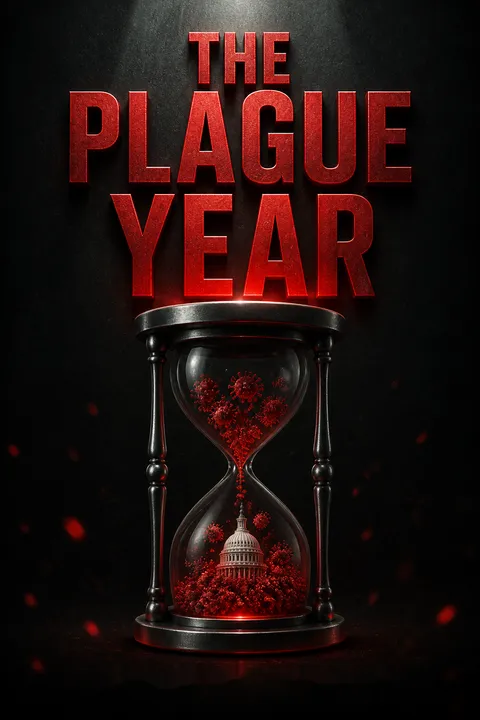
The Plague Year is a reported history of a biological emergency that became a test of American institutions. Its narrative moves from doctors in Wuhan who were punished for warning others, through a U.S. testing failure and a chaotic contest over masks and supplies, into hospital overload, racial disparity, economic collapse, political violence, vaccine development, and the unresolved question of viral origins. The book’s central argument is that the scale of catastrophe was not determined by the virus alone. It was shaped by the quality of information, the speed of coordination, and the willingness of leaders to trust and communicate science.
Its strongest method is to connect systems to human consequences. A flawed test is not only a technical error; it leaves clinicians blind. A procurement failure is not only bureaucratic confusion; it exposes nurses and patients. A political symbol is not only rhetoric; it can change whether people adopt a low-cost protective measure. The stories of Li Wenliang, Bellevue’s staff, Ebony Hilton, and Iris Meda make visible the human cost that aggregate statistics can obscure. Historical comparisons, especially with the 1918 influenza pandemic and the Black Death, add perspective without making the past a simple template.
The book also holds several tensions in view. Public-health advice must change when evidence changes, yet unexplained reversals erode trust. Central coordination can distribute scarce resources, yet local conditions differ. Economic support can prevent avoidable hardship, yet it cannot substitute for controlling infection. These are not contradictions to solve once and for all. They are governance problems requiring transparent decisions, feedback, and accountability.
Wright’s strongest conclusion is that preparedness is not a document on a shelf or a stockpile that can be allowed to expire. It is a living capacity: laboratories able to scale, supply chains that can respond, agencies with clear authority, and leaders able to communicate uncertainty without disguising it. The account is also a warning against treating public health as separate from democracy, economic security, or racial justice. A pathogen moves through all of them. A resilient response must, too.
Review Summary
The Plague Year is a comprehensive account of America's COVID-19 pandemic experience in 2020. Wright's thorough research and engaging writing style provide insight into the scientific, political, and social aspects of the crisis. Readers appreciate the balanced perspective and historical context, though some found it premature or repetitive. The book examines missed opportunities, leadership failures, and societal impacts, offering a valuable record of this unprecedented time. While occasionally disorganized, it's considered an important work for understanding the pandemic's impact on America.
People Also Read


Glossary
Flatten the curve
Reduce the infection peakA public-health goal of slowing the rate at which infections occur so fewer people need care at the same time. Lowering the peak helps keep hospitals from being overwhelmed. In the book, the phrase is illustrated by comparing cities during the 1918 influenza pandemic: places that acted earlier and maintained several restrictions tended to have lower peaks and fewer deaths.
Nonpharmaceutical interventions
Non-drug infection controlsPublic-health measures used to reduce disease transmission without medicines or vaccines. Examples in the book include isolation, school closures, limits on public gatherings, social distancing, and masks. Their effectiveness depends on timing and combination. The 1918 city comparisons show that a single measure may be insufficient, while several measures applied early and sustained can reduce the number of simultaneous cases.
Superspreading event
One gathering, many infectionsAn occasion in which one or a few infected people transmit a disease to many others, often in a crowded or poorly ventilated setting. The book describes the Biogen conference in Boston, where a single initial infection was linked to roughly 100 infections among 175 attendees and later spread across many locations. Such events can seed outbreaks far beyond the original gathering.
Doom loop
Self-reinforcing economic declineA cycle in which an initial economic shock creates further damage. In the pandemic account, disrupted production and closed businesses threaten workers’ income; lower income weakens spending, which hurts businesses further and creates more unemployment. The term highlights why temporary economic support can matter, while also showing that aid alone may not restore activity when people still fear infection.
Structure-based vaccine design
Design vaccines from protein shapesA method of developing vaccines by studying a virus’s molecular structure and choosing a form of its proteins that the immune system can recognize. Barney Graham and Jason McLellan used structural knowledge from work on other respiratory viruses to stabilize the coronavirus spike protein. That prior work helped them design a vaccine candidate soon after the SARS-CoV-2 genetic sequence became available.
Crimson Contagion
U.S. pandemic preparedness exerciseA 2019 exercise organized by the U.S. Department of Health and Human Services to simulate an influenza pandemic spreading from China. It involved federal agencies, hospitals, public organizations, and states. The scenario exposed problems with unclear leadership, shortages of protective equipment and ventilators, limited domestic production, and competition among states. The book emphasizes that many identified weaknesses remained unresolved when Covid-19 arrived.
Gain of function
Experiments increasing pathogen capabilitiesA category of laboratory research in which scientists alter an organism to examine how a trait changes, including experiments that may increase a pathogen’s ability to infect or spread. The book discusses controversial influenza experiments in which repeated infections of ferrets produced an airborne virus. Such work can offer insight into possible future threats, but it also raises safety concerns because an accidental release could cause harm.
Immune escape
Evade existing antibody defensesA virus’s capacity to change in ways that make antibodies from prior infection or vaccination less effective at recognizing and neutralizing it. The book discusses mutations in variants that raised concern about reinfection and reduced vaccine performance. Immune escape does not necessarily mean that all protection disappears, but it can weaken existing defenses and make monitoring, vaccination, and efforts to reduce transmission especially important.
ACE2 receptor
Cell entry point for coronavirusA protein on the surface of some human cells that SARS-CoV-2 uses to enter and infect them. The book describes the receptor as a molecular target that the virus’s spike protein can bind to. ACE2 is present in several organs, which helps explain why Covid-19 can affect more than the lungs. Mutations that improve binding can contribute to more efficient infection.
Download PDF
Download EPUB
.epub digital book format is ideal for reading ebooks on phones, tablets, and e-readers.








