

Key Takeaways
Win the emotional judgment before asking voters to audit your policy math
Feeling shapes judgment. Westen’s central claim is that voters rarely behave like calculators, scoring each policy by personal benefit. Party loyalty, trust, fear, pride, and identification shape what evidence they notice and how they interpret it. In a brain-imaging study during the 2004 election, 30 committed Democrats and Republicans judged contradictions by their own candidate more leniently than contradictions by the opposing candidate or neutral public figures. In separate studies of high-stakes political disputes, feelings often predicted judgments far better than factual knowledge did.
Emotion is not always error. Feelings can summarize concerns about safety, fairness, and trust that a voter cannot fully calculate. But they can also shelter a preferred belief from contrary evidence. The practical lesson for campaigns is to make the human and moral significance of a choice clear, then use facts to substantiate it.
The useful distinction is not emotion versus reason, but emotion that helps people recognize what matters versus emotion that makes a favored belief immune to correction. That distinction matters in both campaigning and citizenship. A vivid story can make a neglected consequence visible, while a strong identity can make even clear evidence feel like an attack. Westen’s studies illuminate motivated judgment, but their political-crisis settings do not prove that factual reasoning is generally powerless. The strongest application is to treat emotion as the doorway into attention, not as a substitute for evidence.
Give voters one memorable story that explains what your party stands for
Stories organize values. A master narrative is the broad, repeatable account of a party’s identity, its central problem, and the kind of society it wants. Westen contrasts Bill Clinton’s 1992 introduction, which tied his modest upbringing and public service to hope and the American dream, with John Kerry’s 2004 introductory ad. Kerry’s ad began with a compelling military story, then wandered into privilege, Yale, service, and optimism without joining them into one clear account. Its details gave opponents material for an unwanted story about him.
Coherence beats inventory. A story gives separate policies a shared purpose, much as a title can make a confusing passage easier to understand and remember. The book’s recurring test is whether a party’s story can be retold simply, with recognizable values and a clear moral. A pile of worthy proposals may still leave voters unsure what binds them together.
Narrative is a compression tool: it lets people remember a political identity without memorizing a platform. That makes it powerful, but also risky. A coherent story can clarify genuine commitments or hide inconvenient facts by assigning heroes and villains too neatly. In the Clinton and Kerry comparison, the lesson is not that every candidate needs a polished personal myth. It is that campaign details should reinforce a truthful account of what the candidate values. When a story has to conceal basic contradictions, its clarity is purchased at the cost of credibility.
Shape the associations around an issue before opponents define its meaning
Ideas arrive connected. Westen uses the term networks of association for linked memories, images, words, beliefs, and feelings. Mentioning one idea can activate related ideas without deliberate awareness. A gun might evoke a hunting trip for one voter and a crime scene for another. Likewise, the 1988 Willie Horton advertisements explicitly criticized a prison furlough policy while also associating the candidate with racialized images of danger. The surface claim was about crime; the imagery carried additional emotional meaning.
Every channel contributes. Words, music, photographs, facial expressions, and the order in which they appear can strengthen or weaken a message. The book argues that campaign teams should inspect not only what an ad says, but what its sensory details bring to mind. This applies to the opposition’s language, too: repeating an opponent’s label, even to deny it, can help make that label familiar.
Association explains why communication cannot be reduced to fact-checking a transcript. A technically accurate sentence may sit inside a misleading visual story, and an image can make a stereotype feel like common sense without anyone consciously endorsing it. The ethical challenge is to distinguish ordinary persuasion from covert manipulation. Deliberate concealment and racial coding undermine informed choice; evocative but transparent imagery can instead help audiences grasp consequences. A useful review asks both, “Is this claim true?” and, “What inference is the audience being invited to make?”
Treat mixed opinions as ambivalence to explain, not permission to retreat
Mixed answers reveal conflict. Westen argues that voters can hold competing feelings about the same issue, rather than occupying one settled point on a simple scale. On abortion, many respondents in the surveys he cites supported legal access in some circumstances while also favoring restrictions, especially later in pregnancy. On guns, voters could support ownership for lawful uses and favor tighter controls at the same time. Calling such views inconsistent misses the underlying concerns.
Name the principle. A principled stand connects a value to an issue without pretending every case is simple. Westen’s proposed approach to abortion acknowledges the decision’s difficulty, places it with the woman’s conscience, and recognizes growing moral concern as pregnancy advances. His gun example centers on protecting law-abiding owners while restricting access for people who pose a danger. The point is to explain a real moral tension rather than hedge to avoid criticism.
Ambivalence is often a sign of moral attention, not confusion to be exploited. People may be weighing autonomy against developing life, or personal protection against public safety. A principle can make that tension legible without erasing it. Still, a politician’s proposed middle ground is not automatically the public’s hidden consensus, and the book’s preferred formulations reflect its own political commitments. Good deliberation requires testing whether the principle is applied consistently, including in cases that challenge the candidate’s preferred outcome.
Start with a human stake, then use policy to show how you will act
Sequence changes meaning. Westen argues that a persuasive appeal often begins with something emotionally consequential, such as a person facing a problem, a candidate’s formative experience, or an injustice. It then clarifies the choice between competing approaches, offers a practical response, and returns to the human stakes. Franklin Roosevelt’s Depression-era radio addresses first conveyed that he understood the hardship families faced, then explained the government’s response. Al Gore’s Medicare debate performance took the reverse route, leading with exact figures and technical references before connecting them to an elderly couple’s difficulty paying for medicine.
Facts still matter. The proposed sequence is not an argument against policy detail. It is an argument for making detail answer a question voters already care about: what is at stake, and why should this person be trusted to act? A number has more force when it clarifies a consequence rather than posing as the whole case.
This is a communication principle with uses well beyond elections. In public health, law, and organizational change, people engage more readily when an abstract problem is connected to an affected person, then supported with credible evidence. The human example should not be mistaken for proof, however. One vivid case can distort the scale or typicality of a problem. Effective persuasion pairs narrative with representative data, so feeling directs attention while evidence calibrates it.
Counter attacks quickly, but keep criticism accurate and tied to public character
Silence leaves a vacuum. When Michael Dukakis faced the Willie Horton attack in 1988, his campaign largely answered with explanations of the furlough program. Westen argues that this failed to address the emotional force of the attack or challenge its racial implications. He sees a similar pattern in John Kerry’s slow response to the Swift Boat Veterans’ accusations in 2004: delay allowed doubts about Kerry’s military record to spread. An immediate response can reject a false frame and explain why the attack itself matters.
Not every attack is legitimate. The book contrasts accurate criticism of Senator Rick Santorum’s votes on pay raises and the minimum wage with a fabricated insinuation in an ad targeting Michael Arcuri. The standard is not positivity. It is truthfulness, relevance, and proportion. Criticize conduct that bears on public service, but do not manufacture private scandal or rely on prejudice.
Rapid response is important because unchallenged claims can become familiar, but speed alone is not a virtue. A campaign can correct misinformation without turning every disagreement into an assault on an opponent’s character. The distinction between public conduct and private life protects democratic debate from becoming a contest in humiliation. Westen’s own imagined counterattacks sometimes lean toward aggressive personal rhetoric, which complicates his ethical standard. The most durable reply is forceful about the record, careful about evidence, and explicit about why the conduct affects voters.
Bridge different voters through shared values instead of abandoning whole regions
Demographics are not destinies. People grouped by age, income, geography, or ethnicity may attach very different feelings to the same words. Westen uses guns to illustrate this: urban voters may associate them with crime, while rural voters may associate them with family, hunting, and self-reliance. He argues that a campaign should find shared concerns, such as keeping firearms away from criminals and protecting children, rather than treating all gun owners as opponents. He also proposes linking conservation to hunting, fishing, clean water, and land passed between generations.
Build common ground without erasing difference. The same principle applies to race and class. A credible message can affirm fairness and equal opportunity while acknowledging that people care about work, responsibility, and safety. Campaigns that avoid difficult issues allow opponents to define them; campaigns that listen can connect concerns that appear to belong to opposing political camps.
This approach resembles coalition-building in community organizing: people need not share every belief if they can work together on a concrete interest. The bridge must be real, not a rhetorical trick that borrows someone’s identity while ignoring their needs. The book’s strategic emphasis on winning persuadable voters is useful, yet representation cannot be reduced to persuadability. Durable coalitions also depend on whether policies deliver for people whose interests are less electorally decisive.
Choose candidates whose presence makes their message believable
Delivery carries meaning. Westen calls political intelligence a combination of abilities relevant to leadership and campaigning, including reading emotions, showing empathy, managing relationships, and communicating with confidence. Voters also respond to facial expression, voice, posture, and ease. In studies he discusses, brief silent clips of candidates helped observers predict election winners, including one study where a one-second look at congressional candidates predicted the winner about 70 percent of the time. Such findings concern impressions, not direct proof of competence.
Coach without sanding away the person. A candidate’s tone can reinforce or contradict the words. Bill Clinton’s ease in town-hall exchanges helped convey connection, while Al Gore’s technical language and controlled demeanor sometimes strengthened an image of distance. Campaigns can review how candidates appear on camera, but overmanagement can make them seem rehearsed. The aim is not artificial charm; it is congruence between a candidate’s real commitments and their public expression.
Thin-slice judgments reveal how quickly people form impressions, not how reliably those impressions measure governing ability. Charisma can signal confidence, but it can also camouflage weak judgment; a reserved style can be mistaken for coldness. Candidate selection should therefore treat presence as relevant evidence, not as a substitute for experience, integrity, or policy capacity. Coaching is most useful when it removes distracting signals and lets a genuine quality show, rather than teaching a candidate to perform a personality they do not possess.
Separate real security from fear cues that make voters cling to familiar authority
Threat can narrow judgment. Terror management theory is the named account Westen uses for research on how reminders of mortality can strengthen attachment to familiar worldviews. He describes experiments in which death-related prompts shifted some participants toward more traditional or punitive positions. In one study of young registered voters in the Northeast during the 2004 election, a control group favored John Kerry four to one, while a group prompted to consider death favored George W. Bush two to one. These results came from a specific experiment, not a universal law of voting.
Challenge the frame, not the danger. Westen argues that campaigns should distinguish actual security threats from language that repeatedly evokes terror or conflates separate conflicts. He criticizes the phrase “war on terror” for turning an emotion into an enemy and obscuring distinct questions about Afghanistan, Iraq, and al-Qaeda. A serious response acknowledges danger while asking whether a policy reduces it.
The experiments make a plausible case that mortality reminders can activate identity protection, but the effect depends on context, prior beliefs, and the specific prompt. Political leaders also face genuine security threats, so dismissing fear as manipulation can be as misleading as manufacturing alarm. A democratic response should offer both emotional steadiness and transparent evidence: what is known, what remains uncertain, and what a proposed action can realistically accomplish. This preserves vigilance without making anxiety itself the campaign’s organizing principle.
Make compassion and pluralism unmistakably moral, not merely policy preferences
Values need a voice. Westen argues that a party that talks only about technical policy can surrender the language of faith, morality, and shared purpose to its opponents. The 2005 Terri Schiavo dispute illustrates the opportunity and the risk: Congress intervened in a family’s end-of-life decision, while polls cited by Westen showed broad disapproval of federal involvement. He argues that opponents could have framed the issue around personal liberty, compassion, and humility about imposing one religious view on everyone.
Distinguish faith from coercion. The book urges campaigns to address poverty, care, and human dignity as moral concerns, while respecting religious diversity. Its proposed contrast is between compassion-based public ethics and efforts to impose sectarian doctrine through government. That argument need not presume that religious voters are a single bloc: Westen distinguishes evangelical Christians who may respond to appeals to compassion from fundamentalist leaders who organize around exclusion and condemnation.
Moral language can make neglected obligations visible, especially when it links abstract policy to suffering people can recognize. Pluralism adds an important limit: shared civic rules cannot depend on everyone accepting one theology. The book’s distinction between evangelical and fundamentalist politics can help resist treating religious Americans as a monolith, though labels should not replace attention to individuals and institutions. The strongest case for moral leadership combines conviction about human dignity with restraint about who has authority to define it.
Analysis
The book’s most enduring contribution is its insistence that political communication is not a pipeline carrying facts into an otherwise neutral mind. It is an encounter among identity, feeling, memory, language, and evidence. The Clinton and Kerry advertisements make that claim concrete: similar biographical material can either form a coherent account of character or leave disconnected details that an opponent can reinterpret. The associated recommendation, build a narrative and defend its emotional frame, remains useful in politics saturated with short video, fragmented attention, and rapid repetition.
The argument is strongest when it treats emotion as part of judgment rather than its enemy. Fear can detect danger, anger can register perceived injustice, and empathy can reveal costs hidden by aggregate statistics. Emotion becomes hazardous when identity protects a belief from correction, or when a campaign deliberately activates prejudice while hiding its purpose. That distinction supports a democratic ethic of persuasion: make consequences vivid, disclose the reasoning, and preserve space for disagreement.
The book’s empirical confidence needs qualification. Its brain scan involved only 30 committed partisans, and its strongest claims about emotional prediction draw on unusually charged political crises. These findings show that motivated reasoning can be powerful, not that voters never learn from evidence or that emotion always dominates. Some of the book’s strategic prescriptions also assume that a sharper message will serve the public good. Yet compelling rhetoric can mobilize solidarity or scapegoating, depending on who is made protagonist and who is cast as threat.
The deepest practical lesson is therefore not simply to persuade more emotionally. It is to unite emotional clarity with factual accountability. A campaign should tell a story that explains why an issue matters, identify the values beneath it, and show how its policy follows from those values. It should also ask whether its imagery and language invite understanding or exploit an audience’s blind spots. Persuasion is unavoidable in democratic politics. The choice is whether it helps citizens perceive the stakes or makes them easier to manipulate.
Review Summary
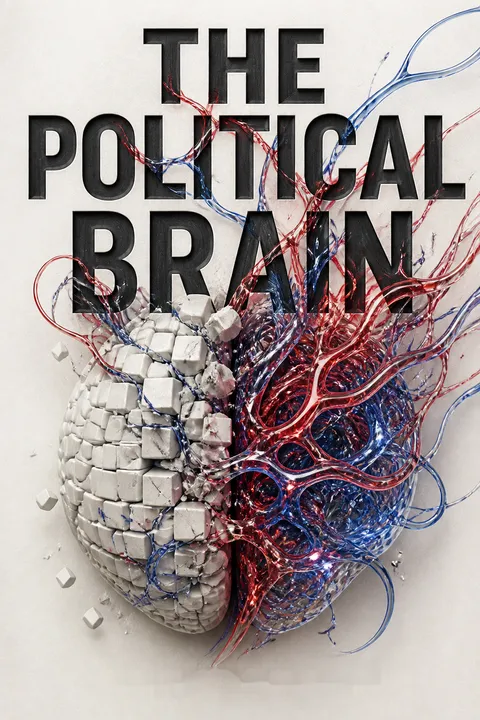
The Political Brain explores how emotions, rather than logic, drive voters' decisions. Westen argues that Democrats need to appeal to emotions and values to win elections, criticizing past Democratic campaigns for focusing too much on policy details. Many reviewers found the book insightful and relevant, praising its analysis of political psychology and campaign strategies. Some criticisms include the author's biases and dated examples. Overall, readers consider it an important work for understanding modern politics and campaign tactics.
People Also Read








Glossary
Networks of association
Linked ideas and feelingsNetworks of association are connected memories, images, words, beliefs, and emotions that shape how a person interprets a subject. Activating one element can make related elements easier to notice or recall. In politics, a phrase, image, or sound may therefore evoke meanings beyond its literal content, sometimes without conscious awareness.
Master narrative
A party’s defining storyA master narrative is the broad story that explains what a political party represents, what problem it sees, and what kind of future it seeks. It links values, leaders, and policies into a recognizable account that supporters can remember and repeat. Westen argues that without one, a party’s proposals can seem like an unrelated list.
Motivated reasoning
Reasoning shaped by preferenceMotivated reasoning is the tendency to evaluate information in ways that support a desired or emotionally comfortable conclusion. People may scrutinize threatening evidence more harshly, accept congenial evidence more readily, or create explanations that protect prior beliefs. In Westen’s account, political identity and feeling can guide these processes before people consciously experience themselves as reasoning.
Principled stand
A value applied to an issueA principled stand connects a broad moral value to a specific political problem without requiring a detailed policy blueprint. It gives voters a clear explanation of what a candidate believes and why, while allowing implementation to vary across circumstances. Westen presents it as a way to speak honestly about emotionally complicated issues without retreating into poll-driven hedging.
Trickle-up politics
Policy details drive votingTrickle-up politics is Westen’s label for the assumption that voters first evaluate individual policies, combine those judgments, and then form an overall preference for a party or candidate. He contrasts this model with an approach that begins with feelings about party identity, candidates, and shared values, then uses policies to illustrate those commitments.
Political intelligence
Skills for political leadershipPolitical intelligence is Westen’s term for a cluster of abilities that help candidates lead and communicate effectively. It includes emotional intelligence, empathy, comfort in public interaction, coalition-building, awareness of status dynamics, and general intellectual ability. The concept concerns more than policy expertise: it includes the capacity to read people and make a message emotionally credible.
Terror management theory
Mortality reminders shape worldviewsTerror management theory is a named psychological account of how awareness of death can increase reliance on cultural beliefs and identities that make life feel meaningful. The research discussed by Westen uses reminders of mortality and measures their effects on attitudes. He applies the theory to political appeals that repeatedly evoke death, terrorism, or threats to national identity.
FAQ
What's The Political Brain about?
- Emotion in Politics: The Political Brain by Drew Westen explores the significant role emotions play in political decision-making, challenging the traditional view that rational thought is predominant.
- Neuroscience Integration: The book combines insights from neuroscience, psychology, and political science to demonstrate how emotional responses shape voter perceptions and decisions.
- Campaign Strategies: Westen provides guidance on how political campaigns can be more effective by appealing to emotions rather than relying solely on facts and rational arguments.
Why should I read The Political Brain?
- Voter Behavior Insights: The book is essential for understanding why voters often make seemingly irrational decisions, delving into the emotional underpinnings of political choices.
- Practical Campaign Advice: It offers practical strategies for political candidates and strategists to craft emotionally compelling messages that resonate with voters.
- Broader Implications: The insights extend beyond politics, offering valuable lessons for leadership, marketing, and communication.
What are the key takeaways of The Political Brain?
- Emotions Over Rationality: Emotions play a more critical role than rational thought in political decision-making, as "when reason and emotion collide, emotion invariably wins."
- Campaign Messaging: Successful campaigns focus on creating emotional narratives that connect with voters' values and experiences, rather than just presenting policy details.
- Understanding the Political Mind: Understanding how the brain processes political information can lead to more effective communication strategies in politics.
What are the best quotes from The Political Brain and what do they mean?
- “The political brain is an emotional brain.”: This quote encapsulates the book's main argument that emotional responses are fundamental to how voters engage with political information and make decisions.
- “You can’t win an election with half a brain.”: Emphasizes the necessity of engaging both emotional and rational aspects of voters for successful campaigns.
- “Political persuasion is about networks and narratives.”: Highlights the need for campaigns to create compelling stories that resonate with voters' emotions and experiences.
How does Drew Westen define the role of emotions in political campaigns?
- Emotional Compass: Emotions guide voter behavior, influencing decisions based on feelings rather than purely rational assessments.
- Network of Associations: Voters have networks of emotional associations that can be activated by candidates' messages, leading to strong preferences or aversions.
- Importance of Storytelling: Effective political communication must involve storytelling that evokes emotions, making the candidate relatable and trustworthy.
What is the significance of the "Marketplace of Emotions" concept in The Political Brain?
- Emotional Appeal: Political success hinges on appealing to voters' emotions rather than just presenting logical arguments or policies.
- Republican Advantage: Republicans have been more successful in this marketplace, effectively using emotional narratives to connect with voters.
- Democratic Challenges: Democrats often struggle to engage in this marketplace, focusing instead on rational arguments that fail to resonate emotionally with the electorate.
How does The Political Brain suggest candidates should respond to attacks?
- Immediate and Forceful Response: Candidates should respond to attacks quickly and assertively to avoid perceptions of weakness.
- Emotional Counterpunching: Counter negative attacks with emotionally compelling narratives that reinforce the candidate's values and strengths.
- Avoiding Dispassionate Responses: Rationalizing or downplaying attacks can alienate voters who expect a more passionate defense of character.
What is the conservative master narrative described in The Political Brain?
- Coherent Storytelling: Presents a clear and emotionally compelling story about America’s past, portraying it as a time of greatness undermined by liberal policies.
- Villainization of Liberals: Characterizes liberals as villains who have eroded traditional values, creating a sense of urgency for voters to reclaim their country.
- Emotional Resonance: Taps into feelings of nostalgia, fear, and anger, making it a powerful tool for mobilizing support.
How does The Political Brain suggest Democrats can improve their messaging?
- Crafting a Master Narrative: Develop a coherent master narrative that resonates emotionally with voters, reflecting shared values and principles.
- Addressing Emotional Underpinnings: Acknowledge and address the emotional undercurrents that influence voter behavior, rather than relying solely on policy proposals.
- Using Personal Stories: Share relatable experiences to create emotional connections with voters that transcend traditional political discourse.
What role do narratives play in political persuasion according to The Political Brain?
- Central to Campaigns: Narratives are essential for political persuasion, helping to create emotional connections between candidates and voters.
- Structure of Stories: Effective narratives should follow a recognizable structure that includes protagonists, antagonists, and a moral.
- Reframing Opposition Narratives: Candidates should work to reframe opponents' narratives, turning negative associations into positive ones.
How can understanding the political brain improve campaign strategies?
- Targeting Emotional Responses: Craft messages that resonate more deeply with voters by understanding how the brain processes emotions.
- Utilizing Neuroscience Insights: Use insights from neuroscience to engage voters, such as using imagery and language that evoke specific emotional responses.
- Building Emotional Connections: Prioritize emotional connections over rational arguments to align with the way voters naturally process political information.
How does The Political Brain address the issue of negative campaigning?
- Ineffectiveness Myth: Challenges the myth that negative campaigning is inherently ineffective or unethical, arguing it can be a powerful tool.
- Strategic Use of Negativity: Use negative campaigning strategically to highlight opponents' weaknesses and resonate with voters' emotions.
- Response to Attacks: Emphasizes the importance of responding to negative attacks with strong counterattacks that reinforce a candidate's narrative.
Download PDF
Download EPUB
.epub digital book format is ideal for reading ebooks on phones, tablets, and e-readers.








