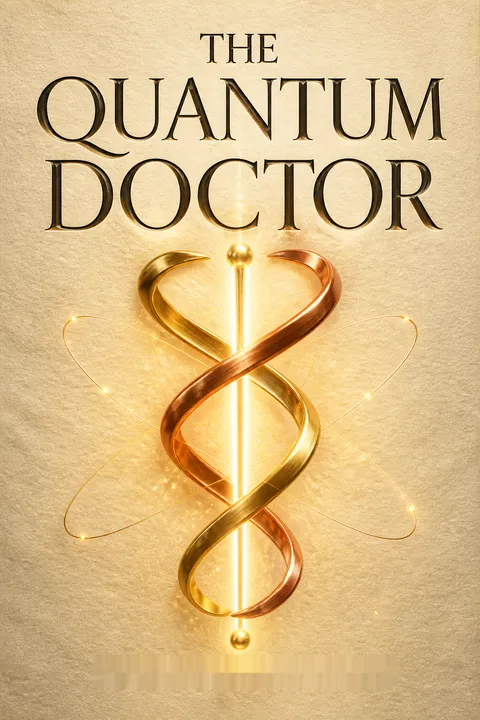


Key Takeaways
Use quantum medicine as a bridge between traditions, not as settled physics.
One map, several treatments. Physicist Amit Goswami argues that medicine needs a shared philosophy capable of explaining both conventional treatment and traditions such as Ayurveda, acupuncture, and mind-body care. His proposal, Integral Medicine, starts with consciousness as the basis of reality. Matter, thought, and vital energy are possibilities within consciousness, rather than separate substances that somehow have to interact. This, he says, explains how different treatments could affect the same person through different routes.
The central caveat. Goswami draws on quantum physics, but the idea that consciousness creates physical events is his interpretation, not a medical conclusion established by quantum experiments. The model offers a sweeping way to connect practices; its elegance should not be mistaken for proof that each practice works or that quantum mechanics explains its effects.
The ambition is genuinely integrative: it asks medicine to account for lived experience, not only measurable organs. That resembles a broader shift in science toward studying organisms as interacting systems rather than isolated parts. Yet a unifying story is not the same as a validated mechanism. Quantum theory predicts physical measurement outcomes with remarkable precision, but it does not establish that intention can select a healing outcome. The proposal is most useful as a philosophical invitation to ask what conventional models leave out, not as evidence for quantum cures.
Use conventional medicine first when delay could cost life or function.
Urgency changes the choice. Goswami does not reject conventional medicine. After experiencing chest pain, he was diagnosed with blocked arteries and chose bypass surgery, which he says succeeded. He presents the decision as a matter of time: lifestyle changes might help some heart conditions, but were not a safe substitute for treating his immediate risk. In his model, surgery, drugs, and radiation are most appropriate when the physical body needs rapid intervention.
Complement, do not gamble. He proposes adding approaches directed at stress, behavior, or vitality when they are compatible with medical care. This is a more cautious position than rejecting allopathy, but the book also makes claims about vaccines and drugs that should not guide treatment decisions. A reader should not delay or stop proven care in favor of an alternative therapy, especially for emergencies, cancer, or serious infection.
This is the book's most practically valuable restraint. A pluralistic approach works best when it keeps the proven strengths of acute medicine, including diagnosis, surgery, and effective drugs, while making room for supportive care. The governing distinction is not conventional versus alternative, but whether an intervention has evidence for the problem at hand and whether delay creates risk. The book's own emergency example makes that principle vivid. Its broader attacks on routine medicine are less reliable and should not dilute this sensible rule.
Match treatment to the problem's level, not to one medical doctrine.
Five layers of experience. Goswami sorts health into the physical body, the vital body, the mind, the supramental realm of organizing patterns, and the bliss body, his term for the encompassing ground of consciousness. He proposes that trouble can begin at one level and affect others. Conventional medicine concentrates on physical disease; mind-body approaches address meaning and stress; Indian and Chinese traditions focus on vital patterns. He also distinguishes disease, an objectively detectable malfunction, from illness, the person's felt experience.
A useful question, not a diagnosis. The framework encourages asking whether a problem is structural, emotional, or connected to a person's experience of vitality. It also argues that healing may need more than one kind of support. But the five levels are a philosophical classification, not an established diagnostic system. A clinician should determine what is causing symptoms rather than infer a subtle-body imbalance from the framework alone.
The disease and illness distinction has practical force: test results and a patient's suffering are related, but not identical. Clinical care improves when both are taken seriously. The broader layered model similarly reminds practitioners that social conditions, emotions, and biology can interact. Its limitation is that it adds categories without offering validated tests for many of them. A framework can guide questions and broaden attention, but treatment still requires evidence that the proposed cause is real and that the chosen intervention changes outcomes.
Treat stress and meaning as influences, never as proof of blame.
Mind can affect the body. Goswami describes how the meaning assigned to events can alter emotion and physiology. He highlights psychoneuroimmunology, the study of connections among psychological processes, the nervous system, and immunity. In a study he cites, volunteers exposed to cold viruses were more likely to develop illness when they reported greater psychological stress. He also recounts experiments in which rats learned an immune response through conditioning, suggesting that bodily responses can be influenced by learned signals.
Influence is not total control. The book argues that habits such as suppressing emotion or reacting with hostility may contribute to illness. It also recognizes physical and vital causes. That distinction matters: stress can affect health, but it does not follow that a patient caused a disease by thinking wrongly. The proposed personality types and chakra-based explanations go beyond what the examples establish.
The strongest version of this insight is probabilistic: stress, social support, and learned expectations can shape health without determining it. That view avoids both extremes, treating the body as an emotion-proof machine or treating every diagnosis as a psychological message. It also protects patients from moralizing explanations. Stress research can identify patterns across groups, but it rarely tells a clinician why one individual became ill. Emotional care belongs in treatment; blame does not.
Assess traditional healing systems carefully, rather than trusting their claims wholesale.
Different traditions, different maps. Ayurveda classifies individual constitutions through three doshas, called vata, pitta, and kapha; a person's baseline pattern is prakriti. The book says illness can arise when that baseline shifts. Traditional Chinese medicine instead emphasizes yin and yang, patterns of vital energy, and meridians. Acupuncture is presented as a way to influence those patterns. Homeopathy follows a different principle, matching symptoms to a remedy and using repeated dilution, sometimes beyond the point where a molecule of the starting substance is expected to remain.
Explanations are not evidence. Goswami offers a vital-body interpretation for these practices, but that interpretation does not establish their effectiveness. The book's reports of herbal trials and personal cures are suggestive anecdotes or limited examples, not grounds for treating serious disease with unproven methods. Individualized care can be valuable; the specific claims of each system still need reliable testing for safety and benefit.
Traditional systems often notice dimensions that a rushed appointment can miss, including a person's routines, constitution, and subjective experience. That is a useful clinical sensibility, even where the systems' underlying explanations remain contested. Personalization itself is not proof of efficacy: a treatment can feel precisely tailored and still fail to outperform a comparison treatment. Homeopathy's extreme dilutions make this distinction especially important. Respect for a tradition is compatible with asking whether its remedies produce reproducible benefits beyond expectation, attention, and natural recovery.
Practice awareness and relaxation, but treat quantum healing as a hypothesis.
Train attention and response. Goswami discusses self-hypnosis, biofeedback, meditation, visualization, and bodywork as ways to notice and influence patterns linked to stress or pain. Biofeedback uses a device to display a bodily signal, such as muscle tension, so a person can learn to alter it. He also applies a four-stage model of creativity: preparation, incubation, insight, and putting an idea into practice. He suggests that a sudden change in perspective may help some people change habits or experience relief.
Do not confuse relief with cure. The book calls sudden healing through a creative shift quantum healing. That is Goswami's proposed explanation, not a demonstrated consequence of quantum physics. The practices described may support relaxation, coping, and self-awareness, but they should not be presented as cures for cancer or other serious disease. Their value depends on the condition, the method, and evidence for the particular use.
The practical methods have a more modest and defensible appeal than the quantum language surrounding them. Biofeedback makes an invisible signal observable, while meditation can help people notice reactions before acting on them. Such skills may improve coping and complement treatment. The risk arises when an account of a dramatic remission is treated as a repeatable protocol. Recovery can have multiple causes, and an inspiring story cannot identify which one mattered. A useful practice does not need an extraordinary physics claim to earn a place as supportive care.
Make clinician and patient collaborators, not commander and subordinate.
Healing involves a relationship. Goswami calls a circular, mutually influential relationship a tangled hierarchy. In medicine, this means the clinician contributes training while the patient contributes knowledge of symptoms, history, and daily life. He argues that a rigid doctor-knows-best posture can shut down patient participation. One story concerns a doctor who gave an asthma patient what he thought was a new medicine, only to learn that the sample was actually a placebo. The patient's improvement followed the doctor's confidence in it.
Trust helps, but cannot diagnose. A strong therapeutic relationship can improve communication and make patients more likely to follow a care plan. The anecdote, however, cannot show that belief alone caused the improvement or that the placebo treated the underlying condition. Collaboration should combine trust with candid discussion of uncertainty, risks, and objective signs of progress.
The collaborative ideal aligns with patient-centered care: people are more than passive recipients, and their observations can change what a clinician notices. Trust may also shape expectations and adherence. But the placebo anecdote is not a reason to substitute confidence for accurate information. Deception can compromise informed consent, and subjective improvement may not mean an illness has resolved. The strongest partnership is neither authoritarian nor credulous. It shares decision-making while maintaining clear standards for diagnosis and follow-up.
Let illness prompt inquiry without turning suffering into personal fault.
Find meaning without assigning guilt. Goswami presents disease as a possible prompt to reconsider how a person lives, relates, or handles emotion. At the spiritual level, he describes healing as moving toward wholeness and what he calls supramental intelligence, a source of broader organizing insight beyond ordinary thought. His examples encourage reflection on whether a person's actions, feelings, and beliefs are pulling in conflicting directions.
Meaning is optional, not a verdict. The book warns that telling patients they created their disease can make them feel guilty. That warning deserves emphasis. A person may learn from illness without assuming that illness was deserved, chosen, or caused by a failure of character. Reflection can support coping and personal change; it cannot replace medical explanation or guarantee recovery.
Meaning-making can help people regain agency in situations they cannot fully control. It is especially useful when framed as a question about what support or change might help now, rather than a search for a hidden moral cause. This distinction echoes trauma-informed care, which avoids adding shame to vulnerability. The book's spiritual vocabulary may resonate with some readers, but no metaphysical interpretation is required to make use of reflective practice. A humane account of illness leaves room for meaning without making it compulsory.
Build vitality across body and mind, and leave immortality in speculation.
Health means more than diagnosis. Goswami's idea of positive health includes physical care, attention to feelings, mental habits, creativity, rest, and supportive relationships. He discusses food, exercise, yoga, breathing practices, meditation, and spending time with people whose example encourages well-being. The goal is not simply to eliminate symptoms, but to cultivate a fuller capacity to live.
The final leap is conjecture. In the epilogue, Goswami speculates that human evolution might produce a form of matter capable of representing higher patterns directly, making bodies ageless. He discusses the Hayflick finding that cultured human cells divide only a limited number of times, then imagines possibilities beyond ordinary aging. This is philosophical speculation, not an established route to longevity. Positive health is a practical aspiration; immortality is not a medical plan.
The broad conception of health is valuable because it includes capacities that disease counts alone miss, such as energy, connection, and a sense of purpose. It also invites prevention without reducing wellness to perfect control over the body. The proposed ageless future is a different kind of claim. A finite division count in cell cultures does not imply a path to immortality, and quantum theory offers no established mechanism for one. The distinction keeps the book's humanistic vision without confusing aspiration with scientific forecast.
Analysis
The book's most consequential move is not its account of quantum mechanics, but its attempt to make medicine philosophically plural without making any single modality sovereign. Goswami's layered picture encourages readers to consider biology, emotion, behavior, and subjective experience together. His own bypass surgery story gives the proposal welcome practical humility: an integrative outlook need not mean rejecting effective conventional care.
The central weakness is a recurring jump from analogy to mechanism. Quantum physics describes probabilities and measurement in the microscopic domain. The book treats consciousness as the selector of physical outcomes, then extends that interpretation to vital energy, acupuncture, homeopathy, spontaneous remission, and spiritual healing. Those steps are not entailed by quantum theory. Nor does an account that sounds coherent demonstrate that a treatment works. Anecdotes, selected studies, and unusual recoveries cannot establish the proposed causal chain, especially when natural variation, expectation, concurrent treatment, and diagnostic uncertainty remain possible explanations.
This matters because the book sometimes places established care and poorly supported therapies under one umbrella as if a shared metaphysics could confer equal credibility. They require different standards of evidence. A humane, whole-person clinical approach can include patient meaning, stress, cultural practice, and supportive rituals while still asking whether a specific intervention improves outcomes and whether its risks are acceptable. The author is strongest when inviting attention to overlooked experience and weakest when presenting speculative ontology as scientific explanation.
The durable reader's lesson is therefore selective: take seriously that people are embodied, emotionally responsive, and shaped by relationships; preserve the value of patient participation and reflective practice; and do not infer that consciousness can cure disease simply because mental states influence physiology. The book is best read as an ambitious philosophical proposal, not as a clinical guide or a reliable account of quantum healing.
Review Summary
The Quantum Doctor receives mostly positive reviews, with readers praising its innovative approach to integrating quantum physics with alternative medicine. Many appreciate Goswami's explanation of complex concepts and his exploration of various healing modalities. Some find the book mind-expanding and life-changing, while others note it can be challenging to grasp. A few critics argue that the latter half of the book becomes speculative and biased. Overall, readers value the book's attempt to bridge the gap between traditional and modern medicine, though opinions on its success vary.
People Also Read








Glossary
Integral Medicine
A proposed unifying medical modelGoswami's proposed framework for relating conventional medicine to alternative systems by placing them within a philosophy centered on consciousness. It assigns different kinds of treatment to different dimensions of health and allows their combined use. The framework is a philosophical proposal, not a clinically validated system for choosing treatments.
quantum collapse
Possibility becoming actualityIn quantum physics, collapse commonly refers to the transition from a mathematical description of possible measurement outcomes to a particular recorded result. Goswami interprets this transition as consciousness choosing an actuality from possibilities. That consciousness-centered interpretation is not a settled conclusion of physics and should not be treated as evidence for a medical effect.
downward causation
Higher-level influence on lower levelsA term for causation in which a higher-level process influences events at a lower level, such as mental activity affecting bodily physiology. Goswami assigns consciousness a central role in this process and connects it to quantum choice. In medicine, psychological states can influence bodily processes, but the book's specific quantum explanation remains speculative.
vital body
Proposed patterning layer of lifeIn Goswami's model, the vital body is a nonphysical domain containing patterns or blueprints for biological functions and forms. He uses it to interpret ideas such as prana in Ayurveda and chi in Chinese medicine. It is not an anatomical structure recognized by standard biology, and its proposed role is not established by the examples in the book.
morphogenetic fields
Proposed organizers of biological formRupert Sheldrake's term for hypothesized fields that guide the development of biological forms and patterns. Goswami incorporates these fields into his account of the vital body, treating them as blueprints for organs and biological functions. This hypothesis is outside mainstream biological explanation and is not equivalent to a demonstrated physical field.
prakriti
Baseline Ayurvedic constitutionIn Ayurveda, prakriti is a person's characteristic constitution, described through the relative balance of the three doshas. Goswami uses it as an individual's baseline state, from which further imbalance may arise. The concept guides individualized Ayurvedic interpretation, but it is not a standard biomedical diagnosis or a substitute for clinical assessment.
doshas
Ayurvedic constitutional patternsVata, pitta, and kapha are the three doshas in Ayurveda. They describe patterns of bodily constitution and function, and Ayurvedic practice relates their balance to health. Goswami interprets them as physical signs of underlying vital-body processes. The book's interpretation is theoretical, and dosha categories are not interchangeable with established biomedical causes of disease.
tangled hierarchy
Mutual influence across levelsGoswami uses this term for a circular relationship in which different levels influence one another rather than operating in a one-way chain. In a clinical relationship, it describes clinician and patient shaping understanding together. The term also refers to his proposed account of how subject and object arise together in quantum measurement.
quantum healing
Healing through a proposed insight shiftGoswami's term for healing that he attributes to a sudden creative shift in consciousness, especially when ordinary changes in thought or behavior seem insufficient. He links such shifts to quantum possibilities and a change in the context guiding mental or bodily processes. The term does not name an established medical treatment or a confirmed quantum mechanism.
supramental intelligence
Insight beyond ordinary reasoningIn Goswami's framework, supramental intelligence is a realm of organizing patterns and archetypes that underlie physical, vital, and mental processes. People are said to access it through intuition or creative insight. The concept belongs to the book's metaphysical system, rather than to a recognized cognitive or medical construct.
FAQ
What's The Quantum Doctor about?
- Integrative Medicine Focus: The Quantum Doctor by Amit Goswami explores the integration of quantum physics with medicine, proposing a new paradigm called Integral Medicine. It emphasizes the role of consciousness in health and healing.
- Mind-Body Connection: The book discusses how consciousness influences physical health, suggesting that understanding this connection can lead to better healing practices. It argues for the coexistence and complementarity of conventional and alternative medicine.
- Holistic Approach: Goswami presents a holistic view of health, incorporating concepts from Ayurveda and traditional Chinese medicine, emphasizing the need to address both physical and subtle bodies in healing.
Why should I read The Quantum Doctor?
- New Paradigm of Healing: The book offers a fresh perspective on health, challenging conventional medical practices and introducing Integral Medicine. It encourages readers to consider the role of consciousness in their health.
- Bridging Science and Spirituality: Goswami merges scientific principles with spiritual insights, making complex ideas accessible. This integration can inspire readers to explore their health journeys more deeply.
- Practical Applications: It provides practical advice on applying Integral Medicine concepts in everyday life, making it a valuable resource for those interested in holistic health.
What are the key takeaways of The Quantum Doctor?
- Consciousness is Primary: The book posits that consciousness is the foundation of all existence, including health and disease. Understanding this can empower individuals to take control of their healing processes.
- Integral Medicine: Goswami introduces Integral Medicine as a framework combining allopathic and alternative practices, emphasizing treating the whole person—body, mind, and spirit.
- Vital Body Concepts: The author discusses the vital body and its role in health, explaining how energy imbalances can lead to disease.
What is Integral Medicine as defined in The Quantum Doctor?
- Holistic Healing Framework: Integral Medicine integrates conventional and alternative medical practices, addressing both physical and subtle bodies in the healing process.
- Consciousness-Centric: This approach is grounded in the primacy of consciousness, suggesting that healing occurs when individuals align their consciousness with health goals.
- Multilevel Treatment: It advocates for treating disease at multiple levels—physical, vital, mental, and supramental—for a more personalized and effective healing strategy.
How does The Quantum Doctor explain the mind-body connection?
- Consciousness Influences Health: The book argues that consciousness plays a crucial role in the mind-body connection, affecting physical health through thoughts and emotions.
- Quantum Mechanics Insights: Goswami uses principles from quantum mechanics to illustrate how mental states can influence physical conditions, suggesting healing through mental and emotional shifts.
- Practical Techniques: Techniques such as meditation and visualization are provided to enhance the mind-body connection and achieve better health outcomes.
What are the doshas in Ayurveda as discussed in The Quantum Doctor?
- Three Body Types: The doshas—vata, pitta, and kapha—represent different body types and their characteristics, each associated with specific physical and emotional traits.
- Imbalance Causes Disease: Imbalances in these doshas can lead to health issues, emphasizing the importance of maintaining balance for optimal health.
- Personalized Healing: Understanding one’s dosha can guide dietary and lifestyle practices to restore balance and promote healing.
How does The Quantum Doctor define the vital body?
- Energy Blueprint: The vital body is described as the reservoir of morphogenetic fields that provide blueprints for physical form-making, essential for understanding energy imbalances.
- Nonphysical Aspect: It operates in a realm of possibilities, influencing the physical body through energy movements, aligning with Ayurvedic and Chinese medicine.
- Healing Mechanism: The vital body plays a crucial role in healing by restoring balance and harmony to the physical body.
What role does consciousness play in healing according to The Quantum Doctor?
- Downward Causation: The book introduces the concept of downward causation, where consciousness influences physical health outcomes, allowing active participation in healing.
- Quantum Measurement: Consciousness is involved in the quantum measurement process, determining how experiences manifest in reality, underscoring the power of awareness in healing.
- Empowerment through Awareness: Recognizing the role of consciousness empowers individuals to take charge of their health using techniques like meditation and visualization.
What is the significance of chakras in The Quantum Doctor?
- Energy Centers: Chakras are energy centers in the body corresponding to different aspects of being—physical, emotional, mental, and spiritual.
- Healing Pathways: Imbalances in chakras can lead to physical and emotional issues, making it essential to maintain their health for overall well-being.
- Integration with Other Systems: Goswami connects chakras with Ayurvedic and Chinese medicine, suggesting that working with chakras can enhance healing practices.
What techniques for healing does The Quantum Doctor recommend?
- Visualization: Visualization is advocated as a powerful tool for healing, influencing physical health and emotional well-being through positive imagery.
- Meditation: Meditation is emphasized for achieving relaxation and awareness, promoting healing by reducing stress and enhancing emotional clarity.
- Chakra Psychology: Chakra psychology addresses emotional blockages, helping release negative patterns and foster healing.
What is quantum healing according to The Quantum Doctor?
- Healing Through Consciousness: Quantum healing involves shifts in consciousness and understanding, emphasizing intention and awareness in promoting health.
- Discontinuous Quantum Leaps: It involves sudden insights or shifts in perspective that lead to healing, accessing new possibilities for health and well-being.
- Integration of Mind and Body: Quantum healing integrates mental, vital, and physical aspects of health, requiring addressing all levels of being for true healing.
How does The Quantum Doctor address the concept of disease?
- Disease as Disharmony: Disease arises from disharmony within the mind, body, and spirit, caused by emotional blockages or energy imbalances.
- Opportunity for Growth: Disease can serve as an opportunity for personal growth and transformation, offering insights into life changes needed for healing.
- Holistic Treatment: A holistic approach to treating disease is advocated, incorporating physical, mental, and spiritual practices to restore balance and promote well-being.
About the Author
Download PDF
Download EPUB
.epub digital book format is ideal for reading ebooks on phones, tablets, and e-readers.








