

Key Takeaways
Treat consciousness as brain activity, not a ghost riding inside it
The brain shapes experience. Bor’s starting point is personal: after his father’s stroke, the man’s personality changed, and he often failed to notice people on his left. A real-time brain-scanning experiment later let Bor answer questions silently by imagining either walking around his home or playing tennis. The experimenters could read the answers from different patterns of brain activity. Together, these cases make consciousness look dependent on the brain, not housed in a separate, immaterial mind.
A physical account remains open. Bor argues that brains process information computationally, and that sufficiently similar artificial systems might someday be conscious. This does not mean today’s computers feel anything, or that science has solved subjective experience. It means brain dependence gives researchers testable questions instead of treating awareness as beyond investigation.
What's striking is how the argument begins with disruption rather than abstraction: alter the brain, and a person’s experience and identity can alter with it. That is powerful evidence for dependence, though dependence alone does not explain why neural activity feels like anything from the inside. The book is strongest when it turns a philosophical puzzle into empirical questions. Its proposal that computation could support experience is more speculative, and should be read as a possibility, not a result established by the scanning demonstrations.
Use awareness to find patterns that routine processing cannot discover
Life stores useful information. Bor traces a line from biological evolution to human thought. DNA preserves traits that helped organisms survive, while mutations and reproduction introduce variations that may fit a changing environment better. Brains add a faster, within-lifetime way to learn from the world. In this account, consciousness is not every bit of brain activity. It is a costly capacity for working through novel or complex information, especially by finding patterns that can guide new understanding and action.
Novelty has a price. Routine skills can run automatically once learned, freeing conscious attention for problems without ready-made answers. The same tension appears in evolution: preserve what works, but allow enough variation to adapt when it does not. Human curiosity can generate useful discoveries, from scientific insights to practical inventions, but the search for patterns can also produce false beliefs.
The evolutionary framing gives consciousness a functional role: it is not merely a private glow, but a way to test possibilities before acting. The connection between biological variation and mental exploration is illuminating because both trade reliability for the chance of improvement. It also helps explain why curiosity can be productive and error-prone at once. The analogy has limits, however. Genetic change and deliberate thought operate on different timescales and through different mechanisms, so their resemblance is a guide to the argument, not proof that one is simply a version of the other.
Guard attention: what you fail to notice may effectively disappear
Attention selects the scene. The senses deliver far more information than the brain can deeply analyze, so attention filters some signals and amplifies others. Bor describes visual input as roughly a billion pieces of information per second. In a classic experiment, people counting basketball passes often failed to notice a person in a gorilla suit crossing the scene. Only 44 percent noticed the unexpected figure. In another demonstration, viewers took a long time to spot that a plane in one picture had lost an engine.
Focus changes experience. Attention can also make a target seem clearer or more vivid, even when the eyes stay fixed elsewhere. This selection is useful when a threat or goal matters, but it means perception is not a complete recording of the surroundings. What reaches awareness is shaped by current aims, expectations, and competing signals.
The lesson reaches beyond laboratory tricks: attention determines not only what gets noticed, but which parts of a situation become available for judgment. That makes attention a hidden influence on memory, conversation, and even conflict, where two people may leave the same encounter with different perceived evidence. The gorilla result is vivid precisely because the missed detail seems obvious afterward. Still, missing a detail does not mean it was never processed at any level. The distinction between raw registration and conscious access matters when interpreting these experiments.
Compress details into chunks, then use the freed mind to reason
Working memory is small. Bor describes working memory as the short-term mental space where information can be held and manipulated consciously. Experiments suggest it usually accommodates about three or four items at once. A chunk is a group of details treated as one meaningful unit, such as recognizing a familiar face rather than separately holding its eyes, nose, and name. Chunking lets a small workspace handle far richer material than its item limit suggests.
Patterns create leverage. One student trained for nearly two years on digit recall eventually repeated sequences of 80 digits. He achieved this by grouping digits into familiar running times, then grouping those groups into larger units. In another example, a sequence with a mathematical rule is easier to remember than a random one. The gain comes from discovering structure, not merely trying harder to store every detail separately.
Chunking resembles compression, but it does more than save mental space: a good pattern allows prediction and makes unfamiliar information easier to interpret. The same principle appears in expertise, where a chess position becomes a meaningful arrangement rather than a pile of pieces. The caution is that compression can impose a pattern that is not really there. Bor notes that the human appetite for structure can produce superstition as well as insight. Effective chunking therefore needs both pattern-finding and a willingness to test whether the pattern holds.
Give conscious thought the hard problems, not every familiar motion
Practice moves work offline. Conscious attention is useful for learning a complex skill, but once the skill is established, automatic processing can run it more efficiently. Walking and driving may continue while attention is elsewhere, until something unexpected demands renewed focus. Bor links this division to learning under anesthesia: patients can show a faint priming effect for a word they heard, but do not appear to learn its meaning when deeply unconscious. More complex learning depends on awareness.
Choices are not always deliberate. Unconscious processes shape habits, impulses, and judgments. In Libet’s finger-movement experiments, brain activity associated with preparing a movement began before participants reported consciously deciding to move. Bor cautions that this does not settle the question of free will: the timing and meaning of a neural signal are disputed, and a simple finger lift is not the same as a considered life choice.
This division of labor clarifies why overthinking can sabotage a practiced movement while careful reasoning helps with a genuinely new problem. It also resists two tempting extremes: treating the unconscious as a superior oracle, or imagining that every action begins with a fully conscious decision. The distinction between automatic initiation and reflective evaluation is crucial. A study of arbitrary finger movements cannot by itself settle responsibility for complex choices, which involve memory, goals, social context, and sustained reasoning.
Look for consciousness in coordinated networks, not one magic brain spot
Awareness depends on connections. Bor highlights the thalamus, which helps coordinate information across the brain, and a connected set of prefrontal and parietal regions involved in attention, working memory, and complex tasks. Sensory regions contribute the particular content, such as a face or a color, while broader networks help combine that content into a coherent experience. Brain scans show activity in these general-purpose regions when people become aware of words, sounds, touch, or shifting visual images.
No single signal settles it. Fast, widespread patterns of neural activity are associated with conscious access, and Bor presents them as a possible way for distant brain regions to integrate information. Yet the relevant theories remain provisional. Damage to the cerebellum, despite its enormous number of neurons, need not erase awareness, showing that sheer neuron count is not enough. The organization and communication of the system matter.
The network perspective is more explanatory than searching for a single consciousness center. It makes sense of why awareness depends on both specialized content and coordination among regions. It also aligns with the book’s central emphasis on combining information: an isolated signal is not yet the unified experience of a rose, a face, or a word. But neural activity associated with awareness is not automatically its full explanation. A reliable marker may help locate or measure conscious access without resolving why that access has a subjective quality.
Judge animal minds by flexible insight, not human resemblance alone
Behavior offers clues, not certainty. Scrub-jays have been shown to hide food differently when another bird watches, and crows can solve multi-step tool problems. In experiments, monkeys also choose safer or riskier rewards in ways that track how confident they are in a previous judgment. Such flexible behavior suggests more than fixed reflexes, though it cannot reveal exactly what an animal experiences.
Human awareness may differ in depth. Bor argues that people excel at hierarchical chunking: combining objects or ideas into increasingly complex structures. In a nesting-cup task, young children learned to move two cups together as one unit, while adult apes generally did not reach that level. This does not prove that other animals lack rich awareness. It suggests that human consciousness may stand out less for the number of items held at once than for how many layers of meaning can be built from them.
Flexible problem-solving is a better guide to animal cognition than resemblance to human anatomy alone. The octopus, with a very different nervous system, is a reminder that familiar brain structures should not be treated as the only route to complex behavior. At the same time, a clever task performance cannot tell observers exactly what an animal feels. The book’s continuum view is ethically useful because uncertainty can support caution, while its emphasis on hierarchical chunking offers a specific account of how human capacities may differ without making other minds irrelevant.
Do not mistake silence or paralysis for an empty mind
Behavior can conceal awareness. Patients diagnosed as vegetative may open their eyes yet show no reliable outward response. Bedside assessments can miss subtle signs: one study cited by Bor found that about 43 percent of patients were misdiagnosed, usually as vegetative rather than minimally conscious. A patient may also be conscious but unable to move, making ordinary behavioral tests inadequate.
Brain signals can provide a voice. In a landmark case, a woman classified as vegetative followed instructions in an fMRI scanner by imagining playing tennis or walking through her home. The distinct brain patterns showed purposeful command-following. Later research found that about 17 percent of apparent vegetative patients could produce appropriate activity on this kind of task. A negative scan is harder to interpret, but a positive response can reveal awareness and, in some cases, permit yes-or-no communication.
This is one of the book’s clearest demonstrations that measurement choices carry moral weight. If clinicians equate movement with awareness, paralysis can make a conscious person appear absent. Brain-based assessment does not eliminate uncertainty, since fatigue, motion, or injury can obscure a response, but it offers an independent route to evidence. The practical implication is not that every unresponsive patient is conscious. It is that confidence should be calibrated to the limits of the test, especially when decisions about care depend on the result.
Protect sleep and reduce stress to keep working memory online
Awareness can be squeezed. Bor connects sleep disruption and stress with reduced working memory and weaker function in the prefrontal and parietal regions associated with conscious control. Sleep apnea, which repeatedly interrupts breathing during the night, was linked in the cited research with increased depression risk. In one study, healthy young adults who missed a night of sleep showed working-memory problems and brain activity resembling that of much older adults.
Mental illness is not one mechanism. The book proposes that some psychiatric symptoms can be understood as distorted or diminished awareness. ADHD and schizophrenia, for example, are associated with working-memory difficulties, though their underlying biology differs. Stress can also strengthen threat responses and interfere with deliberate control. These connections are promising ways to frame research, not a claim that every psychiatric condition has the same cause or can be treated by sleep alone.
The account usefully treats attention and working memory as capacities that depend on bodily conditions, not just on motivation. That can replace moral judgment with a more precise question: what is reducing a person’s ability to hold goals, assess evidence, and regulate action? The caution is equally important. A shared cognitive symptom does not imply a shared diagnosis or treatment. The book’s broad consciousness framework helps organize possibilities, but clinical decisions still require attention to the distinct causes and circumstances of each condition.
Practice attention and question old mental habits to widen experience
Train the mental workspace. Bor describes meditation as sustained attention to a simple experience, with fewer competing thoughts. Studies cited in the book found that brief practice could improve attention or working-memory performance, while longer practice was associated with changes in brain activity and reduced stress. Working-memory training also improved some measured skills and symptoms in ADHD and schizophrenia studies. These findings support targeted practice, not the idea that any commercial brain game broadly improves intelligence.
Inspect automatic patterns. The epilogue applies the same logic to everyday life: old mental habits can shape emotions and choices without being noticed. Bringing a recurring reaction into awareness makes it possible to ask whether that response is still useful. Direct attention to a meal, a walk, or another ordinary sensation can also interrupt habitual inattention and make familiar experience feel newly detailed.
The practical advice follows from the book’s model rather than from generic exhortation: attention is trainable, and awareness makes some habits available for examination. Meditation can be understood here as changing what receives attention, without requiring mystical assumptions. The strongest version of the advice is modest: practice may create more room to notice and respond, not permanent mastery over thought. The same pattern-seeking ability that helps expose stale habits can also invent misleading explanations, so self-questioning should include evidence, not just introspection.
Analysis
Bor’s central move is to define consciousness by what it does: it selects information, holds a few meaningful units in working memory, and searches for structure that supports learning and innovation. This gives the book unusual explanatory reach. The same framework connects a stroke patient’s altered experience, ordinary attentional failures, the child learning to group objects, animal problem-solving, and psychiatric symptoms. Consciousness becomes a biological capacity with an evolutionary function, not an inexplicable ornament attached to cognition.
The strongest parts are those in which the theory is anchored to observable differences. Attention can be manipulated, working-memory limits can be tested, and brain injury can alter awareness in specific ways. The clinical discussion also shows why these questions matter beyond philosophy: a person unable to communicate may still be able to follow commands internally. The book’s account encourages careful measurement and humility when outward behavior is ambiguous.
Its main conceptual risk is treating conscious access and subjective experience as if they were the same problem. Attention, working memory, and information integration can explain how information becomes globally available for reasoning and report. They do not, by themselves, explain why such processing is accompanied by a felt point of view. Bor argues that philosophical objections rely too heavily on intuition, but the explanatory gap is not dissolved simply by showing that brain activity tracks experience. The proposed link between consciousness and pattern-finding is similarly suggestive rather than exhaustive: it may explain a major function of human awareness without defining every form of experience.
The book is most persuasive when presented as a research program, not a final solution. It offers a coherent map of mechanisms, evolutionary pressures, and applications while acknowledging that artificial consciousness, animal measurement, and integrated-information theories remain unsettled. Its lasting value is a productive shift in the question: instead of asking whether awareness is beyond science, investigate which kinds of information processing support it, what those processes enable, and where the evidence ends.
Review Summary
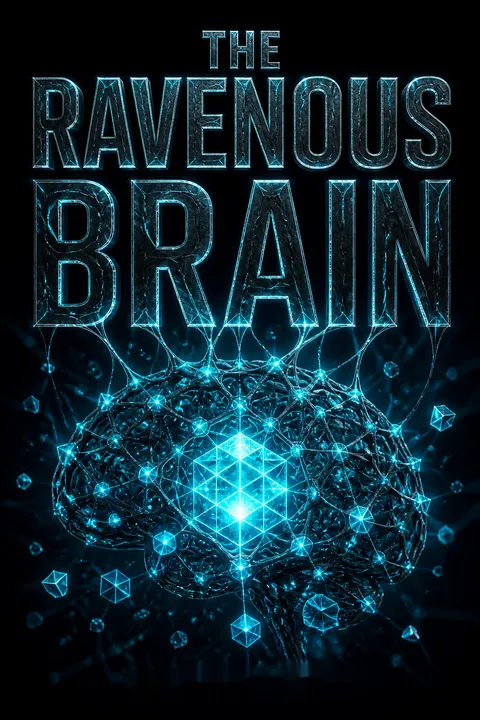
The Ravenous Brain explores consciousness from a scientific perspective, arguing it emerges from the brain's structure and information processing. Bor presents theories on consciousness, evolution, and mental illness, offering insights into how our minds work. Readers appreciate the clear explanations and engaging style, though some find parts repetitive or dense. The book challenges traditional views, suggesting consciousness is an emergent property rather than mystical. While not all agree with Bor's conclusions, many find the book thought-provoking and valuable for understanding consciousness and the human mind.
People Also Read






Glossary
Chunking
Grouping details into unitsA way of combining separate pieces of information into a meaningful unit that can be handled as one item. A person can remember a structured sequence more easily by grouping its parts according to a familiar pattern or rule. In Bor’s account, chunking is central to learning, reasoning, and the distinctive richness of human consciousness.
Working memory
Conscious mental workspaceThe limited, short-term mental space in which information can be held, compared, and rearranged. Bor describes it as closely linked to conscious awareness and attention, with room for roughly three or four fully processed items. Chunking allows each item to contain more information than a single raw detail.
Prefrontal parietal network
Flexible thought and attention networkA connected set of prefrontal and posterior parietal brain regions associated with attention, working memory, and demanding or novel tasks. Bor argues that this network helps combine information from specialized brain areas and supports conscious access. Its activity and integrity are also relevant to disorders of awareness and some psychiatric conditions.
Global neuronal workspace model
Conscious information broadcastA theory in which specialized brain regions process particular kinds of information, while a widely connected network makes selected information available across the brain. Conscious access occurs when information is broadly shared and can guide multiple processes, such as memory, reasoning, and action. Bor connects this model to working memory and the prefrontal parietal network.
Information integration theory
Consciousness as integrated informationGiulio Tononi’s theory that consciousness depends on how much information a system can represent and how thoroughly its parts combine that information. The theory is intended to apply to networks beyond the human brain, including possible artificial systems. Bor presents it as influential and promising, while noting that its calculations and some implications remain challenging.
Blindsight
Visual responses without clear sightA condition sometimes found after damage to the primary visual cortex. A person may report no visual experience in part of the visual field yet correctly guess aspects of a stimulus there better than chance. Bor cautions that awareness and performance vary across patients, so the condition does not provide a simple separation between information and experience.
Hemispatial neglect
Failure to attend to one sideA neurological condition often following damage to one hemisphere, in which a person persistently fails to attend to the opposite side of space. The affected person may omit that side when eating, drawing, or describing a familiar scene, even though basic sensory abilities can remain. Bor uses neglect to show how attention shapes conscious experience.
FAQ
What’s The Ravenous Brain by Daniel Bor about?
- Exploration of consciousness: The book investigates how the brain creates consciousness, framing it as a product of complex information processing and pattern recognition.
- Evolutionary and scientific lens: Daniel Bor explains consciousness’s evolutionary roots and its role in survival, learning, and innovation.
- Bridging science and philosophy: The narrative connects neuroscience, psychology, and philosophical debates to provide a comprehensive understanding of conscious experience.
- Fragility and clinical relevance: It also addresses the vulnerability of consciousness in brain injury and mental illness, and discusses emerging scientific methods to assess and restore awareness.
Why should I read The Ravenous Brain by Daniel Bor?
- Comprehensive scientific insight: The book offers a detailed, accessible overview of the neuroscience behind consciousness, linking brain anatomy, neural activity, and cognitive functions.
- Bridging philosophy and neuroscience: Bor critically examines philosophical arguments about mind-body duality and subjectivity, showing how modern science challenges these views.
- Practical and clinical implications: Readers gain understanding of how consciousness can be disrupted by injury or illness, and how this knowledge can improve diagnosis and treatment.
- Engaging and relatable: Personal stories, such as Bor’s account of his father’s stroke, make complex ideas accessible and emotionally resonant.
What are the key takeaways from The Ravenous Brain by Daniel Bor?
- Consciousness as information processing: Human consciousness is defined by the brain’s ability to detect, chunk, and manipulate complex patterns.
- Attention and working memory: Conscious awareness is limited in capacity, with attention acting as a filter and working memory as the workspace for conscious thought.
- Chunking as a core mechanism: The process of grouping information into meaningful units underlies learning, expertise, and the richness of conscious experience.
- Clinical and ethical relevance: Understanding consciousness has implications for treating brain injuries, mental illness, and for debates about animal and artificial intelligence.
What are the best quotes from The Ravenous Brain by Daniel Bor and what do they mean?
- “Consciousness is the ravenous search for patterns and meaning.” This highlights the book’s central thesis that the drive to find structure in information is the essence of being conscious.
- “The brain is a biological computer, and consciousness is its most complex program.” Bor emphasizes the physical, computational basis of consciousness.
- “Our awareness is both limited and astonishingly rich, thanks to the brain’s ability to chunk information.” This quote explains how chunking creates the illusion of a detailed conscious world despite strict capacity limits.
- “The more we understand consciousness, the more we can help those who have lost it.” Bor connects scientific discovery to real-world clinical hope.
How does Daniel Bor define and explain consciousness in The Ravenous Brain?
- Physical, brain-based process: Consciousness is described as a product of the brain’s information processing, not a mystical or separate entity.
- Pattern recognition and chunking: The ability to detect, group, and manipulate patterns is central to conscious thought.
- Limited workspace: Consciousness is limited to a few items at a time, managed by working memory and shaped by attention.
- Dynamic and flexible: Consciousness allows for rapid learning, problem-solving, and adaptation to new situations.
What is chunking, and why is it important in The Ravenous Brain by Daniel Bor?
- Definition of chunking: Chunking is the process of grouping individual pieces of information into larger, meaningful units or patterns, reducing cognitive load.
- Core to consciousness: The prefrontal parietal network is most active when we consciously detect and use novel patterns, making chunking a core mechanism of conscious thought.
- Foundation of learning and expertise: Chunking enables efficient learning, memory, and skill acquisition by compressing information into manageable units.
- Language and prediction: Language acquisition and predictive abilities are prime examples of chunking in action, allowing exponential growth in knowledge.
How does The Ravenous Brain by Daniel Bor explain the relationship between consciousness, attention, and working memory?
- Attention as a gatekeeper: Attention filters and selects relevant information to enter the limited workspace of consciousness.
- Working memory as conscious space: Working memory holds the contents of consciousness, typically about four items or chunks at a time.
- Neural competition: Consciousness arises from coalitions of neurons competing for dominance, with attention enhancing selected signals.
- Interdependence: Attention and working memory work together to enable complex cognition, learning, and conscious control.
What are the main brain regions and networks involved in consciousness according to The Ravenous Brain by Daniel Bor?
- Prefrontal parietal network: This network, including the lateral prefrontal cortex and posterior parietal cortex, is central to conscious awareness and complex cognitive tasks.
- Thalamus as a hub: The thalamus filters and organizes sensory information, playing a crucial role in wakefulness and consciousness.
- Reticular formation: Located in the brainstem, it controls the sleep-wake cycle and is necessary for consciousness, though higher brain regions generate conscious experience.
- Global workspace: These regions form a “global workspace” that broadcasts information across the brain for flexible, conscious processing.
What are the main theories of consciousness discussed in The Ravenous Brain by Daniel Bor?
- Recurrent processing model (Lamme): Consciousness arises from two-way, recurrent neural communication between brain regions, with deeper consciousness involving the prefrontal parietal network.
- Global neuronal workspace model (Dehaene and Changeux): Consciousness is a global workspace where specialized brain areas broadcast information to a central core for flexible, effortful processing.
- Information integration theory (Tononi): Consciousness is quantified by the amount of integrated information a system can generate, suggesting a continuum of consciousness across species.
- Comparative analysis: Bor discusses the strengths and limitations of each theory, emphasizing the importance of information integration and neural connectivity.
How does The Ravenous Brain by Daniel Bor address the evolutionary origins and purpose of consciousness?
- Information as survival tool: Evolution favors organisms that accurately represent and respond to their environment, with consciousness enhancing this ability.
- From simple to complex brains: The book traces the evolution from chemical replicators to complex brains capable of rapid, flexible learning and mental simulation.
- Internal evolution: Brains allow for internal “evolution” of ideas and strategies within a lifetime, increasing adaptability and survival.
- Human uniqueness: Human consciousness is especially “ravenous” for patterns and meaning, driving innovation and cultural advancement.
What does The Ravenous Brain by Daniel Bor say about consciousness in animals and artificial intelligence?
- Behavioral evidence in animals: The book reviews animal behaviors such as tool use, planning, and self-recognition as indicators of consciousness.
- Neural and anatomical comparisons: Presence of brain structures like the prefrontal parietal network and thalamus in various species is linked to potential levels of consciousness.
- Information integration theory: Bor discusses Tononi’s theory, which suggests a continuum of consciousness based on network complexity, applicable to both animals and AI.
- Ethical implications: The book explores the ethical questions raised by animal consciousness and the possibility of artificial consciousness.
How does The Ravenous Brain by Daniel Bor address disorders of consciousness, mental illness, and practical methods for enhancing mental health?
- Disorders of consciousness: The book explains how damage to key brain regions can cause vegetative or minimally conscious states, and how brain scanning can detect covert awareness.
- Mental illness as abnormal awareness: Conditions like bipolar disorder, autism, ADHD, and schizophrenia are framed as disorders of consciousness involving too much or too little awareness.
- Therapeutic approaches: Meditation, cognitive training, and lifestyle changes are recommended for enhancing consciousness and mental health, sometimes outperforming medication.
- Hope for recovery: Advances in neuroscience offer new ways to diagnose, treat, and potentially restore consciousness in patients with brain injuries or psychiatric conditions.
Download PDF
Download EPUB
.epub digital book format is ideal for reading ebooks on phones, tablets, and e-readers.








