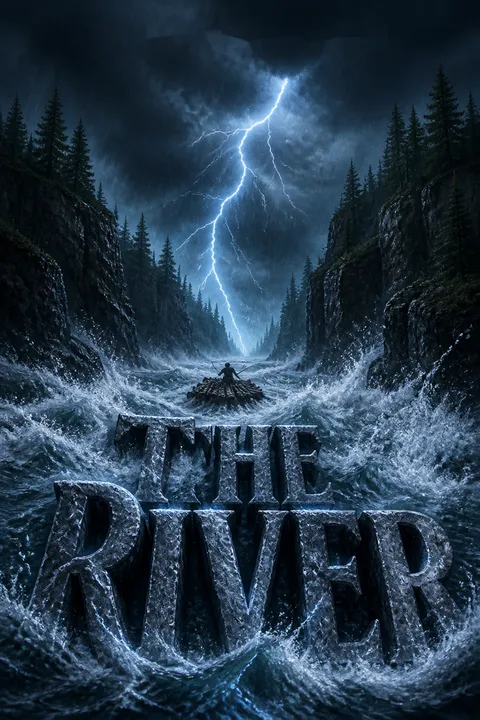


Plot Summary
Asked to Enter the Woods
A year after surviving fifty-four days alone in the Canadian wilderness, fifteen-year-old Brian Robeson is approached by Derek Holtzer, a psychologist with a government survival school. Derek wants Brian to return to the wild with him so instructors can study what survival feels like from the inside.
Brian is no longer the boy who came home: he cooks with care, notices food and movement intensely, and struggles to explain how the wilderness changed him. Fame has faded, but its attention once even followed his girlfriend, Deborah. His parents' divorce remains part of his unsettled home life. Brian remembers the hunger, danger, and terror of his first ordeal, yet Derek's request stirs a pull he cannot dismiss.
Brian's transformation is legible in ordinary habits before it becomes a survival skill again. Cooking is not simply a hobby; preparing food lets him revisit deprivation in a controlled, shared setting. His difficulty describing the wilderness also establishes a conflict between lived knowledge and professional language. Derek seeks observations he can record, while Brian knows that the experience cannot be reproduced by reports alone. The invitation therefore appeals to Brian's sense of purpose, but it also risks reopening an ordeal whose meaning he has not been able to communicate even to those closest to him.
Leave the Safety Gear
Brian's mother calls the proposed return reckless, remembering how rescuers once thought her son dead, but she listens when Brian says his experience might help others. His father must also agree, and, after two weeks of planning, the expedition takes a bush plane to an unfamiliar lake.
Derek has packed food, a tent, weapons, and other supplies, but Brian sees that a stocked camp would turn survival into an exercise with an escape hatch. At the shore, he refuses to unload the equipment, allowing only the emergency radio and Derek's notebook case to remain. The pilot flies away. Brian is frightened, but he has made the conditions he believes will make the experiment honest.
Brian's refusal is not a rejection of safety for its own sake. He recognizes that abundant supplies would let both men avoid the psychological pressure the school wants to understand. Yet the decision also reveals how easily an ethical purpose can become self-imposed risk: he is setting terms for Derek as well as himself. The radio is a negotiated boundary, a concession to his promise to his parents and a reminder that this is still an organized study. Once the plane leaves, that compromise cannot guarantee control. The experiment's central contradiction is now active: they seek authentic danger while trying to manage it.
Rain Without a Roof
With only pocketknives, Brian and Derek build a flimsy lean-to, but Brian cannot find flint to start a fire. Mosquitoes swarm them after dark, and the shelter offers little protection. A hard rain soon soaks them through, forcing them to crouch beneath trees until morning.
Brian knows this misery from his first ordeal, but having Derek beside him changes the burden: the psychologist wants him to explain each thought, while Brian has learned to survive by observing quietly. At daylight, Brian begins naming priorities aloud. They need shelter, fire, and food, and food comes first in every search. He spots berries and hazelnuts, postpones eating chokecherries, and teaches Derek to stay near the lake.
The first night strips away the comforting idea that survival is mainly a sequence of correct techniques. Brian can identify what the men need, but knowing the order does not produce a fire or shelter in time. Derek's request that Brian narrate his thinking adds another strain: introspection competes with attention to immediate conditions. Brian's focus on food is grounded in the bodily memory of starvation, not in abstract instruction. His teaching also begins to reverse their expected roles. The adult came to study the teenager, but the wilderness makes Brian the one who can interpret what is happening.
Fire, Then Too Much Food
When a rain-weakened bank collapses beneath Brian, the fall exposes sharp black flint. He strikes it with his knife until sparks catch in birch bark and grass, then makes a sheltered camp beneath a rock ledge. The fire drives off mosquitoes, and pine boughs soften their beds.
Over the next few days, Brian and Derek find berries, plums, nuts, clams, and fish; Brian makes a bow, builds a fish trap, and shows Derek how to use it. They have ample food and a tidy camp. Instead of feeling successful, Brian worries that their luck has made the exercise too easy. Derek records the lessons, but Brian fears that instructions cannot recreate the pressure of an actual emergency.
The accidental discovery of flint echoes Brian's earlier survival without simply repeating it: this time he can explain each step to someone else. Yet competence quickly creates a new problem. The pair's abundance validates their practical skills while undermining the experiment's emotional realism. Brian understands that information alone cannot transmit the state of mind produced by injury, uncertainty, and hunger. His concern is not that Derek has learned nothing, but that a successful simulation may teach confidence without teaching judgment under genuine threat. The tranquil camp is therefore a false resolution, one that makes the coming catastrophe feel less like a lesson than a sudden rupture.
Lightning Takes Derek
During a night storm, Derek reaches for his radio and notebook case as lightning strikes a pine beside the shelter. The bolt hits Derek and Brian, then surges through the equipment; Brian wakes the next morning bruised and finds Derek unresponsive but breathing. A burn mark on the radio confirms that their only call for help is ruined.
Brian spends the day beside Derek, waiting for him to wake, then faces the practical demands of keeping him clean and comfortable. When Brian tries to give him water, Derek chokes, so even that simple care is dangerous. Their scheduled check-in is days away. Brian realizes he cannot depend on the school to discover the emergency in time.
The storm turns the carefully negotiated experiment into the very emergency it was meant to study. Brian's earlier discomfort with the radio's presence gives way to its sudden absence, showing that symbolic safeguards matter less than working ones. His first response is denial expressed as waiting: if Derek is merely unconscious, Brian need not make a decision. Care interrupts that hope with physical facts, especially Derek's inability to swallow. The burden has shifted from demonstrating survival to preserving another person's life. Brian must now act without the certainty, supervision, or equipment that Derek's program was supposed to provide.
One Hundred Miles Downriver
Searching Derek's papers, Brian finds the map and traces the river to Brannock's Trading Post, roughly a hundred miles away. If he waits for the next scheduled search, Derek may go too long without water; if he leaves Derek alone, animals and exposure could finish what the lightning began. Brian chooses to take him downstream.
Beavers have already cut poplars into useful lengths, and Brian uses those logs, smaller crosspieces, and strips from his jacket to build a raft. He ties Derek on his side, props his head on a jacket, and leaves a written warning with the damaged radio in the shelter. Then he pushes the raft toward the river's outlet, carrying no map of what the current will demand.
Brian's decision is a moral calculation made under severe uncertainty, not a clean act of heroism. Staying seems safer for Brian but may abandon Derek to dehydration; leaving risks both men in a river Brian cannot fully predict. The beavers' work becomes an accidental tool, but the raft remains improvised and vulnerable. Brian's note preserves responsibility by telling rescuers where he has gone, even as he acts beyond the experiment's planned boundaries. His choice marks a change from surviving alone to accepting accountability for another person. The question is no longer whether Brian can endure the wilderness, but whether his judgment can carry someone else through it.
Sleep Nearly Wins
The raft repeatedly jams against river bends, forcing Brian to shove it free and learn to steer with a crude paddle. After dark he fights mosquitoes and exhaustion, then falls asleep while the raft drifts into a wide stretch of water. He uses the moon and a splash near shore to orient himself, but fatigue brings hallucinations and a terrible temptation: the raft would move more easily without Derek's weight.
Brian rejects the thought and keeps paddling until dawn carries them back into the current. The map does not show the lake he crossed, so he cannot fully trust its distance estimates. As the banks steepen and the raft speeds up, Brian hears water rushing ahead and recognizes the approach of rapids.
The river's danger is partly physical and partly cognitive. Brian's exhaustion does not make him simply weak; it distorts perception, time, and moral imagination. His brief thought of abandoning Derek is frightening because it grows from a practical observation about weight, not from cruelty. He counters it by reaffirming their shared journey, then continues acting despite the absence of comfort or certainty. The missing lake on the map compounds this vulnerability: the route is no longer a reliable line on paper. By dawn, Brian has learned that endurance depends on repeatedly restoring judgment when sleep deprivation tries to replace it with expediency.
The Rapids Break Everything
The current funnels between stone bluffs and drives the raft into a violent chute. Brian tries to steer around the boulders, but the water swings the logs into a rock and throws him into the river. Underwater, he is battered against the bottom before escaping the pressure wave and surfacing below the rapids. The raft is gone.
Brian fights panic, then abandons the muddy bank and swims downstream, pushing through exhaustion because Derek may still be alive. After rounding bend after bend without finding him, Brian finally spots the raft caught beneath willows. Derek lies twisted on it, nearly motionless. Brian checks him and hears faint breaths. The relief empties Brian of strength, and he collapses against the raft.
The rapids erase the distinction between expert and novice that the experiment tried to examine. Brian's knowledge cannot keep the raft from striking submerged stone, and survival becomes a matter of finding air and refusing panic. The scene also makes the earlier moral choice tangible: Brian has to pursue Derek after losing the raft, although his own body has been battered. His collapse after finding faint signs of life reveals the cost of sustaining action without rest. The river has not rewarded skill with safety; it has left Brian with only the next necessary task, and the evidence that Derek may still be reachable.
At the Trading Post
Brian wakes on the raft and resumes paddling, though the map and notebook case have been lost in the rapids. He makes a new paddle from a forked branch and part of Derek's pant leg, then drives himself through another long day and night. With no way to measure distance, he can only follow the river and keep the raft moving.
His hands are raw, his strength nearly gone, and Derek remains unconscious. At last the river widens, a dock appears, and a dog and boy reveal the presence of people. A family from the trading post pulls Brian onto the dock and lifts Derek from the raft. Their radio can summon help. Brian has carried Derek out of the wilderness.
The arrival at the trading post resolves the immediate rescue problem without making the journey feel neatly mastered. Brian reaches people not through a final clever maneuver but through sustained repetition after his tools, map, and certainty have disappeared. The improvised paddle is an especially concentrated image of adaptation: even Derek's clothing becomes part of the means of keeping him alive. The dock, dog, and child matter because they restore ordinary human presence after days in which the river has dictated every decision. Brian's achievement is relational, not merely individual. He has used the abilities formed in solitude to keep another person within reach of help.
Epilogue
The trading post family uses its radio to call for assistance. Derek has a relatively mild coma and begins recovering about a week later, eventually returning to health. Brian loses twelve pounds and develops infected cuts on his hands, but he recovers.
His parents initially forbid another wilderness trip, then accept that he has unusual experience to draw on. Seven months later, Derek sends Brian a canoe with a note of thanks, turning the raft that carried them through danger into a promise of an easier next journey.
The coda gives the rescue a measured aftermath rather than pretending that hardship ends at the dock. Derek's recovery confirms that Brian's decision brought him to help, while the account also notes that Derek might have survived without the journey, though with serious dehydration. That qualification preserves the uncertainty Brian faced: he acted without knowing whether the risk was necessary. The canoe is both gratitude and a gentle correction. Derek recognizes that Brian's makeshift raft worked, but that the labor should not have been so punishing. The gift converts a shared crisis into a continuing relationship, one founded on experience rather than professional observation alone.
Analysis
The River asks whether survival can be taught without being reduced to a checklist. Derek's project begins with a reasonable professional problem: instructors know procedures, but lack firsthand knowledge of what desperation does to a person. Brian's critique is equally concrete. A well supplied camp, he argues through his actions, cannot reproduce the conditions that made his first survival ordeal transformative. The story then tests this claim in a way neither man planned. Once lightning disables the radio and Derek cannot care for himself, the experiment becomes an emergency whose lessons are not safely contained by a training schedule.
Brian's growth is measured less by new wilderness tricks than by a changed scale of responsibility. In his earlier ordeal, each decision concerned his own survival. Here he must judge whether to wait, leave Derek, or carry him toward help, and no option comes with certainty. The river makes that judgment bodily: exhaustion creates the thought of abandoning Derek, rapids destroy the raft, and Brian must continue after his tools and map are gone. His refusal to act on that brief impulse matters because it shows moral endurance as an active practice, repeatedly chosen under pressure.
The book also distinguishes information from knowledge. Derek can record how Brian finds food or makes fire, but the crisis reveals that useful judgment depends on attention, adaptation, and a willingness to revise plans. The map helps, then proves incomplete; the raft works, then nearly kills them; Brian's competence does not cancel luck. By the end, survival is neither a triumph of control nor a romantic merger with nature. It is disciplined response to changing facts, joined to responsibility for another person. The canoe Derek later sends does not erase the ordeal. It recognizes that Brian's hard-won experience has become something they share.
Review Summary
The River receives mixed reviews, with ratings ranging from 1 to 5 stars. Many readers appreciate the survival elements and Brian's character development but find the premise implausible. Some criticize the pacing and lack of tension compared to Hatchet. Positive reviews highlight Brian's resilience and the book's exploration of survival instincts. Negative reviews cite repetitiveness and unrealistic scenarios. Overall, opinions are divided, with some considering it a worthy sequel and others disappointed by its execution.
People Also Read

Characters
Brian Robeson
Wilderness-tested teenagerBrian is fifteen and already known for surviving alone in the Canadian woods. At home, he is observant, self-contained, and changed by experiences that other people struggle to understand. He takes pleasure in cooking, partly because food has become more vivid to him since his ordeal. His parents' divorce and the attention of the press belong to the life he is trying to resume, but neither fully explains what the wilderness made him notice. Brian is practical without being invulnerable; fear, hunger, and exhaustion affect his judgment. He is driven by a desire to make his hard-won knowledge useful, even as he remains wary of anyone treating survival as a game.
Derek Holtzer
Psychologist in the fieldDerek is a psychologist working with a government survival school. He approaches Brian not as a celebrity but as someone whose firsthand experience could improve how instructors prepare people for emergencies. His curiosity is methodical: he asks questions, keeps notebooks, and wants Brian to make his thinking visible. That professional habit is paired with sincere concern about helping others survive. Derek is less experienced in the wilderness than Brian, which makes the planned expedition a genuine learning encounter rather than a demonstration by an expert. He trusts procedures and careful observation, while Brian relies more on instinct and accumulated experience. Their differing methods create the central human partnership of the story.
Brian's mother
Protective, newly trusting parentBrian's mother has lived through the fear of believing her son was lost in the wilderness. She is practical and protective, and she initially sees Derek's proposal as an unacceptable risk. Yet she has grown closer to Brian since his return and recognizes that he has changed in ways she cannot entirely understand. Her consent is not casual approval; she hears his reasons, asks for precautions, and remains worried as he departs. Their relationship holds both parental care and a new willingness to respect Brian's judgment.
Brian's father
Distant but involved parentBrian's father is divorced from Brian's mother and lives apart from him. He has fallen in love with another woman and plans to marry, changes Brian has had to absorb while growing up. Though less present in the immediate story, he is consulted before Brian returns to the wilderness. His role reflects the divided family life Brian is learning to accept, rather than a simple conflict between a good parent and a bad one.
Deborah McKenzie
Private connection after fameDeborah is a girl Brian meets at school and dates after returning from the wilderness. Press attention spills into her life, so Brian tries to keep their time together private. Her brief place in the story shows how his survival experience follows him into ordinary relationships.
Bill Mannerly and Erik Ballard
Survival school instructorsBill Mannerly and Erik Ballard accompany Derek when he first visits Brian. They are instructors at the government survival school, but remain behind when Derek joins Brian in the field. Their brief appearance establishes that Derek's project belongs to a larger training program.
The bush-plane pilot
Wilderness transport pilotThe young pilot flies Brian and Derek to the remote lake and lands the floatplane with care. His competence gives Brian a point of comparison with the fatal crash that began his earlier survival ordeal. After dropping them off, he leaves them to the expedition.
The trading post family
Rescuers at the river's endA husband, wife, and young son live at the remote trading post, where trappers bring furs. The boy and the family's dog are the first signs that Brian has reached people. The adults respond quickly, pull Brian from the river, help Derek, and use their radio to summon assistance. Their small settlement connects the wilderness journey to organized help.
Plot Devices
The survival experiment
A test without rehearsalDerek's project gives Brian a reason to return to the wilderness and frames their early days as an attempt to observe survival firsthand. Brian's refusal to use the packed supplies makes the trial harsher, but the arrangement remains an experiment rather than an actual crash. That distinction matters: the men can learn techniques, yet their comfortable success leaves Brian doubting whether Derek has seen the mental pressure he came to study. When the storm disables their equipment and injures Derek, the exercise becomes a real emergency, exposing the gap between controlled instruction and consequential action.
The damaged radio
A severed line to helpThe radio is the one piece of equipment Brian permits them to keep, a limited safeguard after he rejects the rest of Derek's supplies. Lightning burns it during the storm, leaving Brian unable to report Derek's condition or request a plane. Its failure creates urgency without making the men entirely invisible: Derek has already established a loose check-in schedule, and Brian leaves a written account with the radio at their shelter. The device's changing role marks the difference between planned risk and a crisis no longer under their control.
The river map
A route with uncertain edgesDerek's map gives Brian a possible route from the unnamed lake to Brannock's Trading Post. Brian measures the river's twists rather than trusting the straight-line distance, then uses its terrain markings to anticipate faster water. The map turns a desperate idea into a navigable plan, but it is not fully reliable: the river's broad stretch of water does not match what Brian sees on the page. Once the briefcase is lost in the rapids, Brian must finish without it. The map offers direction, never certainty.
The beaver-cut raft
A rescue built from scrapsBrian finds poplar logs that beavers have already felled, trimmed, and moved toward the lake. He binds the logs with crosspieces and strips of his own clothing, creating a platform broad enough to carry both men. The raft is not a boat, and its weight makes steering difficult, especially through bends and rapids. It is also the only way Brian can attempt the journey without carrying Derek through the forest. After the raft is damaged and Brian is thrown clear, he finds it again downstream and continues with a newly improvised paddle.
FAQ
Synopsis & Basic Details
What is The River about?
- Survival Redux: The River follows Brian Robeson as he returns to the wilderness, not by accident, but by choice, to help a government survival school understand the psychological aspects of survival.
- Unexpected Complications: What begins as a controlled experiment quickly devolves into a desperate fight for survival when Brian's companion, Derek, is struck by lightning, leaving Brian to navigate a dangerous river to seek help.
- Inner and Outer Journey: The story explores not only the physical challenges of wilderness survival but also Brian's internal struggles as he grapples with his past experiences and the responsibility for another person's life.
Why should I read The River?
- Intense Survival Story: The River offers a gripping narrative of survival against the odds, showcasing the raw power of nature and the resilience of the human spirit.
- Psychological Depth: It delves into the psychological impact of isolation and trauma, exploring how past experiences shape one's ability to cope with new challenges.
- Character-Driven Narrative: Readers will connect with Brian's internal struggles and growth, making it a compelling character study as much as a survival story.
What is the background of The River?
- Sequel to Hatchet: The River is a direct sequel to Gary Paulsen's Hatchet, building upon Brian's previous survival experience and the profound changes he underwent.
- Psychological Exploration: The story is set against the backdrop of a government survival school seeking to understand the psychological aspects of survival, adding a layer of scientific inquiry to the narrative.
- Wilderness Setting: The remote Canadian wilderness serves as both a beautiful and dangerous setting, highlighting the power of nature and the challenges it presents to human survival.
What are the most memorable quotes in The River?
- "I discovered fire.": This quote encapsulates Brian's profound connection to nature and his unique understanding of survival, highlighting his transformative experience in the woods.
- "Food is everything.": This emphasizes the primal importance of food in survival, reflecting Brian's changed perspective after his first experience in the wilderness.
- "We go.": This simple yet powerful quote marks Brian's resolute decision to take action and embark on the perilous river journey, showcasing his determination and courage.
What writing style, narrative choices, and literary techniques does Gary Paulsen use?
- Simple, Direct Prose: Paulsen employs a straightforward, unadorned writing style that focuses on action and sensory details, immersing the reader in Brian's experience.
- Internal Monologue: The narrative frequently delves into Brian's thoughts and feelings, providing insight into his psychological state and the impact of his experiences.
- Repetitive Phrases: Paulsen uses repetition of key phrases, such as "The Time," to emphasize the significance of Brian's past and the lasting changes it has brought about.
Hidden Details & Subtle Connections
What are some minor details that add significant meaning?
- The Digital Clock: The digital clock in Brian's entryway, mentioned when the men first arrive, symbolizes the contrast between the modern world and the raw, natural world he is about to re-enter.
- Brian's Love for Cooking: Brian's newfound love for cooking after his first survival experience highlights his appreciation for the abundance and comfort he once lacked, showing how his perspective has shifted.
- The Pilot's Music: The young pilot listening to rock music with headphones contrasts sharply with the serious nature of their mission, foreshadowing the unexpected turn of events and the loss of control.
What are some subtle foreshadowing and callbacks?
- "Too much stuff": Brian's initial unease with the amount of gear foreshadows the central conflict of the story, where reliance on external resources is challenged by the need for self-reliance.
- The Tornado: Brian's memory of the tornado from his previous experience foreshadows the sudden and violent nature of the lightning strike, highlighting the unpredictable dangers of the wilderness.
- "It lacks tension": Derek's observation about the lack of tension in their survival experience foreshadows the dramatic and life-threatening events that are about to unfold, creating a sense of impending doom.
What are some unexpected character connections?
- Brian and Derek's Role Reversal: The dynamic between Brian and Derek shifts from teacher-student to a more complex relationship where Brian becomes the caretaker, highlighting the unpredictable nature of survival situations.
- Brian and His Mother's Understanding: The shared understanding between Brian and his mother, developed after his first survival experience, allows her to accept his decision to return, showcasing the depth of their bond.
- The Beavers as Unintentional Helpers: The beavers' work in felling trees provides Brian with the necessary materials for his raft, highlighting the interconnectedness of nature and the unexpected ways it can aid survival.
Who are the most significant supporting characters?
- Derek Holtzer: As Brian's companion, Derek presence and subsequent incapacitation drive the plot, forcing Brian to take on a leadership role and make life-or-death decisions.
- Brian's Mother: Her initial worry and eventual acceptance of Brian's decision highlight the emotional toll of his experiences and the strength of their relationship.
- The Trading Post Family: Though they appear briefly at the end, they represent the hope of rescue and the return to civilization, providing a crucial turning point in the story.
Psychological, Emotional, & Relational Analysis
What are some unspoken motivations of the characters?
- Brian's Need for Validation: Brian's willingness to return to the wilderness may stem from a need to validate his survival skills and prove his transformation, not just to others but to himself.
- Derek's Desire for Authenticity: Derek's insistence on leaving behind most of their gear suggests a desire to experience true survival, not just a simulation, driven by a need to understand the psychological aspects firsthand.
- Brian's Mother's Fear and Acceptance: Brian's mother's initial fear is balanced by her understanding of Brian's need to help others, revealing a complex mix of maternal protectiveness and respect for his autonomy.
What psychological complexities do the characters exhibit?
- Brian's Hyper-Awareness: Brian's heightened senses and constant vigilance, a result of his previous survival experience, reveal the lasting psychological impact of trauma and the difficulty of returning to normalcy.
- Derek's Naivete: Derek's initial enthusiasm and lack of practical survival skills highlight his naivete about the true nature of the wilderness, contrasting with Brian's hard-earned wisdom.
- Brian's Internal Conflict: Brian's internal struggle with the idea of leaving Derek behind, even when faced with the dire circumstances, reveals his moral compass and the psychological burden of responsibility.
What are the major emotional turning points?
- The Lightning Strike: The lightning strike that incapacitates Derek is a major turning point, shifting the narrative from a controlled experiment to a desperate fight for survival and forcing Brian to take charge.
- Brian's Decision to Leave: Brian's decision to leave the lake and embark on the river journey is a significant emotional turning point, showcasing his courage and determination in the face of overwhelming odds.
- Brian's Hallucinations: Brian's hallucinations during the night on the lake reveal his physical and emotional exhaustion, highlighting the psychological toll of his ordeal and his struggle to maintain his sanity.
How do relationship dynamics evolve?
- Teacher-Student to Caretaker: The relationship between Brian and Derek evolves from a teacher-student dynamic to one where Brian becomes Derek's caretaker, highlighting the unpredictable nature of survival situations.
- Brian's Growing Respect for Derek: Despite Derek's initial naivete, Brian develops a growing respect for his genuine desire to learn and help others, showcasing the power of shared experiences.
- Brian's Self-Reliance: Brian's journey forces him to rely on his own skills and instincts, further solidifying his self-reliance and highlighting his transformation from a boy to a capable survivor.
Interpretation & Debate
Which parts of the story remain ambiguous or open-ended?
- The Extent of Derek's Awareness: The story leaves ambiguous the extent to which Derek is aware of his surroundings while in a coma, raising questions about the nature of consciousness and the possibility of communication with the unconscious.
- The Accuracy of the Map: The map's inaccuracies and the river's changing course raise questions about the reliability of external resources and the need for adaptability in survival situations.
- The Long-Term Impact on Brian: While the story concludes with Brian's rescue, it leaves open-ended the long-term psychological impact of his experiences, suggesting that his journey of growth and self-discovery is ongoing.
What are some debatable, controversial scenes or moments in The River?
- Brian's Decision to Leave the Gear: Brian's insistence on leaving behind the survival gear can be seen as both courageous and reckless, raising questions about the balance between self-reliance and practicality.
- Brian's Dark Thoughts: Brian's fleeting thoughts about leaving Derek behind are controversial, highlighting the psychological toll of extreme stress and the moral dilemmas faced in survival situations.
- The Realism of the Journey: The realism of Brian's journey down the river, particularly his ability to navigate the rapids and survive for days without sleep, can be debated, raising questions about the limits of human endurance.
The River Ending Explained: How It Ends & What It Means
- Rescue and Relief: The ending provides a sense of relief as Brian and Derek are rescued, but it also underscores the fragility of life and the importance of human connection.
- Transformation and Growth: The ending highlights Brian's transformation from a boy who survived by chance to a capable and self-reliant young man, showcasing the power of adversity to foster growth.
- The Gift of the Canoe: Derek's gift of the canoe symbolizes his gratitude and the bond formed through their shared ordeal, suggesting that their experience has left a lasting impact on both of them.
Brian's Saga Series

Download PDF
Download EPUB
.epub digital book format is ideal for reading ebooks on phones, tablets, and e-readers.








