

Key Takeaways
Define wealth by the freedom it buys, not the number it displays
Money serves a purpose. Templar frames wealth as a means to security, comfort, leisure, independence, status, or generosity, not as a score to maximize for its own sake. His wealthy friend sets an unusually high threshold: living on returns generated by investment earnings, rather than spending the original capital. Templar's own definition is simpler: having enough not to worry about having enough. Neither measure is universal. The useful question is what money should make possible in a particular life.
Turn desire into a destination. Choose a concrete definition, a timeframe, and a plausible route. A vague wish to be rich cannot guide a decision about saving, work, or spending. Revisit the target as family needs and priorities change, and ask whether money is actually the best way to meet the need behind it.
The distinction between money and its intended use helps prevent a familiar trap: treating a rising net worth as proof that life is improving. In decision science, goals work best when they clarify choices, not when they become measures of personal worth. A target tied to security or time can be more actionable than a round-number fortune. The limitation is that a definition of enough can move as circumstances and social comparisons shift. Periodic review matters, but so does setting boundaries on what counts as a successful life.
Question inherited money beliefs, then build wealth without betraying your standards
Inspect the assumptions. Templar lists familiar beliefs that can quietly shape behavior: money is dirty, wealthy people are dishonest, or some people simply do not deserve to be rich. He recommends asking where such ideas came from and whether they are true. He also argues that wealth follows useful work and decisions rather than arriving as a moral prize. His student-era story is telling: he sold a valuable book to afford a meal, choosing immediate relief over a future asset, and later regretted the trade.
Choose your own rules. The book urges sustained effort, learning, and delayed gratification, while insisting that earning money need not require dishonesty or sacrificing health and family. Its point is not that every sacrifice is wise. It is that a financial plan should reflect both the goal and the limits a person refuses to cross.
Money scripts resemble other inherited beliefs: they can influence choices before a person notices they are operating. Naming them creates room to question them. The book's emphasis on agency is useful, especially when shame or moral suspicion blocks basic planning. But its claim that most people remain poor through laziness is too sweeping. Income, health, discrimination, caregiving, and local opportunity constrain choices. Personal effort matters, yet it cannot erase structural barriers. A fair reading keeps the agency without turning financial hardship into a character diagnosis.
Take a financial inventory before choosing your next move
Find the starting point. Before planning, Templar asks readers to list what they own, what they owe, what is owed to them, and their recurring income and expenses. Net worth is the value of assets minus liabilities. A separate cash-flow picture shows whether money is coming in faster than it leaves. The book compares this to a shipwreck survivor checking available supplies before deciding what to do next: plans depend on the actual situation, not a hopeful guess.
Find the leaks. Track spending for a short period and inspect balances, interest charges, subscriptions, and upcoming bills. Then build a plan that fits the facts. It might involve reducing debt, changing work, building a business, or adding an income source. Plans should be concrete enough to guide action, but flexible enough to change when circumstances do.
A financial inventory is a feedback system, not merely a bookkeeping chore. In behavioral research, making a behavior visible can interrupt automatic patterns; tracking spending can expose a recurring cost that vague intentions miss. The same applies to assets and debt: a single net-worth figure is helpful, but it can hide whether money is accessible or tied up in a home or business. Measurement should inform decisions, not become an invitation to scrutinize every small purchase or mistake ordinary volatility for failure.
Save a surplus consistently and clear costly debt before investing
Give savings time to grow. Templar's central money mechanism is compounding: returns that remain invested can generate further returns. He urges readers to set money aside whenever income arrives, rather than waiting to save whatever happens to remain. His own chosen percentage is 50 percent, but the broader lesson is to establish a repeatable amount that fits real circumstances. Small, regular contributions can accumulate, especially when started early and reinvested.
Stop paying for yesterday. The book prioritizes personal debt because borrowing costs commonly exceed the return earned on savings. It suggests tackling the most expensive balances first and avoiding new borrowing unless the case is carefully justified. A business he describes began with small contributions from its founders and later sold for $43 million, while another successful founder used heavy borrowing and retained little after repayments. These anecdotes show how debt can dilute gains, not that borrowing always fails.
Automating a manageable transfer can make saving less dependent on willpower, while compounding rewards time and persistence. The debt advice is strongest for high-interest consumer balances, where the cost is visible and often hard to outrun. It should not become a rule against all borrowing: mortgages and well-underwritten business loans can fund useful assets, but only when cash flows, risks, and repayment capacity are understood. The founders' contrasting outcomes are vivid illustrations, not controlled evidence that bootstrapping is always superior.
Raise your earning power through valuable skills, selling, and repeatable deals
Create value people will pay for. Templar argues that a marketable skill becomes more valuable when it is in demand, uncommon, or difficult to replace. That might mean deepening a specialty, making expertise easier to buy, or finding another setting in which to use it. Selling is broader than a sales job: it includes explaining the value of a service, an idea, or one's own work.
Look beyond the paycheck. The book favors deals because a product or business can earn beyond the hours its creator personally works. It describes a college student who sold advertising space in small blocks across a webpage, turning a simple online asset into a large pool of buyers. Still, employment can be a strong route to prosperity, and self-employment can fail. Compare stability, demand, costs, and likely income before choosing a path.
This section's strongest insight is about leverage: an hour of specialized labor has a ceiling, while a product, distribution channel, or repeatable service can reach many customers. The webpage example also shows that an opportunity can come from reframing an ordinary resource. Yet the contrast between deals and wages risks undervaluing skilled employees and essential work. A deal creates wealth only when customers value what is sold and the economics work. Selling is a skill, not a substitute for product quality, fair treatment, or a viable market.
Compare net returns, risk, and alternatives before investing
Calculate what remains. Gross income can disguise a weak investment. For a rental property bought for $100,000 and bringing in $10,000 a year, Templar says to subtract mortgage costs, insurance, management fees, vacant periods, and taxes before judging its return. Potential price growth matters, but it is uncertain, particularly over a short holding period.
Know what you own. The book treats shares and property as risky investments, urges readers to understand businesses before buying their shares, and recommends practice portfolios before risking real money. It also explains the risk premium: the extra potential reward from a risky investment compared with a safer alternative. Templar favors long horizons and broad portfolios, and argues that shares offer greater growth potential than property over time. That is a general claim, not a guarantee about any market or future period.
Net-return thinking counters a common framing error: comparing an investment's advertised income with the full cost of a safer alternative. The relevant comparison includes fees, taxes, liquidity, and the chance of loss. Diversification can reduce exposure to a single company or asset, but it cannot make risk disappear. The book's property-versus-shares conclusion should be treated as time- and market-dependent rather than timeless law. Its more durable advice is to understand the investment, compare alternatives, and avoid making a decision from headline yields alone.
Use hunches as prompts for research, never as permission to gamble
Treat intuition as an alert. Templar recommends noticing discomfort or excitement around a person or opportunity, but he distinguishes a hunch from an impulsive bet. His process is to investigate the idea, prepare a reasoned proposal, and ask experienced advisers to test it. A financial mentor, in his usage, is someone with a demonstrated record of making money who can question a plan and share relevant experience.
Check incentives and evidence. The book warns readers about get-rich-quick pitches, secret investment systems, and unsolicited offers. For stock picking, it proposes writing down hypothetical purchases and predictions over months or years, then checking the record before investing actual money. It also advises examining fees and small-print terms. The aim is to make confidence answerable to evidence, rather than letting charisma, fear of missing out, or a persuasive brochure make the decision.
Intuition can be a useful pattern detector, particularly when it registers inconsistencies that are hard to articulate. It is not a reliable substitute for verification: excitement, familiarity, and fear can all feel like certainty. The author's research-and-review process turns a gut reaction into a testable claim. Mentors can add useful friction, but they also bring their own blind spots and incentives. Independent advice, written assumptions, and clear fee disclosures help make the relationship more accountable than admiration alone.
Review finances routinely and keep emergency money accessible
Build a maintenance habit. Templar recommends frequent financial checkups, ideally weekly, to reconcile accounts, review debts and investments, notice upcoming bills, and keep tax obligations in view. Regular attention helps catch forgotten payments and idle cash. He also urges investors to avoid constant tinkering after a considered plan is in place, since unnecessary changes can add costs or lock in a poor reaction to short-term noise.
Prepare for interruptions. The book suggests an emergency reserve sufficient to cover three to six months of ordinary expenses, kept somewhere readily accessible. It also calls for retirement savings and careful review of insurance. Templar is skeptical of insuring every appliance or pet, but recognizes that insurance can make sense when a loss would be unaffordable or coverage is legally required. The key is to compare premiums with the severity of the risk and the resources available to absorb it.
Routine reviews are a form of risk management: small problems are easier to address when they are noticed early. Liquidity matters because an emergency can force the sale of a long-term investment at a bad time. The book's reserve target is a useful planning prompt, but the right amount depends on income stability, dependents, and access to other support. Its insurance skepticism needs the same nuance. Self-insuring a replaceable appliance differs sharply from absorbing a catastrophic medical, liability, or property loss.
Choose what counts as enough, then spend and give without flaunting
Use money on purpose. Templar favors buying durable quality over repeatedly replacing cheap goods, while also advising readers to compare prices and inspect contract terms. He warns against spending expected future income before it arrives, because the income may be delayed or fail to appear. With friends and family, he argues that a loan should be treated as a gift unless repayment is genuinely affordable to lose; otherwise, money can damage the relationship.
Set an end point. Decide what level of wealth is sufficient for the life being built, and make room to enjoy it, share it, or support causes that matter. The book recommends checking a charity's mission and finances rather than giving under pressure. It also urges parents to teach children budgeting instead of insulating them from every constraint. Wealth that is only accumulated and guarded can become a burden rather than a tool.
The ending shifts the question from accumulation to stewardship. A defined threshold can protect time and relationships from endless financial escalation, while deliberate giving connects private wealth to public benefit. Choosing a cause and examining how it uses funds makes generosity more accountable. The caution is that tasteful restraint should not become a moral test based on appearances, and assistance should not impose the giver's preferences on recipients. Good stewardship combines discretion with respect for other people's agency.
Analysis
The book's most useful contribution is not a secret investment strategy. It is a behavioral sequence: define what money is for, inspect the current position, make a plan, protect a surplus, build earning capacity, assess investments, and decide how wealth should be used. The sequence links personal finance to self-management. A budget is not merely arithmetic here; it is a way to turn an intention into repeated choices.
Templar's conversational voice and stories make abstract habits memorable. The student who sells a valuable book for a meal illustrates the force of immediate need. The small webpage advertising venture illustrates how a resource can be repackaged as something buyers value. Such examples offer useful prompts, but they are not representative evidence. A striking business outcome can make a tactic seem more replicable than it is.
The book also contains tensions worth keeping visible. It celebrates work and discipline, but sometimes treats poverty as a result of laziness, understating structural constraints. It says not to borrow, then treats mortgages and business finance as possible exceptions. It praises quick decisions while also insisting on research and long horizons. These are not fatal contradictions if read as reminders to distinguish consumer debt from productive borrowing, decisiveness from haste, and personal agency from guarantees of success.
Some financial claims are time-sensitive. Predictions about property and shares, insurance value, and investment performance depend on jurisdiction, costs, taxes, and market conditions. The durable method is to calculate net outcomes, diversify, preserve liquidity, and seek qualified advice while retaining responsibility for decisions. The book's final ethical point is equally practical: wealth is not an endpoint. It is useful when it creates security, choice, enjoyment, or help for others, and harmful when the pursuit itself consumes the life it was meant to improve.
Review Summary
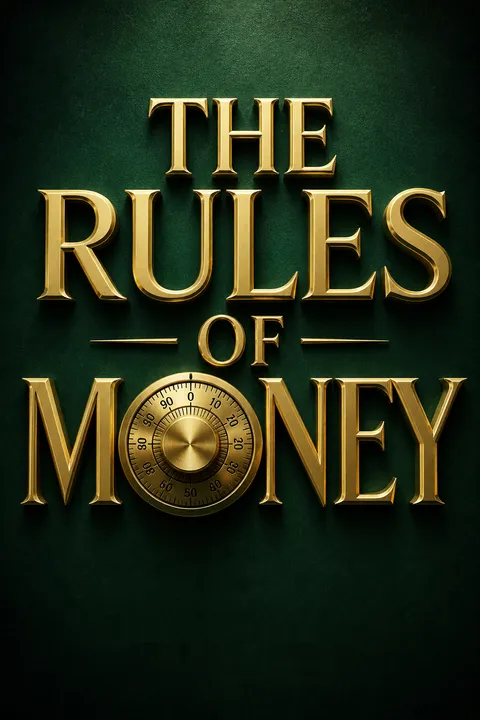
The Rules of Money receives mixed reviews, with readers appreciating its practical advice and simple rules for wealth building. Many find it beneficial for beginners and young adults, praising its easy-to-understand approach. Some readers note that the book offers common sense ideas and serves as a good reminder of financial principles. However, a few critics argue that the rules are overly simplistic or repetitive. Overall, readers value the book's straightforward guidance on managing money, investing, and developing a wealth-oriented mindset.
People Also Read









Glossary
Risk premium
Extra return for riskThe potential reward for choosing a riskier investment, measured against what a safer alternative might earn. Templar uses the comparison to argue that an investment's appeal changes with available alternatives. A volatile asset may look attractive when safe returns are low and less compelling when safer options pay more. The premium is potential, not a guaranteed gain.
Money mentors
Experienced financial sounding boardsPeople with a demonstrated record of building wealth who can question plans, share experience, and identify risks the decision-maker may miss. In Templar's approach, mentors help test an opportunity rather than take control of the money. Their advice is input, not a substitute for research or personal responsibility.
Contingency fund
Accessible emergency savingsMoney kept available for unexpected expenses or interruptions to income, rather than invested in assets that may be hard to sell quickly. Templar suggests setting aside enough to maintain ordinary living standards for three to six months. The appropriate amount depends on a person's expenses, income stability, and other resources.
Convertible loan
Loan that can become equityA financing arrangement that begins as a formal loan with repayment terms and may convert into an ownership share if the business succeeds. Templar presents it as a way to distinguish serious proposals from vague requests and to give the lender a potential share of upside. Its legal terms and risks need professional review.
Wealth bondage
Being trapped by accumulated moneyTemplar's label for holding wealth so tightly that a person fails to use or share it while alive. The term warns against treating accumulation as the only purpose of money, then leaving difficult or poorly planned financial arrangements for others to manage. It points toward intentional spending, giving, and estate planning.
FAQ
What's "The Rules of Money: How to Make It and How to Hold on to It" about?
- Overview: The book by Richard Templar provides a comprehensive guide on how to accumulate wealth and maintain it. It offers practical advice and strategies for financial success.
- Structure: It is divided into five parts, each focusing on different aspects of wealth management, from thinking wealthy to sharing your wealth.
- Purpose: The book aims to change readers' perceptions of money and wealth, encouraging them to adopt behaviors and mindsets that lead to financial prosperity.
Why should I read "The Rules of Money"?
- Practical Advice: The book offers actionable steps and rules that can be applied to everyday financial decisions, making it useful for anyone looking to improve their financial situation.
- Mindset Shift: It encourages a change in how you think about money, which is crucial for long-term financial success.
- Comprehensive Coverage: From saving and investing to managing debt and sharing wealth, the book covers a wide range of topics relevant to financial management.
What are the key takeaways of "The Rules of Money"?
- Wealth is Accessible: Anyone can become wealthy by applying themselves and changing their mindset about money.
- Long-term Planning: Success in wealth accumulation requires setting clear objectives and planning for the long term.
- Behavioral Change: Adopting new financial behaviors, such as controlling spending impulses and making informed investment decisions, is essential.
What are the best quotes from "The Rules of Money" and what do they mean?
- "Anybody Can Be Wealthy—You Just Need to Apply Yourself": This quote emphasizes that wealth is not exclusive to a select few; it is attainable for anyone willing to put in the effort.
- "Money is a Placebo, Not a Cure": It highlights that while money can alleviate certain problems, it is not a solution to all of life's challenges.
- "Don’t Make Money by Being Bad": This quote advises against unethical means of making money, stressing the importance of integrity in financial dealings.
How does Richard Templar suggest we change our money beliefs?
- Identify Myths: Recognize and discard inherited money myths that may be holding you back, such as the belief that money is inherently evil.
- Adopt New Beliefs: Replace old myths with positive beliefs about money, such as seeing it as a tool for achieving goals.
- Self-Reflection: Understand where your money beliefs come from and how they influence your financial decisions.
What is the importance of setting financial objectives according to "The Rules of Money"?
- Clear Direction: Setting objectives provides a clear path and destination for your financial journey, making it easier to plan and execute.
- Motivation: Having specific goals keeps you motivated and focused on your financial journey, helping you overcome obstacles.
- Measurement of Success: Objectives allow you to measure your progress and success, ensuring you stay on track toward achieving your financial goals.
How does "The Rules of Money" suggest managing risk in investments?
- Assess Risk Appetite: Determine your comfort level with risk, considering factors like age, family commitments, and financial goals.
- Diversification: Spread investments across different asset classes to minimize risk and protect against market volatility.
- Informed Decisions: Make investment decisions based on thorough research and understanding, rather than speculation or hearsay.
What does Richard Templar mean by "Money Begets Money"?
- Compound Interest: Understand and utilize the power of compound interest to grow your wealth over time.
- Reinvestment: Continuously reinvest profits to generate more income, creating a cycle of wealth accumulation.
- Initial Capital: Start with a small amount of capital and let it grow through smart investments and financial decisions.
How does "The Rules of Money" address the relationship between money and happiness?
- Not a Direct Correlation: Money alone does not guarantee happiness; it is a tool that can alleviate certain stresses but not solve all problems.
- Focus on Value: Understand the difference between price and value, and prioritize spending on things that truly enhance your life.
- Balanced Approach: Use money to create a balanced life that includes security, comfort, and the ability to pursue passions.
What strategies does "The Rules of Money" offer for staying wealthy?
- Regular Financial Check-ups: Conduct regular financial health checks to stay informed and make timely adjustments.
- Avoid Complacency: Continuously seek new opportunities and avoid resting on your laurels once you achieve financial success.
- Smart Spending: Shop for quality and avoid unnecessary expenses to maintain and grow your wealth.
How does Richard Templar suggest sharing wealth in "The Rules of Money"?
- Philanthropy: Use your wealth to support causes and charities that align with your values and make a positive impact.
- Family Support: Help family members financially, but ensure it is done in a way that does not create dependency or resentment.
- Legacy Planning: Consider how you want to be remembered and what legacy you wish to leave behind, using your wealth to achieve those goals.
What is the significance of having money mentors according to "The Rules of Money"?
- Guidance and Support: Mentors provide valuable advice and support, helping you make informed financial decisions.
- Experience Sharing: Learn from the experiences and mistakes of others to avoid common pitfalls in wealth management.
- Accountability: Mentors can hold you accountable to your financial goals and ensure you stay on track.
About the Author
Other books by Richard Templar





Download PDF
Download EPUB
.epub digital book format is ideal for reading ebooks on phones, tablets, and e-readers.








