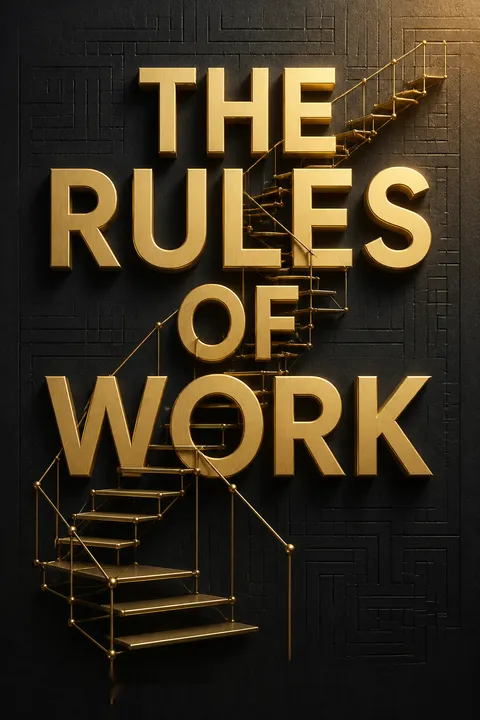


Key Takeaways
Earn the next role by solving problems beyond your current job.
Performance is the entry ticket. The book's central distinction is between doing the assigned work well and helping the organization handle larger problems. In its opening story, a consultant tells Templar that his rival Rob looks more like a manager. Rob gets promoted, but cannot do the job well, so Templar is brought in above him. The lesson cuts both ways: competence alone may not make someone visible as a future leader, but appearance without competence cannot sustain the promotion.
Think beyond your desk. A strong candidate understands how their work affects other teams, customers, and the organization's direction. Templar calls someone who combines performance with deliberate awareness a Rules Player. The term means a capable employee who consciously manages their work, conduct, and reputation, rather than relying on good work alone to speak for itself.
What's useful here is the distinction between task execution and organizational judgment. Leadership often requires seeing dependencies that are invisible from a single role, such as how a local shortcut affects customer service or another team's workload. That broader view can be demonstrated without pretending to hold authority. The caution is that looking like a leader can reproduce a narrow model of who seems credible. Results, judgment, and fair access to advancement should matter more than polished mannerisms alone.
Make your contribution visible through useful work, not constant self-promotion.
Visibility needs substance. Routine excellence can disappear into the daily churn, especially when everyone is expected to meet the same targets. Templar recommends occasionally identifying a practical improvement and presenting it clearly, rather than simply doing more of the same task. A report on a better process can reveal initiative, provided the idea is sound, useful, and shared with the right people. Repeated unsolicited proposals, however, risk looking like attention-seeking.
Build a useful specialty. One example is Mike, a worker who learned personal details about customers that colleagues did not know, making him a resource when important clients needed attention. This expertise became a visible contribution beyond his job description. The aim is not to hoard knowledge or make oneself impossible to replace. It is to develop a relevant capability that helps colleagues and makes the value of one's work easier to recognize.
This is a practical account of signaling: other people infer capability from observable evidence, not from private effort they never see. A useful proposal or uncommon skill gives them something concrete to evaluate. The strongest version of this practice also shares credit and makes the process transferable, so visibility does not depend on hoarding expertise. There is a genuine tension between making work legible and self-promotion. The test is whether the contribution would still help the organization if nobody attached a name to it.
Map the next rung, then turn ambition into specific learning.
Replace drift with direction. Templar urges readers to study how advancement actually works in their industry, identify the likely steps to a desired role, and determine what each step requires. A career plan should include both a long-range destination and nearer-term actions, while leaving room for unexpected opportunities. His own account shows this in practice: instead of pursuing a regional job he did not want, he proposed a roving role the company lacked and helped shape a position that suited his strengths.
Make plans usable. The book distinguishes a career direction from a task list. It suggests organizing immediate work, projects being developed, and longer-range possibilities separately. It also recommends setting a simple objective before a difficult meeting, such as staying focused on decisions relevant to one's role. A plan is useful when it guides choices, not when it becomes a rigid promise to follow one path regardless of changing circumstances.
The valuable shift is from aspiration as a mood to aspiration as an information problem: what experience, relationships, and proof does the next position require? That question makes development more deliberate and helps expose whether a promotion route is real or merely imagined. Career maps can also be wrong, especially when organizations reorganize or roles disappear. The book's emphasis on revising plans is therefore essential. A direction should guide exploration, not make every detour look like failure.
Signal readiness by learning the next role before you claim it.
Rehearse responsibility, not costume. Templar advises workers to study how people one level above them communicate, handle decisions, and frame problems, then practise those skills before seeking promotion. His own leap from assistant manager to general manager followed an effort to adopt the broader perspective of the job he wanted. But the story also supplies a warning: Rob had the managerial appearance and lacked the ability to perform. Templar himself had to learn quickly after his promotion, studying outside work to close the gap.
Show the larger view. A more senior perspective asks how a decision affects customers, colleagues, and the whole organization, rather than only personal convenience. It may mean speaking about shared outcomes and preparing for responsibilities beyond the immediate assignment. The point is preparation, not pretending. Readiness becomes credible when behavior signals broader judgment and actual performance can support the signal.
This advice resembles deliberate practice: observe a demanding skill, try it in manageable situations, and use feedback to improve. It is stronger than simply copying a superior's style because it focuses on the reasoning beneath the behavior. Still, imitation can turn into a performance detached from competence, particularly when organizations reward confidence more readily than careful judgment. A good test is whether the new behavior improves decisions for other people, not merely whether it makes the employee look promotable.
Adapt to workplace norms without confusing conformity with competence.
Read the local culture. Offices develop unwritten expectations about language, dress, hierarchy, social events, and who handles routine decisions. Templar argues that ignoring these norms can make a capable person seem out of place. His examples range from using the workplace's familiar terminology to noticing how formal people dress for meetings. He advises adapting enough to work smoothly with others, rather than assuming that one's preferred style is universally understood.
Stay recognizably yourself. The book's account of the motorcyclist whose conspicuous riding gear marked him as too junior illustrates how presentation can influence judgment before work is assessed. Yet adapting does not require adopting every belief or joining every activity. Learn which norms affect trust and coordination, and distinguish them from habits that are merely fashionable, unfair, or irrelevant. Fit should help people see the work, not erase the person doing it.
Organizational culture functions as a coordination system: shared expectations can reduce friction, but they can also reward familiarity over ability. The book is perceptive about the speed of first impressions, while some of its prescriptions about clothing and status reflect a narrow, dated image of professionalism. A more durable principle is context-sensitive clarity. Adapt where it improves communication or trust, and question norms that exclude people without helping the work. Belonging should not require concealing meaningful differences.
Use questions and restraint to cool conflict without ducking hard truths.
Lower the temperature. In a meeting where two colleagues are arguing, Templar suggests asking one person to explain a specific concern, then giving the other a fair turn. A focused question redirects attention from personal combat toward the issue under discussion. He also recommends listening visibly, asking sincere questions, and avoiding gossip, insults, and impulsive remarks. Small courtesies matter in this system because they build a reputation for reliability and respect.
Be constructive, not silent. When something is wrong, translate a complaint into a question about causes, consequences, or a workable remedy. The book favors calm, measured speech over public venting. Its advice to avoid gossip does not mean concealing misconduct or refusing to raise legitimate concerns. The useful distinction is between spreading unverified personal talk and making a responsible report about behavior that affects people or the organization.
The method works because a specific question can interrupt escalation and restore turn-taking, a basic condition for solving a disagreement. Restraint also protects relationships from damage caused by anger in the moment. But composure is not the same as neutrality in every dispute. When there is harassment, fraud, or a serious safety concern, treating both sides as equally reasonable can deepen the harm. Diplomacy is most valuable when it makes truth easier to hear, not when it makes conflict disappear from view.
Protect your career with clear ethical boundaries and written records.
Decide your limits early. Templar recommends learning the legal and ethical expectations of one's industry and setting personal standards before a difficult request arrives. His core safeguards include refusing to lie, declining to cover up for others, and not knowingly participating in unlawful conduct. He describes leaving a company after being asked to take part in illegal behavior, then refusing to disclose damaging information when questioned by a rival employer. The examples frame integrity as both principle and protection.
Keep decisions clear. Written notes, instructions, and agreements reduce disputes about what was requested, when, and by whom. Records are especially useful when details may be forgotten or responsibilities are contested. The book also distinguishes honesty from volunteering every fact in every situation. That is not permission to mislead: it is a reminder to answer accurately and thoughtfully, while protecting legitimate privacy and avoiding needless disclosure.
Precommitting to ethical boundaries reduces the pressure of deciding under threat, loyalty demands, or career incentives. Written records add procedural fairness by giving people a shared account to check, rather than relying on memory or rank. The delicate issue is the line between discretion and concealment. Selective communication is legitimate when it protects privacy or stays relevant; it becomes dangerous when it hides material facts from people entitled to know them. Clear reporting channels and consistent standards make integrity less dependent on personal bravery.
Learn who actually moves decisions before you need their support.
Titles do not show every influence. Templar urges readers to notice informal authority: people who control access, understand procedures, advise senior leaders, or keep the organization functioning. He recounts approaching a maintenance worker angrily, only to discover that the worker was related to the regional director and had been assigned elsewhere by that director. The misstep came from acting before learning the relationships and instructions involved.
Build broad relationships. The book's own roving role gave Templar access to people often overlooked, including receptionists, cleaners, cashiers, and drivers, who could explain how a workplace really operated. Treating such colleagues with genuine interest helped him learn more than formal channels revealed. The point is not to flatter gatekeepers or collect favors. It is to understand how decisions travel, respect the people who make work possible, and avoid confusing job title with actual influence.
This is an important corrective to the idea that organizations are governed only by formal charts. Information often travels through trusted relationships and people close to everyday operations. Sociological accounts of organizations similarly distinguish official authority from informal networks, though the latter can spread misinformation as well as insight. Relationship-building is most robust when it is reciprocal and respectful. Treating people as instruments may secure a short-term advantage, but it undermines the trust that makes informal knowledge valuable.
Compete by proving your fit, not by weakening colleagues.
Understand the selection. When a promotion opens, Templar recommends identifying the role's real requirements and comparing them with one's own experience and that of other candidates. A position might demand product knowledge, sales ability, and staff supervision, but decision-makers may value one more than the others. Learning that priority helps a candidate present relevant evidence instead of relying on a generic application.
Keep the contest clean. The book rejects backstabbing, lies, stolen information, and disguised insults about competitors. It advises emphasizing one's own strengths and explaining how they meet the organization's needs. A colleague's genuine strengths can be acknowledged without arguing that they should remain in place. The approach is persuasive rather than destructive: make the case for one's own readiness, and let decision-makers compare evidence. Promotion politics are real, but sabotage can damage the reputation needed to lead former peers.
This approach treats advancement as a problem of fit and evidence rather than a contest in character assassination. It also protects future working relationships, which matter because a newly promoted manager still depends on colleagues' cooperation. Yet informal selection processes can be opaque, and a polished case does not guarantee a fair assessment. Organizations need clear criteria and structured evaluation, not only better self-presentation from candidates. Personal integrity is valuable, but it cannot substitute for accountable promotion systems.
Keep promotion from becoming a permanent claim on your evenings.
Ambition has a cost. Templar repeatedly describes advancement as demanding exceptional effort, private study, and careful attention to how others perceive one's work. At the same time, he advises readers to protect family life, avoid routine evening and weekend work, and remember that employment is only one part of life. These claims sit uneasily together. The book's story of studying after hours to master a new role shows why extra effort may sometimes be necessary, but not why it should become a permanent expectation.
Choose the trade consciously. A career plan should account for what a promotion demands, not only its title or pay. If a role requires a lasting sacrifice the employee does not accept, that is useful information, not a lack of ambition. Enjoying difficult work can matter, but so can rest, relationships, and the ability to set limits. A sustainable career is not simply an upward one.
The tension here deserves attention because the book's performance ideal can slide from preparation into chronic overwork. Occupational health research consistently treats recovery and control over nonwork time as important to sustained functioning, although individual demands vary. The strongest synthesis is to distinguish temporary learning investment from a workplace culture that rewards permanent availability. Ambition is more meaningful when its costs are visible and chosen. A promotion that consumes the life it was meant to improve may be a poor bargain.
Analysis
The Rules of Work is a practical career manual organized as ten clusters of workplace behavior, not a researched theory of organizations or a conventional memoir. Its narrative anchor is Richard Templar's early defeat by Rob, an apparently weak candidate whose managerial manner impressed decision-makers. Templar's later advancement gives the book its central proposition: doing one's assigned job well is necessary, but advancement also depends on showing judgment, social awareness, and capacity for broader responsibility.
That proposition explains the book's range. It covers visible performance, self-presentation, planning, communication, ethics, organizational culture, diplomacy, informal influence, and competition. Its recurring method is to turn tacit workplace expectations into explicit practices. The most durable advice is not the period-specific grooming code or performance of status. It is the insistence that employees study how decisions are made, understand the next role before seeking it, communicate with restraint, maintain standards, and make useful contributions beyond routine duties.
The book is strongest when it joins ambition to competence and civility. Its origin story itself demonstrates the limit of impression management: Rob looked the part, but could not perform, and Templar's skills were needed to correct the consequences. Yet several recommendations pull against one another. The reader is urged to work relentlessly while also protecting family life, to cultivate colleagues while keeping professional distance, and to be honest while carefully managing what is disclosed. These tensions are not incidental. They show why the rules cannot function as a literal checklist for every workplace.
A modern reading treats the book as a guide to making one's capability legible, not as a license to manipulate perception or reproduce dated status conventions. Its practical value rises when paired with organizational responsibility: employers should make promotion criteria transparent, recognize outcomes rather than polish alone, and avoid requiring unpaid labor as proof of commitment. The individual can learn to navigate a system, but the system remains responsible for making advancement fair.
Review Summary
The Rules of Work receives mixed reviews, with ratings ranging from 1 to 5 stars. Some readers find it helpful for career advancement, praising its clear structure and practical advice. Others criticize it as manipulative, outdated, and promoting a toxic work environment. Several reviewers note that the book assumes a corporate setting and may not apply to all workplaces. Some appreciate the straightforward rules, while others find them obvious or contradictory. The book's focus on image and climbing the corporate ladder is seen as both a strength and a weakness by different readers.
People Also Read








Glossary
Rules Player
Deliberate workplace practitionerTemplar's term for an employee who does the underlying job well while consciously attending to reputation, communication, planning, relationships, and workplace expectations. A Rules Player is not meant to be a poseur who substitutes appearance for ability. The concept combines competence with deliberate awareness of how work is perceived and how organizations function.
game plan
Chosen career directionA deliberate account of what kind of professional a person intends to become and what long-term direction they want their work to take. In the book, a game plan is broader than a schedule or list of tasks. It guides decisions and conduct, while remaining adaptable when opportunities or circumstances change.
Belbin's team roles
Nine team contribution patternsA team-role model by Meredith Belbin that the book uses to describe different ways people contribute to group work. Its nine roles include idea generation, resource gathering, coordination, challenging, evaluation, support, implementation, detail-checking, and specialist expertise. Templar suggests identifying one's contribution and strengths rather than assuming every person should work in the same way.
FAQ
What's "The Rules Of Work" about?
- Guide to Success: "The Rules Of Work" by Richard Templar is a guide that outlines a set of principles designed to help individuals succeed in their careers by understanding and navigating workplace dynamics.
- Unspoken Rules: The book focuses on the unspoken rules of the workplace that can help you get noticed, get ahead, and achieve personal success.
- Practical Advice: It provides practical advice on how to improve your work performance, enhance your professional image, and cultivate the right attitude for career advancement.
Why should I read "The Rules Of Work"?
- Career Advancement: If you're looking to advance in your career, this book offers insights into the behaviors and strategies that can help you stand out.
- Understanding Workplace Dynamics: It helps you understand the often unspoken dynamics of the workplace, which can be crucial for navigating your career path effectively.
- Self-Improvement: The book encourages self-improvement by focusing on personal standards, ethics, and the development of a professional persona.
What are the key takeaways of "The Rules Of Work"?
- Walk Your Talk: Demonstrate competence and reliability in your work while maintaining a calm and composed demeanor.
- Be Judged Positively: Always be aware that you are being judged and ensure that your appearance, communication, and behavior reflect well on you.
- Have a Plan: Set clear short-term and long-term career goals and work strategically towards achieving them.
- Cultivate Diplomacy: Handle conflicts with tact and diplomacy, and avoid taking sides or getting personal.
What are the best quotes from "The Rules Of Work" and what do they mean?
- "Walk your talk": This emphasizes the importance of aligning your actions with your words, ensuring that you are seen as credible and trustworthy.
- "Never let anyone know how hard you work": Suggests maintaining an image of effortless competence, which can enhance your professional reputation.
- "If you can’t say anything nice – shut up": Encourages maintaining a positive and professional demeanor, avoiding gossip and negativity.
How does Richard Templar suggest getting your work noticed?
- Unsolicited Reports: Templar suggests occasionally submitting unsolicited reports to show initiative and get your work noticed by higher-ups.
- Focus on Excellence: Being very good at your job and consistently delivering high-quality work is the best way to get noticed.
- Avoid Distractions: Stay focused on your tasks and avoid getting involved in office politics or gossip.
What does "Walk Your Talk" mean in "The Rules Of Work"?
- Consistency in Actions: It means ensuring that your actions are consistent with your words, demonstrating reliability and integrity.
- Competence and Confidence: Show that you are competent in your role and confident in your abilities, which builds trust with colleagues and superiors.
- Secret Learning: Templar advises learning and improving in private, so your competence appears natural and effortless.
How can I "Blend In" according to "The Rules Of Work"?
- Understand Corporate Culture: Know the culture of your workplace and adapt to it without losing your individuality.
- Dress Appropriately: Dress in a way that aligns with the norms of your workplace, whether it's formal or casual.
- Speak the Language: Use the jargon and communication style that is prevalent in your workplace to fit in seamlessly.
What does "Act One Step Ahead" involve in "The Rules Of Work"?
- Dress and Talk Up: Dress and communicate as if you are already in the position you aspire to, which can help you be seen as a natural fit for promotion.
- Think Like a Boss: Start thinking from the perspective of the next level up, focusing on broader company issues rather than just your own tasks.
- Prepare for Future Roles: Always be preparing for the next step in your career, even before you achieve your current goal.
How does "Cultivate Diplomacy" help in the workplace?
- Conflict Resolution: Being diplomatic helps in resolving conflicts and maintaining a harmonious work environment.
- Objective Appraisal: It involves being objective and fair in your dealings, which earns respect and trust from colleagues.
- Avoiding Sides: By not taking sides, you maintain neutrality and can act as a mediator, which is a valuable skill in any organization.
What is the importance of "Having a Plan" in "The Rules Of Work"?
- Career Direction: Having a plan gives you a clear direction for your career, helping you make informed decisions about your professional path.
- Setting Objectives: It involves setting both short-term and long-term objectives to guide your actions and measure your progress.
- Flexibility: While having a plan, it's important to remain flexible and adapt to changes in the workplace or industry.
How does "Know the System – and Milk It" apply in "The Rules Of Work"?
- Understanding Unwritten Rules: It involves understanding the unspoken rules and dynamics of your workplace to navigate it effectively.
- Leveraging Knowledge: Use your understanding of the system to your advantage, ensuring you are in the right place at the right time.
- Building Relationships: Cultivate relationships with key people who can help you advance within the organization.
How should one "Handle the Opposition" according to Richard Templar?
- Identify Competitors: Know who your competition is for promotions and opportunities within the company.
- Avoid Backstabbing: Focus on your strengths and achievements rather than undermining others.
- Capitalize on Opportunities: Use career-enhancing moments to showcase your skills and make a positive impression on decision-makers.
About the Author
Other books by Richard Templar





Download PDF
Download EPUB
.epub digital book format is ideal for reading ebooks on phones, tablets, and e-readers.








