

Key Takeaways
Treat anxiety as information, not proof that you are defective
Read the signal. Frank reframes anxiety as a body alarm that may point to danger, unmet needs, or truths a person is avoiding. Like a dashboard warning light, anxiety is worth investigating rather than simply silencing. Her own story moves through addiction, an eating disorder, destructive relationships, and a cult before she begins to understand what her distress may be signaling. Client examples also show panic easing when people face the circumstances they fear, such as a controlling parent or an unsafe marriage.
Keep care in view. This perspective is not a reason to minimize severe symptoms or reject treatment. The book recognizes that medication and medical care can be lifesaving, and that physical causes should be ruled out. Its tools assume a measure of safety, choice, and access to resources.
The warning-light metaphor offers a humane alternative to self-blame: distress can contain information without defining a person. It also fits a broader clinical principle that symptoms need context, not just classification. But a signal is not a diagnosis. Anxiety can arise from medical conditions, psychiatric disorders, or external danger, and its meaning may not be obvious even after careful reflection. Treating anxiety as useful data works best alongside appropriate professional assessment, not as a substitute for it.
Ask what staying stuck protects before demanding that it stop
Look for the payoff. The book argues that persistent behaviors usually serve a function, even when their costs are high. Its Four P's name four possible benefits: stuckness can prevent discomfort, protect against emotions, promote connection, and point toward a problem. Procrastination, for example, can keep someone from risking failure or rejection. Staying in an unsatisfying job may preserve an identity as loyal and dependable, while also avoiding the uncertainty of leaving.
Trade shame for curiosity. Frank describes women who returned to abusive partners partly because early rewards, such as companionship or financial security, made leaving feel frightening. Those rewards never make abuse the survivor's fault. The broader lesson is to identify what a behavior provides, then seek safer ways to meet that need.
Functional analysis is common in behavioral science: a behavior is easier to change when its triggers and consequences are understood. This approach replaces the unhelpful question of why someone is weak with a more actionable question about what the behavior accomplishes. It also demands precision. A perceived benefit does not mean a behavior is beneficial overall, and understanding a protective function does not excuse harm or remove accountability. Both the payoff and the cost belong in the same honest inventory.
Replace lazy with a safety question, then help your system shift
Motivation follows state. Frank challenges the idea that procrastination proves laziness. She describes a brain that budgets energy and scans for safety, sometimes mobilizing into anxious, restless overdrive and sometimes shutting down into fatigue or inaction. She calls the brain's unconscious reading of safety and danger neuroception, and its prediction of bodily energy needs allostasis. In this model, a person can logically know a task is safe while their body still responds as if resources are scarce or danger is near.
Use the body first. Instead of self-criticism, ask what might help the body feel safer or more alert. The book suggests sensory grounding, simple movement, social contact, and breaking overwhelming tasks into specific pieces. If an environment is genuinely unsafe or choices are unavailable, these strategies cannot solve the underlying problem.
The model is useful because it connects motivation to physiology and environment instead of treating it as a moral virtue. It resembles stress research showing that threat and exhaustion can impair attention and planning. Still, calling procrastination or attention problems trauma responses can overreach if treated as a universal explanation. ADHD, depression, sleep disorders, and other conditions may need specific care. The strongest use of this model is as one hypothesis to explore, not a label that replaces assessment.
Name the body sensation before believing the story attached to it
Separate sensation from interpretation. Frank uses a practical distinction: feelings are physical sensations, while emotions are those sensations interpreted through a story. A fast heartbeat and tight jaw might be experienced as anger after a disappointing meeting, or as excitement before a race. The sensation is real; the interpretation helps shape its meaning. Thoughts, by contrast, are ideas, beliefs, and judgments about what is happening.
Get specific first. A client who arrived panicked was guided to locate and describe a tight feeling in her chest. As she focused on its physical qualities, she connected the alarm to caregiving stress and could think more clearly about what she needed. The exercise is not to deny the story, but to pause before treating a harsh conclusion, such as being broken, as fact.
Putting a name to a bodily sensation can create useful distance from a spiraling interpretation. It has affinities with mindfulness practices that train attention toward immediate experience, and with emotion research emphasizing the role of context in how sensations are understood. The distinction between feelings and emotions is Frank's working vocabulary, not a universal scientific definition. Its value is practical: it helps readers observe experience more carefully, while leaving room for medical causes and meanings that are not yet clear.
Listen to disowned parts without letting them run the show
Make room for contradictions. Frank uses shadow to describe qualities a person hides or rejects, including anger, ambition, envy, or vulnerability. Her term shadow intelligence, or SQ, means awareness of these disowned aspects and their possible needs. In the Internal Family Systems approach she draws on, the mind can be understood as containing different parts, such as a critical voice, a fearful childlike part, or a driven achiever. These are metaphors for inner experience, not evidence of multiple personality disorder.
Lead with compassion and limits. Frank's PART method means pausing, acknowledging the part, removing shame, and taking responsibility for a plan. A bingeing part might be recognized as trying to soothe distress, while the person still makes a concrete plan to eat regularly. Compassion means listening; it does not mean approving every action.
The parts perspective makes inner conflict easier to examine without reducing a person to their worst impulse. It also echoes a basic insight from systems thinking: components can have different functions, and coordination matters more than pretending they do not exist. The metaphor should remain a tool rather than a literal account of mental architecture. Self-dialogue may help some people, while others benefit more from guided therapy, practical support, or medical care.
Set boundaries around your choices, and repair harm with specifics
Distinguish a request from a limit. A request asks another person to change; a boundary states what someone will choose in response. Asking a partner to give advance notice is a request. Deciding not to attend plans made at the last minute is a boundary. Frank recommends agreeing in advance on conflict conditions, such as where to talk, how long to continue, and how either person can pause the discussion. This written agreement is a conflict contract.
Repair with action. For significant hurt, the book recommends the Four O's: own the behavior, observe its impact, outline a plan to prevent a repeat, and offer to listen. A partner who missed a childcare commitment, for example, should name what happened, acknowledge the effect on the other's work, say how they will handle a future commitment, and listen to any remaining concern. Abuse is not a communication problem, and relationship advice does not make the harmed person responsible for it.
These tools translate abstract advice about healthy communication into observable practices. A pre-agreed pause can reduce escalation, while a behavioral boundary preserves agency because it depends on one's own action. Repair also requires more than the right words: trust is rebuilt through repeated follow-through. The framework is best suited to relationships where both people can participate freely. In coercive or abusive situations, negotiation tools can be unsafe, and outside support and safety planning take priority.
Build a social circle by role, not by best-friend mythology
Make connection realistic. Frank argues that adult friendships differ from childhood friendships: people see one another less often, have more competing obligations, and may move in and out of one another's lives. In a study of more than 309,000 people cited in the book, weak social relationships were associated with a 50 percent increase in risk of premature death, comparable to smoking up to 15 cigarettes a day. The point is not that every friendship must be profound, but that connection matters.
Match people to roles. A hiking companion can be enjoyable without being a trusted confidante. The book encourages a mix of peers, mentors, and people one can support, with room for light, infrequent, or online friendships. In dating, the same realism helps: love alone cannot guarantee compatibility, and confusion from someone interested but unavailable is a reason to step back, not to chase harder.
Role-based friendship can reduce the pressure to find one person who supplies every kind of intimacy. That is a useful corrective to cultural stories that equate closeness with constant contact or total trust. The mortality statistic supports taking connection seriously, but population-level associations do not establish that every individual friendship has the same health effect. Nor should role clarity become a way to tolerate repeated dishonesty or mistreatment. The practical test is whether the relationship's actual terms feel acceptable.
Measure family skill by repair, not by a perfect-childhood myth
Name patterns without assigning villains. Frank presents family emotional skill as a continuum, not a simple split between healthy and toxic. Even well-meaning caregivers can dismiss a child's accurate perception, lean on a child to manage adult feelings, or make affection and body boundaries confusing. These patterns can shape confidence and relationships without proving that a family was abusive. The book distinguishes unintentional hurt from abuse, which requires a different response.
Respond where there is choice. Its BUILD guide points toward boundaries, choice-based language, checking perceptions with a trusted person, naming feelings, and acknowledging injuries before rushing to compassion or forgiveness. A person cannot make relatives change, but can decide what contact to accept and seek more reciprocal relationships elsewhere. Forgiveness may matter personally or spiritually, but the book does not treat it as a requirement for healing.
A skill-based lens can make family reflection less polarized: it permits recognition of harm without demanding a totalizing judgment of everyone involved. The emphasis on repair is especially valuable because emotional competence is shown through what happens after a mistake, not through a claim of good intentions. The approach has limits when harm is ongoing or power is unequal. In those cases, boundaries may not be enough, and distance or specialized support may be necessary.
Find the truth beneath a habit, then use OODA to choose
Look past the behavior. Frank compares compulsive habits to a pilot's graveyard spiral, in which a pilot's sensations give a misleading picture of the aircraft's position. In her account, habits can persist when denial separates a person's inner story from what is happening. A prescribed painkiller helped a teenager after an injury, but dependence and withdrawal led him toward more dangerous drug use. That story shows why addiction can involve biology, environment, and circumstances, not simply a moral failing.
Use a decision loop. OODA stands for Observe, Orient, Decide, and Act. Notice the urge and the situation around it, attend to bodily cues, list available choices, then take one manageable action and reassess. Changing a habit may feel worse before it feels better. Chemical withdrawal can be medically dangerous, so it requires professional guidance rather than self-directed detox.
The aviation analogy makes a subtle point memorable: confidence in one's perception is not proof that the perception is accurate. OODA adds a repeatable pause between impulse and action, connecting habit change to decision-making under pressure. The book's focus on hidden pain can deepen understanding, but not every addiction has a single concealed truth at its root. Dependence, biology, access, and social conditions also matter. The framework works best alongside evidence-based treatment when needed.
Grieve childhood's end to stop asking adult life to redo it
Recognize emotional regression. Frank defines emotional regression as feeling younger or smaller than one's chronological age, especially around family, authority, or conflict. It may show up as fearing disapproval, struggling to say no, or waiting for someone else to make decisions. Her proposed response is grief: accepting that childhood, whether joyful or painful, cannot be repeated or repaired by finding a perfect rescuer.
Work through the loss. Adapted from grief counselor J. William Worden, the book's four tasks are to accept the loss, feel its pain, establish new boundaries, and make choices in adult life. Frank suggests journaling and personal rituals to mark the transition. Grief is not a tidy sequence of stages, and it does not require forgiveness. The aim is not to erase the past, but to stop organizing every present choice around it.
This framing makes grief relevant beyond bereavement: growing up can mean relinquishing hopes about what childhood should have supplied. Rituals can help make an abstract transition tangible, while the focus on new boundaries links mourning to action. The model should not imply that everyone needs to conduct deep childhood work to function as an adult. Some people may prefer symptom management, practical supports, or a different therapeutic approach, and those choices can also be valid.
Make one small move, study the feedback, and celebrate it
Get the whole board. Frank closes with the Square of Stuck, a practical way to apply the book's ideas across life areas such as work, health, relationships, money, and creativity. Take inventory, choose an easy move, generate three small options, and distinguish what can be changed from what cannot. Then act on one choice, notice what the result teaches, and recognize the effort. Progress does not require fixing every area at once.
Let action teach you. Frank recalls a period after a drug binge when a sponsor guided her through eating a single spoonful of yogurt at a time. The example makes the scale of a useful step personal: when functioning is difficult, a tiny action still counts. The book also stresses that movement is not a promise of immediate relief. Adjust the plan to the feedback, and celebrate without pretending that hard circumstances are easy.
This ending turns a broad psychological argument into a usable method: lower the cost of beginning, gather information from action, and reinforce progress. It resembles iterative problem-solving in design, where a small test can reveal more than prolonged speculation. Celebration may help mark effort, but it should not become another performance demand. Some barriers are structural or medical, not motivational; recognizing a real constraint is part of accurate planning, not a failure to play.
Analysis
The book's most useful move is to replace moral accusation with functional inquiry. Rather than asking why a person lacks discipline, it asks what a behavior protects, what a body is signaling, and what choices are genuinely available. That shift links individual experience to relationships, family patterns, social connection, and material conditions. Its recurring metaphors, from dashboard alerts to a pilot's disorientation and a chessboard, make an intricate argument easier to remember: action becomes possible when experience is observed accurately and translated into a manageable next step.
The book is also unusually practical. It offers scripts for boundaries and repair, exercises for noticing bodily sensations, a decision loop for urges, and a final method for taking small actions and learning from them. Its personal history and client stories give these tools emotional stakes, while the reminders about abuse, medical care, medication, and limited access to safety prevent the self-help frame from being entirely individualistic.
The main limitation is the reach of some explanatory claims. Anxiety, depression, procrastination, and attention problems can sometimes be understood as protective responses to context, but that does not establish that they are not also disorders, neurodevelopmental conditions, or medical problems. Likewise, defining trauma broadly as overwhelm can reduce stigma while blurring distinctions between ordinary stress, traumatic events, and clinically significant trauma. These explanations are best treated as lenses, not universal diagnoses. The book is strongest when curiosity about function expands a person's options, and weakest when a compelling metaphor risks sounding more settled than the evidence allows. Its own caveat matters: self-reflection cannot replace safety, resources, or professional treatment.
Review Summary
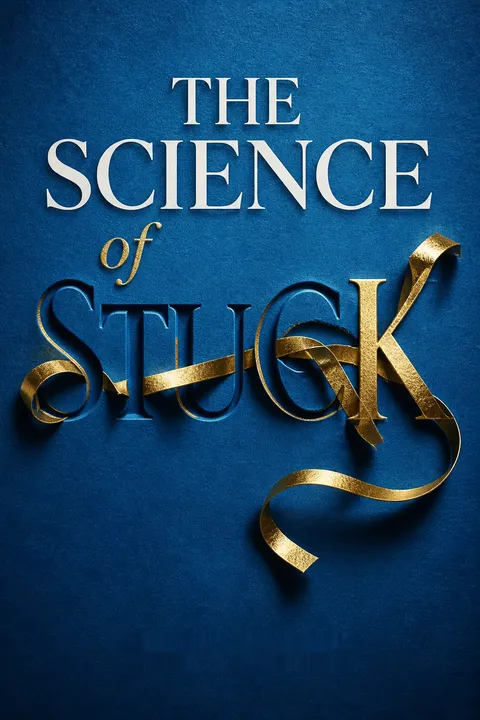
The Science of Stuck received mixed reviews, with an overall rating of 4.06 out of 5. Positive reviews praised its practical advice, relatable writing style, and innovative approach to self-help. Critics found the book lacking in scientific rigor, overly reliant on platitudes, and too surface-level. Some readers appreciated the actionable tools and exercises provided, while others felt the content was repetitive or unoriginal. The book's approach to trauma and mental health was both lauded and criticized. Several reviewers noted that the book might be more helpful for those new to self-help literature.
People Also Read





Glossary
Neuroception
Unconscious safety assessmentThe book uses neuroception for the nervous system's largely unconscious assessment of people, places, and situations as safe or dangerous. That assessment can differ from a person's conscious judgment. In Frank's model, a perceived threat can produce alarm or shutdown even when the person logically believes there is no immediate danger.
Allostasis
Predicting energy needsAllostasis is the brain's ongoing process of predicting and meeting the body's energy needs. Frank uses the concept to explain why the brain may mobilize too much energy or conserve too much, affecting attention, activity, and rest. The book presents inaccurate energy predictions as one possible contributor to feeling overwhelmed, restless, or shut down.
Shadow intelligence (SQ)
Awareness of disowned partsShadow intelligence, abbreviated SQ, is Frank's term for recognizing and understanding qualities or feelings a person has hidden or rejected. Examples include anger, envy, ambition, and creativity. The aim is not to act on every impulse, but to understand what it may signal and make deliberate choices instead of being driven by unexamined reactions.
The Four P's
Functions of staying stuckThe Four P's describe four possible functions of stuck behavior: it can prevent discomfort, protect a person from emotions, promote connection, and point to underlying problems. The framework encourages a curious inventory of what a behavior provides as well as what it costs. Understanding a behavior's function is presented as a starting point for changing it.
Conflict contract
Pre-agreed conflict rulesA conflict contract is an agreement made before an argument about how difficult conversations will be handled. Partners may specify timing, location, duration, physical space, and how either person can pause the discussion. Its purpose is to create conditions for safer communication before emotions rise, rather than attempting to invent rules in the middle of a conflict.
The Four O's
A relationship repair scriptThe Four O's are Frank's steps for making amends after a meaningful hurt: own the behavior, observe its impact, outline how to prevent a repeat, and offer to listen. The process emphasizes accountability and empathy rather than relying on a vague expression of regret. Frank also applies it to misunderstandings where a person can acknowledge impact without claiming intentional wrongdoing.
OODA loop
A decision-making cycleOODA stands for Observe, Orient, Decide, and Act. Developed by military strategist and pilot John Boyd, the framework is adapted in the book for responding to habits and impulses. A person observes the situation, attends to bodily and environmental context, considers available choices, takes one action, and checks the result before deciding what to do next.
Emotional regression
Feeling younger under stressEmotional regression is Frank's term for feeling emotionally younger or smaller than one's chronological age, often in situations involving family, authority, or fear of rejection. It can appear as indecision, people-pleasing, emotional outbursts, or difficulty setting limits. The book connects change to grieving childhood's end and making choices from an adult position.
Square of Stuck
A practical action planThe Square of Stuck is the book's final framework for moving from reflection to action. It asks readers to survey important areas of life, find a manageable opening, identify a few choices, distinguish personal influence from what cannot be controlled, and act. It also emphasizes learning from feedback and acknowledging small gains rather than waiting for a complete transformation.
FAQ
What's The Science of Stuck about?
- Understanding stuckness: The book explores why people feel stuck in life, emphasizing that it's a common human experience rather than a personal failing.
- Emotional inertia: It delves into emotional inertia, combining psychological insights with practical advice to help readers break free from these patterns.
- Anxiety as a guide: Britt Frank reframes anxiety as a tool for understanding personal challenges, viewing it as a "warning light" that signals when something needs attention.
- Practical strategies: The book offers evidence-based practices and personal anecdotes to help readers identify their patterns of stuckness and develop actionable steps to move forward.
Why should I read The Science of Stuck?
- Relatable content: The author shares her own journey, making the material accessible and relatable, providing comfort to readers who feel alone in their struggles.
- Actionable insights: It provides practical exercises and tools that can be implemented immediately, making it a useful guide for improving mental health and relationships.
- Expert-backed advice: Britt Frank combines her professional expertise as a therapist with scientific research, ensuring that the advice is grounded in credible psychological principles.
- Empowerment through knowledge: The book encourages readers to take control of their lives by understanding their emotions and making conscious choices.
What are the key takeaways of The Science of Stuck?
- Anxiety as a superpower: Anxiety is presented as a helpful signal rather than a hindrance, encouraging readers to listen to it as a guide to understanding their needs.
- Hidden benefits of being stuck: Staying stuck can provide subconscious rewards, such as avoiding discomfort or protecting oneself from emotional pain, which is crucial to recognize for change.
- Self-compassion importance: The author stresses the need for self-acceptance and compassion when addressing feelings of stuckness, empowering individuals to take control of their lives.
- Emotional regression concept: Recognizing emotional regression, where adults feel younger than their age, is crucial for personal development.
What are the best quotes from The Science of Stuck and what do they mean?
- “You are not crazy.”: This reassures readers that feelings of being stuck or anxious are valid and common, not indicative of a personal flaw.
- “Anxiety is a signal; this is a more effective framework for getting unstuck.”: Highlights the central theme that anxiety should be viewed as a helpful indicator rather than a disorder.
- “Staying stuck is one of the greatest obstacles to growth.”: Emphasizes the importance of recognizing and addressing feelings of stuckness as a call to action.
- “You are unbreakable.”: Reminds readers of their inherent strength and resilience in the face of challenges.
How does Britt Frank define anxiety in The Science of Stuck?
- Anxiety as a signal: Described as a "check-engine light" indicating when something needs attention, suggesting it serves a purpose rather than being inherently negative.
- Physical sensations: Emphasizes that anxiety consists of physical sensations rather than being a mental illness, aiding in more effective management.
- Necessary for growth: Argues that anxiety is essential for personal growth, prompting individuals to confront fears and make necessary changes.
What is the "myth of motivation" discussed in The Science of Stuck?
- Misunderstanding motivation: Challenges the notion that feeling unmotivated is a personal failing, explaining it often stems from a trauma response or survival brain.
- Survival brain concept: Introduces the idea that the brain may trigger a shutdown or procrastination response when perceiving danger, often mistaken for laziness.
- Reframing motivation: Encourages understanding that motivation is not a fixed trait but can be influenced by external and internal factors, helping to reignite motivation.
How does The Science of Stuck address relationships and intimacy?
- Conflict languages: Introduces "conflict languages," communication styles that create safety during difficult conversations, helping couples navigate conflicts effectively.
- Boundaries vs. requests: Differentiates between setting boundaries and making requests, emphasizing boundaries are about personal choices rather than controlling others.
- Making amends: Advocates for making amends instead of simply apologizing, providing a structured approach to repairing relationships and fostering deeper understanding.
What are the hidden benefits of staying stuck, according to The Science of Stuck?
- Avoiding discomfort: Staying stuck can prevent facing uncomfortable emotions or situations, feeling safer short-term but hindering long-term growth.
- Protecting from emotional pain: Serves as a protective mechanism against emotional distress, helping individuals understand their patterns and motivations.
- Promoting connection: Sometimes fosters a sense of connection with others who share similar struggles, creating a sense of belonging even if not beneficial.
How can I apply the concepts from The Science of Stuck to my life?
- Self-reflection: Encourages engaging in self-reflection to identify patterns of stuckness, helping understand triggers and motivations.
- Practical exercises: Provides exercises that can be completed in minutes, designed to help implement concepts in daily life.
- Seek support: Emphasizes the importance of seeking support from friends, family, or professionals, building a network for encouragement.
What is the significance of shadow work in The Science of Stuck?
- Understanding the shadow: Explains the "shadow" as parts of ourselves we hide or deny, with shadow work allowing confrontation and integration.
- Shadow intelligence (SQ): Introduces shadow intelligence, awareness, and acceptance of one's shadow parts, leading to greater self-acceptance and growth.
- Healing potential: Acknowledging and befriending shadow parts can access hidden strengths and creativity, leading to a more fulfilling life.
What is emotional regression as defined in The Science of Stuck?
- Feeling younger than your age: Occurs when adults feel emotionally smaller or younger, manifesting as indecisiveness and emotional outbursts.
- Triggered by stressors: Often happens in response to stressors, particularly during emotionally charged situations, helping manage emotional responses.
- Path to emotional adulthood: Outlines steps to reverse regression, including grieving the past and establishing healthy boundaries for maturity.
What is the OODA loop and how is it used in The Science of Stuck?
- Decision-making framework: Stands for Observe, Orient, Decide, Act, serving as a method for making decisions and breaking habits.
- Feedback mechanism: Emphasizes listening to feedback and adjusting actions, crucial for navigating challenges and avoiding stagnation.
- Encouraging action: Encourages taking small steps toward change, leading to significant progress over time, combating feelings of being stuck.
Download PDF
Download EPUB
.epub digital book format is ideal for reading ebooks on phones, tablets, and e-readers.








