

Key Takeaways
Make readers trust, feel for, and bet on the hero before plot takes over.
A person before a plot. The book’s central framework is Believe, Care, Invest: readers first accept the hero as a credible person, then feel the pressure of the hero’s situation, then trust the hero to confront it. In an opening, that bond can matter more than rushing through plot points. The book illustrates this with Katniss in The Hunger Games. She describes trying to get rid of a sick stray cat and later killing a wild cat for its pelt. These choices are harsh, but her hunger and survival instincts make them intelligible. Her opening establishes a vivid worldview, hardship, and competence, all before the main contest begins.
Not a virtue test. “Hero” here means the story’s central character, not necessarily someone morally admirable. The aim is not to make every reader approve, but to make the character compelling enough to follow.
The framework separates three questions that are often blurred together: Does this person feel real? Does the situation matter to them? Can they do something about it? That distinction gives writers a practical way to diagnose a flat opening. It also resembles ordinary social judgment, where people infer character from behavior, feel concern when they understand someone’s stakes, and assess whether that person has agency. The useful complication is that investment does not equal endorsement. A story can make a reader intensely curious about a corrupt or dangerous character without asking for moral approval.
Make invented people feel real through ordinary needs and peculiar worlds.
Life outside the plot. A hero feels more substantial when the story shows what occupies their life beyond the central problem: food, work, friends, reading, and the routines of a community. Such details imply a world that continues beyond the scene. In Twin Peaks, FBI Agent Cooper reports the components of an enjoyable lunch as carefully as he reports clues, making appetite part of his personality. A job can establish economic pressures and practical knowledge; friends suggest relationships formed before the plot arrived.
A world with texture. Sensory impressions, local expressions, professional jargon, music, and objects make a setting specific. The aim is not to decorate every paragraph. A few telling details can make a fictional world feel inhabited, especially when they reveal what the hero values or takes for granted.
These details do more than create atmosphere. They function like social evidence: a reader infers a character’s priorities from what they eat, notice, own, or complain about. Objects and routines are especially efficient because they can carry several kinds of information at once, including class, culture, and personal history. There is a limit, however. A catalogue of brands or sensory flourishes can feel like a writer displaying research rather than revealing a person. The strongest detail changes how the character is understood, not merely how much scenery is visible.
Repeat defining behavior until readers can predict, and recognize, the hero.
Pattern creates recognition. Readers enjoy discovering a character’s likely response, so an opening can establish personality through several actions that echo one another. In Little Women, the four sisters reveal their differences through what they say about being poor, what gifts they choose for their mother, and how they help around the house. The repeated contrasts let readers learn the group quickly without lengthy explanations.
Voice is behavior, too. A character’s word choices, sentence rhythm, recurring jokes, and habits of reasoning can make them recognizable. Bird calls one specialized aspect a “metaphor family”: the characteristic images, comparisons, and expressions shaped by a person’s background, work, or outlook. A character may also have a default trait that survives a major change. Tony Stark, for instance, changes his moral commitments while retaining his cocky manner.
Repetition gives the audience a small predictive model of the character. Once that model exists, a familiar response feels satisfying, while a deviation becomes meaningful. This is why repeated characterization need not be redundant: it teaches the reader what to notice. The risk is turning a person into a single gag or verbal tic. A useful pattern has room for contradiction, and the character’s surprises should emerge from pressures or choices rather than random exceptions. Recognition creates attachment; variation keeps recognition from becoming a cage.
Build a flaw from the shadow side of a genuine strength.
Make change costly. A flaw becomes dramatically useful when it grows from something valuable. Harriet’s sharp observation helps her understand people, but it can become cruelty. Woody’s leadership in Toy Story becomes possessiveness when he fears losing his place. Readers can want a character to change without wanting them to lose the strength that made them interesting.
Give the hero a mistaken map. Early goals and beliefs can be shortsighted, creating a gap between the hero’s understanding and the audience’s. Private fears, concealed histories, and public identities add further tension. The book favors family legacy over prophecy: learning that a relative took an adventurous path can suggest possibility without declaring the hero destined for greatness. Bilbo’s cautious Baggins side and adventurous Took inheritance pull him in competing directions, leaving his choice meaningful.
A strength-based flaw avoids the easy moral arithmetic of “bad trait removed, good person revealed.” It makes growth a negotiation between competing goods, which is closer to how people experience change. The legacy example also preserves agency: inheritance can shape a person’s sense of what is possible without deciding what they must do. A writer should still resist making every flaw a secretly admirable gift. Some destructive behavior causes real harm, and a character’s development gains credibility when the story takes those consequences seriously.
Make one tailored, disproportionate wound expose the hero’s deeper flaw.
Pain should reveal character. The book’s strongest opening harms do more than make the hero miserable. They expose a vulnerability or pressure the hero does not yet understand. In Raiders of the Lost Ark, Indiana Jones replaces a sacred idol with a bag of equal weight, then triggers the temple’s defenses. Bird reads the moment as a sign of Indy’s deeper problem: he treats religious value as if it were only a matter of measurement.
Calibrate the injustice. A useful wound is often partly deserved, but more severe than the hero’s mistake warrants. It should also strike this particular person where it matters. Irving’s elaborate effort to arrange his hair in American Hustle makes a handler’s deliberate disruption especially humiliating. The audience understands the sting because the story has shown what the ritual means to Irving.
This approach turns suffering into information. The audience is not simply told that a character has a flaw; the character’s own response to pressure makes the flaw visible. The imbalance between a minor mistake and an outsized consequence also invites moral attention: readers can acknowledge the hero’s part in the trouble while still judging the punishment excessive. That balance is more involving than either perfect innocence or deserved comeuppance. The writer’s challenge is to make the harm feel specific rather than engineered solely to manipulate sympathy.
Use embarrassment and deprivation, but stop before suffering becomes numbing.
Care has many registers. A hero need not face catastrophe to earn sympathy. Social isolation, unreturned affection, money trouble, illness, embarrassment, humiliation, and anxiety can all make a situation matter. In Holes, young Stanley imagines that the camp where he has been sent might include a lake, while readers already know the place is dry. The gap between his hope and the reality makes an ordinary expectation painful. In Mean Girls, Cady’s first school lunch ends with her alone in a bathroom stall, a small scene that makes social exclusion concrete.
Keep the audience with the hero. A deadline or fear of becoming a bad person can create tension before disaster strikes. But stacking hardship endlessly can backfire. If the hero seems only helpless, the reader may become weary instead of more compassionate.
The range of possible wounds is valuable because it avoids equating emotional stakes with physical danger. A social slight can matter deeply when the story has established what the hero hopes for and what is at risk. The distinction between empathy and pity is central: a reader needs access to the character’s experience, not just a record of misfortune. This also suggests a practical test for writers: Does each hardship deepen understanding or force a consequential choice? If it does neither, it may be accumulating misery rather than meaning.
Give readers evidence that the hero can act, adapt, and choose.
Pity is not enough. To invest in a hero, readers need signs of agency: skill, resourcefulness, courage, authority, wit, or an attitude that helps the character keep moving. Mookie in Do the Right Thing can move between the Black community and Sal’s white-owned pizzeria, giving him a perspective no one else in the neighborhood quite shares. In Chinatown, detective Jake Gittes uses cheap watches and a broken taillight to make surveillance easier, showing ingenuity rather than relying on force.
Agency can be imperfect. A hero’s defining move may be reckless or self-destructive, as when Lady Bird jumps from a moving car during an argument with her mother. The point is not that the choice is wise. It is active, revealing, and temporarily changes the situation. Defiance, including silence, can also be a form of power.
Agency gives readers a reason to expect the character’s choices to affect events. It need not look like conventional toughness: observation, refusal, humor, or the ability to cross social boundaries can be as consequential as physical strength. The book’s emphasis on competence also highlights a tension. A hero who solves everything too easily may reduce suspense, while a hero who never acts can exhaust attention. The most satisfying protagonists tend to have a real capacity that is also limited, so their successes feel earned and their failures remain possible.
Balance attraction with liabilities instead of assembling a flawless checklist.
The tools interact. Believe, Care, and Invest are not independent boxes to tick. A job can make a hero feel grounded but less exceptional; a weakness can invite sympathy while reducing confidence in the hero’s ability to act. The book adds “Liabilities” for traits that make a protagonist difficult to like or identify with. These are not defects to erase automatically. They can create the friction that makes a character distinctive.
Let one choice do several jobs. WALL-E, a mostly silent robot, becomes compelling through his solitary cleanup work, his collection of discarded objects, his repair skills, and his longing for connection. Each detail builds a world, reveals a personality, creates sympathy, or shows capacity. The goal is not maximum likability. It is enough coherence and curiosity that readers want to see what this person does next.
The framework is most persuasive when treated as a system of tradeoffs, not a recipe. Its attention to liabilities protects characters from becoming polished bundles of virtues, while its emphasis on multi-purpose details respects the limited attention of an opening. WALL-E demonstrates how behavior and objects can carry character without explanatory dialogue. Still, no checklist can predict every audience response. Genre, cultural context, and reader experience affect which traits feel charming, threatening, or implausible. The framework is best used to ask sharper questions, not to standardize every protagonist.
Mine real life for details, then shape them to the medium.
Observation beats polish. Bird recommends keeping a notebook of odd behaviors, painful moments, and impressive acts encountered in daily life. Such details can feel convincing precisely because they are not the neatest inventions. A memoir has another constraint: its writer cannot invent events, but can select and arrange them to create a clear narrative. Fiction can invent freely, yet benefits from the texture of lived observation.
Fit the form. A novel can linger in a character’s thoughts and sensory impressions; a film has to communicate efficiently through image, sound, and action. TV pilots must introduce characters and a continuing premise quickly, while a memoir depends heavily on the narrator’s perspective. Study openings in the form being written, borrow underlying techniques rather than exact scenes, and use suggestions as tools rather than mandatory rules.
A notebook trains attention, a skill that is easy to mistake for imagination. Ordinary life supplies awkward phrasing, odd habits, and conflicting motives that fiction often tidies away. The medium-specific advice is equally important: a detail that works as interior narration may become clumsy when spoken aloud or staged. There is also an ethical dimension, especially in memoir. Real people provide potent material, but selection and compression can reshape their lives in ways that deserve care. Observation is a source of authenticity, not a license to treat others as props.
Analysis
The book offers a practical theory of narrative attachment. Its central claim is not that plot is unimportant, but that plot has little force until a reader has a reason to care who experiences it. Believe, Care, and Invest divide that reason into three useful judgments: the character seems real, the situation has emotional weight, and the character appears capable of acting within it. The approach turns a vague editorial complaint, such as “the opening is not working,” into questions a writer can test against actual scenes.
Its strongest insight is that character is communicated through evidence rather than labels. A job, a food preference, a repeated reaction, or a peculiar object lets readers infer history and values. Repetition creates a model; contradiction gives that model depth. The book also understands sympathy as calibrated rather than sentimental. A harm matters most when it exposes a specific vulnerability, and a hero’s capacity to respond prevents sympathy from collapsing into passive pity.
The framework’s danger is the same as its convenience. Once turned into a checklist, it can encourage over-design: too many quirks, wounds, secrets, and demonstrations of competence crammed into an opening. The book explicitly resists that use, and its best examples support the warning. One detail can serve several functions, while a single powerful relationship or predicament may outweigh a dozen decorative traits. Nor does every story need an immediately capable central hero. Horror, ensemble fiction, and contemplative memoir can draw readers through vulnerability, uncertainty, or the pleasure of a particular voice.
The most useful reading of the method is diagnostic, not prescriptive. If a character feels thin, examine what the reader can observe. If the reader feels nothing, clarify the character’s stakes. If the reader doubts the hero, establish a credible form of agency, even if it is small or flawed. The aim is not universal likability. It is to create a person whose particular way of meeting the world makes the next page feel necessary.
Review Summary
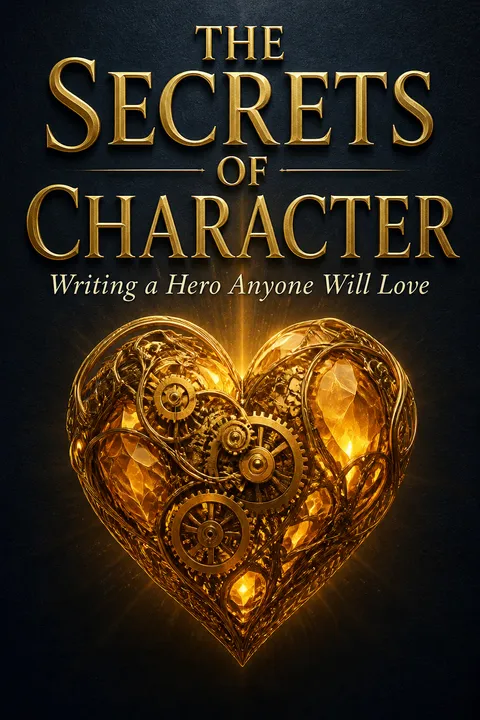
The Secrets of Character receives mostly positive reviews, with readers praising its practical advice, engaging writing style, and numerous examples from books, movies, and TV shows. Many find it helpful for developing believable and appealing characters, particularly in the crucial first pages of a story. Some reviewers note it's more useful as a reference guide than a cover-to-cover read. While a few critics find the examples excessive or the advice simplistic, most recommend it for both new and experienced writers seeking to improve their character development skills.
People Also Read



Glossary
Believe, Care, Invest
Three tests for attachmentA framework for analyzing how a story earns a reader’s interest in its central character. Believe asks whether the character and world feel credible. Care asks whether the character’s circumstances matter emotionally. Invest asks whether the reader has reason to trust the character to confront the problem. The elements can overlap, but they are distinct questions.
Liabilities
Traits that complicate sympathyThe aspects of a protagonist that make the character difficult to like, trust, or identify with. Liabilities may include selfishness, passivity, cruelty, or choices that alienate the audience. Rather than treating these traits as errors to remove, the book uses them as tensions to balance with credibility, emotional stakes, and evidence of agency.
metaphor family
A character’s characteristic imageryThe recurring comparisons, expressions, and verbal references a character tends to use. These may be shaped by occupation, culture, region, or psychological outlook. A consistent metaphor family can make a voice recognizable and suggest less obvious aspects of a character’s identity, such as a person’s training or history.
default argument tactic
A habitual way to argueA character’s recurring method for handling disagreement or trying to persuade someone. One person may rely on jokes, another on rules, evasions, or elaborate reasoning. Establishing this habit makes dialogue distinctive and gives the writer a way to show personality under pressure, even as the character’s circumstances or beliefs change.
Download PDF
Download EPUB
.epub digital book format is ideal for reading ebooks on phones, tablets, and e-readers.








