

Key Takeaways
Create value by combining imagination with judgment, not choosing between them
The Producer distinction. The book calls people who envision new value and assemble the people and resources to deliver it Producers. Performers excel at optimizing a known product, function, or system. Both matter, but breakthrough businesses need someone who can see what might be and assess what customers will actually embrace. These are not fixed personality categories or a ranking of human worth. They describe different contributions that organizations often separate into different jobs.
Practice the combination. Producers bring together perspectives that many companies keep apart: imagination and judgment, patience and urgency, invention and execution. The authors studied 120 self-made billionaires selected from a broader list of roughly 600. Their central argument is that the defining advantage was not a single trait or lucky idea, but a practiced ability to integrate these tensions and turn insight into a working business.
The distinction is useful because it shifts attention from charisma to the work of integration. Organizations often evaluate imagination through presentations and execution through metrics, then wonder why the handoff drains an idea of its force. A more revealing question is whether someone can move between the customer’s unmet need, the economics of serving it, and the practical steps that make it real. Still, the categories should remain tools for assigning work, not labels that excuse one person from operational discipline or another from creative thought.
More than 80% built fortunes in contested markets, not empty blue oceans
Find the overlooked opening. In the authors’ sample, more than 80 percent of the billionaires built their fortunes in mature, competitive industries. Their opportunities were often new combinations or better-designed offers inside familiar markets, rather than inventions in untouched territory. The authors describe these blended opportunities as purple oceans: established markets made newly valuable through a different product, customer experience, or business model.
Red Bull’s unusual category. Dietrich Mateschitz brought an Asian energy drink concept to Western consumers, adjusting the beverage, packaging it in a distinctive small can, and pricing it above ordinary soda. He did not need to invent beverages or advertising. He needed to make a familiar market feel newly relevant. Dyson, Spanx, and Starbucks likewise entered crowded categories with a sharper offer or a new way to frame what customers could buy.
This is a useful corrective to the romance of the untouched market. Competitive categories contain existing demand, suppliers, habits, and distribution, which can make a focused redesign more tractable than building an entirely new market. The strategic question becomes what incumbents treat as inevitable: price structure, product format, or target customer. The caveat is that crowding can signal real barriers, not merely a lack of imagination. A purple-ocean thesis earns credibility only when customer behavior and unit economics support it, not when a familiar product is given a novel story.
Study real customer friction, then use expertise to imagine what could replace it
Empathy needs experience. Empathetic Imagination is the ability to understand what customers need and translate that understanding into a new offer with broad potential. It is not simply asking customers what they want. It combines close knowledge of a market with curiosity about needs that current products fail to meet.
Start with a problem you know. Joe Mansueto struggled to compare mutual funds using piles of prospectuses. That frustration suggested a business: Morningstar made fund information easier to compare for ordinary investors. Sara Blakely wanted smooth-looking clothes under white pants, so she cut the feet from pantyhose and developed the idea behind Spanx. Their ideas were grounded in direct experience, but their value depended on serving many people with similar needs. Expertise and curiosity helped each founder recognize a larger pattern in a personal irritation.
Customer empathy is strongest when it joins observation with a testable account of why people behave as they do. That connects the book’s examples to modern user research: watching someone struggle can reveal needs that a survey misses, while prototypes can expose whether the proposed fix matters. Personal experience is a powerful sensor, but it is not a representative sample. The discipline is to treat one person’s annoyance as a hypothesis, then look for evidence across different users, contexts, and price points before declaring a mass market.
Prepare urgently for trends whose arrival you cannot schedule
Patient Urgency explained. This is the ability to prepare intensely for a long-term opportunity while accepting that its timing cannot be predicted precisely. It differs from both passive waiting and the pressure to make every idea pay off within a quarter. Producers act quickly where action creates readiness, then stay patient where the market itself must change.
A decade of groundwork. Steve Case built AOL for years before mainstream Internet use made its service a household name. The work included making the software easier to use, reducing connection costs, and building relationships with device makers. Eric Lefkofsky’s earlier online business arrived too early, before social networks could support the model he later pursued with Groupon. The lesson is not to forecast perfectly. It is to build expertise and capabilities, test with customers when possible, and notice when conditions have changed.
The distinction between urgency and impatience matters in technology and infrastructure, where complementary systems often need to mature together. Preparation can create options without requiring certainty about the exact launch date. The book also warns that relentless time pressure can crowd out imagination; organizational research on creativity similarly distinguishes focused execution from exploratory work. Yet slow horizons are not automatically wise. Waiting needs milestones, observable signals, and a willingness to stop when evidence contradicts the thesis, or patience becomes a dignified name for sunk-cost thinking.
Redesign the whole route to value, not just the product
Execution can be invention. Inventive Execution means redesigning the product, delivery, pricing, sales approach, or business model so an idea can reach customers and scale. Many companies treat these choices as inherited from existing practices. Producers treat them as open questions.
Change the delivery mechanism. Michael Jaharis found that a long-acting nitroglycerin pill did not work as promised. Rather than abandon the treatment, he developed Nitro-Dur, a skin patch that delivered the medication continuously. Mo Ibrahim faced a different design problem in African markets, where many customers had irregular incomes and subscriptions were a poor fit. Prepaid phone cards let people buy service in affordable increments. Both examples show that value may depend less on changing what is offered than on changing how people can use or pay for it.
The emphasis on design broadens innovation beyond appearance. A product’s adoption depends on the surrounding system: access, payment, distribution, incentives, and the experience of using it. This is close to service design and business-model innovation, where changing one interface can alter who participates in the market. The important constraint is coherence. A lower entry price, for example, must still support viable delivery and quality. Redesign is not a license to ignore operational limits; it is a way to make those limits part of the design problem rather than an excuse to stop.
Compare the danger of acting with the cost of standing still
Relative View of Risk. The book uses this term for judging a choice against its real alternatives, including the opportunity that may be lost by doing nothing. Producers are not portrayed as thrill seekers. They look for where the meaningful downside lies, what they can learn, and whether the potential gain justifies the exposure.
Choose the risk that fits the facts. Yan Cheung moved her paper business from Hong Kong to California because China’s growing demand could not be met with the limited local supply. She brought market knowledge and supplier relationships, even though she lacked English and local contacts. In a contrasting example, developer Alex Spanos walked away from a savings-and-loan purchase when no one could clearly say whether the company made money. One decision meant moving toward an opportunity; the other meant refusing an opaque deal.
This perspective counters loss aversion, the tendency to feel a possible loss more strongly than an equivalent gain. It also resembles decision analysis that compares an action with its best alternative, rather than treating the status quo as risk-free. The frame is powerful, but it can be abused: founders may call avoidable danger an opportunity cost. A sound relative assessment needs explicit assumptions, downside limits, and independent challenge. The point is not to make risk feel small. It is to stop letting familiarity masquerade as safety.
Pair a market-making integrator with a specialist who makes the promise work
Leadership Partnership. The book uses this term for a trusted working relationship between a Producer, who sees how an opportunity and its resources fit together, and a Performer, who brings deep skill in execution. The partnership is not a solo genius with assistants. It joins different capabilities around a shared business.
Two different strengths. John Paul DeJoria understood sales, marketing, and the professional beauty market. Hairstylist Paul Mitchell understood hair and could demonstrate the products to salons. When their promised investor funding vanished, the two started with only $700. Mitchell showed stylists why the products worked; DeJoria designed salon-only distribution and negotiated to pay the manufacturer when the product arrived. Each supplied a capability the other lacked, turning a fragile launch into a viable company.
Complementary partnership reduces the cognitive and operational burden on any one leader. Research on teams often finds value in combining distinct expertise, but difference alone does not produce synergy. Shared goals, decision rights, and trust determine whether disagreement sharpens a plan or turns into conflict. The book’s archetypes are best treated as flexible roles, not permanent identities. A market-making founder still needs feedback from specialists, and an operations leader may spot a new market. The practical test is whether the pair can challenge each other without losing accountability.
Keep enough runway to learn from failure and make another intelligent attempt
Resilience needs resources. Producers in the book often build more than one business, and their first ventures do not always produce their greatest success. Resilience is not simply a heroic attitude after a setback. It is the ability to recover, learn, and remain capable of acting again.
Protect the next move. Stephen Ross combined ambitious real estate development with income from syndication and rental properties. When the 1991 real estate downturn left him owing banks $120 million, those steadier cash flows helped support repayment; he paid the banks back within three years. Mark Cuban similarly urged young founders to keep expenses and debt manageable. These examples make a practical point: commitment to a big opportunity need not mean risking every resource at once. Financial breathing room preserves choices when plans go wrong.
This is a more useful account of resilience than celebrating failure as inherently productive. Recovery depends on what the person retains: cash, relationships, skills, reputation, and the ability to try again. In finance, this resembles preserving liquidity so an investor is not forced to sell at the worst moment. The caution is that a cushion cannot eliminate structural inequality. People with family resources or access to capital can absorb setbacks that others cannot. Good organizational practice therefore includes bounded experiments and shared learning, rather than expecting individuals to finance every risk personally.
Build workplaces where new ideas can be tested without making everyone a Producer
Match the role to the work. Performers remain essential for reliable operations, while Producers are needed when a task requires new combinations or a market-changing design. The authors argue that companies often promote people who optimize known systems, then put them in charge of challenges that require a different kind of thinking.
Make production possible. Give employees direct contact with customers, room to propose improvements, and small pilots that test ideas in the market. Join creative and operational staff early instead of handing a concept across departmental walls. Set clear milestones and stop initiatives when evidence is poor, but do not punish every reasonable failure as incompetence. Leaders and boards need to protect promising work from reflexive rejection, while keeping legal and ethical boundaries firm. The aim is not universal entrepreneurship. It is to recognize which work calls for production and support it accordingly.
The organizational argument is strongest when translated into concrete governance: who can sponsor an experiment, what evidence counts, and who can halt a project. Without those mechanisms, calls for creativity are mostly theater. At the same time, autonomy without scrutiny can waste resources or magnify a charismatic founder’s blind spots. A healthy system pairs protected exploration with transparent review and operational expertise. It also measures whether the organization learns from a failed pilot, not merely whether it can tell an inspiring story about having tried.
Analysis
The book’s most useful move is to treat extraordinary value creation as a pattern of work rather than a mysterious personality or a single lightning strike. Its Producer model connects customer understanding, market timing, business design, risk assessment, and complementary execution. This integrated account is more practical than advice centered on confidence or boldness because it suggests specific capabilities that can be observed and practiced.
The evidence deserves a careful reading. The authors studied 120 people selected from a Forbes billionaire list, then combined biographies with interviews. That design supports comparison and vivid case studies, but it cannot establish that the identified habits caused billionaire outcomes. The sample is selected precisely for extreme success, and retrospective interviews invite coherent stories to be built from uneven, contingent careers. The findings also reflect a narrow outcome measure: creating personal wealth, which is not identical to creating social value or durable public benefit.
Still, the examples expose an important organizational problem. Firms often divide discovery from delivery, then evaluate each side with different measures. That division can protect quality and efficiency, but it can also make an idea everyone’s responsibility and no one’s responsibility. The practical implication is not to abolish specialization. It is to connect customer-facing discovery, decision authority, and operational learning early enough that a concept can change in response to reality.
The model also risks over-crediting individual agency. Timing depends on infrastructure, regulation, capital, labor, and chance, and a founder’s account may understate the contributions of workers and partners. A disciplined application should therefore ask not only whether a leader displays Producer traits, but whether the organization makes experimentation safe, distributes credit, and limits downside. The book is best read as a guide to designing conditions for valuable experiments, not as a recipe for manufacturing billionaires. Its deepest lesson is institutional: protect the capacity to imagine and test new arrangements while retaining the competence to execute, evaluate, and stop them.
Review Summary
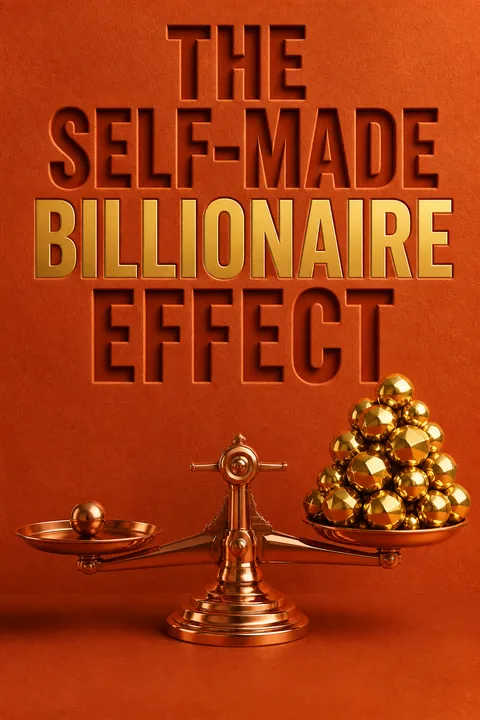
The Self-made Billionaire Effect receives mixed reviews, with an average rating of 3.67. Positive reviews praise its insights into billionaire mindsets and habits, highlighting concepts like "producer" vs "performer" roles. Critics find the book repetitive and lacking novelty. Some readers appreciate the research and anecdotes but feel the advice is too vague or tailored for corporate audiences. The book's exploration of traits like empathetic imagination, patient urgency, and risk perception resonates with many, while others find it oversimplified or biased towards certain types of success stories.
People Also Read







Glossary
Producer
Integrator of new valueA person who identifies an opportunity, imagines a valuable offer, and brings together people and resources to make it real. Producers combine customer insight with judgment and execution. The term describes a contribution to value creation, not a claim that one person can or should perform every function.
Performer
Specialist in known systemsA person who excels at a defined function, product, or operating system, improving its performance through specialized skill. Performers are essential to delivering reliably and at scale. In the book’s contrast, they are less likely than Producers to integrate multiple functions into a new market-making opportunity.
Empathetic Imagination
Customer insight turned possibilityThe ability to understand what customers, partners, or investors value and imagine a new offer that could serve those needs at scale. It combines practical knowledge of a market with curiosity and openness to alternatives. It is not mere empathy or brainstorming: the insight must connect to a plausible business opportunity.
Patient Urgency
Prepare now, wait wiselyA flexible approach to time that combines urgent preparation and action with patience about when a market or trend will be ready. It does not depend on accurately predicting an exact date. It involves building relevant knowledge, capabilities, and relationships while acting quickly when customer evidence or conditions call for action.
Inventive Execution
Redesign the path to marketThe practice of treating the full route from idea to customer as open to invention. This can include product design, delivery, pricing, distribution, sales, financing, and deal structure. Rather than accepting industry conventions as fixed, a Producer redesigns the arrangements needed to make an offer useful and scalable.
Relative View of Risk
Compare action with inactionAn approach to risk that evaluates possible losses alongside potential gains and the cost of missing an opportunity. It asks where the real exposure lies, how severe it would be, and what alternatives are available. It is not a general appetite for danger or a claim that uncertainty can be eliminated.
Leadership Partnership
Trusted complementary collaboratorsA working relationship in which people with different but complementary strengths jointly create and execute a business. The book often describes a Producer who integrates opportunities and resources working with a Performer who brings specialized expertise. Trust and mutual recognition allow each partner to contribute without treating difference as competition.
stage focus
Concentrate on the current phaseThe ability to hold a long-term vision while directing present effort toward the business’s immediate stage of development. A company may need to prove a small service before planning its much larger version. Stage focus keeps action grounded in what customers and operations can support now, without abandoning future ambition.
purple oceans
New value in existing marketsThe book’s term for opportunities created by blending a fresh approach with an established market. Rather than treating mature, competitive markets as exhausted, Producers look for unmet needs, new customer groups, or redesigned offers within them. The metaphor combines the familiar red-ocean market with the novelty commonly associated with blue-ocean strategy.
dealsmanship
Designing and selling agreementsThe ability to shape agreements so that a new idea can gain the resources, partners, customers, or distribution it needs. It goes beyond selling a known product. Dealsmanship may change the terms, risks, ownership, or context of an arrangement to make participation worthwhile for the other side.
design integrity
Keep experience aligned with visionThe consistency between a business’s central idea and the operational details that create the customer experience. Product choices, service, staffing, pricing, and the sales environment should reinforce the promise being made. The concept explains why a profitable addition may still damage a business if it undermines the experience customers value.
BATNA
Best acceptable alternativeAn acronym from negotiation practice meaning the best alternative to a negotiated agreement. The book applies it to career and business choices: understanding what a person can do if a job, partnership, or deal is declined clarifies the real stakes. It helps prevent the current arrangement from being mistaken for the only safe option.
Prospect Theory
How framing shapes risky choicesA theory of decision-making associated with Daniel Kahneman and Amos Tversky. It describes how people evaluate potential gains and losses relative to a reference point, with losses often weighing more heavily than comparable gains. The book uses it to explain why people may overestimate the danger of failure and overlook the cost of missed opportunities.
FAQ
What's The Self-made Billionaire Effect Deluxe about?
- Focus on Billionaires: The book delves into the unique traits and habits of self-made billionaires who have created massive value through entrepreneurial ventures.
- Key Concepts: It introduces concepts like "Empathetic Imagination," "Patient Urgency," and "Inventive Execution," which are crucial for understanding how billionaires navigate challenges.
- Research-Based Insights: The authors conducted extensive research, analyzing the behaviors and backgrounds of over 600 self-made billionaires to identify common patterns and practices.
Why should I read The Self-made Billionaire Effect Deluxe?
- Valuable Lessons: The book provides actionable insights for aspiring entrepreneurs and business leaders to cultivate the mindset necessary for success.
- Understanding Dualities: It emphasizes balancing judgment and imagination, helping readers develop a holistic approach to problem-solving.
- Real-World Examples: Compelling stories of well-known billionaires illustrate how their unique approaches can be applied in various business contexts.
What are the key takeaways of The Self-made Billionaire Effect Deluxe?
- Billionaire Mindset: Self-made billionaires possess a unique blend of empathy and imagination, allowing them to identify opportunities others overlook.
- Risk Perspective: They take a "Relative View of Risk," focusing on potential gains rather than the fear of failure.
- Integration of Skills: Successful billionaires integrate various skills, such as salesmanship and design thinking, to execute their ideas effectively.
What is "Empathetic Imagination" in The Self-made Billionaire Effect Deluxe?
- Understanding Customer Needs: It refers to the ability to deeply understand customer needs and desires, crucial for generating innovative business ideas.
- Combining Insight and Creativity: This concept merges empathetic insight with imaginative thinking to envision solutions that resonate with the target audience.
- Real-World Application: Examples include Joe Mansueto and Sara Blakely, who used Empathetic Imagination to create successful businesses.
How do billionaires exhibit "Patient Urgency" according to The Self-made Billionaire Effect Deluxe?
- Balancing Time Perspectives: It involves maintaining a long-term vision while acting with urgency in the short term to capitalize on immediate opportunities.
- Flexibility in Action: Billionaires operate at multiple speeds, understanding that timing is not static and must be prepared to act quickly.
- Examples of Success: Entrepreneurs like Eric Lefkofsky balance long-term goals with the need for immediate action.
What is "Inventive Execution" in The Self-made Billionaire Effect Deluxe?
- Designing for Success: It involves creatively designing and implementing business strategies to bring innovative ideas to market effectively.
- Attention to Detail: Emphasizes considering all aspects of a product's design, from customer experience to pricing and distribution.
- Case Studies: Examples like Michael Jaharis showcase the power of Inventive Execution in transforming businesses.
How do billionaires reverse the risk equation as discussed in The Self-made Billionaire Effect Deluxe?
- Relative Risk Assessment: They assess risks based on potential gains rather than focusing solely on the fear of loss.
- Resilience in Failure: Successful entrepreneurs view failures as learning experiences that inform future decisions.
- Real-Life Examples: Stories of billionaires like Yan Cheung illustrate focusing on opportunity rather than fear of failure.
What distinguishes Producers from Performers in The Self-made Billionaire Effect Deluxe?
- Integration of Skills: Producers integrate various skills, such as creativity and execution, while Performers excel in optimizing existing systems.
- Embracing Dualities: Producers hold multiple perspectives simultaneously, navigating complex challenges, whereas Performers focus on singular objectives.
- Value Creation: Producers are adept at creating new market value, while Performers maintain and optimize existing value.
How does The Self-made Billionaire Effect Deluxe redefine traditional views of entrepreneurship?
- Challenging Clichés: It dispels the myth that successful entrepreneurs are inherently risk-takers, highlighting their ability to assess risks relative to rewards.
- Focus on Empathy and Imagination: Emphasizes understanding customer needs and using imaginative thinking to create innovative solutions.
- Long-Term Perspective: Advocates for a shift from short-term gains to long-term value creation, encouraging patience and strategic pursuits.
What are the best quotes from The Self-made Billionaire Effect Deluxe and what do they mean?
- Mark Twain: "Whenever you find yourself on the side of the majority, it is time to pause and reflect." This emphasizes independent thinking and questioning conventional wisdom.
- Pablo Picasso: "Inspiration exists, but it has to find us working." Highlights that creativity and success come from hard work, not just luck.
- Andy Warhol: "They always say time changes things, but you actually have to change them yourself." Stresses the proactive nature of billionaires in taking charge of their circumstances.
How can I apply the lessons from The Self-made Billionaire Effect Deluxe in my own career?
- Cultivate Empathy: Understand your customers' needs and desires to identify opportunities for innovation.
- Embrace a Dual Perspective: Balance judgment and imagination in decision-making for creative solutions.
- Take Calculated Risks: Focus on potential gains rather than fear of failure to pursue bold ideas.
How can organizations cultivate a Producer-friendly environment according to The Self-made Billionaire Effect Deluxe?
- Encourage Innovation: Create a culture that values creativity and allows exploration of new ideas without fear of failure.
- Recognize and Reward: Acknowledge those who demonstrate Producer traits, providing support and resources for innovative projects.
- Foster Collaboration: Pair Producers with Performers to enhance successful outcomes through complementary skills.
Download PDF
Download EPUB
.epub digital book format is ideal for reading ebooks on phones, tablets, and e-readers.








