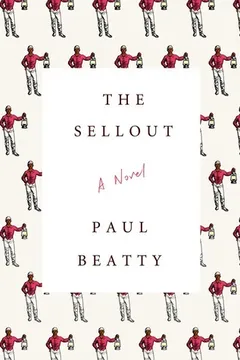


Plot Summary
Prologue
Five years of appeals have brought Bonbon,1 a Black farmer1 from the vanished Los Angeles town of Dickens, to the United States Supreme Court. He faces charges for imposing segregation and claiming an elderly Black actor3 as his slave. High on his own marijuana, he treats the courtroom less like a place of judgment than a stage where the country’s ideals can be tested against its habits.
His lawyer, Hampton Fiske,8 tries to contain the spectacle, while a Black justice erupts at Bonbon’s1 defense of the very institutions that once oppressed his people. The hearing opens on a question the case cannot settle: who gets to define justice?
The courtroom frame makes the novel’s central provocation literal: Bonbon’s experiment is not only a neighborhood stunt but a constitutional challenge. His intoxication and irreverence unsettle the expected posture of a defendant who should show contrition, while the Black justice’s anger exposes the pressure to make racial progress look coherent and respectable. By placing this confrontation before the childhood that shaped Bonbon, the book asks readers to judge his acts before learning their causes. The Supreme Court becomes a public theater in which inherited injury, political symbolism, and legal argument compete for authority.
The Skinner Box Son
Bonbon1 grows up on a farm in Dickens under the watch of his father, F.K. Me,2 a social psychologist who treats parenting as a series of experiments. He frightens his infant son1 with gunfire, stages a violent test of whether neighbors will help him, and later makes him administer electric shocks during a lesson in obedience.
When Bonbon1 chooses white dolls for their better accessories, his father2 burns the study’s findings and sends him to work the fields. Yet F.K.2 also calms armed neighbors as the community’s crisis negotiator and gathers locals at Dum Dum Donuts to discuss inequality.
Bonbon1 learns that his father2 can soothe a neighborhood more easily than he can comfort his own son,1 leaving the boy hungry for approval and unsure which version of his father2 to believe.
F.K.’s experiments turn abstract claims about race into bodily lessons for his son. Bonbon is not merely taught that social behavior is learned; he is made to experience violence as the instrument of that learning. The doll study’s failure is especially revealing: Bonbon notices what the experiment cannot measure, the material appeal of the toys, and his father responds by destroying the evidence rather than revising the premise. At the same time, F.K.’s public tenderness makes his private severity harder to dismiss. Bonbon inherits both his father’s appetite for testing systems and the emotional injury that makes those tests personal.
A Father Falls
During Bonbon’s1 college break, F.K.2 is shot by plainclothes officers after a traffic dispute turns fatal. Bonbon1 reaches the scene, recognizes his father,2 and carries his body to Dum Dum Donuts, interrupting the neighborhood intellectuals’ meeting.
When police block his way home, Bonbon1 refuses to surrender the body until a crisis negotiator clears a path. A wrongful-death settlement later gives him enough money to keep the family farm, where he buries his father.2 Dickens itself disappears from official maps and services amid corruption and redevelopment.
Bonbon1 becomes the neighborhood’s reluctant crisis negotiator, but without his father’s2 calming voice he struggles to manage emergencies. The town that once defined him is gone, and his inheritance is a working farm, a settlement, and no clear idea of who he is without his father.2
The officers’ shooting makes the father’s theories about power immediate, while Bonbon’s act of carrying the body rejects the police account of what should happen next. The farm is both inheritance and burden: the settlement keeps it alive, but it also preserves the labor and isolation that shaped his childhood. Dickens’s bureaucratic disappearance deepens the loss. The town is not destroyed in a single public catastrophe; it is erased through absent services and missing signs. Bonbon’s identity therefore loses both its paternal anchor and its civic address, turning the search for a home into a search for a self.
Hominy Wants a Master
After Dickens vanishes, Bonbon1 takes over some of his father’s2 crisis calls, including those involving Hominy Jenkins,3 an elderly former Little Rascal whose career left him famous to old viewers and invisible to everyone else. Bonbon1 finds Hominy3 trying to hang himself, then cuts him down.
Hominy3 explains that without Dickens he has lost the place where people remember him, and insists that Bonbon1 accept him as a slave. Bonbon1 tries to free him with legal papers, but Hominy3 rejects them and later demands a beating, which Bonbon1 gives before police intervene.
Hominy3 then urges him to think beyond individual rescues and restore the city itself. Bonbon1 installs a highway sign for Dickens and marks the town on his road atlas, giving their impossible project its first physical foothold.
Hominy’s demand turns a historical injustice into a present-day relationship that neither man can easily control. He seeks the degrading role because it gives him attention and a recognizable place in a town that has disappeared; Bonbon’s refusal to accept that logic cannot restore Hominy’s lost identity. The beating makes the arrangement morally dangerous rather than merely theatrical. Hominy’s advice redirects Bonbon from one-on-one rescue toward civic design, and the highway sign answers with a small but concrete act. The sign cannot make Dickens legally exist, yet it gives the two men a shared object around which to build their next attempt.
Bonbon Draws a Border
Bonbon1 presents his plan to revive Dickens at a Dum Dum Donuts meeting dominated by Foy Cheshire,5 his father’s2 old friend and a once-famous media figure. Foy5 dismisses the proposal while promoting sanitized rewrites of classic books.
The meeting’s Dickens-born gangster, King Cuz,7 quietly backs Bonbon1 and explains that the out-of-town intellectuals do not speak for the neighborhood. Bonbon1 begins painting a white line around Dickens. Residents extend it, guard the wet paint, add their own markings, and help complete the boundary.
The line does not restore the town’s charter, but it gives residents a visible edge to claim. Bonbon’s1 project shifts from private longing to public participation, and Foy5 recognizes that his son’s1 old friend may be challenging his influence over the Dum Dums.
The meeting stages competing ideas of representation. Foy wants to edit racial history into acceptable language; Bonbon wants to alter the streets where people live. King Cuz’s support matters because it comes from someone rooted in Dickens rather than from a polished outsider claiming to speak for it. The residents’ additions to the line also prevent Bonbon from remaining its sole author. His boundary begins as a personal gesture but becomes collective labor. At the same time, the painted border resembles both a town limit and a segregation line, foreshadowing how easily an attempt to build belonging can reproduce the divisions it claims to expose.
Hominy Takes the Seat
Bonbon’s1 former girlfriend, Marpessa Dawson,4 drives the number 125 bus. She and Bonbon1 renew contact after he rides her route, and Hominy’s3 birthday gives him an opening to propose a public experiment. He places signs on the bus reserving priority seating for seniors, disabled riders, and white passengers.
Hominy3 eagerly gives his seat to a white woman, while the other riders notice the signs and begin treating one another with unusual courtesy. Marpessa4 turns the bus into a rolling birthday party, and the discovery that the white passenger knows Hominy3 exposes how much of his performance depends on being seen.
The bus becomes safer and calmer, and Bonbon1 and Marpessa4 recover some of their old intimacy. His boundary experiment has moved from the street into daily public life.
The bus makes Bonbon’s theory testable in a confined space: passengers can see the signs, watch Hominy obey them, and decide how to respond. The resulting courtesy does not prove that segregation is humane; it shows how a visible rule can interrupt habitual hostility, at least temporarily. Hominy’s eagerness to yield his seat complicates any easy reading of the experiment, since the role gives him purpose even as it humiliates him. Marpessa’s presence links the civic project to Bonbon’s private life. Their renewed closeness grows through shared action, not a sudden declaration that the past has been repaired.
Career Day Castration
At Chaff Middle School’s Career Day, assistant principal Charisma Molina6 asks Bonbon1 to make farming interesting to students with little faith in the futures adults describe. He demonstrates how to castrate a calf, and a girl from a group home, Sheila Clark, takes the knife and performs the procedure herself.
The spectacle draws the children’s attention but also reveals how bleak their prospects seem to the adults around them. Charisma6 tells Bonbon1 that the bus experiment has reduced conflicts among riders, and he connects that change to the school’s already divided tracks and classrooms.
He proposes formal racial segregation, arguing that an invented white school across the street could motivate Chaff’s students. Charisma6 agrees to let him try, despite warning that Dickens has too many Mexican residents for the plan to fit neatly.
The calf demonstration makes education physical and uncomfortable, replacing Career Day’s promises of employment with an intervention on a living body. Sheila’s participation gives her agency within a grim lesson, while the surrounding students’ fascination exposes how little ordinary schooling has claimed their attention. Bonbon takes Charisma’s report about the bus as evidence that rules can change behavior, but his leap to racial segregation is a much riskier inference. The plan depends on a counterfeit school and on students’ desire to approach whiteness. His political experiment begins with a real tension: whether a humiliating symbol can produce better conditions without making humiliation the lesson.
Wheaton Academy Appears
Bonbon1 builds the Wheaton Academy from an enlarged school illustration and photographs of white students, placing it across from Chaff with a sign promising its arrival. The school does not exist, but its presence gives Chaff’s pupils a rival and an imagined standard.
Charisma6 tracks the results: attendance, behavior, and academic scores improve, and the school avoids immediate state intervention. Bonbon1 and Hominy3 spread the experiment through Dickens, placing racial signs in businesses, dividing library hours, and staging Whitey Week to let students sample the privileges associated with whiteness.
They also paint signs in neighboring Polynesian Gardens that make rival groups cross the railway tracks to discover identical messages. When Foy5 photographs the fake academy, a silent drive-by damages his car and an orange strikes him; he blames Bonbon,1 deepening their conflict.
The Wheaton Academy works because its fiction is materially persuasive: a fence, a picture, and a promise alter how students imagine their own prospects. The measurable improvement at Chaff gives Bonbon’s provocation a consequence beyond shock, but it does not establish that segregation itself produces learning. His wider installations turn public spaces into experiments whose participants cannot always consent. The identical signs in Polynesian Gardens offer a less coercive use of the same device, sending rivals across a boundary only to find shared wording. Foy’s damaged car marks the cost of making the experiment visible: Bonbon’s mockery has become entangled with genuine threat and personal resentment.
Hood Day Reunites Rivals
As Bonbon’s1 segregation schemes spread, he marks businesses, public facilities, and even a hospital with categories that expose the town’s ordinary exclusions. At the same time, his satsuma crop ripens after he shields the trees from excessive rain.
Children gather at his farm for the fruit, and its fragrance draws neighbors together despite the neighborhood’s foul industrial air. On Hood Day, gangs that once treated the park as contested ground share Bonbon’s1 pineapples and marijuana.
Two men from rival Polynesian Gardens factions stop fighting long enough to eat together, an effect Bonbon1 connects to the signs directing both sides to the same right side of the tracks. In the same period, school results continue to improve. Bonbon’s1 staged divisions have produced moments of common ground, though he cannot know how long they will last.
The fruit offers a form of persuasion unlike the signs: it draws people through taste and appetite rather than through imposed categories. Bonbon’s agricultural work becomes civic work when children and neighbors gather around the satsumas. The Hood Day scene makes the consequences of his signs visible in behavior, but the temporary truce does not erase the rivalries that brought the gangs there. His confidence remains qualified; he cannot prove that a painted message caused the change. The farm, school, bus, and park each produce different kinds of contact, suggesting that community is built through repeated encounters, not secured by a single clever rule.
The Missing Little Rascals
At a festival of racist cartoons, Hominy3 insists that the degrading performances in the old films were simply acting. A pre-med student, Butterfly Davis,10 appears in blackface with her sorority sisters, then shows Bonbon1 production ledgers proving that six Little Rascals films were withheld from public circulation.
The records show that Foy5 checked them out. Hominy3 recognizes Foy5 as the person who has kept the work he longs to have seen again. Bonbon1 takes them to Foy’s5 Hollywood Hills estate, only to find the house foreclosed and Foy5 living out of his car nearby.
Hominy3 and Butterfly10 search the empty property and find no films, though their new alliance comforts Hominy.3 The missing reels now connect Foy’s5 buried past to Bonbon’s1 growing challenge.
The festival makes the gap between performance and injury impossible to ignore. Hominy’s insistence that the material was acting protects the only career identity he has, while Butterfly’s blackface shows how racial spectacle can be repeated as satire and still wound. The ledgers replace rumor with evidence: Foy’s connection to the missing films is documented, even though their location remains unknown. Finding Foy impoverished complicates the image of a successful gatekeeper without absolving him. Hominy’s search becomes more than a bid for old entertainment; it is a demand to see the record of the role that shaped his life.
Foy Brings a Gun
When five white students arrive to enroll at Chaff, Foy5 joins their campaign against the school’s exclusion and brings a gun. Charisma6 refuses them entry, while Foy5 denounces the fake Wheaton Academy as a cruel promise. He fires at his Mercedes and then at Bonbon,1 who is wounded in the abdomen.
Hominy3 attacks Foy5 before officers pull him away. Bonbon1 is arrested for segregation and enslavement, and his attorney, Hampton Fiske,8 argues that the case exposes contradictions in civil-rights law rather than a conventional crime.
Foy5 is later found not guilty by reason of temporary insanity. Bonbon’s1 case travels through years of appeals toward the Supreme Court, where the novel’s opening hearing resumes. The dispute that began as neighborhood theater has become a national legal test.
The confrontation collapses the distance between symbolic provocation and physical danger. Foy’s opposition to the fake school is not merely intellectual; his gun turns the argument into an assault, and Bonbon’s wound gives the experiment a bodily cost. Charisma’s refusal to admit the white students preserves the policy she helped create while exposing its limits. Hominy’s attack is an act of loyalty and rage, not a legal solution. Hampton’s defense reframes the charges as questions about the gap between civil-rights ideals and lived outcomes. The Supreme Court frame keeps those questions open rather than allowing the novel’s satire to settle them neatly.
Dickens Returns to Weather
After Foy’s5 acquittal, Bonbon1 wins a civil suit that gives him control of the lost films. At a small gathering, he and the others watch the reels, including a final short that reveals young Foy5 performing in a degrading role.
The discovery helps explain why Foy5 hid the films, though it cannot undo what Hominy3 endured. Hominy3 then declares that he is done being Bonbon’s1 slave. As the party settles, Marpessa4 turns Bonbon’s1 attention to the television weather report.
The forecast lists Dickens alongside nearby cities, though the town has existed only in the residents’ minds and Bonbon’s1 markings. He runs outside, checks the temperature, and breaks down in tears: the place has returned to the map. His legal case, however, still awaits its Supreme Court decision.
The recovered films offer Hominy recognition, but not a clean restoration: the final reel implicates Foy in the very spectacle he later tried to control. Hominy’s decision to leave the slave role gives their relationship a necessary boundary, replacing coercive intimacy with the possibility of choice. The weather report completes Bonbon’s civic project through an institution that once erased Dickens, yet the return is modest and almost absurdly ordinary. A forecast, rather than a court order or official ceremony, names the town. The unresolved appeal preserves the novel’s refusal to confuse symbolic recognition with full justice.
Epilogue
In the closing section, Bonbon1 remembers the day after a Black president’s inauguration, when Foy5 drove through town waving an American flag as if the country had settled its debts. Bonbon1 asks who will answer for the harms done to Native Americans, immigrants, poor people, and the natural world.
Foy5 dismisses the question and says Bonbon1 will never understand. The exchange leaves the book on an unresolved note: a national milestone can feel like payment to one person and plainly insufficient to another.
The coda widens the argument beyond Bonbon’s case without offering a final accounting. Foy treats the inauguration as a receipt for historical obligations, while Bonbon insists that symbolic progress cannot settle debts owed to groups and places outside that celebration. Their disagreement echoes the novel’s central tension between representation and material repair. The flag is not simply a sign of patriotism; it becomes a claim about who has been paid and who remains outside the transaction. Foy’s refusal to engage leaves Bonbon without the closure he sought, but it also prevents the story from mistaking one political achievement for justice completed.
Analysis
The novel turns civic recognition into a material problem. Dickens’s residents know where they live, yet the town disappears from maps and public services; Bonbon1 responds with signs and boundaries that make the place visible again. His methods are deliberately indefensible, but they force abstract commitments to equality into ordinary settings: a bus seat, a school entrance, a library schedule, a hospital corridor. The resulting improvements do not validate segregation. They reveal how behavior changes when rules make hierarchy impossible to ignore, and how quickly an experiment becomes coercive when its subjects did not choose it.
Bonbon1 inherits this habit of experimentation from a father2 who taught social psychology through fear and humiliation. His schemes repeat that inheritance even as they challenge it. He wants to restore Dickens, but also to discover who he is without his father’s2 authority. The farm gives that search a practical form: fruit, livestock, and seasonal labor create relationships that speeches cannot. Satsumas bring children to the gate; shared food interrupts gang boundaries; a town finally reappears in a weather forecast. These modest outcomes matter precisely because they do not amount to historical repair.
Hominy’s3 attachment to racist roles and Bonbon’s1 acceptance of them expose a difficult distinction between chosen performance and inherited captivity. The recovered films make the spectacle visible, but recognition cannot give Hominy3 back the childhood or career that produced it. Likewise, the Supreme Court hearing offers visibility without a guaranteed verdict. The book ends by refusing the comfort of a completed moral account. Its satire insists that contradiction is not a temporary flaw to be edited out of public life; it is part of the evidence people must confront when they decide what justice has actually changed.
Review Summary
The Sellout garners polarizing reactions, earning an overall 3.74 rating. Many praise its razor-sharp racial satire, comparing Beatty's voice to Dave Chappelle and Richard Pryor, lauding its fearless examination of post-racial America through absurdist premises involving slavery and segregation. The humor is frequently described as hilarious and incendiary. Critics, however, find the relentless satirical tone exhausting, noting weak plot structure, repetitive themes, and inaccessibility for non-American readers. Most agree it's a daring, timely work deserving its Booker Prize, even if its dense cultural references and lack of narrative direction frustrate some readers.
People Also Read





Characters
Bonbon
Farm-born racial provocateurThe unnamed narrator is a Black farmer and reluctant neighborhood crisis negotiator raised in Dickens by a psychologist father. He approaches social life as something that can be tested, measured, or rearranged, but his dry humor often hides uncertainty about where he belongs. Farming gives him practical competence and a private language of care; his father’s2 experiments leave him wary of emotional dependence and hungry for approval. His bond with Hominy3 grows through responsibility, while Marpessa4 draws him back toward intimacy he has never learned to handle gracefully. Bonbon’s most revealing trait is his tolerance for contradiction: he can recognize a harmful symbol and still try to use it as a tool.
F.K. Me
Experimental father and mentorBonbon’s1 father is a social psychologist who applies academic theories to his family and neighborhood with unnerving conviction. He believes Black people need tools for liberation, yet his lessons often make his son1 the subject rather than the partner. At home he is controlling and emotionally withholding; in public he is patient, persuasive, and willing to approach people others fear. He founds the Dum Dum Donut Intellectuals as a place for local debate and social observation. His life embodies the gap between a person’s humane ambitions and the damage caused by the methods he uses to pursue them.
Hominy Jenkins
Forgotten child-star survivorHominy is an elderly former Little Rascal whose early screen career trapped him in racist comic roles. He remembers studio life vividly and insists that performance gave him a craft, even when others see only humiliation. After Dickens disappears, his hunger for an audience becomes inseparable from his longing for the town that once recognized him. He is theatrical, volatile, funny, and capable of startling insight, though he often treats an imposed identity as the only identity available. His relationship with Bonbon1 mixes affection, dependency, and provocation, forcing both men to ask what care means when one person insists on a degrading role.
Marpessa Dawson
Bus driver and first loveMarpessa is a skilled Los Angeles bus driver, Bonbon’s1 childhood companion, and the person whose judgment can puncture his elaborate theories. She is observant, funny, and toughened by a job that brings her into constant contact with conflict and exhaustion. Her history with Bonbon1 carries genuine affection but also frustration at his passivity and emotional distance. She helps him test his ideas in public, yet she is not simply his accomplice: she questions his motives and insists on being seen as a person rather than a symbol in one of his experiments. Her practical care contrasts with his tendency to turn every feeling into an argument.
Foy Cheshire
Ambitious public intellectualFoy is a media personality and former friend of Bonbon’s1 father2, drawn to public influence and the authority of being recognized as a spokesman. He is quick with presentation and less comfortable with ideas that resist easy packaging. His career depends on turning complex racial history into arguments, books, and television projects that audiences can consume. Foy’s relationship with the Dum Dum group is shaped by status as much as fellowship, and his rivalry with Bonbon1 grows from their competing claims about how Black identity should be represented. Beneath his polish, he is vulnerable to professional failure and fears losing the audience that once confirmed his importance.
Charisma Molina
School administrator and strategistCharisma is Chaff Middle School’s assistant principal and Marpessa’s4 close friend. She is practical, politically alert, and deeply aware that her students face poor resources and narrow expectations. She does not accept Bonbon’s1 proposals uncritically, but she is willing to test an idea when ordinary reforms have failed to change student behavior. Her Mexican-American identity also complicates the neat racial categories Bonbon’s1 project depends on. Charisma’s authority comes from doing the daily work of protecting students, not from claiming that a single policy can solve their circumstances.
King Cuz
Gang leader with civic instinctsKing Cuz is a respected Dickens gang leader who attends the Dum Dum meetings and understands the neighborhood from the inside. He speaks little in public forums, but his observations often cut through the academic posturing around him. Cuz values local loyalty and recognizes how easily outsiders turn the community into an object of study. His support gives Bonbon’s1 plan a foothold among residents, while his capacity for both violence and surprising civic insight keeps him from becoming a simple comic sidekick.
Hampton Fiske
Defense lawyer and old friendHampton is Bonbon’s1 longtime friend and a criminal defense attorney who represents people with few resources. His flamboyant style masks disciplined preparation and a belief that the law’s promises deserve to be tested, even when a case appears indefensible. He knows how to turn Bonbon’s1 absurd circumstances into legal questions without pretending the underlying harms are simple. Hampton’s role is to translate a neighborhood experiment into language the courts must hear.
Stevie Dawson
Marpessa’s volatile brotherStevie is Marpessa’s4 brother, a dangerous man recently released from prison with conditional freedom. His relationship with MC Panache and King Cuz7 links him to Dickens’s gang culture, but his return also shows how reputations and loyalties travel across the neighborhood. Stevie is quick to threaten, yet capable of tenderness toward Bonbon’s1 fruit and farm. He embodies the uneasy overlap between community protection and street violence.
Butterfly Davis
Sorority archivist and studentButterfly is a pre-med student and member of a Black sorority whose use of blackface turns an attempt at provocative satire into an unsettling public spectacle. She has done research into the Little Rascals’ production history and brings Bonbon1 evidence from studio ledgers. Her curiosity and archival work give Hominy’s3 memories a documentary counterpart. Butterfly is both participant in racial performance and investigator of its history, a contradiction the novel refuses to make comfortable.
Nestor Lopez
Neighbor and rodeo riderNestor is a Mexican-American neighbor from the Lopez family, known for his rodeo riding and showmanship. He grew up near Bonbon1, sharing films and food with him before gang divisions pulled their lives apart. His appearances at school events and neighborhood gatherings show how shared childhood can survive beneath racial and territorial boundaries.
Plot Devices
The vanishing city
Makes belonging visibleDickens disappears from official signs, services, and maps, leaving residents with a home they can inhabit but struggle to name. Bonbon1 answers with a highway sign, a hand-marked road atlas, and a painted perimeter. These objects make civic recognition tangible while exposing its arbitrariness: a place can feel real to its residents and still be treated as nonexistent by institutions. The device drives Bonbon’s1 project and shapes the novel’s question of whether recognition alone can repair a community.
Segregation signs
Rearrange public behaviorBonbon1 posts false signs assigning people to spaces by race, first on Marpessa’s4 bus and then across businesses, schools, and public facilities. The signs provoke anger and expose familiar assumptions, but they also prompt some residents to act with greater care toward one another. Their effects are uneven and never prove that segregation is just. They function as social experiments whose results depend on context, consent, and the people forced to live under the rules.
The Wheaton Academy
Turns aspiration into pressureThe supposed all-white school opposite Chaff Middle School is only an illustration attached to a construction fence. Yet its students, facilities, and promise of access appear convincing enough to change how Chaff’s pupils behave and perform. The fake institution gives Bonbon1 a way to expose the power of proximity to privilege, while the improving scores complicate any assumption that the hoax is merely a joke. It is both a symbol of unequal opportunity and an intervention with measurable effects.
Hominy’s film archive
Preserves a buried historyThe missing Little Rascals reels connect Hominy’s3 personal memories to the history of racist entertainment. Production ledgers establish that six films were withheld and that Foy5 had checked them out, turning rumor into evidence. When the films finally appear, they complicate the relationship between performance, exploitation, and the people who profited from it. The archive gives Hominy3 a chance to see more of his own screen history, while showing that recovered evidence cannot reverse the harm embedded in it.
Download PDF
Download EPUB
.epub digital book format is ideal for reading ebooks on phones, tablets, and e-readers.








