

Key Takeaways
When ownership stays concentrated, security reforms can harden into legally enforced dependence.
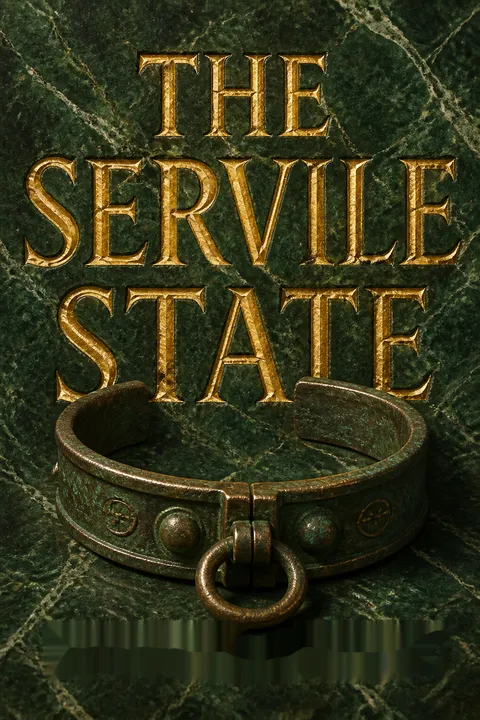
Belloc's central warning. The Servile State is a society where a large class is compelled by law to work for the benefit of owners. Workers might receive greater security and a guaranteed minimum standard of living, but they lose the legal freedom to refuse work or bargain by withholding their labor. Belloc argues that modern industrial society, with production controlled by a minority, tends toward this arrangement as a stable answer to insecurity. He is describing a tendency, not claiming that every safety net is slavery, and he says the label concerns a society's legal structure rather than whether its conditions are comfortable.
Security has a price. The danger, in his account, is that reforms may protect workers while leaving ownership concentrated and making workers' obligations enforceable. The result would preserve owners' control while changing workers' status from nominally free citizens to a legally defined laboring class.
What's useful here is the insistence that policy be judged by more than the benefit it provides. A provision can ease hardship while also changing who has the right to refuse, who sets the terms, and what penalties follow noncompliance. Those questions make Belloc's warning a tool for examining institutional design, not just rhetoric about freedom. The caution is that his definition places heavy weight on legal compulsion. Public support tied to reasonable conditions can protect people without making them a subordinate class, so the boundary depends on the scope of the obligation and the person's real ability to contest it.
Treat access to productive assets as a condition of real bargaining freedom.
Ownership shapes choice. Belloc divides production into land, labor, and capital. Land means nature's resources; labor is human effort; capital is wealth set aside for future production, such as tools or supplies. The means of production are land and capital together. A person who owns only labor may be politically free, yet unable to earn a livelihood without an owner's permission. In Belloc's view, the ability to refuse a job is a meaningful bargaining tool only when refusal does not mean immediate destitution.
The outside option matters. A worker may formally accept or reject an employment contract, but if the alternative is starvation, the choice is sharply constrained. Belloc calls a society capitalist when a minority owns productive assets and most people must sell their labor to live. This distinction between legal freedom and economic dependence anchors his argument.
Belloc's point anticipates a basic bargaining insight: negotiating power depends partly on what happens if a deal is rejected. An independent source of income, tools, land, or savings can make refusal credible; without one, the written freedom to say no may be hollow. That makes asset distribution relevant to workplace autonomy, not merely to wealth statistics. Still, ownership is not the only route to bargaining power. Collective organization, enforceable labor rights, and income support can improve a worker's alternatives, even when personal ownership of productive assets remains limited.
Track who owns the tools before blaming machinery for workers' dependence.
History turns on control. Belloc argues that European society began with slavery as a normal economic institution, then gradually changed as customary arrangements altered how laborers lived and worked. On the Roman villa, enslaved people increasingly kept the produce beyond customary dues and became attached to particular holdings. Over centuries, Belloc says, the serf came to function much like a peasant: holding land, inheriting it, and owing fixed obligations rather than being treated as a movable possession.
Ownership spread beyond farms. He points to medieval guilds, self-governing associations of craftspeople and traders, as another check on the creation of a propertyless workforce. Guild rules and shared institutions, in his account, helped members retain productive tools and limited the rise of monopolizing owners. This was not public ownership of everything, but a society in which property was widely held.
The historical sequence makes an important analytical move: technologies do not determine who benefits from them; institutions governing access and control do. The same tool can support independent producers or strengthen an employer's command, depending on who owns it and how production is organized. Belloc's account also reminds readers that ownership rules can be embedded in customs and associations, not only in individual title. Its weakness is that a long, varied history is compressed into a single arc from slavery to broad ownership. That makes the pattern vivid, but leaves less room for regional differences and competing causes.
Protect broad ownership before shocks turn small losses into oligarchy.
England's turning point. Belloc locates the decline of widespread property in political decisions that began before the Industrial Revolution. In his account, Henry VIII's dissolution of the monasteries transferred a large share of land and wealth out of church hands. The Crown initially took possession, but powerful landowners secured much of the confiscated property. Belloc estimates that the transfer shifted more than a fifth of the country's wealth into the hands of an already wealthy class.
Industry inherited the imbalance. By the time machinery and factories transformed production, Belloc says England already had many people without productive property and a concentrated class able to finance new industry. He therefore rejects the claim that machinery itself created capitalism. The inventions expanded production, but ownership patterns shaped who controlled the factories and received the gains.
The distinction between a technological shock and the ownership structure receiving it remains a powerful way to read economic change. It asks who can finance the new system, who can adapt, and who captures its returns. Belloc's account makes policy and political power central rather than treating inequality as an automatic side effect of innovation. Its historical explanation is also highly concentrated: he gives the monastic land transfer decisive weight. Readers can retain the institutional question without treating this single account as a complete explanation of England's economic transformation.
Equal contracts cannot create freedom when one side controls every livelihood.
Law and life diverge. Belloc sees capitalism as unstable partly because its legal language assumes citizens who can own property and freely make contracts, while its economic reality leaves most people without productive assets. A contract may be legally voluntary, but a worker facing hunger has little practical ability to reject the employer's terms. Belloc describes this as a conflict between formal equality and material dependence.
Insecurity destabilizes the system. Workers without property depend on wages, which disappear during unemployment, illness, or old age. Owners, by contrast, can receive income from accumulated assets. Competition among owners can also create overproduction, failed businesses, and insecure jobs. Belloc argues that the system then limits competition and provides some public support, changing its original promise of universal political freedom in order to remain workable.
This is one of Belloc's sharpest distinctions: formal consent and meaningful consent are not identical when one party controls access to necessities. It directs attention to the background conditions under which contracts are made, rather than treating a signature as proof of equal power. The analysis also connects personal insecurity with system-level instability, since the loss of income affects entire households and communities. A qualification matters, however: competition can produce insecurity, but it can also lower prices and spur useful innovation. The central question is how gains and risks are distributed, not whether competition exists at all.
Capitalism's three exits are shared ownership, public control, or compelled labor.
Three possible settlements. Belloc says a society with concentrated private ownership and formally free citizens cannot remain stable indefinitely. He identifies three broad alternatives: spread productive property among many citizens, place it under public officials, or legally compel non-owners to work for owners. He calls the first a Distributive State, the second a Collectivist State, and the third a Servile State.
The easiest route may mislead. Belloc argues that public acquisition seems more attainable than rebuilding widespread private ownership because it can use existing administrative and financial machinery. Yet reforms that promise security without transferring control of productive assets may leave owners in place and bind workers more tightly to their jobs. His central prediction is that attempts to soften capitalism through regulation can drift toward the third settlement rather than achieve genuine public ownership.
The three-part map clarifies a debate that often treats capitalism and socialism as the only alternatives. It forces a separate question: who owns productive assets, and who can compel whom to work? That distinction helps explain why a policy's stated destination may differ from its institutional effects. The map is also deliberately stark. Real economies combine public services, private firms, cooperatives, and social insurance, so these categories work best as dominant tendencies rather than mutually exclusive boxes. Belloc's challenge is to identify which tendency is gaining power and what rights remain available to those affected.
Judge social insurance by whether it protects people without fixing them in status.
Status is the test. Belloc does not define servile policy as any law that regulates work or protects workers. A general safety rule, such as requiring guards on dangerous machinery, applies to citizens without making a legal class out of workers. The warning sign, for him, is a law that distinguishes owners from employees and attaches special duties or obligations to each group because of that status.
Protection can carry control. Writing in 1912, Belloc treats compulsory worker insurance as an early example: he says it classified people by employment and required employers to help administer the scheme. He also criticizes proposals for statutory wage floors, compulsory arbitration, and labor colonies, arguing that guarantees of support could be paired with legal pressure to accept work. These are Belloc's forecasts and interpretations of his period, not proof that every such policy leads to forced labor.
This distinction gives a practical method for evaluating protective laws: ask whether they create a durable subordinate category, who administers the benefit, and whether recipients retain meaningful ways to refuse or appeal. It is a stronger test than simply labeling regulation either benevolent or oppressive. Belloc is right that a benefit can be designed alongside surveillance or coercion. Yet his suspicion can obscure another possibility: collective protections may increase a worker's ability to refuse unsafe or underpaid work. The policy's consequences depend on both the benefit and the rights attached to it.
Publicly buying productive assets can leave private investors collecting the same returns.
Purchase is not transfer without cost. Belloc challenges the idea that a government can gradually buy out all private owners without confronting the underlying ownership struggle. In his example, owners receive a continuing return on their assets. The state must either pay them from future profits, borrow money, or tax the public to finance the purchase. If the state pays a premium while owners reinvest the proceeds, private capital may simply move elsewhere.
Debt can preserve dependence. Belloc argues that municipal and national purchases often require loans, interest, and repayment. A public service may change managers while private investors continue receiving income from the debt used to acquire it. He allows that a successful purchase can transfer a particular asset, but doubts that piecemeal borrowing can eliminate concentrated ownership across the economy.
Belloc usefully separates public management from public ownership without private claims attached. A service can be run by public officials while its financing still channels returns to private holders of debt. This makes the balance sheet part of the political argument, not a technical afterthought. The analysis does not establish that borrowing is always a disguised transfer to capitalists: public borrowing can finance useful assets, and its effects depend on the terms, the returns, and who bears the risk. Belloc's durable question is whether a reform changes control and income flows, or merely changes the operator.
Rebuild liberty by distributing productive property, not just distributing income.
Belloc's alternative is ownership. He argues that the answer to concentrated wealth is not simply to divide income more evenly, but to give many households and working communities control over productive assets. His historical examples include peasant holdings and guilds, where producers could own tools and participate in self-governing institutions. Joseph Pearce's preface presents practical directions associated with this tradition: support small businesses and cooperatives, resist monopolies, and move political power closer to local communities.
Security and independence differ. A wage increase may improve living standards while leaving a worker dependent on an employer's decision to provide work. Ownership can offer a more direct basis for self-direction, though Belloc does not claim every family must own an identical share of every asset. His closing contrast is between broad economic independence and a population made secure mainly through obligations enforced from above.
The distinction between income redistribution and control of productive resources changes what counts as a successful reform. Income can relieve immediate hardship; ownership can also alter who makes decisions and who has an independent route to livelihood. Belloc's emphasis on small-scale ownership and local institutions therefore links economic design to political decentralization. The challenge is practical: modern production can require large infrastructure and coordination that scattered individual ownership cannot easily provide. His principle is most useful when treated as a demand to broaden participation and counter concentrated power, not as a claim that every enterprise should be small.
Analysis
The Servile State is a political-economic warning organized around one question: what happens when most people depend on owners for access to work, while law still treats their bargains as freely chosen? Belloc's answer is that a capitalist society seeks stability by guaranteeing workers some security while making their labor more enforceable. His most enduring contribution is the separation of three things that public debate often blurs: who owns productive assets, who receives protection, and who has the power to refuse work.
His historical narrative gives the argument force. The transition from ancient slavery to medieval peasant holdings, and then to concentrated ownership in England, presents economic arrangements as institutions made and remade by political choices. The account also makes a memorable claim: industrial machinery did not dictate capitalism; concentrated ownership shaped how machinery was used. Yet the story is selective. Belloc gives decisive weight to the dissolution of the monasteries and presents the medieval order as unusually distributive. Those claims illuminate his interpretation, but the text does not offer a comparative history capable of settling every competing explanation.
The argument's greatest limitation is its tendency to treat public protection as a path toward compulsion. Social insurance, minimum wages, and safety rules can impose duties, but they can also strengthen workers' ability to survive without accepting any particular employer's terms. Their effects depend on enforcement, democratic accountability, and whether recipients can appeal decisions or refuse unsuitable work. Conversely, private property can support independence while concentrated ownership can leave most people with little practical choice.
Belloc's framework is therefore most valuable as a diagnostic, not a prophecy. For any reform, ask who controls productive resources, who carries the costs, what happens when someone refuses a job, and whether the policy changes the distribution of power or only manages its consequences. Those questions preserve the book's urgency while allowing more than its three stark social outcomes.
Review Summary
The Servile State receives generally positive reviews for its insightful analysis of capitalism's instability and its prediction of a transition to a servile society. Readers appreciate Belloc's historical perspective and critique of both capitalism and socialism. Some find the prose challenging but value the book's relevance to modern economic issues. Critics note occasional simplifications and outdated historical interpretations. Overall, reviewers commend the book for its thought-provoking ideas on economic systems and its advocacy for distributism as an alternative to capitalism and socialism.
People Also Read




Glossary
Servile State
Legally compelled labor systemA society in which a substantial class is legally compelled to work for the benefit of those who own productive assets. In Belloc's definition, workers may receive guaranteed subsistence or other protections, but they are distinguished from owners by a status that limits their freedom to refuse labor. The system need not involve direct personal ownership of workers.
Capitalist State
Concentrated private productive ownershipBelloc's term for a society where private ownership of land and capital is restricted to a minority, while most citizens lack useful control of the means of production. Citizens remain legally free, but non-owners must sell their labor to access a livelihood. Belloc considers this combination unstable because it joins formal political freedom with widespread economic dependence.
Distributive State
Productive property held widelyBelloc's name for a society in which productive property is widely distributed among families and working citizens, rather than concentrated in a small owning class or held entirely by public officials. Its purpose is to make economic independence a normal condition of citizenship. Belloc associates this arrangement with peasant holdings, guilds, and other institutions that restrain the growth of a propertyless class.
Collectivist State
Production publicly administeredA society in which the means of production are owned or managed by political officers on behalf of the community. Belloc treats it as one proposed response to capitalism, distinct from spreading private ownership among citizens. He argues that attempts to create it can be deflected if they improve workers' security without transferring control of productive assets from private owners to public bodies.
Proletariat
People without productive propertyBelloc uses this term for people who possess their labor but lack useful control over land and capital, the means of production. They must generally work on terms set by owners in order to obtain a livelihood. The term describes an economic position, not simply a particular occupation or level of income.
Effective Desire of Accumulation
Minimum return needed to saveBelloc's term for the minimum return on accumulated capital that, in a particular society and period, owners will accept before choosing to spend rather than save. In his argument about public buyouts, this threshold helps explain why owners expect a continuing income in exchange for transferring assets. He uses it to argue that financing broad expropriation through purchase cannot make the underlying cost disappear.
FAQ
1. What is "The Servile State" by Hilaire Belloc about?
- Central Thesis: The book argues that modern industrial society, particularly in England, is inevitably moving toward a new form of slavery—what Belloc calls the "Servile State"—where a majority are legally compelled to work for the benefit of a minority who own the means of production.
- Historical Perspective: Belloc traces the evolution of European society from ancient slavery, through the medieval Distributive State (where property was widely owned), to the rise of Capitalism and its inherent instability.
- Key Argument: He contends that unless property is widely redistributed, society will stabilize not through socialism or collectivism, but by legally enforcing labor upon the propertyless, thus re-establishing a form of slavery.
- Scope: The book combines economic, historical, and philosophical analysis to critique both capitalism and socialism, and to warn of the dangers of state-enforced servitude.
2. Why should I read "The Servile State" by Hilaire Belloc?
- Insight into Modern Society: The book provides a unique and prescient analysis of the evolution of economic systems and the risks of state-enforced labor, which remain relevant in discussions about welfare, labor laws, and economic freedom.
- Historical Context: Belloc offers a sweeping historical narrative that connects ancient slavery, medieval property distribution, and modern capitalism, helping readers understand the roots of current social and economic issues.
- Alternative Perspective: Unlike many contemporaries, Belloc critiques both capitalism and socialism, advocating for a "Distributive State" where property is widely owned, offering a third way often overlooked in mainstream discourse.
- Influence on Later Thinkers: The book influenced figures like G.K. Chesterton and George Orwell, and is foundational for understanding the distributist movement and critiques of both state socialism and unrestrained capitalism.
3. What are the key takeaways from "The Servile State" by Hilaire Belloc?
- Instability of Capitalism: Belloc argues that capitalism, defined by a minority owning the means of production, is inherently unstable and cannot last.
- Return to Servitude: Without a restoration of widespread property ownership, society will stabilize by legally compelling the propertyless to work for the property-owning minority, effectively reintroducing slavery.
- Critique of Socialism: Attempts to achieve socialism or collectivism in a capitalist society will not result in true collective ownership, but rather in a bureaucratic form of servitude.
- Distributism as Solution: Belloc advocates for distributism—a system where property is widely distributed among the population—as the only alternative to both capitalism and the servile state.
4. How does Hilaire Belloc define the "Servile State" in "The Servile State"?
- Legal Compulsion to Labor: The Servile State is defined as a society where a significant portion of the population is legally compelled to work for the benefit of others who own the means of production.
- Distinction from Other Systems: It is not simply a society with inequality or poverty, but one where the law enforces a difference in status between property owners (free) and non-owners (servile).
- Not Just Harsh Conditions: Belloc emphasizes that servility is not about the degree of hardship, but about the kind of legal status—compulsory labor enforced by the state.
- Permanent Social Division: The Servile State is marked by a permanent, legally enforced division between those compelled to work and those who benefit from that work.
5. What are the main historical stages of economic society according to "The Servile State" by Hilaire Belloc?
- Ancient Servile State: European society began with slavery as its foundation, where most people were legally compelled to labor for a minority.
- Medieval Distributive State: The rise of Christianity and gradual social changes led to the dissolution of slavery and the emergence of a society where property was widely distributed among free citizens.
- Rise of Capitalism: In England, especially after the Reformation and the seizure of monastic lands, property became concentrated in the hands of a few, creating a large proletariat.
- Modern Instability: The capitalist state, with its division between property owners and the propertyless, is inherently unstable and leads toward either a return to servitude or a radical redistribution of property.
6. How does Belloc describe the transition from the Distributive State to Capitalism in "The Servile State"?
- Confiscation of Monastic Lands: The dissolution of the monasteries in England led to the transfer of vast amounts of property from the Church to a small class of landowners.
- Rise of Oligarchy: This new class of large landowners gained economic and political dominance, undermining the widespread property ownership of the medieval period.
- Creation of the Proletariat: As property became concentrated, more people lost their economic independence and became wage laborers, forming a proletariat.
- Industrial Revolution's Role: The Industrial Revolution did not cause capitalism, but rather entrenched and expanded the capitalist system that already existed due to earlier property concentration.
7. What are the three possible stable social arrangements Belloc identifies in "The Servile State"?
- Distributive State (Property): A society where property, especially the means of production, is widely distributed among the population, ensuring economic freedom for most citizens.
- Collectivist State (Socialism): A system where the means of production are owned and managed by the state or public officials, theoretically for the benefit of all.
- Servile State (Slavery): A society where the majority are legally compelled to work for the benefit of a property-owning minority, with their status enforced by law.
- No Fourth Option: Belloc insists that there is no other stable arrangement; societies must choose between these three models.
8. Why does Belloc argue that attempts at socialism or collectivism in a capitalist society lead to the Servile State?
- Practical Difficulties of Expropriation: Belloc claims that confiscating property from the capitalist class is nearly impossible due to legal, moral, and practical barriers.
- "Buying Out" Illusion: Efforts to gradually buy out capitalists through state purchases or compensation are economically unworkable and only reinforce capitalist power.
- Security over Freedom: Social reforms aimed at providing security and sufficiency for the proletariat, without redistributing property, inevitably result in legal compulsion to work—servitude.
- Bureaucratic Control: Instead of true collective ownership, the result is a bureaucratic system where the state enforces labor and maintains the privileges of the property-owning class.
9. How does "The Servile State" by Hilaire Belloc critique both capitalism and socialism?
- Capitalism's Instability: Belloc criticizes capitalism for creating a large, insecure proletariat and for being inherently unstable due to its moral and economic contradictions.
- Socialism's Unrealizability: He argues that socialism, as commonly envisioned, is unattainable in a capitalist society because it cannot overcome the entrenched power of property owners.
- Servile Outcome of Reforms: Both capitalist and socialist reforms, when enacted in a capitalist context, tend to produce a servile state rather than true economic freedom or equality.
- Distributism as Alternative: Belloc presents distributism—widespread property ownership—as the only viable alternative to both capitalism and the servile state.
10. What is distributism, and how does Belloc advocate for it in "The Servile State"?
- Definition of Distributism: Distributism is the social and economic philosophy advocating for the widespread distribution of property and the means of production among as many people as possible.
- Rooted in Catholic Social Teaching: Belloc and contemporaries like G.K. Chesterton drew on Catholic principles, especially subsidiarity, to support distributism.
- Contrast with Socialism and Capitalism: Unlike socialism, distributism does not seek state ownership, and unlike capitalism, it opposes concentration of property in a few hands.
- Practical Policies: Belloc suggests policies such as supporting small businesses, breaking up monopolies, encouraging cooperatives, and decentralizing political power to promote distributism.
11. What are some key concepts and definitions in "The Servile State" by Hilaire Belloc?
- Wealth: Matter transformed by human labor to serve human needs; essential for survival and well-being.
- Means of Production: The combination of land and capital (tools, resources, accumulated wealth) necessary for producing wealth.
- Proletariat: Those who possess only their labor and lack ownership of the means of production, making them economically dependent.
- Capitalist State: A society where a minority owns the means of production, and the majority are free in law but economically dependent.
- Servile State: A society where the law compels a significant class to labor for the benefit of property owners, creating a permanent division of status.
12. What are the most important quotes from "The Servile State" by Hilaire Belloc, and what do they mean?
- “If we do not restore the Institution of Property we cannot escape restoring the Institution of Slavery; there is no third course.”
- Belloc’s central warning: without widespread property ownership, society will revert to legal servitude.
- “It was not machinery that lost us our freedom, it was the loss of a free mind.”
- He argues that the decline of economic freedom was due to social and moral choices, not technological inevitability.
- **“The servile condition is present in society only when there is also present the free citizen for whose benefit the slave works
Download PDF
Download EPUB
.epub digital book format is ideal for reading ebooks on phones, tablets, and e-readers.








