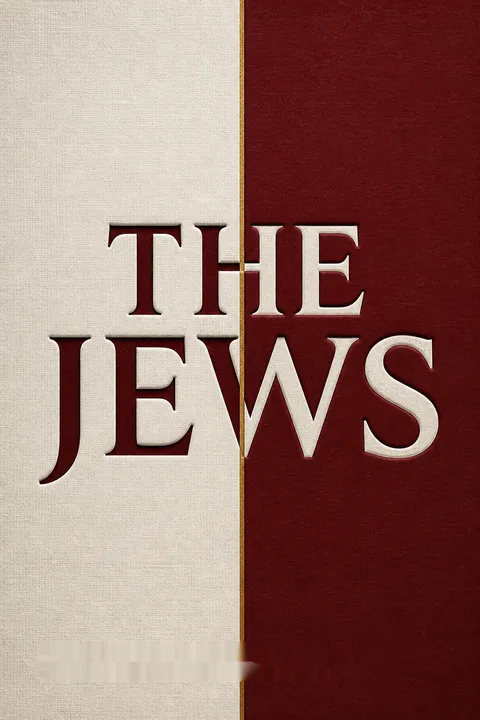


Key Takeaways
Belloc proposed recognition, but his peace plan rested on ethnic separation.
The central proposal. Published in 1922, Belloc’s political polemic argues that Jews and the nations around them experience persistent conflict because he regards Jews as a distinct, enduring people living within other national societies. He dismisses three possible outcomes: violent destruction, expulsion, and absorption into the majority. His preferred alternative is what he calls recognition: both sides openly accepting Jewish national difference and making room for it in public life.
A serious limitation. Belloc presents this as a way to prevent persecution, not to justify it. Yet his plan starts by treating Jewish identity as a fixed, collective political condition. That is his premise, not an established description of Jewish people or a neutral account of European society.
The effort to rule out violence and forced expulsion gives the book a real moral concern, but its proposed remedy confuses recognition with separation. A society can acknowledge religious, cultural, and historical identities while granting equal citizenship; no single national identity need define every member of a minority. Belloc’s framework makes the majority’s discomfort with difference seem like a permanent fact to be managed, rather than a political problem that institutions can reduce. The distinction matters: protecting a minority is not the same as assigning it a separate civic status.
He rejects assimilation, expulsion, and violence, leaving negotiated separation.
A recurring pattern. Belloc describes a cycle in which Jewish communities are first welcomed, then regarded with increasing unease, and finally subjected to exclusion or violence. He argues that the cycle persists because host societies either deny Jewish difference or try to remove Jews rather than address tensions openly. As an example, he points to England’s expulsion of Jews in 1290 and their return centuries later, treating the long gap as proof that expulsion could not permanently settle the issue.
History as argument. The cycle is a useful reminder that exclusion can displace a problem rather than resolve it. But Belloc turns selected historical episodes into a near-universal law. Relations between Jewish communities and their neighbors varied widely across time and place, so his recurring sequence cannot establish that conflict was inevitable.
The cycle has the appeal of a clear historical pattern: welcome, tension, coercion, and renewed migration. It also resembles feedback loops studied in political science, where exclusion can deepen mistrust and make later compromise harder. Its weakness is the leap from recurring episodes to an unchanging rule. Belloc gives little room to peaceful coexistence, changing state policies, or the agency of particular communities. A pattern can help readers notice repetition, but it becomes misleading when every event is treated as evidence for the same predetermined story.
His theory of friction recasts prejudice as evidence of permanent group difference.
Difference, not simply defect. Belloc argues that accusations about Jewish character often arise because people interpret unfamiliar behavior through their own social expectations. He illustrates the point with a story from Nîmes during the Dreyfus affair: an elderly Jewish pamphlet seller, he recounts, approached French soldiers with material attacking the army and left unharmed. Belloc presents the man’s willingness to take that risk as a form of courage, even though it differed from what his audience might expect.
The leap to group traits. The story supports a modest insight: courage and loyalty can take different forms. Belloc extends it much further, attributing durable mental and moral qualities to Jews as a people. A vivid anecdote cannot establish that an entire population shares a fixed psychology.
Belloc’s distinction between a moral quality and the particular way it appears in a culture can help readers question narrow definitions of courage or loyalty. The problem is that his method then turns cultural variation into racial generalization. Social science warns against the ecological fallacy: inferring the traits of individuals from claims about a group, or treating a population as internally uniform. The Nîmes anecdote can illuminate one person’s conduct; it cannot validate a theory of Jewish character. Careful analysis preserves the insight about different expressions of virtue while refusing the essentialist conclusion.
He blames secrecy on Jews, but also condemns non-Jewish hypocrisy.
Two sides of distrust. Belloc identifies concealment of names, relationships, and origins as a source of suspicion. He acknowledges that such practices could grow from a history of persecution and discrimination, but argues that they now intensify mistrust. He also criticizes non-Jews for publicly acting as though Jewish difference does not matter while privately discussing it with hostility. In his account, this dissembling leaves Jewish neighbors with a false impression of how they are regarded.
His proposed change. Belloc calls for more candid discussion and less show of superiority from Jews, alongside greater honesty, charity, and understanding from their hosts. The asymmetry is important: the book asks a vulnerable minority to make itself more legible to a majority whose prejudice it also describes.
The critique of social hypocrisy remains useful: polite public language can conceal discrimination rather than remove it. Open institutions and honest discussion can make disagreement less dependent on rumor. But transparency is not automatically a virtue when disclosure can expose people to discrimination or danger. Belloc recognizes persecution as part of the historical context, yet still treats concealment largely as a communal irritant. A fairer principle distinguishes voluntary openness from pressure to disclose identity, and asks whether the rules of public life protect people who choose privacy.
He condemns anti-Jewish hatred while treating it as evidence of Jewish power.
A warning with a flaw. Belloc describes the anti-Semite as someone who interprets nearly any event as proof against Jews and assigns collective guilt to people who may have no connection to it. He recognizes that this mindset distorts judgment and can lead to persecution. At the same time, he presents the growth of anti-Jewish hostility as a sign of unresolved social tension and repeatedly links it to claims of excessive Jewish influence.
The danger in that logic. A hostile movement’s growth does not demonstrate that its target caused the hostility. Belloc’s framing risks turning prejudice into evidence for the claims that fuel it. His warning against mass violence is important, but it is undermined when conspiracy narratives are treated as reasonable explanations for why hatred has spread.
Belloc sees that political hatred can become organized, distort evidence, and threaten the people it targets. That remains a valuable warning about scapegoating. The analytical failure is treating prejudice as a measuring device for the supposed power of its victims. In social psychology, a stereotype can be self-reinforcing: suspicion prompts selective attention, and selected examples then appear to confirm suspicion. The appropriate response to rising hostility is to investigate its causes and protect those at risk, not to infer that the targeted group must have provoked it.
He makes Bolshevism an ethnic story, despite acknowledging Jewish dissent.
Belloc’s account. He presents the Russian Revolution and Bolshevism as a crisis shaped by Jewish leadership. He says explicitly that most Jews did not participate and that many opposed the movement, but still treats the backgrounds of some revolutionary leaders as central to understanding the revolution. He connects their actions to anger at repression, opposition to capitalism, international political ideas, and a weaker attachment to Russian nationalism as he understood it.
What the framing obscures. These explanations turn a complex political upheaval into an ethnic narrative. The revolution involved many kinds of actors and arose from war, state collapse, social conflict, and competing political programs. Jewish participation by particular individuals does not make Bolshevism a Jewish movement, nor does it assign responsibility to Jews as a group.
Belloc’s distinction between individual participation and collective responsibility is worth retaining, even though the surrounding argument repeatedly blurs it. Political movements should be explained through institutions, interests, and historical conditions, not converted into the property of an ethnicity. The claim that a transnational identity explains revolutionary politics is especially fragile: it mistakes one possible influence for a group-wide motive. A careful reader can separate the valid question of who held power in a revolutionary government from the false inference that an entire people shared its aims.
He warns Zionism could intensify dual-loyalty accusations and imperial conflict.
His concern about Zionism. Belloc argues that a Jewish state could make Jewish national identity more visible to people already inclined to see Jews as outsiders. He fears that hostile governments might then tell Jewish residents to leave for that state. He also criticizes the British-backed project in Palestine because its security depended, in his view, on British soldiers and political commitment rather than solely on Jewish institutions.
A revealing contradiction. Belloc favors public recognition of Jewish nationhood, yet fears that an actual Jewish national home could provide ammunition to those demanding Jewish removal. His analysis captures a real political risk in a foreign protectorate, but his framing also repeats the dual-loyalty suspicion that has often been used to question minorities’ belonging.
Belloc’s scrutiny of the costs of a protectorate is a recognizable question in political history: a state that depends on another power for security may inherit that power’s strategic conflicts. His concern about consequences for local populations also deserves attention. Yet the argument treats Jewish national self-determination primarily as a danger to diaspora Jews, while giving too little weight to why Zionism appealed to people facing exclusion and insecurity. Dual-loyalty allegations should be examined as political claims, not assumed to follow naturally from a minority’s connection to a homeland.
His remedy begins with candor and restraint, then lets law follow.
The duties he proposes. Belloc assigns responsibilities to both sides. He asks non-Jews to discuss Jewish history and identity openly, avoid impulsive retaliation, and treat Jewish neighbors with greater honesty and charity. He asks Jews to reduce secrecy, moderate displays of superiority, and develop community institutions of their own. He resists starting with new public laws, arguing that shared habits and recognition should come first, with formal rules emerging from them.
No concrete settlement. The book does not specify a workable legal structure for equal rights, political participation, or disputes between citizens. Its practical prescription remains a change in tone and social custom, alongside voluntary communal organization. That leaves a crucial question unanswered: how can institutions protect equal citizenship when public opinion is hostile?
The emphasis on changing everyday conduct before imposing a new legal arrangement reflects a familiar insight: laws depend partly on social norms for legitimacy and compliance. But rights cannot safely wait for a majority to become comfortable with a minority. Belloc’s duties are not symmetrical in practice, because the majority has far greater power to set law and enforce exclusion. A stronger version of his appeal to candor would pair open discussion with enforceable equal protection, so that frank disagreement does not become a license to restrict belonging.
Analysis
The Jews is best read as a 1922 political polemic, not as a reliable history of Jewish communities or a neutral guide to minority relations. Its organizing question is practical: how can recurring conflict be prevented? Belloc rejects violence, expulsion, and forced assimilation, and urges open discussion rather than silence. That humane concern sits beside an account built on antisemitic assumptions: Jews are portrayed as a coherent, inherently distinct political body, and claims about finance, revolutionary leadership, secrecy, and influence are used to explain social change. The book sometimes acknowledges that most Jews had no part in the actions it condemns, but that qualification does not undo its repeated movement from individuals to collective explanation.
Its most revealing contradiction is that Belloc condemns anti-Jewish hatred while treating its growth as evidence that Jewish power has become intolerable. This lets prejudice function both as a danger and as confirmation of the premise that supposedly produced it. His proposed recognition also differs from equal pluralism. Rather than imagine civic belonging that can include multiple identities, he centers separation as the basis for peace. His anxiety about Zionism sharpens the contradiction: Jewish national recognition is necessary in theory, yet a Jewish state might make exclusion easier in practice.
The book’s continuing value is therefore diagnostic rather than prescriptive. It shows how a writer can oppose persecution while reproducing the essentialist and conspiratorial logic that makes persecution plausible. Its call to replace polite evasion with candor remains worth examining, but candor alone does not guarantee justice. Historical claims about collective control or ethnic political motives require evidence and careful limits; the source repeatedly substitutes generalization for both. A modern reading should preserve its concern about political violence and examine how its argument shifts responsibility from institutions and actors onto an entire people. Equal citizenship, protection from discrimination, and scrutiny of actual decisions offer a more defensible basis for coexistence than assigning a fixed national character to neighbors.
Review Summary
The Jews received mixed reviews, with an average rating of 3.81 out of 5. Some readers praised Belloc's foresight and balanced approach to discussing Jewish-Gentile relations, while others found the content anti-Semitic. Critics noted the book's historical significance, predicting future events and analyzing societal tensions. Many reviewers emphasized the importance of open dialogue on sensitive topics. Some appreciated Belloc's attempt at finding a peaceful solution, while others criticized his views as outdated or offensive.
People Also Read






Glossary
recognition
Acknowledging separate Jewish nationalityBelloc’s preferred approach to Jewish and non-Jewish relations. He uses recognition to mean openly accepting Jews as a distinct people living among other nations, rather than pretending that Jewish identity is only a private religion or trying to absorb Jews into the majority. His usage is tied to a separation-based political theory and is not equivalent to contemporary equal-citizenship pluralism.
segregation
Separation of distinct communitiesBelloc uses segregation broadly for keeping a group distinct within or apart from a larger society. He distinguishes hostile separation, imposed without regard for the minority, from an arrangement he calls amicable and associates with mutual recognition. The term in this book describes his proposed framework, not a neutral or universally accepted solution to minority relations.
tragic cycle
Welcome followed by persecutionBelloc’s description of a repeating historical sequence: Jewish communities are welcomed, tensions develop, hostility intensifies, and exclusion or violence follows, after which migration begins the sequence elsewhere. He presents the cycle as a recurring pattern in relations between Jews and host societies. It is an interpretive scheme, not proof that conflict is inevitable.
Liberal fiction
Civic equality without national recognitionBelloc’s pejorative label for the nineteenth-century approach that treated Jews as individual citizens of their countries of residence, generally classifying Judaism as a religion rather than recognizing Jewish nationhood. He argues that this policy concealed rather than resolved difference. The phrase reflects his own framework and should not be mistaken for an impartial description of liberal citizenship.
Jewish problem
Belloc’s framing of minority relationsBelloc’s name for what he sees as persistent friction between Jews and the societies in which they live. He explains that friction through claims about separate nationality, social difference, political influence, and competing loyalties, then proposes recognition as a remedy. The phrase is the book’s organizing category, not a neutral term for Jewish identity or a settled historical diagnosis.
Download PDF
Download EPUB
.epub digital book format is ideal for reading ebooks on phones, tablets, and e-readers.








