


Key Takeaways
When inherited ideals collapse, build values instead of demanding cosmic guarantees
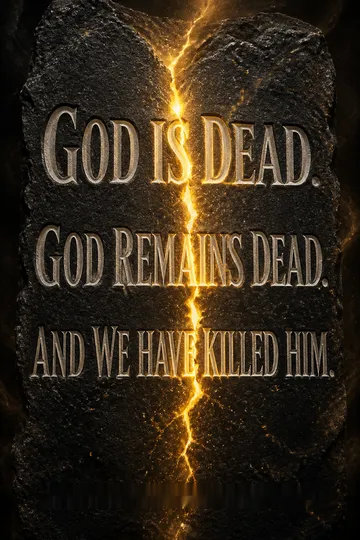
A crisis of meaning. Nietzsche calls nihilism the loss of authority of a culture’s highest values. It is not simply sadness or hardship. Christianity once made suffering meaningful, gave human life special worth, and supplied a moral order. But its demand for truthfulness eventually turns against its own claims: once people doubt the religious story, they may conclude that nothing has purpose or value. That conclusion is a transition, not a final answer.
A necessary passage. These notes present the collapse of old values as an opening for creating new ones rather than finding another unquestionable authority. The book itself is a posthumous arrangement of unfinished notebook fragments, so its account is exploratory, not a completed argument. Its recurring challenge is practical: what can people value when inherited guarantees no longer persuade them?
What's striking is Nietzsche's account of secular disillusionment as an inheritance, not a clean break. A society can discard religious language while retaining its demand for history, science, or politics to guarantee progress and moral purpose. That makes the diagnosis useful beyond religion. Its limit is that a crisis of shared belief does not automatically produce creative renewal; it can also produce apathy, cynicism, or competing dogmas. Treating nihilism as a transitional condition is a wager, not a forecast secured by the evidence here.
Ask whose life a moral rule protects before calling it universal
Values have a history. Nietzsche treats morality as a system of judgments shaped by how people live together. Rules such as obedience, mutual aid, and restraint can help a community survive; they may also protect those who benefit from a particular social order. His method asks what a value does, whose needs it serves, and what kind of life it encourages. He distinguishes this investigation of origins from proving a value right or wrong: discovering a rule's history is a reason to examine it, not a verdict by itself.
The moral reversal. Nietzsche argues that inherited religious morality can condemn ordinary drives, including ambition and pride, as if they were bad in themselves. Yet he also recognizes that shared rules can preserve a community. His target is their claim to govern every kind of person and purpose, not the mere existence of common standards.
This genealogical approach resembles historical sociology: norms are examined as products of institutions and group needs, rather than treated as timeless facts. It helps reveal when moral language disguises an interest or turns a local custom into a universal command. But an origin story alone cannot settle whether a norm is justified. Rules born in social coordination can still protect people from violence, and a value's usefulness to a group does not make it morally suspect by definition. The stronger question is what a norm enables, whom it harms, and whether alternatives work better.
Treat power as the drive to expand capacity, not merely to command
More than domination. Nietzsche uses “will to power” for a basic tendency to express, organize, and increase force by meeting resistance. He argues that living things do more than preserve themselves: they also absorb, transform, and shape what surrounds them. In his example, a simple organism extends itself toward material it can incorporate. This is Nietzsche's interpretive theory of life, not a settled biological finding.
Growth through resistance. The concept also recasts pleasure as a possible sign of increased strength, rather than life's ultimate goal. It can describe artistic creation, the shaping of character, or the struggle among impulses within one person. Power here need not mean ruling other people. It can mean gaining the capacity to act, make, endure, or impose form on disorder.
The concept is most illuminating when it broadens the idea of agency beyond conscious plans. People and organisms can organize their surroundings and develop capacities without explicitly aiming at domination. That resonates with systems thinking, where order emerges through interaction and resistance. The risk is turning one metaphor into a universal explanation: if every outcome counts as power, the theory becomes difficult to test and can excuse coercion as natural. It is more useful as a lens for asking how capacities grow than as a complete account of why everything happens.
Use knowledge as a map, not a window onto reality itself
Knowing simplifies. Nietzsche argues that perception and thought do not present reality untouched. Senses select; concepts group unlike things together; language gives events subjects and causes. These shortcuts make experience easier to communicate and navigate. The result is a workable picture, not proof that the world is built from the categories humans use to describe it. Even the familiar idea of a single, stable “self” may simplify a shifting collection of impulses.
Interpretations still differ. Nietzsche calls this perspectivity: knowledge arises from particular needs and standpoints, and the same world can acquire different meanings from different angles. He does not offer a reliable view from nowhere. His point is that interpretations should be examined for what they select and make possible, rather than mistaken for the final structure of reality.
The map analogy preserves a valuable distinction: representations can be partial and still help people predict and coordinate. Modern cognitive science likewise studies perception as selective and shaped by prior expectations, without concluding that an external world is unreal. Nietzsche's challenge is strongest against the fantasy of a perfectly neutral observer. It is weaker if read as saying that all interpretations are equally sound. Evidence, prediction, and the ability to correct errors still distinguish a useful model from a self-serving one.
Notice when shared rules enable cooperation and when they flatten difference
The herd's virtues. Nietzsche calls morality shaped around a community's common needs “herd morality.” He sees virtues such as obedience, modesty, and mutual care as ways to build trust and protect social life. They can also pressure people toward sameness, making unusual ambitions or abilities appear threatening. He argues that problems arise when rules useful to a group are treated as the only proper standards for every person.
A sharp and risky distinction. Nietzsche does not simply call for abolishing common morality. These notes accept that shared rules can serve a community while arguing that they should not automatically dictate the aims of exceptional individuals. His proposed “order of rank” values people by power and capacity, a controversial alternative that often slips from criticizing conformity into endorsing rigid hierarchy.
The distinction between coordination and conformity remains useful. Shared expectations make cooperation possible, but institutions can also penalize difference simply because it is inconvenient to manage. Nietzsche is right to ask whether safety and sameness have become indistinguishable. Yet his hierarchy does not provide a fair way to identify whose abilities deserve authority, and his contempt for equality risks licensing domination. A defensible application is to protect room for unusual work without treating equal rights or care for vulnerable people as obstacles to human excellence.
Let art transform suffering without pretending it is secretly fair
Art affirms life. Nietzsche presents art as a counterforce to teachings that condemn the world for being painful, changing, or imperfect. Art can make experience more intense and give form to what would otherwise feel chaotic. He describes two artistic tendencies: the Apollonian impulse toward clear form and individual shape, and the Dionysian impulse toward ecstatic intensity and connection with life beyond the individual. Greek tragedy, in his account, combines these forces rather than simply teaching resignation.
Affirmation is not denial. A tragic artwork can face terror and loss without claiming that suffering is deserved or that a better world will compensate for it. Art's power lies in making difficult experience bearable, even valuable, through form, attention, and creation. It does not prove that every real-world harm is necessary or just.
This account makes art more than decoration: form can help people encounter painful material without reducing it to a lesson or a cure. That connects with how stories and music can create distance while preserving emotional force. The distinction between transforming suffering and explaining it away matters. Aesthetic affirmation can expand what a person can face, but it can also glamorize pain or distract from preventable harm. The strongest reading treats artistic transformation as one response to suffering, not a reason to tolerate its causes.
Test a life by whether you could affirm its return, again and again
A severe thought experiment. Nietzsche presents eternal recurrence in two forms. As a cosmological hypothesis, it imagines a finite amount of force and an endless span of time, so that every possible arrangement would recur. As an existential test, it asks whether a person could affirm living the same life, including its suffering and mistakes, repeatedly. The first claim is speculative; the second makes the idea a measure of one's attitude toward life.
Not a promise of rescue. Recurrence removes the hope that history is moving toward a final reward, perfect society, or escape from existence. Its pressure is meant to make each choice matter without relying on an afterlife or ultimate destination. In this collection, the doctrine is both a theory of the universe and a discipline for testing affirmation, not a demonstrated scientific result.
The thought experiment shifts attention from abstract approval of life to the details a person would have to accept along with it. That can expose how much a sense of purpose depends on imagining a later correction. Still, it is a demanding and potentially misleading test: no one controls all the conditions of a life, and affirming existence need not mean approving every injustice or refusing help. Its value is diagnostic. It can reveal what a person wants to stand behind, not dictate a single answer to suffering.
Replace inherited prohibitions with disciplined experiments in self-creation
Discipline can create freedom. Nietzsche's constructive project is not simply to discard old values. He calls for people to examine inherited standards, train their capacity to choose, and create aims they can genuinely sustain. These notes suggest practices such as periods of solitude, restraint, demanding work, and testing whether a person can keep commitments. Discipline is valuable here as a way to shape capacity, not as proof that bodily needs or pleasure are shameful.
Creation needs direction. Nietzsche imagines future thinkers as lawgivers who establish new standards rather than appealing to eternal rules. That ambition carries a serious danger: his political ideal includes domination and the subordination of many to a few. The more grounded lesson is to treat self-formation as deliberate practice while asking who sets the goals and who bears their costs.
The useful insight is that freedom depends partly on trained capacities. A person who cannot sustain attention, delay an impulse, or keep a promise has fewer meaningful choices, not more. But discipline is never neutral: it serves the aims and authorities that define success. Nietzsche's image of self-creation gains ethical credibility when paired with accountability, consent, and the freedom of others. Without those limits, a language of excellence can turn into a polished defense of control.
Analysis
The title suggests a finished system, but this edition is a posthumous assembly of Nietzsche's notebook fragments, arranged by editors after his breakdown. The source itself acknowledges that the work was never completed and that its paragraphs range from sketches to developed arguments. Readers should therefore treat its architecture as editorially shaped and its claims as provisional, not assume every passage belongs to a single, settled doctrine.
The collection's strongest movement runs from diagnosis to construction. First, inherited religious and moral values lose credibility under the pressure of their own demand for truth. Next, Nietzsche asks what those values do for the lives and groups that hold them. He then turns the same suspicion on knowledge itself: concepts and explanations organize experience from particular perspectives. Against the conclusion that nothing matters, he proposes interpreting life as a creative struggle of forces, finding affirmation in art, discipline, and the possibility of recurrence.
That movement is powerful but unstable. Nietzsche rejects universal moral authority while advancing his own hierarchy of human worth with considerable confidence. His critique of conformity can illuminate how institutions suppress unusual work, yet his preferred politics of rank, domination, and selective breeding threaten to make people instruments for elite ambitions. The notebook material includes coercive and eugenic proposals that cannot be separated from the account of his political imagination. They should be examined directly, not softened into generic advice about personal growth.
His biological explanations also exceed what the text establishes. The claim that all life is will to power is a sweeping interpretation, not a demonstrated scientific law. The enduring value lies less in accepting that metaphysics than in the questions it sharpens: who benefits from a moral ideal, what capacities does it cultivate, and can life be affirmed without inventing a cosmic guarantee? The book rewards readers who distinguish its diagnostic brilliance from its hazardous prescriptions.
Review Summary
The Will to Power is a posthumously published collection of Nietzsche's notes, compiled by his sister. Readers debate its authenticity and coherence, with some finding it a valuable insight into Nietzsche's thought process and others dismissing it as incomplete. The book explores themes of nihilism, morality, and the nature of power. While some praise its philosophical depth, others criticize its contradictions and potentially dangerous ideas. Many recommend reading Nietzsche's other works first to provide context for these unpolished thoughts.
People Also Read


Glossary
Nihilism
Collapse of inherited valuesNietzsche uses nihilism for the condition in which a culture's highest values lose their authority, leaving no accepted purpose or standard for life. In this account, Christian morality helps produce the crisis: its demand for truth eventually undermines the religious explanations that once gave existence meaning. Nihilism can signal exhaustion, but Nietzsche also treats it as a possible transition toward new values.
Will to Power
Drive to expand and shapeNietzsche's proposed interpretation of life as a striving to express, organize, and increase force by overcoming resistance. It is broader than a conscious wish to dominate other people: it includes processes of growth, appropriation, creation, and the shaping of experience. In these notes Nietzsche extends the idea from living organisms to existence generally, a philosophical claim rather than an established scientific principle.
Transvaluation of all values
Reassessment and creation of valuesNietzsche's project of examining inherited standards, especially religious and moral ones, and changing the order by which they are judged. It asks what kinds of life existing values preserve or suppress, then seeks standards that affirm life rather than condemn it by reference to a supernatural world. The project involves creating values, not merely reversing every old judgment.
Perspectivity
Knowledge from situated viewpointsNietzsche's view that knowing always involves a standpoint shaped by needs, senses, and interpretive habits. Human concepts simplify experience so it can be organized and used, but they do not provide an unconditioned view of reality. Perspectivity does not by itself show that every interpretation is equally reliable; it directs attention to what each one selects and enables.
herd morality
Morality serving group cohesionNietzsche's term for moral standards that prioritize the stability and shared interests of a community. Traits such as obedience, restraint, and mutual assistance can help members live together, but herd morality can also pressure people toward conformity. Nietzsche objects especially when these standards claim authority over every individual and every kind of purpose.
Apollonian
Form, clarity, and individuationNietzsche's name for an artistic tendency associated with lucid form, defined appearance, measure, and the shaping of distinct individuals. In his account of Greek art, the Apollonian impulse gives boundaries and images to experience. It is paired with the Dionysian, rather than treated as art's only legitimate force.
Dionysian
Ecstatic affirmation of lifeNietzsche's name for an artistic and existential force associated with intensity, emotional overflow, and a sense of connection beyond the isolated individual. The Dionysian confronts change, suffering, and destruction without treating them as proof that life should be rejected. In his account of Greek tragedy, it works in tension with the Apollonian drive toward form.
Eternal Recurrence
Repetition of the same lifeNietzsche presents eternal recurrence both as a speculative cosmological idea and as an existential test. The cosmological version imagines the same arrangements of a finite amount of force recurring through endless time. The practical version asks whether someone could affirm living the same life repeatedly, including its pain. The text does not establish the cosmological claim as scientific fact.
order of rank
Hierarchy of human capacitiesNietzsche's proposed way of evaluating people and forms of life according to differences in strength, independence, and capacity, rather than treating all aims as interchangeable. He argues that common social morality should serve communal life without automatically ruling exceptional individuals. The idea is central to his political vision and raises serious questions about authority, equality, and coercion.
FAQ
What's The Will to Power about?
- Core Philosophy: The Will to Power by Friedrich Nietzsche explores the "will to power" as the fundamental driving force in human beings, suggesting that individuals are motivated by a desire to assert and enhance their power.
- Critique of Morality: Nietzsche critiques traditional moral values, particularly those rooted in Christianity, arguing that they suppress natural instincts and promote mediocrity.
- Nihilism and Values: The book discusses the rise of nihilism, emphasizing the need for new values that affirm life as traditional religious and moral absolutes decline.
Why should I read The Will to Power?
- Understanding Nietzsche: The book provides insight into Nietzsche's philosophy, particularly his views on power, morality, and the human condition, foundational to modern existential thought.
- Cultural Relevance: Themes of nihilism and morality critique are increasingly relevant in contemporary discussions about ethics, society, and individualism.
- Provocative Ideas: Nietzsche's challenging ideas encourage readers to question their beliefs and societal norms, fostering critical thinking and self-reflection.
What are the key takeaways of The Will to Power?
- Will to Power Concept: Nietzsche posits that the "Will to Power" is the primary driving force in humans, influencing all actions and aspirations beyond mere survival.
- Critique of Herd Morality: He argues that morality is often a construct of the weak to control the strong, promoting mediocrity and suppressing exceptional individuals.
- Need for New Values: As traditional values decline, Nietzsche emphasizes the necessity for new values that celebrate life, strength, and individuality.
What are the best quotes from The Will to Power and what do they mean?
- "What does Nihilism mean?": This quote encapsulates Nietzsche's view that the decline of traditional values leads to a crisis of meaning, prompting a reevaluation of what is truly valuable.
- "The will to power is the fundamental principle of all life.": Nietzsche asserts that the desire to assert and enhance one's power is central to human existence, challenging the notion that self-preservation is the primary instinct.
- "Morality is the herd instinct in the individual.": This statement critiques conventional morality, suggesting it arises from a collective desire to maintain social order at the expense of individual strength and creativity.
How does Nietzsche define the "Will to Power" in The Will to Power?
- Fundamental Drive: Nietzsche defines the "Will to Power" as the inherent drive in all living beings to assert and enhance their power and influence over their environment and others.
- Beyond Survival: This concept transcends mere survival instincts, suggesting that individuals are motivated by a deeper desire to grow, dominate, and achieve greatness.
- Creative Force: The "Will to Power" encompasses creativity, ambition, and the pursuit of excellence, shaping human behavior and societal structures.
What is Nietzsche's critique of traditional morality in The Will to Power?
- Morality as Control: Nietzsche argues that traditional morality, especially from Christianity, serves to control and suppress the natural instincts of individuals, particularly the strong and exceptional.
- Herd Instinct: He describes morality as a product of the herd instinct, where the values of the weak are imposed on the strong, leading to mediocrity and conformity.
- Need for Individual Values: Nietzsche advocates for a revaluation of values that prioritize individual strength, creativity, and the affirmation of life, rather than guilt and self-denial.
What is the significance of the concept of Nihilism in The Will to Power?
- Crisis of Values: Nihilism represents a cultural crisis where traditional values lose their meaning, leading to a sense of purposelessness.
- Path to New Values: Nietzsche views nihilism as a necessary stage before new, life-affirming values can emerge, allowing individuals to create their own meaning.
- Psychological Impact: The rise of nihilism can lead to despair, but Nietzsche argues it also opens the door for personal empowerment and the revaluation of values.
What is the concept of eternal recurrence in The Will to Power?
- Philosophical Proposition: Eternal recurrence is the idea that all events in life will repeat themselves infinitely in the same sequence.
- Implications for Living: This thought experiment encourages readers to evaluate their choices and actions, prompting them to consider whether they would be satisfied with their lives if they had to experience them repeatedly.
- Affirmation of Life: Embracing eternal recurrence can lead to a profound affirmation of life, compelling individuals to find meaning and joy in their experiences.
How does The Will to Power relate to Nietzsche's other works?
- Continuation of Themes: The Will to Power builds on themes from Nietzsche's earlier works, such as Thus Spoke Zarathustra and Beyond Good and Evil, particularly the ideas of power, morality, and the individual.
- Philosophical Development: It serves as a culmination of Nietzsche's thoughts, presenting a more systematic exploration of his philosophy and the implications of the "Will to Power."
- Influence on Existentialism: Nietzsche's ideas in The Will to Power have had a lasting impact on existentialist thought, influencing later philosophers like Jean-Paul Sartre and Martin Heidegger.
How does Nietzsche propose we create new values in The Will to Power?
- Embrace Individuality: Nietzsche encourages individuals to embrace their unique strengths and perspectives, creating values that reflect their personal experiences and aspirations.
- Reject Herd Morality: He advocates for a rejection of herd morality, urging individuals to challenge societal norms and redefine what is considered valuable and meaningful.
- Affirm Life: The creation of new values should be rooted in a celebration of life, strength, and creativity, fostering a culture that empowers individuals to pursue their passions and ambitions.
What role does art play in The Will to Power?
- Expression of Power: Nietzsche views art as a manifestation of the "Will to Power," where the artist asserts their vision and creativity, challenging societal norms and conventions.
- Transcendence of Morality: Art allows individuals to transcend conventional morality, providing a space for the exploration of deeper truths and the expression of human experience.
- Cultural Reflection: Art reflects the values and struggles of a culture, serving as both a mirror and a catalyst for change in societal values.
How does Nietzsche's The Will to Power redefine the concept of strength?
- Strength as Vitality: Nietzsche redefines strength not merely as physical power but as the vitality and creativity that drive individuals to assert themselves and shape their environments.
- Overcoming Weakness: He emphasizes the importance of overcoming weakness, both within oneself and in societal values, arguing that true strength involves embracing one's instincts and desires.
- Dynamic and Fluid: Strength is dynamic and fluid, constantly evolving as individuals engage with life, encouraging a proactive approach to personal growth and empowerment.
About the Author
Other books by Friedrich Nietzsche








Download PDF
Download EPUB
.epub digital book format is ideal for reading ebooks on phones, tablets, and e-readers.








