


Key Takeaways
Read Nietzsche as a dangerous conversation, not a ready-made doctrine
A restless body of work. The Portable Nietzsche gathers four complete books, selections, notes, and letters from across his career. It is not one orderly argument. Nietzsche writes as essayist, aphorist, satirist, and prophet, sometimes revisiting an idea from a sharply different angle. The editor warns that a striking line can mislead when detached from its setting or from Nietzsche’s other works.
A story of failed address. In Thus Spoke Zarathustra, a solitary teacher descends from the mountains to address a crowd, but the people prefer a tightrope show. When the performer falls, Zarathustra learns that he needs creative companions, not an audience waiting to be led. The book’s drama mirrors its challenge to readers: examine, resist, and make something of its ideas rather than merely admire them.
The anthology’s unevenness is part of its intellectual lesson. A polished system can conceal the assumptions that hold it together; Nietzsche’s collisions make those assumptions harder to ignore. Reading him across genres also resembles reading a thinker’s changing research notes, not just a final theory. That approach rewards patience, but it carries a risk: contradiction can be mistaken for profundity. The editor’s chronological arrangement helps readers notice development without pretending that every late claim resolves an earlier one.
When God disappears, inherit the job of making earthly meaning
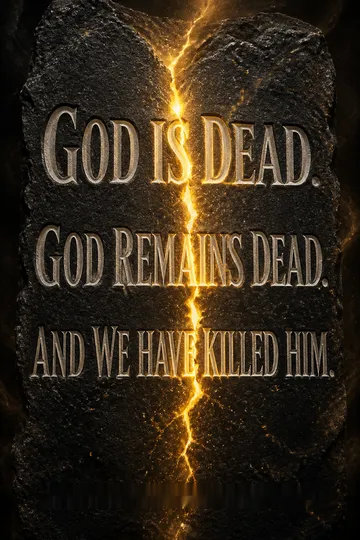
A cultural earthquake. Nietzsche’s famous announcement that God is dead describes the collapse of Christianity’s authority as a shared source of truth and moral purpose. It is not a claim that a deity has literally died. In The Gay Science, a madman tells an amused crowd that they have destroyed the old foundation, though they have not yet understood what its loss requires of them.
Meaning becomes a task. Zarathustra urges people to stop treating earthly life as a waiting room for a supernatural reward. Human beings must create purposes and values within this life. Nietzsche fears that, without such work, people may settle for comfort, safety, and small pleasures, mistaking mere survival for a meaningful future.
The madman’s audience captures a familiar lag between changing beliefs and changing institutions. Sociologists describe this as cultural delay: practices and moral habits can outlast the convictions that once supported them. Nietzsche’s challenge is useful because it asks what actually justifies inherited values after their religious grounding weakens. The harder question is whether individuals can create meaning alone. Shared traditions can constrain, but they can also coordinate care, obligation, and collective action.
Turn inherited discipline into freedom, then create values of your own
Rebellion is not enough. Zarathustra describes growth as a passage from carrying demanding traditions, to gaining the strength to refuse them, to beginning something new. The stages matter: rejecting every rule without first learning how rules work leaves a person reacting to the past rather than shaping a future. Nietzsche’s creator is not simply an iconoclast.
Make a world, not a pose. The final movement is playful and affirmative: the creator can commit to a self-chosen direction without pretending it is a universal command from heaven. This is why the childlike image matters in the speech. It suggests fresh beginnings, experimentation, and the ability to say yes to a project after the inherited standards have been questioned.
This progression resembles a distinction in education between mastery, critique, and original contribution. Expertise often requires first absorbing a practice, then understanding its limits well enough to revise it. Nietzsche gives rebellion a constructive destination: creation. Still, self-authorship cannot mean choosing values without consequence. Personal commitments shape other people’s lives, so freedom needs reflection about responsibility, not only liberation from old restraints.
Treat moral rules as historical inventions, not timeless facts
Values have a history. Nietzsche’s genealogy of morals asks how moral categories arose and what needs they serve. He contrasts values that begin in a confident affirmation of one’s own activity with values formed through ressentiment, a term for frustrated hostility that turns into moral condemnation. In his account, the powerless may recast their inability to act as virtue and label the powerful evil.
The Greek example complicates morality. In Homer’s Contest, Nietzsche presents competitive envy as both dangerous and productive. Greek rivals, including poets and public figures, could spur one another toward achievement. The point is not that every old custom was admirable, but that virtues depend on the social world that gives them meaning.
Genealogy is a powerful tool because it shifts debate from whether a rule sounds noble to how it came to feel necessary. Modern moral psychology likewise finds that judgments can reflect group loyalties and emotional reactions before people assemble explicit reasons. But Nietzsche’s master and slave contrast can flatten diverse histories into two camps. Resentment can distort judgment, yet anger at injustice can also expose real abuses and motivate reform.
Test your truths for hidden metaphors, interests, and convenient causes
Language shapes what seems real. In On Truth and Lie in an Extra-Moral Sense, Nietzsche argues that words and concepts simplify a changing world. Calling many distinct leaves by one name, for instance, makes their differences disappear from thought. Over time, familiar metaphors can feel like direct access to reality rather than human-made descriptions.
Suspicion should include the self. Nietzsche questions explanations that comfort their audience, such as treating misfortune as deserved punishment or success as proof of virtue. He values careful scientific methods, especially the patience to test claims and notice how they were produced. His point is not simply that every claim is false; it is that certainty deserves investigation, including certainty in the name of truth.
The argument anticipates a central concern in cognitive science: perception and explanation are shaped by prior expectations, and people often defend conclusions that serve identity or emotional comfort. That does not erase the difference between a well-tested account and a convenient story. Nietzsche’s strongest practical contribution is methodological vigilance. His own sweeping claims about psychology and history need the same scrutiny he applies to religious explanations.
Train passions into craft instead of declaring them enemies
The body is not an obstacle. Zarathustra challenges thinkers who treat the body as a lesser vessel for a separate soul. He presents thought, feeling, and reason as expressions of embodied life, with conscious reasoning serving needs it may not fully understand. A passion, in this view, is not automatically a vice to be removed.
Shape what moves you. Nietzsche argues that intense drives can be redirected into creativity and disciplined character. In The Gay Science, he describes giving style to one’s character: recognizing strengths and flaws, then working with them rather than pretending to be flawless. His criticism of moral repression is not a defense of every impulse. The aim is integration and mastery, not simply indulgence.
This account has an affinity with contemporary ideas about emotion regulation: people often manage strong feelings more effectively by understanding and redirecting them than by pretending they do not exist. Artistic practice can offer a model, turning raw material into a chosen form. Yet Nietzsche’s language of mastery can understate how trauma, illness, or poverty constrain choice. Not every drive can be transformed by will or aesthetic discipline alone.
Ask whether you could affirm this exact life, including its pain
A thought experiment of return. In The Gay Science, Nietzsche imagines a demon telling someone that every event in their life will recur in exactly the same order, endlessly. The challenge is not to calculate how to escape the cycle. It is to ask whether the thought would feel like a curse or an affirmation of the life already lived.
Meaning without escape. Zarathustra struggles with the recurrence of suffering and, especially, the return of petty, disappointing human behavior. The idea presses readers to consider whether they can accept a life without postponing its meaning to an afterlife or ideal future. The editor notes that Nietzsche’s claim that science proves recurrence is mistaken; its force here is personal and ethical, not scientific.
The scenario resembles a counterfactual test used in decision-making: imagine having to endorse a choice under the most demanding possible description. It can clarify what a person values, but it can also become a harsh standard that treats pain as something to celebrate. Affirmation need not mean approving injustice or refusing change. A useful distinction is between accepting that an event occurred and deciding that it should happen again.
Use rivalry to sharpen creation, but refuse to confuse conflict with virtue
Contest can produce excellence. Nietzsche’s account of ancient Greek competition presents rivals as sources of pressure and invention. Poets, teachers, and public figures competed for distinction, and their work could improve through that struggle. In Homer’s Contest, even envy can have a constructive form when it spurs achievement rather than destruction.
Choose the scale of conflict. Zarathustra often urges a person to reserve energy for serious intellectual opponents instead of being consumed by every insult or public quarrel. The point is to treat disagreement as a test of thought, not an excuse to harm. Yet Nietzsche’s celebration of warlike language and rank can blur this distinction, especially when applied to political life.
Research on teams and organizations suggests that disagreement can improve decisions when participants share a task, exchange reasons, and can challenge status without fear. Competition becomes less productive when it rewards humiliation or makes every disagreement a winner-take-all contest. Nietzsche helps identify the creative potential of friction, but his admiration for hierarchy makes it essential to ask who gets to define excellence and who pays for the contest.
Offer help without turning another person’s suffering into your virtue
Pity can center the helper. Nietzsche worries that pity may make suffering contagious, preserve helplessness, or leave the recipient feeling exposed and indebted. Zarathustra’s advice is to recognize whether a person wants compassion and to avoid using help to display moral superiority. In the book, some forms of giving are presented as generous because they do not demand gratitude or submission in return.
Care is not one thing. Nietzsche’s criticism targets pity that diminishes the sufferer, not every act of practical support. Elsewhere in the anthology, he imagines treating criminal behavior with attention to illness and circumstances rather than simple revenge. These positions share a question: does a response reduce harm and support agency, or merely satisfy the observer’s need to feel righteous?
The distinction between empathic concern and personal distress is useful here. Psychological research often separates attention to another person’s needs from becoming overwhelmed by that person’s pain; the first can support effective aid, while the second can shift attention back to the helper. Nietzsche is sharp about condescension, but his blanket suspicion of pity risks excusing indifference. Respectful care can preserve agency without demanding gratitude.
Resist mass conformity without turning rank into a license to dominate
Beware borrowed identities. Nietzsche attacks nationalism, party loyalty, and the state when they demand that people treat collective slogans as their own deepest convictions. The editor emphasizes that Nietzsche opposed anti-Semitism and nationalist politics, despite later attempts to recruit him to those causes. He directs attention toward independent judgment and individuals who create rather than merely repeat values.
Read the hierarchy critically. Nietzsche also makes severe arguments for inequality, elite rule, and the cultivation of exceptional people. His language about women and social groups is often contemptuous, and some of his claims rely on unsupported biological assumptions. The book offers no simple democratic program, but neither does its critique of conformity automatically justify political domination.
Nietzsche’s suspicion of mass politics remains useful when movements demand loyalty at the expense of thought. Yet political equality can protect people from arbitrary power, not merely express conformity. The distinction between resisting herd pressure and denying others equal standing is crucial. His own anti-nationalist commitments coexist with rhetoric that can be appropriated by authoritarian readers, making context and critical judgment necessary rather than optional.
Analysis
The Portable Nietzsche is best read as an edited encounter with a changing mind, not as a single, settled doctrine. Its central movement runs from the diagnosis of inherited values to the difficult possibility of making new ones. Zarathustra gives that movement a dramatic shape: a solitary teacher descends to speak, fails to reach the crowd, and learns to seek companions capable of creating for themselves. Across the other selections, the same question appears in different forms: what kind of life does a belief serve?
Nietzsche’s method is distinctive because it treats moral language as evidence about its users. Concepts such as sin, virtue, pity, and truth are not accepted at face value; their histories, emotional rewards, and social functions become objects of inquiry. This psychological approach can reveal how ideals disguise fear, revenge, or the wish to control. It also makes Nietzsche’s own judgments vulnerable to the same analysis. His praise of strength and rank may illuminate creative ambition, but it can also convert his preferences into a supposedly natural hierarchy.
The book’s literary form intensifies both its value and its risk. Aphorisms unsettle easy agreement; parables make abstractions memorable; polemic supplies energy. But rhetorical force can make a claim feel better established than it is. Nietzsche’s account of eternal recurrence, for example, has ethical power as a test of affirmation, while the editor rejects its proposed scientific basis. His fierce critique of Christian pity can expose condescension, yet it sometimes treats compassion as weakness too broadly. The reader must separate the questions worth keeping from the answers that overreach.
The lasting challenge is neither to obey Nietzsche nor to dismiss him as a collection of provocations. It is to use his suspicion recursively: test inherited moral systems, test the interests behind them, and test Nietzsche’s own hierarchy of values by the same standard. That practice preserves the book’s most productive demand, intellectual independence, without mistaking independence for immunity from criticism.
Review Summary
The Portable Nietzsche is a comprehensive collection of Friedrich Nietzsche's works, including complete texts and excerpts. Readers appreciate the breadth of content and Kaufmann's translations, though some find Nietzsche's writing style challenging. The book offers insights into Nietzsche's philosophy, including his critiques of religion, morality, and society. While controversial, many readers find value in engaging with Nietzsche's ideas, even when disagreeing. Some criticize the editor's selections, arguing they present a sanitized version of Nietzsche's philosophy.
People Also Read






Glossary
Overman
self-surpassing human idealNietzsche’s name for a hoped-for human type that creates meaning and values within earthly life rather than relying on supernatural purpose. The overman is not a stronger animal or a predictable result of biological evolution. In Zarathustra, the concept represents a direction of self-overcoming, contrasted with the comfortable, conformist figure called the last man.
Last man
comfort-seeking conformistZarathustra’s image of a society that prizes safety, convenience, and modest pleasures above risk or creation. The last man is satisfied with life as it is and sees little reason to set demanding goals. Nietzsche uses the figure as a warning that rejecting religious authority does not automatically produce freedom or purpose.
Will to power
drive to expand and overcomeNietzsche’s term for a basic tendency in living things to organize, express, and increase their capacities by overcoming resistance. It is not simply a desire to control other people. In Zarathustra, the idea also describes self-command, the creation of values, and the way a living form changes or surpasses itself.
Ressentiment
reactive, value-making hostilityA term Nietzsche uses for resentment that cannot find direct expression and instead becomes a system of moral judgment. In his account of slave morality, the resentful person first condemns an enemy as evil, then defines the self as good in contrast. Nietzsche presents this as one possible origin of moral values, not a neutral description of every oppressed person.
Eternal recurrence
life repeated without alterationThe thought that every event in one’s life, including its smallest details, may recur in the same sequence endlessly. Nietzsche presents it as a test of one’s attitude toward existence: could life be affirmed if it had to be lived again? The Portable Nietzsche’s editor distinguishes this personal and ethical meaning from Nietzsche’s unsupported claim that science establishes recurrence.
Dionysian
creative affirmation of becomingNietzsche’s term, developed from the Greek god Dionysus, for an exuberant relation to life that can affirm change, passion, suffering, and destruction as parts of creation. In his later work it does not mean uncontrolled indulgence. It names a capacity to embrace existence without requiring it to be calm, morally tidy, or free from pain.
Apollinian
form, image, and restraintNietzsche’s term, associated with Apollo, for the shaping powers of image, measure, and artistic form. In The Birth of Tragedy, it is paired with the Dionysian, which represents ecstatic life and dissolution. The contrast helps explain Greek tragedy as an art that gives form to forces that cannot simply be removed.
Three metamorphoses of the spirit
burden, refusal, creationA parable in Zarathustra describing three changes in a person’s relation to values. First comes the capacity to bear demanding duties; then the strength to refuse inherited commands; finally, the freedom to begin and create. The sequence distinguishes genuine creation from both passive obedience and rebellion that remains defined by what it opposes.
Revaluation of all values
reassessing inherited moral standardsNietzsche’s project of examining the origins and effects of society’s highest moral and religious values, then asking whether they affirm or diminish life. Revaluation is not simply replacing one rulebook with another. It questions who benefits from a value, what human needs it expresses, and whether different forms of life might require different standards.
FAQ
What's The Portable Nietzsche about?
- Philosophical Anthology: The Portable Nietzsche is a collection of Friedrich Nietzsche's essential works, including Thus Spoke Zarathustra, Beyond Good and Evil, and The Gay Science. It provides a comprehensive overview of his philosophy.
- Exploration of Human Nature: Nietzsche delves into the complexities of human existence, morality, and the quest for meaning in a world without divine purpose, challenging traditional values.
- Literary Style: The book is known for its poetic and aphoristic style, blending philosophy with literary artistry, using metaphor and allegory to engage readers deeply.
Why should I read The Portable Nietzsche?
- Influential Thinker: Nietzsche is a pivotal figure in modern philosophy, influencing existentialism, psychology, and literature. His work offers insights into contemporary philosophical discussions.
- Challenging Norms: The book encourages questioning societal norms and values, promoting self-examination and personal growth through Nietzsche's provocative style.
- Rich in Ideas: With diverse themes and concepts, it serves as both an introduction and a deep dive into Nietzsche's thought, appealing to those interested in philosophy, ethics, and the human condition.
What are the key takeaways of The Portable Nietzsche?
- Will to Power: Nietzsche suggests that the fundamental human drive is the "will to power," challenging the notion of survival as the primary instinct.
- Übermensch Concept: The Übermensch is an individual who transcends conventional morality to create their own values, encouraging humanity to strive for self-overcoming.
- Critique of Religion: Nietzsche's declaration that "God is dead" reflects his view that humanity must find meaning without relying on divine authority.
What are the best quotes from The Portable Nietzsche and what do they mean?
- "God is dead.": This signifies the decline of traditional religious beliefs, urging humanity to create its own values and meaning.
- "Man is something that shall be overcome.": It encapsulates Nietzsche's call for self-improvement and the pursuit of higher ideals, challenging individuals to transcend their limitations.
- "He who has a why to live can bear almost any how.": This emphasizes the importance of purpose, suggesting that a strong reason for living can help endure suffering.
What is the significance of the concept of the Übermensch in The Portable Nietzsche?
- Ideal Human: The Übermensch represents Nietzsche's vision of an ideal human who creates their own values and lives authentically, serving as a goal for humanity.
- Rejection of Herd Mentality: It contrasts with the "last man," who embodies mediocrity, critiquing societal norms that promote conformity.
- Cultural Impact: The concept has influenced literature, psychology, and political thought, challenging readers to rethink morality and human potential.
How does Nietzsche address morality in The Portable Nietzsche?
- Critique of Traditional Morality: Nietzsche argues that conventional morality is rooted in resentment and weakness, advocating for a re-evaluation based on individual strength.
- Master-Slave Morality: He distinguishes between "master morality," valuing strength, and "slave morality," arising from weakness, encouraging questioning of moral beliefs.
- Affirmation of Life: Nietzsche promotes a morality that embraces life's complexities, encouraging individuals to create their own values.
What role does suffering play in The Portable Nietzsche?
- Source of Growth: Nietzsche views suffering as essential for personal growth and self-discovery, strengthening character and resolve.
- Creative Force: Suffering inspires creativity, with artists and thinkers often drawing from pain to produce profound works.
- Rejection of Pity: He criticizes pity, arguing it leads to weakness, advocating for embracing suffering as a necessary life aspect.
How does The Portable Nietzsche reflect Nietzsche's views on art and creativity?
- Art as Expression: Nietzsche sees art as vital for transcending suffering, allowing individuals to assert their will and create meaning.
- Role of the Artist: Artists are creators who challenge norms, with Nietzsche encouraging readers to embrace their creative potential.
- Aesthetic Values: He emphasizes aesthetic values in shaping experience, arguing that beauty and art provide insights into existence.
What is Nietzsche's perspective on truth in The Portable Nietzsche?
- Subjective Nature of Truth: Nietzsche challenges objective truth, suggesting it's shaped by individual perspectives, encouraging questioning of established truths.
- Truth as a Construct: He posits truths are social constructs serving specific purposes, advocating for a dynamic understanding of truth.
- Will to Truth: Nietzsche warns against dogmatism, promoting a critical approach to truth that embraces uncertainty and complexity.
What is the idea of eternal recurrence in The Portable Nietzsche?
- Life Affirmation: Eternal recurrence suggests living as if reliving life repeatedly, serving as a test of choices and values.
- Challenge to Live Fully: It challenges individuals to embrace life fully, making choices they'd repeat eternally, emphasizing authentic living.
- Existential Reflection: The notion encourages reflection on life's meaning, asking if one lives in a way they'd want to experience again.
How does Nietzsche critique Socrates in The Portable Nietzsche?
- Socrates as a Decadent: Nietzsche sees Socrates' emphasis on reason as a departure from life-affirming values, viewing it as decadence.
- Irony of Reason: He argues Socratic reliance on reason undermines human experience's richness, advocating for embracing life's chaos.
- Cultural Shift: The critique reflects concern about Western thought's shift towards rationalism, seen as detrimental to culture and individuality.
How does The Portable Nietzsche address the theme of individuality?
- Emphasis on Self-Overcoming: Nietzsche champions individuality through self-overcoming, urging transcendence of societal norms and limitations.
- Critique of Conformity: He critiques herd mentality, promoting uniqueness and resistance to conformity pressures.
- Celebration of the Individual: The book celebrates individuals as creators of values, empowering readers to pursue passions without fear of judgment.
About the Author
Other books by Friedrich Nietzsche








Download PDF
Download EPUB
.epub digital book format is ideal for reading ebooks on phones, tablets, and e-readers.








