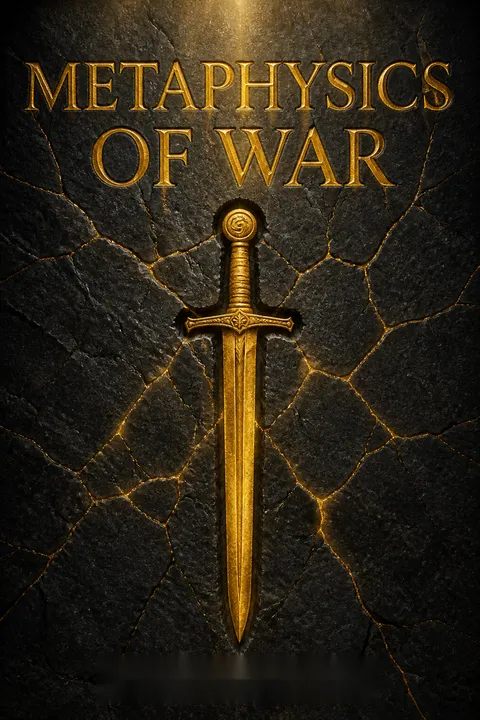


Summary Unavailable
This book is not suitable for a summary (it may be a textbook, workbook, cookbook, reference book, or collection). However, you can still explore the FAQs, about author, and other metadata below!
Key Takeaways
For Evola, war's spiritual meaning depends on the warrior's inner stance.
Death is not enough. Evola argues that a willingness to die does not, by itself, make someone a hero. The same battlefield sacrifice might express spiritual discipline, pride in personal glory, or the loss of individual judgment to fear and group instinct. He sorts these into three broad outcomes: an ideal of spiritual transcendence, a fierce but limited warrior ethos, and a degraded, impersonal submission to forces outside oneself.
The meaning is contested. His account draws a sharp distinction between outward conduct and inward purpose. In his reading, Erich Maria Remarque's war novel depicts people pushed by instinct rather than spiritual purpose. This is Evola's interpretation, not a neutral description of soldiers or a demonstrated measure of heroism.
The distinction between an act and its meaning is useful beyond military life: courage can serve care, ambition, or coercion, depending on the surrounding purpose. Research on stress and group behavior likewise suggests that danger can intensify solidarity, but also impair judgment; neither outcome proves spiritual elevation. Evola's framework insists that intention matters, yet offers no reliable way to observe or verify a supposedly transcendent inner state. That gap matters because leaders can claim noble motives for sacrifices borne by others. The concept is most productive as a question about ethical agency, not as a ranking system for real people.
Distinguish disciplined courage from instinct, fanaticism, and collective self-erasure.
Three kinds of courage. Evola warns that bravery is not a single quality. A person may face danger through trained self-command, through a pursuit of personal honor, or through an impersonal surge of fear, rage, or group loyalty. His examples include Remarque's soldiers, whose survival depends on reflexes after patriotic ideals collapse, and the Japanese combatants he describes as willingly sacrificing themselves. He sees the first as degraded instinct and the second as spiritually oriented sacrifice.
Interpret the cases carefully. These examples reveal his categories more clearly than they establish the inner motives of the people involved. The book contrasts the Japanese with Soviet soldiers, whom it portrays through a racist and politically charged stereotype of collectivism. Such broad characterizations should be read as wartime polemic, not dependable accounts of entire populations.
A useful modern distinction is between self-sacrifice that preserves agency and sacrifice demanded by institutions that deny it. Social psychology finds that group identity can motivate extraordinary cooperation, but cooperation may be voluntary, coerced, or shaped by propaganda. Visible fearlessness cannot tell these apart. Evola's categories draw attention to the inner life often ignored by military statistics, while his own examples show how easily a writer can assign noble or degraded motives to whole groups. The sharper question is not who appears fearless, but who chooses the purpose, who bears the cost, and whether dissent remains possible.
Treat the greater war as inward discipline, never as permission to kill.
An inner and outer struggle. Evola uses the Islamic terms lesser war and greater war to distinguish physical conflict from the effort to master fear, appetite, anger, and weakness within oneself. He presents the outer struggle as potentially serving the inner one, rather than as spiritually meaningful on its own. In the Bhagavad-Gita, he reads Krishna's counsel to the hesitant warrior Arjuna as a demand to act without selfish attachment to victory or personal safety.
A dangerous interpretation. The book uses religious traditions to frame battle as a route to spiritual realization. That is Evola's selective reading, not a general religious license for violence. The volume's editor notes uncertainty about the attribution of the saying used to introduce the greater and lesser war distinction. Religious texts and traditions contain varied, sometimes conflicting accounts of duty, restraint, and violence.
The inward-war metaphor can be valuable when it redirects attention from conquering other people to governing one's own impulses. It also resembles practices in contemplative traditions that treat attention and desire as disciplines. But joining inner mastery to armed conflict creates a moral hazard: the language of purification can make violence seem sacred and criticism seem cowardly. Ethical traditions generally need limits on both means and targets, not just a claim about the actor's intention. The distinction is strongest when inner discipline restrains external harm, rather than supplying a spiritual story that excuses it.
Shared warrior myths do not prove a single timeless spiritual tradition.
A comparative argument. Evola places Roman rites, Nordic stories of Valhalla, Persian warrior imagery, the Crusades, Islamic jihad, and the Bhagavad-Gita beside one another. He argues that their different symbols express a common idea: combat can become a passage beyond ordinary selfhood. Roman triumph ceremonies and the promise of a hero's place among the dead serve as examples of war being treated as more than a practical contest.
Similarity is not identity. The essays often move quickly from resemblance to universality. The traditions cited emerged in distinct societies and do not necessarily assign the same meaning to war, victory, or death. Evola's comparative method illuminates recurring questions, but its conclusion that the traditions share one metaphysical core is a philosophical claim, not something the examples establish on their own.
Comparative religion becomes most informative when it examines both resemblance and difference. Symbols of death, trial, and renewal appear across cultures because human societies face recurring problems: mortality, loyalty, and the legitimacy of force. Yet similar imagery can support opposed ethics, from restraint to conquest. The book's sweeping synthesis can prompt readers to look for patterns, but it also risks treating selected texts as evidence for a theory fixed in advance. A stronger comparison would ask who authored each account, what institutions it served, and which voices or interpretations it leaves out.
Evola's caste ladder turns history into a story of spiritual decline.
A hierarchy of social functions. Evola describes four levels: spiritual authorities, warriors, merchants, and laborers. He treats these as distinct human types, not simply jobs, and argues that societies decline when power shifts from spiritual authority toward commercial and then mass politics. He applies the same ladder to heroism: sacred duty becomes warrior honor, then patriotic service, then revolutionary collectivism. The framework organizes much of the book's account of politics and war.
An ideological map. This is not a neutral historical model. It assigns greater worth to hereditary and spiritual hierarchy, and treats egalitarian movements as signs of decline. Its confident sequence compresses complex histories into a single story and does not establish that societies actually develop through these stages or that the supposed social types are natural.
The framework is powerful partly because it makes political change feel like a moral drama: every shift in who holds authority becomes evidence of decline. That clarity is also its weakness. Historical change has many causes, and the same society can combine religious, military, commercial, and popular institutions. Modern social science generally analyzes class and institutional power without assuming that one group possesses a higher spiritual nature. The model can still help readers notice how writers attach moral value to social rank, but its hierarchy should be treated as an argument requiring evidence, not as a discovered law of history.
His spiritualized race theory remains racial hierarchy, not a scientific account.
Race beyond biology. Evola claims that race includes bodily inheritance, character, and spiritual qualities. He uses terms such as race of the spirit and super-race for an alleged higher spiritual type, arguing that war can awaken or degrade these qualities. This moves beyond biological race theory, but it does not leave racial hierarchy behind. The essays repeatedly divide peoples into superior and inferior types and link political order to those divisions.
Read the premise critically. These claims belong to the racial politics of the period in which the essays were written. Evola also attacks modern egalitarianism and makes explicitly antisemitic claims, including attributing modern capitalism to Jewish influence. The book offers no sound evidence for its supposed spiritual races; metaphysical language does not make racial categories scientifically valid.
The move from biological race to spiritual race can appear less crude because it emphasizes character and culture. Yet it can preserve the same hierarchy while making it harder to test: success is credited to superior spirit, while failure can be blamed on degeneration. That is a self-sealing theory, not a useful account of human variation. Modern genetics and social research do not support the book's ranked racial types. The important reading practice is to distinguish its questions about identity and social power from its false claims that ancestry or collective essence determines moral and political worth.
Roman victory rituals made political success appear divinely authorized.
Victory as sacred theater. Evola describes Roman warfare as surrounded by rites, priestly procedures, and interpretations of omens. In his account, a triumph was more than a parade: the victorious commander wore divine symbols and dedicated the victory to Jupiter, presenting success as the work of a power beyond the individual. The ritual of devotio, in which a commander vowed his life in battle for Rome, offered an extreme example of sacrifice framed as a public religious act.
Ritual also legitimizes. Evola reads these practices as evidence of a metaphysical reality joining divine and human action. A historical reader can also see how ceremony turns military success into political legitimacy and collective memory. The account makes clear that a victory is never only a battlefield result; it is also interpreted, celebrated, and used to authorize rule.
Ritual helps communities absorb risk and loss by giving events a shared meaning. It can also make power appear natural, sacred, or beyond challenge. That double role is visible in Roman triumph: the ceremony honors achievement while placing it within the authority of the state and its gods. Political sociology offers a useful complement to Evola's metaphysical explanation, asking how public symbols create allegiance and who gains authority from them. Neither account alone explains every participant's belief. Ritual may persuade, express sincere faith, or do both at once.
Military discipline can create solidarity while making obedience look virtuous.
A soldier's way of life. In essays about the army as a worldview, Evola extends military habits beyond combat: discipline, endurance, fidelity, composure, and duty become a model for ordinary conduct. He contrasts this ideal with what he calls bourgeois comfort and sentimental universalism. He also imagines social unity as comrades acting side by side under command, rather than as a community grounded in equal rights or universal affection.
The cost of the model. This ethic prizes self-command, but it also ranks people by usefulness and authority. Evola explicitly rejects egalitarian social ideals and argues for hierarchical political order. The language of duty can therefore describe both meaningful commitment and enforced submission. His vision is not merely personal advice about resilience; it is a political argument for organizing society around martial values.
Discipline can support reliability, mutual trust, and coordinated action, all of which matter in emergencies as well as armies. But healthy cooperation also depends on accountability, informed consent, and the ability to challenge bad orders. A system that treats obedience as proof of virtue can suppress correction precisely when it is most needed. The productive distinction is between discipline that equips people to serve a shared purpose and discipline that makes authority immune to scrutiny. Evola's account is unusually clear about the appeal of order, and unusually dismissive of the protections that limit abuse.
Modern warfare exposes the danger of demanding heroes for systems that consume them.
A postwar change of emphasis. In the final essay, written after the Second World War, Evola argues that modern conflict increasingly pits people against machinery and mass destruction. He criticizes governments that seek military sacrifice while publicly promising comfort, security, and a war fought to prevent war. In his view, a society that treats people as expendable resources cannot sustain genuine heroism through equipment and propaganda alone.
The unresolved tension. Evola's proposed answer is an inward strength that can preserve human dignity amid technological violence. Yet this response does not address how to prevent wars, restrain state power, or protect civilians. His critique of instrumentalizing people is sharp; his earlier celebration of war as spiritual opportunity complicates it. The collection ends with that conflict between resistance to dehumanization and the glorification of sacrifice.
The warning about turning people into resources remains pertinent wherever institutions measure human worth by output or strategic usefulness. A further question is whether heroic language resists that reduction or helps sell it. Political leaders often praise sacrifice most loudly when others are asked to bear the cost. Human dignity is better protected by limits on violence, public accountability, and care for survivors than by demanding exceptional fearlessness. The book's late critique of technological war is compelling, but it sits uneasily beside its earlier claim that combat can be a privileged path to transcendence.
Analysis
Metaphysics of War is a collection of essays, largely written between 1935 and 1943, with a postwar conclusion. Its recurring question is not simply why wars happen, but what kind of person, society, and spiritual meaning Evola believes combat can produce. He builds the answer through a hierarchy of heroism, comparative readings of Roman, Nordic, Persian, Islamic, Christian, and Hindu traditions, and a theory that inner discipline can transform external battle into spiritual practice. The structure is cumulative, but not neutral: history, religion, and social change are repeatedly interpreted through Evola's prior commitment to hierarchy and anti-egalitarian politics.
The book's strongest analytical distinction is between the outward act of sacrifice and the inward purpose attributed to it. This invites scrutiny of motives, group pressure, and the stories states tell about death. Its weakness is that it treats an unverifiable spiritual state as if it could be ranked confidently, while assigning different populations and political movements to predetermined moral categories. The comparative method is similarly suggestive but selective: shared symbols of trial and transcendence do not prove that traditions express one timeless doctrine.
Historical context is essential. These essays were produced during Evola's engagement with Italian Fascism and German National Socialism, and they argue for an authoritarian, stratified order. The collection's racial theory, including its claims about spiritual races and its antisemitic explanations of modern society, is ideological rather than evidential. Such claims should not be softened by their metaphysical vocabulary. The final essay's concern that technology can make people disposable is more broadly compelling, but it conflicts with earlier passages that exalt war as a route to transcendence. The lasting value lies less in accepting Evola's prescriptions than in examining how spiritual language can dignify courage, legitimize power, and turn human sacrifice into a political ideal.
Last updated:
Report IssueReview Summary
Metaphysics of War by Julius Evola is a collection of essays exploring war as a spiritual and metaphysical concept. Readers find it thought-provoking but controversial, praising its intellectual depth while criticizing its repetitiveness and outdated views on race. The book examines war through various cultural and religious lenses, emphasizing the warrior's spiritual journey. Some appreciate Evola's critique of modern society and his traditionalist perspective, while others find his ideas too esoteric or politically problematic. Overall, the book is seen as a challenging but potentially valuable read for those interested in alternative perspectives on war and spirituality.
People Also Read


Glossary
Greater war
Inner struggle for self-masteryEvola uses this term for the inward struggle against fear, appetite, anger, and other impulses that he believes obstruct spiritual discipline. He pairs it with the lesser war, or external armed conflict, and argues that outer combat can serve as a setting for inner transformation. The pairing is his interpretation of religious ideas, not a general authorization of violence.
Lesser war
External armed conflictIn Evola's terminology, the lesser war is physical combat against an external enemy. He contrasts it with the greater war, an inward struggle for self-mastery, and argues that the two can be joined when the combatant acts with spiritual discipline. The distinction describes Evola's metaphysical framework; it does not establish that warfare is spiritually beneficial or morally justified.
Race of the spirit
Alleged spiritual racial inheritanceEvola's term for a supposed spiritual quality attached to a people or lineage, beyond bodily ancestry. He presents it as a formative force expressed through character, social tradition, and political order. Although it shifts racial claims from biology to metaphysics, it remains part of a hierarchical racial ideology and has no established scientific basis.
Super-race
Evola's higher spiritual typeEvola uses this term for people he believes have transcended instinct and ordinary biological existence through a superior spiritual orientation. He contrasts this supposed type with what he calls races of nature, which he portrays as governed by collective instinct. The term embeds an unsubstantiated ranking of human beings and should be understood as ideological vocabulary, not a valid account of human difference.
devotio
Roman ritual self-sacrificeIn Evola's discussion, devotio is an ancient Roman rite in which a commander formally offered his life in battle for the success of Rome. He interprets it as a deliberate sacrifice intended to invoke supernatural aid and influence victory. The practice also illustrates how ritual can turn personal death into a public act of religious and political meaning.
mors triumphalis
Death framed as triumphA Latin expression Evola uses for the idea that death in battle can represent spiritual victory rather than simple defeat. He connects it to traditions that promise heroes a privileged afterlife or treat sacrifice as a passage beyond ordinary existence. This is a religious and metaphysical interpretation, not a factual claim about what follows death.
numen
Manifest divine powerEvola uses the Roman religious term numen for a divine power understood as active and capable of manifesting through events or people, rather than simply as a personal deity. He applies it to the victorious commander, whom Roman ritual could present as temporarily embodying a higher force. The term helps explain his reading of Roman victory as both political and sacred.
FAQ
What is "Metaphysics of War" by Julius Evola about?
- Exploration of War's Spiritual Dimension: The book examines war not just as a physical or political phenomenon, but as a path to spiritual realization and transcendence, rooted in the traditions of ancient and medieval societies.
- Tradition vs. Modernity: Evola contrasts the traditional, hierarchical, and spiritual understanding of war with the materialistic, democratic, and collectivist views of the modern world.
- Comparative Analysis: The text draws on examples from Roman, Nordic, Christian, Islamic, and Hindu traditions to illustrate how different civilizations have understood the metaphysical significance of battle, heroism, and death.
- Critique of Modern Attitudes: Evola criticizes pacifism, humanitarianism, and the reduction of war to mere politics or economics, arguing that these perspectives ignore the deeper, transformative potential of conflict.
Why should I read "Metaphysics of War" by Julius Evola?
- Unique Perspective on War: The book offers a rare philosophical and spiritual analysis of war, challenging conventional, materialist interpretations.
- Insight into Traditionalism: Readers interested in traditionalist thought, the critique of modernity, or the spiritual dimension of history will find Evola’s approach thought-provoking.
- Historical and Cross-Cultural Depth: Evola draws from a wide range of sources—Roman, Aryan, Islamic, and more—providing a comparative study of heroism and combat.
- Relevance to Modern Crises: The book addresses the decline of heroism and the challenges of modernity, offering perspectives that some may find relevant to contemporary cultural and existential questions.
What are the key takeaways from "Metaphysics of War" by Julius Evola?
- War as Spiritual Path: In traditional societies, war was seen as a means of spiritual ascent, not merely as violence or politics.
- Hierarchy of Heroism: Evola distinguishes between different types of heroism, from sub-personal, collective sacrifice to supra-personal, transcendent self-overcoming.
- Critique of Modern Decline: The loss of spiritual meaning in war reflects the broader decline of traditional values and the rise of materialism and egalitarianism.
- Universal Patterns: Despite cultural differences, many civilizations share a core understanding of the metaphysical significance of battle, victory, and death.
How does Julius Evola define "heroism" in "Metaphysics of War"?
- Multiple Forms of Heroism: Evola identifies a hierarchy of heroism, from instinctual, collective sacrifice (as seen in mass armies) to conscious, spiritual heroism aimed at transcendence.
- Heroism as Self-Overcoming: True heroism involves overcoming the fear of death and the limitations of the individual self, aligning with a higher, supra-personal principle.
- Distinction from Modern Notions: Evola contrasts traditional heroism with modern, materialist, or collectivist forms, which he sees as degenerate or sub-personal.
- Role in Social Order: Heroism, in its highest form, is linked to the maintenance of a hierarchical, spiritually-oriented society.
What is the "metaphysics of war" according to Julius Evola?
- War as Spiritual Test: Evola sees war as a metaphysical ordeal that can lead to spiritual awakening or liberation, not just a physical or political event.
- Dual Nature of Combat: He distinguishes between the "lesser war" (external, physical combat) and the "greater war" (internal, spiritual struggle against one’s own lower nature).
- Transcendence Through Action: The act of fighting, when done with the right inner orientation, becomes a means of transcending individuality and achieving a higher state of being.
- Tradition as Foundation: This metaphysical understanding is rooted in the doctrines and rituals of traditional civilizations, such as the Aryan, Roman, and Hindu worlds.
How does "Metaphysics of War" by Julius Evola compare different cultural traditions on war and heroism?
- Roman Tradition: War is seen as sacred, with rituals and beliefs that link victory to divine favor and the possibility of immortality for the hero.
- Nordic and Aryan Traditions: Concepts like Valhalla and the "triumphal death" (mors triumphalis) emphasize the spiritual rewards for warriors who die heroically.
- Christian and Islamic Traditions: Evola discusses the Crusades and jihad, highlighting the idea of "holy war" as both an external and internal struggle.
- Hindu Tradition: The Bhagavad-Gita is cited as a key text, presenting battle as a path to spiritual realization when fought with detachment and right intention.
What is the significance of the "greater war" and "lesser war" in Evola's philosophy?
- Lesser War: Refers to physical, external combat against enemies, typical of conventional warfare.
- Greater War: Represents the internal, spiritual battle against one’s own passions, weaknesses, and lower instincts.
- Integration of Both: Evola argues that the true warrior unites both wars, using external conflict as a means to achieve inner transformation.
- Universal Principle: This duality is found in various traditions, especially in Islamic and Hindu teachings, and is central to Evola’s metaphysical justification of war.
How does Julius Evola critique modernity and its approach to war in "Metaphysics of War"?
- Materialism and Egalitarianism: Evola criticizes the modern reduction of war to economics, politics, or mass mobilization, devoid of spiritual meaning.
- Loss of Hierarchy: He laments the decline of traditional, hierarchical societies in favor of bourgeois, democratic, and collectivist systems.
- Dehumanization of Combat: Modern war, in Evola’s view, turns individuals into "human material" or "cannon fodder," stripping away the possibility of heroic transcendence.
- Call for Inner Renewal: He suggests that only by restoring the spiritual dimension of war can societies and individuals recover true meaning and order.
What role does the concept of "race" play in "Metaphysics of War" by Julius Evola?
- Beyond Biology: Evola distinguishes between biological race and "race of the spirit," emphasizing inner qualities over mere genetics.
- Race and Heroism: He argues that the capacity for true heroism and spiritual awakening is linked to the presence of a "super-race" or spiritual elite within a people.
- Degeneration and Renewal: Racial decline, for Evola, is as much a spiritual and moral process as a biological one, and war can serve as a test or catalyst for racial renewal.
- Controversial Views: Evola’s ideas on race are complex and have been criticized for their association with fascist and racialist ideologies.
What practical advice or methods does Julius Evola offer in "Metaphysics of War" for individuals seeking a traditional warrior path?
- Inner Preparation: Evola emphasizes the need for spiritual discipline, self-mastery, and detachment from material concerns.
- Embracing Ordeals: He encourages individuals to see challenges, risks, and even suffering as opportunities for inner growth and transcendence.
- Living According to Tradition: The book advocates aligning one’s actions and attitudes with the principles of traditional societies, such as honor, hierarchy, and service to a higher cause.
- Apoliteia: Evola introduces the concept of "apoliteia," or the apolitical stance, as a way for traditional individuals to engage with the world without being corrupted by it.
What are the best quotes from "Metaphysics of War" by Julius Evola and what do they mean?
- "War offers man the opportunity to awaken the hero who sleeps within him." — This encapsulates Evola’s view that war can be a catalyst for spiritual transformation.
- "There is then a synthesis, an energy and, with it, an utmost efficiency." — Refers to the union of external action and inner purpose, leading to the highest form of heroism.
- "Do thou fight for the sake of fighting, without considering happiness or distress, loss or gain, victory or defeat – and by so doing you shall never incur sin." — Quoting the Bhagavad-Gita, Evola highlights the ideal of pure, detached action.
- "The blood of Heroes is closer to the Lord than the ink of scholars and the prayers of the pious." — Emphasizes the spiritual value of heroic sacrifice over intellectual or devotional pursuits.
How does "Metaphysics of War" by Julius Evola remain relevant to contemporary readers?
- Critique of Modern Society: The book’s analysis of the loss of meaning, heroism, and hierarchy in modern life resonates with those disillusioned by contemporary culture.
- Search for Transcendence: Evola’s call for inner transformation and spiritual struggle appeals to readers seeking depth beyond material success or political activism.
- Alternative to Pacifism and Militarism: The text offers a third way, neither glorifying violence nor advocating passivity, but seeking a higher purpose in action.
- Influence on Modern Thought: Evola’s ideas continue to influence traditionalist, conservative, and even radical circles, making the book a key text for understanding certain intellectual currents today.
About the Author
Julius Evola was an Italian philosopher and esotericist born in 1898. Raised Catholic, he developed an anti-bourgeois, anti-Christian, and anti-modern worldview. Evola was a multifaceted individual, exploring various fields including art, politics, and Eastern philosophy. His work centered on the pursuit of the Transcendent and a critique of modern civilization. His best-known book, "Revolt Against the Modern World," exemplifies his traditionalist philosophy. Evola's writings have influenced right-wing and conservative thought in Europe and beyond. Despite his political impact, he is primarily considered a proponent of the Traditionalist School, alongside figures like René Guénon and Frithjof Schuon.
Other books by Julius Evola

Download PDF
Download EPUB
.epub digital book format is ideal for reading ebooks on phones, tablets, and e-readers.








